Archive for the ‘Ticks’ Category

WA Man Hospitalized With Tick-borne Disease. Here’s How to Keep Yourself Safe

https://www.seattletimes.com/seattle-news/health/wa-man-hospitalized-with-tick-borne-disease-heres-how-to-keep-yourself-safe/

WA man hospitalized with tick-borne disease. Here’s how to keep yourself safe

The first local human case of anaplasmosis, a tick-borne disease, was reported this month in Washington state.

The case was discovered on Aug. 8 after a Whatcom County man in his 80s was hospitalized with severe disease after working in the brush in Mason County, according to the Washington State Department of Health. The man, likely bitten by an infected tick, is recovering.

While human cases of anaplasmosis have been identified in the state before, this is the first case that did not involve travel outside of Washington. There have been cases of dogs diagnosed with anaplasmosis after being bit within the state, DOH said.

In humans, symptoms include fever, headache, muscle aches and nausea and typically begin within one to two weeks of a tick bite. There is no vaccine to prevent the disease, which is treatable with antibiotics, according to DOH.

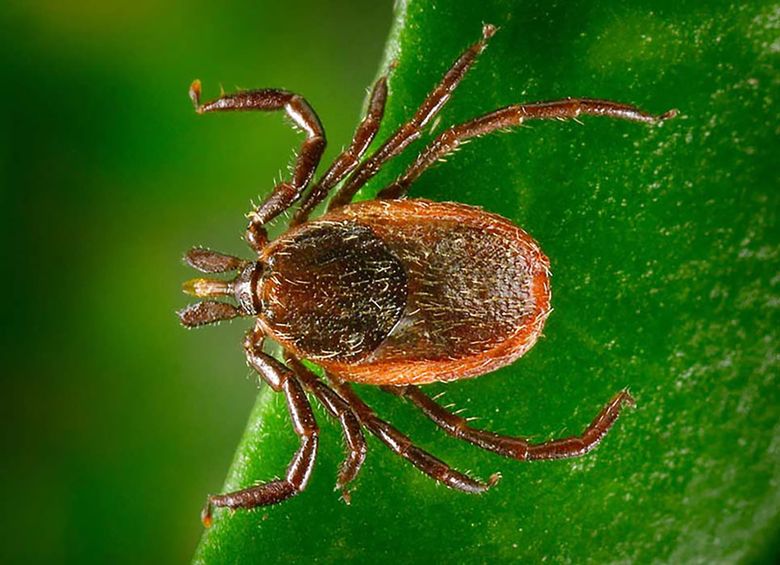
The disease is spread by the western blacklegged tick, which is found in the western parts of the state and along the eastern slopes of the Cascades.

“Not all tick bites will cause disease,” said Washington state epidemiologist Scott Lindquist in a news release. “However, people across Washington are at risk for tick-borne illnesses and should take precautions to prevent tick bites.”

(See link for article)

_________________

**Comment**

The article then gives tick prevention tips.  You will be helped more by reading this:  https://madisonarealymesupportgroup.com/2019/04/12/tick-prevention-2019/

The article then explains what to do if you are bitten by a tick.  Again, you will be helped better by reading these:

Do NOT take the “wait and see” approach.

If you are bitten by a black legged tick, get on treatment asap.  The risk just isn’t worth it.

‘I Feel Incredibly Robbed’: The Debate and Deadly Effects of Lyme Disease in Colorado

https://www.rmpbs.org/blogs/rocky-mountain-pbs/lyme-disease-colorado-ticks/  Video Here (Approx. 7 Min)

‘I feel incredibly robbed’: The debate and deadly effects of Lyme disease in Colorado

Alexis Kikoen
Samantha Davis and her 3-year-old son Felix look through pictures of her husband, Nate, after he lost his life to complications from Lyme disease and mold poisoning.

DENVER — Samantha Davis and her 3-year-old son Felix sit together at their kitchen table. A large pile of photographs sits in front of them, and they slowly start to make their way through it.

“Oh my gosh, what are we doing?” Davis asks Felix as she shows him a picture. “Rafting with Papa!” he excitedly responds.

Davis continues to flip through the stack and lands on a picture of her husband wandering through a canyon in Moab, Utah. Her expression becomes somber.

“Here’s Papa in Moab, probably the year he got bit,” she sighs. “We had no idea what the early symptoms of Lyme disease were, or what untreated Lyme could do to you.”

Davis lost her husband Nate Watters on June 5, 2021, to complications from Lyme disease and mold poisoning. He was 36 years old. (See link for article)

__________________

SUMMARY:

  • The article predictably asks the question if Lyme even exists in Colorado.  The problem with this illogical and ignorant question is it doesn’t take into account the fact that travel.  The fox, deer, bird, and people travel everywhere picking up ticks and dropping them everywhere.  I can’t believe we are still having this discussion.
  • A singular thinking doctor in Colorado (Dr. Shawn Naylor) points out that there are numerous strains of borrelia that cause Lyme-like disease, and while they may not be picking up Borrelia burgdorferi, it doesn’t mean that there aren’t other strains causing illness, and absence of evidence is not proof of absence.  Borrelia is a fastidious organism and extremely hard to find. The “discoverer” of Lyme, Willy Burgdorfer stated so in this important 4 min video.
  • The fact this man had a EM rash (which is diagnostic for Lyme) and didn’t get diagnosed and treated is a clear reminder that Lymeland remains in the Dark Ages.  When is the medical profession going to take this seriously enough to train doctors appropriately?  Simply put: this man did not have to die.
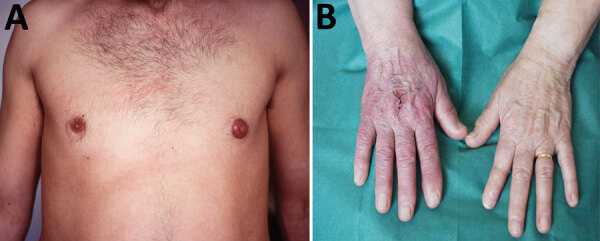
  • IMO the hands/skin pain and rawness is an indicator that should point doctors to another strain – a European strain that causes skin manifestations (not something I see much of here in WI but still exists).   This picture is from a year old study and even shows the hand involvement.       

  • Then the barrel of monkey symptoms came tumbling out: (weight loss, facial swelling, body lesions, fatigue, graying hair, muscle pain, etc) should have sent off red-light warning bells. But, the medical system stupidity continues.
  • The guy even manages to test positive for Lyme.  But again, due to flagrant stupidity, doctors regurgitate the mantra that it must be a false positive because Lyme isn’t common in Colorado, and Lyme “doesn’t look like this.”  Wow.
  • The ignorance is blatantly pointed out by an entomologist and Lepidopterist manager that states the black legged tick does not naturally occur in Colorado, therefore Lyme disease transmission is rare to non-existent.  As the saying goes however; gargage in, garbage out.

    • First, ticks carry all sorts of nasty diseases they can transmit and they can all look somewhat similar. Second, testing for ALL of these pathogens is abysmal, which means it’s not getting picked up which explains why things are often “rare” when they are not. Third, even IF patients are picking Lyme up from nearby states, what does it matter?  You have sick people and they need to be diagnosed and treated.  It’s ironic to me that globalization is embraced for everything until it comes to tick-borne illness.  Then, for some illogical but nefarious reason, it’s all about geography and limitations (where ticks are and where they aren’t – where things are rare, and where they aren’t) when people and animals move about freely. Fourth, it’s unacceptable that we are still in this quandary and that doctors are still taking this tact when it’s been proven there are numerous genospecies that cause illness in animals and humans, including:
      • a peer-reviewed research paper published in The Journal of Infectious Diseases in September 1994, a new genospecies of Borrelia burgdorferi was discovered in wood rats and ticks found in Northern Colorado.
      • A second paper published in the Journal of Clinical Microbiology in August 2000 gave the new Borrelia isolate a name – Borrelia bissettii. The strain has been identified in at least three different tick species in Colorado and has been isolated in humans displaying clinical symptoms typically associated with Lyme disease. According to the study, “It is therefore possible that some cases of Lyme disease in the United States may be caused by B. bissettii.”  
  • The fact Naylor, the singular thinking doctor, has to “speak carefully” on the subject demonstrates perfectly that Lyme/MSIDS has become highly politicized (like COVID) and politics trump science.  Naylor points out that the deceased man ran into denial from doctors despite testing positive multiple times on the western blot. He states doctors want to err on the side of ignorance than acknowledge that this is severely under-studied. Doctors also know that if they defy the accepted narrative, they will be hunted down and persecuted (just like we are seeing with doctors treating COVID). The persecution of doctors is extremely taxing, stressful, time consuming, and full of risk.  It takes strong, determined doctors to defy this tyranny, which is why we desperately need to decentralize the public health monopoly.
  • Doctors are getting their orders from the top-down, which starts in the government and then trickles down to research institutions, medical schools/professional organizations, and hospitals/clinicsThere are vast conflicts of interest in this pyramid scheme.
  • The Centers for Disease Control and Prevention reports that up to 90% of tick-borne disease cases go unreported nationwide.  Hello!
  • Naylor then points out that states that are not considered to be “endemic” have much more complex and arduous reporting requirements, which turns into a self-fulfilling prophecy keeping these states forever non-endemic, even when they aren’t.
  • And this is how the CDC controls the narrative. They are in charge of parameters be it with reporting, testing, diagnostics, treatment guidelines, you name it.  Until this corrupt organization is shut down we will never have truth.

Asian Longhorned Ticks: Where They Came From + How To Spot Them

https://rawlsmd.com/health-articles/asian-longhorned-ticks-where-they-came-from-how-to-spot-them

Asian Longhorned Ticks: Where They Came From + How to Spot Them

by Jenny Menzel, H.C.
Posted 6/7/22

Every spring heralds a new tick season here in the US, along with the need to prevent these pests from wreaking havoc on our health and the health of our pets, livestock, and wildlife. But with at least 80 different tick species in the country, knowing exactly which ones are dangerous and what to look out for can be daunting.

Added to the US tick species list in 2017 was the Asian longhorned tick, which was first discovered stateside on a New Jersey sheep farm after making its way to America. Exploding in numbers due to its unique procreation abilities, a vital need for awareness was born, with its population swiftly expanding inland from the Eastern Seaboard.

So what do we know about these ticks? Can they contract and carry tick-borne infections like Lyme disease, babesia, or other coinfections? Or, do Asian longhorn ticks transmit diseases we’ve never been exposed to?

Research is ongoing, and experts don’t have all the answers yet, but here is what we know so far about the new tick on the block — and what you need to know if you encounter them.

What are Asian Longhorned Ticks?

As you may have guessed by its name, the Asian longhorned tick (ALT), Haemaphysalis longicornis, comes from Asia — eastern nations, including China, Japan, Korean, and parts of Russia — eventually spreading to New Zealand, Australia, and the Pacific Islands around the early 1900s.

While experts can’t say exactly how they got to New Jersey, these tiny ticks likely hitched a ride on livestock shipped from overseas. ALT have reportedly been intercepted on imported animals at several East Coast ports.

Where Have ALT Been Found?

As of September 2021, the Centers for Disease Control and Prevention (CDC) has reported ALT in 17 states:

  • Arkansas
  • Connecticut
  • Delaware
  • Georgia
  • Kentucky
  • Maryland
  • Missouri
  • New Jersey
  • New York
  • North Carolina
  • Ohio
  • Pennsylvania
  • Rhode Island
  • South Carolina
  • Tennessee
  • Virginia
  • West Virginia

USA map with Asian Longhorned Tick found states in red

Virginia and West Virginia lead the way for the highest number of affected counties. ALT have mostly been found while feeding on livestock and in surrounding pastures when they’re between hosts.

Fittingly, because they prefer to feed on cattle and spend almost 90% of their lives in grassy pastures, they’ve picked up the nicknames “cattle tick” and “bush tick.”

But they don’t limit themselves to cows and farms. Foxes, white-tailed deer, coyotes, birds, sheep, chickens, pigs, dogs, cats, and even humans have been hosts to ALT; they’ve even been found on well-manicured lawns.

The ALT Lifecycle

While their lifespan is generally a full year shorter than other three-host ixodid ticks (hard ticks like the American dog tick and blacklegged deer tick) common to the US, the ALT is similar in that it needs three separate hosts throughout its four life stages: egg, larvae, nymph, and adult.

two Asian Longhorned Ticks, nymph to left and adult female to right

Stage I: Egg

The egg stage begins as soon as an adult female drops from her last host to lay eggs, usually in late summer, and ends a few weeks later when the eggs hatch into six-legged larvae.

Stage II: Larvae

Depending upon the temperatures and humidity after hatching, the larvae will crawl up nearby grass or shrubs to await a suitable host that they’ll feed on over the winter — most commonly a small rodent or rabbit.

Stage III: Nymph

After the larvae molt into nymphs the following spring, it ejects itself from its first host to climb nearby vegetation in search of its second host, where it will feed until adulthood in mid to late summer.

Stage IV: Adult

Once an adult, it quickly seeks its next feast with its largest host, usually cattle or something human-sized at this stage. After its final feeding, the adult drops off its last host to lay eggs over a 14- to 21-day period — and the cycle continues.

What Makes Them Unique?

Perhaps the most interesting (and alarming) quality about this tick is how rapidly their population grows due to being parthenogenetic — able to reproduce asexually without the need for a male. While some types of ALT can mate with males, the strain found in the US doesn’t need their help to produce offspring.

Furthermore, these female ticks can lay thousands of eggs at one time, all hatching into females that will lay thousands of their own eggs in the following season. Their quick lifecycle makes it easy to see how difficult containing the spread of these ticks might be.

How to Spot an ALT

ALT are pretty unremarkable in terms of physical identification, which helps them easily blend in with the rest of the US tick population. However, there are a few subtle differences to notice.

dorsal view of an adult female, asian longhorned tick, climbing a blade of grass.

Identifying Physical Features:

  • Reddish-brown color
  • Two horn-like spurs on the sides of their mouths
  • Two slightly longer front legs

The Key Difference

Because these ticks look so similar to others, the distinct characteristic of the ALT is the sheer number of ticks you’ll find on one host, and thousands of ALT may assemble on a single animal.

Another clue that it could be ALT is timing: August is the peak of reproduction, so you’re likely to encounter ALT more around this time of year, although their population remains highly active into the fall.

What Diseases Do They Carry?

ALT are aggressive biters and have been shown to cause almost half a dozen diseases in Asia, Australia, and New Zealand that infect both humans and animals, with some diseases causing severe illness.

But in the US, there haven’t been any reported cases of humans contracting tick-borne infections from ALT. While it’s still possible ALT in the US could carry pathogens that harm people, the types of infections and the frequency with which they transmit them are still being studied. Here’s what we do know:

Severe Fever with Thrombocytopenia Syndrome

Also called Dabie bandavirus, severe fever with thrombocytopenia syndrome (SFTS) is a life-threatening disease that has been reported in East Asia. The average fatality rate is between 12% and 30%, according to the journal Medicine, with cytokine storms (overactive immune response) being a chief cause of fatality.

And though no cases have been reported in the US, a similar bandavirus called Heartland virus is spread by Lone Star ticks, which bears a close genetic relationship with SFTS, raising concerns that ALT may be able to carry and spread Heartland in epidemic proportions. To date, no cases of Heartland virus have been found in the US ALT population, but one recent study found ALT is capable of carrying and transmitting the virus to mice in a laboratory setting, warranting further research.

Spotted Fevers

ALT can carry and transmit certain spotted fevers, however, it’s unclear if they can be transmitted to humans. One study demonstrated that ALT could acquire Rickettsia rickettsii, also known as Rocky Mountain spotted fever (RMSF), by feeding on infected guinea pigs in a laboratory setting — and they could also infect other guinea pigs. However, more research is needed to understand if or how ALT actually acquires RMSF from hosts that live in nature and what impact that may have on human health.

Additionally, in Japan and South Korea, Rickettsia japonica, or Japanese spotted fever, is a tick-borne disease that can be transmitted to humans from ALT, but again, no cases have been reported in the US.

Bovine Theileriosis

So far, the only infection carried to the US is bovine theileriosis (Theileriosis orientalis). The good news: This disease doesn’t affect humans, but it can cause severe blood loss and anemia in animals that have been infected. This malarial-like blood parasite primarily infects cattle, and diagnosing a herd can be difficult due to most presenting asymptomatically.

What About Lyme Disease?

Although ALT larvae have shown the ability to contract the Lyme-causing bacteria Borrelia burgdorferi while feeding on infected mice, the transmission process likely stops there. Research indicates that borrelia is lost during the molting phase from larvae to nymphs, so it’s unlikely that ALT will significantly contribute to Lyme disease transmission.

Are Humans at Risk?

We know ALT have a history of biting humans in other parts of the world, but it wasn’t until 2018 that the first human bite occurred in the US, and it was published in the journal Clinical Infectious Diseases:

A 66-year-old man from Yonkers, New York, with no travel history beyond his own manicured lawn for 30 days prior, had removed a tick from his right leg. Presumed to be a deer tick by his physician, the patient was treated with a standard dose of 200 mg of doxycycline. Later that day, the patient turned the tick into the Lyme Disease Diagnostic Center (LDDC) for testing, where its identification as an ALT was confirmed. The patient remained asymptomatic and never tested positive for Lyme disease or other tick-borne illnesses.

split image between Group of young steers in the meadow and older sick woman

While humans are at risk of being bit by ALT, most often, their host of choice is animals, especially cattle. But research efforts are ongoing to find out which states and counties they reside in, other diseases they could carry, and whether they can transmit any of those diseases to humans.

Prevention and Protection

The CDC suggests ALT may not be as attracted to human skin compared to recognized native ticks (deer ticks, Lone Star ticks, American dog ticks, etc.). However, you’ll still want to protect yourself and your pets using the same preventative strategies against any tick species.

You can protect your animals by following these guidelines from Cornell University’s Department of Agriculture.

  • Avoid pasture or lawn overgrowth
  • Prevent wildlife from nearing your home or farm
  • Consider the use of insecticides
  • Check your animals for ticks regularly
  • Consult your veterinarian to find which product is right for your animals.

You can protect yourself or your family by following the CDC-recommended guidelines.

  • Keep a lookout for tick-friendly habits, including tall grass, overgrown lawns, thick brush, and piles of leaves.
  • Use tick repellent like DEET, picaridin, or oil of lemon eucalyptus (OLE).
  • Treat your clothes and shoes with permethrin.
  • Take a shower when you come in from outdoors.
  • Perform tick checks on yourself and family members.
  • Remove ticks promptly

What To Do if You Find Ticks

Finding a tick on you or your pet can be scary. If you encounter a tick bite, keep the following in mind:

  1. Remove the tick as quickly as possible using clean, fine-tipped tweezers, ensuring that you pull up with steady, even pressure — never twisting or jerking to avoid leaving mouthparts in the skin.
  2. Clean the area with rubbing alcohol or soap and water after removing it.
  3. Never crush a tick with your fingers. Instead, put it in a Ziploc bag with a moist cotton ball or paper towel for further testing.
  4. Mail your tick into a reputable lab like Igenex or Tick Report that can help you with specialized pathogenic testing. Some universities may have tick identification programs as well.
  5. Make an appointment to see your physician, and take note of when the tick bite happened and where on the body it took place.

If you find or remove a tick, you might not know what kind it is right off the bat. But getting your tick tested is one of the best ways to gain peace of mind and, if necessary, arm yourself with information to take to your healthcare provider. Although there’s still a lot to learn about ALT, you don’t have to avoid the great outdoors altogether. Thankfully, you can take action steps toward keeping yourself, your family, and your animals as safe as possible.

REFERENCES
1. Casel, M.A., Park, S.J. & Choi, Y.K. Severe fever with thrombocytopenia syndrome virus: emerging novel phlebovirus and their control strategy. Exp Mol Med. 53, 713–722 (2021). doi:10.1038/s12276-021-00610-1
2. Beard CB, Occi J, Bonilla DL, et al. Multistate infestation with the exotic disease–vector tick haemaphysalis longicornis — United States, August 2017–September 2018. MMWR Morbidity and Mortality Weekly Report. 2018;67(47):1310-1313. doi:10.15585/mmwr.mm6747a3
3. Breuner NE, Ford SL, Hojgaard A, et al. Failure of the Asian longhorned tick, Haemaphysalis longicornis, to serve as an experimental vector of the lyme disease spirochete, borrelia burgdorferi sensu stricto. Ticks and Tick-borne Diseases. 2020;11(1):101311. doi:10.1016/j.ttbdis.2019.101311
4. Eisen RJ, Kugeler KJ, Eisen L, Beard CB, Paddock CD. Tick-Borne Zoonoses in the United States: Persistent and Emerging Threats to Human Health. ILAR J. 2017;58(3):319-335. doi:10.1093/ilar/ilx005
5. Gleim, E.R., Zemtsova, G.E., Berghaus, R.D. et al. Frequent Prescribed Fires Can Reduce Risk of Tick-borne Diseases. Sci Rep. 9, 9974 (2019). doi:10.1038/s41598-019-46377-4
6. Hoogstraal H, Roberts FH, Kohls GM, Tipton VJ. Review of haemaphysalis (kaiseriana) longicornis neumann (resurrected) of Australia, New Zealand, New Caledonia, Fiji, Japan, Korea, and northeastern China and USSR, and its parthenogenetic and bisexual populations (Ixodoidea, ixodidae). The Journal of Parasitology. 1968;54(6):1197. doi:10.2307/3276992
7. Hu J, Li S, Zhang X, et al. Correlations between clinical features and death in patients with severe fever with thrombocytopenia syndrome. Medicine (Baltimore). 2018;97(22):e10848. doi:10.1097/MD.0000000000010848
8. Khatoon, S., Kolte, S. W., Kurkure, N. V., Chopde, N. A., Jahan, A. (2015). Detection of tropical bovine theileriosis by polymerase chain reaction in cattle. Journal of Parasitic Diseases. 39(1), 53-56. doi:10.1007/s12639-013-0270-0
9. Noguchi M, Oshita S, Yamazoe N, Miyazaki M, Takemura YC. Important Clinical Features of Japanese Spotted Fever. Am J Trop Med Hyg. 2018;99(2):466-469. doi:10.4269/ajtmh.17-0576
10. Rainey T, Occi JL, Robbins RG, Egizi A. Discovery of Haemaphysalis longicornis (Ixodida: Ixodidae) Parasitizing a Sheep in New Jersey, United States. J Med Entomol. 2018;55(3):757-759. doi:
10.1093/jme/tjy006
11. Preventing Tick Bites. Centers for Disease Control and Prevention website. https://www.cdc.gov/ticks/avoid/on_people.html
12. Sato Y, Mekata H, Sudaryatma PE, Kirino Y, Yamamoto S, Ando S, Sugimoto T, Okabayashi T. Isolation of Severe Fever with Thrombocytopenia Syndrome Virus from Various Tick Species in Area with Human Severe Fever with Thrombocytopenia Syndrome Cases. Vector Borne Zoonotic Dis. 2021 May;21(5):378-384. doi: 10.1089/vbz.2020.2720
13. Stanley HM, Ford SL, Snellgrove AN, et al. The Ability of the Invasive Asian Longhorned Tick Haemaphysalis longicornis (Acari: Ixodidae) to Acquire and Transmit Rickettsia rickettsii (Rickettsiales: Rickettsiaceae), the Agent of Rocky Mountain Spotted Fever, Under Laboratory Conditions. J Med Entomol. 2020;57(5):1635-1639. doi:10.1093/jme/tjaa076
14. Wormser GP, McKenna D, Piedmonte N, et al. First recognized human bite in the United States by the Asian longhorned tick, Haemaphysalis longicornis. Clinical Infectious Diseases. 2019;70(2):314-316. doi:10.1093/cid/ciz449
_____________________
**Comment**
Remember, a lot is unknown and things often change over time.  No tick is a good tick and all exchange fluids with those it bites.  Prudence would err on the side of caution.
For more:

Tick Bites Warning As Woman Waits 29 Years For Lyme Disease Diagnosis

https://news.stv.tv/west-central/tick-bites-warning-after-pauline-bowie-waited-29-years-for-lyme-disease-diagnosis  Article and video here

Tick bites warning as woman waits 29 years for Lyme disease diagnosis

University experts working to understand more about ticks found in Scotland.
 STV News

Pauline Bowie, from Clydebank, was bitten in 1989 and for decades experienced chronic fatigue, heart problems and joint pain. 

She was diagnosed with fibromyalgia and ME, but was still struggling with her symptoms when she heard about Lyme disease.

“I was off work, barely able to get out of bed at times and it was just a throwaway comment from my dad,” the 54-year-old said.

“He had been speaking to a cousin of mine who was getting treated for Lyme disease.”

Pauline googled the virus and finally felt “everything fell into place”.   (See link for article)

_________________

SUMMARY:

  • A ‘throwaway’ comment is quite often how “everything falls into place” for people because  government public health has failed to lead mainstream medicine to truth about this plague. Myths have continued unabated for over 40 years and show no sign of changing.
  • Similarly to this patient, nearly everyone who goes to a regular GP to get standardized testing has a negative testfurther propelling the Lyme lies.
  • It wasn’t until this patient, like so many others, uses a more sensitive testvilified by conflict riddled authorities due to their own patent ownership in testing, that she found out not only did she have Lyme, but numerous other tick-borne infections (TBIs). This is also common in Lymeland.
  • And she, like thousands, if not millions more – don’t receive true help until they see a doctor who specializes in TBIs – who are also vilified and called “quacks” by conflict riddled authorities, and who are hunted down by state medical boards and other professional medical groups and are persecuted for helping patients.
  • The patient admits she’s now in remission but has occasional flare-ups – or relapses, necessitating stints of treatment.  This concept is completely denied, ignored, and vilified by mainstream medicine.
  • She also admits she can do things now she hasn’t been able to do since she was in her 20’s, and that it’s been “life changing.”  DITTO!
  • Scientists as Glasgow University have developed a map where members of the public can upload information about where and when they found ticks, and take samples from hot spots.
  • Evidently people from all over Scotland are stating they’ve never seen ticks like they have this year and the team has found larger numbers in urban areas and gardens, and warns that they are everywhere.
  • The article then gives tick prevention ideas which can also be found here in an article that is more thorough & complete. They also recommend changing into a new set of clothes at the end of your activity which is a good idea.  (Put the others in a tightly secured bag and put in dryer on high for 15-20 min when you get home)
  • They also give a section on what to do if you are bitten.  I believe this article is better.  The article quotes the International Lyme and Associated Diseases Society (ILADS – how to handle a tick bite):

    “ILADS recommends that prophylaxis (preventive treatment) be discussed with all who have had a blacklegged tick bite. An appropriate course of antibiotics has been shown to prevent the onset of infection.

    When the decision is made to use antibiotic prophylaxis, ILADS recommends 20 days of doxycycline (provided there are no contraindications).The decision to treat a blacklegged tick bite with antibiotics often depends on where in the country the bite occurred, whether there was evidence that the tick had begun feeding, and the age of the person who was bitten.  Based on the available evidence, and provided that it is safe to do so, ILADS recommends a 20-day course of doxycycline.

  • Personally, I would treat each and every black-legged tick bite with antibiotics/antimicrobials.  The risk just isn’t worth it. Taking the “wait and see” approach is foolish considering the potential devastating outcome.

Deer Keds, Flying Ticks?

https://www.iamexpat.de/expat-info/german-expat-news/tick-season-germany-look-out-flying-ticks

Tick season in Germany: Look out for “flying ticks”

Excerpts:

Ticks can cause similar problems amongst humans, spreading diseases like tick-borne encephalitis (TBE) and Lyme disease, as well as some other, lesser-known diseases like babesiosis and boutonneuse fever. In 2019, a Hyalomma tick even infected a man in North Rhine-Westphalia with typhus.

Beware of “flying ticks”

Between July and October, the deer louse fly is also active in Germany. Sometimes known as a “flying tick”, these critters make a beeline for their target and then shed their wings when they land, burrowing down, biting and sucking blood from their victims. The ticks usually target animals, but attacks on humans have been recorded. They prefer to bite humans on the scalp or neck and can cause allergic reactions and even heart infections.

Deer louse flies are usually found in forests in the summer and autumn. It is recommended to thoroughly check any pets after walks in case they have been bitten by ticks. Ticks can be located using a flea comb and removed with adhesive tape or washed away. Any animal that has been infested with ticks should be bathed and washed.

(See link for article)

_____________________

The deer ked (Lipoptena cervi) mainly parasitize elk and deer but also bite humans.  It is unknown whether it serves as a vector for transmission but the following have been detected:

Remains of L. cervi have been found on Otzi, the Stone Age mummy.

Read the following on the deer fly (200 species in the Chrysops genus):

While male deer flies collect pollen, female deer flies feed on blood, which they require to produce eggs.[4] Females feed primarily on mammals. They are attracted to prey by sight, smell, or the detection of carbon dioxide. Other attractants are body heat, movement, dark colours, and lights in the night. They are active under direct sunshine and hours when the temperature is above 22 °C (71.6°).[4] When feeding, the females use scissor-like mandibles and maxillae to make a cross-shaped incision and then lap up the blood. Their bite can be painful. Anti-coagulants in the saliva of the fly prevents blood from clotting and may cause severe allergic reactions. Parasites and diseases transmitted by the deer fly include tularemia, anthrax, anaplasmosis, equine infectious anemia, hog cholera, and filiariasis. DEET is not an effective repellent.[2]

_________________

https://www.sciencedaily.com/releases/2019/05/190531135826.htm

New records show spread of parasitic deer flies across the United States

Date:
May 31, 2019
Source:
Penn State
Summary:
With flattened bodies, grabbing forelegs and deciduous wings, deer keds do not look like your typical fly. These parasites of deer — which occasionally bite humans — are more widely distributed across the US than previously thought, according to entomologists, who caution that deer keds may transmit disease-causing bacteria.

With flattened bodies, grabbing forelegs and deciduous wings, deer keds do not look like your typical fly. These parasites of deer — which occasionally bite humans — are more widely distributed across the U.S. than previously thought, according to Penn State entomologists, who caution that deer keds may transmit disease-causing bacteria.

“It was more or less known where deer keds are found, but very broadly,” said Michael Skvarla, extension educator and director of the Insect Identification Lab in the Department of Entomology at Penn State. “We don’t know if deer keds transmit pathogens (disease-causing microorganisms), but if they do, then knowing where they are at more precisely could be important in terms of telling people to watch out for them.”

The researchers collated records of the four North American deer ked species and produced the most detailed locality map of these flies to date, documenting ten new state and 122 new county records. The researchers published their results in a recent issue of the Journal of Medical Entomology. They also provided an illustrated species-identification key.

The team harnessed citizen science — collection of data by the public — to gather deer ked records from the U.S. and Canada. In addition to scouring museum databases and community websites like BugGuide and iNaturalist, the team distributed deer ked collection kits to hunters as part of the Pennsylvania Parasite Hunters community project. The researchers also collected flies directly from carcasses at Pennsylvanian deer butcheries.

“I really like using citizen science information,” said Skvarla. “It often fills in a lot of gaps because people are taking photographs in places that entomologists may not be going. Deer keds are the perfect candidate for citizen science. They’re easy to identify because there’s only four species in the country and because they’re mostly geographically separated. And as flat, parasitic flies, they’re really distinctive. You couldn’t do this with a lot of insect groups because they’d be too difficult to identify from photographs.”

The European deer ked, Lipoptena cervi, thought to have been introduced from Europe, previously was reported to occur throughout the Northeast region. The researchers newly report this species from Connecticut, Rhode Island, Vermont, and as far south as Virginia. In Pennsylvania, it occurs throughout the state, with 26 new county records.

The researchers also describe new records of the neotropical deer ked, L. mazamae, from North Carolina, Tennessee and Missouri — increasing its range further north and east than had previously been reported.

In western North America, two deer ked species, L. depressa and Neolipoptena ferrisi, are found from British Columbia through the U.S. and into Mexico — and as far east as South Dakota. The researchers newly report these species from Nevada and Idaho.

Deer keds are usually found on deer, elk and moose, but occasionally bite humans and domestic mammals. Although several tick-borne pathogens — including bacteria that cause Lyme disease, cat scratch fever and anaplasmosishave been detected in deer keds, it is unknown whether they can be transmitted through bites.

“In Pennsylvania you have a lot of hunters,” said Skvarla.

“Deer keds can run up your arm while you’re field dressing a deer and bite you. If these insects are picking up pathogens from deer, they could transmit them to hunters. With two million hunters in the state, that’s not an insignificant portion of the population. We don’t want to scare people, but people should be aware there is the potential for deer keds to transmit pathogens that can cause disease.”

The researchers will next screen hundreds of deer keds for pathogens. They will also dissect some insects to screen the salivary glands and guts separately. According to Skvarla, this approach will give a good indication of whether deer keds could transmit pathogens through bites, or whether the bacteria are merely passed through the gut after a blood meal.

In Pennsylvania, after deer keds emerge from the soil each fall, they fly to a host and immediately shed their wings, usually remaining on the same host for life. Females produce just one egg at a time — it hatches inside her, and she feeds the growing larva with a milk-like substance. When the larva is almost fully developed, it drops to the soil and forms a pupa, eventually emerging as a winged adult. If disease-causing bacteria are transmitted from mother to offspring, newly emerged flies could pass on pathogens to hosts. Pathogens could also be spread when bacteria-harboring flies jump between animals in close contact.

The other researcher working on this project was Erika Machtinger, assistant professor of entomology at Penn State.

___________________

https://www.mdedge.com/dermatology/article/171732/infectious-diseases/deer-ked-lyme-carrying-ectoparasite-move

Deer Ked: A Lyme-Carrying Ectoparasite on the Move

Lipoptena cervi, known as the deer ked, is an ectoparasite of cervids traditionally found in northern European countries such as Norway, Sweden, and Finland. Although rarely reported in the United States, this vector recently has been shown to carry Borrelia burgdorferi and Anaplasma phagocytophylum from specimens collected domestically. Importantly, it has been suggested that deer keds are one of the many disease-carrying vectors that are now found in more expansive regions of the world due to climate change. We report a rare sighting of L cervi in Connecticut. Additionally, we captured a high-resolution photograph of a deer ked that can be used by dermatologists to help identify this disease-carrying ectoparasite.

Practice Points

  • There are many more disease-carrying arthropods than are routinely studied by scientists and physicians.
  • Even if the insect cannot be identified, it is important to monitor patients who have experienced arthropod assault for signs of clinical diseases.

Case Report

A 31-year-old man presented to the dermatology clinic 1 day after mountain biking in the woods in Hartford County, Connecticut. He stated that he found a tick attached to his shirt after riding (Figure). Careful examination of the patient showed no signs of a bite reaction. The insect was identified via microscopy as the deer ked Lipoptena cervi.

Comment

Lipoptena cervi, known as the deer ked, is an ectoparasite of cervids traditionally found in Norway, Sweden, and Finland.1 The deer ked was first reported in American deer in 2 independent sightings in Pennsylvania and New Hampshire in 1907.2 More recently deer keds have been reported in Massachusetts, New York, Pennsylvania, and New Hampshire.3 In the United States, L cervi is thought to be an invasive species transported from Europe in the 1800s.4,5 The main host is thought to be the white-tailed deer (Odocoileus viginianus). Once a suitable host is found, the deer ked sheds its wings and crawls into the fur. After engorging on a blood meal, it deposits prepupae that fall from the host and mature into winged adults during the late summer into the autumn. Adults may exhibit swarming behavior, and it is during this host-seeking activity that they land on humans.3

Following the bite of a deer ked, there are reports of long-lasting dermatitis in both humans and dogs.1,4,6 One case series involving 19 patients following deer ked bites reported pruritic bite papules.4 The reaction appeared to be treatment resistant and lasted from 2 weeks to 12 months. Histologic examination was typical for arthropod assault. Of 11 papules that were biopsied, most (7/11) showed C3 deposition in dermal vessel walls under direct immunofluorescence. Of 19 patients, 57% had elevated serum IgE levels.4

In addition to the associated dermatologic findings, the deer ked is a vector of various infectious agents. Bartonella schoenbuchensis has been isolated from deer ked in Massachusettes.7 A recent study found a 75% prevalence of Bartonella species in 217 deer keds collected from red deer in Poland.5 The first incidence of Borrelia burgdorferi and Anaplasma phagocytophylum in deer keds was reported in the United States in 2016. Of 48 adult deer keds collected from an unknown number of deer, 19 (40%), 14 (29%), and 3 (6%) were positive for B burgdorferi, A phagocytophylum, and both on polymerase chain reaction, respectively.3

A recent study from Europe showed deer keds are now more frequently found in regions where they had not previously been observed.8 It stands to reason that with climate change, L cervi and other disease-carrying vectors are likely to migrate to and inhabit new regions of the country. Even in the current climate, there are more disease-carrying arthropods than are routinely studied in medicine, and all patients who experience an arthropod assault should be monitored for signs of systemic disease.