Archive for the ‘Lyme’ Category

No Lyme Disease in California? That’s a Misplaced Impression

https://www.lymedisease.org/raeena-lari-lyme-in-california/

No Lyme disease in California? That’s a misplaced impression

Oct. 25, 2021

By Raeena Lari

Lyme disease is the most common and the fastest-growing vector-borne disease in the country, and constitutes a significant public health threat, with  476,000 new cases each year from 2010 to 2018.

This is a zoonotic bacterial infection transmitted to humans by the bite of infected blacklegged ticks, also known as deer ticks, found in 56 of 58—or 97%—of all counties in California.

Ticks are arachnids that attach to humans or animals to feed on blood. They are called vectors because when they feed on a Lyme-infected animal, they transmit it to the next human or animal they bite. The primary infective agent of Lyme is the spirochete bacteria Borrelia burgdorferi.

There is a misplaced impression that Lyme disease does not exist in California. In reality, tick season is year-round in California; a recent study found disease-carrying ticks near beaches, in equal rates to woodland habitats, in parts of northwestern California.

A single bite can transmit many diseases, termed co-infections, which makes the illness severe and complicated. The bite, unlike that of a mosquito, does not cause immediate irritation. In addition, nymphal ticks are the size of poppy seeds that are hard to detect.

Symptoms can be immediate or gradual

Some people get immediate symptoms (such as bone-crushing fatigue, fever, sore throat, migratory musculoskeletal pain, cognitive problems and sleep disturbances), while others experience a gradual onset of the same symptoms and descent into ill health. The myriad symptoms mimic many different diseases, earning Lyme the moniker “The Great Imitator,” making it harder to diagnose.

Lyme diagnostic tests remain unreliable and the classic bull’s-eye rash only shows in a subset of patients. Even when present, it may appear in a part of the body not noticeable—like the back of the head—or not recognizable.

Early diagnosis and treatment is key for a quick recovery, and that is where awareness can be life-altering. If left untreated, Lyme disease can affect all organs of the body, including the brain, nervous system (causing meningitis and encephalitis) and heart (causing Lyme carditis and sometimes death).

To increase awareness, Santa Clara County has promoted National Lyme Disease Awareness Month and the Centers for Disease Control and Prevention’s online Tick Lunch and Learn Series on its Facebook pages. In addition, the Board of Supervisors passed a commendation in August 2020 to recognize the prevalence of Lyme disease.

I applaud Supervisor Dave Cortese (now State Senator) and the County of Santa Clara Board of Supervisors’ actions. I am confident that they will continue to bring attention to this important issue.

My family was exposed at a Santa Clara County park. The debilitating illness took us to 26 different doctors and specialists over an entire year, before a diagnosis was eventually made because of the widespread and mistaken notion that Lyme does not exist in California.

Let’s make this statewide

This needs to be extended throughout our state. Nonprofit organizations like LymeDisease.org and the Bay Area Lyme Foundation are working to raise awareness and support medical research. Their websites, as well as that of the California Department of Public Health, provide invaluable information including simple prevention strategies.

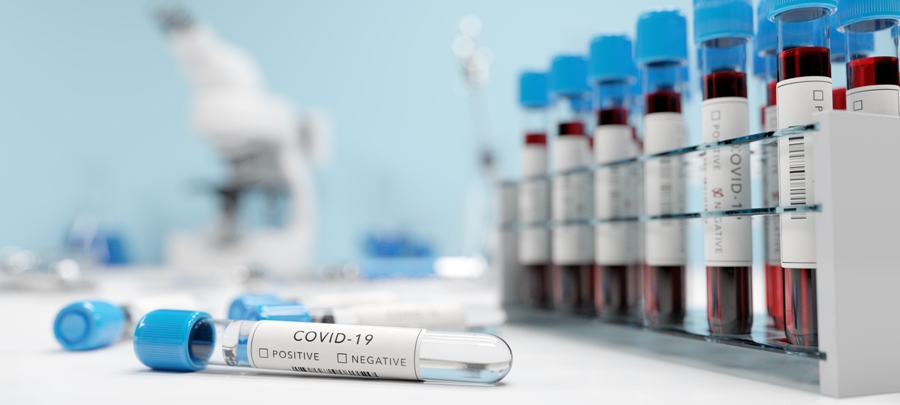
COVID and Lyme disease have many overlapping symptoms and similarities, creating the potential for misdiagnosis. In a subset of Lyme patients, symptoms can persist even after treatment, reminiscent of long-haul COVID. Long-haul COVID and chronic Lyme also have overlapping longer term symptoms such as extreme fatigue, pain and cognitive dysfunction.

We must recognize the struggle of millions suffering because long-haul COVID and chronic Lyme have become persistent infections for them. Our medical system needs resources and support to treat, cure and eradicate the diseases, otherwise the number of chronically ill and disabled people will continue to grow exponentially, triggering economic and social ramifications that will impact us all.

Raeena Lari, a resident of San Jose, serves as vice chairperson of the County of Santa Clara Health Advisory Commission. This article was published in the San Jose Spotlight.

New Guidance for Treatment of Lyme & Other TBD in Pregnancy

https://www.lymedisease.org/lyme-pregnancy-guidance/

New guidance for treatment of Lyme and other TBD in pregnancy

Oct. 27, 2021

from the Lyme Disease Association website:

In a recently published review article,* authors provide a comprehensive summary of treatment options for pregnant patients with less common bacterial, fungal, and viral infections, including several tick-borne diseases (Lyme disease, ehrlichiosis, human granulocytic anaplasmosis, human monocytic ehrlichiosis, babesiosis, and Rocky Mountain spotted fever).

This review provides guidance to clinicians based on the most recently published evidence-based research and expert recommendations.

The review included a search of MEDLINE (inception to March 2021); clinical practice guidelines (both national and international); the CDC website; and additional references from bibliographies of noteworthy articles. The review also provides a list of medications on the WHO Essential Medications List that are used to treat the above infections (*Alyssa P. Gould et al., Drugs in Context-peer reviewed).

A summary of key treatment recommendations from the review article for several tick-borne diseases during pregnancy are as follows:

Lyme disease:

  • Treatment of gestational Lyme disease is essential to reduce adverse outcomes in pregnancy. The data shows adverse outcomes in treated pregnancy is (11–16%) compared to untreated disease (50–60%).
  • Doxycycline should not routinely be used in pregnancy for Lyme disease in order to avoid adverse side effects including transient suppression of bone growth and staining of developing teeth, especially with proven alternatives.
  • Amoxicillin is the preferred treatment in the absence of neurological manifestations or atrioventricular heart block.
  • Ceftriaxone is typically reserved for patients with severe neurological or cardiac manifestations.
  • One study noted a non-significant increase in adverse pregnancy outcomes, such as pregnancy loss, among orally treated (31.6%) compared to parenterally treated (12.1%) pregnant patients.
  • Alternative oral therapy is cefuroxime axetil and parenteral therapies include penicillin G or cefotaxime.
  • Late Lyme disease (often manifesting as Lyme arthritis) may be managed with oral or parenteral β-lactams.

Ehrlichiosis & Anaplasmosis:

  • If infections with anaplasmosis or ehrlichiosis is suspected, treatment should be initiated due to the likelihood of complications and potential for vertical transmission of disease.
  • Rifampin has shown in vitro activity against ehrlichia and has been used successfully in limited case reports of pregnant women with anaplasmosis.
  • Doxycycline has been used successfully to treat ehrlichiosis.
  • Due to a lack of data, these pregnant patients should be closely monitored for resolution of disease.
  • The addition of amoxicillin or cefuroxime is suggested if coinfection with Lyme disease is suspected, as rifampin does not have activity against B. burgdorferi.

Babesiosis:

  • Patients with suspected babesiosis should be treated due to potential complications, including possible vertical transmission to the fetus.
  • Combination therapy is preferred with clindamycin plus quinine.
  • Longer treatment courses or retreatment may be needed in cases with symptoms and/or parasitaemia persisting >3 months. Resolution of parasitaemia should be used to determine treatment course.

Rocky Mountain spotted fever (RMSF):

  • RMSF cases are associated with poor outcomes for the fetus, regardless of the treatment.
  • Prevention is crucial for pregnant patients, and treatment should be provided within 3–5 days of exposure.
  • Doxycycline is the preferred therapy. Treatment course is typically 5–7 days or 3 days after fever resolution.
  • Chloramphenicol is a proposed alternative treatment; but there are concerns for significant adverse effects, including myelosuppression, aplastic anaemia, and grey baby syndrome, specifically at or near birth, and it is associated with higher mortality in RMSF. (chloramphenicol is not available orally in the US).

Read the full review article here.

Read other LDA articles regarding treatment here

Increase in Tick Bites During COVID-19 Pandemic

https://danielcameronmd.com/increase-in-tick-bites-during-covid-19-pandemic/

Increase in tick bites during COVID-19 pandemic

tick-bites-COVID-19

In a recent article, “Effects of COVID-19 Pandemic on Reported Lyme Disease, United States, 2020,” McCormick and colleagues assessed how the pandemic might influence the risk of tick bites and affect patients seeking medical care and the reporting of Lyme disease cases.

“The data suggested that individuals were more likely to spend time outside, more likely to visit the CDC website describing tick bite removal, were less likely to visit an ER, and tested for Lyme disease,” according to the authors.¹

Approximately 50% of U.S. residents spent more time outdoors in 2020 than in 2019, but fewer tick bite–related emergency department visits and Lyme disease laboratory tests were reported, according to a survey by Porter Novelli.¹ “Only 20.9% of respondents reported spending less time outdoors in 2020.”

Furthermore, there was an 25% increase in visits to the CDC’s website page which describes tick bite removal procedures.

ED visits for tick bites

Despite an increase in tick bite exposures, there was a decrease in the number of individuals visiting the Emergency Department (ED) for tick bites and fewer tests for Lyme disease. “The largest relative decreases were observed in May,” according to the authors.

During the month of May, between 2017 and 2019, there was an average of 12,693 ED visits for tick bites. However, in May 2020, only 5,845 ED visits for tick bites occurred. And, the number of Lyme disease tests decreased by 25%.

“These findings suggest that the risk of acquiring Lyme disease was similar or potentially higher in 2020 compared with risk during prior years, but fewer persons sought care, and fewer positive laboratory reports were referred for case investigation.”

The authors point out, “Lyme disease case reporting for 2020 might be artificially reduced due to coronavirus disease–associated changes in healthcare-seeking behavior,” the authors point out.

 Editor’s perspective

I have had Lyme disease patients who have put delayed visiting the Emergency Department or their doctor’s office during the COVID-19 pandemic.  I’ve also had Lyme disease patients who were initially tested for COVID-19 but not Lyme disease. Their treatment for Lyme disease was delayed, making it more difficult to treat them.

Latest ILADS 2021 Meeting

https://www.treatlyme.net/guide/fresh-ideas-from-2021-ilads  Video Here

The Latest from ILADS 2021 Annual Meeting

Here is the latest from ILADS 2021 Annual Meeting. During most ILADS annual meetings I find two or three new ideas I use in my treatments at Marty Ross MD Healing Arts. Watch the video clip in top link from my weekly Lyme Q&A webinar, Conversations with Marty Ross MD, for a full explanation of new insights and treatment ideas I learned this time.

  • Learn about lumbrokinase for Bartonella plaques and nests.
  • See how peptides, like BPC-157, could save the day.
Recommended Supplements

In the video I discuss lumbrokinase and BPC-157. Here is how I recommend using each of these supplements.

  • Lumbrokinase 20 mg, 1 pill 2 times a day. Do not take food, medicines or supplements beginning 1 hour before through 1 hour after taking.
  • Body Protection Compound (BPC-157) 500 mcg, 1 pill 2 times a day. Discuss using higher doses with your physician or health care provider.

You can find these products at Marty Ross MD Supplements.

See full profile: on LinkedIn
Follow: on Twitter, YouTube, and Instagram

About the Author

Marty Ross, MD is a passionate Lyme disease educator and clinical expert. He helps Lyme sufferers and their physicians see what really works based on his review of the science and extensive real-world experience. Dr. Ross is licensed to practice medicine in Washington State (License: MD00033296) where he has treated thousands of Lyme disease patients in his Seattle practice. 

Marty Ross, MD is a graduate of Indiana University School of Medicine and Georgetown University Family Medicine Residency. He is a member of the International Lyme and Associated Disease Society (ILADS) and The Institute for Functional Medicine.

________________

For more:

Final Remarks to the NH Lyme Disease Study Commission

https://www.change.org/p/the-us-senate-calling-for-a-congressional-investigation-of-the-cdc-idsa-and-aldf/

Final Remarks to the NH Lyme Disease Study Commission

Carl Tuttle

Hudson, NH, United States

Oct 9, 2021 — 

Please see my final statement below from the last meeting held Oct 4, 2021.

Our study commission has concluded with a final report to be sent to the Governor within the next few weeks which will be distributed to the public and medical community. I will be posting a copy of that report here on this petition site.

The Commission’s focus was on the diagnostic tests:
http://gencourt.state.nh.us/legislation/2020/HB0490.html

“RSA 141-C:6-a, relative to a commission to study the use and limitations of serological diagnostic tests to determine the presence or absence of Lyme and other tick-borne diseases and the development of appropriate methods to educate physicians and the public with respect to the inconclusive nature of prevailing test methods.”

Final Remarks to the NH Lyme Disease Study Commission

———- Original Message ———-

From: CARL TUTTLE <runagain@comcast.net>
To: Leah Cushman <Leah.Cushman@leg.state.nh.us, Jerry Knirk <Jerry.Knirk@leg.state.nh.us>, Tom Sherman <Tom.Sherman@leg.state.nh.us>, Jeb Bradley <Jeb.Bradley@leg.state.nh.us>,
Cc: All members of the NH Lyme Disease Study Commission
Date: 10/06/2021 9:42 AM
Subject: Corrected Final Statement for the Lyme Disease Study Commission

To the Lyme Study Commission Members,

Please see the corrections below to my final statement which was read at our last meeting.

Carl Tuttle’s closing remarks:

Over the course of this Study Commission, we have heard from numerous front-line treating physicians across the country who have treated thousands of Lyme patients. These physicians all agree that serology is unreliable and a negative test result does not rule out Lyme disease.

Dr. Horowitz published a study of 200 late-stage chronic Lyme patients and found that these patients were IgM positive but had negative IgG results on their Western blots. [1] Johns Hopkins published similar results in 2015. [2]

During the Dearborn Conference in 1990 (Known as Dearborn 1) the following statement was recorded by Rahn & Malawista of Yale University:

“In some patients, the IgM antibody level remains elevated for many months or IgM antibody reappears late in illness; these phenomena predict continued infection.”

During the Dearborn Conference in 1994 (Known as Dearborn 2) the following case definition was established to support vaccine development:

“IgM WB is considered positive when at least two of the following three bands are present: 24 kilodalton (kDa) outer surface protein C (OspC)*, 39 kDa basic membrane protein A (BmpA), and 41 kDa (Fla). ***Disregard IgM results for specimens collected >30 days after symptom onset.”***

Dr. Donta who has also treated thousands of patients has found that those who have a reaction to band 23 for example which is OsPC (highly specific to Borrelia) and also reactions to the less specific band 41 which represents the spirochete’s flagella are markers for active infection without meeting the CDC case definition.

I decided to put this newfound information to test and asked patients who testified on Aug 23rd to send me copies of their Western blots.

Kim Parker had a fully positive IgM result with 3 out of 3 positive CDC bands but no IgG bands whatsoever. Her test results match the Dearborn 1 Conference conclusion which was tossed out in 1994.

Ashley Lynch who testified from her wheelchair had reactions to band 31 OsPA (highly specific to Borrelia) along with band 41. Similar to what Dr. Donta had pointed out.

My wife’s Western blot had only two positive bands, once again 23 and 41 as Dr. Donta has mentioned.

As Laura Hovind pointed out in her testimony and supporting documentation, [3] the sickest of the Lyme patient population do not produce a robust immune response as those with the swollen knee presentation (Allen Steere disease) This was reiterated by Dr. Raymond Dattwyler of SUNY-Stonybrook during the FDA’s Vaccines and Related Biologics Product Advisory Committee [4] a few months prior to Dearborn 2 in 1994. Despite knowing this, the CDC went along with the case definition that we are stuck with to this day which was sanctioned by the Association of Public Health Laboratories.

No matter how many complaints have been registered [5] regarding misdiagnosis due to false negative serology over the past three decades, nothing changes. Dr. Durand and I were at this ten years ago.

The unimaginable pain and suffering are detailed in the patient testimony of Aug 23rd. [6] Thank you Rep Cushman for uploading that video to Rumble for the record.

I don’t possess the legal knowledge to determine if a crime has been committed here even though it certainly appears to be the case.

In closing I have two action items:

1.  I would like to ask the Chair to assist with approaching the Attorney General with a possible inquiry detailing the specifics of the alleged crime.

2.  Propose legislation following Virginia’s bill requiring a disclaimer to be added to every Lyme disease laboratory report. (See Attachment) [7]

I have one final question for the Chair; After presiding over this Commission how confident are you that if you or a family member is bitten by a tick that transmits Lyme disease, you’ll receive an accurate and timely diagnosis?

Carl Tuttle
Hudson, NH

Correction: The Rahn & Malawista statement; “In some patients, the IgM antibody level remains elevated for many months or IgM antibody reappears late in illness; these phenomena predict continued infection.” was published March 15, 1991 in the Annals of Internal Medicine. [8]

Dearborn 1 was held on Nov 1-2 1990

Case Definition from the transcript:

https://www.dropbox.com/s/0qlvxkf72gu1dhl/Dearborn%201%20Case%20Definition.jpg?dl=0

https://www.dropbox.com/s/mzi70r8fycc9lsv/Dearborn%201%20Case%20Definition%202.jpg?dl=0

Cautionary statement: (Lyme is a clinical diagnosis)

https://www.dropbox.com/s/4q9lrpv5gp4zw6u/Dearborn%201%20Serology%20Caution.jpg?dl=0

References

  1. Horowitz, R.I.; Freeman, P.R. Precision Medicine: retrospective chart review and data analysis of 200 patients on dapsone combination therapy for chronic Lyme disease/posttreatment Lyme disease syndrome: part 1. International Journal of General Medicine  https://pdfs.semanticscholar.org/5085/03c18ba7e0f39a0922dd9af7e05f272f2419.pdf
  2. Characteristics of seroconversion and implications for diagnosis of post-treatment Lyme disease syndrome: acute and convalescent serology among a prospective cohort of early Lyme disease patients  https://link.springer.com/article/10.1007%2Fs10067-014-2706-z
  3. TruthCures Brochure  https://www.dropbox.com/s/a1x6lwsktkp3x5w/NH%20Handout.pdf?dl=0
  4. June 1994 FDA Meeting with Dattwyler Comment  https://www.dropbox.com/s/sxozktu3117enj9/June%201994%20FDA%20Meeting%20with%20Dattwyler%20Comment.pdf?dl=0
  5. 2010 Letter Jose T. Montero, MD, Director NH Dept. of Health  https://www.dropbox.com/s/3pfjav6mtj50hkd/2010%20Letter%20Jose%20T.%20Montero%2C%20MD%2C%20Director.pdf?dl=0
  6. Video recording of testimony from the Aug 23rd meeting  https://rumble.com/vmyzi9-nh-commission-to-study-testing-for-lyme-and-other-tick-borne-diseases-08.23.html
  7. § 32.1-137.06. Lyme disease test result information State of Virginia  https://law.lis.virginia.gov/vacode/title32.1/chapter5/section32.1-137.06/
  8. Lyme Disease: Recommendations for Diagnosis and Treatment  Daniel W. Rahn, MD, Stephen E. Malawista, MD  https://www.acpjournals.org/doi/abs/10.7326/0003-4819-114-6-472