Physically exhausted. Mentally drained. Totally weary. While symptoms of Lyme disease can vary from one person to the next, extreme fatigue is the one just about everyone struggles with.
Why is chronic and debilitating fatigue so common among Lyme patients, and what can you do to get your energy levels back to normal again?
Join a live webinar with Dr. Bill Rawls, author of the bestselling book Unlocking Lyme, who knows firsthand what it’s like to live with chronic Lyme disease and related fatigue. He’ll shed new light on how Lyme steals energy on a cellular level, and share natural ways to ease physical and mental fatigue and restore your overall health.
PLUS: Don’t miss an exclusive gift for webinar attendees, and have your questions ready for a LIVE Q&A on Lyme and fatigue with Dr. Rawls.
Tuesday, July 19th, at 8pm EDT
In this webinar, Dr. Rawls will discuss:
• Why fatigue is a sign that your cells are suffering from more than Lyme disease alone
• The internal and external forces that break down cell function and communication and drain your energy
• The best herbs for restoring cellular health, immune strength, and vital energy
• Additional supportive therapies and lifestyle habits for combating fatigue
• Numerous insights and answers during the LIVE Q&A with Dr. Rawls
Precisely how do ticks ambush you–and give you Lyme disease?
John Eoin Healy, PhD, now retired from University College Cork, Ireland, has been researching tick biology for over 40 years. In the following article and video, he explains how questing ticks make contact with unsuspecting people and animals.
by John Eoin Healy, PhD
Various estimates indicate that up to 60% of people who contract Lyme borreliosis (Lyme disease) have no recollection of being bitten by a tick.
For those concerned about Lyme disease risk, it may be useful to explain how ticks make contact with and attach to host animals i.e. birds and mammals, including unfortunate humans.
The species of tick that transmits the Borrelia bacteria that cause Lyme disease are Ixodesricinus in Europe, and Ixodesscapularis and Ixodespacificus in North America. These ticks thrive in areas with woodland or heavy vegetation which provide the cool moist conditions that these ticks need to survive.
Their second vital requirement is a sufficient number of host animals (deer, cattle, sheep, goats, small mammals and birds) to ensure that ticks have hosts on which they can feed (that is, suck blood) and then reproduce. Increasing numbers of host animals such as deer will accelerate the growth of tick populations.
Ticks have limited mobility
At the risk of stating the obvious, ticks are wingless and therefore cannot fly. Neither can they run or jump. The species of tick that transmit the Borrelia bacteria that cause Lyme disease move very little laterally on the ground, that is, in the horizontal plane.
When a blood-fed larva (the first active life stage) drops from the skin of a bird or mammal, it moves directly downwards with the prospect of finding humid vegetation. There, it undergoes digestion and it moults into the next active life stage, the nymph.
If the larva happens to drop from its host onto a dry path or other unsuitable terrain, then it will most likely desiccate and die.
In the event of success, the emerged nymph will begin to seek a host. It does this by climbing vertically on whatever vegetation happens to be in the immediate vicinity.
Ticks don’t choose their location
Sometimes one may hear someone say, “Long grass is the only place you will find ticks” or, “Stay away from ferns – always ticks there” or some such warning, as if ticks choose the vegetation that they will climb. Ticks have no say in the matter – they simply climb whatever vegetational structure is available to them at the location that the previous life stage dropped from its host.
The behaviour and movements of host bird and mammal species dictate where ticks are deposited. So, a blood-fed larva will give rise to an emerging nymph, and a blood-fed nymph will produce an adult male or female. And of course, a blood-fed female will produce up to 2,000 eggs from which larvae will hatch.
I have conducted mass releases of paint-marked adult ticks in a prepared “arena” in a woodland clearing and then observed what happened. I found that the vast majority of individual ticks moved less than 2 metres from their release point, although a small number managed to travel 4 to 5 metres within 4 days.
The most interesting finding was that the majority of ticks somehow managed to locate vertical vegetation to climb within a short radius from the point of release.
Ticks have a finite fuel supply
Ticks waiting for a host to appear.
Ticks limit their horizontal movement for a very good reason – an economic one. A blood-fed larva that drops from a host has a finite energy supply of fat. Think of it as a full fuel tank. The more a tick moves, the more fuel it burns.
If it runs out of fuel before making contact with a host, then life ends for that particular tick. So, ticks have evolved a strategy to conserve their energy supplies by minimizing their movement. They climb vertically and wait … and wait … and wait.
Usually, they will position themselves at or close to the tip of a structure, whether it be a leaf, twig, bracken, grass or rush stem. Ticks can be found on vegetation from a few centimetres to almost 2 metres above ground level. When no hosts are nearby, ticks can assume a resting or “quiescent” position with front legs folded.
In the event of ticks becoming dehydrated, they will move downward into the moist vegetation mat to replenish their bodily water content, before climbing vertically once more.
Ambushing a host
Image shows a nymph and an adult female questing – front legs extended and raised. Another female is in the quiescent pose.
Ticks can detect the presence of a potential host by temperature, carbon dioxide and by various odours released from the skin of the host. Each of the front pair of legs has a specialised organ which is loaded with sensory cells for this purpose.
Once a tick detects the presence of a host animal, its behaviour changes. It will begin to move and adopt what is termed the “questing” pose.
A questing tick waves its front legs about as its scans the local atmosphere. It is most likely that it has the capability to determine the direction and distance from the approaching host although this has not been proven.
In a video clip which I shot in an infested woodland location, you can see how easily an adult female tick latches onto my finger.
The tick was initially in a quiescent position (saving energy) until I began to move my hand close to the rush stem on which it sat. Sensing my hand, and therefore a possible blood meal, it begins to quest as the video shows.
Note the ambushing strategy that this species has evolved – it doesn’t hunt its victim, it waits for the victim to pass close by. The smaller nymph behaves in exactly the same way.
I focused on an adult female for this video rather than a nymph simply because its size made it easier to capture on camera.
The video shows how easy it is for a tick to “jump on board” a passing human. The slightest brush of a hand, arm or leg against infested vegetation is all that is necessary.
Of course, ticks will also cling onto clothing and burrow through to the skin where they will penetrate and begin to suck blood. Bare wrists, arms and legs are the most vulnerable body parts so there is very good reason to use an appropriate tick repellent on these areas.
Light-coloured clothing makes visual detection of ticks much easier. And it is very important that clothing should be of a close weave as ticks will find this much more difficult to penetrate. I would also recommend that socks and walking boots/shoes be sprayed with repellent.
A note on adult and nymph ticks
The Ixodes ticks species that transmit Lyme disease have three active life stages – larva, nymph and adult. The general view among Lyme/tick specialists is that larvae carry very little Borrelia and so present a minimal risk to humans. Adult male ticks do not feed and so cannot transmit bacteria.
Nymphs pose the real threat. An unfed nymph is approximately 1.5 mm in size and weighs around 0.2 mg. In contrast, an unfed adult female can be 3.5 mm in length and 2 mg in weight – 10 times the weight of a nymph.
A person is much more likely to see and feel an adult tick on the skin than detect the smaller nymph. And once a tick has attached and has begun to suck blood, the smaller nymph may remain undetected for long enough to pass Borrelia into the unsuspecting victim. And of course, the small physical size and weight of the nymph explains why so many Lyme disease victims cannot recollect being bitten by a tick.
Dr. Healy’s expertise lies in the area of tick ecology, genetics, behavior and Borrelia infection rates. He has published in all of these fields. Click here for a list of his publications.
_________________
**Comment**
While ticks can’t fly, they can blow in the wind. I’ve seen it.
And minimum attachment time has never been determined which means nobody has a clue how little of time it takes for a tick to transmit diseases to you. Treat each tick bite as seriously as a heart attack.
Uptick: UWSP researchers use DNA to link Lyme disease, infected ticks
May 26, 2022
Diane Caporale has collected thousands of ticks during her career as a biology professor and researcher. Since moving to Wisconsin 1999, she has had help. Nearly 500 students in her molecular biology courses at UW-Stevens Point have collected ticks each year from 2000-2020.
Tick surveillance is useful for predicting human disease risk. What’s especially significant about Caporale’s research is its duration. This is the first continuous surveillance of tick-borne pathogens for two decades in the nation. “It’s been quite an enormous, exciting project,” she said.
“It was started in 2000 — before I was born — so it’s kind of crazy the amount of time this has been going on,” said Cody Korth, a student researcher in her lab.
Caporale first began collecting ticks in the Northeast, where she grew up.
When she was asked to develop a molecular biology course at UW-Stevens Point, it was an opportunity to broaden her research into tick-borne diseases. During the first week of October each year since 2000, her molecular biology students collect blacklegged ticks (Ixodes scapularis). It gives students the opportunity to use DNA as a tool to forecast the incidence of disease.
Blacklegged (or deer) ticks carry three pathogens that can cause human disease. Caporale’s students analyzed all three: Borrelia burgdorferi, the bacterium responsible for Lyme disease; Anaplasma phagocytophilum, a bacterium that causes Anaplasmosis; and Babesia microti, a protozoan that causes Babesiosis. The latter presents with malaria-like symptoms, while the others have flu-like symptoms.
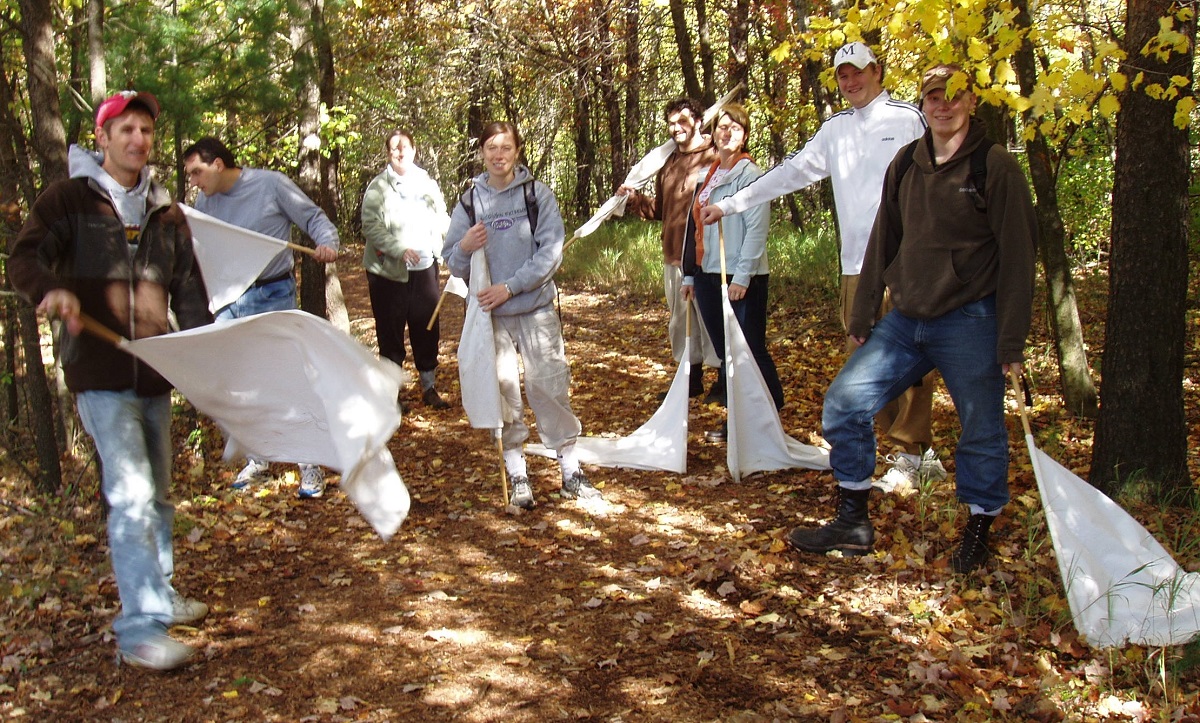
Caporale and her students conducted research in what is known as a microgeographic region that is also convenient to campus: the Schmeeckle Reserve trail around Lake Joanis. They use white flannel flags to collect the ticks – a total of 2,008 in 21 years.
The students extracted DNA and analyzed it for the presence of three pathogens that cause human diseases, then sequenced the DNA to learn what percentage of ticks were infected with one, two or all three pathogens, said McKenzi Fernholz, who took molecular biology in 2019.
Cody Korth and McKenzi Fernholz are student researchers in Biology Professor Diane Caporale’s lab at UW-Stevens Point, analyzing 20 years of data on ticks.
They found each pathogen became more prevalent over time. In 2000, Borrelia burgdorferi, which causes Lyme disease, was found in just the northwest segment of the trail. Seven years later, it reached detectable levels around the perimeter of the lake. The number of ticks with Borrelia peaked in 2015, which was also a year when a high number of ticks were infected with more than one pathogen.
Anaplasma was first detected in 2004 in the southeast segment. It reached detectable levels all around the lake within four years. Babesia was first detected in 2007 in the southwest region. It took eight years to reach detectable levels around the lake.
The highest number of infected ticks – 56% — was recorded in 2014.
An increase in the number of infected ticks in one year was related to an increase in tick-borne illness, notably Lyme disease, the following year, Korth said. The students compared their data with human disease statistics from Portage County and state public health units.
“If it’s increasing here, it’s increasing elsewhere,” said Caporale, who has also researched ticks in the Kettle Moraine area, Colfax and Whitewater. Overall, cases of Lyme disease oscillate, she said.
Caporale’s students also monitored rainfall each June, average winter temperature in December through February and snow depth for conditions that favor ticks. More eggs hatched when rainfall was higher the prior year, and more snow increased the chance of winter survival, Caporale said.
Tick numbers around Lake Joanis dropped significantly in 2017. That summer, strong winds downed numerous trees on the north end of the trail. When trees were removed, so was refuge for white-footed mice, the main reservoir for these pathogens. Also, invasive buckthorn – a preferred vegetation for ticks – was removed or treated with herbicide. In fall 2021 no ticks were found along the lake trail where extensive restoration occurred. Students did find ticks around the Schmeeckle Reserve Visitor Center carrying Borrelia and Anaplasma.
As independent study researchers in Caporale’s lab, Fernholz and Korth analyzed all the sequenced DNA data collected over the 21 years and determined trends in tick infection rates. They developed graphs and charts to display the results and presented them at the College of Letters and Science research symposium earlier this month. The results will be submitted for publication this summer.
It’s interesting to observe the correlation between infection rates in ticks and humans, Korth said, which means that tick surveillance may be able to predict Lyme disease trends in the following year. “It’s worth the time to take the samples every year because when we compared our tick infection rates to the cases of Lyme disease in humans in Portage County, we saw a one-year difference consistently with pathogen emergence.”
Korth, a biochemistry major from Marshfield, enjoys doing research independently in the lab and said it’s helped him develop critical thinking and problem-solving skills outside of the classroom. “Research is why I came to UW-Stevens Point. I was pleased with how easy it was to get involved.”
Doing undergraduate research with Caporale helped Fernholz, of West Salem, realize she wants to pursue a career in research. “It allowed me to get a sense of what a career in molecular biology research would be like.” A biochemistry and Spanish major, she graduated in May.
Helping students learn research techniques and be inspired to pursue research careers is a proud legacy for Caporale, who will retire in August.
This article shows that the COVID shots give ZERO protection against death according to ONS data. And this article, using data from the Netherlands & Canada, shows that “vaccine” effectiveness actually is negative against serious disease and death and that the “vaxxed” are actually more likely to be hospitalized or admitted to the ICU with COVID.
The data confirms that in the real world, regardless of how many doses of “vaccines” someone may have, it makes absolutely no difference to the likelihood that they may die from Covid, and in fact are making things worse.
Dr. Nass explains in this article how the shots don’t prevent transmission, severe illness or death and that we’ve been lied to repeatedly.
Quietly this month, a New York Supreme Court judge ruled that regulations mandating that people infected with or exposed to highly contagious communicable diseases be quarantined are a violation of state law, declaring them null and void. The Isolation and Quarantine procedures, known as Rule 2.13, were enacted in February.
It also appears France has said “no more” to COVID tyranny, and has managed to even unite divergent political parties. The National Assembly rejected government powers that would have demanded travelers show proof of “vaccination” or a negative test when entering France. The Prime Minister condemned this and pushed back stating there was collusion between the extremes. Some are calling it “The Shot Heard Around the World.”
Whilst you were distracted by Boris resigning, the UK Gov. quietly published a report confirming the Vaccinated account for 94% of all COVID-19 Deaths since April, 90% of which were Triple/Quadruple Jabbed
A report that was quietly published by the UK Government, just hours before Prime Minister Boris Johnson announced his resignation, reveals that Covid-19 deaths have risen dramatically among the triple vaccinated population in England over the past couple of months whilst declining drastically among the unvaccinated population.
With the most recent figures showing the vaccinated population in England accounted for a shocking 94% of all Covid-19 Deaths in April and May, and 90% of those deaths were among the triple/quadruple vaccinated population.
(See link for article)
__________________
SUMMARY:
In March the UK Health Security Agency announced it would no longer publish “vaccination” status of cases, hospitalizations, and deaths due to the end of free universal testing, but this was a lie. The real reason was that the data clearly showed the “vaxxed” were suffering immense immune system damage and had higher cases, hospitalizations, and deaths than the unvaxxed. (see charts in top link)
Now there is even more evidence as the Office for National Statistics (ONS) has just published data on deaths by “vax” status. The charts say it all:
The percentage of Covid-19 deaths by vaccination status in England between 1st April and 31st May 2022, according to the latest ONS dataset published just hours before Boris Johnson’s resignation:
Comments Off on While You Were Distracted by Boris, A UK Report Confirms the “Vaxxed” Account for 94% of all COVID Deaths Since April – 90% of Which Were Jabbed 3-4 Times
The Wuhan-1 Spike Protein is a Universal Synergistic Neurotoxin
Concern over the neurotoxicity of compounds from many sources, including aluminum and mercury in vaccines, should be amplified for those who have received the spike protein-inducing jabs
There are those who deny that aluminum is a neurotoxin. Paul Offit, for example, thinks it might be a nutrient, given that premature infants had higher amounts of aluminum body burden than full-term infants (yes, he really said that – in a book, even). There are those who have worked systematically to utterly confuse the American public on the toxicity of thimerosal – which is 50% ethylmercury by weight – by claiming that it is “safer” than methylmercury.
That’s like saying kerosene is safer to spread around your home because gasoline is more volatile.
In my course, “Environmental Toxicology: Ecosystem and Human Health”, we review the toxicology of many different classes and types of compounds. Many of them are established neurotoxins – that is, their effects on the human brain are established by science. In one lecture, I go into detail, especially on the developmental neurotoxic metals – lead, mercury, aluminum – when the human brain is most vulnerable.
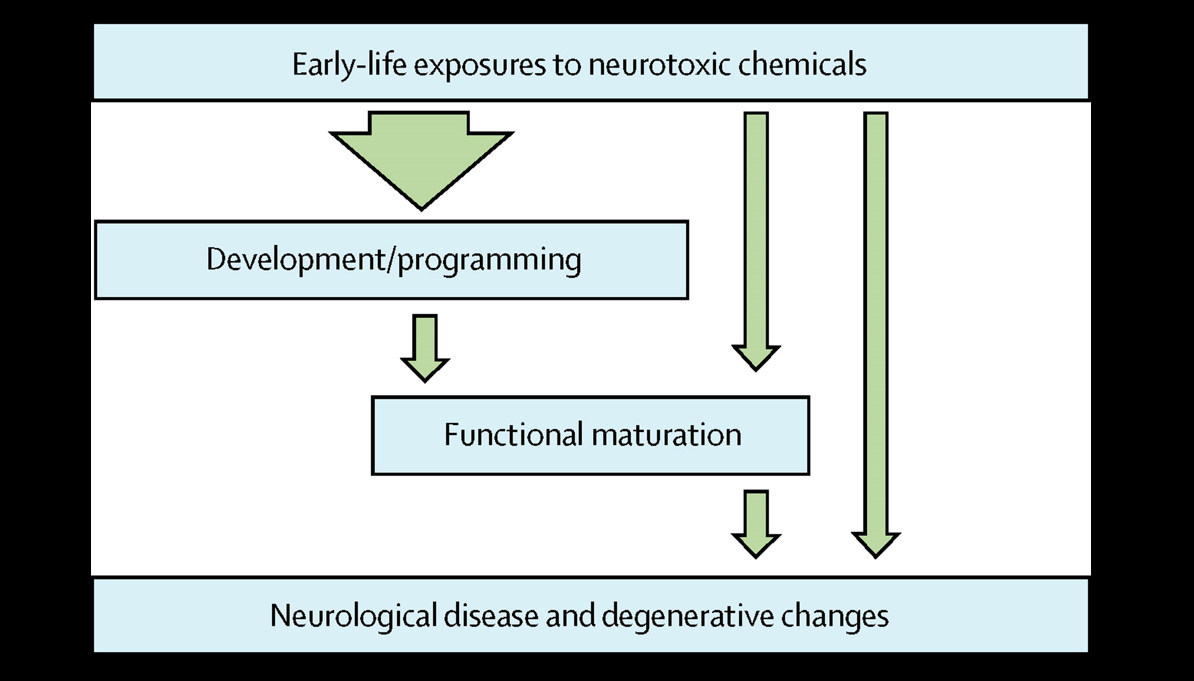
This chart is from Grandjean & Landrigan (The Lancet Neurology 2014 13330-338DOI: (10.1016/S1474-4422(13)70278-3)) and it captures a well-known fact: the earlier in life people are exposed to neurotoxins, the more compounded the effects.
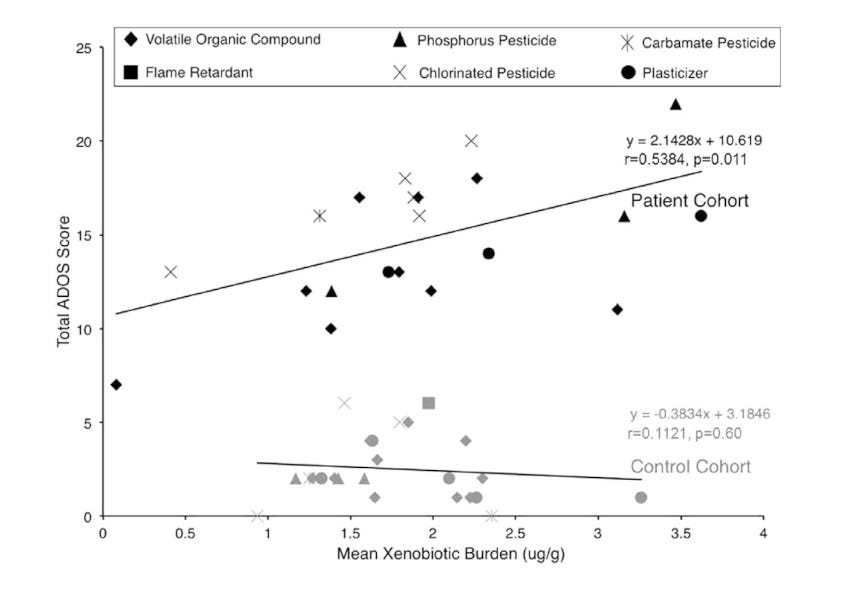
Another fact is that kids with autism are sponges for environmental toxins. Take this result from ref$, which shows that kids with autism have ADOS scores that are correlated with the mean serum concentration of toxins from common, everyday exposures: gasoline, pesticides, flame retardants, plasticizers, etc.:
Published in Nature, 2015, this study also found that kids without autism had far lower ADOS scores and that their scores were not correlated with mean serum concentration at all. The combined effects of these organic pollutants are clearly profound. Scott Faber, second author of the study, came to the book release party for “The Environmental and Genetic Causes of Autism” at the Hard Rock Cafe in Pittsburgh, PA, and showed me this result. It was so compelling I called the publisher and had them (literally) stop the presses to make sure we had this particular result in the book.
These pollutants no doubt have their own mechanisms of toxicity, setting the stage for synergistic toxicity. Now consider aluminum and fluoride. In a study of mice, one study found that the combined application of
It turns out that historically, concern over aluminum and fluoride synergistic toxicity existed due to their effects on G-coupled proteins. Check out this resource from 2013:
“Fluoride and Aluminium Alum ( Aluminium ) is added to water to flocculate dirt and bacteria at water treatment plants. Fluoride is added at the last stage. Alumino -fluoride complexes (Al. Fx) form spontaneously in aqueous solutions containing fluoride and traces of aluminium ions and appear to act as phosphate analogs Fluoride anions have long been known to influence the activity of various enzymes and guanine nucleotide-binding proteins (G-proteins).”
and
“Fluoride and Aluminium Understanding the role of phosphate and G-proteins in cell signaling makes it possible to suggest a hypothesis that the synergistic action of fluoride and aluminum in the environment, water and food chains can evoke various and multiple pathological symptoms. The long-term synergistic effects of these ions in the living environment and their hidden danger for human health is not yet fully recognized.”
Now fast-forward to the post-COVID-19 world in which vaccines with mRNA capable of inducing the production of the Wuhan-1 spike protein are being, perhaps perpetually, pointed at everyone around the world.
Unfortunately for everyone taking the shot, epithelial cellular adhesion helps maintain the integrity of the Blood-Brain Barrier (BBB). This study shows that the Wuhan-1 spike protein activates RhoA, which leads to increased permeability of the blood-brain barrier.
This means:
The Wuhan-1 SARS-CoV-2 Spike Protein is THE UNIVERSAL SYNERGISTIC NEUROTOXIN
The toxicity of the Spike protein, however, is not restricted to neurologic tissues. In fact, nearly all of the adverse events from the vaccine are tied to the toxicity of the Spike protein breaking down the barriers between endothelial cells by creating connections call syncytia.
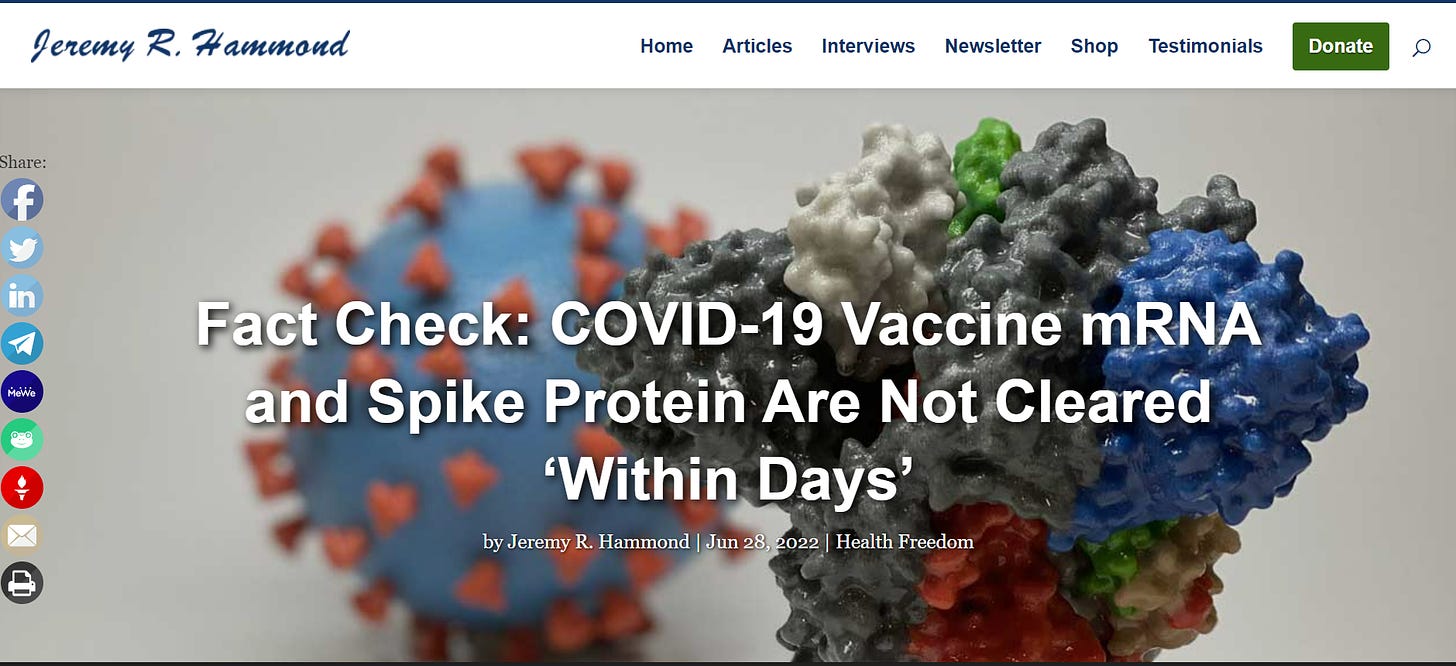
The amazingly objective journalist Jeremy Hammond has reviewed most of the literature on the toxicity of the spike protein (debunking the so-called “Fact Checking” opinion website Health Feedback). I recommend a complete read AND A SUBSCRIPTION (he is REALLY amazing). The studies show that the spike protein impairs the endothelial cells all around the body.
These effects are on top and in addition to the autoimmunity predicted and validated to be occurring by #PathogenicPriming.
All of this tells us that Wuhan-1 Spike Protein isTHE UNIVERSAL SYNERGISTIC TOXIN.
Thanks to the brilliant people at the US FDA, future COVID-19 vaccines will continue to force people to produce the Wuhan-1 strain of the SARS-CoV-2 virus via their plan to include mRNAs for Wuhan-1, a long-extinct SARS-CoV-2 variant, known to cause antibody-dependent enhancement.
Unfortunately, people will have morbidity and mortality stemming from the toxicity of all types of toxins that will never be attributed to the spike protein encoding vaccines making it worse. We need to reduce total population exposure to ALL sources of toxins due to the problem of synergy. That’s up to us working together.