Archive for the ‘Lyme’ Category

Unresolved Heart Block in Lyme Carditis: A Case Report

https://www.cureus.com/articles/112673-unresolved-heart-block-in-lyme-carditis-a-case-report

Unresolved Heart Block in Lyme Carditis: A Case Report


Abstract

A man in his thirties presented to the emergency department with a one-day history of syncopal episodes. He was found to have complete heart block and had multiple long and symptomatic pauses in telemetry while in the hospital. The longest pause was measured at 30 seconds. He had frequent occupational exposure to ticks and was found to have positive immunoglobulin G (IgG) and immunoglobulin M (IgM) antibodies for Lyme disease. He was immediately started on IV (intravenous) ceftriaxone and isoproterenol infusion for inotropy in anticipation of recovery of atrioventricular (AV) conduction with IV antibiotics. Rapid response was called for multiple symptomatic pauses overnight, the longest one lasting 30 seconds. The patient was taken for urgent temporary transvenous pacemaker placement in the morning. AV conduction failed to improve with IV antibiotics. A permanent pacemaker was placed on day four of hospitalization as his complete heart block failed to resolve with IV antibiotics and the patient could not be weaned from temporary pacemaker support.

A complete heart block is a rare manifestation of Lyme disease and warrants a high index of suspicion when a patient in an endemic area presents with this condition. A majority of patients recover with IV antibiotics, although some patients may need to be put on temporary pacemaker support in the interim. On rare occasions, a permanent pacemaker is necessary.

Atrioventricular conduction may fail to improve with IV antibiotics, and these patients may need early pacemaker support with a transvenous pacemaker in addition to IV ceftriaxone followed by permanent pacemaker placement. Our patient presented with recurrent Lyme disease and had a complete heart block on presentation, which failed to improve with IV antibiotics and required temporary transvenous pacemaker support followed by permanent pacemaker placement.

For more:

There are much sexier, lucrative diseases like zika, COVID, Swine flu, etc. that are cash cows for government bureaucrats in bed with Big Pharma and Big Media.

Please read this important expose on Fauci, the highest paid federal employee who has gotten nearly every single thing wrong about COVID, and who has been at the helm of NIAID for 7 presidencies peddling lies and controlling all government funding for science.  “Dr. Science,” after causing untold damage, is finally stepping down but will hardly fade into the background, and could in fact become even more powerful behind the scenes.

Support: The Most Helpful Thing in My Lyme Journey

https://www.globallymealliance.org/blog/the-most-helpful-thing-in-my-lyme-journey

The article discusses the one thing that has helped me most in my Lyme journey.

Lyme warriors write to me every day to ask what helped me get better. Many of them have been suffering from persistent symptoms for months or years. They find inspiration reading about how well I’m doing, and hope I can give them the magic answer. Most ask, “What medication did you take?” I wish there was a magic answer I could give, but the fact is, no two cases of tick-borne illness are alike. What worked for me might not work for others, and my own protocol has changed many, many times over more than 15 years of treatment.

Because it doesn’t help to give out my ever-changing protocol, I have written about various other therapies and lifestyle changes that have worked in conjunction with medication to get my tick-borne illnesses into remission and keep them there. These include adjunct therapies like integrative manual therapy and neurofeedback, talk therapy, and an anti-inflammatory diet. I’ve learned to pace myself physically and cognitively, have set boundaries around my needs, and have reframed my thinking about living with a chronic illness. My wellness is a result of a complex interplay of many factors, changes, and techniques. I can’t point to any one of them as more helpful than another.

Support

Gala PR Image (15)But if I had to name the one thing that has been the most helpful in my Lyme journey, it would be support. Imagine what happens when someone you know is diagnosed with cancer. That person will suffer physically and emotionally, but they will not do it alone. Friends and family will start websites, fundraisers, and meal trains. They’ll drive the patient to appointments, sit with them afterwards, do their dishes, help with their kids, water their plants. They’ll send cards and flowers, and call often to check in. They will never say to the patient, “Aren’t you over that yet?” or, “Maybe you don’t really have cancer. Maybe it’s just all in your head.” The patient will be enveloped in support that will allow them to focus solely on getting well.

If that same person had Lyme disease instead of cancer, the response might be very different. Some Lyme warriors have excellent support networks, but too many are misunderstood by family, friends, and doctors alike. Not only do these patients have to fight to get well, but they also have to fight to be believed. They spend energy they don’t have trying to convince others of their suffering. They often don’t get the help they need, whether it’s running an errand, appealing an insurance denial, or just having a comfortable shoulder to cry on. Lyme patients need and deserve the same outpouring of support that patients with better-known and less-controversial illnesses count on.

When I first got sick with mono that slipped into chronic Epstein-Barr virus, I struggled to get a diagnosis. Two years later, I was also diagnosed with underlying tick-borne infections. I thought I finally had the magic answer—an infection that could be treated! Little did I know what I was up against. The subsequent years were an uphill battle not just for wellness, but for validation. I had to find the right medical support, and figure out who I could talk to that would stand beside me on the journey. I had to learn to brush off the naysayers and to trust that I knew my body best.

My friends supported me unconditionally, even if they didn’t fully understand my illnesses. They started email support chains for me. They came to visit. They called and sent cards. My family had a harder time understanding tick-borne illnesses, and chronic illness in general, at the beginning. They wondered when I would get well, how much longer it would take, whether I had something else entirely. It wasn’t easy for them to have me under their roof as an adult, and it wasn’t easy for any of us to communicate our feelings and needs. Over time, their Lyme literacy—and their understanding—has improved dramatically. We’ve all come to understand what it means for a family member to live with a chronic illness, which has made all the difference in my healing journey.

When I got COVID-19 in 2020, it didn’t take years for me to get the support and understanding I needed. Even with a (false) negative initial test, no one questioned whether I actually had COVID-19. No one chided me for being lazy. People checked in every day, and the whole world was on pause with me. What a difference that camaraderie made! With COVID-19, I was lonely because I was quarantined, but I never felt alone. With tick-borne illness, I wasn’t lonely because I was around other people, but I often felt alone.

I have learned first-hand that any challenge we face in life is easier with support. If you know someone who has Lyme disease, ask them, “How can I best support you?” Or, ask yourself, “If this friend had cancer or COVID-19, what would I do to support them?” The answer will likely make your friend’s journey a little easier.

Writer

Jennifer Crystal

Opinions expressed by contributors are their own. Jennifer Crystal is a writer and educator in Boston. Her work has appeared in local and national publications including Harvard Health Publishing and The Boston Globe. As a GLA columnist for over six years, her work on GLA.org has received mention in publications such as The New Yorker, weatherchannel.com, CQ Researcher, and ProHealth.com. Jennifer is a patient advocate who has dealt with chronic illness, including Lyme and other tick-borne infections. Her memoir about her medical journey is forthcoming. Contact her via email below.  Email: lymewarriorjennifercrystal@gmail.com

Go here for support groups:

Can Lyme Disease Trigger A Cascade of Costly, Unnecessary Tests?

https://danielcameronmd.com/can-lyme-disease-trigger-a-cascade-of-costly-unnecessary-tests/

Can Lyme disease trigger a cascade of costly, unnecessary tests?

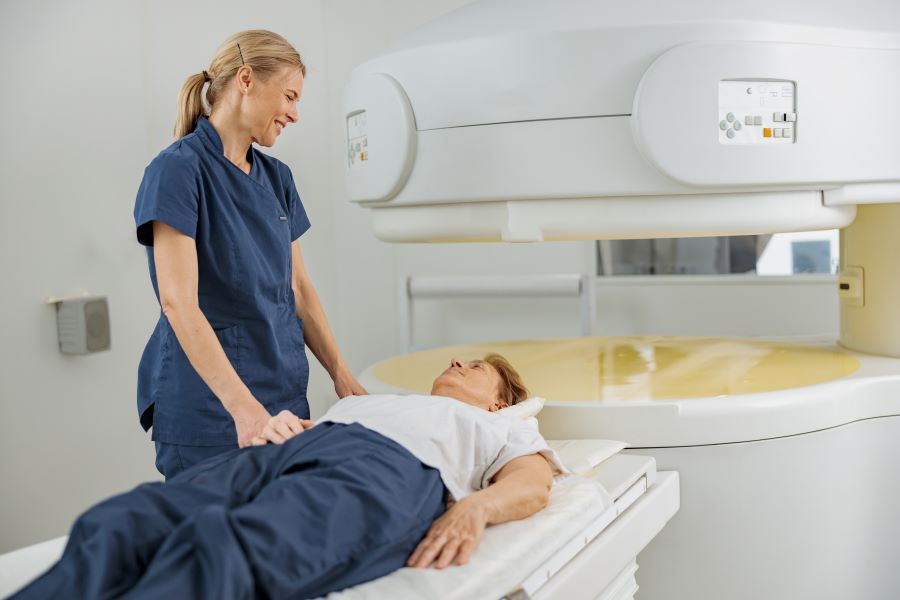
Lyme disease patient getting a costly tests including an MRI.
In an article published in JAMA Internal Medicine, Dr. Meredith Niess described a case where routine medical tests triggered a cascade of costly, unnecessary care.

Dr. Meredith Niess discussed the case in more detail in an NPR story.[1] A man was scheduled for hernia surgery. A preoperative X-ray was ordered despite the paucity of evidence of whether the X-ray was needed. The X-ray suggested a mass. The patient was worried about cancer.

Cancer was ruled out. “In fact, a follow-up CT scan showed a clean lung but picked up another suspicious “something” in the patient’s adrenal gland,” stated Neiss. The second CT scan was negative.

Niess used the case “as an example of what researchers call a “cascade of care” — a seemingly unstoppable series of medical tests or procedures.”

This cascade effect has been described before. “With regard to medical technology, the term refers to a chain of events initiated by an unnecessary test, an unexpected result, or patient or physician anxiety, which results in ill-advised tests or treatments that may cause avoidable adverse effects and/or morbidity,” wrote Deyo.[2]

Deyo cited an example of a cascade effect in his review from the professionals who coined the term.

Mold & Stein offered the story of a patient admitted to the hospital for elective repair of an inguinal hernia.[3] “He had a history of coronary disease with very mild arterial narrowing on a previous cardiac catheterization. Anxious about his cardiac status, the surgeons requested a preoperative cardiology consultation. Perhaps uncertain about his own clinical judgment, the cardiologist suggested obtaining an exercise tolerance test.

This was delayed for six hours while the patient waited outside the test room, during which time he became anxious, agitated, and angry, and had some mild chest discomfort. Because of the chest discomfort, the test was not done and the patient was transferred to a telemetry unit. There he became more anxious and agitated, was found to have some electrocardiogram changes, and received medications.

He underwent another cardiac catheterization, which actually showed slight improvement since his previous test. At that point, the hernia repair could not be performed because of a full operating room schedule, and the primary physician was left to try to reassure the patient that he was in no danger. The procedure had to be delayed for two weeks.

In this example, the chain of events seemed to be fueled by physician anxiety, and it snowballed with the addition of patient anxiety.”

Cascade of tests for Lyme disease patients

In some cases, Lyme disease may go undiagnosed and with its broad array of symptoms and presentations can trigger a cascade of costly, unnecessary tests.

Misdiagnosis and delayed diagnosis have been described in a large Lyme disease database.

“More than half (51%) reported that it took them more than three years to be diagnosed and roughly the same proportion (54%) saw five or more clinicians before diagnosis. These diagnostic delays occurred despite the fact that 45% of participants reported early symptoms of Lyme disease within days to weeks of exposure,” wrote Johnson et al. [4]

Others with recurrent Lyme disease and Lyme encephalopathy have waited an average of 2 years before receiving treatment.[5,6]

These delays can have life-long repercussions. Once the Borrelia burgdorferi (Bb) infection disseminates, symptoms can become more problematic and treatment more difficult.

References:
  1. When routine medical tests trigger a cascade of costly, unnecessary care. https://www.npr.org/sections/health-shots/2022/06/13/1104141886/cascade-of-care
  2. Deyo RA. Cascade effects of medical technology. Annu Rev Public Health. 2002;23:23-44. doi:10.1146/annurev.publhealth.23.092101.134534
  3. Mold JW, Stein HF. The cascade effect in the clinical care of patients. N Engl J Med. Feb 20 1986;314(8):512-4. doi:10.1056/NEJM198602203140809
  4. Johnson L, Shapiro M, Mankoff J. Removing the Mask of Average Treatment Effects in Chronic Lyme Disease Research Using Big Data and Subgroup Analysis. Healthcare (Basel). Oct 12 2018;6(4)doi:10.3390/healthcare6040124
  5. Fallon BA, Keilp JG, Corbera KM, et al. A randomized, placebo-controlled trial of repeated IV antibiotic therapy for Lyme encephalopathy. Neurology. Mar 25 2008;70(13):992-1003. doi:10.1212/01.WNL.0000284604.61160.2d
  6. Cameron DJ. Consequences of treatment delay in Lyme disease. J Eval Clin Pract. Jun 2007;13(3):470-2. doi:10.1111/j.1365-2753.2006.00734.x

After 20 Years of Debilitating Lyme Symptoms, Woman Makes a Miraculous Recovery

https://www.globallymealliance.org/blog/nicola-lavin

After 20 years of miscellaneous, debilitating symptoms and countless ignorant doctors, Nicole Lavin decided to take an active role in her healing journey and saved her life.
How It All Started…

My name is Nicola Lavin and my story starts 22 years ago in the Summer of 2000. I was almost finished my degree as a medical scientist and before settling into a long term career. I wanted one more summer of fun so I left Ireland to join the hundreds of other J1 students in Montauk New York. Let me just say… Montauk is heaven! Sandy beaches and long summer days and hundreds of students working together and living the dream.

download (2)I got a job at the infamous Guerney’s Inn. I could walk to work every morning through the grass and watch chipmunks play right beside me. I didn’t even think about ticks just waiting to find their prey. In this case, it was the white freckly legs of an Irish girl walking happily through the long grass. I also didn’t even realize that I had been bitten. I had an area in my armpit that became red and swollen but I never developed the diagnostic bulls-eye rash.

I flew home really sick. Like having the worst flu and hangover of your life all at once. I immediately went to my doctor at home who told me to give it a few weeks and come back if I still wasn’t better. I didn’t get better and the daily nausea became so bad that it prompted my doctor so do a pregnancy test and you guessed it….I was pregnant! All of my symptoms were put down to that and never having been pregnant before I didn’t know that it really wasn’t supposed to be that bad. By the end of the pregnancy, I was rushed to hospital in complete heart failure. My heart stopped and I died and had to be revived. 

I was never the same after that. Even though the doctors were happy that they had reversed my heart failure through medication, they still couldn’t account for the extreme fatigue and large myriad of symptoms that I was now experiencing.

My Many Symptoms

download (3)Over the years, I developed many autoimmune conditions, my heart rate was consistently low (about 35bpm), POTS, severe pins and needles, joint pain, muscle fatigue, brain fog and memory loss. I also developed painful oesophageal spasms, difficulty swallowing and then began having strange neurological symptoms like paralysis episodes where I could hear my son and husband crying with worry but I couldn’t move a muscle to let them know I was ok. When I eventually would come around, my speech would be slurred like someone who had just suffered a stroke.

The Countless Doctors

And still the doctors passed me off from one to the other. Instead of them looking at my symptoms as a whole, I was referred to a rheumatologist for my joint pain, a dermatologist for my burning skin, a gastroenterologist for my oesophageal spasms, a cardiologist for POTS, an immunologist who told me that he didn’t do fatigue and several neurologists for my nerve pain and memory issues.

And still the doctors passed me off from one to the other. Instead of them looking at my symptoms as a whole, I was referred to a rheumatologist for my joint pain, a dermatologist for my burning skin, a gastroenterologist for my oesophageal spasms, a cardiologist for POTS, an immunologist who told me that he didn’t do fatigue and several neurologists for my nerve pain and memory issues. Despite me telling them initially about the bite I thought I had gotten, I was never tested for Lyme disease. And I was 17 years sick like this, going from doctor to doctor for answers and still trying desperately to live a normal life. My blood tests at this stage always showed inflammation in my body and that I was now producing autoantibodies.

Finally Finding Answers

download (6)Taking care of me became my husband’s full-time career: having to wash, spoon feed me and even brush my teeth. I decided that was enough and began researching myself. The medical scientist in me had also thought of Lyme so I paid myself to have my bloods testing in a private lab in Germany. My Lyme PCR came back positive for Borellia burgdorferi DNA and an American strain of the bacteria. Finally I had answers but as anyone with a Lyme diagnosis knows that is just when the uphill battle begins as so many doctors still refused to accept that chronic Lyme disease actually exists.

I did find a good neurologist who took me under his wing, and after a year and a half off a strong cocktail of antibiotics the scientist in me felt that the Lyme had to be well and truly dead. But I still felt awful! The more I thought about it the more I realized that it was my immune system causing the issues. Think of it this way. Your house is on fire but you manage to put the fire out after a lot of damage is done. You wouldn’t go back living in this house until that damage was repaired. So I knew that was what I had to do, repair my damaged immune system. I needed to clean out all of the junk in my damaged cells and get them communicating again. I needed to fix my nerve cells so that my brain could make my organs function properly again. So I decided to go back to Germany where they seemed to know a lot more about treating Lyme to have stem cell therapy.

After 18 long years, I was finally given a second chance at life.

download (5)On October 4th 2018 my stem cells were removed from my fat cells on my hips in a procedure that is very similar to liposuction. I was dreading this part, but it didn’t hurt in the slightest. A short time later my husband was given the privilege of injecting my stem cells through my IV. To say that we were emotional is an understatement. After 18 long years, I was finally given a second chance at life.

The Healing Process

I’m not going to lie, the healing process was tough. There were days when I never thought I would come out the other side. Neurological healing takes up to two years, but I was extremely lucky in that this treatment worked for me. My quality of life began to improve dramatically to the point where I could work and travel (my biggest passion in life). Being bed-bound was like solitary confinement–so as soon as I was well enough, I began traveling and documenting my journeys.

I enjoyed it so much that I started a travel blog and now get to travel the world with my husband. Any symptoms I have now are mild and the most important thing is that I now have a good quality of life. I am back doing what I love most…..exploring the world! Traveling the world with chronic illness isn’t easy but it is possible and my advice to anyone dealing with Lyme disease at the moment is that even though it might not feel like you will ever get your life back never give up! It took me over 18 years and it’s an experience that has changed my life forever but it has made me so appreciative of the little everyday moments in life.

For more blogs and patient stories, click here.

The above material is provided for information purposes only. The material (a) is not nor should be considered, or used as a substitute for, medical advice, diagnosis, or treatment, nor (b) does it necessarily represent endorsement by or an official position of Global Lyme Alliance, Inc. or any of its directors, officers, advisors or volunteers. Advice on the testing, treatment or care of an individual patient should be obtained through consultation with a physician who has examined that patient or is familiar with that patient’s medical history. 

22 Year Old Chronic Lyme Patient Commits Suicide

https://www.insider.com/woman-dies-by-suicide-after-long-battle-with-lyme-disease-2022-9

A 22-year-old died by suicide after years-long struggle with chronic Lyme disease, her father says in a heart-wrenching LinkedIn post

Amélie Champagne.
Courtesy of Alain Champagne
  • Amélie Champagne, 22, died by suicide this month after a battle with Lyme disease, her father said.
  • Lyme disease can infiltrate the joints, heart, and nervous system if left untreated.
  • Her father shared the news on LinkedIn.

Amélie Champagne, 22, struggled to find an explanation for her physical pain for years before she was finally diagnosed with Lyme disease in June 2021.

By then, the tick-borne bacteria had already taken a severe toll on her brain. On a Sunday this September — more than a year after her diagnosis — Champagne died by suicide.

Her father Alain, outgoing president of the Canadian drugstore chain Jean Coutu Group, recently shared the news in a poignant LinkedIn post. (See link for article)

___________________

SUMMARY:

  • Like so many, it took years before this woman got diagnosed with Lyme disease.
  • And like so many, this complex disease(s) “hijacked her.”
  • If you or someone you know is experiencing depression or has had thoughts of harming themself or taking their own life, get help. In the US, call or text 988 to reach the Suicide & Crisis Lifeline, which provides 24/7, free, confidential support for people in distress, as well as best practices for professionals and resources to aid in prevention and crisis situations. Help is also available through the Crisis Text Line — just text “HOME” to 741741.
For more: