Archive for the ‘Lyme’ Category

Unrecognized Lyme Disease Leads to 16 Joint Surgeries

https://www.lymedisease.org/misdiagnosed-lyme-joint-surgeries/

Unrecognized Lyme disease leads to 16 joint surgeries

Sept. 19, 2022

By Meghan Holohan
Today.com

When Meghan Bradshaw began fainting and experiencing joint pain, she visited many doctors. At first, they suspected that she might have a vitamin D deficiency or that she was anemic.

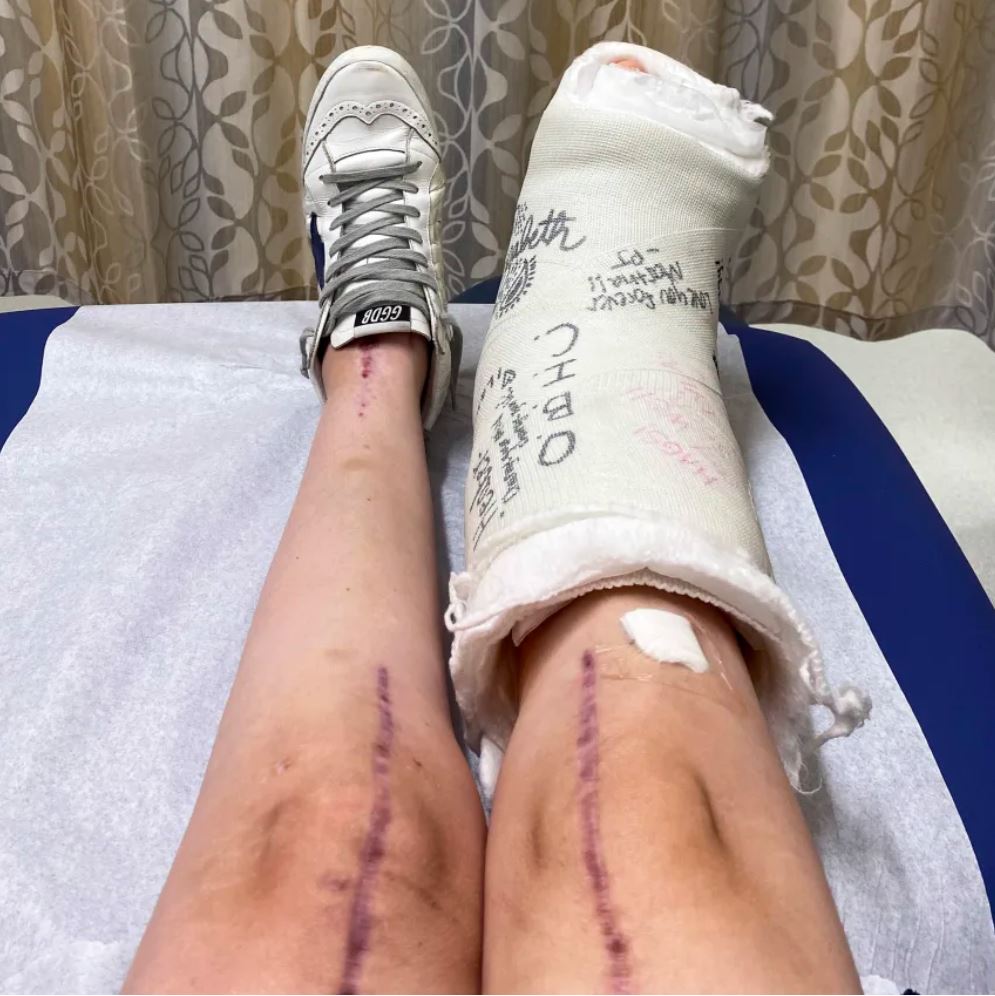
By her early 20s, her symptoms became “debilitating” and she passionately searched for answers. After years of being misdiagnosed, she learned she has Lyme disease, which caused arthritis, leading to 16 joint surgeries before the age of 30.

Meghan Bradshaw has had the joints in her lower extremities completely replaced. A late diagnosis of Lyme arthritis plus a connective tissue disorder likely contributed to the severity of her joint deterioration and the need for so many joint replacements before turning 30. (Courtesy Meghan Bradshaw)

“While it’s extreme, my story really highlights a lot of the things that other people experience, like delayed diagnosis and misdiagnosis and having a general unawareness of the dangers of ticks,” the 29-year-old told TODAY.

READ MORE

https://www.insider.com/young-woman-needed-16-joint-surgeries-lyme-disease-2022-9

___________________

Important quote:

When Lyme disease goes untreated, the chance of developing arthritis increases. Lyme arthritis often starts in the knee, Gaston said.

“About 60% will end up with some arthritis,” Gaston said.

Yep. 

I am currently dealing with this now.

While I am not a doctor, it is my experience and opinion that the quicker you deal with this inflammation/pain the better.  Allowing this process to fester could lead to irreversible damage.  The root, of course, is inflammation which must be addressed and dealt with.

Things that have helped tremendously:
  • MSM & DMSO
  • Proteolytic/Systemic enzymes
  • LDN
  • CBD
  • Niacinamide/vitamin C protocol
  • Curcumin
  • Diet can have a huge impact.  Gluten was my problem, but never appeared to be a problem before.  Removing it has made all the difference. I’m not celiac.  Some also struggle with dairy or the nightshade plants as well as alcohol and sugar.  Do an elimination diet to determine if getting rid of these things can help you.
  • Staying hydrated with water
  • Various laser therapies
  • Heat therapies
  • Massage therapy
  • Chiropractic care
  • If you are willing to spend $50, you may want to read a brief testimonial from someone who used  “The Arthritis Strategy” by Shelly Manning.  While I have not used it myself, it appears to be sound advice – although as always “buyer beware.”  It’s always wise to run things by your LLMD to make sure.  What’s nice about this is it’s about a month long strategy that will educate you fairly quickly on the things you can tangibly do yourself that could make a world of difference.  Sometimes it’s overwhelming to attack all these issues on your own.  With this strategy, you will have someone who has been there, giving you advice that worked for them.

You can also check out these resources:

Curcumin for Pain

https://takecontrol.substack.com/p/curcumin-helps-patient-recovery

Curcumin Helps Patient Recovery

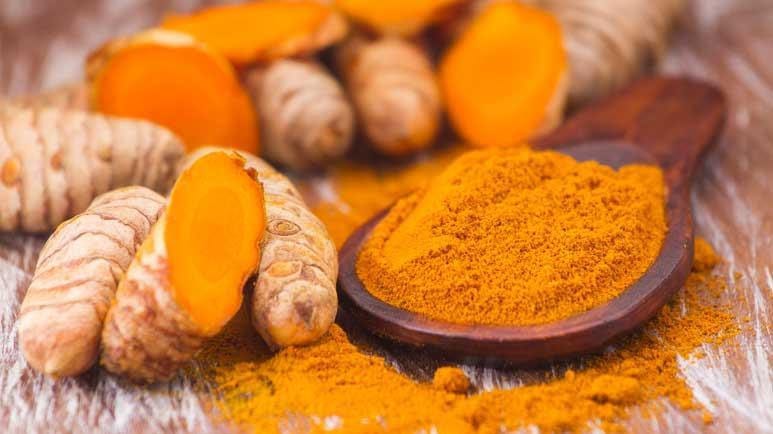
Curcumin, the pigment that lends turmeric its yellow-orange color, has been recognized for millennia as a healing spice.

curcumin helps patient recovery

STORY AT-A-GLANCE

  • Studies show curcumin’s ability to repair and regenerate damage caused by strokes, enhancing verbal, visual and memory abilities and improving patients’ attention spans and other brain functions
  • Studies show that people who eat lots of curcumin-containing foods show fewer incidences of Alzheimer’s disease and sharper cognitive function and suggest meaningful cognitive benefits over time
  • Researchers have found several powerful health effects from curcumin, the active compound in the spice turmeric, particularly in relation to treating and preventing several common disorders
  • Eating foods and spices such as turmeric, which have high amounts of antioxidant compounds, may increase cognitive and mitochondrial function and mood, while decreasing depression caused by brain inflammation
  • Because the curcumin in turmeric is poorly absorbed through your gastrointestinal tract, it’s more effective to use a high-quality bioavailable curcumin extract

For those who appreciate the unique spiciness of turmeric, it’s serendipitous to learn there are several layers of extraordinary health benefits included with the active ingredient known as curcumin. One of the latest was revealed in a study in which scientists tested the powerful compound for its effects on heart failure patients.

Heart failure, experienced by over 6 million people in the U.S., weakens your heart and affects its ability to pump sufficient oxygen. Patients no longer have the ability to participate in activities and exercise like they once did, which could be described as life altering.

Heart failure is also described as chronic, progressive and incurable, although a change in lifestyle, such as eating a balanced, healthy diet and performing regular exercise can decrease feelings of fatigue and enhance their mood enough to help people resume their lives to a large degree.

Research published in the Journal of Applied Physiology reports that curcumin may help patients with chronic heart failure by increasing skeletal muscle strength, endurance and exercise capacity. Although mice were the subjects used in the trial, the scientists are hopeful their research can eventually be translated to human patients in a clinical setting.

Turmeric is in the same botanical family as ginger, another powerful spice with proven, health-beneficial compounds. With that in mind, corresponding study author Dr. Lie Gao, assistant professor of cellular and integrative physiology at the University of Nebraska Medical Center (UNMC), notes:

“This study showed an important proof of principle. Some foods and spices, such as broccoli and turmeric, contain a rich supply of antioxidant compounds. Consumption of these foods or spices may improve skeletal muscle health. For patients with stable heart failure that have limited ability to exercise, compounds like these may be beneficial.”

Interestingly, previous studies proposed that targeting skeletal muscle with antioxidants may be advantageous for heart failure patients, but Gao states that it’s not possible to use curcumin on humans because of the high amounts it would take.

Gao then suggests that “other antioxidants” such as dimethyl fumarate, a drug currently popular for treating multiple sclerosis, could be used for its health-improving benefits. That said, curcumin is one of hundreds of plant-based nutriments, from carrots to tobacco, to be unapologetically sourced and manufactured into pharmaceuticals.

Curcumin: Gingery, Earthy, Healing

Curcumin, taken from the underground rhizome of the plant, is the pigment that gives curry its bright yellow hue, explaining why turmeric is an ingredient used to complement and color stir-fries and sautéed root vegetables, rice, scrambled eggs and braised greens such as kale and collards.

In just the past few years, queries about the spice touted to have a “cult following” have increased exponentially, according to The Guardian. It’s showing up in foods like smoothies and the trendy turmeric latte known as golden milk, a potent blend of organic turmeric powder and coconut milk and/or virgin coconut oil.

Optional flavor additions include vanilla, raw honey or stevia, a stick of ginger and/or cinnamon, and sometimes a healthy dash of black or white pepper. The addition of ghee is used to soothe a sore throat.

In fact, the use of black pepper in golden milk is supported by a study in which the “curcuminoid-piperine combination” addressed the symptoms of metabolic syndrome in 117 study subjects who exhibited both oxidative stress and inflammation. According to the randomized, controlled trial and updated meta-analysis,7 oxidative and inflammatory status showed significant improvement, even with short-term curcumin supplementation.

Tellingly, turmeric is called the “spice of life” in India. Golden milk is becoming increasingly popular not just as a pleasant, warming drink for cool autumn evenings, but as a sleep aid for people who struggle with insomnia. Further, curcumin has been identified as a substance that’s safe, effective and natural.

A plethora of studies point to the anti-inflammatory properties of curcumin (Curcuma longa) and reveal more than 160 separate physiological and cell-signaling pathways, positively influencing arthritic conditions, cancer, obesity, inflammatory bowel disease, and, more recently, metabolic syndrome and dementia.

Studies Reveal Curcumin’s Powerful Potential for Your Brain

In another study from mid-2018, scientists at Texas A&M endeavored to relieve patients suffering from Gulf War illness (GWI), characterized by “substantially declined neurogenesis, chronic low-grade inflammation, increased oxidative stress and mitochondrial dysfunction in the hippocampus.” In the animal study, GWI rats treated with curcumin (CUR) maintained better memory and mood function. In addition:

“Enhanced neurogenesis, restrained inflammation and oxidative stress with normalized mitochondrial respiration may underlie better memory and mood function mediated by CUR treatment.”

The scientists wrote that their use of curcumin was due to its long-recognized ability to positively influence several aspects of brain health. The rats in the study were exposed to low doses of DEET, or N-diethyl-m-toluamide, a common insect repellant, and other chemicals related to GWI, such as pyridostigmine bromide and permethrin. They were also subjected to restraint for five minutes daily for a period of 28 days.

Even more recently, another study shows that chronic neuropathic pain and the cognitive impairment that accompanies it can be addressed with the antinociceptive (reduced sensitivity to painful stimuli) and neuroprotective application of curcumin, demonstrated using rats in a lab setting subjected to cobra venom.

Interestingly, the rats exhibited improvements in spatial learning and memory deficits, as well as increased exploratory activities due to the ability of curcumin to reverse the damage done to hippocampal neurons and synapses. Scientists concluded that curcumin can “alleviate pain, improve spatial learning and memory deficits, and treat chronic neuropathic pain-induced cognitive deficits.”

Mood and Memory Enhancement via Curcumin

The inflammatory and antioxidant properties of curcumin to improve memory and mood were again confirmed when UCLA published results of a double-blind, placebo-controlled 18-month trial in the American Journal of Geriatric Psychology, in which 90 milligrams (mg) of a bioavailable form of curcumin, taken twice a day, “led to significant memory and attention benefits” in people with mild memory loss.

Curcumin has been suggested as the explanation for why senior citizens in India, whose regular diets include generous amounts of curcumin-containing foods, show both a lower incidence of Alzheimer’s disease and sharper cognitive function. Further, the study “results suggest that taking this relatively safe form of curcumin could provide meaningful cognitive benefits over the years.”

Gary Small, director of the University’s Semel Institute for Neuroscience and Human Behavior and the study’s first author, notes that while the mechanisms behind curcumin’s brain benefits aren’t yet known definitively, they might be due to its inhibitory effect on brain inflammation, which has been associated with both major depression and Alzheimer’s disease.

Forty people, including healthy people without dementia as well as those with the characteristic “microscopic plaques and tangles” of Alzheimer’s, ranging in age from 51 to 84 years, participated in the study. Scientists took standardized cognitive assessments at the beginning of the study as well as at six-month intervals, and participants’ curcumin levels were checked in their blood after 18 months. Further:

“Thirty of the volunteers underwent positron emission tomography, or PET scans, to determine the levels of amyloid and tau in their brains at the start of the study and after 18 months. The people who took curcumin experienced significant improvements in their memory and attention abilities, while the subjects who received placebo did not …

In memory tests, the people taking curcumin improved by 28 percent over the 18 months. Those taking curcumin also had mild improvements in mood, and their brain PET scans showed significantly less amyloid and tau signals in the amygdala and hypothalamus than those who took placebos.”

The participants’ amygdala and hypothalamus — regions of the brain known to control several memory and emotional functions, which were positively influenced by the curcumin — were defined as critical areas of the brain.

Curcumin Is Used to Alleviate Stroke Damage

Still another study, this one presented at an American Heart Association International Stroke Conference, uncovered curcumin’s ability to repair damage caused by strokes, which have been called “brain attacks” caused when a blood clot blocks an artery or blood vessel, effectively cutting off blood flow and triggering brain cell death and sometimes brain damage and even death.

Stroke symptoms include an inability for individuals to walk due to a loss of balance, a sudden, severe headache, difficulty seeing, weakness, often on one side only, and sudden confusion. It’s crucial to know that the longer your brain goes without oxygen, the greater your risk of lasting damage.

A drug used on stroke victims, referred to as “clot-busting,” the current and most common intervention, is a synthetic contrast to the curcumin-hybrid known as CNB-001, which repairs damage sustained at the molecular level by the lack of oxygen.

Besides crossing the blood-brain barrier, CNB-001 works by influencing the mechanism responsible for the regeneration of brain cells and offers future stroke victims new hope for more complete recovery.

This is a specific example of a time when a drug can both save your life and prevent the very frequent and devastating outcomes of a stroke. Incidentally, medical intervention is crucial to help prevent such damage from stroke, but must be obtained within 60 minutes.

Curcumin to Help Prevent Cancer

Curcumin has been identified as one of the most powerful chemopreventive and anticancer agents, and recognized for its wide spectrum of pharmacological properties and inhibitory effects on metabolic enzymes, according to PubChem, which notes its wound healing and antimicrobial effects, and states:

“Curcumin blocks the formation of reactive-oxygen species, possesses anti-inflammatory properties as a result of inhibition of cyclooxygenases (COX) and other enzymes involved in inflammation; and disrupts cell signal transduction by various mechanisms including inhibition of protein kinase C.

These effects may play a role in the agent’s observed antineoplastic properties, which include inhibition of tumor cell proliferation and suppression of chemically induced carcinogenesis and tumor growth in animal models of cancer.”

The same study shows curcumin as able to suppress cancer proliferation and apoptosis (programmed cell death), thereby acting as a chemopreventive agent in skin, colon and stomach cancers. Other studies using animal models list breast, bladder, brain, esophageal, kidney, liver, lung, pancreas and prostate cancers, and more.

Significantly, the active elements in curcumin attack cancer while leaving healthy cells untouched. For the purpose of disease intervention, while turmeric is available in powdered form, it contains very little of the active compounds in curcumin, or only about a 3 percent curcumin concentration.

Because it’s not easily absorbed through your gastrointestinal tract, it’s more effective to use a high-quality bioavailable curcumin extract, according to a 2013 study. A typical anticancer dose is just under 1 teaspoon of curcumin extract three or four times daily.

Subscribe to Mercola Newsletter

Disclaimer: The entire contents of this website are based upon the opinions of Dr. Mercola, unless otherwise noted. Individual articles are based upon the opinions of the respective author, who retains copyright as marked.

The information on this website is not intended to replace a one-on-one relationship with a qualified health care professional and is not intended as medical advice. It is intended as a sharing of knowledge and information from the research and experience of Dr. Mercola and his community. Dr. Mercola encourages you to make your own health care decisions based upon your research and in partnership with a qualified health care professional. The subscription fee being requested is for access to the articles and information posted on this site, and is not being paid for any individual medical advice.

If you are pregnant, nursing, taking medication, or have a medical condition, consult your health care professional before using products based on this content.

___________________

**Comment**

I recently added this form of curcumin to my regimen for arthritis pain.  I was pain free after one pill which is hard to even believe to me.  (I do not receive any payment from this or any supplement company)

I also use many other things for inflammation/pain as well.  I’ve found that all of these things have some benefit.

Best Presentation on Myocarditis

Lyme/MSIDS can affect the heart.  See:

Now, there is a further complication muddying the waters for those who get the COVID mRNA injections.  On top of Lyme/MSIDS causing heart issues, the COVID shots are also being linked to heart issues:

https://rumble.com/v1i4e7n-myocarditis-in-the-setting-of-sars-cov-2-infections-and-covid-19-vaccinatio.  Video Here (Approx. 45 Min)

Myocarditis in the setting of SARS CoV-2 Infections and Covid-19 Vaccinations in Children

Kirk Milhoan, MD, PhD, FACC, FAAP Medical Director for Heart and Souls speaking about Covid-19 vaccines in children. Are they safe? What are we to believe?

_________________

1 in 100 teens developed heart inflammation after 2x of Pfizer according to a new study. An additional 4 of the 300 participants developed subclinical myocarditis. This is FAR greater than the 1/3000 or 1/10000 or 1/50000 they initially claimed (and continued to reduce). ~ Kim Iversen

Vaccine myocarditis update from Thailand

https://anishkokamd.substack.com/p/vaccine-myocarditis-update-from-thailand

By Anish Koka MD (Cardiology)

Excerpts:
It has long ago been established that the messenger RNA vaccines cause myocarditis, the controversial question now relates to what the actual rate of myocarditis is. The CDC chart below notes a peak myocarditis rate (all boxes shaded in orange are myocarditis rates that are higher than what is expected in the population) in 16-17 year old boy of 75.9 / million (or 1/13,157 ) after dose 2 of the mrna COVID vaccine.
Unfortunately, because of the heavy reliance in the United States on passive reporting, which entails clinicians/ patients voluntarily reporting myocarditis cases, this number is likely an undercount.
 I can assure you, and the mostly ER doctor contingent on twitter that brays about “mild myocarditis”, that there are no cardiologists who want to see their child have a cardiac troponin that is 2x normal or 40x normal after administration of some therapeutic.

It is absolutely head-spinning to see that the public conversation now is geared to dismiss cardiac injury in young healthy children as “mild”.

The US has done an unbelievably poor job of defining that risk to the population since myocarditis was first reported as an adverse event related to the vaccines in April of 2021. The Thai study helps fill in some of the data void so parents and their doctors can be better informed when discussing the risks and benefits of the vaccines.
Please see the preprint that enrolled 13-18 year olds in a comprehensive study that sought to assess myocardial injury by routinely checking an electrocardiogram, cardiac troponins, and an echocardiogram ( a cardiac ultrasound) at baseline and after a second dose of the Pfizer vaccine.

The most common cardiovascular effects were:

  • tachycardia (7.64%)
  • shortness of breath (6.64%)
  • palpitation (4.32%)
  • chest pain (4.32%)
  • hypertension (3.99%)
  • Seven participants (2.33%) exhibited at least one elevated cardiac biomarker or positive lab assessments
  • Cardiovascular effects were found in 29.24% of patients, ranging from tachycardia, palpitation, and myopericarditis
  • Myopericarditis was confirmed in one patient after vaccination
  • Two patients had suspected pericarditis and four patients had suspected subclinical myocarditis

Conclusion: Cardiovascular effects in adolescents after BNT162b2 mRNA COVID-19 vaccination included tachycardia, palpitation, and myocarditis. The clinical presentation of myopericarditis after vaccination was usually mild, with all cases fully recovering within 14 days. Hence, adolescents receiving mRNA vaccines should be monitored for side effects. Clinical Trial Registration: NCT05288231

The Moderna vaccine has been shown to have myocarditis rates 3-4x Pfizer.

“Hundreds of thousands of Americans have been killed by this ‘vaccine’, and millions have been injured.”

“This is the most dangerous ‘vaccine’ ever created.”

Ron Johnson is the only person in Congress who cares at all  about the millions pf people who were ‘vaccine’ injured. ~ Steve Kirsch

A British Heart Foundation Ad also attempts to normalize heart problems in children:

http://

NY Presbyterian Hospital Ad Normalizes Myocarditis in Children

http://

Sept. 6, 2022

Youtube apparently censored this video.  To see it go here:  https://twitter.com/tsalt7/status/1566942974017413120

New York-Presbyterian Hospital, which operates more than 200 locations throughout Manhattan, Queens, Brooklyn, Westchester and Putnam Counties, as well as 10 hospital campuses, created a video called “Pediatric Patient Story – Suri (30s version)” that was published on September 6.

Myocarditis, a rare issue before Operation Warp Speed, has greatly increased according to a peer-reviewed Nordic study which looked at 23 million residents.

According to VAERS, upwards of 90 percent of all myocarditis cases end up requiring hospitalization.

http:// Approx. 2 Min

Sept. 14, 2022

Buettner was a nurse for 13 years in the cardiovascular care unit where she took care of children with myocarditis after the COVID shots. She states that these reactions were not being reported to VAERS. She states it was an unspoken thing that they were not allowed to talk openly about it in the unit.

“I am the face of your misinformation, Nathan. I am the one who lost my career in pediatric, cardiovascular ICU care.” ~ Nurse Tawny Buettner

For more:

Lyme & Post-Traumatic Stress Disorder

Many who contract chronic Lyme disease develop Post-Traumatic Stress Disorder (PTSD) as a result of the stress, pain, and suffering.

For many years after my April 2007 relapse of Lyme and other tick-borne illnesses, I experienced symptoms of Post-Traumatic Stress Disorder each spring. As the weather blossomed with new possibility, my body went into “fight or flight” mode, the stress response we have when we encounter danger. For animals, this is the natural protective reaction of prey when a predator swoops in. Humans have the same reaction when they are in immediate danger—say, in combat—or when they are confronted with trauma, like a shocking loss or a catastrophic medical event.

Once we are out of danger, the “fight or flight” response usually abates, but for some, it can hang on for months or years, triggered when someone is reminded of the trauma. Even though I wasn’t consciously worried about relapsing again, my body would remember that time and prepare each spring as if it were going to happen. I’d suffer from anxiety, flashbacks, and nightmares. As Bessel Van der Kolk, M.D. writes in The Body Keeps the Score: Brain, Mind and Body in the Healing of Trauma,

“While we all want to move beyond trauma, the part of our brain that is devoted to ensuring our survival (deep below our rational brain) is not very good at denial. Long after a traumatic experience is over, it may be reactivated at the slightest hint of danger and mobilize disturbed brain circuits and secrete massive amounts of hormones.”[i]

Ironically, though my body was trying to protect me from experiencing relapse, it is precisely this stress response that can trigger a flare for Lyme disease patients. My doctor equates a high release of the stress hormone cortisol to “walking into a minefield of ticks.” This news, of course, only made me more stressed; was my subconscious worry about relapse going to cause a relapse?

Thankfully it didn’t, but I had to work hard to fight both the possibility of relapse and my innate response to that possibility. This required boosting my immune system, engaging in talk therapy (including cognitive behavioral therapy), increasing adjunct therapies, and grounding myself with mindfulness and fun. Through my work, I learned that I was not alone. I had always associated PTSD with veterans, who do understandably suffer high rates of this ongoing stress response. But PTSD can happen to anyone who experiences trauma, and there are so many aspects of tick-borne illness that are traumatic.

In addition to the devastating physical toll of tick-borne diseases, especially when they are undiagnosed for months or years, prolonged serious illness can take a toll on finances, relationships, and self-worth. The diagnosis process itself can be traumatizing.

“It’s important to understand that many of these undiagnosed patients have suffered not only the debilitating physical symptoms of tick-borne disease, but also the indignity of being humiliated and demeaned by many of the specialists they have visited,” writes psychiatrist Bernard Raxlen, M.D. in his book Lyme Disease: Medical Myopia and the Hidden Global Pandemic. “A negative process, sustained by a punishing medical system, has traumatized these patients.”[ii]

Visiting a doctor, worrying about relapse, or experiencing the tiniest flare of symptoms can trigger a PTSD response in patients of tick-borne illness. As we head into summer and the height of tick season, many of us also experience PTSD as we worry about being reinfected. I’m now feeling healthier than I have in years, and celebrate summer with swimming, kayaking and paddleboarding. But as I head out for these activities, I’m bathing myself in repellent. When I return, I’m fastidiously doing tick checks and taking other precautionary measures. My joyful days are often followed by nightmare-ridden sleep. (For more on this delicate balance, see my post “Managing Fear of Ticks During the Summer”).

PTSD is a natural response for Lyme patients. The first step in coping with it is normalizing this reaction. There’s no shame in experiencing PTSD, and having anxiety-related symptoms does not mean “you’re crazy” or “it’s all in your head.” It may mean that you have a diagnosable and treatable disorder. Talk to your Lyme Literate Medical Doctor (LLMD) about ways to manage your PTSD. Eventually, with the right support, you just may be able to rewire your response, and could even find your PTSD turning into PTG: Post-Traumatic Growth.

[i] Van der Kolk, Bessel, M.D. The Body Keeps the Score: Brain, Mind and Body in the Healing of Trauma. New York: Penguin Books, 2015 (2).

[ii] Raxlen, Bernard, M.D. with Cashel, Allie. Lyme Disease: Medical Myopia and the Hidden Global Pandemic. London, UK: Hammersmith Health Books, 2019 (20).

Writer

Jennifer Crystal

Opinions expressed by contributors are their own. Jennifer Crystal is a writer and educator in Boston. Her work has appeared in local and national publications including Harvard Health Publishing and The Boston Globe. As a GLA columnist for over six years, her work on GLA.org has received mention in publications such as The New Yorker, weatherchannel.com, CQ Researcher, and ProHealth.com. Jennifer is a patient advocate who has dealt with chronic illness, including Lyme and other tick-borne infections. Her memoir about her medical journey is forthcoming. Contact her via email below.

Email: lymewarriorjennifercrystal@gmail.com

________________

**Comment**

PTSD is very real for Lyme/MSIDS patients, but rarely discussed.  There are numerous pathogens besides Lyme that can cause mental health issues.  I can relate to virtually everything in this post – and my husband can as well.  Since the two of us were infected it put a lot of stress on our family which meant we had to be very open with our children who were teenagers at the time going through their own stuff!

We essentially became each other’s therapist and had to work through trauma sometimes going all the way back to childhood, because the brain is a funny thing that can remind you of a past you thought was completely forgotten with something as simple as a fragrance, image, or sound from the past.  Feelings come bubbling up and you have to face them and deal with them. 

This aspect of the Lyme/MSIDS journey is a very important one that you can’t just treat with a pill to make it go away, although treating the infections causing it is a crucial, required step.  This is deep stuff that requires patience, time, and freedom/safety to talk about the past, feelings, and sometimes downright crazy thoughts.

But know this: you are not alone and you are not crazy.  You are a complex person with a complex history that often needs revisiting, facing, and unraveling.  The effort you put into it will all be worth it in the end.

For more:

Overcome Bacterial & Viral Infections With SOT and RGCC Test

https://forumhealthfonddulac.com/masterclass/

Masterclass: Overcome Bacterial and Viral Infections with SOT Therapy and the RGCC Test

October 11th at 7pm ET

Are you or a loved one suffering from Lyme disease, shingles, hepatitis, Epstein-Barr virus or another viral or bacterial infection?

In this masterclass, Dr. Clayton Bell and Dr. Terri Beim will discuss how RGCC testing and SOT (Supportive Oligonucleotide Technique) is a highly effective and individualized method that can aid the body in overcoming bacterial and viral infections so you can feel like yourself again.

In This Masterclass You Will Learn

The webinar is especially relevant for anyone suffering from:
  • Lyme disease
  • Shingles
  • Hepatitis B and C
  • Epstein-Barr virus
  • Cytomegalovirus
  • Coxsackie virus
  • Co-infections such as Babesia and Bartonella
  • HHV 1, 2 and 6
  • HPV 6, 11, 16 AND 18
  • HTLV1

About Terri M. Beim, ND

As a naturopathic practitioner for more than 20 years, Dr. Beim is first and foremost an educator. She practices at Forum Health Austin and spends an extensive amount of time with patients — understanding their medical history, body, chemistry, diet, lifestyle, load toxicity, and resulting health challenges — in effort to determine WHY their problems started in the first place. After seeking to understand, Dr. Beim educates her patients and offers personalized protocols that ensure positive health outcomes.
“Listening to and learning from patients is the only way to create an effective treatment plan. It must be personal; it must be holistic”.

Not only is Terri known for her extensive knowledge base in the field, but she brings overwhelming partnership, encouragement, and commitment to each patient’s journey of life-long health, wellness, and vitality.

Untitled-design-3.png

About Clayton Bell, MD, FAAFP, ABOIM

Dr. Clayton Bell’s medical practice combines cutting edge Functional Medicine with Integrative Medicine wellness techniques and ancient healing traditions from Ayurvedic Medicine. This synergistic and potent medicinal blend allows the patient to be heard and seen on multiple levels: physical, psychological, emotional, and spiritual. Dr. Bell has been shaped by his transformational personal and medical experiences both nationally and internationally. He has delivered babies in Maine, treated cholera epidemics in Haiti, taken a vision quest, ridden his bicycle across the country twice, and hiked across the Himalayas, Alps, Patagonia, New Zealand, and Kilimanjaro. These experiences solidified Dr. Bell’s medical philosophy that the common thread to optimizing vitality and health lies with activating, supporting, and empowering the person to heal themselves from the inside out.  Together, you and Dr. Bell will co-create a personalized wellness plan which will address your concerns and maximize your health.   

For more on SOT:

For more on the RGCC test: