Archive for the ‘Activism’ Category

Dr. Richard Urso Details Important COVID Issues

DR RICHARD URSO (PART 1): COVID-19 PCR TESTS ARE FAULTY AND BEING MISUSED (16:00):

https://www.brighteon.com/5bdbfb25-9fe6-441e-8c65-955999faae28  Video Here

  • PCR is not designed to diagnose Covid-19 infection (or any other disease) and being misused to drive a “casedemic” and inflate deaths.
  • Dr. Richard Urso has treated 300,000+ patients, performed 30,000+ surgeries and successfully treated 200+ patients with Covid-19.

DR RICHARD URSO (PART 2): WHY ARE U.S. COVID-19 DEATHS SO HIGH? (10:36)

  • Dr. Richard Urso discusses how Covid-19 deaths are being inflated and excess deaths spurred on by lockdowns.

DR RICHARD URSO (PART 3): LOCKDOWNS ARE UNSCIENTIFIC & CAUSING EXCESS DEATHS (7:15)

  • Dr. Richard Urso discusses scientifically unsupported lockdowns, which are causing excess deaths, and the seasonal nature of Covid-19. (Jan. 22, 2021)

(01:04) Covid-19 is a seasonal illness
(02:35) Experts arguing lockdowns cause deaths, suicides, mental health issues…
(03:22) Businesses shut down and newly created reliance on govt
(03:47) Vaccine passports
(04:29) Lockdown caused poverty and connection to health and illness
(04:59) Great Barrington Declaration
(05:35) Lockdowns not supported by science
(05:51) Fear and PCR tests
(06:15) Covid-19 diagnosing protocol changed to include clinical diagnosis after Biden elected president

DR. RICHARD URSO (PART 4): COVID-19 TREATMENT EXISTS & CONFLICTS OF INTEREST (9:16)

https://www.brighteon.com/294bebb5-760d-4c82-9ebe-a72d56d2c112  Video Here

  • Dr. Richard Urso discusses successful treatment protocols, including hydroxychloroquine and iverectin, that have always been available and are purposely being ignored for political and financial conflicts of interest within the FDA, CDC and NIH. (Jan. 22, 2021 interview.)
  • Dr. Urso has successfully treated 200+ Covid-19 patients and prophylaxed 400+ people using various treatment protocols.

(00:40) Drug treatment protocols
(05:04) Treating his first Covid-19 patient
(05:55) Go to outpatient drugs
(06:28) Covid-19 prophylaxis
(06:57) Why has the FDA not approved certain drugs used in the treatment of Covid-19?
(07:38) Conflicts of interest within FDA, CDC and NIH
(08:50) Part 5 preview: Vaccines

Klinghardt Debrief: Biological Approach to Chronic Lyme

http://

Biological Approach to Chronic Lyme

Sept. 2, 2021

This is the first in a new series of Debriefs from Dr Klinghardt on Lyme and its co-infections, updated for 2021.

Dr Klinghardt holds weekly Debriefs every Thursday at 8.30pm UK time, 12.30pm Pacific, 3.30pm Eastern.

Sign up via the link below to join our newsletter and receive invitations to these live sessions: http://eepurl.com/df7ydT

_____________________

**Comment**

Lengthy talk but if you scroll to the pictures of borrelia, he begins talking about his treatment approach.

Dr. Klinghardt uses a sublingual form of Hyaluronic Acid to fool the cyst forms to open and become spirochetes so they can be killed by antimicrobials.  For more on Klinghardt’s treatment:  Klinghardt Lyme Protocol

Hyaluronic Acid is a type of sugar molecule.  Many other Lyme literate doctors also use forms of sugar such as Stevia or Erythritol as “cyst busters,” in their treatment regimens.  Look for reputable sources of Erythritol as it is most commonly made with GMO cornstarch.

FLCCC Webinar Tonight at 7 PM ET: Court Cases Compelling Hospitals to Give Ivermectin, 63 Studies Now Show it’s Efficacy in All Stages of COVID

https://zoom.us/webinar/register/WN_2CY5VGh7Rk6NeDPZOpzKyQ  Register Here

Don’t miss our FLCCC Weekly Webinar, tonight September 8th at 7 PM ET. We have an amazing line-up of guests from the front-lines of national news.

Newsworthy Topics:

  • Guests who have been involved in recent court cases to compel hospitals to give their loved ones Ivermectin.
  • Hospitals have refused to prescribe ivermectin to their critically ill patients.
  • 63 studies have now shown Ivermectin’s efficacy in all stages of COVID-19 disease.

Featured Guests:

  • FLCCC co-founding physician Dr. Fred Wagshul, who prescribed ivermectin to a patient in a Cincinnati hospital.
  • New York attorney Ralph Lorigo, who has represented more than a dozen families in these court cases.
  • Relatives and patients who survived after winning their court orders.

Videos of patients’ stories:

Recent Ruling:

On Monday, September 6, 2021, the Cincinnati judge, Michael A. Oster, Jr., ruled that West Chester hospital would be allowed to discontinue giving ivermectin to their patient, Jeffrey Smith, after the initial ruling compelled the hospital to give Mr. Smith the drug for 14 days.

  • “But for me, the most disturbing issue is that the hospital itself—after telling Julie Smith, Jeffrey’s wife, that they had tried everything to recover her husband and could do nothing more for him—refused to try ivermectin,” said Dr. Wagshul.

Register for Live Webinar

For more information on the FLCCC, the science and our protocols, please visit www.flccc.net

Molecular Biologist, mRNA Vaccine Mandates Based on ‘Faulty Assumption’ “Are We Going To Continue With Discrimination & Segregation in the United States of America?”

https://blogs.mercola.com/sites/vitalvotes/archive/2021/09/07/molecular-biologist-mrna-vaccine-mandates-based-on-_1820_faulty-assumption

Molecular Biologist: mRNA Vaccine Mandates Based on ‘Faulty Assumption’

If Youtube censors this incredibly important video, go here:  https://www.bitchute.com/video/n0Zb7OrPK6co/

Calling mRNA “vaccines” gene therapies that the media have oversimplified based on a “faulty assumption,” Michigan molecular biologist Christina Parks gave a chilling testimony at a hearing on Michigan HB 4471, which would prohibit employers from discriminating against an individual who has not received the shot.

Saying mandates “basically take away our freedom of choice,” Parks said the faulty assumption is that vaccines prevent transmission when in actuality they don’t. “Does the vaccine for DTaP prevent transmission?” she asks. “No. Does the vaccine for flu prevent transmission? No.

“Do the vaccines for COVID prevent transmission? No. In fact they were never designed to do that.” As far as the “95% effective” goes, that isn’t even a reality, she said, because the Delta variant is predominant now — and “these vaccines have no ability to prevent infection by and transmission of the Delta variant.”  She doesn’t mention the fact when absolute risk is taken into account these injections are less than 1% effective.  She also doesn’t mention that without looking at infection rates, efficacy numbers convey nothing useful.  Statistical ‘slight of hand’ shenanigans are misleading the public. Further, these injections have caused more adverse reactions and death than all the vaccines reported to VAERS in the past 30 years.

Asking the legislature to base their decisions on real data, Parks pointed out that, as someone with a Ph.D., she is among those who are most vaccine hesitant for the COVID vaccines. And, aside from understanding the science of what the vaccines can and cannot do, she is also keenly aware of why people — especially Blacks — with less than a college education are also hesitant to trust the government’s vaccine recommendations.

The question, she said, is “who are we going to exclude from the workforce? Are we going to continue with discrimination and segregation in the United States of America?”

SOURCE: YouTube August 24, 2021

___________________

For a powerful short video on why blacks are “vaccine” hesitant:  https://twitter.com/WayneDupreeCom/status/1446222569628184580

For an excellent expose on the “vaccine” mandates, watch a 9 min report by investigative journalist Sharyl Attkisson on Full Measure.

https://rumble.com/vs33yz-tricia-lindsay.html  Video Here if Youtube censors it below (Approx. 11 min) 

http://

10 Minutes of Powerful Truth: “Vaccine” Mandates are Illegal

Tricia Lindsay gives a very powerful speech to the public about how the US government and governments around the world are violating human rights by imposing mandates and discriminate against the unvaccinated.

“This is medical rape.” Tricia Lindsay, Civil Rights Attorney

For more:

There’s been a lot of cover-up, fraud, and collusion in the public health arena.  A group of inter-agency scientists formed a group called SPIDER that has delineated the corruption.  These groups are known to manipulate data for their own nefarious purposes.  I am elated that someone from the black community is educating others on these true racial travesties which have been covered up by our corrupt public health ‘authorities,’ because it concerns the ‘golden calf’ of vaccines – therefore it’s simply swept under the rug because, “it’s for the greater good.”

Mosquito Resistant Clothing Prevents Bites in Trials

https://news.ncsu.edu/2021/07/mosquito-resistant-clothing-prevents-bites-in-trials/

Mosquito-Resistant Clothing Prevents Bites in Trials

Bite-resistant textiles
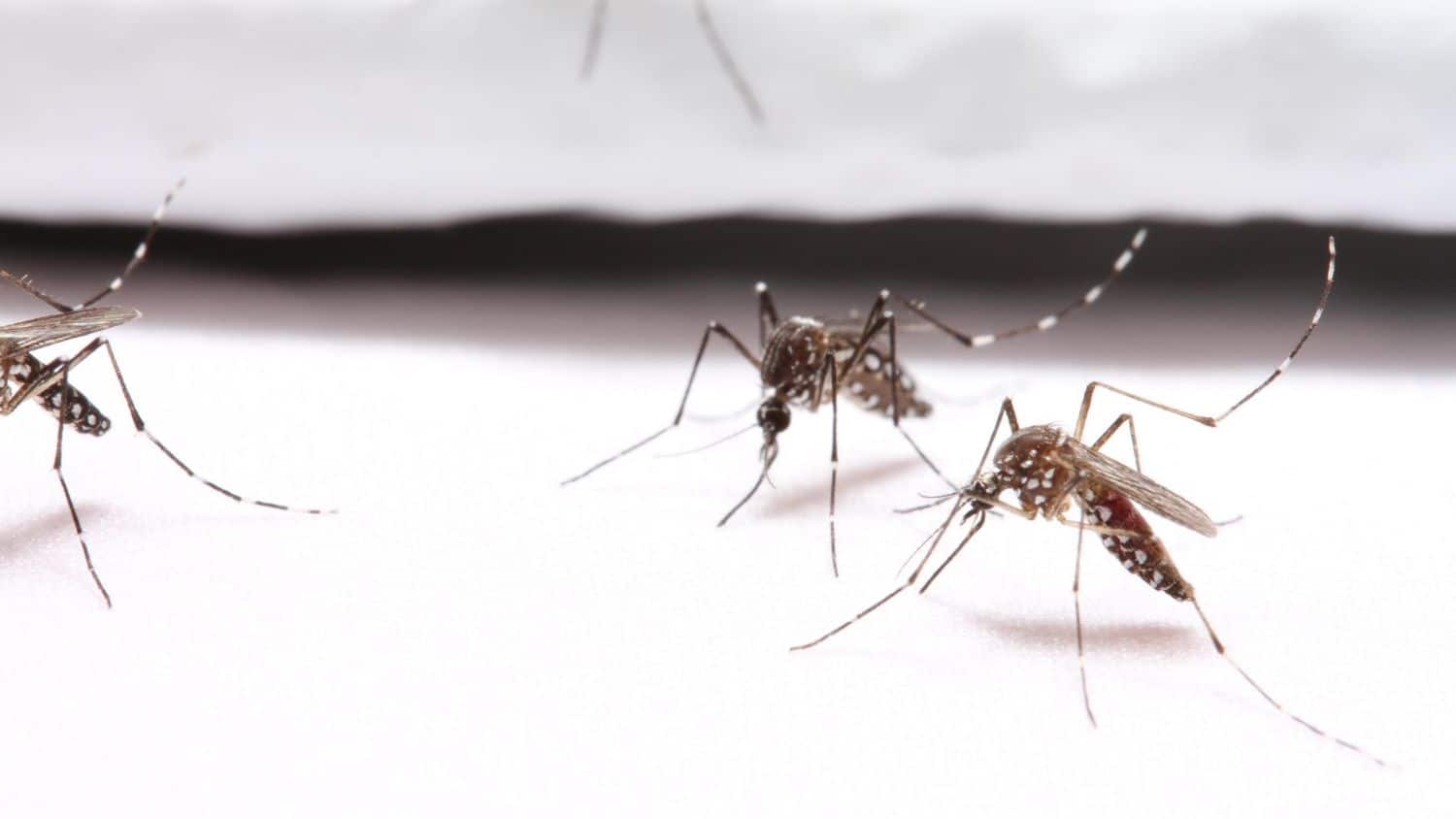
Mosquitoes landing on bite-resistant fabric during an in vivo bioassay in which they fail to probe through the fabric due to its small pore size. The proboscis bends when mosquitoes try to push through the fabric. Credit: Matt Bertone.
FOR IMMEDIATE RELEASE
R. Michael Roe
Grayson Cave
Laura Oleniacz, NC State News Services

North Carolina State University researchers have created insecticide-free, mosquito-resistant clothing using textile materials they confirmed to be bite-proof in experiments with live mosquitoes. They developed the materials using a computational model of their own design, which describes the biting behavior of Aedes aegypti, the mosquito that carries viruses that cause human diseases like Zika, Dengue fever and yellow fever.

Ultimately, the researchers reported in the journal Insects that they were able to prevent 100 percent of bites when a volunteer wore their clothing – a base layer undergarment and a combat shirt initially designed for the military – in a cage with 200 live, disease-free mosquitoes. Vector Textiles, an NC State startup company, has licensed the related patent rights and intends to make clothing for commercial sale in the United States.

The researchers think their computational model could be used more widely to develop clothing to reduce transmission of diseases.

“The fabric is proven to work – that’s the great thing we discovered,” said study co-author Andre West, associate professor of fashion and textile design at NC State and director of Zeis Textiles Extension for Economic Development. “To me, that’s revolutionary. We found we can prevent the mosquito from pushing through the fabric, while others were thick enough to prevent it from reaching the skin.”

To develop the computational model to design textile materials that could prevent A. aegypti bites, researchers investigated the dimensions of the head, antenna and mouth of A. aegypti, and the mechanics of how it bites. Then, they used the model to predict textile materials that would prevent bites, depending on their thickness and pore size. Researchers said they believe the materials could be effective against other mosquito species in addition to A. aegypti because of similarities in biology and biting behavior.

“There are different uses for clothing,” said the study’s first author Kun Luan, postdoctoral research scholar of forest biomaterials at NC State. “The idea is to have a model that will cover all possible garments that a person would ever want.”

To test the accuracy of their model, the researchers tested the materials predicted to be bite-proof. In experiments with live, disease-free mosquitoes, the researchers surrounded a blood reservoir with plastic materials made according to parameters predicted by the model. They then counted how many mosquitoes became engorged with blood.

One material they initially tested was very thin – less than one millimeter thick – but had a very small pore size to prevent the mosquito from sticking its mouth parts, or proboscis, through the material. Another material had a medium pore size to prevent the mosquito from inserting its head through the textile far enough to reach the skin; and a third material had larger pores, but was sufficiently thick that the mosquito’s mouth still couldn’t reach the skin.

In a subsequent test, the researchers chose a series of knitted and woven fabrics that met the bite-proof parameters determined by the model, and validated they worked in experiments using both the blood reservoir and human volunteers. The researchers tested the number of bites received by volunteers when study participants inserted an arm covered by a protective sleeve into a mosquito cage. The researchers also compared the fabrics’ ability to prevent bites and repel mosquitoes to fabrics treated with an insecticide.

From what they learned in early experiments, researchers developed the bite-resistant, form-fitting undergarment made with a thin material, as well as a long-sleeved shirt, which was initially envisioned as a combat shirt for the military.

When a volunteer wore the garments sitting for 10 minutes and standing for 10 minutes in a walk-in cage with 200 hungry mosquitos, the volunteer found the combat shirt was 100 percent effective at preventing bites. In the first trial testing the base layer, the volunteer received bites on the back and shoulders – seven bites for 200 mosquitoes. The researchers attributed the bites to the fabric stretching and deforming, so they doubled the material layer around the shoulders, and were ultimately able to prevent 100 percent of bites. They also tested the clothing for comfort, and to see how well it trapped heat and released moisture.

“The final garments that were produced were 100 percent bite-resistant,” said Michael Roe, William Neal Reynolds Distinguished Professor of Entomology at NC State. “Everyday clothing you wear in the summer is not bite-resistant to mosquitoes. Our work has shown that it doesn’t have to be that way. Clothes that you wear every day can be made bite-resistant. Ultimately, the idea is to have a model that will cover all possible garments that person would ever want – both for the military as well as for private use.”

The study, “Mosquito-textile physics: A mathematical roadmap to insecticide-free, bite-proof clothing for everyday life,” was published online July 13, 2021, in the journal Insects. It was authored by Luan, Roe, West, Charles Apperson, Marian McCord, Emiel DenHartog, Quan Shi, Nicholas Travanty, Robert Mitchell, Grayson Cave, John Strider and Youngxin Wang from NC State University and Isa Bettermann, Florian Neumann and Tobias Beck from Aachen University, Germany. The study was supported by the National Science Foundation, the Department of Defense Deployed War Fighter Program, Natick Contracting Division of the U.S. Department of Defense, the Chancellor’s Innovation Fund at NC State, the Southeast Center for Agricultural Health and Injury Prevention, PILOTS and the NC Agriculture Research Experiment Station.

-oleniacz-

Note to editors: The abstract follows.

“Mosquito-textile physics: A mathematical roadmap to insecticide-free, bite-proof clothing for everyday life”

Authors: Kun Luan, Andre J. West, Marian G. McCord, Emiel DenHartog, Quan Shi, Isa Bettermann, Jiayin Li, Nicholas V. Travanty, Robert D. Mitchell III, Grayson L. Cave, John B. Strider, Yongxin Wang, Florian Neumann, Tobias Beck, Charles S. Apperson and R. Michael Roe.

Published online in Insects on July 13, 2021.

DOI: 10.3390/insects12070636

Abstract: Garments treated with chemical insecticides are commonly used to prevent mosquito bites. Resistance to insecticides, however, is threatening the efficacy of this technology, and people are increasingly concerned about the potential health impacts of wearing insecticide-treated clothing. Here, we report a mathematical model for fabric barriers that resist bites from

Aedes aegypti mosquitoes based on textile physical structure and no insecticides. The model was derived from mosquito morphometrics and analysis of mosquito biting behavior. Precision polypropylene plates were first used to simulate woven and knitted fabrics for model validation.

Then based on model predictions, prototype knitted textiles and garments were developed that prevented mosquito biting and were tested for comfort. Our predictive model can be used to develop additional textiles in the future for garments that are highly bite-resistant to mosquitoes.

_____________________

For more: