The continued use of mRNA vaccines in the United States remains one of the most politically and medically contentious issues of our time. As public awareness grows around adverse event profiles and the questionable regulatory processes that ushered these products into global use, many are now asking an urgent question: why hasn’t HHS Secretary Robert F. Kennedy Jr. acted to revoke them?
To the untrained observer, Kennedy’s hesitation might appear as political caution or betrayal of his vaccine-critical roots. But the reality is far more complex. Pulling a product authorized under Emergency Use Authorization (EUA) or granted full Biologics License Application (BLA) approval is not a matter of executive decree. It requires a coordinated, multi-agency reckoning with evidence, policy, and law. And the legal scaffolding built to protect vaccine manufacturers—particularly under the Public Readiness and Emergency Preparedness (PREP) Act—was designed precisely to prevent the kind of abrupt retraction the public is demanding.
Yet the fortress is beginning to crumble.
Most Americans believe the mRNA vaccines are “approved.” In fact, the vaccines administered to the majority of the population have remained under EUA, not full licensure. The FDA granted BLAs to Comirnaty (Pfizer) and Spikevax (Moderna), but those exact products are often not available in the U.S. commercial supply chain. This bait-and-switch has significant legal implications, particularly around informed consent and product liability.
Under 21 U.S.C. § 360bbb-3, EUA requires that the Secretary of HHS determine that there is a public health emergency, that no adequate approved alternatives exist, and that the known and potential benefits outweigh the known and potential risks. But what happens when emerging data calls that balance into question?
History tells us that only under grave circumstances does the FDA pull a vaccine. The Cutter Incident in 1955, in which live polio virus in inactivated vaccine batches caused paralytic disease and death, is one example. RotaShield, pulled in 1999 after being linked to intussusception in infants, is another. Pandemrix, used during the 2009 H1N1 pandemic, was withdrawn in Europe after post-vaccine narcolepsy cases.
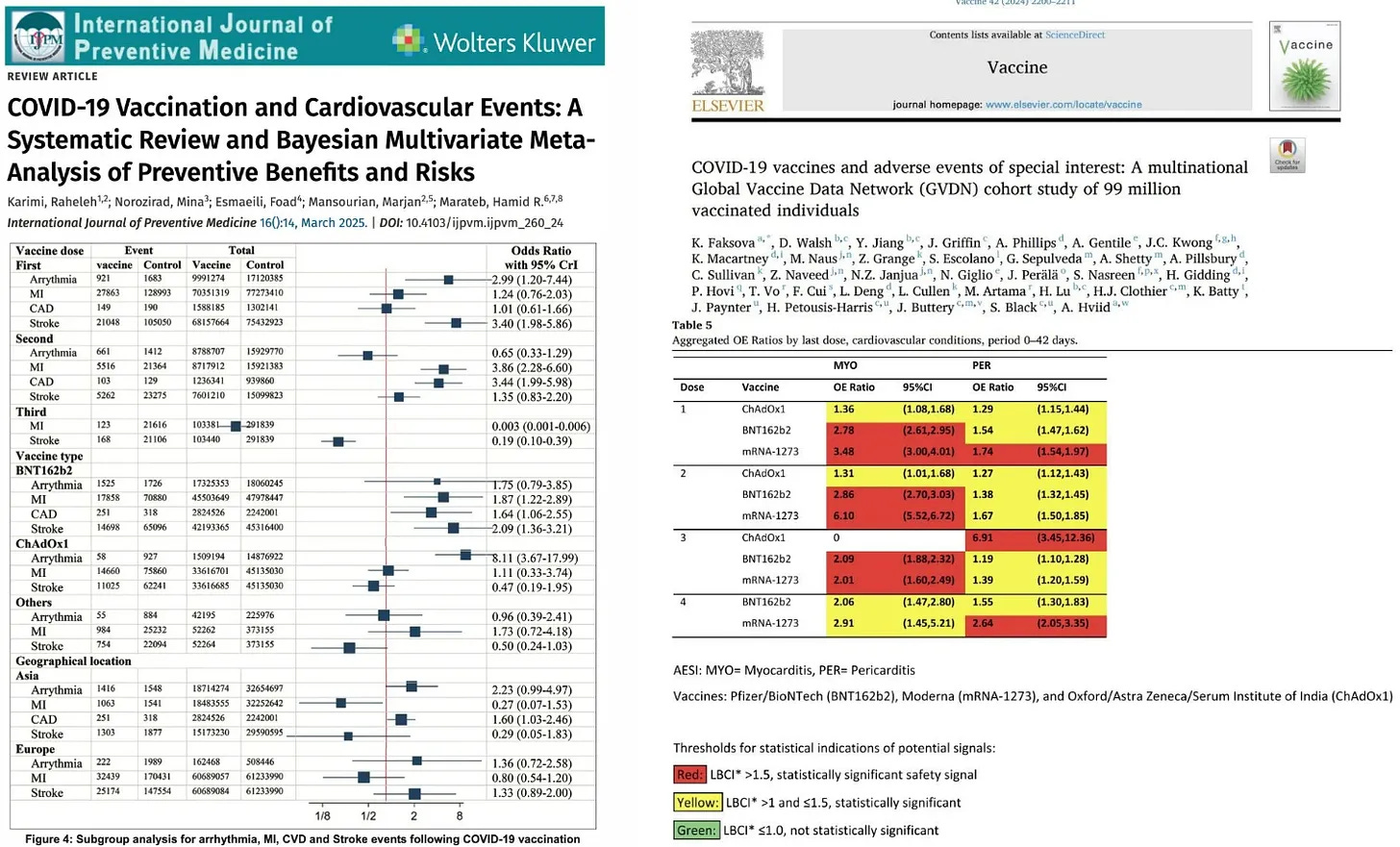
But unlike those cases, mRNA vaccine injuries are statistically diffuse, often delayed, and obscured by passive surveillance systems with notorious underreporting. (See link for article)
_______________
Important quote:
The regulators knew. The manufacturers knew. And, in time, the record will show who acted—and who remained silent. ~ Dr. James Lyons Weiler
The article discusses the sweeping liability protection to ‘vaccine’ manufacturers called The Prep Act and that The Supreme Court could soon be asked whether HHS may revoke these immunities if the product’s risk-benefit profile is no longer defensible. It also discusses the replacement of Peter Marks, who remained resistant to transparency to the bitter end, with Vinay Prasad, who is known for his rigorous critique of Pharma-captured science and his opposition to the inclusion of the COVID shots on the routine childhood schedule.
It was enjoyable to watch Prasad become more and more vocal after he swallowed the red pill. At the end, he was stating,
Do not test, do not report cases, do not wear masks, do not take the shots.
Quite a turnaround.
He also had no trouble taking Walensky down, pointing out her repeated LIES, and stating the CDC abandoned science. It was actually fun watching him go from a short-haired, square cornered, believe the ‘experts’ type doctor to a long haired, beard wearing, bloody honest doctor who in the end despises what public health has become. Bravo!
The Prep Act needs to go.


 Madison Area Lyme Support Group