
Lyme: The Government Has Been Making Bugs More Deadly
Lyme: The Government Has Been Making Bugs More Deadly
STORY AT-A-GLANCE
- In her book, “Bitten: The Secret History of Lyme Disease and Biological Weapons,” Kris Newby reviews the circumstantial evidence suggesting the organism that causes Lyme disease may originally have been developed as a biological weapon
- An estimated 476,000 Americans are diagnosed with and treated for Lyme disease each year, and prevalence is rising
- Lyme disease is transmitted by ticks (and sometimes other biting insects) infected with the bacteria Borrelia burgdorferi. There are about two dozen species of B. burgdorferi with hundreds of strains worldwide, many of which are resistant to antibiotics
- Ticks can also carry other pathogens, and coinfections are another reason why Lyme disease is so difficult to treat
- A major challenge with Lyme disease is that its symptoms imitate so many other disorders, including multiple sclerosis (MS), arthritis, chronic fatigue syndrome, fibromyalgia and even Alzheimer’s disease, making proper identification difficult and time consuming
In a February 28, 2023, Substack article,1 investigative journalist Paul D. Thacker interviewed award-winning author Kris Newby about the U.S. government’s history of manipulating pathogens to make them deadlier, and the secretive federal research that may be responsible for the epidemic of Lyme disease.
Newby, who educates health care providers on vector-borne diseases, is the author of “Bitten: The Secret History of Lyme Disease and Biological Weapons.” She also produced the 2008 Lyme disease documentary “Under Our Skin,”2 which was nominated for an Academy Award the following year.3 A follow-up film, “Under Our Skin 2: Emergence” came out in 2014.
As is the case with many people who end up becoming experts at a particular disease, Newby and her husband contracted Lyme disease in 2002 during a vacation at Martha’s Vineyard. “We were desperately ill and undiagnosed for a year. I thought that was the end of my life as I knew it. It took us four or five years to fully recover,” she told Thacker.
Background on Lyme Disease
According to the U.S. Centers for Disease Control and Prevention, an estimated 476,000 Americans are diagnosed with and treated for Lyme disease each year.4 While exact numbers are difficult to ascertain, what is known is that the prevalence is rising, and this is true across the world. Outbreaks are also steadily creeping into northern areas with less temperate climates.5
Lyme disease is transmitted by ticks (and sometimes other biting insects) infected with the bacteria Borrelia burgdorferi. There are about two dozen species of B. burgdorferi with hundreds of strains worldwide,6 many of which are resistant to antibiotics. Research7 suggests one reason for this may be that B. burgdorferi form protective biofilms around themselves, which enhances antibiotic resistance.
Another feature that makes B. burgdorferi such a formidable foe is its ability to take on different forms in your body, depending on the conditions. This clever maneuvering helps it to hide and survive. Its corkscrew-shaped form also allows it to burrow into and hide in a variety of your body’s tissues, which is why it causes such wide-ranging multisystem involvement.
Ticks can also carry other pathogens, and coinfections are another reason why Lyme disease is so difficult to treat, as the symptomology can be all over the place. Coinfections in many cases also don’t respond to treatment for B. burgdorferi, so a multilayered approach is frequently required to get all of the infections under control.
Lyme Disease Is Often Debilitating
A “typical” case usually starts out with an expanding rash, fever, fatigue, chills and headache. As the disease progresses, additional symptoms such as muscle spasms, loss of motor coordination, arthritic pain, debilitating fatigue, heart problems, psychiatric symptoms, cognitive difficulties, and problems with vision and hearing can emerge.8
For more information on identifying a Lyme disease rash, see the American Lyme Disease Foundation’s (ALDF) website.9 Newby describes her personal experience:
“It’s sort of like having multiple sclerosis, Alzheimer’s, chronic fatigue … joint pain, all at the same time. It’s primarily a neurological disease that creates hyper-inflammation in your body. And the symptoms commonly move around your body. You can be very debilitated, unable to perform the tasks of a normal adult …
There is a growing body of scientific evidence that shows that the Lyme disease bacterium is a trickster that is good at dodging your immune system.
It comes out of the tick in a very mobile spirochetal form and, when it senses an antibiotic or killer cells, it goes into a dormant cyst form, hiding out for months to years. And when your immune system is stressed, it can start causing disease again.”
A major challenge with Lyme disease is that its symptoms imitate so many other disorders, including multiple sclerosis (MS), arthritis, chronic fatigue syndrome, fibromyalgia and even Alzheimer’s disease, making proper identification difficult and time consuming.10
What’s worse, many Lyme sufferers outwardly look quite healthy, and their blood work often raises no cause for concern, which is why Lyme disease has also been called “the invisible illness.”
In the past, Lyme sufferers were frequently told that their problem was psychiatric; in essence, the symptoms were “all in their head.” Today, Lyme is becoming more widely recognized as an actual disease, but sufferers are still often met with skepticism and resistance from the medical community and insurers.
The Lyme Disease Mimicker
Complicating matters further, there’s yet another tick-borne disease on the loose. Researchers have identified a tick-borne illness that is very similar to Lyme, caused by Borrelia miyamotoi.
The CDC11 describes B. miyamotoi as a distant relative to B. burgdorferi, being more closely related to bacteria that cause tick-borne relapsing fever. This disease is characterized by recurring episodes of fever, headache, nausea and muscle or joint aches.
This bacterium was first identified in Japanese ticks in 1995. Since then, it’s been found in several rodent species (and the ticks that feed on them) in the U.S., as well as in ticks feeding on European red deer, domestic ruminants and white-tailed deer.
Is Lyme Disease a Biological Weapon Gone Rogue?
According to Newby, there’s good reason to suspect that Lyme disease might be a biological weapon. There’s no smoking gun; just circumstantial evidence. But when taken together, it forms a highly suspect picture.
She describes being at a party where a former CIA agent bragged about a Cold War operation that involved dropping infected ticks on Cuba. “At that point, I knew I wasn’t done with the story,” she told Thacker. Her book, “Bitten,” is the result of her investigation into the military’s use of infectious bioweapons.
“When we started the film, Lyme disease was already too controversial to go down the bioweapons rabbit hole, so we focused on the human toll and the corruption in the medical system that allowed this epidemic to get so out of control,” Newby told Thacker.
“This CIA guy was a little bit in his cups, but what he said rang true. I started doing some research, interviewed him several times, and found that it was a verifiable story.”
Newby also got tipped off by Willy Burgdorfer during the filming of “Under Our Skin.” Burgdorfer, a Swiss medical zoologist, is credited with discovering Lyme disease. He worked at Rocky Mountain Labs — a National Institutes of Health-run biosafety level 4 (BSL4) facility in Montana — his whole career, and had contracts with Fort Detrick, which oversees the U.S. chemical and biological weapons programs.
While he made some important admissions during that interview, at the very end, he broke into an “evil little smile” and said, “I didn’t tell you everything.” Was he hinting that Lyme disease was a bioweapon?
“He started hinting at the unnatural origin of the outbreak to several people,” Newby told Thacker. “When I interviewed him for the book, he said, ‘Yes, I was in the biological weapons program. I was tasked with trying to mass produce ticks and mosquitoes.’
That’s also when he told me that he was called to investigate the outbreak of what was called ‘Lyme disease,’ but which could’ve been caused by one or more organisms. In Army documents, they said they were conducting early gain-of-function experiments by mixing pathogens — bacteria and viruses — inside ticks to create more effective bioweapons.”
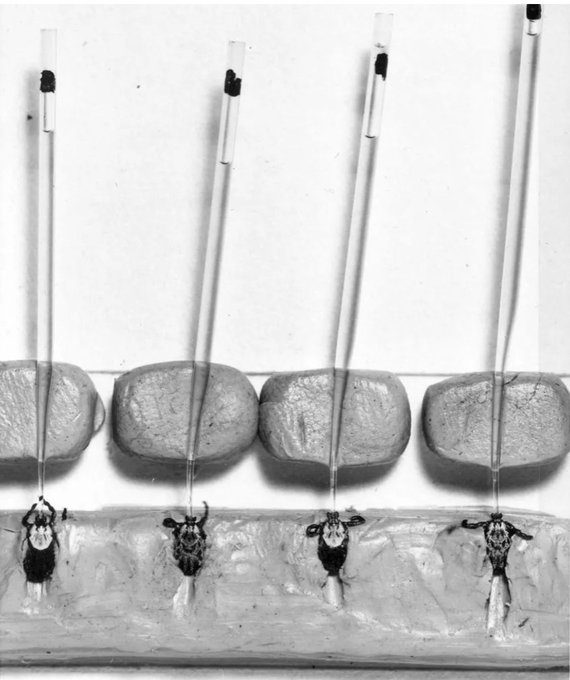
These ticks were infected with various diseases. KRIS NEWBY, MSME
The Official Story
As described by Newby, the official story is that Burgdorfer was sent to investigate a novel disease outbreak in Lyme, Connecticut, and Long Island. In 1980, he discovered the bacterium that now bears his name, Borrelia burgdorferi, and determined that this was what caused the disease.
He subsequently published an article stating the organism was easily killed off with penicillin. The notion that Lyme disease is easy to diagnose and treat has stuck ever since, even though the reality is often the opposite.
Newby agrees that, if caught early, many cases can indeed be cured with an inexpensive course of doxycycline. Two other antibiotics, ceftriaxone and vancomycin, have also been shown to clear the B. burgdorferi infection in cases where doxycycline fails.12 Unfortunately, Lyme disease patients often go undiagnosed for years, and by the time a diagnosis is made, the infection is well-established and very difficult to treat.
Holes in the Official Storyline
While researching for the book, Newby produced an animation of the original outbreak, which supposedly began at the mouth of the Connecticut River, near Long Island. This turned out to be rather revealing. She told Thacker:
“When I drew a 50-mile radius around that point, there were three new, highly virulent tick-borne diseases that showed up at that same time, in the late ’60s. This was 13 years before the Lyme bacterium was declared the cause of ‘Lyme disease’ in 1981.
I started looking through military records to see if the outbreak could be tied to any bioweapons accidents. And that’s when I discovered this massive bug-borne weapons program, as well as a program where germs were sprayed from airplanes over large areas, called Project 112.
Some of those germs were tick-borne diseases that they freeze-dried and aerosolized for spraying … Whatever happened in Lyme, Connecticut, we don’t have all the details. But I put together a solid circumstantial case, based on available evidence …
Burgdorfer … had worked with Q fever and ticks, experience that was needed at Rocky Mountain Labs for their bioweapons work. As soon as he got a security clearance, he started putting plague in fleas; deadly yellow fever in mosquitoes; and then mixing and matching viruses and bacteria in ticks to increase the virulence of these living weapons.
The Detrick weapons designers were looking for ticks that could be dropped on an enemy without arousing suspicion, filled with agents for which the target population wouldn’t have natural immunity … Ticks were the perfect stealth weapon, untraceable and long-acting …
I went as far as I could as a journalist to put together the circumstantial evidence that says Lyme disease is not the big problem — meaning the bacteria called Borrelia burgdorferi.
It’s what Burgdorfer said that they’re covering up: 1) that a different bacteria, perhaps a rickettsia related to Rocky Mountain spotted fever, was developed as a bioweapon in the Cold War; 2) that it might be a combination of bugs inside the ticks that is making people sick.”
Mice and Rats Are the Most Problematic Hosts
Since the late 1970s, the spread of Lyme disease has primarily been blamed on deer. However, more recent evidence suggests rodents like mice and rats are a far more serious threat.13 Ticks are not born with the Lyme spirochetes. They pick up the bacteria when feeding on an infected host.14
Research indicates that white-footed mice infect 75% to 95% of larval ticks that feed on them, while deer only infect about 1%. According to a 1996 study,15 rats are even more infectious than mice, noting that “the capacity of rats to serve as reservoir hosts for the Lyme disease spirochete, therefore, increases risk of infection among visitors to … urban parks.”
Another study16 published the following year also found that Norway rats and black rats were exceptionally effective hosts, infecting nearly all ticks that fed on them.
The main predators of small rodents like mice and rats are foxes, birds of prey, skunks and snakes.17 Agricultural and urban sprawl have decimated the habitats of these natural predators of mice and rats, allowing disease-carrying rodent populations to rise unabated.
Better Diagnostics for Lyme Are Sorely Needed
A big problem facing Lyme patients and their treating doctors is the difficulty of reaching a proper diagnosis.18 Conventional lab tests are unreliable, and one reason for this is because the spirochete can infect your white blood cells.19
Lab tests rely on the normal function of white blood cells to produce the antibodies they measure. If your white cells are infected, they don’t respond to infection appropriately. So, for blood tests to be truly useful, you need to be treated first.
Once your immune system begins to respond normally, only then will the antibodies show up. This is called the “Lyme Paradox.” You have to be treated before a proper diagnosis can be made.
That said, I recommend the specialized lab called IGeneX20 because they offer highly sensitive tests for more outer surface proteins (bands), and can often detect Lyme while standard blood tests cannot. IGeneX also tests for a few strains of coinfections such as Babesia and Ehrlichia.
Patients and Doctors Fight for Recognition of Chronic Lyme
As if the difficulties of getting a proper diagnosis and treatment were not enough, Lyme sufferers face additional hurdles when they don’t fully recuperate after the initial treatment. Whether “chronic” Lyme disease is possible or not has been the subject of controversy for many years.
The Infectious Diseases Society of America (IDSA), which publishes guidelines for a number of infectious diseases, including Lyme disease, has long opposed the idea chronic Lyme exists, and doesn’t include long-term treatment guidance for chronic Lyme in its clinical guidelines.21,22
This is important, as insurance companies frequently restrict coverage for long-term treatment based on IDSA’s guidelines. Physicians’ treatment decisions are also guided by its recommendations. Opposing IDSA is the International Lyme and Associated Diseases Society (ILADS), the members of which argue that many patients suffer long-term consequences and require far longer treatment than recommended by IDSA.23
Prevention Tips
Considering the difficulty of diagnosing and treating Lyme disease, taking preventive measures should be at the top of your list:
- Avoid tick-infested areas, such as leaf piles around trees. Walk in the middle of trails and avoid brushing against long grasses and path edgings. Don’t sit on logs or wooden stumps and take extra precautions if you’re in an area where rats have been sighted.
- Wear light-colored long pants and long sleeves, to make it easier to see the ticks.
- Tuck your pants into socks, and wear closed shoes and a hat, especially if venturing out into wooded areas. Also tuck your shirt into your pants.
- Ticks are very tiny. You want to find and remove them before they bite, so do a thorough tick check upon returning inside, and keep checking for several days following exposure. Also check your bedding for several days following exposure.
As for using chemical repellents, I do not recommend using them directly on your skin as this will introduce toxins directly into your body. If you use them, spray them on the outside of your clothes and avoid inhaling the spray fumes. The Environmental Protection Agency has a list24 indicating the hourly protection limits for various repellents.
If you find that a tick has latched onto you, it’s very important to remove it properly. For detailed instructions, please see lymedisease.org’s tick removal page.25 Once removed, make sure you save the tick so that it can be tested for presence of pathogenic organisms.
It’s Time to Ban Gain-of-Function Research
In closing, the Lyme disease epidemic and COVID-19 both appear to be the result of bioweapons development, and the real-world ramifications clearly demonstrate the risks involved. They can’t guarantee containment of the created pathogens, and sometimes, they don’t even try to contain them. In the case of Lyme disease, it’s possible that live testing is what led to the epidemic.
And while we don’t know whether SARS-CoV-2 was intentionally released or simply escaped, the end result is the same. The virus spread worldwide. If the world doesn’t wise up and realize just how suicidal these biological weapons programs are, humanity may eventually be wiped out by one of our own creations.
- 1 Paul Thacker Substack February 28, 2023
- 2 Under Our Skin
- 3 Indie Wire November 18, 2009
- 4 CDC How Many People Get Lyme Disease? December 21, 2018
- 5 Science Daily Experts Sound Alarm April 14, 2019
- 6, 8 International Lyme and Associated Diseases Educational Foundation
- 7 Lyme Disease Association Eva Sapi January 14, 2019
- 9 American Lyme Disease Foundation April 20, 2019
- 10 Symbiosis (2009) 47, 51-58 (PDF)
- 11 CDC January 10, 2019
- 12 Antimicrobial Agents and Chemotherapy Oct 2018, 62 (11) e01201-18
- 13 QZ.com July 9, 2015
- 14 Tickencounter.org
- 15 J Infect Dis. 1996 Nov;174(5):1108-11
- 16 J Med Entomol 1997 Jul;34(4):489-93
- 17 Orkin House Mice Enemies
- 18 ILADS Controversies & Challenges in Treating Lyme
- 19 Arthritis Rheumatol. 2014 Sep; 66(9): 2313–2323
- 20 Igenex.com
- 21 Clinical Infectious Diseases IDSA Clinical Guidelines for Lyme Disease January 2021; 72(1): e1-e48
- 22 Lyme Disease News August 20, 2019
- 23 Expert Review of Anti-Infective Therapy 2014; 12(9)
- 24 EPA Review the Guidance Document
- 25 Lymedisease.org
_______________
**Comment**
I highly recommend reading Thacker’s substack article. In it you will learn that Sam Telford, a Chronic Lyme denialist who is part of the Cabal, teaches biosecurity, specializes in the bioweapon Tularemia, and was the director of a bio-level 3 lab in Groton, Massachusetts that works on dangerous, tickborne diseases on the government’s select agent list. He’s funded by the NIH and the military-industrial complex so of course he was going to destroy anything that threatens the official narrative on Lyme/MSIDS.
For more:
- https://madisonarealymesupportgroup.com/2020/09/16/48473/ Secret History of Lyme Disease: Most Telling interview with Kris Newby Yet
- https://madisonarealymesupportgroup.com/2020/12/17/weaponized-ticks-human-experiments-the-lyme-disease-truth-with-kris-newby/
- https://madisonarealymesupportgroup.com/2019/08/13/lyme-disease-the-cdcs-greatest-coverup-what-they-dont-want-you-to-know/
- https://madisonarealymesupportgroup.com/2020/09/25/why-should-we-care-about-lyme-disease-a-colorful-tale-of-government-conflicts-of-interest-probable-bioweaponization-and-pathogen-complexity/
- https://madisonarealymesupportgroup.com/2019/07/31/tick-expert-admits-to-working-on-ticks-dropping-them-out-of-airplanes/
- https://madisonarealymesupportgroup.com/2021/11/12/interview-u-s-bioweapon-lab-suspected-of-source-of-lyme-disease/
- https://madisonarealymesupportgroup.com/2019/07/19/biological-warfare-experiment-on-american-citizens-results-in-spreading-pandemic/
- https://madisonarealymesupportgroup.com/2019/07/21/got-15-minutes-the-officially-ignored-link-between-lyme-plum-island/
- https://madisonarealymesupportgroup.com/2019/07/27/lyme-biowarfare-4-video-series/
- https://madisonarealymesupportgroup.com/2015/08/12/connecting-dots-mycoplasma/
- https://madisonarealymesupportgroup.com/2021/09/03/new-book-on-human-experimentation-biological-chemical-weapons/
- https://madisonarealymesupportgroup.com/2022/10/11/us-government-agent-testing-biological-chemical-agents-making-thousands-sick-tick-borne-illness/
- https://madisonarealymesupportgroup.com/2022/04/11/bioweapons-expert-speaks-out-pentagon-unit-a1266-studies-bioterrorism-agents-in-kazakhstan-collects-40000-ticks/
- https://madisonarealymesupportgroup.com/2022/03/14/pathogens-from-the-pentagon-biosafety-labs-in-ukraine-revealed/
- https://madisonarealymesupportgroup.com/2022/08/17/ukraine-war-biowarfare-the-theft-of-billions/
 Madison Area Lyme Support Group