Archive for the ‘research’ Category

Newly Emerging Tick-borne Disease in Northern California

https://www.lymedisease.org/newly-emerging-tick-borne-disease-in-northern-california/

Newly emerging tick-borne disease in Northern California

Feb. 17, 2023

From the County of Santa Clara Vector Control District, via Facebook:

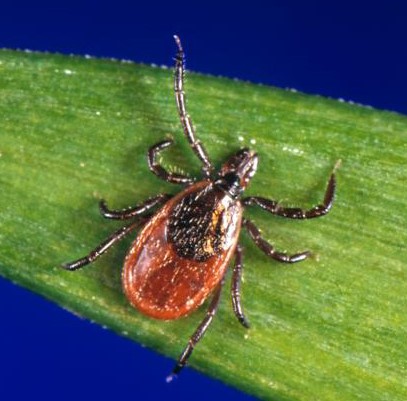
Pacific Coast Tick Fever (PCTF) is a newly emerging tick-borne disease in Northern California, transmitted by the Pacific Coast tick (Dermacentor occidentalis).

Symptoms of PCTF include fever, headache, and an eschar formation [dead tissue] at the tick bite site.

The first case of PCTF within Santa Clara County was reported in 2011 and the second human case was reported in August 2021, both in the same geographic area.

Over a six-month period, the District conducted monthly sampling at the resident’s home and surrounding parks within a one-mile radius. The ticks were collected, identified, and tested for the presence of the pathogen. The pathogen was detected in 5.2% (7 out of 134) of the ticks tested.

The District will continue to monitor for the presence of PCTF and reminds the public to take proactive steps to protect themselves from tick bites by staying in the middle of trails, wearing long sleeves and pants when hiking, and checking themselves, children, and pets after spending time in tick habitat.

Increasing Spread of Lyme Disease in Europe

https://danielcameronmd.com/increasing-spread-of-lyme-disease-in-europe/

INCREASING SPREAD OF LYME DISEASE IN EUROPE

lyme-disease-europe

The number of Lyme disease cases continues to climb in the U.S. and Europe despite preventative measures. A new study examines the prevalence of Lyme disease in Greece, a country that has questioned its existence.

The existence of Lyme disease in Greece remains controversial. In a recent study  “Serological evidence of possible Borrelia afzelii lyme disease in Greece,”  Karageorgou and colleagues examined patients throughout Greece suspected for Lyme disease by enzyme-linked immunosorbent assay (ELISA) and by western blotting for Borrelia burgdorferi sensu lato species.

“We found one patient positive for Borrelia burgdorferi and two patients positive for Borrelia afzelii specific antibodies. Both B. afzelii patients were suffering with neurological manifestations and had never traveled abroad,” the authors wrote.¹

Their findings indicate evidence of two autochthonous Lyme disease cases in Greece, possibly caused by B. afzelii.

“Suggestions that Lyme disease exists in Greece remain controversial and no study to date has definitively identified the presence of a Borrelia spp. that infects humans.”

In another study, Olafsdotti and Askling reviewed the possible reasons behind the growing number of cases in the U.S. and abroad.² “Reasons for poor progress in limiting the disease are manyfold” and include:

  1. The surveillance system for Lyme disease remains highly variable, despite European Union surveillance to standardize definition.
  2. “There are still substantial diagnostic gaps for the disease given its varied and unusual presentation.”
  3. “Absence of reliable assays for acute infection.”
  4. “Difficulty in differentiating past disease from current disease.”
  5. “An inability to monitor treatment response.”

Furthermore, the poor prognosis in limiting the disease is expected to be worse with climate change, wrote the authors.

The authors stressed the need to overcome diagnostic challenges, develop better surveillance strategies and policies for Lyme disease, as well as identify a safe and effective vaccine against Borrelia burgdorferi.

Karageorgou et al. concludes, “We demonstrate the possibility of the presence of B. afzelii in Greece. Therefore, we need to raise awareness of Lyme disease among healthcare providers and ensure that B. afzelii, and possibly also other Lyme borrelia species must be taken into account. The true underlying rate of Lyme disease in Greece remains unknown.”

References:
  1. Karageorgou I, Koutantou M, Papadogiannaki I, Voulgari-Kokota A, Makka S, Angelakis E. Serological evidence of possible Borrelia afzelii lyme disease in Greece. New Microbes New Infect. Mar 2022;46:100978. doi:10.1016/j.nmni.2022.100978
  2. Olafsdottir B, Askling HH. Increasing spread of borreliosis in Europe. New Microbes New Infect. 2022 Aug 29;48:101022. doi: 10.1016/j.nmni.2022.101022. PMID: 36176541; PMCID: PMC9513809.

_______________

**Comment**

The fact people are still quibbling over where and if Lyme exists should tell you everything you need to know about this very real plague, which the climate doesn’t affect one iota.

Can Anaplasmosis Cause Heart Issues?

https://danielcameronmd.com/can-anaplasmosis-cause-heart-problems/

CAN ANAPLASMOSIS CAUSE HEART PROBLEMS?

anaplasmosis-heart-problems

The number of cases of human granulocytic anaplasmosis (HGA) is rising in the United States, with more than a three-fold increase over the past several years. The tick-borne illness is not often associated with conduction problems and myocardial disease. But a new study highlights a case in which anaplasmosis triggered mycopericarditis.

In their article, “Case report: human granulocytic anaplasmosis causes acute myopericarditis with atrial fibrillation,” Levy et al. describe the case of a 65-year-old man who presented to the emergency room with fever and malaise, which had persisted for one week.¹ An electrocardiogram showed new atrial fibrillation and conduction abnormalities.

The man resides in a suburb of Boston in a home surrounded by wooded areas. “He reported being outdoors regularly for kayaking trips in the few months prior to presentation,” the authors wrote.

“Anaplasma serologies were positive for IgM and negative for IgG, and subsequent PCR detected anaplasma phagocytophilum DNA,” the author wrote. “CMR imaging revealed findings consistent with myopericarditis.”

According to the authors, the man had “an isolated HGA infection, and cardiac workup showed evidence of myopericarditis as well as conduction system disease.”

Conduction and rhythm abnormalities are frequently associated with Lyme disease but have not been previously reported with [anaplasmosis] HGA.

“This case highlights that conduction and rhythm disturbance can be a feature of myocarditis in the setting of isolated [anaplasmosis] HGA infection,” the authors wrote.

“In our patient HGA was the sole identifiable culprit,” the authors point out. “This is an uncommon finding; isolated HGA myocarditis or myopericarditis has been reported only once previously.”

The authors conclude:

  • “myopericarditis and serious haemodynamic compromise are potential severe complications of HGA infection, without the need for a concomitant Lyme infection.
  • “anaplasma phagocytophilum infection, in the absence of any concomitant Lyme disease, can cause acute myopericarditis”
  • “HGA myopericarditis can present with electrical disturbances including atrial fibrillation and conduction system disease.”

It is important to include anaplasmosis in patients presenting with clinical symptoms consistent with myopericarditis and continuing doxycycline treatment until both Lyme disease and HGA are ruled out, the authors explained. This is particularly relevant to those patients living in endemic regions who present with symptoms during the late Spring through early Fall.

References:
  1. Levy AM, Martin LM, Krakower DS, Grandin EW. Case report: human granulocytic anaplasmosis causes acute myopericarditis with atrial fibrillation. Eur Heart J Case Rep. 2023 Jan 17;7(1):ytad026. doi: 10.1093/ehjcr/ytad026. PMID: 36727140; PMCID: PMC9883714.

_______________

**Comment**

It’s important to remember the distinction between rarely reported and rarely occurring.  Big diff.

For more:

Migratory Songbirds Transport Amblyomma Ticks to Canada

https://www.jelsciences.com/articles/jbres1659.pdf

Migratory Songbirds Transport Amblyomma longirostre and Amblyomma maculatum Ticks to Canada

John D Scott1 *, Jaclyn TA McKeown2 and Catherine M Scott1 1 Upper Grand Tick Centre, 365 St. David Street South, Fergus, Ontario N1M 2L7, Canada 2 Centre for Biodiversity Genomics, University of Guelph, Guelph, Ontario N1G 2W1, Canada *Corresponding author(s) John D Scott, Upper Grand Tick Centre, 365 St. David Street South, Fergus, Ontario N1M 2L7, Canada Email: jkscott@bserv.com DOI: 10.37871/jbres1659

Submitted: 23 January 2023 Accepted: 02 February 2023 Published: 06 February 2023 Copyright: © 2023 Scott JD, et al. Distributed under Creative Commons CC-BY 4.0

OPEN ACCESS

VOLUME: 4 ISSUE: 2 – FEBRUARY, 2023 BIOLOGY GROUP PARASITOLOGY MOLECULAR BIOLOGY INFECTIOUS DISEASES

ABSTRACT

Birds transport ticks into Canada during northward spring migration, and some of these ticks are infected with tick-borne zoonotic pathogens. Some Amblyomma species harbour pathogens that cause debilitating diseases that can be fatal to humans, and domestic and wildlife animals. At least 65 Amblyomma spp. are indigenous in the Western Hemisphere, and approximately half bite humans. Amblyomma longirostre carries Rickettsia amblyommatis which causes spotted fever group rickettsiosis, a febrile disease in humans. Additionally, Amblyomma maculatum harbors and transmits Rickettsia parkeri, a spotted fever group rickettsiosis, and this tick bites humans. In the present study, we use two technologies to identify ticks. To confirm identification, we took microphotographs followed by DNA barcoding of the cytochrome c oxidase I gene. Based on molecular analysis, we confirmed that the two Amblyomma spp. were Amblyomma longirostre, a neotropical tick and Amblyomma maculatum, the Gulf Coast tick. Based on our tick-bird findings, we confirm that migratory songbirds transport Amblyomma ticks into Canada, and have the potential, either directly or indirectly, to transmit tick-borne zoonotic pathogens to humans.

_______________

**Comment**

Amblyomma ticks, like other ticks, have many species.  The best known in the U.S. is Amblyomma americanum, commonly known as the lone star tick, which is fast and aggressive and clusters in groups of 2,000-8,000 until they are nymphs which means those who brush up  against a cluster could have hundreds to thousands attaching simultaneously.  Females are distinguished by a white dot, hence “star” on her back. They have swarmed a town in Martha’s Vineyard and are typically associated with Southern states; however, this important work shows that once again ticks commonly defy the narrative that they only exist in certain geographical locations.  This is a huge problem that needs to be addressed and not blamed on climate change, the latest cash cow for researchers, which will only divert precious research dollars into the hands of those who will not help sick patients one iota.

Patients to this day are denied a diagnosis and treatment due to some bone-headed doctor looking at a map.

Other species of Amblyomma ticks are common in Africa, the Caribbean, and Central and South America. Most attach to birds, and migration of avian hosts has been unfortunately downplayed in favor of “climate change,” but is far more implicated in dissemination of tick-borne diseases than “experts” admit.

Recently established populations of Amblyomma maculatum (Gulf Coast) ticks were discovered in New York, further demonstrating that ticks don’t seem to bother with maps.

While rodents, particularly the white footed mouse, get all the air-play regarding tick proliferation, many birds travel great distances and are transporting ticks into new locations.  Rather than focusing on research that will truly help sick patients, researchers have focused on releasing hordes of GMO mice into the wild.  Similarly to the experimental gene therapy COVID injections, nobody has a clue about the unintended consequences.  Funding for said research becomes crystal clear when you discover that DARPA has a defense advanced research project called “Insect Allies” which is designed to genetically modify mature plants in a live environment by releasing insects infected with GMO viruses. They have also developed “remote-controlled insects.”  This type of research is all the rage now.

Their goal: release all this into the wild and repeat, “It’s safe and effective.”

Bartonella in Malignant Melanoma, A Preliminary Study

https://www.ncbi.nlm.nih.gov/pmc/articles/PMC7998106/

 2021 Mar; 10(3): 326.
Published online 2021 Mar 10. doi: 10.3390/pathogens10030326
PMCID: PMC7998106
PMID: 33802018

Bartonella henselae Detected in Malignant Melanoma, a Preliminary Study

Lawrence S. Young, Academic Editor and Olivier Sparagano, Academic Editor

Abstract

Bartonella bacilliformis (B. bacilliformis)Bartonella henselae (B. henselae), and Bartonella quintana (B. quintana) are bacteria known to cause verruga peruana or bacillary angiomatosis, vascular endothelial growth factor (VEGF)-dependent cutaneous lesions in humans. Given the bacteria’s association with the dermal niche and clinical suspicion of occult infection by a dermatologist, we determined if patients with melanoma had evidence of Bartonella spp. infection. Within a one-month period, eight patients previously diagnosed with melanoma volunteered to be tested for evidence of Bartonella spp. exposure/infection. Subsequently, confocal immunohistochemistry and PCR for Bartonella spp. were used to study melanoma tissues from two patients. Blood from seven of the eight patients was either seroreactive, PCR positive, or positive by both modalities for Bartonella spp. exposure. Subsequently, Bartonella organisms that co-localized with VEGFC immunoreactivity were visualized using multi-immunostaining confocal microscopy of thick skin sections from two patients. Using a co-culture model, B. henselae was observed to enter melanoma cell cytoplasm and resulted in increased vascular endothelial growth factor C (VEGFC) and interleukin 8 (IL-8) production. Findings from this small number of patients support the need for future investigations to determine the extent to which Bartonella spp. are a component of the melanoma pathobiome.

_______________

For more: