Know Your Ticks

https://www.globallymealliance.org/tick-table/

Know your ticks

Easy to read table shows the most common ticks found in the U.S. that transmit pathogens to humans.
Note: only a partial list. To learn more about tick-bite prevention and how to be Tick AWARE, click here

Click here to download the Tick Table
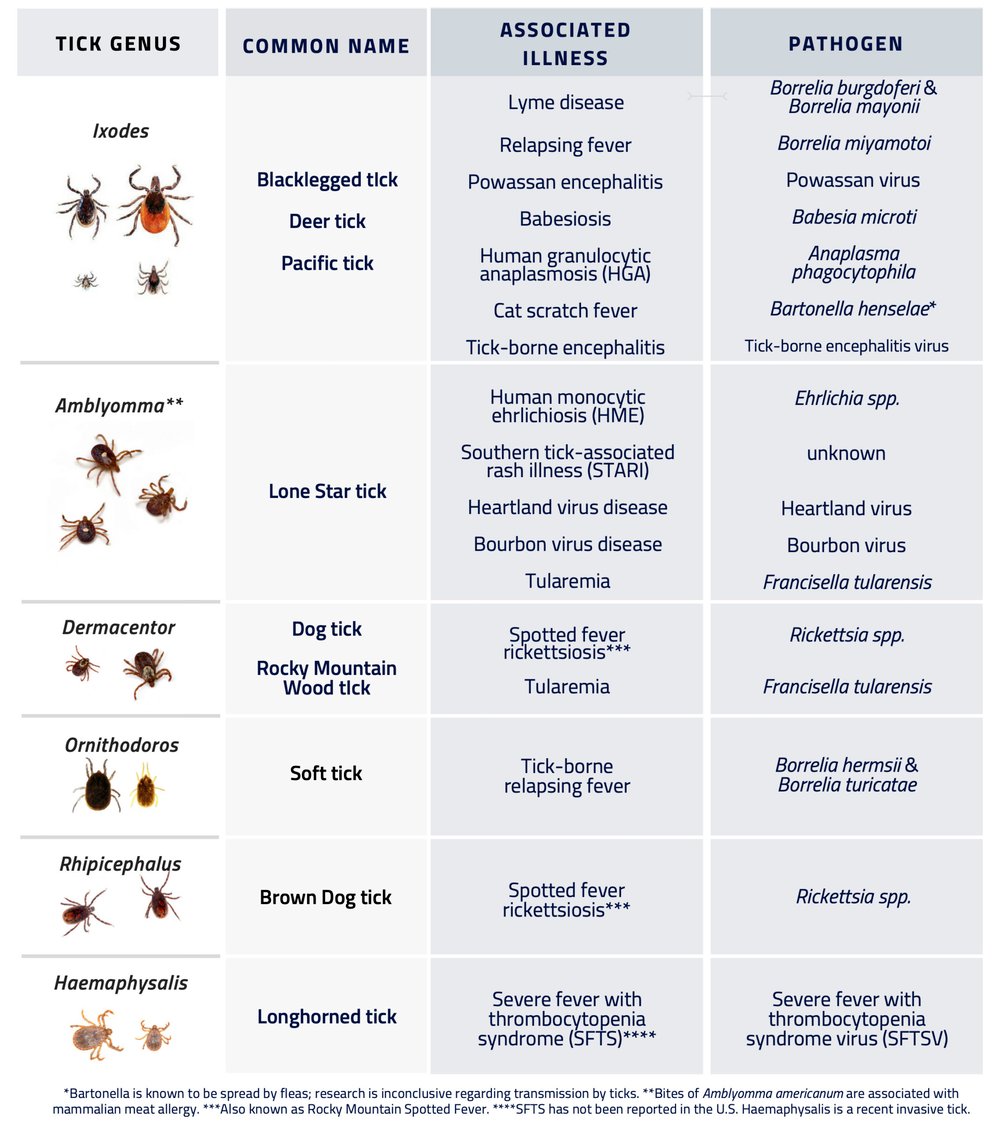
Tick Table

For more:

Remember, in Wisconsin, ticks are found in every county in the state. Researchers are also finding them in bright, open, mowed lawns.

https://danielcameronmd.com/babesia-microti-multiple-sclerosis-patient/  Go Here for Podcast

BABESIA MICROTI IN A MULTIPLE SCLEROSIS PATIENT

babesia microti in MS patient

Welcome to another Inside Lyme Podcast. I am your host Dr. Daniel Cameron. In this episode, I will be discussing the case of a 54-year-old male with a 12-year history of multiple sclerosis who was diagnosed with Babesia microti.

Haberli and colleagues describe the case in the journal Multiple Sclerosis and Related Disorders.1

Babesia microti, a tick-borne pathogen that infects red blood cells, can cause severe disease in immunocompromised individuals. This patient was immunocompromised due to multiple sclerosis (MS) and the immunosuppressive drug he was receiving, ocrelizumab.

Disease Modifying Therapy

Ocrelizumab (sold under the brand name Ocrevus™ in the US) was approved in 2017 for the treatment of multiple sclerosis (MS). It is a humanized anti-CD20 monoclonal antibody, which targets mature B-cells that contribute to demyelination and damage to nerve cells.

Ocrelizumab is a disease modifying therapy (DMT) approved to treat both primary progressive MS and relapse-remitting MS. Ocrevus™ can cost just over $65,000 per year if not covered by insurance.

The patient was prescribed Ocrevus™. 

“The use of ocrelizumab has been associated with increased risk of infections involving upper respiratory, gastrointestinal, and urinary tracts, in addition to herpes simplex reactivation,” wrote the authors. 

“Data from one randomized clinical trial has shown a statistically significant increase in the incidence of malignancy among ocrelizumab users compared to placebo and interferon β1,” they added.

Rituximab, a medication with a similar mechanism of action, has been associated with rare infections in non-MS patients including severe or relapsing Babesia microti infections, the authors wrote.

MS patient fails treatment

This is the first published case of Babesia microti in a patient treated with Ocrevus™.

The 54-year-old man had been diagnosed with major depressive disorder, hypertension and had a 12-year history of relapse-remitting multiple sclerosis.

He was hospitalized with malaise, fever, fatigue for one week and episodes of syncope. He failed treatment with 4 different disease modifying drugs ─ glatiramer acetate, natalizumab, dimethyl fumarate, and fingolimod.

The man refused further therapy and was lost to follow-up.

6 years later, MS symptoms worsen

Six years later, the man’s MS symptoms worsened and he was prescribed Ocrevus™.

Four months later, he was hospitalized and treated for possible sepsis. He had unexplained thrombocytopenia (low blood platelet count).

Tests positive for Babesia microti

As part of his sepsis work-up, the patient was tested for tick-borne infections with PCR test results for Babesia microti returning positive.

The man was treated with 500mg daily azithromycin and 750mg twice daily atovaquone. 

“At week 8, his therapy was discontinued due to complete resolution of pancytopenia, negative B. microti PCR, and negative Giemsa-stained blood smear,” wrote the authors.

There have been other cases of Babesia microti patients treated with Ocrevus™.  

“There were five babesiosis cases associated with ocrelizumab reported between June 2018 and August 2020 on the FAERS database,” the authors wrote.²

“There were two females and two males with an age range of 45 to 51 years old, and one female 65 to 85 years old, all of whom had serious events without reported fatalities,” wrote the authors based on a review of the FDA Adverse Event Reporting System (FAERS) public dashboard.

The following questions are addressed in this podcast episode:  

  1. What is Babesia microti?
  2. How do you diagnose Babesia?
  3. Is testing accurate?
  4. How severe is Babesia?
  5. Are there asymptomatic cases of Babesia?
  6. Why do immunosuppressive drugs pose a risk to Babesia patients?
  7. What are the risk factors for symptomatic Babesia?
  8. What is a disease modifying agent?
  9. What is Ocrevus™?
  10. What was the treatment for Babesia?
  11. What is the significance of 8 weeks of treatment with Babesia?

    Thanks for listening to another Inside Lyme Podcast. You can read more about these cases in my show notes and on my website @DanielCameronMD.com. As always, it is your likes, comments, reviews, and shares that help spread the word about Lyme disease. Until next time on Inside Lyme.

Please remember that the advice given is general and not intended as specific advice to any particular patient. If you require specific advice, then please seek that advice from an experienced professional.

Inside Lyme Podcast Series

This Inside Lyme case series will be discussed on my Facebook page and made available on podcast and YouTube.  As always, it is your likes, comments, and shares that help spread the word about this series and our work. If you can, please leave a review on iTunes or wherever else you get your podcasts.

References:
  1. Haberli N, Coban H, Padam C, Montezuma-Rusca JM, Creed MA, Imitola J. Babesia microti infection in a patient with multiple sclerosis treated with ocrelizumab. Mult Scler Relat Disord. Feb 2021;48:102731. doi:10.1016/j.msard.2020.102731
  2. Ezequiel M, Teixeira AT, Brito MJ, Luis C. Pseudotumor cerebri as the presentation of Lyme disease in a non-endemic area. BMJ Case Rep. 2018;2018.

________________________

**Comment**

This case brings up a very important point: MS can be caused or exacerbated by tick-borne infections. Immune-suppressing drugs are contraindicated for people with TBI’s. The only caveat to that is if they are used in conjunction with antibiotics.

I can’t help but wonder how many other patients are out there with this exact same scenario.

For more:

https://www.globallymealliance.org/blog/dear-lyme-warrior-help-1

Every few months, Jennifer Crystal devotes a column to answering your questions. Do you have a question for Jennifer? If so, email her at lymewarriorjennifercrystal@gmail.com.

Is it helpful to pulse antibiotics?

Pulsing is a method of antibiotic administration where the patient takes the medication for a certain amount of time (for example, two weeks) and then stops it for a period (say, another two weeks), and then repeats the cycle. Some people have found great success with this method (Steven Phillips, MD talks about it in his new book Chronic: The Hidden Cause of the Autoimmune Pandemic and How to Get Healthy Again). He writes about patients who were on antibiotics all the time for years and only reached a certain level of wellness, but then felt completely better after switching to a pulsed regimen. Pulsing allows the body to detox, especially after intense Herxheimer reactions, and gives the gut a break, too.

That said, pulsing doesn’t work for everyone. Some feel that doing so allows the spirochetes to build up a stronger load during the off-period, making them harder to kill (and causing worse Herxheimer reactions) during the on-periods. My own body has difficulty adjusting to any kind of on-off regimen (for example, if I’m weaning off a medication, it never works for me to take it every other day; this just causes a jerking effect). For others, that method works just fine. The bottom line is that you need to speak with your Lyme Literate Medical Doctor (LLMD) to see if pulsing is the right choice for you, and you may need to do a little trial-and-error to find out.

I’ve been battling Lyme for four months and just started getting rashes and hives on my legs at random times. It seems it may coincide with something I ate. Did you have any trigger foods, and did you find anything to help rashes and hives long-term?

Lyme is an inflammatory disease. As I explain in my post “Stop the Itching! Lyme and Hives,” Lyme can cause an inflammatory response anywhere in the body, manifesting as redness, swelling, heat, pain, or loss of function. I started getting hives four years after getting a tick bite, but it would be another four years before I got accurately diagnosed and started treatment. Once I did get proper antibiotic treatment, the hives stopped.

Before then, itchiness and redness could sometimes be triggered by exercise. After a run, my legs might turn bright red and grow incredibly itchy. The reaction was never triggered by food, but one of two things may be going on for you. You may simply be having an allergic reaction to something you’re eating (try to find a common denominator in your meals, and see an allergist who can test for food allergies). Or, maybe you are eating an inflammatory food that is exacerbating the inflammation you’re already experiencing from Lyme. (See my post “The Lyme Diet” for information on inflammatory and anti-inflammatory foods). It helped me to switch to an anti-inflammatory diet, which I’ve been on for over a decade. What helped the most with my inflammation, though, was proper treatment with antibiotics and anti-inflammatory medication. If you are not already seeing a LLMD, I encourage you to find one who can address your systemic inflammation, check for co-infections, and help you consider dietary changes. (To find a good LLMD in your area, please click here).

Before sleep medication, can you describe your insomnia? Was it every night? For how long?

Once tick-borne illnesses crosses the blood-brain barrier, they can cause a host of neurological issues, including sleep disturbances. Before I was accurately diagnosed with and treated for Lyme disease, babesiosis, and ehrlichiosis, I had horrendous insomnia. At one point, I was literally awake for weeks. I tried everything: meditating, counting sheep, using lavender oil, taking over-the-counter sleep aids, but nothing worked. Despite my exhaustion, my brain would not turn off. I had word and song iteration—words and songs playing in my head like a mash-up, over and over again. It felt like my body was in park and my brain was in overdrive.

Some nights I did sleep, but it wasn’t restful. I experienced hallucinogenic nightmares that left me more tired when I woke up than when I went to sleep. Sleep disturbances went on for a couple years before I was accurately diagnosed, and persisted (with some improvements) for a few months during the start of treatment. These issues came back when I relapsed. The first step in getting them under control was to treat the infections that were causing it. I saw a sleep specialist who did neurofeedback, taught me good sleep hygiene, and figured out, through some trial-and-error, the best medication to help me sleep.

Writer

Jennifer Crystal

Opinions expressed by contributors are their own. Jennifer Crystal is a writer and educator in Boston. Her work has appeared in local and national publications including Harvard Health Publishing and The Boston Globe. As a GLA columnist for over six years, her work on GLA.org has received mention in publications such as The New Yorker, weatherchannel.com, CQ Researcher, and ProHealth.com. Jennifer is a patient advocate who has dealt with chronic illness, including Lyme and other tick-borne infections. Her memoir about her medical journey is forthcoming. Contact her via email below.

Email: lymewarriorjennifercrystal@gmail.com

______________________

**Comment**

This post took me back in time.

The crazy manifestations of this complex multi-faceted illness can not be overstated.  They are unbelievable.  This is one of the reasons main-stream medicine thinks we are all nuts.  I’m sure it appears that way when we frantically diatribe through our litany of bizarre symptoms.  It truly takes a special practitioner to quietly listen to patients, believing that there is a real, physiological cause behind it all.  To believe that thousands upon thousands of patients are saying similar things are all crazy is a lazy way out.

I’ve pulsed antibiotics successfully and taken them everyday successfully.

Pulsing is based upon the fact that Lyme disease has a 4-week cycle, where every 4 weeks patients experience a symptom flair. Burgdorfer found this in mice studies, and IGeneX found the same thing in urine antigen studies.Borrelia grow and are active, then become inactive.Four weeks later they activate.This has been shown recently in vitro. Think of Bb as a slow relapsing fever.This nuance is important because antibiotics only kill during the active phase.You need a minimum of a month to bracket a whole generation cycle. 

Slightly different than pulsing, is something called “cycling”, used when patients reach a plateau. You discontinue antibiotics until symptoms return.  Then, when symptoms return, go to full treatment until symptoms are gone again. Dr. Burrascano states that many patients become symptom free after 4 of these cycles.  He used this on himself as well with success.  Burrascano found 3 other physicians doing the exact same thing with patients. This approached worked for all of them despite the different geographical areas they were in.

But, like all things Lyme/MSIDS, this doesn’t work with every patient.  But – it’s still worth trying!

My LLMD states Lyme/MSIDS causes all sorts of rashes – everywhere on the body.  I had one that looked like ring-worm that was on my derrière.  It expanded outwardly until finally it disappeared.  I believe treatment resolved it.

Rashes-larger-blog-4

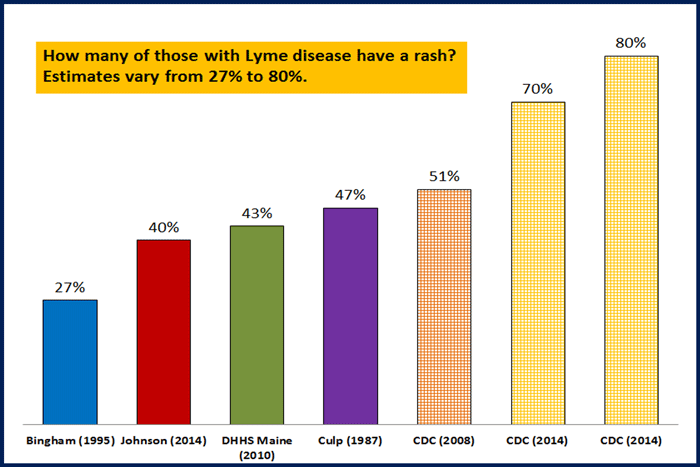
A reminder that the EM rash is diagnostic for Lyme.  If you have the EM rash, you have Lyme, but many never see or get the rash.  This graph beautifully demonstrates that getting the “classic” EM rash is highly variable.

Insomnia is a real pain.  

For more:

http://blckbx.tv/videos/de-meest-verwijderde-docu-van-het-moment-corona-op-zoek-naar-de-waarheid?  Go here for Documentary

Corona in search of the Truth…

The most deleted documentary of the moment.

Professor Dr. Martin Haditsch is an Austrian microbiologist and infectious disease specialist who traveled halfway around the world for a documentary that will go down in history as vitally important. For example, he interviewed the following experts about the crisis that has gripped the entire world for more than a year.

  • Dr. Pierre Kory – IC physician and researcher in New York

  • Professor Dr. Michael Levitt – Nobel laureate Stanford University

  • Professor Dr. Roland Wiesendanger – University of Hamburg

  • Professor Dr. Klaus Stöhr – Virologist and Epidemiologist

  • Professor Dr. Klaus Püschel – straightforward

  • Professor dr. Kurt Zatloukal – Director of the Research Institute for Pathology & Microbiology in Graz.

  • Dr. Thomas Ly – leads Thailand’s largest hospital chain in the fight against the Pandemic and is a trusted advisor to the Dalai Lama

  • Professor Marco Confalonieri – Head of the Cattinara Long specialized hospital in Triest

Removed by Youtube

Corona in Search of the Truth is the title of the high-end documentary that program maker Flavio Pasquino received from someone last week via telegram. He opened the link, looked at it for a few minutes, and ran to his computer to get the impressive documentary back as soon as possible. And you guessed it…the documentary was removed by YT less than an hour later.

A must see

“Corona Auf der Suche nach der Waarheid is such a film that you must see” Flavio Pasquino opens the promotional video on Youtube that stops after a few minutes and refers to the link in this message.

BLCKBX translated the video into Dutch and English by a native German translator and hosted it outside of Youtube. So we would like to ask you to really take the time for it. It lasts 1.5 hours but the documentary is rock solid for the confrontational facts that also come to light in this documentary, but…as Flavio Pasquino concludes in the announcement:

“It’s still nicer to know the painful truth than to muddle through the fog of ignorance.”

_______________________

**Comment**

I was able to install Google Translator which gives me English closed captioning.  I found hearing multiple voices confusing so I turned the sound completely off and just read the subtitles.  This is well worth your time.  These experts are highly censored yet are specialists taking a big risk coming out with this information.

Please share widely.

For a refresher, please see this 5 minute video on the absolute fear mongering of COVID in children.  The truth is deaths from COVID are ‘incredibly rare’  which has a mortality of .000002%. for children. 

Newly released data show that not a single healthy young person under the age of 50 has died from COVID in Israel, ever.

There is also absolutely ZERO evidence to support the complete myth that the asymptomatic are transmitting the virus to others.  Up until COVID, healthy people have never been quarantined, and a literature review and meta-analysis shows that lockdowns have had little to no effect on COVID mortality.  

http:// Approx. 2 Min

The Lies of COVID Shot Effectiveness

https://doctors4covidethics.org/expert-evidence-regarding-comirnaty-covid-19-mrna-vaccine-for-children/

Expert evidence regarding Comirnaty (Pfizer) COVID-19 mRNA Vaccine for children

Michael Palmer MD, Sucharit Bhakdi MD, Stefan Hockertz PhD

The expert statement was submitted by Italian lawyer Renate Holzeisen to the European General Court in conjunction with a lawsuit that challenges the EU’s authorization of the use of Pfizer’s mRNA vaccine on children of 12 years and older. The arguments made here specifically reference the Pfizer vaccine, but they apply similarly to the Moderna mRNA vaccine, and many also apply to the adenovector-based AstraZeneca and Johnson & Johnson (Janssen) vaccines.

Permission is hereby granted to freely share and distribute this document in unchanged form.

About the authors

Michael Palmer MD is Associate Professor in the Department of Chemistry at the University of Waterloo, Ontario, Canada. He studied Medicine and Medical Microbiology in Germany and has taught Biochemistry since 2001 in Canada. His focus is on Pharmacology, metabolism, biological membranes and computer programming, with an experimental research focus on bacterial toxins and antibiotics (Daptomycin). He has written a textbook on Biochemical Pharmacology.

Sucharit Bhakdi MD is Professor Emeritus of Medical Microbiology and Immunology and Former Chair at the Institute of Medical Microbiology and Hygiene, Johannes Gutenberg University of Mainz.

Stefan Hockertz is Professor of Toxicology and Pharmacology, a European registered Toxicologist and Specialist in Immunology and Immunotoxicology. He is CEO of tpi consult GmbH.

All three are founding signatories of Doctors for Covid Ethics

__________________

For more:

Vaccinated children were significantly more likely than unvaccinated children to be diagnosed with severe allergies (OR = 4.31, 95% CI 1.67 – 11.1), autism (OR = 5.03, 95% CI 1.64 – 15.5), gastrointestinal disorders (OR = 13.8, 95% CI 5.85 – 32.5), asthma (OR = 17.6, 95% CI 6.94 – 44.4), ADHD (OR = 20.8, 95% CI 4.74 – 91.2), and chronic ear infections (OR = 27.8, 95% CI 9.56 – 80.8). Vaccinated children were less likely to be diagnosed with chickenpox (OR = 0.10, 95% CI 0.029 – 0.36). Children who were “vaccinated and not breastfed” or “vaccinated and delivered via cesarean section” had the highest rates of adverse health outcomes. In this study, higher ORs were observed within the vaccinated versus unvaccinated groups for several adverse health conditions. Further research is essential to understand the full scope of health effects associated with childhood vaccination.

Despite CDC’s efforts at suppression, independent scientists and research institutions (including UCLA) have managed to conduct and publish several additional vaccinated/unvaccinated studies since 1999. Those studies indicate high incidence of chronic diseases and brain and immune system injuries among vaccinated compared to unvaccinated cohorts. Some of those studies are summarized in this presentation.

**UPDATE July 15, 2021**

In an unprecedented totalitarian move, an advisory put out by the U.S. Surgeon General is recommending that Big Tech companies (Facebook, Twitter, Youtube, etc) impose consequences for accounts that violate the private companies’ own policies.  In other words the government is telling privately owned companies what to do – particularly with regard to what they call ‘misinformation’, defined as ‘information that is false, inaccurate, or misleading according to the best available evidence.’

In case you missed it, Big Tech has already been censoring and shutting down accounts that disagree with what the government is peddling, which includes their own ineffective treatments and injections they erroneously call “vaccines.” Even scientific journals have been engaging in a massive disinformation campaign.

It’s been discovered that “fact-checkers” also have conflicts of interest. This Face-book fact-checker worked for the Wuhan Lab. Google funded the Wuhan Lab.

Our own government is guilty of ‘misinformation’ but has gotten away with it because they hold the power. They have lied about COVID being isolated, the effectiveness of masks, testing, actual case counts of COVID, that there are cheap, effective treatments, the true cause of death, and on the effectiveness and safety of the COVID injection, which they own half the patent on. They also have owned SarsCov spike protein injection patents since the early 2000’s, created computer-generated genome sequences claimed to be coronaviruses, patented those man-made sequences, patented the so called “vaccines,” comprised of synthetic lab-made proteins to “treat” the contrived, patented coronavirus, detected by the patented test, to detect the make-believe virus.

While the U.S. General states that, “health misinformation is an urgent threat to public health. It can cause confusion, sow mistrust, and undermine public health efforts, including our ongoing work to end the COVID-19 pandemic,” they are the ones repeatedly sowing misinformation and by keeping life-saving treatment from sick people so they can push their own lucrative treatments and injections.

INTERESTINGLY, THEY CALL THOSE SOWING ‘MISINFORMATION’ ‘SUPER-SPREADERS.”  THIS IS NOT BY ACCIDENT.  BULLIES HAVE ALWAYS USED NAME-CALLING IN THEIR ARSENAL OF TOOLS.

POWER CORRUPTS; ABSOLUTE POWER CORRUPTS ABSOLUTELY.

There is a information war going on.  Make sure you are equipping yourself with facts that haven’t been twisted by those with vested interests.