Researchers confirm new Rickettsia species found in dogs
By Tracy Peake, NC State
Researchers from North Carolina State University have confirmed that a species of Rickettsia first seen in dogs in 2018 is a new species of bacteria.
The new species, dubbed Rickettsia finnyi, is associated with symptoms similar to those of Rocky Mountain spotted fever (RMSF) in dogs, but has not yet been found in humans.
Rickettsia pathogens are categorized into four groups; of those, spotted-fever group Rickettsia (which is transmitted by ticks) is the most commonly known and contains the most identified species. There are more than 25 species of tick-borne, spotted-fever group Rickettsia species worldwide, with R. rickettsii – which causes RMSF – being one of the most virulent and dangerous.
Symptoms of RMSF in dogs and people are similar, including fever, lethargy and symptoms related to vascular inflammation, like swelling, rash and pain.
“We first reported the novel species of Rickettsia in a 2020 case series involving three dogs,” says Barbara Qurollo, associate research professor at NC State and corresponding author of the new study.
“Since then we received samples from an additional 16 dogs – primarily from the Southeast and Midwest – that were infected with the same pathogen. We were also able to culture the new species from the blood of one of the naturally infected dogs in that group.”
To name a new Rickettsial bacterial species, the bacteria must be cultured, its genome sequenced and published, and the cultures must be deposited in two biobanks so that other researchers can also study it. Qurollo’s group successfully cultured the new species from the infected dog.
Culturing a difficult pathogen
“Rickettsia species are difficult to culture because these organisms grow inside of cells,” Qurollo says. “While we haven’t been able to confirm which tick species transmit it yet, we think it may be associated with the lone star tick, because a research group in Oklahoma found R. finnyi DNA in a lone star tick.”
The researchers named the new species Rickettsia finnyi, after Finny, the first dog they found it in.
“By naming it after an individual dog, we wanted to honor all companion dogs that have contributed to the discovery of new pathogens that could cause serious illness in both dogs and humans,” Qurollo says.
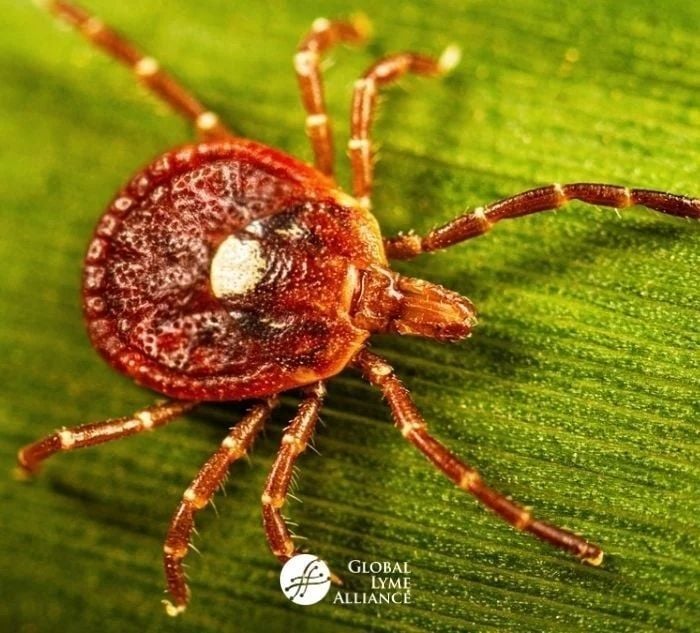
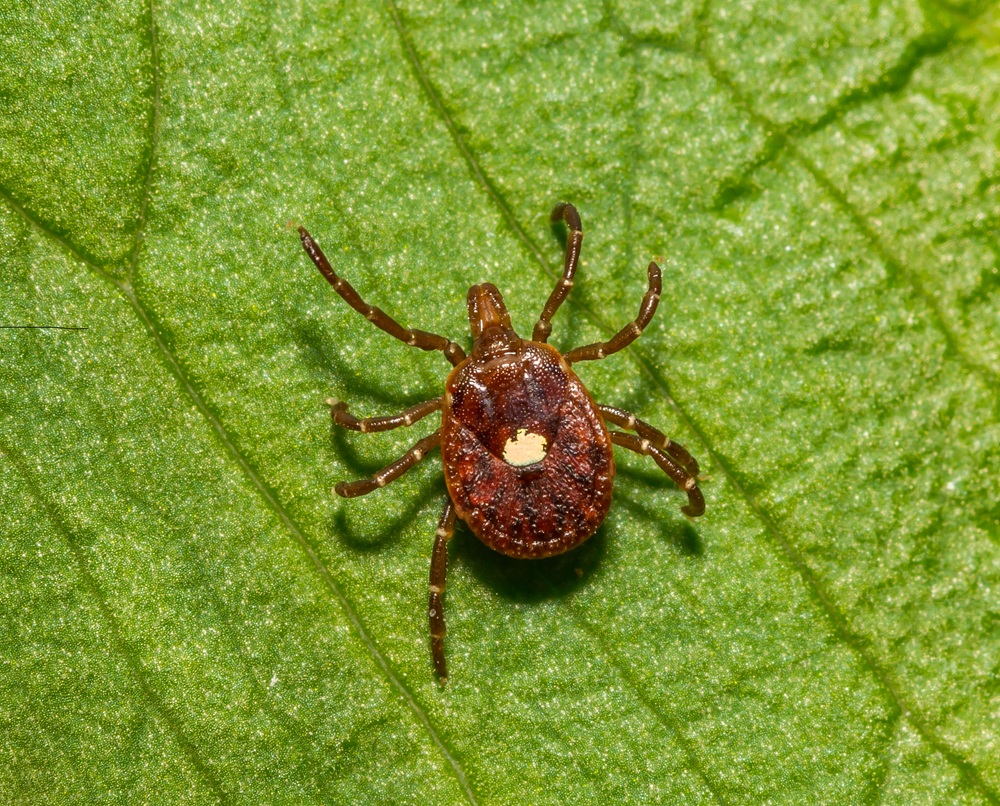
The lone star tick, notorious for spreading disease and causing a red meat allergy called alpha-gal syndrome, has long plagued the eastern United States.
Now, UC Davis researchers warn it may be edging closer to establishing itself in California.
Their study uncovered seventy-six lone star ticks reported across the state, including recent finds in the Bay Area and San Clemente. While field teams in 2024 and 2025 didn’t recover any during surveillance, climate models show coastal California offers prime conditions for the species.
Experts say the tick isn’t officially established yet, but the risk is real. With climate change and increased movement of animals and people, scientists caution that Californians should stay vigilant, check for ticks after outdoor activities, and report unusual sightings.
Sadly, climate clap trap has taken hold in research because a political tribalism has taken over due to highly competitive, but limited research dollars to be vied for. “Science” has been wrong about global warming for over 50 years but refuses to admit fault or reform.
Regarding tick and disease proliferation, independent research has already proven the climate is a mute point as ticks are highly ecoadaptive, yet the narrative continues on like a bad penny. And nary a word is ever mentioned about our own government experimenting on ticks and dropping them out of airplanes.
This frightening injection for cows and scary additives for their food is to curb the methane they produce. All for profit of course – Gates’ profit. Just when we hoped Gates would disappear from our sight, he’s back with more schemes for our food. He just had a secret meeting with President Trump and then came back two weeks later for another. Something monstrous is definitely brewing in the kitchen.
Gates has his fingers in so many pies it’s hard to keep them all straight. The many pies include, but aren’t limited to:
Florida Governor Slams Proposal to Engineer Meat Allergies in Humans to ‘Save the Planet’
Florida Gov. Ron DeSantis criticized a bioethicist’s video suggesting humans could be engineered to develop a red meat allergy, linking the idea to the World Economic Forum and World Health Organization. “Genetically engineering humans to become allergic to meat because some elites think people eat ‘too much’ of it is insane,” DeSantis wrote.
October 20, 2025This article was originally published by The Defender — Children’s Health Defense’s News & Views Website.
Florida Gov. Ron DeSantis last week publicly rejected the notion that humans could be engineered to develop a red meat allergy as a way to curb meat consumption and protect the environment — an idea he linked to the World Economic Forum (WEF) and the World Health Organization (WHO).
On X, DeSantis posted a 2016 video of Matthew Liao, a professor of bioethics at New York University and director of its Center for Bioethics. Liao tells his audience that ticks could be used to spread allergies that make humans unable to tolerate red meat — an idea that has been repeated by other bioethicists.
“People eat too much meat. And if they were to cut down on their consumption of meat, then it would actually really help the planet,” Liao said in the video. “There’s this thing called the lone star tick, where if it bites you, you will become allergic to meat. So, that’s something we can do through human engineering.”
DeSantis said Liao’s statements are “an example of why entities like the WEF and WHO are persona non grata” in Florida.
“Genetically engineering humans to become allergic to meat because some elites think people eat ‘too much’ of it is insane,” DeSantis wrote.
Tim Hinchliffe, editor of The Sociable, said that while Liao’s comments were not new — the video is from an almost 10-year-old talk at the World Science Festival — DeSantis’ remarks were significant.
“Although he’s slow to the game, at least he’s noticing,” Hinchliffe said.
Liao “has been talking about making people allergic to meat for over a decade, going back to his TED Talk 12 years ago, in 2013,” Hinchliffe said.
During that talk, Liao said, “Just as some people are naturally intolerant to milk or crayfish, like myself, we could artificially induce mild intolerance to meat by stimulating our immune system against common bovine proteins.”
“This isn’t dietary advice — it’s social engineering,” Ji said. “Unelected global organizations have no business dictating what free people eat, especially when they’re demonizing traditional foods that have sustained human health for millennia.”
Kendall Mackintosh, a board-certified nutrition specialist, said such claims aren’t “just about climate,” but are also centered around “control and consolidation.”
“Real, regenerative farmingsupports independence and local economies. Centralizing food systems through synthetic or lab-grown products benefits corporations, not families,” Mackintosh said.
Ji agreed. He said such proposals are indicative of “the merger of biotechnology and behavioral control.” He added:
“The war on meat has never been about climate. It’s about control — consolidating food production under centralized, patented, technology-dependent systems.
“Meat represents everything the global technocracy fears: decentralized production, nutritional independence and cultural traditions that resist standardization. When people can raise their own food, they’re harder to control. The WEF understands this perfectly.”
Recent paper suggests spreading meat allergy to humans is a moral obligation
A paper published earlier this month in the journal Bioethics proposed using the lone star tick to spread alpha-gal syndrome (AGS), “a condition whose only effect is the creation of a severe but nonfatal red meat allergy.”
In the paper, Western Michigan University bioethics professors Parker Crutchfield, Ph.D., and Blake Hereth, Ph.D., argued that “if eating meat is morally impermissible, then efforts to prevent the spread of tickborne AGS are also morally impermissible.”
According to the Centers for Disease Control and Prevention (CDC), when it bites, the lone star tick transmits the alpha-gal sugar molecule into the human bloodstream, leading to a red meat allergy. Consuming red meat after being infected could result in life-threatening anaphylaxis.
The paper’s authors present what they called the “Convergence Argument.” If a specific action “prevents the world from becoming a significantly worse place, doesn’t violate anyone’s rights, and promotes virtuous action or character,” then it becomes a moral obligation to perform this action, they said.
According to the authors, the use of AGS to spread a red meat allergy to humans meets these criteria. However, they acknowledged ethical obstacles: few people would likely volunteer for the tick bite, and forcing it on people would raise questions of bodily autonomy and freedom.
The authors told The College Fix in an August email that their paper does not constitute an endorsement of spreading AGS to humans, but offers a hypothetical framework raising ethical and philosophical questions.
Mackintosh questioned this denial. “Calling it a ‘thought experiment’ doesn’t make it any less disturbing. The idea that inducing an allergy or harming human health could somehow serve a moral purpose shows just how far detached some parts of academia have become from basic human ethics,” she said.
“The fact that this was even published tells you how normalized these anti-human, anti-food narratives are becoming under the guise of ‘ethics,’” Mackintosh added.
Ji said the paper raises questions about bodily autonomy.
“This is about far more than food, it’s about whether human beings retain sovereignty over their own bodies, or whether that sovereignty can be overridden by those who believe they know better. The answer to that question will determine whether we remain free,” he said.
Mackintosh questioned the authors’ claim that lone star tick bites “only” lead to AGS.
AGS “can cause severe allergic reactions, including anaphylaxis, and can completely alter someone’s diet and quality of life,” Mackintosh said. “The suggestion of using ticks or any biological vector to intentionally spread an allergy is beyond unethical. It’s dangerous, unpredictable and medically reckless.”
A 2023 CDC report said AGS cases were on the rise in the U.S.
DeSantis previously outlawed sale of lab-grown meat in Florida
While DeSantis didn’t directly address the paper or AGS in his X posts, he has consistently spoken out against efforts to shift people away from red meat and toward alternatives such as lab-grown meat and insects.
Last year, DeSantis signed legislation prohibiting the sale of lab-grown meat in Florida. According to a press release, the law aims “to stop the World Economic Forum’s goal of forcing the world to eat lab-grown meat and insects,” which a 2021 WEF article characterized as an “overlooked” source of protein.”
“Florida is fighting back against the global elite’s plan to force the world to eat meat grown in a petri dish or bugs to achieve their authoritarian goals,” DeSantis said at the time.
Joseph Sansone, Ph.D., a psychotherapist who sued DeSantis and Florida Attorney General Ashley Moody to prohibit mRNA vaccines in Florida, said that while he has been “litigating against DeSantis for over a year and a half to stop mRNA injections,” he agrees with DeSantis on this issue.
“DeSantis is calling out something that many Americans feel — they don’t want global organizations or unelected bodies deciding what they can or can’t eat,” Sansone said.
Mackintosh said lab-grown meat raises questions about potential health risks.
“There are questions about contamination risks, the use of antibiotics or growth media, nutrient content, and even the true environmental impact once scaled up. It’s also ultra-processed — far from the whole, nutrient-dense foods our bodies were designed to thrive on,” she said.
“Many lab-grown meat companies are using immortalized cell lines — cells that are capable of continuously dividing and growing in a manner disturbingly similar to cancer cells,” Ji said. There is a “complete absence of long-term safety studies” for such products.
Scientists have raised similar concerns about human consumption of insects. The exoskeletons of many insects contain chitin, a natural material that can trigger an allergic reaction in humans. Some studies suggest that humans cannot digest chitin, while other studies suggest humans “don’t digest it well.”
WEF suggests consuming alternative meats will ‘save the planet’
In a 2019 video, the WEF suggested that in the not-too-distant future, humans would be allowed to consume only “one beef burger, two portions of fish and one or two eggs per week” to “save the planet.”
That year, the WEF published a white paper calling for “a transformation in the global system for protein provision” to meet climate-related targets.
Mackintosh said corporate interests are behind the push for “alternative” meats.
“The biggest winners in the lab-grown meat push are large food conglomerates, biotech companies and venture capital investors who own the patents and production technology. Small farmers and ranchers — the backbone of our food system — lose. This is about creating dependence, not sustainability,” she said.
Ji agreed. “Follow the money. Biotech corporations and their investors stand to profit massively from patents and market control,” he said.
Liao suggested chemically inducing empathy, making kids smaller
DeSantis and others have suggested a link between Liao and the WEF, including a claim that Liao’s 2012 co-authored paper, “Human Engineering and Climate Change,” which argued that “human engineering deserves further consideration in the debate about climate change,” was the subject of a discussion at the WEF’s 2021 annual meeting.
Hinchliffe noted that the WEF “does have a habit of scrubbing what it considers to be negative publicity from its website.” However, whether or not there is a direct connection between Liao and the WEF, Liao “is definitely aligned” with WEF policies, he said.
“Academic papers proposing disease vectors to manipulate behavior aren’t harmless philosophy — they’re rehearsals. They move the Overton window, normalize the abnormal and provide intellectual scaffolding for future atrocities. The field of bioethics has become less about protecting human dignity and more about rationalizing its violation.”
Bioengineering Without Boundaries: Why Lyme Disease Belongs in the GMO Debacle
Michelle Perro, MD
Published: October 20, 2025
Lyme disease is not simply an infection. It is a lens into the consequences of manipulating biology without accountability. As we confront the obfuscated crisis of Lyme and other chronic infections, it becomes evident that bioengineering in pathogens and genetic engineering in food are part of the same continuum of unregulated biotechnology. Both alter life’s blueprints, both evade oversight, and both are creating a legacy of ecological and human suffering.
In her groundbreaking book, Bitten: The Secret History of Lyme Disease and Biological Weapons, science journalist Kris Newby details how US biowarfare research programs, including work at the Rocky Mountain Laboratories in Hamilton, Montana, experimented with spirochetes to alter virulence and transmission. The intention of these manipulations, although unclear, likely spawned Borrelia burgdorferi, the stealth pathogen now linked to millions of chronic infections worldwide. The same recombinant DNA methods used in agricultural GMOs were being applied in microbial genetics at the time.
“When we manipulate genes for profit or power, the consequences ripple through ecosystems, our children, and future generations.”
Lyme rarely acts alone. It often coexists with Bartonella, Babesia, Ehrlichia, Mycoplasma, Rickettsiae, and viruses such as Powassan, all of which exacerbate inflammation and neuroimmune dysfunction. These infections disrupt the immune system through biofilm formation, cytokine storms, and molecular mimicry, while simultaneously impairing gut barrier integrity; a condition known as ‘leaky gut.’ This state of immune chaos parallels the chronic inflammation seen in individuals exposed to genetically engineered foods and glyphosate residues.
Despite their shared roots in biotechnology, genetically modified foods and engineered pathogens are regulated separately by the USDA, EPA, FDA, NIH, and DOD, none of which coordinate holistic biosafety. This fragmented oversight allows both agricultural and biomedical engineering to advance without unified accountability. The same regulatory capture that shields agri-tech corporations has also protected infectious disease gatekeepers, such as the Infectious Disease Society of America (IDSA), whose restrictive guidelines have left millions of chronic Lyme patients untreated.
Just as the FDA dismisses independent research on GMO toxicity, the IDSA dismisses clinicians and patients suffering from persistent Lyme. Both systems denied chronic exposure or chronic infection, labelled dissenting experts as “fringe,” protecting corporate and institutional interests over public health. The pattern created is systemic and taken directly from the GMO playbook: create complexity, deny chronicity, and suppress those questioning the government/corporate narrative.
Lyme Mythology
Lyme Disease is the modern plague that never shouldn’t have been. It is now one of the fastest-growing infectious diseases in the United States, with the CDC estimating up to 3 million cases annually when underreporting is considered.
Although black-legged ticks (Ixodes scapularis and I. pacificus) are the best-known carriers, Borrelia DNA has been detected in a variety of other insects, suggesting other forms of transmission. This fact is little known in mainstream medicine and leaves those with Lyme disease unclear as to how they were infected when consulting with their physicians who just believe that the tick is the only vector of Lyme.
The Multi-Vector Reality: Beyond the Tick
The following graph demonstrates that there are many other potential vectors of Lyme disease which should increase our awareness when facing those with multi- system complaints and health challenges.
Insect
Evidence ofBorreliaDNA
Proven Transmission to Humans
Comments
Ticks (Ixodes scapularis, I. pacificus)
Strong
Yes
Primary vector
Mosquitoes (Aedes, Culex)
Moderate
No
Possible mechanical transmission
Horseflies / Deer flies
Moderate
No
Possible mechanical role
Fleas
Detected
No
Reservoir role in pets/rodents
Mites
Rare
No
Wildlife vector potential
Lice (Pediculus humanus)
Different Borrelia)
Yes (B. recurrentis, relapsing fever)
Demonstrates Borrelia versatility
Sources: Schotthoefer & Frost, 2015; Franke et al., 2020; Eisen et al., 2017; Jaenson et al., 2019.
Integrative Framework
Healing requires more than antibiotics or symptom management. It demands restoration of biological integrity. Integrative and terrain-based approaches rebuild the immune system through microbial, nutritional, and energetic balance.
The gut-immune axis is central to Lyme’s chronicity. Dysbiosis from antibiotics, poor diet, and/or environmental toxins (e.g., glyphosate, heavy metals) compromises the gut-associated lymphoid tissue (GALT). Over 70% of immune function resides in the gut creating conditions where infections persist and autoimmunity originates.
Supporting terrain integrity is essential though the use of an organic regenerative diet with strict avoidance of glyphosate-contaminated foods (which destroy beneficial gut flora). Additionally, a whole foods based diet composed of increased polyphenols, flavonoids, healthy fats, and fiber are paramount to healing.
An integrative approach is necessary when helping those with Lyme disease and treatments stem from a multimodal tool box with suggestions outlined in article (See top link).
Lyme literate doctors (LLMDs) have learned to track symptoms and then use treatment that works on given symptoms (that change). This requires different drugs. Also, once you beat back Lyme enough, it is quite normal for coinfections to become evident. These also require different drugs. Further, dosage matters. Then, there’s the issue of pulsing and cycling – both techniques that experienced LLMDs use – precisely due to needing a judicious approach since treatment is often protracted. Throwing antibiotics at this indiscriminately is unwise.
Treatment must be fluid to adapt to the ever changing symptoms.
Also, besides congenital transmission, sexual transmission is highly likely:
Why Millions Are Suffering in Silence: A Global Health Crisis
The Silent Pandemic: Misdiagnosis and Urgent Lyme Disease Awareness
Imagine waking up every morning feeling slightly off—just a bit out of sorts. Sometimes there’s a headache, other times an overwhelming sense of tiredness that even a strong cup of coffee can’t shake. You chalk it up to stress, the inevitable wear and tear of a busy life. But as the months pass, your symptoms worsen. By mid-morning, your energy is drained, and strange, fleeting moments of dizziness and confusion disrupt your routine. You tell yourself it’s nothing serious, probably just burnout. Until, one day, the fog in your mind becomes so dense that you can’t recall simple tasks or details you’ve known your entire life.
Doctors Tell You: It’s All in Your Head
When you finally turn to doctors for help, they dismiss your concerns. They tell you it’s all in your head—that you’re stressed, depressed, or simply overworked. You’re prescribed herbal supplements like valerian and ginkgo biloba, and receive a laundry list of vague diagnoses: fibromyalgia, chronic fatigue syndrome, multiple sclerosis, or worse, psychiatric disorders. The medications don’t help, the tests come back inconclusive, and years pass as you’re left searching for answers. Bit by bit, you start to lose touch with your loved ones, as friends and family struggle to understand the invisible illness consuming your life.
The Inadequate Excuse of Covid
Maybe you had Covid a few months or a year ago, and now doctors insist your lingering symptoms are due to Long Covid. But you know plenty of people who had the virus and are perfectly healthy today, long past their infection. The Covid pandemic, while devastating, has also become a convenient excuse to mask a deeper, more sinister truth.
The Real Cause: A Hidden Infection
All the while, the real culprit—a stealthy bacterial infection called Borrelia—is quietly ravaging your body, undetected by the very healthcare system that should be safeguarding you. And you’re not alone. Millions of people worldwide are suffering in silence, unaware that Borrelia is behind their mysterious ailments.
Despite the severity of the infection, few around you have even heard of Borrelia or understand the damage it can cause. Even the most expensive doctors fail to recognize its effects. (See link for article)
_______________
**Comment**
Part of the reason I don’t write more articles is because I spend a great deal of time correcting articles written by others. It amazes me to no end how the accepted narrative of Lyme/MSIDS can still remain so pervasive after 40 years.
That said, this well written article only needs an update on some new research. Since no date is included about when the article was written, but mentioned COVID, we can assume it was written sometime in the past 5 years.
Just this year (2025), a study showed that there is no evidence mosquitoes can transmit Bb, as the bacteria can not survive in their guts long enough to reach their salivary glands to be able to transmit the disease. A few findings:
Mosquitoes exhibited low efficiency in acquiring Borrelia from infected hosts.
Spirochetes artificially introduced through ex vivo blood meals were rapidly eliminated during digestion, primarily due to trypsin activity.
Inhibition of trypsinprolonged spirochete persistence and infectivity in the mosquito gut. (Which begs the question if this is true for the human gut as well). Interestingly, in arthropods trypsin increases significantly after blood feeding and plays an important role in early protein degradation.
Mechanical transmission experiments revealed no evidence of Borrelia transmission from infected to naive hosts.
The study makes the fatal flaw of assuming Ixodes ticks are the SOLE vectors capable of transmitting Lyme disease. There are many other bugs out there that have not been tested for transmission. We also know that human congenital transmission occurs (mother to fetus) and there is much to indicate it can be transmitted sexually as a STD. It’s important to understand that no studies have ruled out sexual transmission but ‘the powers that be’ continue to proclaim it as fact.
https://madisonarealymesupportgroup.com/2019/04/02/transmission-of-lyme-disease-lida-mattman-phd/ Mattman isolated living Borrelia spirochetes in mosquitoes, fleas, mites, semen, urine, blood, plasma and Cerebral Spinal Fluid. She discovered that this bacteria is dangerous because it can survive and spread without a cell wall (L shape). Because L-forms do not possess cell wall, they are resistant to antibiotics that act upon the cell wall.
Others have found various ways Bb is transmitted as well:
Burgess could infect cats with Bb orally, ocularly, and via IV
“The presence of live spirochetes in a genital lesion strongly suggests that sexual transmission of Lyme disease occurs,” said Middelveen. “We need to do more research to determine the risk of sexual transmission of this syphilis-like organism.”
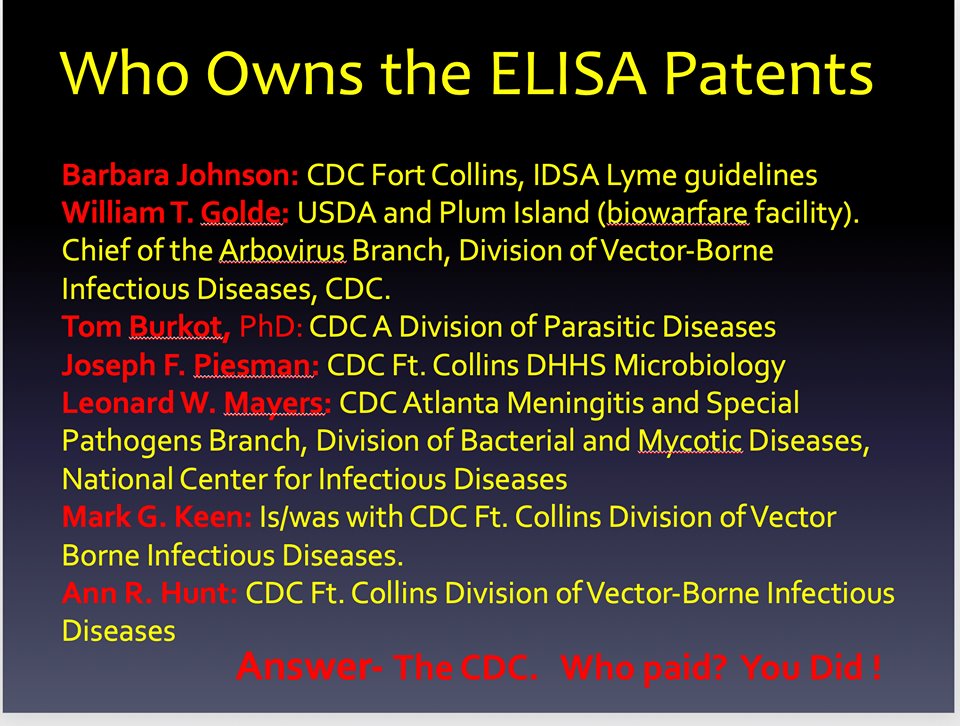
The CDC/IDSA/NIH are on vacation and still haven’t received/accepted the memo
Like so many other pioneers who expose inconvenient truths about Lyme, the Michigan State Attorney’s Office told Dr. Mattman to stop testing for Lyme using her gold standard direct culture technique. She also successfully duplicated the results of the Bowen Q-RiBb test, which provided a preliminary report of the findings within 24 hours of receiving the specimen. The final report included digital photographs of the finding, which was useful in evaluating treatment by comparing pre and post serial dilution results.
Mattman was subsequently threatened with time in jail or a fine of 5,000 dollars a day. State police arrived at her lab with handcuffs and tried to find evidence that she was still testing but they didn’t find what they were looking for. She was forced to stop her valuable work and leave her lab.
The continued adherence to worthless 2-tier CDC testing is on purpose. They don’t want an accurate test – they’ve had two already and buried them!
Abyssinian in Crisis: How One Cat’s Mysterious Illness and an Unconventional Therapy Transformed a Family — A Physician-Patient Case Report
One of my favorite cancer patients shared her increasing anxiety over Pearl, her new Abyssinian cat that was dying of viral infections. An offhand suggestion led to a complete recovery.
This is the third report in a growing series of cases successfully treated with chlorine dioxide therapy. The first two were of my own personal illnesses (infectious colitis and paronychial abscess), and this third one is of… a cat named Pearl.
The following case report is co-authored by me and my patient, who has requested anonymity (I will refer to her as Laura).
In a recent follow-up visit with Laura, whom I treat for the prevention of recurrence of breast cancer (which she has had 4 separate times), one of the many topics we covered was her glowing update on the condition of her cat Pearl. Meet Pearl:
SUMMARY:
Dr. Kory’s case report written for an academic journal (AI-assisted).
Title
Clinical Report: A Case of Persistent Feline Calicivirus and Mycoplasma felis Infection in an Abyssinian Kitten and the Use of Chlorine Dioxide (MMS) Therapy
Abstract
We report the clinical course and management of a blue-ticked Abyssinian kitten (“Pearl”) presenting with chronic gastrointestinal, respiratory, and ocular disease following adoption from a multiple-cat household and a recent vaccination for FVRCP. Diagnostic workup established infections with Feline Calicivirus and Mycoplasma felis. Despite conventional therapy, the patient’s symptoms persisted. Off-label use of chlorine dioxide (MMS) was initiated by the parents, along with nutritional support and adjunct therapies. Clinical improvements were observed, including resolution of gastrointestinal symptoms and improved activity. This case highlights the complex interplay between vaccination, pathogen persistence, and adjunctive therapies in feline medicine.
Clinical Outcome
Within days of initiating MMS and supportive nutrition, Pearl demonstrated improved appetite, resolution of diarrhea and vomiting, normalization of respiratory effort, and increased mobility. No serious adverse effects were reported, save for transient gastrointestinal upset during dosage increases (interpreted as Herxheimer reaction by parents). By ten months, Pearl exhibited vigorous activity and weight gain (7 lbs 10 oz), with persistent ocular sight impairment but otherwise full return to health. Co-housed littermate Clio remained asymptomatic following similar supportive care. (See link for full article)
______________
**COMMENT**
Cats AND humans can be infected with Mycoplasma felis, the smallest known organism capable of free existence that does not possess a cell wall. It can cause pneumonia, UT issues, conjunctivitis, bite wound abscesses, and other diseases. Mycoplasma can cause mycoplasmosis, which can lead to inflammation of several joints, such as knees, ankles, hips, or shoulders. Other symptoms include long-term lethargy, difficulty moving, fever, discomfort, and respiratory issues like sneezing and coughing.
Antibiotic treatment for mycoplasma infections can last a long time, so it is important to remain patient and follow the veterinarian’s or doctor’s instructions. Source