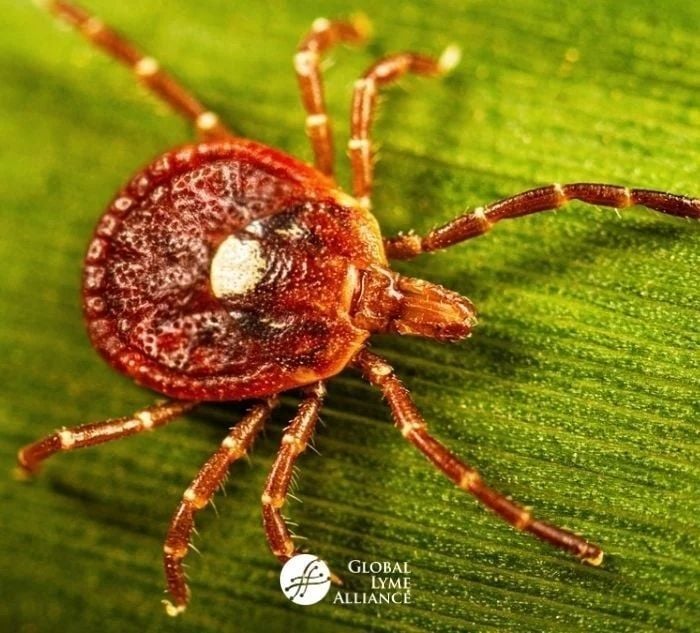
This is one of the most common — and most difficult —questions patients ask.
It often follows a long period of good health before the gradual or sudden onset of fatigue, joint pain, cognitive changes, neurologic symptoms, or unexplained inflammation. In many cases, patients never noticed a tick bite or it is recalled years later, once symptoms begin.
Questions about whether a tick bite can cause illness years later come up because tick-borne diseases don’t always follow a clear or predictable timeline. Unlike infections that cause sudden, obvious symptoms, illnesses like Lyme disease can develop slowly, come and go, or appear in stages.
Understanding this means looking at how the disease can progress over time, rather than focusing on a single tick bite or moment of exposure.
Tick-Borne Illness Timelines Are Confusing
After a tick bite, many people do experience symptoms within days or weeks. Fever, rash, fatigue, and musculoskeletal pain are common early manifestations, and when treatment occurs at this stage, recovery is often straightforward. This familiar pattern is what most people expect when they think about tick-borne illness.
However, not everyone follows this course. Some individuals never develop noticeable early symptoms, while others experience mild or nonspecific complaints that resolve and are quickly forgotten. When health problems surface years later, patients understandably revisit the question of whether a past tick bite could be relevant. At that point, the concern is no longer theoretical—it is personal.
Identifying When Illness Began
In typical cases, early infection is recognized and treated, and symptoms resolve. This reinforces the belief that tick-borne illness always presents quickly and clearly.
Yet clinical experience shows that timelines can vary widely, and absence of early symptoms does not always mean absence of infection.
When symptoms appear later, patients and clinicians struggle to reconstruct when the illness truly began. This uncertainty fuels the question of whether a tick bite could explain illness years later.
How a Tick Bite Can Be Linked to Illness Years Later
One explanation is that early infection was never recognized or treated. When Lyme disease is missed in its initial stages, it may later involve the joints, nervous system, or other organ systems. In these cases, symptoms can develop slowly and appear long after the original exposure.
Another possibility is that early symptoms were subtle and self-limited. Flu-like illness, headaches, fatigue, or migratory aches are often attributed to stress or viral infections. When these symptoms resolve, the connection to a tick bite is lost, only to resurface later when more persistent problems develop.
Immune and inflammatory effects may also evolve over time. Even after an initial infection, immune system activity can persist or shift, contributing to delayed or fluctuating symptoms involving cognition, energy levels, autonomic function, or pain perception. This helps explain how a tick bite can make someone sick years later without a dramatic early illness.
Triggers That Unmask Symptoms
Many patients report that symptoms became noticeable only after a triggering event such as another infection, major stress, surgery, trauma, or hormonal change. These events do not necessarily cause disease themselves, but they can reveal an underlying vulnerability that had previously been compensated for.
When this happens, it may feel as though illness appeared suddenly, even though the groundwork was laid years earlier.
Does a Tick Bite Making You Sick Years Later Mean Active Infection?
Not necessarily. When patients ask whether a tick bite made them sick years later, they are often asking two separate questions: whether an early infection was missed, and whether a past infection can lead to delayed or long-term effects.
Clinical guidelines recognize Lyme disease as a multisystem illness and emphasize careful evaluation of persistent or late-emerging symptoms while also stressing the importance of ruling out alternative diagnoses. Symptoms appearing long after exposure do not automatically prove ongoing infection, but they do warrant thoughtful assessment.
Why Clinicians Disagree About Tick-Bite Timelines
There is broad agreement that Lyme disease can affect multiple organ systems over time. Disagreement arises when symptoms appear well outside expected timelines. Some clinicians emphasize the possibility of persistent infection, while others focus on post-infectious or immune-mediated mechanisms.
Regardless of interpretation, symptoms that do not follow a classic pattern should not be dismissed simply because they are complex.
Clinical Takeaway
A tick bite can be linked to illness years later, but rarely in a simple or linear way. Delayed symptoms may reflect missed early infection, subtle initial illness, evolving immune or inflammatory effects, or life events that unmask disease. Understanding timelines helps reduce confusion and supports individualized care.
Learn about alpha-gal syndrome, a tickborne allergy to red meat, its causes, symptoms, testing, and relation to Lyme disease- as well as prevention tips and current research insights.
The Basics
Alpha-gal syndrome is a more recently identified (c. 2009) tickborne disease. It differs from Lyme disease, babesiosis, anaplasmosis and ehrlichiosis in that it is not a tickborne infection – it is a tickborne allergy. Alpha-gal syndrome is an allergy to red meat and other products containing alpha-gal, including dairy and gelatin for those with more sensitive allergy.
Alpha-gal syndrome’s best recognized cause is tick bites, and it has been described on 6 continents, with the culprit tick species varying across the globe. Lone star tick (Amblyomma americanum) bites are the primary cause of alpha-gal syndrome in the United States. Recently, rare cases linked to blacklegged and western blacklegged ticks (Ixodes scapularis and I. pacificus) have been reported in Maine, Washington state, and the upper Midwest, well outside of the lone star tick range (Thompson et al. 2023). Despite this early evidence that blacklegged ticks and western blacklegged ticks can cause alpha-gal syndrome, they are thought to be an uncommon cause given how few cases have been recognized in high-incidence Lyme regions, particularly of the northeastern United States.
The Timeline: tick bite to food allergy
It is not intuitive to connect how a tick bite can cause food allergy.
To begin with, a typical timeline of the development of allergy is as follows: a tick of a culprit species bites a human. (It is not yet known why some bites do and others do not cause alpha-gal syndrome.) Sometimes the tick bite that preceded new allergy is described as leaving an erythematous, inflamed, and itchy “bite site” lasting weeks. Many tick bites go unnoticed.
Weeks to months after the tick bite, a person who previously ate meat without incident has a meal containing red meat, such as a steak. However, they do not react right away. The allergic symptoms – which can include a combination of hives, facial and throat swelling, wheezing and difficulty breathing, vomiting and other gastrointestinal distress, and anaphylaxis – occur 2-6 hours after eating red meat.
The “classic” story of an initial reaction is someone who eats red meat for dinner, and then wakes up itching in the middle of the night, looks in the mirror, and is surprised to see hives and sometimes facial swelling. There are also less classic clinical presentations, such as people with isolated gastrointestinal distress who eat red meat frequently and may have a hard time connecting the two. Vegetarians and vegans who consume or are exposed to mammalian products may also manifest symptoms of alpha-gal syndrome. Tragically, the first case report of a death from alpha-gal syndrome has been recorded (Platts-Mills 2025).
The alpha-gal molecule and delayed reaction
Alpha-gal syndrome is an allergy to alpha-gal, which is a carbohydrate molecule. (Most food allergies are to proteins.) Human ancestors lost the ability synthesize alpha-gal tens of millions of years ago, but most mammals other than humans – including those that humans eat – do produce alpha-gal. Therefore, “red meat” – or meat from cows, pigs, sheep, deer, and other game – contains alpha-gal. (Fish and birds do not produce alpha-gal.) The alpha-gal carbohydrate in meat is attached to both fats and proteins. The fatty form, glycolipids, take time to be metabolized and enter the bloodstream. That’s why allergic symptoms often appear 2–6 hours after eating, rather than immediately.
In addition to mammals, ticks also have alpha-gal in their saliva, without ever biting a mammal. Why? One compelling explanation is molecular mimicry. Ticks have many ways of trying to disguise their bite to avoid being detected, so expressing alpha-gal may be one additional way to look like their hosts (deer, mice, and other mammals whose cells express alpha-gal). Of tick species in the United States, lone star ticks, blacklegged ticks, brown dog ticks (Rhipicephalus sanguineus) and the invasive Asian longhorned tick (Haemaphysalis longicornis) have been shown to have alpha-gal in their saliva.
Testing for alpha-gal syndrome
Only if you have allergic symptoms, or unexplained gastrointestinal symptoms, should you be tested for alpha-gal syndrome. The test for alpha-gal syndrome is a serum test for alpha-gal IgE. IgE is a type of antibody that the immune system produces in response to allergens. A positive does not necessarily mean you have the allergy. Instead, it shows that your body has made IgE antibodies against alpha-gal, a state called being “sensitized” to an allergen, in allergy terminology.
A high percentage of adult populations screened for alpha-gal IgE in areas with lone star ticks are sensitized to alpha-gal, in the realm of 20-30% and even higher in heavily tick-exposed populations such as forestry and outdoor workers. However, most sensitized individuals in groups that have been screened are “sensitized only” and do not report allergy symptoms.
Alpha-gal syndrome and Lyme disease
There is no established connection between alpha-gal syndrome and Lyme disease in the United States. That’s partly because lone star ticks are the primary cause of alpha-gal syndrome whereas blacklegged ticks transmit the Lyme bacteria. It is important to note that western Europe is different: there, a single tick species—Ixodes ricinus—can both trigger alpha-gal syndrome and transmit Lyme bacteria. Even there, however, being bitten by one of these ticks doesn’t mean a person will develop both conditions. A Swedish study (Tjernberg et al. 2017) found no link between Lyme disease history and having alpha-gal antibodies.
[Ixodes ricinus is commonly known as the castor bean tick or the sheep tick]
Considerations for Lyme-endemic regions of the United States
It is important to recognize that the lone star tick range is expanding, particularly northward and eastward, and prominently along the northeastern coastline. Lone star ticks are now well-established in eastern Long Island, where there are also blacklegged ticks and Lyme disease. Lone star ticks are also increasingly found on Martha’s Vineyard. They are considered an aggressive human-biting tick. Deer are an important host for lone star ticks, whereas white-footed mice (Peromyscus leucopus) are not. EPA-registered insect repellents such as DEET and picaridin for skin and clothing and permethrin for clothing and gear remain important for lone star tick bite prevention, as for blacklegged and other tick bites. An important distinction from Lyme disease is that alpha-gal syndrome can likely be caused by a tick attached for as little as a few hours. The metric of removing a tick within 24 hours, while good advice for Lyme disease, should therefore not be considered protective for alpha-gal syndrome.
Tick bite avoidance
Not only is avoiding tick bites important to avoid developing alpha-gal syndrome, but it remains important for those who have the allergy. Over time (years), some patients with alpha-gal syndrome who avoid tick bites have declining alpha-gal IgE levels that correspond to a remission of their allergy and the ability to reintroduce red meat into their diets. Reintroducing red meat is a very individualized decision to be made with a knowledgeable healthcare provider and incorporating safety considerations. If a patient returns to eating red meat, new tick bites could cause allergic symptoms to return.
Current unknowns and research questions
Much of what is currently understood about alpha-gal syndrome, outlined above, comes from excellent, collaborative research. Yet important questions remain:
What percentage of people bitten by lone star ticks develop alpha-gal syndrome?
What percentage of people sensitized to alpha-gal go on to develop alpha-gal syndrome?
What genetic and immunologic factors determine whether someone sensitized to alpha-gal develops alpha-gal syndrome?
Why are some ticks (i.e., lone star ticks) more effective in sensitizing to alpha-gal and causing alpha-gal syndrome than others (i.e., blacklegged ticks)?
What compounds in tick saliva along with alpha-gal provoke the human immune system to produce allergic antibodies (IgE)?
What aside from ticks (and possibly chiggers, and Ascaris roundworms) can sensitize a person to alpha-gal? (Stoltz et al. 2019, Murangi et al. 2022)
There has been differing evidence about whether the molecule alpha-gal is produced by the tick itself or is synthesized by bacteria that are part of the tick microbiome. In either case, scientists have asked whether bacteria living in ticks could affect the amount of alpha-gal produced in tick saliva (Kumar et al. 2022, Cabezas-Cruz et al. 2018).
New treatments and future directions
For patients suffering from alpha-gal syndrome, the mainstay of management is avoiding red meat and—for some—dairy and other ingredients containing alpha-gal. For those patients sensitive even to minor exposures to alpha-gal, there also now exists a medication called omalizumab that has been effective in decreasing symptoms. It is an anti-IgE monoclonal antibody, and so works not only for alpha-gal syndrome but for IgE-mediated food allergy more broadly. Omalizumab may also be appropriate for those with unavoidable occupational exposures, such as those working in kitchens with skin and fume exposures to meat, and those who birth animals or dress deer and may be exposed to large amounts of body fluids containing alpha-gal (Nuñez-Orjales et al. 2017).
For patients who crave red meat but are allergic, GalSafe® pork is made from a genetically modified pig that doesn’t express alpha-gal, and so can be consumed by patients with alpha-gal syndrome. The technology of gene-editing mammals could also lead to medical products like gelatin and heparin (a blood thinner) being made without alpha-gal. Although reactions to these products are rare, concerns about alpha-gal have complicated medical care for some patients.
Tick control strategies
New strategies to control lone star tick populations are needed, both environmental controls and interventions under study such as a universal tick vaccine. Alpha-gal syndrome has reanimated some of these goals, both through the threat of people no longer being able to eat meat and dairy; through a growing understanding of how ticks interface with the human immune system; and through geography, which unites a growing swath of the United States population in a campaign against ticks and tickborne disease.
Short and sweet
A simple way to explain alpha-gal syndrome to others is double delay, double avoidance. There is a delay of weeks to months from tick bite to the first allergic reaction, and there is a delay of hours from eating red meat to when allergic symptoms appear. The treatment for alpha-gal syndrome is to avoid red meat and avoid further tick bites.
Opinions expressed by contributors are their own. Dr. Eleanor Saunders is an Infectious Diseases physician at the University of North Carolina at Chapel Hill. Dr. Saunders received her MD & MPH from the UNC School of Medicine and UNC Gillings School of Global Public Health, completed residency in Internal Medicine at Bellevue Hospital/NYU Langone Health, and completed fellowship training in Infectious Diseases at UNC. Dr. Saunders works on the epidemiology of alpha-gal syndrome with Dr. Scott Commins, one of the foremost experts on AGS.
What is the biological switch that causes allergy in sensitized individuals, and how is it activated? What factors in tick saliva cause previously asymptomatic antibody carriers to get seriously ill?
Scientists believe that activation of basophils, a type of immune cell involved in allergy, initiates this process. Basophils release histamine, a well-known mediator of allergic reactions.
Independent of IgE status, evidence of basophil recruitment and activation very nearly confirms that someone has AGS and not merely antibodies, according to a 2019 paper.
The authors concluded:
“The basophil activation test should be considered as an additional diagnostic test before performing time-consuming and potentially risky oral provocation tests. The [test endpoints] were the best parameters for distinguishing patients with alpha-gal syndrome from subjects with asymptomatic alpha-gal sensitization.” Source
Celebrity claims are fueling confusion about the risks of Lyme disease. For The National, CBC’s senior health reporter Christine Birak investigates what’s really behind the boom in high-profile cases and uncovers a big-money industry profiting off chronic illness. [Correction: A previous version of this video included images of American dog ticks. It’s been updated to include images of blacklegged ticks.]
(See link for article & video)
_____________
**Comment**
Trust me when I say that there is far more than images of ticks that require correcting! Senior health reporter Christine Birak has a lot to answer for in this extremely biased and faulty piece. The controversy regarding tick-borne illness is most probably older than the journalist herself, yet she doesn’t spend even one minute on it.
While we are told that the story uncovers a ‘big-money industry profiting off chronic illness,’ such as Lyme disease, no such thing occurs. The truly big money is controlled by Big Pharma and the Government with patent royalties, and research grants, but is never mentioned. See: https://madisonarealymesupportgroup.com/wp-content/uploads/2019/06/conflictreport.pdf
The journalist only interviews people who deny chronic, persistent infection. Never once does a Lyme literate doctor from ILADS get to present the controversy in detail, with global research demonstrating persistent infection, time and time again.
The story paints a picture that sick celebrities are taken at face value, are never questioned, and are simply poor, sorry sods who are simply wrong and not to be taken seriously. Imagine for a moment if this same tactic was used with sick celebrities who have cancer…..
The story is nine grueling, factually inaccurate minutes I’ve taken the time to correct below:
Early antibiotic treatment has to be early enough, long enough, and smart enough, but again, does not a guarantee a person will not develop a chronic infection requiring years of complex, expensive, and savvy treatment, not to mention the fact untold numbers are misdiagnosed or undiagnosed – making their cases even tougher because they weren’t caught early. This large subgroup is simply kicked to the curb.
The reporter states that in 2024, Canada had 5,700 reported cases of Lyme. In the U.S. even the corrupt CDC admits that the number of Lyme disease cases is likely much higher than reported, due to under-reporting and changes in surveillance methods. In 2024 in the U.S., reported cases of Lyme disease rose from an average of about 37,000 from 2017–2019 to 62,000 in 2022. That’s an increase of nearly 70%. In order to report a case, you must meet the strict and arbitrary CDC reporting criteria using a test that is only 50% sensitive in the early phase of disease. Further, each state has their own voluntary reporting standards and ‘low incidence’ states are held to a stricter standard by having to show not only positive lab evidence, but clinical info which puts a heavy burden on local health officials. Lack of awareness and under-diagnosis is still a known long-standing issue for many states including California. You can’t count something that hasn’t been reported and you can’t report something you aren’t educated about. Due to these issues, the CDC includes insurance claim data to estimate cases. In 2021, there were 24,611 cases reported but the CDC estimated the actual number to be 476,000. In the past, the CDC has said that Lyme disease cases are underreported by a factor of 10, which if used for 2024 – would total 620,000annual cases. Source Hopefully, it’s clear to see all of this is very unclear!
Chronic Lyme is recognized by science, but you have to depart from IDSA ‘approved’ science, look at the global science, and realize Lyme/MSIDS will never fit neatly into a large randomized controlled trial (RCT). RCTs were designed for standardized drug testing, not complex, multi-systemic conditions such as Lyme/MSIDS. This is something ‘mainstream’ medicine refuses to acknowledge, and the media blindly follows. Lyme science has been rigged from the get-go and continues to entirely omit the sickest patients due to how they create the study design for research.
The doctor who spoke in the news story, Dr. Paul Auwaerter of Johns Hopkins has a long, known history of denying chronic Lyme. He only presents one side of a very disputed coin. To only choose to represent one side and over emphasizing that there’s a ‘whole industry created for chronic Lyme that’s taking advantage of people’ is not only unethical from a journalistic perspective, it ignores people like me, my husband, and virtually every single patient I work with who very well might be dead without this life-saving treatment. Unconscionable.
All independent testing is presented as quackery – a long used trick of the establishment to monopolize testing. Cabalists spout ‘unvalidated’ test, as if there’s a true gold standard. Make no mistake, currently ALL testing for tick-borne disease is abysmal – and everyone knows it until biased pieces like this are presented and they revert back to regurgitating and not thinking.
Since the report is made by CBC News in Canada, they should have at least interviewed Vett Lloyd, a biology professor at Mount Allison University in New Brunswick, who says most Lyme cases are missed with the standard test. She co-authored a study with Dr. Ralph Hawkins, a clinical associate professor at the University of Calgary, using data from New Brunswick where they found the two-tiered tests miss 90 per cent of real Lyme infections. In Ontario, she says about 80 per cent of cases are missed.
Current testing relies upon measuring antibodies that take 4-6 weeks to develop, can not distinguish between active infection from prior exposure or measure response to treatment. The window for accurate testing is so small that only a handful of those infected are getting positives. Trust me, there’s few false negatives. As Dr. McDonald aptly states:
“If false results are to be feared, it is the false negative result which holds the greatest peril for the patient.” –Alan McDonald, Pathologist
Cabalists admit early diagnosis and treatment is best as the infection worsens with time, so how does a test that takes over a month to work help at all?
The same doctor would rather regurgitate the long-held Cabalist phrase of ‘medically unexplained symptoms,’ (MUS) as the cause of why people are unwell than dare to even consider tick-borne infections and learn from ILADS.
The journalist continues following the Cabalist MO when she makes sure to politely empathize that there are sick people who feel dismissed by the system, but that ‘private testing’ comes with significant risk – and then cites a paper done with the same faulty study design by none other than Dr. Paul Auwaerter, the same doctor who denies chronic Lyme and uses the MUS diagnosis so freely. Seeing a trend yet?
Treatment for early Lyme disease is not so ‘simple,’ due to the fact that many continue with symptoms – proving it’s obviously not working! Not to mention treatment failures have been seen in nearly every antibiotic study ever done.
It is not rare to have chronic Lyme when you consider the fact researchers only count those who are diagnosed and treated early into this group. When you add in those diagnosed and treated late, a whopping 40-60% go on to suffer long-term symptoms.
The piece uses the infamous Cabalist term ‘Post Treatment Lyme Disease Syndrome’ (PTLDS) which is horribly inaccurate, and faulty to the core. Then, while stating it’s ‘incurable,’ the report bashes alternative treatments and gives the ancient yet faulty 2001 Klempner study as ‘proof’ long term antibiotics don’t work and carry significant risks. In other words, just accept your sad, sorry lot, stay sick, and die already.
The piece finishes with stating the media needs to be more critical of extremely ill celebrities who claim they have Lyme disease – as if being sick isn’t hard enough! Imagine if this was posited for cancer patients! Can you even imagine? Yet, it’s perfectly fine to dismiss Lyme/MSIDS patients.
Another issue completely bypassed by this piece is that due to the controversy, doctors are too afraid to diagnose and treat patients, giving yet another reason for massive underreporting. For decades doctors have had to close their practices or have been sanctioned and have had to pay hefty fines. My own doctor went through this gauntlet, paying 50K to protect his practice. This is why LLMD’s do not accept insurance. It’s quite often the insurance companies turning them in. All of this plays a part in this Shakespearian like tragedy and should be fairly represented.
It’s high time the media wakes up and smells the coffee. There was once a time when journalists endeavored to be unbiased, present the various sides of a story, and let the reader/viewer come to their own conclusions. Sadly, those days appear to be long gone. My journalism profs are rolling over in their graves.
Researchers confirm new Rickettsia species found in dogs
By Tracy Peake, NC State
Researchers from North Carolina State University have confirmed that a species of Rickettsia first seen in dogs in 2018 is a new species of bacteria.
The new species, dubbed Rickettsia finnyi, is associated with symptoms similar to those of Rocky Mountain spotted fever (RMSF) in dogs, but has not yet been found in humans.
Rickettsia pathogens are categorized into four groups; of those, spotted-fever group Rickettsia (which is transmitted by ticks) is the most commonly known and contains the most identified species. There are more than 25 species of tick-borne, spotted-fever group Rickettsia species worldwide, with R. rickettsii – which causes RMSF – being one of the most virulent and dangerous.
Symptoms of RMSF in dogs and people are similar, including fever, lethargy and symptoms related to vascular inflammation, like swelling, rash and pain.
“We first reported the novel species of Rickettsia in a 2020 case series involving three dogs,” says Barbara Qurollo, associate research professor at NC State and corresponding author of the new study.
“Since then we received samples from an additional 16 dogs – primarily from the Southeast and Midwest – that were infected with the same pathogen. We were also able to culture the new species from the blood of one of the naturally infected dogs in that group.”
To name a new Rickettsial bacterial species, the bacteria must be cultured, its genome sequenced and published, and the cultures must be deposited in two biobanks so that other researchers can also study it. Qurollo’s group successfully cultured the new species from the infected dog.
Culturing a difficult pathogen
“Rickettsia species are difficult to culture because these organisms grow inside of cells,” Qurollo says. “While we haven’t been able to confirm which tick species transmit it yet, we think it may be associated with the lone star tick, because a research group in Oklahoma found R. finnyi DNA in a lone star tick.”
The researchers named the new species Rickettsia finnyi, after Finny, the first dog they found it in.
“By naming it after an individual dog, we wanted to honor all companion dogs that have contributed to the discovery of new pathogens that could cause serious illness in both dogs and humans,” Qurollo says.
The lone star tick, notorious for spreading disease and causing a red meat allergy called alpha-gal syndrome, has long plagued the eastern United States.
Now, UC Davis researchers warn it may be edging closer to establishing itself in California.
Their study uncovered seventy-six lone star ticks reported across the state, including recent finds in the Bay Area and San Clemente. While field teams in 2024 and 2025 didn’t recover any during surveillance, climate models show coastal California offers prime conditions for the species.
Experts say the tick isn’t officially established yet, but the risk is real. With climate change and increased movement of animals and people, scientists caution that Californians should stay vigilant, check for ticks after outdoor activities, and report unusual sightings.
Sadly, climate clap trap has taken hold in research because a political tribalism has taken over due to highly competitive, but limited research dollars to be vied for. “Science” has been wrong about global warming for over 50 years but refuses to admit fault or reform.
Regarding tick and disease proliferation, independent research has already proven the climate is a mute point as ticks are highly ecoadaptive, yet the narrative continues on like a bad penny. And nary a word is ever mentioned about our own government experimenting on ticks and dropping them out of airplanes.
This frightening injection for cows and scary additives for their food is to curb the methane they produce. All for profit of course – Gates’ profit. Just when we hoped Gates would disappear from our sight, he’s back with more schemes for our food. He just had a secret meeting with President Trump and then came back two weeks later for another. Something monstrous is definitely brewing in the kitchen.
Gates has his fingers in so many pies it’s hard to keep them all straight. The many pies include, but aren’t limited to:
Florida Governor Slams Proposal to Engineer Meat Allergies in Humans to ‘Save the Planet’
Florida Gov. Ron DeSantis criticized a bioethicist’s video suggesting humans could be engineered to develop a red meat allergy, linking the idea to the World Economic Forum and World Health Organization. “Genetically engineering humans to become allergic to meat because some elites think people eat ‘too much’ of it is insane,” DeSantis wrote.
October 20, 2025This article was originally published by The Defender — Children’s Health Defense’s News & Views Website.
Florida Gov. Ron DeSantis last week publicly rejected the notion that humans could be engineered to develop a red meat allergy as a way to curb meat consumption and protect the environment — an idea he linked to the World Economic Forum (WEF) and the World Health Organization (WHO).
On X, DeSantis posted a 2016 video of Matthew Liao, a professor of bioethics at New York University and director of its Center for Bioethics. Liao tells his audience that ticks could be used to spread allergies that make humans unable to tolerate red meat — an idea that has been repeated by other bioethicists.
“People eat too much meat. And if they were to cut down on their consumption of meat, then it would actually really help the planet,” Liao said in the video. “There’s this thing called the lone star tick, where if it bites you, you will become allergic to meat. So, that’s something we can do through human engineering.”
DeSantis said Liao’s statements are “an example of why entities like the WEF and WHO are persona non grata” in Florida.
“Genetically engineering humans to become allergic to meat because some elites think people eat ‘too much’ of it is insane,” DeSantis wrote.
Tim Hinchliffe, editor of The Sociable, said that while Liao’s comments were not new — the video is from an almost 10-year-old talk at the World Science Festival — DeSantis’ remarks were significant.
“Although he’s slow to the game, at least he’s noticing,” Hinchliffe said.
Liao “has been talking about making people allergic to meat for over a decade, going back to his TED Talk 12 years ago, in 2013,” Hinchliffe said.
During that talk, Liao said, “Just as some people are naturally intolerant to milk or crayfish, like myself, we could artificially induce mild intolerance to meat by stimulating our immune system against common bovine proteins.”
“This isn’t dietary advice — it’s social engineering,” Ji said. “Unelected global organizations have no business dictating what free people eat, especially when they’re demonizing traditional foods that have sustained human health for millennia.”
Kendall Mackintosh, a board-certified nutrition specialist, said such claims aren’t “just about climate,” but are also centered around “control and consolidation.”
“Real, regenerative farmingsupports independence and local economies. Centralizing food systems through synthetic or lab-grown products benefits corporations, not families,” Mackintosh said.
Ji agreed. He said such proposals are indicative of “the merger of biotechnology and behavioral control.” He added:
“The war on meat has never been about climate. It’s about control — consolidating food production under centralized, patented, technology-dependent systems.
“Meat represents everything the global technocracy fears: decentralized production, nutritional independence and cultural traditions that resist standardization. When people can raise their own food, they’re harder to control. The WEF understands this perfectly.”
Recent paper suggests spreading meat allergy to humans is a moral obligation
A paper published earlier this month in the journal Bioethics proposed using the lone star tick to spread alpha-gal syndrome (AGS), “a condition whose only effect is the creation of a severe but nonfatal red meat allergy.”
In the paper, Western Michigan University bioethics professors Parker Crutchfield, Ph.D., and Blake Hereth, Ph.D., argued that “if eating meat is morally impermissible, then efforts to prevent the spread of tickborne AGS are also morally impermissible.”
According to the Centers for Disease Control and Prevention (CDC), when it bites, the lone star tick transmits the alpha-gal sugar molecule into the human bloodstream, leading to a red meat allergy. Consuming red meat after being infected could result in life-threatening anaphylaxis.
The paper’s authors present what they called the “Convergence Argument.” If a specific action “prevents the world from becoming a significantly worse place, doesn’t violate anyone’s rights, and promotes virtuous action or character,” then it becomes a moral obligation to perform this action, they said.
According to the authors, the use of AGS to spread a red meat allergy to humans meets these criteria. However, they acknowledged ethical obstacles: few people would likely volunteer for the tick bite, and forcing it on people would raise questions of bodily autonomy and freedom.
The authors told The College Fix in an August email that their paper does not constitute an endorsement of spreading AGS to humans, but offers a hypothetical framework raising ethical and philosophical questions.
Mackintosh questioned this denial. “Calling it a ‘thought experiment’ doesn’t make it any less disturbing. The idea that inducing an allergy or harming human health could somehow serve a moral purpose shows just how far detached some parts of academia have become from basic human ethics,” she said.
“The fact that this was even published tells you how normalized these anti-human, anti-food narratives are becoming under the guise of ‘ethics,’” Mackintosh added.
Ji said the paper raises questions about bodily autonomy.
“This is about far more than food, it’s about whether human beings retain sovereignty over their own bodies, or whether that sovereignty can be overridden by those who believe they know better. The answer to that question will determine whether we remain free,” he said.
Mackintosh questioned the authors’ claim that lone star tick bites “only” lead to AGS.
AGS “can cause severe allergic reactions, including anaphylaxis, and can completely alter someone’s diet and quality of life,” Mackintosh said. “The suggestion of using ticks or any biological vector to intentionally spread an allergy is beyond unethical. It’s dangerous, unpredictable and medically reckless.”
A 2023 CDC report said AGS cases were on the rise in the U.S.
DeSantis previously outlawed sale of lab-grown meat in Florida
While DeSantis didn’t directly address the paper or AGS in his X posts, he has consistently spoken out against efforts to shift people away from red meat and toward alternatives such as lab-grown meat and insects.
Last year, DeSantis signed legislation prohibiting the sale of lab-grown meat in Florida. According to a press release, the law aims “to stop the World Economic Forum’s goal of forcing the world to eat lab-grown meat and insects,” which a 2021 WEF article characterized as an “overlooked” source of protein.”
“Florida is fighting back against the global elite’s plan to force the world to eat meat grown in a petri dish or bugs to achieve their authoritarian goals,” DeSantis said at the time.
Joseph Sansone, Ph.D., a psychotherapist who sued DeSantis and Florida Attorney General Ashley Moody to prohibit mRNA vaccines in Florida, said that while he has been “litigating against DeSantis for over a year and a half to stop mRNA injections,” he agrees with DeSantis on this issue.
“DeSantis is calling out something that many Americans feel — they don’t want global organizations or unelected bodies deciding what they can or can’t eat,” Sansone said.
Mackintosh said lab-grown meat raises questions about potential health risks.
“There are questions about contamination risks, the use of antibiotics or growth media, nutrient content, and even the true environmental impact once scaled up. It’s also ultra-processed — far from the whole, nutrient-dense foods our bodies were designed to thrive on,” she said.
“Many lab-grown meat companies are using immortalized cell lines — cells that are capable of continuously dividing and growing in a manner disturbingly similar to cancer cells,” Ji said. There is a “complete absence of long-term safety studies” for such products.
Scientists have raised similar concerns about human consumption of insects. The exoskeletons of many insects contain chitin, a natural material that can trigger an allergic reaction in humans. Some studies suggest that humans cannot digest chitin, while other studies suggest humans “don’t digest it well.”
WEF suggests consuming alternative meats will ‘save the planet’
In a 2019 video, the WEF suggested that in the not-too-distant future, humans would be allowed to consume only “one beef burger, two portions of fish and one or two eggs per week” to “save the planet.”
That year, the WEF published a white paper calling for “a transformation in the global system for protein provision” to meet climate-related targets.
Mackintosh said corporate interests are behind the push for “alternative” meats.
“The biggest winners in the lab-grown meat push are large food conglomerates, biotech companies and venture capital investors who own the patents and production technology. Small farmers and ranchers — the backbone of our food system — lose. This is about creating dependence, not sustainability,” she said.
Ji agreed. “Follow the money. Biotech corporations and their investors stand to profit massively from patents and market control,” he said.
Liao suggested chemically inducing empathy, making kids smaller
DeSantis and others have suggested a link between Liao and the WEF, including a claim that Liao’s 2012 co-authored paper, “Human Engineering and Climate Change,” which argued that “human engineering deserves further consideration in the debate about climate change,” was the subject of a discussion at the WEF’s 2021 annual meeting.
Hinchliffe noted that the WEF “does have a habit of scrubbing what it considers to be negative publicity from its website.” However, whether or not there is a direct connection between Liao and the WEF, Liao “is definitely aligned” with WEF policies, he said.
“Academic papers proposing disease vectors to manipulate behavior aren’t harmless philosophy — they’re rehearsals. They move the Overton window, normalize the abnormal and provide intellectual scaffolding for future atrocities. The field of bioethics has become less about protecting human dignity and more about rationalizing its violation.”