https://www.lymedisease.org/from-illness-to-activism-olivia/

From illness to activism, Olivia just keeps going

By Dorothy Kupcha Leland

May 3, 2023
I first became aware of Olivia Goodreau about six years ago.

I was at my computer, watching the livestream of the first meeting of the federal Tick-Borne Disease Working Group, which convened in Washington DC in December 2017.

At one point, during the meeting’s public comments, a young blonde girl stepped up to the microphone and confidently said, “My name is Olivia Goodreau, and I am 13 years old…I have had Lyme disease for half of my life, and I do not remember what it feels like not to be sick.”

This poised and well-spoken teenager certainly got my attention. I imagine everybody else watching that day took notice as well.

That was just the beginning of Olivia’s public activism on behalf of Lyme patients. She and her family started an organization called the LivLyme Foundation. It has raised money to help pay for Lyme treatment for children, sponsored conferences, and given research grants to scientists.

Through it all, Olivia has functioned as the public face of the foundation. She speaks to the media, helps plan LivLyme events, and sometimes meets with legislators and prominent researchers—heady stuff for a teenager.

She has also worked with a team of design and development experts to create an app called the TickTracker. It allows people to use their cell phones to report and track the location of ticks.

And now she has written a book.

Mysterious symptoms

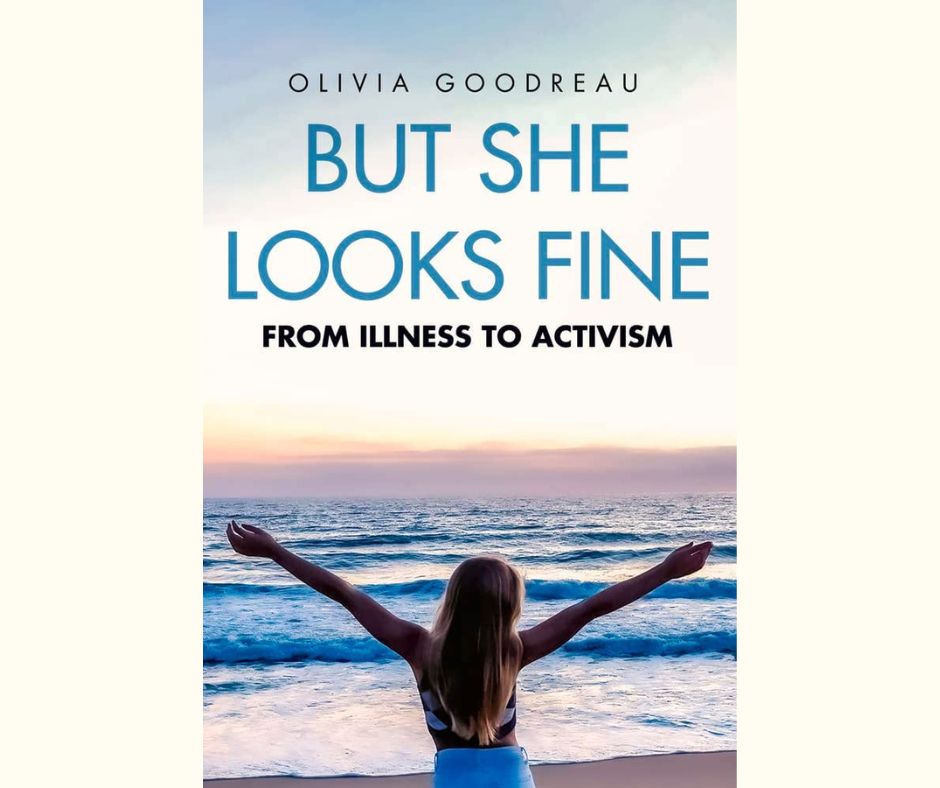
In her memoir But She Looks Fine: From Illness to Activism, Olivia tells her story from when she first starts experiencing mysterious health symptoms at age 7.

In second grade, weird things start happening. Her vision goes in and out, and sometimes she finds it hard to move her body. “My back turned into a wooden board,” she writes. “My feet became cement blocks.”

A bizarre episode during a school choir performance brings Olivia to the brink of collapse. She lands in the hospital and endures days of tests, including x-rays, EKGs, and an MRI. None of it reveals anything amiss. One doctor tells her she just needs to drink more water. The family chooses to keep looking for answers.

After she’s been seen by more than 50 doctors, someone thinks to test Olivia for Lyme disease. When her Western blot comes back positive, they give her the CDC-recommended protocol of 30 days of antibiotics. Initially, she feels better with the drugs. But a few days after finishing the pills, her symptoms return with a vengeance.

Eventually, Olivia is seen by renowned Lyme expert Dr. Richard Horowitz. He diagnoses her with chronic Lyme, Postural Orthostatic Tachycardia Syndrome (POTS), various co-infections and a rare blood disorder. Slowly and surely, Olivia writes, his treatments help her feel better. But it doesn’t happen all at once.

Yearning for “normal”

About this time, the LivLyme Foundation is kicking into high gear and Olivia becomes heavily involved in the world of Lyme activism. She clearly takes great satisfaction from this, but she also longs for normal teenage experiences like friends, parties, and school activities.

Regrettably, some unfortunate instances of bullying mar her middle school years. (I’m aware of other young people with Lyme disease who also have been harassed at school. Not only do these kids have to deal with their miserable symptoms, but they must also put up with bad behavior from classmates. It’s the pits.)

A particularly compelling aspect of the book is the advice Olivia gives in the form of six letters. “Dear Parents,” “Dear Doctors,” “Dear Classmates,” “Dear Politicians,” “Dear Scientists and Researchers,” and “Dear Significant Other” speak to what ailing young people need from others in their lives.

Though not mentioned in the book, social media posts tell us Olivia will attend UCLA in the fall. (My alma mater!)

I suspect she will continue as a force to be reckoned with in the world of Lyme advocacy—or anything else she undertakes.

If you want an inspiring read, pick up a copy of But She Looks Fine: From Illness to Activism.

TOUCHED BY LYME is written by Dorothy Kupcha Leland, President of LymeDisease.org. She is co-author of When Your Child Has Lyme Disease: A Parent’s Survival Guide. Contact her at dleland@lymedisease.org.

For more:

https://www.americaoutloud.com/foia-reveals-troubling-relationship-between-hhs-cdc-the-american-college-of-obstetricians-and-gynecologists/

FOIA Reveals Troubling Relationship between HHS/CDC & the American College of Obstetricians and Gynecologists

by  | May 7, 2023

Imagine this – you’ve just learned you are pregnant. Emotions flood over you. Regardless of any decisions you make concerning the pregnancy, one thing is certain – your life is forever changed in this moment.

Fast forward to your first obstetrical appointment. Waiting nervously to meet your ob-gyn doctor, you make a mental checklist of issues you want to discuss. You presume conversations you are about to have with your doctor will be confidential. You also presume the medical opinions your doctor is about to give will be transparent and honest, in the best interests of you and your baby, and based on your ob-gyn’s independent medical judgment.

Spoiler alert: some conversations you will have with your ob-gyn have been pre-determined – namely, whether you should consent to take the COVID-19 “vaccine” while you are pregnant. Should you refuse your ob-gyn’s recommendation to take the COVID-19 shot, this will likely be recorded in your medical record, potentially shared with governmental officials, and you’ll be asked again to comply in future appointments.1 In what amounts to the ultimate patient betrayal, these pre-arranged COVID-19 “vaccine” discussions are not necessarily the product of your doctor’s independent medical judgment and do not provide informed consent about the known and unknown risks of the shots to both mother and baby. Rather, these conversations are likely fashioned to push the HHS’s/CDC’s pro-COVID-19 “vaccine” narrative, in what seems to be an attempt to capture ob-gyn doctors and their patients across two continents.  (See link for article)

________________

**Comment**

This is not the first time the CDC has either used or created an organization to push their agenda.  The CDC created a “Lyme Corps” to sabotage state laws protecting Lyme disease patients:   https://madisonarealymesupportgroup.com/2017/07/07/cdc-sabotages-state-laws-protecting-lyme-patients/  Excerpt:

It appears that the CDC Lyme Corps program is a national public health education program.  From 2013 to 2016, the CDC website provided no information regarding Lyme Corps.  In mid-May 2016, the CDC website posted a few sentences that provide meager information regarding Lyme Corps.  In a clear departure from normal federal transparency practices regarding public access to unclassified program information, the CDC has made Lyme Corps’ basic program information largely unavailable.

Internet research has found some information regarding Lyme Corps.  According to a conference poster, the CDC Lyme Corps program is a “new means of educating health care providers (HCPs) and the public about Lyme disease because: 1) recent surveys indicate that provider practices are often inconsistent with current Guidelines  and 2) inaccurate information about Lyme disease is disseminated broadly through internet forums, social media, and traditional media.  Pairing these needs with the desire for a “hands on” approach, we developed Lyme Corps. Lyme Corps trains students pursuing health care degrees… to provide Lyme disease education and outreach to both HCPs and the public. Participants’ primary responsibilities include: 1) educating colleagues; 2) educating HCPs via clinic visits and material dissemination; and 3) increasing public knowledge in-person and online.” [v]

As noted, the CDC appears to be concerned that “provider practices are often inconsistent with current guidelines”.  The ‘current guidelines’ referred to are the 2006 Lyme Guidelines written by the Infectious Diseases Society of America (IDSA).

To be clear, the CDC is using Lyme Corps to tell health practitioners the only valid treatment for Lyme, chronic Lyme and complications from coinfections are found in the 2006 IDSA Lyme Guidelines.  However, key science institutions and federal agencies would not support this objective.

With this history in mind, please read on to learn how captured government public health agencies are up to their old tricks:

SUMMARY:

  • The American College of Obstetricians & Gynecologists (ACOG) is the leading organization for obstetricians and gynecologists and has more than 60,000 members spanning North, South, and Central America. 
  • HHS launched a propaganda machine called COVID-19 Community Corps to push the COVID shots and awarded BILLIONS of tax dollars to recruit “trusted community leaders,” to exploit our most private relationships.  This is unethical and deceptive as government involvement – as well as payment, has not been fully disclosed.
  • The COVID-19 Community Corps announcement page has now been taken down with even the original URL removed. These HHS “trusted messengers” infiltrated every nook and cranny of our lives.
  • The ACOG received millions in grant money for being a founding member of the COVID-19 Community Corps, and recklessly endorsed the COVID shots in pregnancy even though NO CLINICAL TRIALS INCLUDED PREGNANT WOMEN.
    • The ACOG website archives show that its initial official recommendation was to allow pregnant women the freedom to choose the shots or not.  This abruptly changed to only follow CDC guidance.
    • One project is called “Engaging Women’s Health Care Providers for Effective COVID-19 Vaccine Conversations.”53 Another separate grant is entitled “Improving Ob/Gyns’ Ability to Support COVID-19 Vaccination, Mental Health, Social Support.”54 Another appears to have received grant money in excess of an additional $1 million, funded at the same time – but this project was apparently so controversial that ACOG and HHS/CDC chose to redact it from public view; however, ACOG’s website provides clues on this project as it contains a special “conversation guide” page for Ob-gyn doctors, completely eliminating any necessary thinking on the part of the physician.  Doctors are told to document any pregnant woman’s refusal of the shots and they should continue to push them at subsequent visits. 
    • Doctors are to repeat the mantra that the shots do NOT cause infertility or spontaneous abortion (when VAERS data refutes this) or adverse maternal or fetal effects (when the CDC openly acknowledges “vaccine” damage and both Pfizer and the FDA knew the shots caused serious harm to both fetuses and infants).  A FOIA request shows despite high miscarriage ratesPfizer didn’t follow up, as well as:
      • The rapid decline in antibody and T cells in monkeys following the second dose.
      • Biodistribution studies (previously released in 2021 through a FOI request in Japan) showing widespread distribution of the “vaccine” with high concentration in the ovaries, liver, adrenal glands, and spleen.
      • Data on the impact of fertility outcomes for rats.
      • Data on fetal abnormalities in rats.
      • Calling these gene therapy products vaccines means that no genotoxicity or carcinogenicity studies have been done.
  • Of the 275 organizations that are founding members, 25 are health and medical organizations including the American Medical Association (AMA), the American Nurses Association, (ANA), the American Medical Women Association (AMWA), and the American Academy of Pediatrics (AAP).  This certainly explains some things.
  • According to a December 23, 2020 article published by CBS News, HHS ran “focus groups” to fine-tune its pro-“vaccine” message for what then HHS Deputy Assistant Sec. Weber referred to as “the moveable middle.”14 Weber also reportedly noted, “Communication science says you need a messenger who resonates as trusted.”15
  • Harvard public health professor Jay Winsten, who has advised previous administrations, reportedly explained to CBS News in its December 2020 article, “You want to go for the low-hanging fruit, those that are easiest to pick and harvest.”17  Winsten added, “People trust their own doctors, their own nurses, their own pastors, their own social networks.” An article was published in the Journal of Health Communication in April of 2022 detailing the process.19 Featuring Weber as lead author, the article confirms that HHS did, in fact, target interpersonal relationships.  Weber’s efforts were so successful that after he retired from HHS, in revolving door fashion, he formed his own private company whose purpose is to achieve goals at the federal level –skills he developed on the tax-payer’s dime as a “public servant.”
  • Market research impacted every element of the “vaccination” campaign from the beginning.
  • Dr. Thorpe made a FOIA request to obtain documents involving the three $11 million “Cooperative Agreement” grants HHS/CDC made to ACOG during the pandemic which triggered 1400+ pages, and half was redacted.
  • The FOIA requests reveal government capture in that ACOG must fully comply with all existing and future HHS guidance.  No thinking persons need apply, just follow your orders. 
  • Government agencies are now using ACOG (and many other medical organizations) to deliver its messages without being seen.
  • Further, ACOG’s mandatory compliance with the CDC means that not only is the CDC inside the patient room influencing the conversation, but so is the Gates Foundation, Big Pharma, and many other private entities due to the fact the CDC Foundation gets money from these sources.
Yet more proof of the ongoing Lyme conspiracy and experimentation on American Citizens.

Do not trust public health agencies.  They stopped caring about public health decades ago, if they ever cared at all.

https://www.thelancet.com/journals/ebiom/article/PIIS2352-3964(23)00089-0/fulltext

Systematic comparisons between Lyme disease and post-treatment Lyme disease syndrome in the U.S. with administrative claims data

, , , , ,
Open Access
Published: March 21, 2023

Summary

Background
Post-treatment Lyme disease syndrome (PTLDS) is used to describe Lyme disease patients who have the infection cleared by antibiotic but then experienced persisting symptoms of pain, fatigue, or cognitive impairment. Currently, little is known about the cause or epidemiology of PTLDS.
Methods
We conducted a data-driven study with a large nationwide administrative dataset, which consists of more than 98 billion billing and 1.4 billion prescription records between 2008 and 2016, to identify unique aspects of PTLDS that could have diagnostic and etiologic values. We defined PTLDS based on its symptomatology and compared the demographic, longitudinal changes of comorbidity, and antibiotic prescriptions between patients who have Lyme with absence of prolonged symptoms (APS) and PTLDS.
Findings
The age and temporal distributions were similar between Lyme APS and PTLDS. The PTLDS-to-Lyme APS case ratio was 3.42%. The co-occurrence of 3 out of 19 chronic conditions were significantly higher in PTLDS versus Lyme APS—odds ratio and 95% CI for anemia, hyperlipidemia, and osteoarthrosis were 1.46 (1.11–1.92), 1.39 (1.15–1.68), and 1.62 (1.23–2.12) respectively. We did not find significant differences between PTLDS and Lyme APS for the number of types of antibiotics prescribed (incidence rate ratio = 1.009, p = 0.90) and for the prescription of each of the five antibiotics (FDR adjusted p values 0.72–0.95).
Interpretation
PTLDS cases have more codes corresponding to anemia, hyperlipidemia, and osteoarthrosis compared to Lyme APS. Our finding of hyperlipidemia is consistent with a dysregulation of fat metabolism reported by other researchers, and further investigation should be conducted to understand the potential biological relationship between the two.
Funding
Steven & Alexandra Cohen Foundation, Global Lyme Alliance, and the Pazala Foundation; National Institutes of Health R01ES032470.
________________
**Comment**
The first noticeable issue here is it is nearly impossible to determine if the infection is completely cleared by medications.  This is an ongoing problem.  There is no way to test to determine if the organism(s) are completely cleared, because they are typically not found in the blood – and worthless blood testing is what is used for Lyme/MSIDS.  So, this is a major flaw with the study.
And while numerous things can cause pain, fatigue, and cognitive issues – including treatment itself, it is the experience of this patient and many that I work with that retreatment will often either clear or improve all of these symptoms.  Sometimes it depends upon finding the right drug.  Sometimes it depends upon the right dosage.  And, sometimes it depends upon the length of treatment or all three or anything in between.  Nobody’s the same and everyone seems to respond differently.  This is another ongoing problem.  MSM wants to stuff everyone into a “one size fits all” box, but this is Pandora’s Box.
And while dysregulation of fat metabolism can be improved through diet and other treatments, anemia screams Babesia and osteoarthritis screams Lyme – both of which are typically not going to improve on their own without specific pathogen consideration and subsequent antimicrobial treatment.  Nuance in treating this is what is missing in MSM – which hasn’t changed in 40 years , which is why getting to a Lyme literate doctor is your best recourse.

https://www.globallymealliance.org/blog/natural-treatment-for-lyme-disease

Did you know that natural remedies like herbal medicine can help patients to heal from Lyme disease?

Lyme disease, caused by the bacterium Borrelia burgdorferi, is the most common vector-borne disease in the United States. Once only associated with woodsy areas like Northeastern United States and the upper Midwest, Lyme is now in every state except Hawaii and in many places throughout the world. Lyme is transmitted through a tick bite (specifically, by black-legged ticks), and is commonly known for its tell-tale symptom of erythema migrans rash. In addition to or in lieu of rash, this tick-borne infection, also known as Lyme borreliosis, can cause flu-like symptoms, joint pain, fever, fatigue, chills, and swollen lymph nodes in its early stage. If not treated, Lyme can spread to other parts of the body such as the nervous system, heart, and joints, causing neurological symptoms such as brain fog and Bell’s palsy, cardiac symptoms like heart palpitations and POTS, and rheumatic symptoms like Lyme arthritis (not to be confused with rheumatoid arthritis). For some, this infectious disease causes chronic illness, with persistent symptoms like chronic fatigue.

Whether dealing with early or chronic Lyme, you need to know how to best treat the infection and relieve your symptoms, and may be wondering if naturopathic medicine or herbal remedies might help.

Can Natural Treatments Help with Lyme Disease?

Lyme disease is a bacterial infection that should be treated with antibiotic therapy by a healthcare provider, but natural treatments like herbal medicine can potentially help remedy symptoms. Natural remedies may also help support your immune system, which is impacted by Lyme disease, and may help with cellular repair, sleep, detoxification, and inflammation.

What Are the Best Herbs for Lyme Disease?

The best herbal remedies for Lyme disease include:

  • Cryptolepis sanguinolenta
  • Black walnut (Juglans nigra)
  • Sweet wormwood (Artemisia annua)
  • Cat’s claw (Uncaria tomentosa)
  • Japanese knotwood (Polygonum cuspidatum)
  • Chinese skullcap (Scutellaria baicalensis)
  • Cistus incanus

This does not mean, though, that you should just take all of these remedies if you have Lyme disease. Natural doesn’t always mean better, or safer; each of these products can have side effects and can interact with antibiotic treatment or other medication.

Research Information About Herbal Medicine and Lyme Disease

The seven herbal medicines listed above have been shown in research to kill the Lyme disease bacteria in test tubes. In a study conducted at the Johns Hopkins Bloomberg School of Public Health, cryptolepis sanguinolenta completely eradicated the bacteria (whereas the antibiotics doxycycline and cefuroxime did not). Cryptolepis has also been used for the tick-borne illness babesiosis.

Researchers at Johns Hopkins Bloomberg School of Public Health have also studied the effect of essential oils on Borrelia burgdorferi. In a study of 35 essential oils, researchers found that oil derived from garlic cloves, myrhh trees, thyme leaves, cinnamon bark, allspice berries, and cumin seeds showed strong activity against “persister” forms of the Lyme disease bacterium.

These studies show good potential and may be exciting news, particularly for chronic Lyme disease patients, but further research is needed to determine the efficacy of herbal remedies.

How to Choose Herbal Supplements

Talk to your Lyme Literate Medical Doctor (LLMD) about the best supplements for you, and where to buy them. They’ll likely want you to consider:

  • Brand—research brands and make sure the one you pick is reputable
  • Ingredients—make sure the supplement doesn’t have extra, unnecessary ingredients
  • Form—there are a variety of ways to take supplements, including tea, capsules, and tinctures
  • Side effects and interactions—make sure you talk with your LLMD about possible side effects of each supplement and how it might interact with your other treatment

Should You Speak to Your Doctor Before Using Natural Remedies?

Yes. You should always consult your LLMD before taking any supplement or doing any kind of alternative treatments. Though natural remedies can often be purchased over the counter, they can interact with prescription medications (or with each other) and can have negative side effects. Your doctor should help you determine which natural remedies are best for you (remembering that every case of Lyme disease is different, and there is no set protocol), and they should also give you dosage instructions.

Lyme Disease Treatment

Though some natural remedies can possibly help with Lyme disease, they are not guaranteed to help and don’t have guaranteed properties. Lyme disease treatment, whether natural, traditional, or a combination thereof, should always be done by a healthcare provider.

Treatment for Lyme disease varies depending on the stage of the infection, severity of symptoms, presence of co-infections, age, and other clinical factors. The most common treatment for early stage Lyme disease is a 14-21 day course of oral antibiotics, whereas late stage Lyme disease should be treated with 3-6 weeks of oral antibiotics (depending on the type of antibiotic used) or 2-4 weeks of intravenous antibiotics. Treatment should be extended or repeated in the event of persistent or recurrent symptoms.

Other treatments for Lyme disease such as Disulfiram (Antabuse) and dapsone are also being studied. Your LLMD will determine the best course of treatment for you. For more information on Lyme Disease treatment, see https://www.globallymealliance.org/about-lyme/treatment/.

Maintaining a Healthy Lifestyle

If you’re battling Lyme or other tick-borne disease, it’s important not just to treat the infection but to make lifestyle changes that can help your body best fight the disease. This can be particularly important if you are fighting chronic disease. A healthy lifestyle should include a program of light exercise as tolerated, good nutrition, and good sleep hygiene. While on antibiotics, taking a probiotic containing acidophilus will replenish the “good” bacteria in the GI tract. Organic yogurt and kefir are also good sources of probiotics.

You may also want to try some adjunct therapies such as integrative manual therapy, neurofeedback, physical therapy, and talk therapy, which can complement your Lyme treatment and help you on your overall journey to health. Always consult with your physician first regarding non-prescription treatments, adjunct therapies, nutrition and exercise programs.

The above material is provided for information purposes only. The material (a) is not nor should be considered, or used as a substitute for, medical advice, diagnosis, or treatment, nor (b) does it necessarily represent endorsement by or an official position of Global Lyme Alliance, Inc. or any of its directors, officers, advisors or volunteers. Advice on the testing, treatment or care of an individual patient should be obtained through consultation with a physician who has examined that patient or is familiar with that patient’s medical history.

For more:

https://www.lymedisease.org/pa-legislation-tick-removal-school/

If a tick is removed from a student at school, what happens next?

The Pennsylvania State Senate has passed legislation by Sen. Michele Brooks to create a standard protocol in response to a tick being removed from a student during the school day.

Senate Bill 232 would require school officials to notify parents in writing about the tick removal and provide information on the symptoms of Lyme disease. The notification will include the date of the tick removal and the recommendation that the child’s parent or guardian promptly seek medical treatment.

The bill also states that the tick must be preserved for the student’s parent or guardian to send to East Stroudsburg University’s tick lab for free testing for tick-related diseases including Lyme disease, Rocky Mountain spotted fever or Powassan virus.

The school also has the option of sending the tick for testing.

“Testing a tick found on a child can provide critical information to help medical professionals prevent the child from long-term or chronic effects from the diseases ticks can carry,” Brooks said.

“In keeping with my ongoing efforts to combat the tick crisis in Pennsylvania, I encourage anyone who has removed a tick from themselves, a pet, and especially a child, to place it in a plastic zip-locked bag and send it to the tick lab.”

Pennsylvania leads the nation in the number of Lyme disease cases. Approximately one in four cases of Lyme occur in children, with children ages five to nine being at the greatest risk for contracting Lyme and other tick-borne illnesses.

The bill now moves to the House of Representatives for consideration.

SOURCE OF PRESS RELEASE: The Office of State Senator Michele Brooks

Editorial from Williamsport Sun-Gazette endorsing the legislation: Schools a logical ally in fight against tick-borne diseases

________________

**Comment**

What’s sad here is that it should be normal procedure to contact the parents of a child that has been bitten by a tick.  Duh.  But, in today’s crazy world, this has to be legislated.  And even then, it might not happen!

For more:

Rather than give medical advice about recommended treatment, I’m going to quote the International Lyme and Associated Diseases Society (ILADS – how to handle a tick bite):

“ILADS recommends that prophylaxis (preventive treatment) be discussed with all who have had a blacklegged tick bite. An appropriate course of antibiotics has been shown to prevent the onset of infection.

When the decision is made to use antibiotic prophylaxis, ILADS recommends 20 days of doxycycline (provided there are no contraindications).  The decision to treat a blacklegged tick bite with antibiotics often depends on where in the country the bite occurred, whether there was evidence that the tick had begun feeding, and the age of the person who was bitten.  Based on the available evidence, and provided that it is safe to do so, ILADS recommends a 20-day course of doxycycline.

Patients should also know that although doxycycline can prevent cases of Lyme disease, ticks in some areas carry multiple pathogens, some of which, including Babesia, Powassan virus, and Bartonella, are not responsive to doxycycline. This means a person could contract a tick-borne illness despite receiving antibiotic prophylaxis for their known bite.

ILADS recommends against single-dose doxycycline. Some doctors prescribe a single 200 mg dose of doxycycline for a known bite. However, as discussed in detail in the guidelines, this practice is based on a flawed study that has never been replicated.

Read more in the ILADS treatment guidelines.

For more on treatment:  https://madisonarealymesupportgroup.com/2016/02/13/lyme-disease-treatment/  Although it’s highly doubtful even a LLMD will give you more than doxy, you can read and learn about herbs that are effective against the other coinfections and layer those in yourself.  Of course, discuss all treatments with your doctor.