Archive for the ‘Ticks’ Category

Tick Academy

Tick Academy – Announcement Flyer

Tick Academy

cropped-ipm_tickproblem_banner_05

September 13-15, 2021, 10:00a.m. – 2:00pm

Please join the Tick IPM Working Group for the second annual Tick Academy! The Tick Academy is the premier event for researchers, educators, students, public health professionals, pest control professionals, public-space managers and citizen scientists interested in learning more about what they can do to stop the spread of ticks and tickborne diseases in their communities. This virtual event will feature twelve presentations over three, four-hour sessions where presenters will share the newest information from the field. Participants will be able to ask questions of these world-class tick experts.

Topics covered:

  • Tick management Tickborne disease prevention
  • Recent discoveries of emerging pathogens
  • Public perceptions of risk Diversity and identification of ticks
  • Vaccine developments

Instructors:

  • Alejandro Calixto, PhD, Director, New York State Integrated Pest Management Program
  • Bieneke Bron, PhD, DVM, Scientist, Wageningen University & Research
  • Bob Maurais, President, Mainely Ticks, Inc.
  • Bobbi Pritt, MD, MSc, FCAP, DTMH, Director, Clinical Parasitology Laboratory, Mayo Clinic
  • Jean Tsao, PhD, Associate Professor, Michigan State University
  • Jordan Mandli, PhD, MPH, Research Associate, University of Wisconsin-Madison
  • Kirby Stafford, PhD, Chief Scientist, State Entomologist, The Connecticut Agricultural Experiment Station
  • Lorenza Beati, MD, PhD, Curator U.S. National Tick Collection, Georgia Southern University
  • Susan Paskewitz, PhD, Professor & Co-Director, Midwest Center of Excellence for Vector-Borne Disease
  • Tammi Johnson, PhD, Assistant Professor of Wildlife Disease Ecology, Texas A&M University
  • Tom Mather, PhD, Professor & Director, University of Rhode Island Center for Vector-Borne Diseases
  • Xia Lee, PhD, Postdoctoral Researcher, Midwest Center of Excellence for Vector-Borne Disease

Register in top link

What is Powassan Virus?

https://danielcameronmd.com/what-is-powassan-virus/

WHAT IS POWASSAN VIRUS?

what is powassan virus
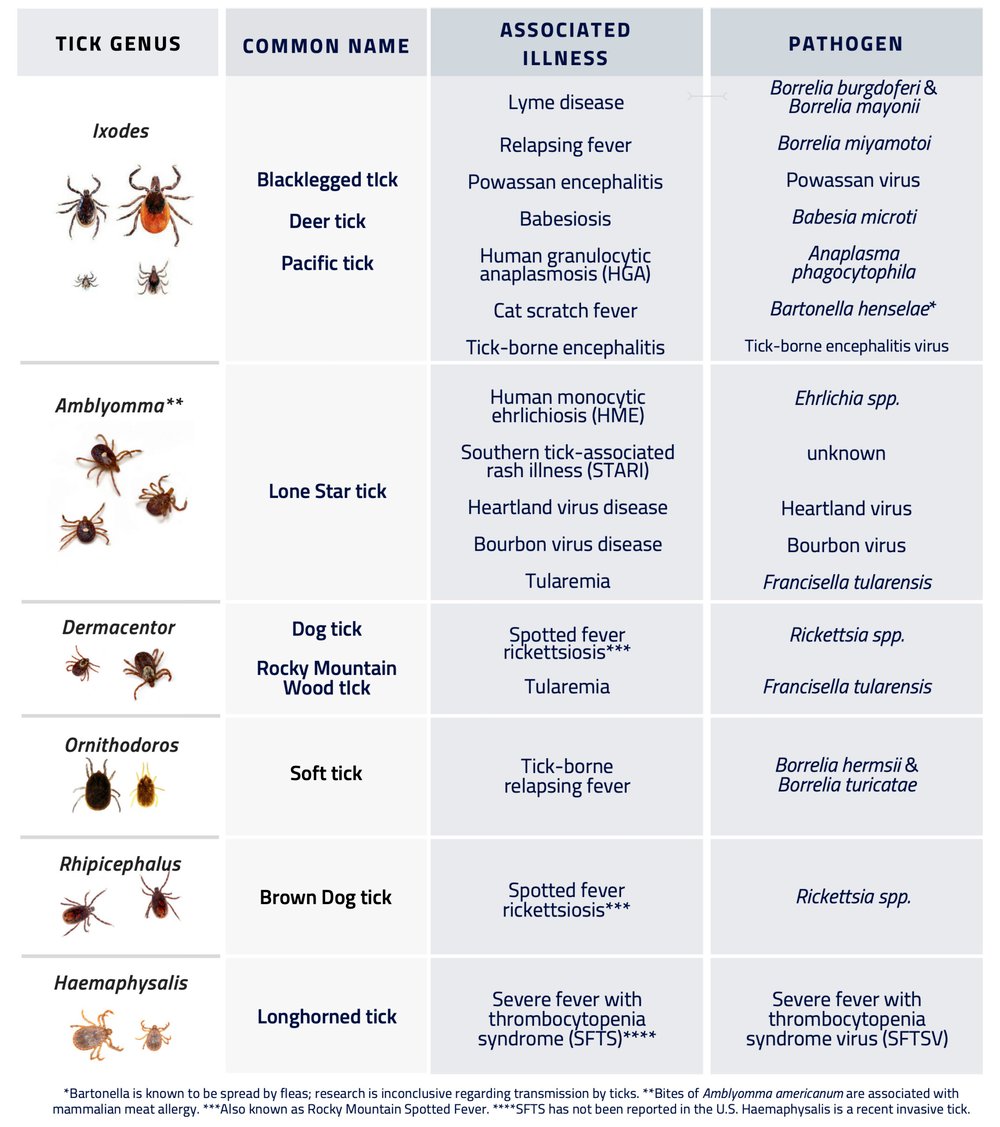
The Powassan virus is a tick-borne illness transmitted by the same tick that harbors the Lyme disease bacterium. Although it is still considered rare, the number of cases is growing and if contracted the virus can have devastating and long-lasting effects.

In their article “Underrecognized Tickborne Illnesses: Borrelia Miyamotoi and Powassan Virus,”  Della-Giustina et al. explain what is the Powassan virus and why it’s raising concerns.  

“We chose to review the Powassan virus because it only requires 15 min. of tick attachment for transmission, and the sequelae of the neurologic disease are devastating, in addition to a 10% mortality rate.”¹

What is Powassan virus?

The Powassan virus (POW) is a tick-borne flavivirus that is related to other viruses including: dengue, yellow fever, West Nile encephalitis, and tick-borne encephalitis (primarily found in Europe). “Flaviviruses are a group of single stranded RNA viruses that cause severe endemic infection and epidemics on a global scale.”²

In recent years, other viruses transmitted by ticks have been identified including the Heartland virus (phlebovirus) and the Bourbon virus (thogotovirus).

POW is very similar genetically to the deer tick virus and the clinical presentations are identical.
How was it discovered?

Powassan was first discovered in the brain of a young child.

“Powassan virus is named for the Ontario, Canada, town where it was first isolated from the brain of a 5-year-old boy who died of severe encephalitis in 1958,” the authors write.

Where is it?

The second case was reported in New Jersey (1970) and then another in eastern Russia (1978). Although, there have been no reported cases in other countries, the virus has been identified in a growing number of states.

In 2019, 13 U.S. states reported cases: Connecticut, Indiana, Massachusetts, Maine, Minnesota, North Carolina, North Dakota, New Hampshire, New Jersey, New York, Pennsylvania, Rhode Island, and Wisconsin.

Ticks infected with Powassan virus can transmit the disease in only 15 minutes, causing long-lasting neurologic problems in some individuals, in addition to a 10% mortality rate.

How is the virus transmitted?

The Powassan virus is carried and transmitted by Ixodes scapularis ticks, also known as deer ticks or blacklegged ticks. These ticks can also transmit Borrelia burgdorferi, the bacteria which causes Lyme disease.

“Although many flaviviruses have mosquitos as competent vectors, there is no evidence of human POW virus disease transmitted by mosquitos,” the authors point out.

How fast can Powassan virus be transmitted?

Very fast. “Transmission in mice has been shown to occur within 15 min. of I. scapularis attachment,” the authors write.

This rapid transmission occurs because the virus is already present in the salivary glands, compared to other non-viral tick-borne diseases where the pathogen is typically harbored in the tick’s mid-gut.

What is the typical clinical presentation?

“Few people who become infected with the POW virus have clinically significant disease,” the authors write.

However, in some cases, “a Powassan infection can lead to disorientation, headache, neck stiffness, fever up to 40°C, clonus, ocular, and other motor palsies, obtundation and convulsions, and can mimic herpes simplex encephalitis.”

Can Powassan virus be serious?

Yes.  

“Approximately 50% of cases result in lasting hemiplegia, memory problems, and muscle wasting,” the authors explain.

“Ten percent of cases are fatal.”

Are there tests for it?

A PCR test is only positive in early stages of a Powassan infection. “IgG by enzyme-linked immunosorbent assay is the mainstay of diagnosis, but confirmation requires specialized testing,” write the authors.

Why are co-infections important?

Treatable tick-borne co-infections may be present. The authors describe a patient with a combination of Powassan encephalitis, Lyme carditis, and Babesia.

Yoon and colleagues described the case of a 17-year-old young man who died waiting for a Powassan virus test.³  He was not treated for a co-infection with Lyme disease. His autopsy showed Borrelia spirochetes, which cause Lyme disease, in his heart and liver. He also had PCR evidence of spirochetes in his brain and lungs.

What is the treatment for a Powassan infection?

There is no treatment for a Powassan virus infection other than supportive care.

References:
  1. Della-Giustina D, Duke C, Goldflam K. Underrecognized Tickborne Illnesses: Borrelia Miyamotoi and Powassan Virus. Wilderness Environ Med. Jun 2021;32(2):240-246. doi:10.1016/j.wem.2021.01.005
  2. Chong HY, Leow CY, Abdul Majeed AB, Leow CH. Flavivirus infection-A review of immunopathogenesis, immunological response, and immunodiagnosis. Virus Res. 2019 Dec;274:197770. doi: 10.1016/j.virusres.2019.197770. Epub 2019 Oct 15. PMID: 31626874.
  3. Yoon EC, Vail E, Kleinman G, et al. Lyme disease: a case report of a 17-year-old male with fatal Lyme carditis. Cardiovasc Pathol. Sep-Oct 2015;24(5):317-21. doi:10.1016/j.carpath.2015.03.003

____________________

**Comment**

Regarding transmission time – ALL pathogens can reside in the salivary glands of ticks due to partial feeding, which will result in quicker transmission times, but this fact is continually downplayed:  https://madisonarealymesupportgroup.com/2019/04/26/three-strains-of-borrelia-other-pathogens-found-in-salivary-glands-of-ixodes-ticks-suggesting-quicker-transmission-time/

It’s also important to note that minimum transmission times have NEVER been established:   https://madisonarealymesupportgroup.com/2017/04/14/transmission-time-for-lymemsids-infection/

https://madisonarealymesupportgroup.com/2021/06/01/cdc-lying-again-tuttle-drops-the-mic/  Within this important letter, Lyme advocate Carl Tuttle shows rapid transmission has occurred in under 4 hours:

  1. Clinical evidence for rapid transmission of Lyme disease following a tick bite:  https://www.sciencedirect.com/science/article/abs/pii/S0732889311004159?via%3Dihub
  2. B. Patmas, MA, Remora, C. Disseminated Lyme Disease After Short-Duration Tick Bite. JSTD 1994; 1:77-78: https://www.lymedisease.org/hard-science-on-lyme-ticks-can-transmit-infection-the-first-day/
  3. Lyme borreliosis: a review of data on transmission time after tick attachment:  https://www.ncbi.nlm.nih.gov/pmc/articles/PMC4278789/  The claims that removal of ticks within 24 hours or 48 hours of attachment will effectively prevent LB are not supported by the published data, and the minimum tick attachment time for transmission of LB in humans has never been established.
  4. Regarding Tick Attachment Times –  https://history.nih.gov/display/history/Burgdorfer%2C+Willy+1986
There are about 5 to 10 percent of infected ticks that have a generalized infection, including salivary glands and saliva at the time of attachment. In such cases, transmission of spirochetes would and does occur immediately at time of attachment.” —Willy Burgdorfer

According to this study by Coppe Labs, right here in Wisconsin, 85% of Powassan infected ticks come from Northern Wisconsin. Another study by Coppe showed that when 95 patients were tested for suspected tick-borne disease, 66% showed evidence of current or prior Lyme infection.  Of those patients, 17% had serologic evidence of acute POWV infection, demonstrating that POWV may affect more patients than we know.

For more on Powassan:

Evaluating Effects of Minimal Risk Natural Products for Control of Black-Legged Ticks

https://pubmed.ncbi.nlm.nih.gov/33044507/

Evaluating the Effects of Minimal Risk Natural Products for Control of the Tick, Ixodes scapularis (Acari: Ixodidae)

Affiliations

Abstract

Knockdown and residual activity of 10 minimal risk natural products (MRNPs), one experimental formulation of nootkatone, and two bifenthrin labels were evaluated against host-seeking nymphal Ixodes scapularis Say using a novel micro-plot product screening system placed in a landscape setting similar to a wooded residential property. The MRNPs evaluated included Tick Stop, EcoPCO EC-X, Met52 EC, CedarCide PCO Choice, EcoEXEMPT IC2, EcoSMART Organic Insecticide, Essentria IC3, privately labeled products 1 and 2 (based on EcoEXEMPT IC2 and sold as a professional pest control application), and Tick Killz.

Just the nootkatone and 4 of these 10 products tested (EcoPCO EC-X, Met52 EC, EcoEXEMPT IC2, and Essentria IC3) had statistically significant (P < 0.05) knockdown effects (killed ticks while active in the arenas) when compared to water-only controls, but only 2 of these, EcoPCO EC-X and nootkatone, displayed significant residual tick-killing activity after weathering naturally in the landscape for 2 wk prior to tick application/testing.

Moreover, botanical oil-based products with the same active ingredients provided inconsistent results when tested multiple times across study years.

For more:

Statewide Passive Surveillance of Black Legged Ticks & Associated Pathogens in Maine

https://www.liebertpub.com/doi/full/10.1089/vbz.2020.2724#utm_source=ETOC&utm_medium=email&utm_campaign=vbz

Statewide Passive Surveillance of Ixodes scapularis and Associated Pathogens in Maine

Published Online:https://doi.org/10.1089/vbz.2020.2724

Abstract

The blacklegged tick, Ixodes scapularis, is the primary vector of multiple human pathogens, including the causative agents of Lyme disease, anaplasmosis, and babesiosis. Both I. scapularis and its associated pathogens have expanded their geographic range throughout the northeastern Unites States and into northern New England. Through this study, we present an updated distribution of I. scapularis in Maine and report the first statewide passive surveillance infection and coinfection prevalence of Borrelia burgdorferiAnaplasma phagocytophilum, and Babesia microti within the state’s I. scapularis population. In 2019, we collected 2016 ticks through a passive surveillance program, in which Maine residents submitted tick samples for identification and/or pathogen testing. We used a single multiplex quantitative PCR assay to detect tickborne pathogens in 1901 tick samples. At the state level, we found:

  • Bo. burgdorferi and A. phagocytophilum infection rates of adults (42.4%, 11.1%) were nearly double that of nymphs (26.9%, 6.7%)
  • B. microti prevalence was similar for both adults (6.5%) and nymphs (5.2%).
  • Spatially, we found an uneven distribution of both tick activity and pathogen prevalence, with both increasing on a north to south gradient.
  • We also noted a potential association between the ratio of adult to nymphal ticks and the incidence of tickborne disease in human populations, with counties that exhibit high rates of human disease also maintaining low adult to nymph ratios.
  • We detected Bo. burgdorferi in ticks from all counties, except Aroostook, although we only tested five samples from this county.
  • Excluding Aroostook, the county-level Bo. burgdorferi prevalence ranged from 30.0% (Piscataquis) to 50.0% (Franklin and Waldo) in adults and 0% (Piscataquis and Somerset) to 43.8% (Knox) in nymphs.
  • High disease incidence counties did not necessarily have higher prevalence rates within submitted ticks.
  • Knowledge of anaplasmosis is not as widespread as Lyme disease, which may lead to the underdiagnosis of this disease.
  • The sporadic distribution of B. microti is consistent with a pathogen that is colonizing a new location and has not yet reached an even spatial distribution (Diuk-Wasser et al. 2016).
  • B. microti is also thought to spread more quickly in areas where Bo. burgdorferi is prevalent due to an immune interaction in reservoir hosts such as white-footed mice (Peromyscus leucopus) or deer mice (P. maniculatus) (Dunn et al. 2014).
  • B. microti is likely to continue spreading throughout Maine.

____________________

**Comment**

It is interesting that researchers acknowledge that multiple infections occur due to an immune interaction yet severely ill patients are still viewed myopically to only have Lyme disease.  Our conflict-riddled public health ‘authorities’ continue to promote ancient mythology, deny persistent infection, and treat patients with a mono-therapy that has never been adequate.  Treating co-infections isn’t even on their radar.

Need for Tick Bite Reporting in Non-Endemic States

https://www.mdpi.com/2227-9032/9/6/771/htm

Tick-Borne Surveillance Patterns in Perceived Non-Endemic Geographic Areas: Human Tick Encounters and Disease Outcomes

*Author to whom correspondence should be addressed.
Academic Editor: Raphael B. Stricker
Healthcare 20219(6), 771; https://doi.org/10.3390/healthcare9060771
Received: 12 May 2021 / Revised: 15 June 2021 / Accepted: 16 June 2021 / Published: 21 June 2021
Abstract
Recent scholarship supports the use of tick bite encounters as a proxy for human disease risk. Extending entomological monitoring, this study was designed to provide geographically salient information on self-reported tick bite encounters by survey respondents who concomitantly reported a Lyme disease (LD) diagnosis in a state perceived as non-endemic to tick-borne illness. Focusing on Texas, a mixed-methods approach was used to compare data on tick bite encounters from self-reported LD patients with county-level confirmed cases of LD from the U.S. Centers for Disease Control and Prevention (CDC), as well as serological canine reports.
A greater proportion of respondents reported not recalling a tick bite in the study population, but a binomial test indicated that this difference was not statistically significant. A secondary analysis compared neighboring county-level data and ecological regions.
Using multi-layer thematic mapping, our findings indicated that tick bite reports accurately overlapped with the geographic patterns of those patients previously known to be CDC-positive for serological LD and with canine-positive tests for Borrelia burgdorferi, anaplasmosis, and ehrlichiosis, as well as within neighboring counties and ecological regions. LD patient-reported tick bite encounters, corrected for population density, also accurately aligned with official CDC county hot-spots. Given the large number of counties in Texas, these findings are notable.
Overall, the study demonstrates that direct, clinically diagnosed patient reports with county-level tick bite encounter data offer important public health surveillance measures, particularly as it pertains to difficult-to-diagnose diseases where testing protocols may not be well established. Further integration of geo-ecological and socio-demographic factors with existing national epidemiological data, as well as increasingly accessible self-report methods such as online surveys, will contribute to the contextual information needed to organize and implement a coordinated public health response to LD.
______________________
Important excerpts:
  • Primary care physicians may under-diagnose LD in areas perceived as non-endemic [33].
  • Misdiagnosis was reported in seventy-two percent of respondents in a large survey [34], indicating the need for improved surveillance beyond entomology that links tick encounters with human disease risk, which can inform diagnostic approaches.
  • The need for expanded and improved LD research and knowledge is highly apparent for the benefit of both patients and health practitioners.
  • Given that LD is often labeled a “contested illness,” TTS respondents who may be perceived as “faking it” could easily report any random county if their tick bites were indeed a false entry in the TTS survey. In other words, it would be highly unlikely that the totality of respondents’ tick bite reports would map directly to confirmed official CDC cases or canine serological findings through attempted deception. TTS-reported tick bites overlap almost exactly with CDC-confirmed LD cases in county-level and eco-region analyses. In one case, in a county in which TTS respondents did not overlap with human cases, tick encounter reports did overlap with a positive canine county.
You know it’s bad when researchers have to deal with the myth that patients are considered deceivers.