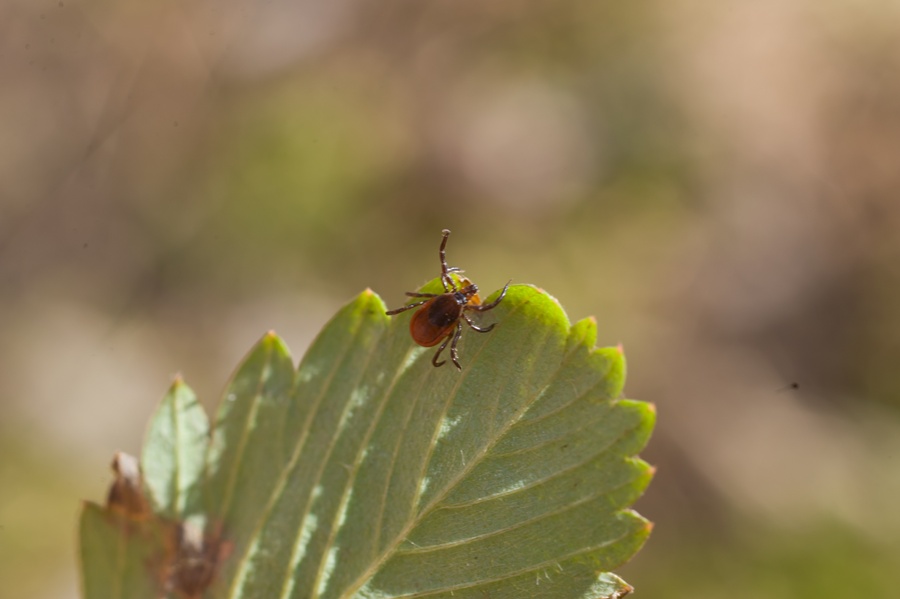
Archive for the ‘Ticks’ Category

Statewide Passive Surveillance of Black Legged Ticks & Associated Pathogens in Maine

https://www.liebertpub.com/doi/full/10.1089/vbz.2020.2724#utm_source=ETOC&utm_medium=email&utm_campaign=vbz

Statewide Passive Surveillance of Ixodes scapularis and Associated Pathogens in Maine

Published Online:https://doi.org/10.1089/vbz.2020.2724

Abstract

The blacklegged tick, Ixodes scapularis, is the primary vector of multiple human pathogens, including the causative agents of Lyme disease, anaplasmosis, and babesiosis. Both I. scapularis and its associated pathogens have expanded their geographic range throughout the northeastern Unites States and into northern New England. Through this study, we present an updated distribution of I. scapularis in Maine and report the first statewide passive surveillance infection and coinfection prevalence of Borrelia burgdorferi, Anaplasma phagocytophilum, and Babesia microti within the state’s I. scapularis population. In 2019, we collected 2016 ticks through a passive surveillance program, in which Maine residents submitted tick samples for identification and/or pathogen testing. We used a single multiplex quantitative PCR assay to detect tickborne pathogens in 1901 tick samples. At the state level, we found:

  • Bo. burgdorferi and A. phagocytophilum infection rates of adults (42.4%, 11.1%) were nearly double that of nymphs (26.9%, 6.7%)
  • B. microti prevalence was similar for both adults (6.5%) and nymphs (5.2%).
  • Spatially, we found an uneven distribution of both tick activity and pathogen prevalence, with both increasing on a north to south gradient.
  • We also noted a potential association between the ratio of adult to nymphal ticks and the incidence of tickborne disease in human populations, with counties that exhibit high rates of human disease also maintaining low adult to nymph ratios.
  • We detected Bo. burgdorferi in ticks from all counties, except Aroostook, although we only tested five samples from this county.
  • Excluding Aroostook, the county-level Bo. burgdorferi prevalence ranged from 30.0% (Piscataquis) to 50.0% (Franklin and Waldo) in adults and 0% (Piscataquis and Somerset) to 43.8% (Knox) in nymphs.
  • High disease incidence counties did not necessarily have higher prevalence rates within submitted ticks.
  • Knowledge of anaplasmosis is not as widespread as Lyme disease, which may lead to the underdiagnosis of this disease.
  • The sporadic distribution of B. microti is consistent with a pathogen that is colonizing a new location and has not yet reached an even spatial distribution (Diuk-Wasser et al. 2016).
  • B. microti is also thought to spread more quickly in areas where Bo. burgdorferi is prevalent due to an immune interaction in reservoir hosts such as white-footed mice (Peromyscus leucopus) or deer mice (P. maniculatus) (Dunn et al. 2014).
  • B. microti is likely to continue spreading throughout Maine.

____________________

**Comment**

It is interesting that researchers acknowledge that multiple infections occur due to an immune interaction yet severely ill patients are still viewed myopically to only have Lyme disease.  Our conflict-riddled public health ‘authorities’ continue to promote ancient mythology, deny persistent infection, and treat patients with a mono-therapy that has never been adequate.  Treating co-infections isn’t even on their radar.

Need for Tick Bite Reporting in Non-Endemic States

https://www.mdpi.com/2227-9032/9/6/771/htm

Tick-Borne Surveillance Patterns in Perceived Non-Endemic Geographic Areas: Human Tick Encounters and Disease Outcomes

*Author to whom correspondence should be addressed.
Academic Editor: Raphael B. Stricker
Healthcare 2021, 9(6), 771; https://doi.org/10.3390/healthcare9060771
Received: 12 May 2021 / Revised: 15 June 2021 / Accepted: 16 June 2021 / Published: 21 June 2021
Abstract
Recent scholarship supports the use of tick bite encounters as a proxy for human disease risk. Extending entomological monitoring, this study was designed to provide geographically salient information on self-reported tick bite encounters by survey respondents who concomitantly reported a Lyme disease (LD) diagnosis in a state perceived as non-endemic to tick-borne illness. Focusing on Texas, a mixed-methods approach was used to compare data on tick bite encounters from self-reported LD patients with county-level confirmed cases of LD from the U.S. Centers for Disease Control and Prevention (CDC), as well as serological canine reports.
A greater proportion of respondents reported not recalling a tick bite in the study population, but a binomial test indicated that this difference was not statistically significant. A secondary analysis compared neighboring county-level data and ecological regions.
Using multi-layer thematic mapping, our findings indicated that tick bite reports accurately overlapped with the geographic patterns of those patients previously known to be CDC-positive for serological LD and with canine-positive tests for Borrelia burgdorferi, anaplasmosis, and ehrlichiosis, as well as within neighboring counties and ecological regions. LD patient-reported tick bite encounters, corrected for population density, also accurately aligned with official CDC county hot-spots. Given the large number of counties in Texas, these findings are notable.
Overall, the study demonstrates that direct, clinically diagnosed patient reports with county-level tick bite encounter data offer important public health surveillance measures, particularly as it pertains to difficult-to-diagnose diseases where testing protocols may not be well established. Further integration of geo-ecological and socio-demographic factors with existing national epidemiological data, as well as increasingly accessible self-report methods such as online surveys, will contribute to the contextual information needed to organize and implement a coordinated public health response to LD.
______________________
Important excerpts:
  • Primary care physicians may under-diagnose LD in areas perceived as non-endemic [33].
  • Misdiagnosis was reported in seventy-two percent of respondents in a large survey [34], indicating the need for improved surveillance beyond entomology that links tick encounters with human disease risk, which can inform diagnostic approaches.
  • The need for expanded and improved LD research and knowledge is highly apparent for the benefit of both patients and health practitioners.
  • Given that LD is often labeled a “contested illness,” TTS respondents who may be perceived as “faking it” could easily report any random county if their tick bites were indeed a false entry in the TTS survey. In other words, it would be highly unlikely that the totality of respondents’ tick bite reports would map directly to confirmed official CDC cases or canine serological findings through attempted deception. TTS-reported tick bites overlap almost exactly with CDC-confirmed LD cases in county-level and eco-region analyses. In one case, in a county in which TTS respondents did not overlap with human cases, tick encounter reports did overlap with a positive canine county.
You know it’s bad when researchers have to deal with the myth that patients are considered deceivers.

How to Apply Repellent

https://www.globallymealliance.org/videos/how-to-apply-repellent

WHY TICK-BITE PREVENTION IS IMPORTANT

Increased tick activity combined with unreliable diagnostics and limited treatment options make diligent tick-bite prevention for the entire family of utmost importance. Even when diagnosed and treated early, up to 20% of people infected with Lyme disease continue to experience debilitating symptoms. For those not diagnosed early, treatment success can vary greatly. With late-stage or chronic Lyme disease, the bacteria can adversely affect multiple organ systems, joints, the heart, the brain, and parts of the central nervous system.

TICKS CARRY MORE THAN LYME DISEASE

The most common tick-borne illnesses are carried by blacklegged ticks (called deer ticks) that may also transmit several bacterial diseases including Babesiosis, Ehrlichiosis, and Anaplasmosis, which often result in infections coincident with Lyme. The same blacklegged tick, may also transmit the Powassan virus which can cause encephalitis and meningitis. Experts warn that viral infections may occur in as little as 15 minutes after a tick bite.

HOW TO BE TICK AWARE
  1. AVOID areas where ticks live. Ticks thrive in wood piles, long grass, leaf piles, and beach grass.
  2. WEAR light-colored clothing: long pants, sleeves, socks, and closed-toe shoes. APPLY EPA-approved, CDC-recommended tick repellent to skin and insecticide to clothing and shoes as directed.
  3. REMOVE clothing upon entering the home; toss into dryer at a high temperature for 10-15 minutes to kill ticks.
  4. EXAMINE yourself and your pets for ticks daily. Check everywhere — ticks love to hide!
CHOOSING A TICK REPELLENT

Body-worn repellents serve as the first line of defense for tick bites.

When choosing a tick repellent, it is important to select an EPA-approved, CDC-recommended active ingredient such as Picaridin 20%. “Picaridin 20% is recommended by the CDC, the World Health Organization, and Health Canada, is the leading active ingredient sold in European pharmacies,” said Chris L. Fuentes, Founder and CEO of Ranger Ready Repellents. “We created Ranger Ready with Picaridin 20% because it’s highly effective against ticks and can be safely worn by adults and children who must be protected every day.”

Go to RangerReady.com and use code GLA2021 for 10% off! As always, a portion of proceeds on rangerready.com go to GLA to advance our combined mission to protect future generations from tick bites and tick-borne illnesses.

For more prevention tips, visit BeTickAware.org

Preventing Tick Bites on a Child Proves Challenging

https://danielcameronmd.com/tick-bite-prevention-methods-failing-children/

PREVENTING TICK BITES ON A CHILD PROVES CHALLENGING

tick-bites-on-child

Children account for 25% of all Lyme disease cases in the U.S., according to the Centers for Disease Control and Prevention (CDC). Unfortunately, tick bite prevention methods are failing our children, as 5-to 9-year-olds continue to be at the highest risk for developing Lyme disease.

A study published in April 2021 looked at the frequency of emergency room visits due to tick bites. The authors examined “ED tick bite visits during January 2017-December 2019 by sex, age group, U.S. region, and seasonality,” writes Marx et al. [2] Their findings revealed that tick bites on a child under the age of 9 accounted for the highest number of ED tick bite visits.

During a 36-month period, there were 149,364 ED tick bite visits. The incidence was highest in the Northeast with the larger peak occurring during the spring and early summer, the authors write.

The findings support previous studies which explored the incidence of tick bites among various age groups and the associated risk of exposure to tick-borne diseases.

In 2016, more than 3,000 ticks (n=3551) were submitted to the University of Massachusetts Laboratory of Medical Zoology, as part of a passive surveillance study. The vast majority of ticks provided over a 7–year period were Ixodes scapularis ticks (or blacklegged ticks) from Massachusetts (N ≡ 2088). [3]

Tick bites on a young child pose dangers

Investigators found that children under age 9 had the largest proportion of tick bites. According to Xu and colleagues, 39.7% were identified as nymphs, while 34.6% were adult ticks.

Nearly 200 ticks were collected from children under age 5. Another 200 ticks were collected from children ages 5 to 9. Nearly 90 ticks were collected from adolescents.

Deer ticks were the most common ticks attached to a child. Out of the 3,551 tick bites, 89% were due to deer ticks.

Additionally, 98% of the 1700 adult ticks submitted were female.

The overall infection rate for Borrelia burgdorferi, Anaplasmosis phagocytophilum, and Babesia microti in human-biting ticks were 29.6%, 4.6%, and 1.8%, respectively, writes Xu. Tick bites on a child may lead to more than Lyme disease.

The authors reported ticks harboring multiple infectious agents:

  • 1.8% were co-infected by B. burgdorferi and A. phagocytophilum;
  • 1.0% were co-infected by B. burgdorferi and B. microti;
  • 0.4% were co-infected by A. phagocytophilum and B. microti.

Triple co-infections were found in 0.3% of the ticks.

Note: The investigators did not check for other infections, such as Bartonella henselae or Borrelia miyamotoi.

When do tick bites on children occur?

Tick bites on a child occurred most frequently in the Spring and Fall when children are participating in school activities and sports, explains Xu.

According to the authors, 1700 adult ticks displayed two discrete peaks:

  • April – June peak (representing questing activity of the overwintering population)
  • October – December peak (representing large autumnal populations)

Between April and October, 360 nymphs were received, with a clear peak in June.

How effective are tick bite prevention methods?

According to several studies, prevention methods are failing our children. One of the most effective ways of measuring whether tick bite prevention methods are working is to monitor the number of tick bites that involve an engorged tick. [4] This is because ticks typically do not become engorged for at least 24 hours.

READ MORE: The dangers in being bitten by a partially fed tick (not fully engorged), where infection is postulated to occur in less than 6 hours. Have you been bitten by a partially fed tick? 

Unfortunately, Xu and colleagues found that 35.6% of ticks attached to children younger than 9-years-old were engorged.

This is particularly concerning given that an engorged tick increases your chances of developing Lyme disease by 20 times. [5]

Only 12% of children reported performing regular tick checks.

A school-based intervention program, offered to 1,562 elementary students, explored why children are more likely to get a tick bite. [6] The responses indicate a need for ongoing educational efforts on tick bite prevention measures.

Following are the responses to several of the questions:

How often do you check yourself for ticks?

  • 56.8% = sometimes
  • 12.0%  = always
  • 25.8% = usually

Who helps you check for ticks most of the time?

  • 77.8% = grown-up at home
  • 14.6% = themselves
  • 2.0% = grown-up at school checked for ticks
  • 4.4% = did not check at all

“As long as there are no effective measures for controlling tick populations and there is no vaccine available, we rely solely on health education and communication efforts to prevent tick bites and Lyme Borreliosis (LB)” writes Beaujean. [7]

“We call on researchers and funders to prioritize research in the field of public health interventions for tick bites and LB,” he writes, “because, in the words of Benjamin Franklin, ‘an ounce of prevention is worth a pound of cure.’”

UPDATED: June 21, 2021

References:
  1. Bacon RM, Kugeler KJ, Mead PS. Surveillance for Lyme disease–United States, 1992-2006. MMWR Surveill Summ, 57(10), 1-9 (2008).
  2. Marx GE, Spillane M, Beck A, Stein Z, Powell AK, Hinckley AF. Emergency Department Visits for Tick Bites – United States, January 2017-December 2019. MMWR Morb Mortal Wkly Rep. 2021 Apr 30;70(17):612-616. doi: 10.15585/mmwr.mm7017a2. PMID: 33914718; PMCID: PMC8084121.
  3. Xu G, Mather TN, Hollingsworth CS, Rich SM. Passive Surveillance of Ixodes scapularis (Say), Their Biting Activity, and Associated Pathogens in Massachusetts. Vector Borne Zoonotic Dis, 16(8), 520-527 (2016).
  4. Falco RC, Fish D, Piesman J. Duration of tick bites in a Lyme disease-endemic area. Am J Epidemiol, 143(2), 187-192 (1996).
  5. Sood SK. Lyme disease in children. Infect Dis Clin North Am, 29(2), 281-294 (2015).
  6. Shadick NA, Zibit MJ, Nardone E, DeMaria A, Jr., Iannaccone CK, Cui J. A School-Based Intervention to Increase Lyme Disease Preventive Measures Among Elementary School-Aged Children. Vector Borne Zoonotic Dis, 16(8), 507-515 (2016).
  7. Beaujean D, Crutzen R, Kengen C, van Steenbergen J, Ruwaard D. Increase in Ticks and Lyme Borreliosis, Yet Research into Its Prevention on the Wane. Vector Borne Zoonotic Dis, 16(5), 349-351 (2016).

____________________

For more:

After a Tick Bite, How Long For Disease Transmission?

https://danielcameronmd.com/have-you-been-bitten-by-a-partially-fed-tick/

AFTER A TICK BITE, HOW LONG FOR DISEASE TRANSMISSION?

tick-disease-transmission

A single tick bite can transmit several diseases. But investigators continue to debate how long a tick must be attached before it can transmit the Lyme disease bacterium. While many believe a tick must be attached for at least 36 to 48 hours before transmission can occur, others say it can happen within several hours.

People often ask: How long does it take for disease transmission to occur after a tick bite? According to investigators, Lyme disease may be transmitted faster if the tick previously fed on another host.

In a 2014 article entitled “Lyme borreliosis: a review of data on transmission time after tick attachment,” Michael J Cook explored the topic. “It is frequently stated that the risk of infection is very low if the tick is removed within 24 to 48 hours with some claims that there is no risk if an attached tick is removed within 24 hours or 48 hours.”

However, in animal models, Cook found, “transmission can occur in less than 16 hours, and the minimum attachment time for transmission of infection has never been established.”

Have you been bitten by a partially fed tick?

Investigators suggest that transmission time may be shorter if a tick has already fed on a host. A study by Shih and colleagues, found that, “Partially fed nymphal ticks transmit spirochetal infection more rapidly than do ticks that have never been attached to a host.”¹

So, how quickly a tick can transmit Lyme disease may depend on whether the tick had been partly fed BEFORE it attached to its second host.

Shih et al. demonstrated that partially fed nymphal ticks (84%) were capable of transmitting spirochetes to a non-infected mouse within 24 hours. The authors discovered it took less time for an infected nymphal deer tick to transmit Lyme spirochetes to a mouse if the tick was partially fed.

Ticks spontaneously detach from hosts

Individuals may mistakenly believe that once a tick bites it will remain attached throughout the entire feeding or until it is removed. But this isn’t the case.

In the mouse study, Shih found that ticks can spontaneously detach during the feeding process. And this action can profoundly impact the time it takes for spirochetes to infect the host.

“Virtually all nymphal ticks that previously had fed for 16 hours reattached efficiently.”¹

“We found that nymphs do detach spontaneously from free-ranging mice in the laboratory, perhaps as frequently as 15% of the time,” the authors report.

“Indeed, about [one tenth] of questing nymphs in nature seem to be distended, and reattachment by partially fed sub-adult ticks commonly occurs.”

In the laboratory, partially fed ticks would reattach to a second host and commence feeding. “Virtually all nymphal ticks that previously had fed for 16 hours reattached efficiently.”

What happens in partially fed ticks?

The tick attaches to a host, feeds and the Lyme bacteria multiply rapidly in the tick’s mid-gut. Normally, the tick eliminates all of the bacteria, leaving behind only those spirochetes that survive in the mid-gut before they molt into an adult.

But, in a partially fed tick, spirochetes multiply in the mid-gut and then move to the salivary glands.

If the tick bites again, the spirochetes residing in the salivary glands can be transmitted more quickly. “Partially fed nymphs [ticks] are able to reattach to another host and Lyme disease spirochetes may be transmitted by partially fed nymphs more rapidly than by nymphs that have not already fed.”

Pet owners: be wary

Their findings are particularly relevant to people who own pets. “These partially fed ticks may already have acquired spirochetal infection and avidly seek other hosts,” writes Shih.

“Pet ownership appears to be a risk factor for human Lyme disease, and this may reflect contact with ticks that have detached from a cat or dog within the household.”

If an unfed tick attaches it can take up to 36 hours to transmit the Lyme spirochetes to a mouse, Shih claims. “The chain of events that culminates in migration of the spirochetes from the gut of the tick to its salivary apparatus begins within the first day of attachment and requires at least another day for completion.”

Note: The study by Shih and colleagues was conducted only with mice and has not been replicated with humans.

UPDATED: June 22, 2021

References:
  1. Shih CM, Telford SR, 3rd, Pollack RJ, Spielman A. Rapid dissemination by the agent of Lyme disease in hosts that permit fulminating infection. Infect Immun, 61(6), 2396-2399 (1993).

_____________________

For more: