Lyme Disease Protocol
By Michael Biamonte, C.C.N.
A Modern Holistic Protocol for Lyme disease……..that works!
Discovery of Lyme Disease
There are about 1,200 cases of Lymes Disease reported across the United States each year; there were 1,282 cases reported in 1934. The disease remains concentrated along the coastal plain of the Northeast and Mid-Atlantic region, in the upper Midwest, and along the Pacific coast, although the disease has been reported in 32 states.
In a Science News report, researchers at the University of Connecticut Health Center in Farmington and the Yale-New Haven Hospital examined 70 children diagnosed with Lymes Arthritis Disease and found that only 53% actually harbored the Lymes-causing bacterium Borrelia burgdorferi. The remaining 47% had been misdiagnosed.
There is some hysteria regarding the incidence of this disease, possibly due to extensive adverse publicity. One thousand two hundred and eighty-two cases out of perhaps several hundred thousand with tick bites is not exactly a national emergency, although for a percentage of those afflicted, the disease can be rather significant and even catastrophic.
Lyme disease has the following symptoms: begins with reddened area that doesn’t itch, resulting from tick bite, but expands over time, measuring several inches across; clearing of bite area begins in center resembling a bull’s-eye; flu-like symptoms: chills, fever, fatigue, joint and muscle pain; may develop a rash which disappears in a few days; may have tingling and numbness; non-symmetrical joint problems; other symptoms may also occur; sometimes sensitivity to light, stiff neck, headache, sleepiness, mood changes and memory loss; swelling and aching joints for months or years at a time; and vague, migrating musculature pains.
The characteristics of Lyme Disease were first laid out in 1975 when two mothers were told that their children had Juvenile Rheumatoid Arthritis. The name “Juvenile” does not distinguish its clinical pattern from that of “Adult” Rheumatoid Arthritis, but merely tells the parent that this horrible, crippling disease occurred in their child, a fact that most parents already know. What is new is the diagnoses of “Rheumatoid Arthritis.”
These two mothers soon learned that many other children and adults in their geographical region were afflicted with the same symptoms, and since Rheumatoid Arthritis does not seem to cluster in a regional geography (with some exceptions), Dr. Stephen E. Malawista of Yale University, among others, began to look for a source of this apparently new disease. Dr. Malawista discovered that many of his patients suffered from a range of symptoms, among which, might be those that resembled Rheumatoid Arthritis.
The cause of Lyme Disease was determined to be a microbe transmitted by a tick, in this first instance, from the species Ixodes capularis. Since this tick was common in the grasses and woods near Lymes, Connecticut, the cluster of symptoms obtained the name “Lymes Disease.” As Dr. Willy Burgdorferi, who worked for Rocky Mountain Laboratories in Hamilton, MT, identified the damaging microbe. The bacteria was named Borrelia burgdorferi, which is a spiral-shaped bacterium similar in shape to the spirochete, Treponema pallidum, which causes syphilis. Since this initial set of discoveries, it’s clear that similar diseases have existed in Australia, Africa, Europe and Asia. It also appears in every one of the states in the United States, but seems to be particularly common in northern California, Minnesota and the Northeast. Infection by Borrelia burgdorferi occurs chiefly in the spring, summer or early fall, because of the life cycle of the Ixodes scapularis tick.
Three Stages of Borrelia Burgdorferi
There are three stages to the life cycle of the tick, and at each stage they have a favorite host, although they will attach themselves to a range of animals, including the human species.
The larva from Ixodes scapularis emerges in the summer from eggs deposited in the spring, and attaches itself to a small vertebrate such as a white-footed mouse, where it imbibes its first meal. If this mouse is infected with Borrelia burgdorferi spirochetes, the larva feeding on the mouse’s blood will also become infected.
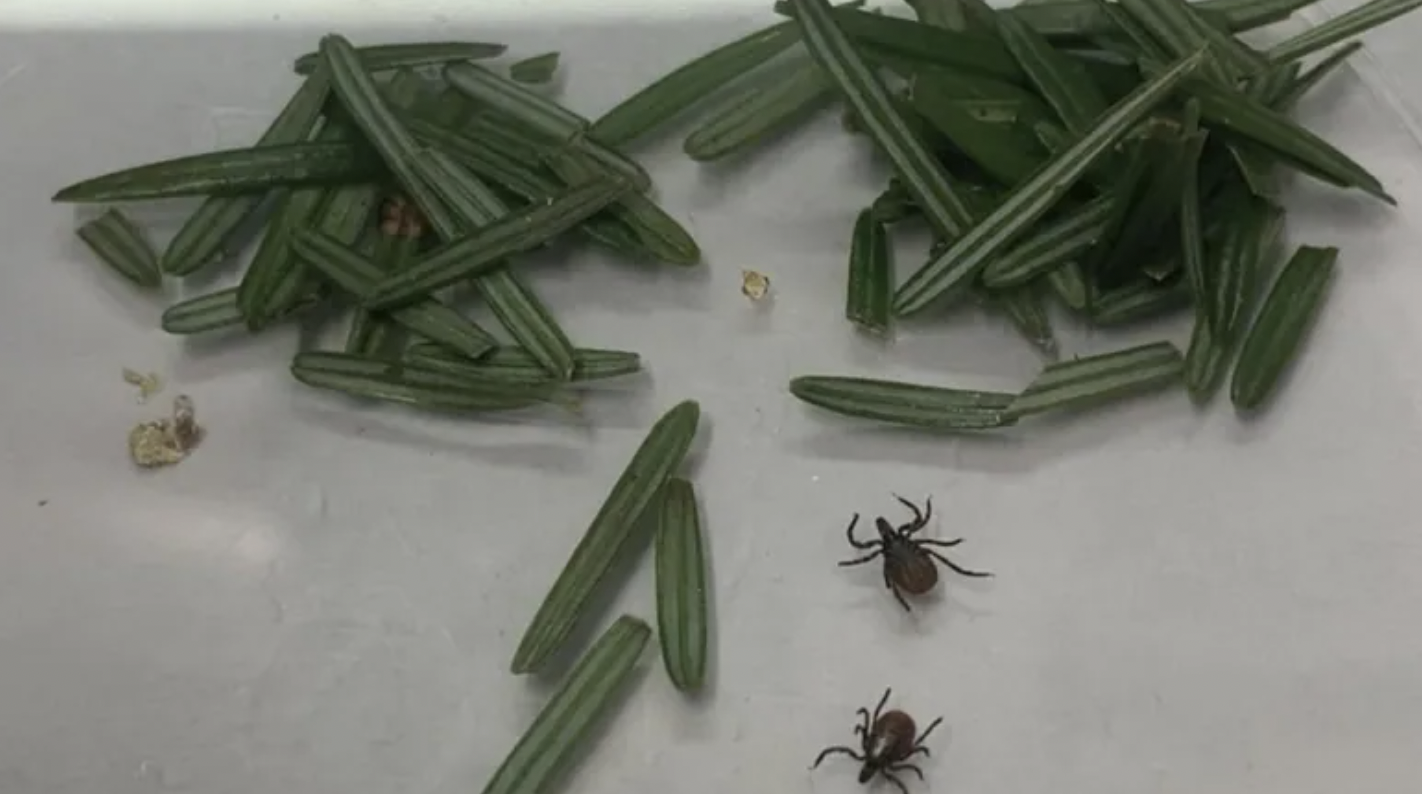
Later, the larva molts into a nymph, and during the spring and summer (usually mid-May through July) this nymph takes a second meal. If the larva was infected, it may very well pass Borrelia burgdorferi onto its second host. This nymph is now about the size of a small seed, say, a poppy seed, and is responsible for most human infections.
The nymph molts again, and by October is the size of a larger seed, like an apple’s. Again this tick feeds, at least by winter or spring, and they also mate to produce eggs that begin the cycle all over again. Usually ticks do their mating on white-tailed deer, which is why they are referred to as a “deer tick”.
In some regions of the United States, between 15 and 30 percent of the Ixodes scapularis nymph and adult ticks are infected with Borrelia burgdorferi — some 50 percent of adult ticks are infected. The adult ticks are more likely to infect humans because they have had more opportunity, throughout their life-cycle, to do so.
About 1 to 3 percent of adults who are bitten by the infected tick contract Lymes disease, meaning that a high percentage of those infected are able to master the infection.
The tick attaches itself to the skin of its host, where it takes its meal of blood. At this time Borrelia burgdorferi begins to multiply in the gut of the tick, whence it crosses into the tick’s circulation system, migrating to the salivary glands and passing with the tick’s saliva through the host’s skin.
A tick must be attached to its host for 36 to 48 hours before an infectious dose of Borrelia burgdorferi is transmitted. This is fortunate, because most folks who are bitten by a tick will find it prior to the infectious event.
Lyme Disease Symptoms
Those infected by the bacteria Borrelia burgdorferi usually have a set of characteristic symptoms.
Stage I Symptoms:
1. About 60% will notice a round rash called an erythema chronicum migrans (ECM), as doctors like to have a nice, neat name for everything they observe.
2. Three days to a month later there will be a redness at or near the site of the tick bite.
3. The reddened area does not itch or hurt, but it will expand over time until it may measure several inches across.
4. There is a clearing that begins in the center, as the rash enlarges, resembling a bull-eye. Some may acquire the rash, but fail to see these characteristics because of the bite’s location.
5. The rash may disappear within weeks or even days.
6. Days or weeks later, a variety of other early symptoms affecting many areas of the body appears, and these symptoms are thought to be from the spread of the spirochete to many different tissues through the blood stream. The symptoms will include flu like symptoms, such as chills, fever, fatigue, joint and muscle pains, and loss of appetite.
Stage II Symptoms:
Weeks to months later, about 10% of those afflicted will experience transient heart dysfunction. There will be varying degrees of heart blockage. Neurological abnormalities include headaches, profound fatigue, meningitis, cranial nerve problems (neuropathies), including fascia palsies, and sensory and motor nerve problems.
Cardiac problems occur with 5 to 10 percent of those infected, if they have been untreated. Usually this condition is not noticed by the infected person, but can be detected by a physician. The heart irregularities persist for but a week to 10 days and probably will not require the use of a pacemaker.
Early symptoms may also include mild musculoskeletal disturbances, where patients complain of vague, migrating pain without swelling in muscles, tendons or joints. The jaw, the temporomandibular joint, may be affected. These symptoms, too, will decrease in weeks to months. However, in about a half a year after the initial infection, 50% of those infected (without treatment) will suffer episodes of obvious arthritis, including the symptoms of swelling and discomfort in one or more joints, but often the knee.
Stage III Symptoms:
Ten percent of those who reach the “arthritic” point will go on to suffer chronic Lyme Arthritis. These patients will find joints swelling for months at a time, or certain joints will become enlarged and achy for a year or more. In these latter stages, joints, the central nervous system and the skin may be involved. Arthritis can develop from a few weeks to several years after Stage I. Sixty percent suffer at least one episode of arthritis if untreated. Usually the joint arthritis is but one-sided, and migration of the joint pain may prefer the larger joints, especially the knees.
Attacks may last for weeks or months, although they may also become less frequent over time and eventually disappear, leaving about 10% with damaged joints.
Sometimes neurological problems also appear, in about 20 percent of untreated patients, including Bell’s palsy. Bell’s palsy is one of our listed “Rheumatoid Diseases,” a collagen tissue disease, and so there must be more than one causation for that affliction. Other neurological afflictions include meningitis (sensitivity to light, stiff neck, headache), encephalitis (sleepiness, mood changes, memory loss), and radiculoneuropathy, where the roots of nerves that stem from the spinal cord to the periphery of some level of the body becomes irritated. These regions may be painful, tingle, or even go numb.
In traditional Rheumatoid Arthritis, a joint affected on one side of the body will also have a matching joint affected on the other side of the body. This is not true for Lyme Arthritis where only one joint may be affected on one side of the body.
Although the skin, heart, joints and nervous system are usually targeted, as the Borrelia burgdorferi bacteria can invade any system in the body, every organ or system in the body can also produce its own variation of symptoms. This ability to invade all human systems, too, is a similarity to the syphilis spirochete.
Traditional and Untraditional Treatments
Thankfully, if diagnosed early enough, antibiotics can easily wipe out the invading population, and bring about swift remission. (The antibiotics, of course, should be heavily accompanied with Lactobacillus acididophilus so that while treating the Lyme Disease, we do not also unwittingly bring about a fungal infection of candidiasis.)
The key to solving Lyme Arthritis is early diagnoses and antibiotic treatment. Early diagnoses can be difficult, especially when the characteristic rash is not present. Since flu like symptoms can arise from many different sources, as described in Dr. Paul Pybus’ The Bernheimer Effect, it becomes most difficult for a physician to make early diagnoses. The patient’s history, especially their recent exposure to woods, ticks, and bites, and especially noting the characteristic bulls-eye lesions on the skin, all are most important for early diagnosis.
Although a definitive test for Borrelia burgdorferi bacteria is possible, the test is presently a low-yield procedure. A direct examination of body fluids and tissues is not recommended because there will be so few organisms found. There are no blood tests that can make early diagnoses of Lyme Arthritis within the time length required for an early diagnosis, although surely someone somewhere is working to develop such an early test, probably based on DNA of the microorganism. The study of body serums, serology, using indirect immunofluorescent assay or enzyme-linked immunoabsorbant assay has a slow antibody response and is positive in but 50% of Stage I infections, and should antibiotics be used, the test is often aborted.
Since Lyme Arthritis is potentially disabling, extreme vigilance must be taken by those who traverse woods and grasses, but overall, it may not cause serious problems for more than 10 percent of those who have received Borrelia burgdorferi through a tick bite. Many who think they have Lyme Arthritis actually suffer from other forms of disease states, but among those who are found among the 10 percent seriously affected, there seems to be no good solution to the problem, because, after the early stage of the disease, antibiotics seem to be ineffective.
The primary problems with traditional treatments consists of the following:
1. Inability to diagnose the disease early without specific noting of the bulls-eye lesions, or having at hand an accurate, clear, case history. This delay affects treatment response by use of antibiotics, and often also causes over-extended usage of antibiotics;
2. Over-extended usage of antibiotics increases overgrowth of organisms-of-opportunity in the intestinal tract, such as Candida albicans, which condition also creates additional disease states, including some that mimic various arthritides forms, and also increases food allergies over time;
3. Many treated cases linger with pain, increasing systemic damage, and lessened vigor over many years, often ending up damaged organs and joints. There is hope, however.
Alternative Treatments
Anti-Amoebic (Anti-Microbial) Treatment
Gus J. Prosch, M.D., Jr. of Birmingham, Alabama suggests a trial of the Rheumatoid Arthritis or Rheumatoid Disease treatment protocol as recommended by The Arthritis Fund/The Rheumatoid Disease Foundation: “I’ve seen Lymes Arthritis Disease clear up after using a course of anti-micro-organism drugs as recommended by Professor Roger Wyburn-Mason for Rheumatoid Diseases.
“Although Lymes Arthritis Disease and other diseases such as Gout, Carpal Tunnel Syndrome, and Tendonitis are not supposed to be the same kind of diseases as Rheumatoid Arthritis, I’ve seen them all respond one time or another to the same treatment we use for Rheumatoid Arthritis.”19
In the case of Lymes Arthritis Disease, Dr. Prosch will give metronidazole (or one of the other 5-nitroimidazoles described) in heavier doses, for a longer period of time than recommended for Rheumatoid Disease.
Artificial Fever and Herbs
Agatha Thrash, M.D. and Calvin Thrash, M.D. write that “About one-third of patients with chronic infectious arthritis derive substantial benefits from fever treatments, one-third derive only moderate benefits, and one-third little or no help.
“In gonococcal arthritis, swelling and pain is often astonishingly helped. Patients suffering from [Osteoarthritis] receive temporary benefit, and the fever treatments may be used along with general arthritis treatment of diet and physical conditioning.”24
The Biamonte Protocol
The protocol that I have developed comes from several years of research. I have worked with a many Lymes patients. Many of them came to me due to their antibiotic treatments causing Candida.
I have found Mild Silver protein to be a very effective alternative to antibiotics in the treatment of Lyme disease. Department of Health & Human Services (NIH) and cancer center laboratory test results, regarding Lymes disease.
Borrelia burgdorferi & b hermsti, organisms associated with the causing the symptoms of Lyme Disease, were tested at the Department of Heath and Human Services, Rocky Mountain Laboratories, & Fox Chase Cancer Center, respectively in 1995, colloidal silver in concentrations of 15 PPM And 150 PPM demonstrated that no live spirochetes of either borrellia burgdorferi (B310 or b hermsti (HS-1) survived after 24 hours of exposure, in the Rocky Mountain Labs study. Ref. (11, 4-D)
The Fox chase Cancer Center, Philadelphia, Pennsylvania, demonstrated growth inhibition of borrelia burgdorferi using colloidal silver in concentrations as low as two to ten PPM. Much more rapid effects demonstrated in higher concentrations e.g. fifteen to seventy-five PPM. Ref. (12, 4-F) This offers great hope to Lymes victims as the draw back of antibiotics, aside from causing yeast infections and antibiotic resistance is that antibiotic treatments in many cases have been observed to cause susceptibility to relapse of Lyme.
Silver protein has a long history as an effective antibiotic. In recent years it has been found effective against not only bacteria but virus as well. Silver has gone through a “rebirth” in the alternative medical industry, due to its broad spectrum applications. It is found effective against very resistive bacteria. Science Digest” March 1978 issue reported in the article “Our mightiest Germ fighter,” “Thanks to eye-opening research, silver is emerging as a wonder of modern medicine. An antibiotic kills perhaps a half-dozen different disease organisms, but silver kills some 650. Resistant strains fail to develop. Moreover, silver is virtually non-toxic.” Dr. Harry Margraf, a biochemist and professional researcher and associate of the late Carl Moyer, M.D., chairman of Washington University’s Department of Surgery in the 1970’s concluded the article, with the following “Silver is the best all-around germ fighter we have.” Ref. (6.)
Anti-malaria medications also play an important role in the elimination of Lymes. The herb Artemisia has been used by the US Army as a Malaria “drug”. This herb traditionally has been used as an anti-parasitic. When combined with silver protein it has been found to be very effective in the elimination of Lymes with low incident of replace. I feel that Silver and Artemisia must be used together! TAO free cats claw and Borrelogen have also been found effective in eliminating lyme and are often used with the silver as a phase 0.
THE ROTATION
Just as in our candida protocols we rotate anti-lyme microbials to guard against the possibility of drug resistance or antibiotic resistance occurring.
While the rotation is underway we also treat the secondary infections that accompany the lyme. A new version of Biocidin has been developed for lyme. Banderol lomatium and Houttuynia can also be rotated to destroy Lyme.
Anecdotal observations by practitioners who have used this protocol conclude that the course of treatment should last approximately 1 year. The incident of relapse has been very low in those who have completed a year’s course. Apparently the “tail” of the spirochete will tend to survive antibiotic therapy and release more of the disease causing eventual relapse. I have seen excellent results with this protocol. It is also compatible with Candida treatments that are so often necessary in the Lymes patient due to their previous antibiotic use.