
Putting Lyme Disease on the Map
https://thetyee.ca/News/2020/08/31/Putting-Lyme-Disease-Map/
Putting Lyme Disease on the Map
BC says the debilitating disease isn’t a risk in much of the province. Advocates say that’s a myth and it’s putting people at risk.
On the BC Centre for Disease Control’s website, a map shows where Lyme disease exists in the province. It highlights isolated areas in the south, mostly focused around Vancouver Island and the Lower Mainland, extending as far north as Clearwater. In the north, there are pockets of “potential” around Williams Lake and in coastal areas.*
But the map, dated 2019, leaves vast swaths unmarked and the impression that Lyme disease is not a risk from tick bites in most of the province.** As a result, it can be hard to get your doctor to listen if you have Lyme symptoms and even harder to get a conclusive diagnosis.
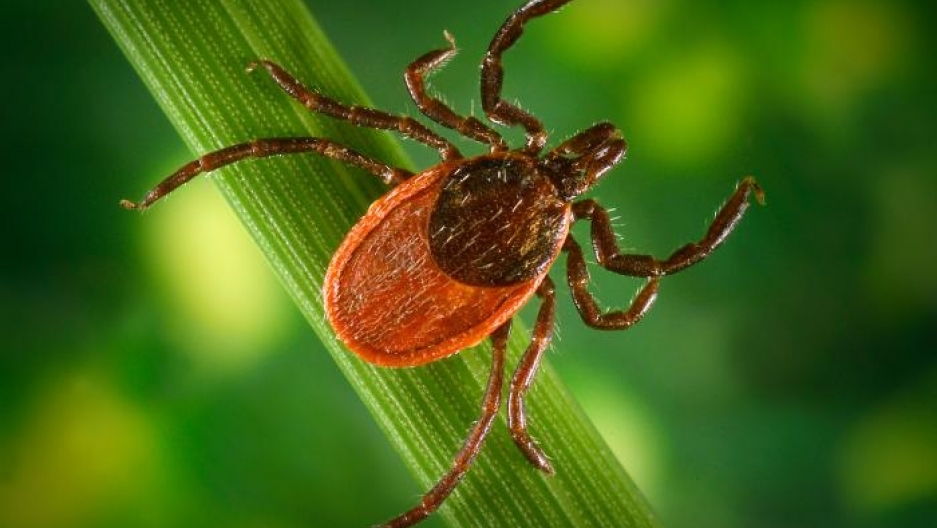
Officially, Lyme, spread by bites from infected ticks, has only been positively diagnosed a handful of times in the northern three-quarters of the province.*** But some experts say that’s because its myriad symptoms — everything from joint pain to facial paralysis — are often misdiagnosed as illnesses like chronic fatigue, fibromyalgia, multiple sclerosis and early dementia. (See link for article)
______________________
**Comment**
Great article highlighting how tick maps have only served to hurt patients for over 40 years. It is high time researchers and doctors understand the limitations of these maps and while interesting, should NEVER be used to diagnose patients.
But Muhammad Morshed, a clinical microbiologist with the BCCDC, says private labs are notorious for inaccurate results, with false positives reported up to 50 per cent of the time.
This belief is a HUGE problem. The CDC used to have a blurb right on their website calling CLIA-certified labs “home-brewed.” From the top down, our public health ‘authorities’, which by the way own patients on Lyme tests, are educating doctors that these smaller specialty labs, which have to jump through the toughest lab standards on the planet to be certified, are substandard. Please see: https://madisonarealymesupportgroup.com/2019/06/28/who-owns-the-elisa-patents/
As to ticks – the idea they only exist in certain areas needs to die. Perhaps that used to be the case, but migrating birds and rodents are taking them everywhere. Not to mention : https://madisonarealymesupportgroup.com/2018/11/07/ticks-on-the-move-due-to-migrating-birds-and-photoperiod-not-climate-change/
Not to mention ticks have been dropped from airplanes: https://madisonarealymesupportgroup.com/2019/07/31/tick-expert-admits-to-working-on-ticks-dropping-them-out-of-airplanes/


 Madison Area Lyme Support Group
Rapid Response:
Re: Tick bite
Dear Editor
Razai et al, in their consultation on tick bite, missed an important message to learners (1).
The most common infectious agents transmitted by Ixodes species ticks in North America that have the potential for co-infection with B burgdorferi are Anaplasma phagocytophilum, Babesia species, deer tick (Powassan) virus, Borrelia miyamotoi, and the Ehrlichia muris–like agent (2).
A phagocytophilum is transmitted by the same Ixodes ticks as B burgdorferi in the United States and causes fever, chills, headache, myalgia, and fatigue arising 1 to 3 weeks following tick exposure. Most cases are mild and self-limited. However, severe manifestations may include respiratory failure, adult respiratory distress syndrome, peripheral neuropathy, rhabdomyolysis, acute renal failure, pancreatitis, and coagulopathies.
It has been found that in Wisconsin, approximately 3% of I scapularis ticks examined were co-infected with B burgdorferi and A phagocytophilum (3). A similar study in 11,000 ticks in public parks of New York State’s Hudson Valley Region found that co-infection rates of nymphs and adults were 0.5% and 6.3%, respectively (4).
The frequency of humans with Lyme disease simultaneously co-infected with A phagocytophilum from various studies ranges from 2% to 10% (5,6). Similirly, Babesiosis is transmitted through the bite of infected I scapularis and I pacificus ticks. Most patients are asymptomatic or have mild, self-limited disease but may be complicated by renal failure, acute respiratory distress, and shock.
In a study of patients with Lyme disease from southern New England, approximately 10% were co-infected with babesiosis (7).
Unlike Lyme disease and Anaplasmosis, doxycycline is not an effective treatment of babesiosis and requires atovaquone and azithromycin or combination of clindamycin with quinine, making it imperitive to consider this diagnosis in mind in patients with tick bite.
Of the 3 species of Ehrlichia in United States, only E muris–like (EML) agent is transmitted by I scapularis is the vector of this emerging pathogen(8).
Possible co-infections should be considered in any patients who are diagnosed with tick bite or Lyme disease, especially those who have unexplained leukopenia, thrombocytopenia, or anemia, or who fail to respond to treatment for Lyme’s disease.
References:
1- Razai MS, Doerholt K, Galiza E, Oakeshott P. Tick bite. BMJ 2020;370:m3029
2- Caulfield AJ, Pritt BS. Lyme disease Coinfections in the United States. Clin Lab Med 2015;35:827–846.
3- Lee, X, Coyle DR, Johnson DK, et al. Prevalence of Borrelia burgdorferi and Anaplasma phagocytophilum in Ixodes scapularis (Acari: Ixodidae) nymphs collected in managed red pine forests in Wisconsin. J Med Entomol 2014;51:694-701.
4- Prusinski MA, Kokas JE, Hukey KT, et al. Prevalence of Borrelia burgdorferi (Spoirochets: Spirochaetaceae), Anaplasma phagocytophilum (Rickettsiales: Anaplasmataceae), and Babesia microti (Piroplasmida: Babesiidae) in Ixodes scapularis (Acari: Ixodidae) collected from recreational lands in the Hudson Valley Region, New York State. J Med Entomol 2014;51:226-36.
5- Horowitz HW, Aguero-Rosenfeld ME, Holmgren D, et al. Lyme disease and human granulocytic anaplasmosis coinfection: impact of case definition on coinfection rates and illness severity. Clin Infect Dis 2013;56;93-9.
6- Steere AC, McHugh G, Suarez C, et al. Prospective study of coinfection in patients with erythema migrans. Clin Infect Dis 2003;36:1078-81.
7- Krause PJ, Telford SR, Spielman A, et al. Concurrent Lyme disease and babesiosis – evidence for increased severity and duration of illness. JAMA 1996;275:1657-60.
8- Pritt BS, McFadden JD, Stromdah E, et al. Emergence of a novel Ehrlichia sp. agent
pathogenic for humans in the Midwestern United States. 6th International Meeting
on Rickettsiae and Rickettsial Diseases. Heraklion (Greece), June 5–7, 2011.
_______________________
**Comment**
This important letter to the editor highlights many contentious issues Lyme/MSIDS patients have to muddle through. From where I sit, I disagree with the author’s statements that these infections are ‘mild and self-limited’, but I deal with sick people – not healthy. If there’s one thing I DO know, it’s that these infections have been downplayed for far too long, and it’s been a real problem. Patients haven’t been taken seriously for over 40 years!
The consideration of coinfections; unfortunately, is not common in mainstream medicine regarding Lyme/MSIDS. They still treat this as a one germ disease with doxycycline curing it, when nothing could be further from the truth: https://madisonarealymesupportgroup.com/2018/10/30/study-shows-lyme-msids-patients-infected-with-many-pathogens-and-explains-why-we-are-so-sick/