
I’m sorry to have to cancel our support meeting for Saturday, Feb. 12, 2022. I’ve got a head cold that morphed into my chest leaving me with laryngitis.
We have rescheduled it to Saturday, March 26, 2022 at 2:30. Information will be forthcoming.

I’m sorry to have to cancel our support meeting for Saturday, Feb. 12, 2022. I’ve got a head cold that morphed into my chest leaving me with laryngitis.
We have rescheduled it to Saturday, March 26, 2022 at 2:30. Information will be forthcoming.
Feb. 9, 2022
Please keep in mind, that if DHS gets away with this, all Lyme/MSIDS patients and the doctors who dare treat them will be considered terrorists as well since they too are spreading a “misleading narrative” according to mainstream science and organizations like the Infectious Diseases Society of America.
 By Matt Agorist
The Department of Homeland Security (DHS) on Monday issued a bulletin warning of a heightened terrorism alert in the United States. One of the “key factors” for the heightened threat, which the DHS considers terrorism, is “the proliferation of false or misleading narratives, which sow discord or undermine public trust in U.S. government institutions.”
Naturally, this has many folks concerned, especially considering the examples cited in the bulletin which include “false or misleading narratives” about “unsubstantiated widespread election fraud and COVID-19.”
While parts of the memo cite calls for violence and attacks by foreign terrorist organizations — which are actual terror threats — as cause for concern, the idea that the government’s definition of misinformation could potentially earn you the label of “terrorist,” is shocking. (See link for article)
_________________
SUMMARY:
Steve Kirsch recently wrote an article called, “DHS: Here is a List of Top COVID Misinformation Spreaders You Should Investigate ASAP.” Here’s Kirsch’s list:
He then states that the top corporate spreaders of misinformation are: Youtube, Facebook, Twitter, LinkedIn, Medium, and Nextdoor, and that collectively they are responsible for the deaths over over 1 million Americans.
Kirsch then gives a list created by Dr. Toby Rogers. Please go here for the list. Many politicians are listed, as well as the media, and special “honorable mentions” such as the AMA, IDSA, and state medical boards. Many of the exact same players in the Lyme/MSIDS debacle. James Corbett also gives a list of another dirty dozen who have caused untold harm.
The Center for Countering Digital Hate (CCDH) was recently called out by Facebook for manufacturing a “faulty narrative” without “any evidence” against 12 individuals it has repeatedly defamed and labeled as the “disinformation dozen.”
http:// Approx. 12 Min
Jan. 31, 2021
Cardiologist Dr Aseem Malhotra
Cardiologist Dr Aseem Malhotra responds to claims the Covid jab could have caused the heart problems.
“If you are under 40 the risk of Myocarditis from the ‘vaccine’ is higher than Myocarditis from Covid.”
And this telling video details how myocarditis concerns are growing. Jefferey Jaxen goes through the VAERS data as well. Coroner states they are dealing with multiple cases.
For more:
http:// Approx. 10 Min
Feb. 5, 2022, GBNews
https://danielcameronmd.com/lumbar-puncture-helpful-for-diagnosing-lyme-neuroborreliosis/
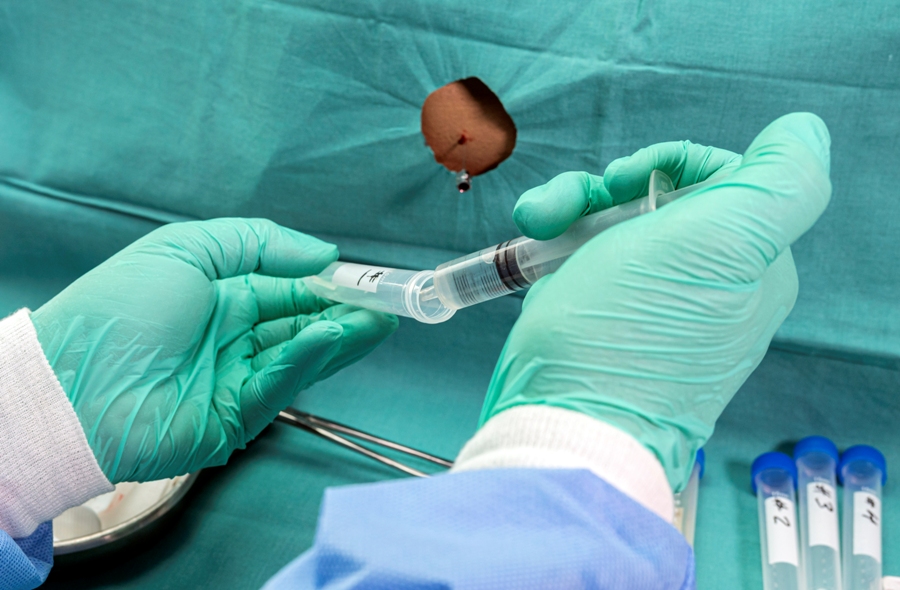
Welcome to another Inside Lyme Podcast with your host Dr. Daniel Cameron. In this episode, Dr. Cameron will be discussing a case which examines the diagnostic value of a lumbar puncture in Lyme neuroborreliosis.
The case was first described by Portales-Castillo and colleagues in the journal Cureus in a paper entitled “To Lumbar Puncture or Not to Lumbar Puncture.” The authors presented a case of “early disseminated Lyme neuroborreliosis with manifestations of facial palsy and painful radiculoneuritis as determined by clinical and serological criteria.”¹
A 61-year-old woman was admitted to the hospital with an inability to close her left eye and an odd sensation on part of her face. She presented with erythematous raised circled rash and swelling on the base of the index finger of her right hand.
Three weeks later, she started to develop posterior dull neck pain, along with bilateral arm pain and arm weakness. Her symptoms progressed to the point where she could no longer comb her hair.
CLICK BELOW TO WATCH VIDEO DISCUSSION OF THE CASE

“The pain later became associated with progressive arm weakness, which continued to progress over the following three weeks up to the point where she could not comb her hair,” the authors wrote.
The woman then developed Bell’s palsy. A Lyme disease IgM Western blot test was positive, consistent with acute Lyme disease.
“Our case aimed to highlight the controversy on the diagnostic utility of cerebrospinal fluid (CSF) analysis in certain presentations of [Lyme neuroborreliosis].”
A spinal tap was recommended but not performed. “She politely declined as she wondered if the treatment decision would be altered by the results of an invasive procedure,” wrote the authors.
Instead, she was treated empirically for Lyme disease.
“After discussion with the neurology and infectious disease consultants, the diagnosis of early disseminated Lyme neuroborreliosis manifesting as painful radiculoneuritis, motor weakness, and facial nerve palsy (so-called Bannwarth syndrome) was considered a strong possibility based on her clinical presentation and serologic criteria,” wrote the authors.
At her two-week follow-up appointment, the woman reported having a “complete resolution of her facial weakness and pain along with marked improvement in her weakness, which did not recur after successful course completion,” the authors wrote.
Spinal tap controversy
“[Lyme neuroborreliosis] remains a challenging diagnosis and often warrants spinal fluid analysis, particularly in the context of acute meningitis,” wrote the authors. “However, the ultimate decision to obtain a lumbar puncture (LP) in such patients with facial palsy and peripheral neurological symptoms remains controversial.”
Cerebral spinal fluid (CSF) tests are not reliable, given that the increase in the number of white cells in the CSF (called pleocytosis) can be raised from other illnesses.
A finding of an elevated B. burgdorferi antibody in the spinal fluid has been helpful. However, the ration of CSF: serum antibodies should be 1.3 or higher. In other words, the CSF antibodies must be 30% higher than the serum antibodies. In some cases, the CSF B. burgdorferi polymerase chain reaction (PCR) may be positive.
The sensitivity of the spinal tests can be low. Only 1 in 27 patients with neurologic Lyme disease had a pleocytosis and that was only 7 cells. One other patient with neurologic Lyme had CSF antibodies but the ratio was only 1. Other studies have shown higher sensitivities. Other CSF tests have been examined including the CXCL13 chemokine biomarker in CSF.
“To Lumbar Puncture or Not to Lumbar Puncture”
A spinal tap may be important to rule out alternative diagnoses. “The need for an LP in suspected cases of LNB remains a clinical decision that needs to be tailored to the specific clinical situation, favored when diagnostic uncertainty is present, and potentially spared when the clinical suspicion for LNB is high,” wrote the authors.
The following questions are addressed in this Podcast episode:
1. What is neurologic Lyme disease?
2. What were the neurologic findings for this patient?
3. What is Bannwarth syndrome?
4. What is a spinal tap?
5. Why is a spinal tap useful and what is the accuracy?
6. What are the findings in a spinal tap of someone with neurologic Lyme disease?
7. What are problems with reliability of the test?
8. Do you discuss “To Lumbar Puncture or Not to Lumbar Puncture” with your patients?
This Inside Lyme case series will be discussed on my Facebook page and made available on podcast and YouTube. As always, it is your likes, comments, and shares that help spread the word about this series and our work. If you can, please leave a review on iTunes or wherever else you get your podcasts.
https://mailchi.mp/ilads.org/webinar-lyme-caregiving-providing-care-without-losing-yourself
|
|||||||||||||
|
|||||||||||||
|

