In this episode, you will learn about the BIOTOXIC Rx including the LabElymental Milk Cleanse, NeuroPraxis, MYCOMEFREE, and more.
About My Guest
My guest for this episode is Jody Levy. Jody Levy is the founder of The LabElymental Milk Cleanse, NeuroPraxis, and soon-to-be MYCOMEFREE. She is also the co-founder of WTRMLN WTR.
Jody has quietly been suffering from symptoms associated with Lyme Disease, Mold Illness (CIRS), and a slew of co-infections and related imbalances for over 20 years.
Now she is fully recovered and living her best life. She feels strong, healthy, pain–free, and proud of her discoveries.
She always knew she could not expose her struggle until she was able to share the solutions that helped her get better. In her unwavering belief that her journey was bigger than herself, she is now committed to creating simple and easy products that people can use to relieve their suffering and thrive.
For years, she was committed to understanding why she was always exhausted, in pain, puffy, blurry, and foggy. No-one could figure out what was wrong with her. But she was relentlessly determined to understand why she did not feel good. She set out on a painful and tedious journey to find solutions to help herself, and others, feel happy and healthy. She always knew that if she stayed the course, she would find the tools that would help her and ultimately many other people. She spun a web of the most exceptional doctors, scientists, researchers, practitioners, and healers who all played their part in her epic recovery.
She tried so many treatments. She mapped her genetics and her entire body. She was meticulous about how she recorded her treatments. Protocol by protocol, she tracked and cross-referenced her short-term and long-term results. She tried things that nearly killed her and when they didn’t work, she would get right back up and try again. Because she knew – intuitively – that she was going to discover things that would help her and others like her return to vibrant health. During this process she was optimistic, but she was also skeptical of everything. After years of treatments, she questioned if she would ever arrive at an answer.
And she finally succeeded! She healed herself of Lyme Disease and mold exposure. She got rid of co-infections and the agonizing symptoms of viruses and parasites. Her mental commitment, psychological anguish, and massive financial investments paid off. She got herself better. Her test results came back clean. Her brain cleared, her vision got crisp, and her mood balanced. Today, she is working to bring all of these solutions to as many people as she possibly can, so that no one has to suffer the way she did for as long as she did.
Key Takeaways
What was her personal experience through Lyme disease and mold illness?
What is the LabElymental Milk Cleanse?
What types of milk can be used with the cleanse?
What are the components of the cleanse?
What are NeuroPraxis and NeuroSculpting?
Does NeuroPraxis target the limbic system, vagus nerve, or parasympathetic nervous system?
What is MYCOMEFREE?
What are other tools that have been helpful in recovering from Lyme disease and mold illness?
Is there hope for recovering from complex, biotoxin illnesses?
My posting information does not mean I endorse the products mentioned in the Podcast, and in this case I have never even heard of them. Just throwing it out there for consideration. I rejoice with each and every patient who manages to find wellness and figure we should all listen and learn from them.
Melatonin has been shown to play a role in viral infections and research suggests it may be an important adjunct to COVID-19 treatment
Data analysis by Cleveland Clinic found patients who used supplemental melatonin had a 28% lower risk of testing positive for COVID-19. Blacks who used melatonin were 52% less likely to test positive for the virus
Melatonin attenuates several pathological features of COVID-19, including excessive inflammation and oxidation, exaggerated immune response resulting in a cytokine storm, acute lung injury and acute respiratory distress syndrome
A case series reports patients given 36 mg to 72 mg of intravenous melatonin per day as an adjunct therapy to standard of care improved within four to five days; all survived
Texas urgent care clinics using high-dose melatonin in combination with vitamin C and vitamin D say they’ve successfully treated hundreds of COVID-19 patients.Melatonin enhances vitamin D signaling and the two work synergistically to enhance your mitochondrial function
Melatonin is a hormone synthesized in your pineal gland and many other organs.1 While it is most well-known as a natural sleep regulator, it also has many other important functions.2 For example, melatonin:
Is a potent antioxidant3 with the rare ability to enter your mitochondria,4 where it helps “prevent mitochondrial impairment, energy failure and apoptosis of mitochondria damaged by oxidation.”5 It also helps recharge glutathione,6 and glutathione deficiency has been linked to COVID-19 severity
May prevent or improve autoimmune diseases, including Type 1 diabetes10
Is an important energy hormone that can influence your energy level11
Helps regulate gene expression via a series of enzymes12
Has anticonvulsant and antiexcitotoxic properties13
Melatonin Also Has Important Role in COVID-19 Treatment
Melatonin has also been shown to play a role in viral infections14 and according to a June 2020 research paper15,16,17 in Life Sciences journal, it may be an important adjunct to COVID-19 treatment. According to the authors, melatonin attenuates several pathological features of COVID-19, including:18
Excessive oxidative stress and inflammation
Exaggerated immune response resulting in a cytokine storm
Acute lung injury
Acute respiratory distress syndrome
They point out that melatonin is also “effective in critical care patients by reducing vessel permeability, anxiety, sedation use, and improving sleeping quality, which might also be beneficial for better clinical outcomes.”19
The scientific review paper,20 “Melatonin Potentials Against Viral Infections Including COVID-19: Current Evidence and New Findings,” published October 2020 in Virus Research journal, also summarizes the many potential mechanisms by which melatonin can protect against and ameliorate viral infections.
The authors review research looking at melatonin’s beneficial effects against a variety of viruses, including respiratory syncytial virus, Venezuelan equine encephalitis virus, viral hepatitis, viral myocarditis, Ebola, West Nile virus and dengue virus. Based on these collective findings, they believe melatonin may offer similar protection against SARS-CoV-2.
Melatonin Reduces Risk of Positive COVID-19 Test
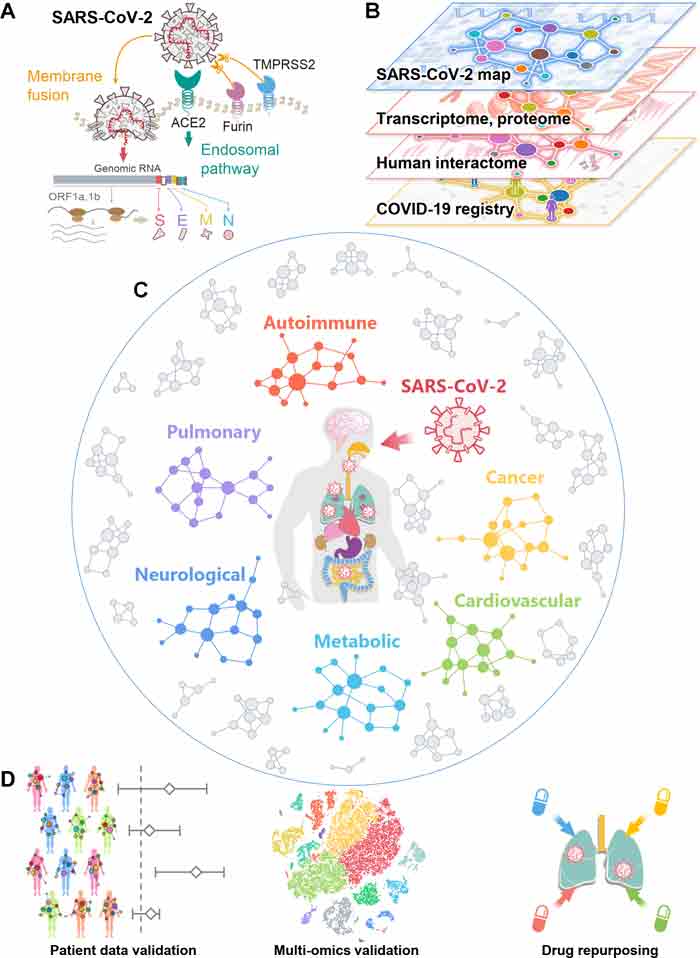
Data21,22 from Cleveland Clinic also supports the use of melatonin. Here, the researchers analyzed patient data from the Cleveland Clinic’s COVID-19 registry using an artificial intelligence platform designed to identify drugs that may be repurposed.23,24
By identifying clinical manifestations and pathologies shared by COVID-19 and 64 other diseases, they were able to conclude that certain proteins associated with chronic diseases are highly connected with SARS-CoV-2 proteins. Put another way, a number of proteins appear to play a key role in the pathologies seen both in COVID-19 and other chronic diseases. For example:25
“Analyses of single-cell RNA sequencing data show that co-expression of ACE2 and TMPRSS2 is elevated in absorptive enterocytes from the inflamed ileal tissues of Crohn disease patients compared to uninflamed tissues, revealing shared pathobiology between COVID-19 and inflammatory bowel disease.
Integrative analyses of metabolomics and transcriptomics (bulk and single-cell) data from asthma patients indicate that COVID-19 shares an intermediate inflammatory molecular profile with asthma (including IRAK3 and ADRB2).”
The diagram below illustrates (among other things) the basic pathogenesis of SARS-CoV-2 (figure A) and the network of disease manifestations associated with the infection (figure C).
These connections suggest that drugs already in use for a chronic disease may be repurposed and used in the treatment of COVID-19, as it acts on one or more shared biological targets. Melatonin stood out in this regard. Patients who used melatonin as a supplement had, on average, a 28% lower risk of testing positive for SARS-CoV-2. Blacks who used melatonin were 52% less likely to test positive for the virus.
Confounding variables adjusted for in the calculations included age, sex, race, smoking history and several known comorbidities. The authors point out that while the findings look promising, large observational studies and randomized controlled trials are still needed to validate the clinical benefits of melatonin.
Two key data points missing from the analysis are the dosage used and the length of supplementation. These data were not included in the patient registry, so we don’t know how much melatonin is required to lower your risk of SARS-CoV-2 infection to the degree found in this study.
High-Dose Melatonin Successfully Treats COVID-19
It’s possible that higher doses than those used for sleep may be needed, at least when treating an active infection. A recent case series26published in the journal Melatonin Research details how high-dose intravenous melatonin can benefit patients with COVID-19 pneumonia.
Here, patients were given 36 mg to 72 mg per day in four divided doses as an adjunct therapy to standard of care. Most supplements contain between 0.5 mg and 5 mg, and when used for sleep, you’d typically start with the lowest dose and work your way up as needed.
All of the patients given melatonin improved within four to five days, and all survived. On average, those given melatonin were discharged from the hospital after 7.3 days, compared to 13 days for those who did not get melatonin.
This is far better than the expensive treatment Remdesivir, which costs over $3,000 and doesn’t produce anywhere near this improvement.
Other Doctors Are Also Using Melatonin Against COVID-19
Dr. Richard Neel and colleagues at Little Alsace and Uvalde Urgent Care clinics in Texas also report using high-dose melatonin in combination with vitamin C and vitamin D, and had as of the last week of July 2020 successfully treated more than 400 patients.27
As reviewed in a section below, melatonin enhances vitamin D signaling and the two work synergistically to enhance your mitochondrial function. Melatonin and vitamin C are both also involved with ACE2, the receptor that SARS-CoV-2 uses to gain entry into the cell.
Together, melatonin and vitamin C help reduce SARS-CoV-2 virulence by inhibiting NLRP3 inflammasomes, which in turn inhibits cytokine storms. The Front Line COVID-19 Critical Care Working Group (FLCCC)28 also lists melatonin as an optional addition to their MATH+ protocolfor COVID-19.
How Melatonin Combats COVID-19
Research suggests melatonin may have the ability to combat COVID-19 via several different mechanisms. For example, it’s been shown to regulate immune responses and prevent cytokine storms.29 As explained by the authors of one such study,30 when your immune cells are in a hyper-inflammatory state, their metabolism changes in a way similar to that of cancer cells:
“Similar to cancer cells … immune cells such as macrophages/monocytes under inflammatory conditions abandon mitochondrial oxidative phosphorylation for ATP production in favor of cytosolic aerobic glycolysis (also known as the Warburg effect) …
The change to aerobic glycolysis allows immune cells to become highly phagocytic, accelerate ATP production, intensify their oxidative burst and to provide the abundant metabolic precursors required for enhanced cellular proliferation and increased synthesis and release of cytokines …
Because of melatonin’s potent antioxidant and anti-inflammatory activities, it would normally reduce the highly proinflammatory cytokine storm and neutralize the generated free radicals thereby preserving cellular integrity and preventing lung damage.”
Cytokine storm is one of the reasons why sepsis (blood poisoning) is so lethal, and studies have confirmed melatonin has a favorable influence on sepsis. (Sepsis is also a feature of severe COVID-19.) As reported in a 2010 study in the Journal of Critical Care:31
“Melatonin is an effective anti-inflammatory agent … Its anti-inflammatory action has been attributed to inhibition of nitric oxide synthase with consequent reduction of peroxynitrite formation, to the stimulation of various antioxidant enzymes thus contributing to enhance the antioxidant defense, and to protective effects on mitochondrial function and in preventing apoptosis.
In a number of animal models of septic shock, as well as in patients with septic disease, melatonin reportedly exerts beneficial effects to arrest cellular damage and multiorgan failure …
Apart from action on the local sites of inflammation, melatonin also exerts its beneficial actions through a multifactorial pathway including its effects as immunomodulatory, antioxidant and antiapoptotic agent.”
More recently, a 2019 animal study32 in the journal Frontiers in Immunology discusses how melatonin can protect against polymicrobial sepsis — i.e., sepsis caused by more than one microbial organism — which has a twofold higher lethality than unimicrobial sepsis (sepsis caused by a single microbe).33
In this case, melatonin appears to offer protection by having an antibacterial effect on white blood cells called neutrophils. A high neutrophil count is an indicator for infection. Melatonin may also combat SARS-CoV-2 infection by:34
Suppressing oxidative stress35
Regulating blood pressure (a risk factor for severe COVID-19)
Improving metabolic defects associated with diabetes and insulin resistance (risk factors for severe COVID-19) via inhibition of the renin-angiotensin system (RAS)
Protecting mesenchymal stem cells (MSCs, which have been shown to ameliorate severe SARS-CoV-2 infection) against injuries and improving their biological activities
Promoting both cell-mediated and humoral immunity
Promoting synthesis of progenitor cells for macrophages and granulocytes, natural killer (NK) cells and T-helper cells, specifically CD4+ cells
Inhibiting NLRP3 inflammasomes36
General Guidance for Supplementation
As mentioned, it’s very difficult to make dosage recommendations based on the limited evidence currently at hand, but since Cleveland Clinic looked at the supplements patients reported using, it seems reasonable to assume they were using it as you typically would. Most melatonin supplements contain between 0.5 mg and 5 mg.
In the case report mentioned earlier, patients were given 36 mg to 72 mg of melatonin intravenously per day, which would likely be excessive for prophylactic use. That said, research37 has found no adverse effects for dosages ranging from 20 mg up to 100 mg.
Whatever dose you take, and I recommend starting low, at 1 mg or less, be sure to take melatonin at night, before bed. Rising melatonin levels is the reason you feel sleepy in the evening, so it’s ill advised to take it in the morning or during the day, when your natural level is (and should be) low. If you happen to wake up in the middle of the night, especially if you’re exposed to a light source, you could also take some then, to help you go back to sleep.
Melatonin is also best taken sublingually, either in the form of a spray or sublingual tablet. Sublingually, it can enter your blood stream directly and doesn’t have to go through the digestive tract. As a result, its effect will be felt more rapidly.
Melatonin and Vitamin D Are a Winning Combo
Another supplement of crucial importance in the age of COVID-19 is vitamin D. Interestingly, melatonin enhances vitamin D signaling, and optimizing your vitamin D may be one of the most beneficial steps you can take to lower all of the risks associated with COVID-19, from reducing your risk of testing positive to lowering your risk of severe infection and death.
To learn more about this, download my free vitamin D report from StopCovidCold.com. Together, melatonin and vitamin D synergistically act to optimize your mitochondrial function. In fact, your mitochondria are the final common target for both.38
A deficiency in either vitamin D or melatonin has been associated with the pathogenesis of several chronic diseases, including high blood pressure, cardiovascular disease, metabolic syndrome and diabetes, just to name a few.39
These conditions have also emerged as comorbidities that significantly raise your risk of death from COVID-19. Synthesis of both vitamin D and melatonin is also dramatically reduced with advancing age, and old age is a primary risk factor for COVID-19 death. So, while vitamin D3 and melatonin supplementation may be beneficial for most people, it’s particularly important for the elderly.
Support Your Body’s Production of Melatonin and Vitamin D
Keep in mind, however, that it makes little sense to take a supplement unless you’re also seeking to optimize your body’s natural production. In the case of melatonin, this includes making sure you get good sleep on a regular basis.
You also need a good dose of natural sunlight around midday to synchronize your circadian clock so that your body produces melatonin at the appropriate time (i.e., in late evening). As the evening wears on and the sun sets, you’ll want to avoid bright and all blue lighting, as blue light inhibits melatonin synthesis. Blue lighting is predominant in LED and fluorescent bulbs that are “cool white.”
Sun exposure, of course, is also the ideal way to optimize your vitamin D. I recommend getting sensible sun exposure on large portions of your body on a regular basis, ideally daily. For further guidance, see “The Risks and Benefits of Sun Exposure.”
If for whatever reason you cannot get sufficient amounts of sun exposure, consider taking a vitamin D3 supplement (along with a little extra vitamin K2 to maintain a healthy ratio between these two nutrients).
I personally have not taken any oral vitamin D for well over 10 years and my levels are typically over 60 ng/mL, even in the winter. I have, however, started taking sublingual melatonin a few years ago as I am now in my mid-60s, even though I sleep in pitch dark and get bright sun exposure during the day.
Despite these COVID-19 treatments, our government has done all in its power to malign them. Their only answer is an experimental, fast-tracked vaccine that has caused serious adverse reactions.
Dr Vega, MD gives info on vit C in COVID-19. He is a radiation oncologist, board certified. Interesting (8.00 min), he plans to treat in a clinical study students in high school with oral vit C, so he can prove schools can stay open with vit C.
He informs about studies and treatment with high dose intravenous vitamin C and oral vit C in COVID-19 and other virus-related diseases.
Vitamin D Might Just Save You From Getting COVID-19
Sept. 12, 2020
In the video, Taha Meli Arvas explains that a study conducted at the University of Chicago and published this week in the Journal of the American Medical Association claims that vitamin D deficiency may have been factor in the infections of COVID-19 patients. In fact, patients that had a vitamin D deficiency or those whose deficiency were not treated were almost twice as likely to test positive for the coronavirus relative to those that had enough vitamin D. Why is this a major breakthrough? This means that those that are already vitamin D deficient, and this is a majority of the population by the way, may need only to take vitamin D supplements to boost their immune system to prevent from getting the coronavirus and successfully battle it if they’ve already been infected.
Connecting the dots is easy. The government is spending over $10 billion on its Operation Warp Speed to produce a vaccine that will be shielded from liability.
A rushed COVID-19 vaccine will not go through full safety trials, yet the FDA will probably issue an Emergency Use Authorization (EUA) to approve a vaccine. To issue an EUA, there must be “no adequate, approved, and available alternative.”In other words, HCQ or another effective treatment is a threat to a vaccine; if hydroxychloroquine is effective, there can be no fast-tracked vaccine.
Vitamins and other successful treatments are a threat to our government.
TIPS AND RESOURCES FOR LIVING IN THE PRESENT DURING CHALLENGING TIMES.
As schools resume and cooler weather rolls in, the country is bracing for a possible second wave of COVID-19. The U.S. death toll recently surpassed 200,000, and the last two weeks have seen an increase of cases in many areas. With concerns about what fall and winter will bring, especially as we move into flu season, it can be hard to stay grounded in the present.
Lyme patients know this conundrum all too well. Late-stage tick-borne illnesses end to follow a relapsing pattern: patients have good days and bad days, sometimes good months and bad months. When we’re feeling well, we have a hard time trusting and enjoying that health, because we know the other shoe could drop at any moment. We, too, are always bracing for another wave.
Not only is it hard to stay present when you’re worried about the future, but it can be difficult to enjoy the present when it itself is difficult. The pandemic has people at their wit’s end trying to negotiate working from home with homeschooling, isolating from loved ones, and worrying about illness and finances. In acute phases of Lyme and other tick-borne illnesses, patients also feel at their wit’s end as they deal with crushing fatigue, joint aches, migraines, and neurological symptoms. In both cases, the suffering can be so intense that people wish they could escape to a better time in the past or future.
While escapism has its merits, it’s important that we accept our current situation(s) and find ways to live presently. Why? Because no matter how bleak the present is, it’s all we are guaranteed. Whether we’re healthy or ill, living in a pandemic or not, none of us know what tomorrow will bring. Therefore, we can’t let the present pass us by.
What I’ve learned from living with tick-borne illnesses for over 20 years, from battling long-haul COVID-19, and from sometimes wanting to escape from both, is this: the best way to stay present is to prepare for the future. Our anxieties are valid and have their place. Acknowledging them can help us prepare for the worst, and that can then allow us to live more fully in the present.
What does preparation look like in practice? During COVID-19, we can wear face masks, following social distancing protocols, wash our hands, and create contingency plans for school and work. While these steps don’t guarantee we won’t get COVID-19, they do lower our risk. Contingency plans give us safety nets.
During periods of remission from tick-borne illness, we can stay on maintenance medication or supplements, continue with adjunct therapies, exercise, eat well, follow good sleep hygiene, and try to keep stress levels down. If we’re in remission or even if we have recovered completely, we can continue to Be Tick AWARE™, taking precautions like wearing repellent, doing tick checks, and staying on cleared paths so as not to get re-infected. We can make sure we have a good support system—doctors, caregivers, resources. As with COVID-19 precautions, these steps won’t make us immune to another tick bite or relapse, but they do lower the risk.
Once we’re prepared for the future, we can live more freely in the present. Even in trying times, there are ways to enjoy ourselves, and ways to reduce stress. In my post “What Lyme Patients Can Teach Us About the New Normal”, I outline some ideas for managing school and work this fall. In my post “Adding Joy and Pleasure to Life, No Matter When”, I talk about enjoying small moments and activities while we wait for health, for bigger moments and activities to be possible, for better days. Even in a pandemic, families can create fun rituals like weekly movie or game nights. Even in the throes of illness, Lyme patients can enjoy a friend’s visit, laugh over just five minutes of a silly movie, or give themselves an at-home spa treatment.
And while we enjoy the present, there’s certainly no danger in hoping for a brighter future, even visualizing it. Sometimes just the idea of hope is enough.
One difference between battling Lyme and living through a pandemic is that we are all experiencing the latter together. We have similar fears. We have similar hopes. And we can find ways to enjoy the present, together. As I’ve said before, there is comfort in that solidarity.
Jennifer Crystal is a writer and educator in Boston. Her memoir about her medical journey is forthcoming. Contact her at lymewarriorjennifercrystal@gmail.com.
________________________
**Comment**
While I’m all about preparing for the future and living in the present, there are numerous inaccuracies in this article that require addressing:
To help alleviate the fear-mongering that is pervasive, the best most productive thing you can do is bolster your immune system. This action will help you no matter what comes down the pike and will give you peace of mind.
As you can see, there is much you can do to make yourself a tough target. Learn all you can about your own body and potential things you can do to bolster your immune system. Discuss these options with your doctor and come up with a plan. This will be a much more effective, long-lasting plan than plopping a mask on.



 Madison Area Lyme Support Group