The main update I can see is his focus on “Babesia Nests” and a blood clotting protein called fibrin which limit blood flow to tissues and may inhibit antimicrobials as well as the immune system. He uses:
Lumbrokinase which he claims is strongest
nattokinase
serapeptase
Also in this update he addresses Babesia microtispecifically and that tafenoquine, a newer anti-malaria medication approved in 2018 has good effects against in the lab and in a recent case report.
He also states that research on those who have Babesia WITH Lyme is nonexistent but that LLMD’s state it can take four to five months of continuous antimicrobials for Babesia to resolve. Dr. Horowitz is on record stating it takes 9-12 months for resolution. Most LLMD’s treat Babesia for 3 weeks on and one week off treatment.
__________________
**Comment**
On a personal note, my husband and I treated Babesia for an entire year with success. Our treatment is laid out in the top link. My husband suffered with severe blood coagulation (the fibrin issue Dr. Ross calls “Babesia nests”) that was successfully treated with heparin, a blood thinner. I have also heard from numerous other patients that this miraculously helped them as well. If you have tried the suggested enzymes and they are not strong enough or cost is an issue, please discuss heparin with your LLMD.
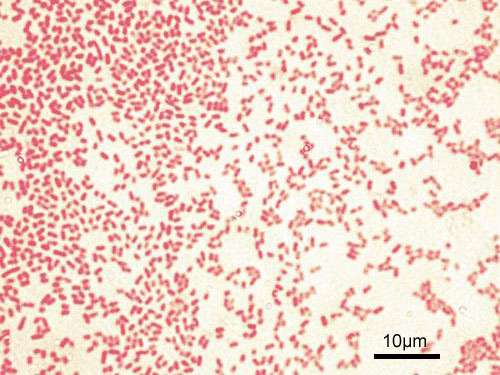
Gram-stained P. aeruginosa bacteria (pink-red rods) Credit: Wikipedia
A study has found that much higher doses of antibiotics are needed to eliminate a bacterial infection of the airways when other microbes are present. It helps explain why respiratory infections often persist in people with lung diseases such as cystic fibrosis despite treatment.
In the study, published today in The ISME Journal, researchers say that even a low level of one type of microbe in the airways can have a profound effect on the way other microbes respond to antibiotics.
The results highlight the need to consider the interaction between different species of microbe when treating infections with antibiotics—and to adjust dosage accordingly.
“People with chronic infections often have co-infection with several pathogens, but the problem is we don’t take that into account in deciding how much of a particular antibiotic to treat them with. Our results might help explain why, in these people, the antibiotics just don’t work as well as they should,” said Thomas O’Brien, who carried out the research for his Ph.D. in the University of Cambridge’s Department of Biochemistry and is joint first author of the paper.
Chronic bacterial infections such as those in the human airways are very difficult to cure using antibiotics. Although these types of infection are often associated with a single pathogenic species, the infection site is frequently co-colonized by a number of other microbes, most of which are not usually pathogenic in their own right.
Treatment options usually revolve around targeting the pathogen, and take little account of the co-habiting species. However, these treatments often fail to resolve the infection. Until now scientists have had little insight into why this is.
To get their results the team developed a simplified model of the human airways, containing artificial sputum (‘phlegm’) designed to chemically resemble the real phlegm coughed up during an infection, packed with bacteria.
The model allowed them to grow a mixture of different microbes, including pathogens, in a stable way for weeks at a time. This is novel, because usually one pathogen will outgrow the others very quickly and spoil the experiment. It enabled the researchers to replicate and study infections with multiple species of microbe, called ‘poly-microbial infections’, in the laboratory.
The three microbes used in the experiment were the bacteria Pseudomonas aeruginosa and Staphylococcus aureus, and the fungus Candida albicans—a combination commonly present in the airways of people with cystic fibrosis.
The researchers treated this microbial mix with an antibiotic called colistin, which is very effective in killing Pseudomonas aeruginosa. But when the other pathogens were present alongside Pseudomonas aeruginosa, the antibiotic didn’t work.
“We were surprised to find that an antibiotic that we know should clear an infection of Pseudomonas effectively just didn’t work in our lab model when other bugs were present,” said Wendy Figueroa-Chavez in the University of Cambridge’s Department of Biochemistry, joint first author of the paper.
The same effect happened when the microbial mix was treated with fusidic acid—an antibiotic that specifically targets Staphylococcus aureus, and with fluconazole—an antibiotic that specifically targets Candida albicans.
The researchers found that significantly higher doses of each antibiotic were needed to kill bacteria when it was part of poly-microbial infection, compared to when no other pathogens were present.
“All three species-specific antibiotics were less effective against their target when three pathogens were present together,” said Martin Welch, Professor of Microbial Physiology and Metabolism in the University of Cambridge’s Department of Biochemistry and senior author of the paper.
At present antibiotics are usually only laboratory tested against the main pathogen they are designed to target, to determine the lowest effective dose. But when the same dose is used to treat infection in a person it often doesn’t work, and this study helps to explain why. The new model system will enable the effectiveness of potential new antibiotics to be tested against a mixture of microbe species together.
Poly-microbial infections are common in the airways of people with cystic fibrosis. Despite treatment with strong doses of antibiotics, these infections often persist long-term. Chronic infections of the airways in people with asthma and chronic obstructive pulmonary disorder (COPD) are also often poly-microbial.
By looking at the genetic code of the Pseudomonas bacteria in their lab-grown mix, the researchers were able to pinpoint specific mutations that give rise to this antibiotic resistance. The mutations were found to arise more frequently when other pathogens were also present.
Comparison with the genetic code of 800 samples of Pseudomonas from around the world revealed that these mutations have also occurred in human patients who had been infected with Pseudomonas and treated with colistin.
“The problem is that as soon as you use an antibiotic to treat a microbial infection, the microbe will start to evolve resistance to that antibiotic. That’s what has happened since colistin started to be used in the early 1990’s. This is another reminder of the vital need to find new antibiotics to treat human infections,” said Welch.
___________________
**Comment**
Hopefully it’s clear why I would post this cystic fibrosis research on a Lyme/MSIDS website. Lyme/MSIDS is also often a polymicrobial illness involving numerous pathogens. Logic would then follow that this complex illness would also be impossible to eradicate using a singular antibiotic against multiple infections that not only require different medications individually but that synergistically would also necessitate higher doses for a longer period of time.
This is known, appreciated, and utilized by Lyme literate doctors when treating patients, and Lyme/MSIDS patients, researchers, and doctors alike have been screaming bloody murder about this topic for decades. But they are laughed at and ridiculed, and written off as tin-foil hat wearing nut-jobs.
Mainstream research and medicine barely even acknowledge coinfection, a fact that is seen not only in ticks but daily in humans living in the real world. They also deny pleomorphism – or the ability of borrelia, and other pathogens to shape-shift into different forms. Research has shown borrelia shape-shifts when threatened so it can survive.
The current simplistic view of Lyme/MSIDS is killing people, and the sooner it is recognized and addressed the better.
One would hope that research showing the very real complexities and failure of standard treatment on patients with multiple infections simultaneously would cause even the most entrenched to consider the same possibility with Lyme/MSIDS.
Kansas Senate also has voted to allow doctors to prescribe ivermectin and HCQ for off-label treatment of COVID. It is called the Off-Label Drug Hill (HB2280). The bill also requires that pharmacists fill prescriptions for medications to treat COVID — by forbidding them to refuse to fill prescriptions solely on the grounds that a medication is being used for COVID. It would also would require childcare centers and public schools to grant parents’ requests for religious exemptions from ‘vaccination’ for their children, “without inquiring into the sincerity of such religious beliefs.” The bill now heads to the House but is 6 votes short of the supermajority needed to override a veto from Democratic Gov. Laura Kelly.
New Hampshire House Votes to Allow Over-the-Counter Sales of Ivermectin
The New Hampshire House on Wednesday passed a bill allowing the state’s pharmacists to dispense ivermectin over the counter, without a prescription. HB 1022 also prevents New Hampshire medical licensing boards from disciplining doctors for prescribing the drug.
“HB1022 permits ivermectin to be dispensed by a pharmacist via a standing order, effectively making it available over the counter. The evidence is growing regarding ivermectin’s effectiveness in reducing severity and duration of COVID-19. When people want access to ivermectin because they or their loved ones are ill, they will get it by any means they can.
“Since many doctors are afraid to prescribe anything off-label for the treatment of COVID-19, patients have turned to foreign pharmacies, buying it on the black market, or buying ivermectin formulated for animals. We need to pass this bill to expand access to pharmacy-grade ivermectin for the people of New Hampshire.”
Dr. Meryl Nass, a Maine physician and member of the Children’s Health Defense (CHD) Scientific Advisory board, praised New Hampshire lawmakers for passing the bill. She told The Defender:
“Yesterday, legislators in the New Hampshire House did something amazing for COVID patients … In order to save their lives using a safe and effective drug, New Hampshire residents will be able to buy human ivermectin from drug stores without a prescription.”
If the bill passes the Senate, patients will “no longer need to dread developing COVID with little prospect of early treatment,” Nass said.
She added:
“CHD still advises that it is always preferable to get care from a medical professional, whenever possible. But when it isn’t, being able to self treat should make a huge dent on COVID mortality and morbidity.”
Nass advised people to read the warnings on ivermectin, avoid drug interactions (especially with coumadin) and take the proper dose by weight. “Most importantly, start treatment early,” she said.
Nass, who supports the use of ivermectin and hydroxychloroquine for treating COVID patients, on Jan. 12 was suspended by the Maine medical licensing board, which accused her of spreading “misinformation regarding the SARS CoV-2 pandemic and the official public health response calling for vaccinations.”
FDA ignores evidence, won’t approve ivermectin for COVID
The U.S. Food and Drug Administration has not authorized the use of ivermectin to treat or prevent COVID-19 and has published documents on its website intended to discourage people from using the drug as a treatment for COVID.
Ivermectin was developed and marketed by Merck & Co. Dr. William C. Campbell and Professor Satoshi Omura were awarded the 2015 Nobel Prize for Physiology of Medicine for discovering and developing avermectin, later modified to create ivermectin.
Ivermectin is an antiparasitic, but it has shown, in cell cultures in laboratories, the ability to destroy 21 viruses, including SARS-CoV-2, the cause of COVID-19.
Ivermectin has been shown to speed recovery from COVID, in part by inhibiting inflammation and protecting against organ damage. This pathway also lowers the risk of hospitalization and death. Meta-analyses have shown an average reduction in mortality that ranges from 75% to 83%.
A meta-analysis in the American Journal of Therapeutics showed ivermectin reduced infection by an average of 86% when used preventively. A more recent study suggested preventive use of ivermectin reduced mortality by 90%.
The 10 doctors who are in the Front Line COVID-19 Critical Care Alliance call ivermectin “one of the safest, low-cost, and widely available drugs in the history of medicine.”
Some doctors have speculated that tens of thousands of deaths could have been prevented if repurposed drugs such as hydroxychloroquine and ivermectin had been more deeply explored and promoted at the outset of the pandemic, instead of suppressed.
26 states weighing similar laws to protect physicians
New Hampshire is not the only state attempting to address the use of off-label treatments for COVID by making it easier for people to obtain the drugs and by protecting those who prescribe and dispense them.
North Dakota Gov. Doug Burgum on Nov. 12, 2021, signed into law HB 1514, a bill that prevents licensing boards from taking disciplinary action against doctors, nurses and pharmacists for the “off-label treatment or prevention of severe acute respiratory syndrome coronavirus 2 identified as SARS-CoV-2, or any mutation or viral fragments from SARS-CoV-2.”
More than 28 states have proposed or passed legislation either restricting medical board authority, explicitly allowing for the off-label treatment of COVID or both.
While most of these bills are still in the introductory stages, several have made it out of subcommittee and are ready for a general vote.
Ivermectin has been used successfully in every stage of COVID, including those on ventilators who were close to death’s door. I have used it personally twice now with immediate effects. Doctors around the world are speaking up and stating it is nearly miraculous in its anti-viral properties. It is my opinion that it works against many if not all viruses, which is why it is being squashed.
Move over cancer: mRNA injections are respawning HIV/AIDS around the globe, while numerous AIDS researchers are suddenly and mysteriously dying
admin
TheCOVIDBlog.com
The face of evil is ever-present.
Two people have been talked about many times on The COVID Blog™ – Dr. Kary Mullis and Dr. Luc Montagnier.
Dr. Mullis is the Nobel Prize-winning biochemist who invented the polymerase chain reaction (PCR) technique. He is also known for his ongoing feud with Fauci in the 1980 and 1990s. Dr. Mullis made clear in the early 1990s that PCR is not a test and can essentially find anything in any living being if you run enough cycles.
He would have gladly challenged Fauci to debates about COVID-19, and that his invention is not a COVID-19 test. But Dr. Mullis mysteriously died on August 7, 2019 at age 74, just a few months before the COVID-19 agenda commenced. Mainstream media barely recognized him or his death, despite his contributions to humanity. This will be an ongoing theme throughout this article.
Mainstream media coverage of Dr. Luc Montagnier’s February 8 death was different than Dr. Mullis’, but with the same motives. The BBC, for instance, described Dr. Montagnier as a “French virologist credited as a co-discoverer of the human immunodeficiency virus (HIV).” That’s an interesting and disingenuous way of saying Dr. Montagnier created the HIV virus in a lab and patented it in 1989. In fact the very first sentence in the abstract of the patent refers to HIV as “the invention.” (See link for article)
____________________
**Comment**
This is a deep dive into history, but is imperative to understand as it all relates today.
SUMMARY(although I highly recommend reading the entire article with accompanying videos):
While there was contention between Dr. Robert Gallo and Montagnier as to who was the inventor of HIV, Montagnier was given credit, and won the Nobel Prize in Physiology or Medicine in 2008.
The article states HIV, a biological weapon, killed countless Africans and Western homosexuals.
While AIDS first presented in homosexual males around 1979-80, as the ‘greatest health scare of the 20th century’,authorities marketed it as being caused by the green monkey, which spread around the world from Africa – similarly to the initial narrative that COVID was a “black disease.” The problem with this narrative is it didn’t appear on the African continent until 1983.
Montagnier went from being a darling to the global elite to a pariah by stating the mRNA and viral vector DNA injections cause COVID variants, and urging people to reject the shots.
AIDS mostly disappeared after the patent expired in 2005 until its recent resurrection and rebooting in 2022.
AIDS, which destroys the immune system, sounds very much like ADE after COVID shots.
Fauci was appointed chief of NIAD in 1980, just in time for AIDS, where the fear-mongering propaganda began in earnest. He warned that routine contact can spread it.(I remember hearing this vividly as a child)
Less than 2 months later he flip-flopped and stated this notion was preposterous. He did this again recently with masks, but both admissions were too little too late as fear dominated, and power-hungry politicians made edicts based on his faulty advice.
Fauci, aka the “Tephlon man,” because nothing ever sticks to him, was rewarded by being promoted to director of NIAD, and has remained since, despite serious allegations.
Similarly with COVID, experts began punching holes in the AIDS narrative. Dr. Robert Strecker discovered by accident that HIV was created in a lab, AIDS is spread by deliberate infection(e.g. Hepatitis B vaccines), pills, water or something else, and kills everyone who contracts it, but that it’s rarely (if ever) transmitted via semen or saliva.
The Feds and researchers laughed at Strecker as general consensus believed only 10% died from AIDS, and they totally swallowed the “green monkey” narrative.
Undaunted, Strecker created “The Bio-Attack Alert” and sent a copy to every governor, the White House, FBI, CIA, and members of Congress. He also created The Strecker Memorandum in 1988 for public viewing on VHS which provided proof that AIDS did not come from nature and is in fact a biological weapon. All of this is eerily similar to the COVIDnarrative.
Dr. Strecker’s brother, Ted, was found dead on August 11, 1988, just a few weeks after The Strecker Memorandum was released, but the official narrative ruled it a suicide. This also is eerily similar to what’s happened to those exposing the truth about COVID.
Dr. Strecker, able to read the hand-writing on the wall, became silent on the issue and died in a car accident at age 71. Both Ted and Dr. Strecker have been erased from history as being AIDS whistleblowers.
The FDA’s approval of AZT in a record setting 20 months is also similar to the experimental, fast-tracked mRNA shots for COVID, both of which bypass the regulatory oversight and transparency of traditional drugs and “vaccines.” Predictably, legislation was put in place protecting manufacturers from liability. How convenient for them.
Homosexual rights activist and Harvard research analyst John Lauritsen tried warning about the flawed and fraudulent clinical trials that led to FDA approval of AZT, just as experts are desperately trying to warn the public about the CDC withholding and skewing data, utilizing flawed and fraudulent clinical trials that led to FDA approval of experimental mRNA shots, as well as “approved” treatments for COVID and others, and exposing fraudulent research used to squash competition. But, history seems to repeat itself and apparently nobody’s listening.
AZT, BTW, cost $8K for a year’s supply in the 90’s, which is equivalent to $17K today – the most expensive drug in U.S. history at the time. Again, it seems history repeats itself with expensive “approved”COVID treatments. There’s no way to know how much money GSK made from AZT or how many actually died from taking it, but homosexual activists state deaths are as high as 300,000 Americans, many of whom were asymptomatic who got deathly ill onlyafter taking the drug.
Indian Researchers were forced to withdraw a Jan. 2020 published a study that found “Uncanny similarit[ies] of unique inserts in the 2019-nCoV spike protein to HIV-1,” due to “vested interests.” One of the researchers tweeted in May 2021 that they were right the whole time about COVID being man-made and containing HIV genome sequences. This study also had to be deleted as it would have nipped the plandemic in the bud before it even began.
The article then lists many coincidental deaths of HIV/AIDS researchers.
Previous CDC director Dr. Robert Redfield was also a player in the HIV racket as he attempted to create a HIV vaccine based on flawed and faulty research which led to an investigation for scientific fraud and misconduct. The government and government employees, which directly own and profit from patents on organisms, testing, vaccines, and treatmentspredictably concluded there was no misconduct afterall.
Doctors debate, patients suffer: The fight over chronic Lyme disease in Wisconsin
Mainstream medicine says the tick-borne infection is a short-term ailment. But some patients insist they have Lyme-caused symptoms that last for years.
Maria Alice Lima Freitas is pictured at her home in Middleton, Wis., on Oct. 6, 2021. Freitas believes she has been suffering from Lyme disease since 2015. She has seen a large number of doctors, who she says have varying degrees of belief in her diagnosis. She is among thousands of patients in Wisconsin who believe they have a long-term version of the disease called chronic Lyme. Mainstream medicine considers Lyme a short-term illness that generally resolves quickly with antibiotics. (Coburn Dukehart / Wisconsin Watch)
Reading Time: 12minutes
Wisconsin Watch is a nonprofit newsroom that focuses on government integrity and quality of life issues. Sign up for our newsletter for more stories straight to your inbox.
If life had gone as planned, Maria Alice Lima Freitas would be in medical school, inspired by the career of her father, a surgeon who practiced in Brazil. But instead of changing careers, the 49-year-old therapist retired from University of Wisconsin-Madison.
Freitas says her undiagnosed Lyme disease has sapped her energy, fogged her thinking and caused pain in her neck, shoulders, hands and right knee. She has three times deferred her entrance into medical school while struggling with myriad symptoms that she attributes to Lyme.
Most of her doctors say she is mistaken, and that her symptoms, which began in 2015, are due to rheumatoid arthritis.
Maria Alice Lima Freitas is pictured at her home in Middleton, Wis., on Oct. 6, 2021, with her husband John Oppenheimer. Freitas’ life and career have been upended by a series of symptoms — including joint pain and brain fog — that she blames on chronic Lyme disease. (Coburn Dukehart / Wisconsin Watch)
Freitas is among thousands of Wisconsinites who say they are suffering from a chronic or long-term version of the disease. The infection comes from tiny ticks primarily found in the northeastern United States, including in Wisconsin — which is a hot spot for Lyme, ranking No. 5 among states for Lyme cases in 2019.
Nationally, Lyme disease infects an estimated 476,000 people a year. The Wisconsin Department of Health Services reports the state had 3,076 estimated cases of Lyme disease in 2020 — a doubling in the past 15 years. But medical entomologists say Lyme cases in the state could be 10 times higher than reported.
The medical establishment calls Lyme a short-term disease that usually quickly resolves with antibiotics. Self-described “Lyme-literate” practitioners argue patients like Freitas suffer from a long-haul version of the disease, often called chronic Lyme disease.
The orthodox position held by most scientific experts and some professional associations — and endorsed by U.S. Centers for Disease Control and Prevention — is that Lyme disease is an acute infectious disease. Clinical diagnosis is based on a “bull’s-eye” rash, other specific symptoms and two-tiered antibody tests. Treatment is by short courses of oral antibiotics. And persistent symptoms rarely occur.
The standard antibody testing for Lyme disease, cleared by the Food and Drug Administration and endorsed by insurance companies, has been criticized by patients and practitioners as inadequate to detect all cases of the disease. Some practitioners offer alternative tests and treatments, but insurance does not cover the cost of their care. And in extreme situations, such doctors risk disciplinary action.
For most people, Lyme disease is treatable and curable. Most patients report their symptoms cleared after a short course of antibiotics if the infection is recognized and treated early. Another 10-20% of patients develop more severe cases whose symptoms include debilitating pain, fatigue, brain fog, irritability and sleep disorders.
Dark-skinned patients face particular difficulties in getting a Lyme diagnosis. Identifying the red target symbol over light skin tone is easy for light-skinned people, but not so with dark skin tones. A recent UCLA study found that 34% of Black patients with Lyme disease had neurological complications compared to just 9% of whites, suggesting the disease may not have been recognized for many Black patients in earlier stages when it’s easier to treat.
Patients with persistent symptoms struggle to get a diagnosis. Wisconsin Watch has spoken with five people in addition to Freitas whose persistent, subjective symptoms fall outside of the mainstream definition of Lyme as an acute disease. Caught in the middle of the debate, they face emotional, physical, mental and financial exhaustion as they bounce between specialists in search of explanations for their pain.
“The best way I can explain…I’m going through hell, (and) keep on going,” Freitas said.
Diagnoses: Viral infection, arthritis
Freitas’ Lyme journey began in March 2019 as she battled monthly bouts of fever. She had trouble falling back to sleep late at night. Her hair rapidly fell out. And her body ached and her neck was stiff. She suffered from severe pain in her joints, bones and chest. She also felt tired. At first, Freitas attributed the exhaustion to the bladder surgery she had undergone in April. Fevers hit her in June and again in July.
The unbearable pain made it hard for her to work. It felt like someone was scraping the inside of her right knee with a knife. By August of that year, Freitas took a medical leave, unable to work.
The black-legged tick, or deer tick, is the vector of the bacteria that cause Lyme disease. Deer ticks are present everywhere in Wisconsin where there is forested habitat. Pictured clockwise from top left: nymph, larva, adult male, adult female. Deer ticks have three life stages, the larva becomes a nymph, which then becomes an adult. (Courtesy of UW-Madison Department of Entomology)
She checked into a Madison hospital for a couple of days. She said the doctor ordered a variety of tests — but not for Lyme. Freitas was diagnosed with a viral infection, which she said failed to explain her full slate of symptoms, including electric sensations on her face and arms and forgetfulness.
Four summers earlier, Freitas said she similarly felt eye pain, knuckle pain, fatigue, forgetfulness and headaches. She recalled a rash that had stayed on her leg for at least three weeks. Freitas saw a rheumatologist at St. Mary’s in early July 2015.
The doctor noticed a red spot on her leg, but it was not the classic Lyme sign of “bull’s-eye” rash. She recalls being tested for Lyme, but the two-step testing came back negative.
The doctor deemed the red spot a likely spider bite and diagnosed her with arthritis. After taking pain medication for a month, Freitas began to feel better. When more symptoms took hold in 2019, she sensed that viral infection alone did not explain them. Freitas started reading articles about Lyme disease.
Her husband, John Oppenheimer, recalled his wife devouring medical journal articles. Freitas has a bachelor’s degree in biology from UW-Madison and a master’s in marriage and family therapy from Edgewood College. In late 2018, a Florida-based medical school had admitted her to a pre-med program, but her declining health disrupted those plans.
Freitas floated the Lyme hypothesis to a rheumatologist, who felt the joint pain and hand swelling looked more like rheumatoid arthritis (RA). Test results also suggested Freitas may have RA.
Questions about testing
Freitas was not convinced.“I have other symptoms that can’t be explained by RA,” she said. She had read journal articles about the difficulty in Lyme diagnosis, finding the recommended tests are “pretty fallible.”
CDC recommends a two-step testing process for determining whether a person has Lyme disease. Both blood tests must come out positive — or at least indeterminate — for a Lyme diagnosis to be made, the agency recommends.
The two tests measure antibodies that can remain in a person’s system for months or even years and therefore may not indicate an ongoing infection.“It cannot tell when you got infected,” said Elitza Theel, who directs Mayo Clinic’s Infectious Diseases Serology Laboratory.
Maria Alice Lima Freitas is comforted by group leader Alicia Cashman during a meeting of the Madison Area Lyme Support Group at the East Madison Police Station in Madison, Wis., on Feb. 8, 2020. Freitas believes she suffers from chronic Lyme disease but has struggled to find doctors who agree. She wept frequently throughout the meeting — the first one she had attended— as other participants shared their personal experiences. She later said she became emotional after realizing she was not imagining her symptoms. She attended the meeting with her husband John Oppenheimer, left. (Coburn Dukehart / Wisconsin Watch)
And the testing has other drawbacks. “It cannot tell what disease severity (is), and it cannot tell whether or not you responded to treatment,” Theel said. “It’s important to remember that we’re not making a diagnosis based on a test result alone.”
She went on to say that the testing also cannot be used to detect other infections that may cause Lyme-like symptoms. “You would have to test for those other infections,” she said.
Freitas tested positive in the first stage of testing but not the second, showing three bands instead of the five that the CDC says are proof of Lyme disease.
She asked the rheumatologist to order a different type of test from IGeneX, a California-based commercial laboratory, hoping that the insurance company would at least cover some cost. It didn’t.
“It’s expensive. I don’t have the money. I’ve been out of my job since August,” Freitas recalled.
The results from that $2,600 test came in December 2019. It indicated she did have Lyme disease. However, the IGeneX testing is not conclusive, either, Theel said. “Their criteria are less stringent than the CDC,” she said, “which will lead to a higher number of false positive results.”
Her rheumatologist refused to accept the result, Freitas and Oppenheimer said, calling it a “shit test.”
Health woes lead to self-doubt
Oppenheimer said Freitas, once wildly independent, increasingly depends on him as she struggles with her health. The two met when she was a single mom driving a Madison Metro bus and juggling classes at the UW-Madison. Oppenheimer had overheard her speaking in Portuguese, and he tried to put together a phrase that he could speak in the same language. That led to a first date — and in 2011, marriage.
But these days, Oppenheimer said, his wife is “very drained.”
And even friends and family members question whether the symptoms Freitas describes are real.
Maria Alice Lima Freitas is pictured at her home in Middleton, Wis., on Oct. 6, 2021, with her husband John Oppenheimer. “The best way I can explain … I’m going through hell, (and) keep on going,” Freitas says. (Coburn Dukehart / Wisconsin Watch)
“When everybody is saying that it is not Lyme,” Freitas said, “you start to question yourself.”
She tried a four-week course of doxycycline, the first-line antibiotics therapy for treating Lyme disease, prescribed by another rheumatologist. She began to feel better, with less pain and less brain fog. However, the symptoms returned once she completed the treatment. She even found herself starting to stutter.
Oppenheimer himself was diagnosed with Lyme disease as a 19-year-old. At the time, he was living less than 50 miles from Lyme, Connecticut, the community for which the disease was named.
He described an “arrogant unwillingness” by the medical establishment to recognize what he believes are his wife’s ongoing symptoms of Lyme disease.
“(I’m) just trying to be there with her and seemingly nothing to be able to do, and it’s horrible to watch,” he said.
Lyme controversial from the start
In autumn 1975, Polly Murray, an artist and mother of four in Lyme, reported to the state health department that she and her children were suffering from mysterious maladies, including stiff and swollen knees and rashes. And neighboring children were having similar hard-to-explain symptoms.
Physicians diagnosed the children with juvenile rheumatoid arthritis. Another mother from the area, Judith Mensch, also contacted the state health department. Finally, the cluster aroused the attention of the Connecticut public health authorities. Yale University’s Dr. Allen Steere, who was still a rheumatologist-in-training, began searching for a cause.
Robert A. Aronowitz, a medical historian at the University of Pennsylvania, said the divide between mainstream medicine and Lyme patient advocates started early — with Patty Murray herself. He noted that Murray created local Lyme support groups starting in the 1980s that began to position themselves “in opposition to the leading Lyme disease physicians and scientists and their view of the disease.”
In her 1996 book, The Widening Circle, Murray warned of long-term cases of the disease. “To me, the fact that some cases seemed to be chronic, lasting for many years, meant that somehow the infection smoldered in some patients and was set off by an immune reaction, perhaps patients were being repeatedly re-infected by the organism,” she wrote.
Two camps, two approaches
Freitas saw a long string of mainstream physicians for a diagnosis — rheumatologists, an infectious-disease specialist, family medicine doctors and emergency room physicians.Then, in the spring of 2020, she began seeing out-of-network doctors in and outside of Wisconsin, and many of them didn’t take insurance.
A survey of more than 2,400 U.S. patients found that 50% of the respondents reported seeing at least seven physicians before a Lyme diagnosis, and more than half continued to suffer symptoms for at least six months after the recommended short course of antibiotics.
Maria Alice Lima Freitas pays about $1,200 a month for medicine, vitamins and treatment for her chronic Lyme disease. She is pictured at her home in Middleton, Wis., on Oct. 6, 2021, with her husband John Oppenheimer. Freitas is now being treated by Dr. Samuel Shor of the Tick-Borne Illness Center of Excellence in Woodruff, Wisconsin. She says her brain is still sometimes foggy but emotionally she is much better and feels optimistic that a doctor is finally taking her symptoms seriously. (Coburn Dukehart / Wisconsin Watch)
In January 2021, Freitas borrowed $4,000 from her mother-in-law and flew to Washington, D.C., to receive intravenous antibiotic therapy. The treatments failed to help; in fact she dropped 30 pounds in a matter of weeks. “I thought I was gonna die because I couldn’t eat,” Freitas said.
She continued to search for doctors.
On May 19, Oppenheimer and Freitas drove from their house in a quiet neighborhood in Middleton to northern Wisconsin.
They were on their way to a virtual visit with Dr. Samuel Shor. The Virginia-based internist works for the Tick-Borne Illness Center of Excellence in Woodruff, Wisconsin. Shor, who also is a clinical associate professor at George Washington University, sees patients in Wisconsin via telemedicine, charging $490 for an initial consultation.
As the former president of the International Lyme and Associated Diseases Society (ILADS), Shor adheres to diagnoses and treatments that the mainstream Infectious Diseases Society of America (IDSA) generally rejects. Dr. Paul Auwaerter of Johns Hopkins Medicine, a former president of IDSA, calls physicians who treat patients for chronic Lyme “antiscience” and a danger to patients and the medical profession.
“It is disappointing to me that people resort to name-calling from either side,”
said Dr. Elizabeth Maloney, a family physician from Minnesota who helped write the latest guidelines on Lyme disease treatment. “It’s not helpful, and it does undermine patients’ confidence in our profession as a whole.”
The guidelines issued by IDSA maintain the group’s recommendations against antibiotic treatment for patients with persistent symptoms. It has also removed a previously endorsed term — Post-Treatment Lyme Disease Syndrome (PTLDS) — for defining patients with persistent symptoms after short courses of antibiotic therapies.
“They don’t even want to go into that quagmire anymore,” said Maloney, who leads the Partnership for Tick-Borne Diseases Education. “They do not really talk about what to do with patients who do not fully recover. It’s kind of a black box.”
The disease is complex. If untreated, Lyme can have wide-ranging effects on skin, joints, nervous system or the heart. The infectious agents attack connective tissue and can move around and “find their own way to … various parts of the body,” said Dean Nardelli, an associate professor who studies later-stage Lyme disease at the UW-Milwaukee’s Biomedical Sciences Lab Programs.
In a 2019 article in the journal Antibiotics, Shor said chronic Lyme is “often dismissed as a fictitious entity.” He and his co-authors consulted more than 250 peer-reviewed articles pointing to “a multisystem illness with a wide range of symptoms,” either continuously or intermittently, lasting at least six months.
“Signs and symptoms may wax, wane and migrate,” they wrote.
Other pathogens to blame?
Shor and his co-authors, including Maloney, propose that the lingering symptoms are caused by several pathogens from the Borrelia burgdorferi family or other tick-borne pathogens.
Nardelli said there’s a variety of symptoms and severity in Lyme disease patients, and those symptoms can be caused by the inflammatory responses against the microbes.
“Inflammation is a huge part of the immune response. It’s one of the frontline defenses we have, and it has this negative connotation, but it is intended for good,” he said. “Your immune response (is) trying to kill the bug … and in doing so, can cause damage, essentially.”
Maria Alice Lima Freitas is pictured at her home in Middleton, Wis., on Oct. 6, 2021, with some of the treatments she takes for Lyme disease and other co-infections. She says she currently pays about $1,200 a month in medicines, vitamins, supplements and treatment costs.(Coburn Dukehart / Wisconsin Watch)
Some theories suggest that variants of the Lyme bacteria are resistant to antibiotics. Others argue that chronic Lyme is caused by a powerful immune reaction — or it may even trigger an autoimmune disease. The central neural networks may be altered, having a significant impact on symptoms — or a combination of these factors.
Nardelli is investigating Lyme-related arthritis that persists after treatment with antibiotics. He said science can be a slow process of acquiring new knowledge, and it’s “tough” for patients who are suffering with no clear answers.
That can lead them to seek out untrustworthy practitioners or fall for costly treatments that don’t work. “You go out and find doctors that diagnose everything as Lyme disease,” Nardelli said.
For complicated cases, Maloney said physicians should approach patients as a detective would, whittling away other possibilities until getting to a diagnosis.
“The whole goal is to get people the right diagnosis so they can get the therapy that they need,” she said.
Freitas said she trusts Shor, who has embraced her IGeneX test results for Lyme and has also diagnosed her as having several afflictions: babesiosis, which has some of the same symptoms as Lyme and can come from the same ticks; bartonella, also known as cat scratch fever; and chronic fatigue syndrome.
Alternate treatments offer relief
Freitas now takes Epsom salt baths on Mondays, Wednesdays, and Fridays and uses an infrared sauna for “detoxification,” saying it makes her body feel better.
And she now takes 30 pills each day, interspersing antibiotics with herbs and dietary supplements, which cost upwards of $1,200 a month.
Maria Alice Lima Freitas says since starting treatment for chronic Lyme disease, she has begun to regain weight and her mind has become a bit clearer. “I’m getting out of the graveyard,” she says. She is seen at her home in Middleton, Wis., on Oct. 6, 2021. S. (Coburn Dukehart / Wisconsin Watch)
“For babesia … I’m taking liquid gold … Mepron,” said Freitas. “It’s really expensive. It’s 50 bucks for 80 milliliters, which lasts two weeks.”
She gave up dairy, gluten, and sugar to reduce inflammation.
And she meets with Shor monthly online from her house at a charge of $250 per visit, which insurance does not cover.
“It was to me (that) the money is well paid. I’m having peace of mind,” Freitas said. “I feel like I’m getting better.”
Freitas said she started gaining back some weight in June. Her mind has become a bit clearer. Her long-term memory seems back a bit, too. “I’m getting out of the graveyard,” she said.
Said Oppenheimer to his wife: “What I’m seeing is you’re better relative to the beginning of (2021), because you’re still not good.”
For Freitas, the struggle for recognition — and relief from her symptoms — continues. She and her husband remodeled their home over the summer, refurbishing their two-story house with a plan to rent out one level to pay for Freitas’ ongoing treatments.
And she still holds out “a little flame of hope” of one day becoming a doctor — just like her dad.
Former WPR/Wisconsin Watch reporter Bram Sable-Smith contributed to this story. The nonprofit Wisconsin Watch (www.WisconsinWatch.org) collaborates with WPR, PBS Wisconsin, other news media and the University of Wisconsin-Madison School of Journalism and Mass Communication. All works created, published, posted or disseminated by Wisconsin Watch do not necessarily reflect the views or opinions of UW-Madison or any of its affiliates.
Republish our articles for free, online or in print, under a Creative Commons license.
_________________
**Comment**
Probably one of the most thorough, well-researched articles I’ve read to date. Please share with others and drop Ms. Wang a “Thank you” note. She has cut through the Chronic Lyme debate with a sharp knife, revealing the human suffering it causes. Also, a big “Thank you” to Maria who was willing to share her story in the hopes of helping others bypass the pain she’s had to go through.
And a quick reminder that in my experience, people get help due to the efforts of other patients willing to take the time to educate others. You are truly needed and important in this war.