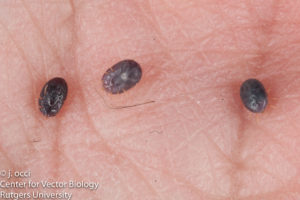
Archive for the ‘Transmission’ Category

How Ticks Ambush & Give You Lyme/MSIDS

https://www.lymedisease.org/ticks-ambush-lyme-disease-healy/

Precisely how do ticks ambush you–and give you Lyme disease?

John Eoin Healy, PhD, now retired from University College Cork, Ireland, has been researching tick biology for over 40 years. In the following article and video, he explains how questing ticks make contact with unsuspecting people and animals.

by John Eoin Healy, PhD

Various estimates indicate that up to 60% of people who contract Lyme borreliosis (Lyme disease) have no recollection of being bitten by a tick.

For those concerned about Lyme disease risk, it may be useful to explain how ticks make contact with and attach to host animals i.e. birds and mammals, including unfortunate humans.

The species of tick that transmits the Borrelia bacteria that cause Lyme disease are Ixodes ricinus in Europe, and Ixodes scapularis and Ixodes pacificus in North America. These ticks thrive in areas with woodland or heavy vegetation which provide the cool moist conditions that these ticks need to survive.

Their second vital requirement is a sufficient number of host animals (deer, cattle, sheep, goats, small mammals and birds) to ensure that ticks have hosts on which they can feed (that is, suck blood) and then reproduce. Increasing numbers of host animals such as deer will accelerate the growth of tick populations.

Ticks have limited mobility

At the risk of stating the obvious, ticks are wingless and therefore cannot fly. Neither can they run or jump. The species of tick that transmit the Borrelia bacteria that cause Lyme disease move very little laterally on the ground, that is, in the horizontal plane.

When a blood-fed larva (the first active life stage) drops from the skin of a bird or mammal, it moves directly downwards with the prospect of finding humid vegetation. There, it undergoes digestion and it moults into the next active life stage, the nymph.

If the larva happens to drop from its host onto a dry path or other unsuitable terrain, then it will most likely desiccate and die.

In the event of success, the emerged nymph will begin to seek a host. It does this by climbing vertically on whatever vegetation happens to be in the immediate vicinity.

Ticks don’t choose their location

Sometimes one may hear someone say, “Long grass is the only place you will find ticks” or, “Stay away from ferns – always ticks there” or some such warning, as if ticks choose the vegetation that they will climb. Ticks have no say in the matter – they simply climb whatever vegetational structure is available to them at the location that the previous life stage dropped from its host.

The behaviour and movements of host bird and mammal species dictate where ticks are deposited. So, a blood-fed larva will give rise to an emerging nymph, and a blood-fed nymph will produce an adult male or female. And of course, a blood-fed female will produce up to 2,000 eggs from which larvae will hatch.

I have conducted mass releases of paint-marked adult ticks in a prepared “arena” in a woodland clearing and then observed what happened. I found that the vast majority of individual ticks moved less than 2 metres from their release point, although a small number managed to travel 4 to 5 metres within 4 days.

The most interesting finding was that the majority of ticks somehow managed to locate vertical vegetation to climb within a short radius from the point of release.

Ticks have a finite fuel supply

Ticks waiting for a host to appear.

Ticks limit their horizontal movement for a very good reason – an economic one. A blood-fed larva that drops from a host has a finite energy supply of fat. Think of it as a full fuel tank. The more a tick moves, the more fuel it burns.

If it runs out of fuel before making contact with a host, then life ends for that particular tick. So, ticks have evolved a strategy to conserve their energy supplies by minimizing their movement. They climb vertically and wait … and wait … and wait.

Usually, they will position themselves at or close to the tip of a structure, whether it be a leaf, twig, bracken, grass or rush stem. Ticks can be found on vegetation from a few centimetres to almost 2 metres above ground level. When no hosts are nearby, ticks can assume a resting or “quiescent” position with front legs folded.

In the event of ticks becoming dehydrated, they will move downward into the moist vegetation mat to replenish their bodily water content, before climbing vertically once more.

Ambushing a host

Image shows a nymph and an adult female questing – front legs extended and raised. Another female is in the quiescent pose.

Ticks can detect the presence of a potential host by temperature, carbon dioxide and by various odours released from the skin of the host. Each of the front pair of legs has a specialised organ which is loaded with sensory cells for this purpose.

Once a tick detects the presence of a host animal, its behaviour changes. It will begin to move and adopt what is termed the “questing” pose.

A questing tick waves its front legs about as its scans the local atmosphere. It is most likely that it has the capability to determine the direction and distance from the approaching host although this has not been proven.

In a video clip which I shot in an infested woodland location, you can see how easily an adult female tick latches onto my finger.

The tick was initially in a quiescent position (saving energy) until I began to move my hand close to the rush stem on which it sat. Sensing my hand, and therefore a possible blood meal, it begins to quest as the video shows.

Note the ambushing strategy that this species has evolved – it doesn’t hunt its victim, it waits for the victim to pass close by. The smaller nymph behaves in exactly the same way.

I focused on an adult female for this video rather than a nymph simply because its size made it easier to capture on camera.

The video shows how easy it is for a tick to “jump on board” a passing human. The slightest brush of a hand, arm or leg against infested vegetation is all that is necessary.

Of course, ticks will also cling onto clothing and burrow through to the skin where they will penetrate and begin to suck blood. Bare wrists, arms and legs are the most vulnerable body parts so there is very good reason to use an appropriate tick repellent on these areas.

Light-coloured clothing makes visual detection of ticks much easier. And it is very important that clothing should be of a close weave as ticks will find this much more difficult to penetrate. I would also recommend that socks and walking boots/shoes be sprayed with repellent.

A note on adult and nymph ticks

The Ixodes ticks species that transmit Lyme disease have three active life stages – larva, nymph and adult. The general view among Lyme/tick specialists is that larvae carry very little Borrelia and so present a minimal risk to humans. Adult male ticks do not feed and so cannot transmit bacteria.

Nymphs pose the real threat. An unfed nymph is approximately 1.5 mm in size and weighs around 0.2 mg. In contrast, an unfed adult female can be 3.5 mm in length and 2 mg in weight – 10 times the weight of a nymph.

A person is much more likely to see and feel an adult tick on the skin than detect the smaller nymph. And once a tick has attached and has begun to suck blood, the smaller nymph may remain undetected for long enough to pass Borrelia into the unsuspecting victim. And of course, the small physical size and weight of the nymph explains why so many Lyme disease victims cannot recollect being bitten by a tick.

Dr. Healy’s expertise lies in the area of tick ecology, genetics, behavior and Borrelia infection rates. He has published in all of these fields. Click here for a list of his publications.

_________________

**Comment**

While ticks can’t fly, they can blow in the wind.  I’ve seen it.

Also, ticks can transmit 19 pathogens and countingfar more than just Lyme.

And minimum attachment time has never been determined which means nobody has a clue how little of time it takes for a tick to transmit diseases to you.  Treat each tick bite as seriously as a heart attack.
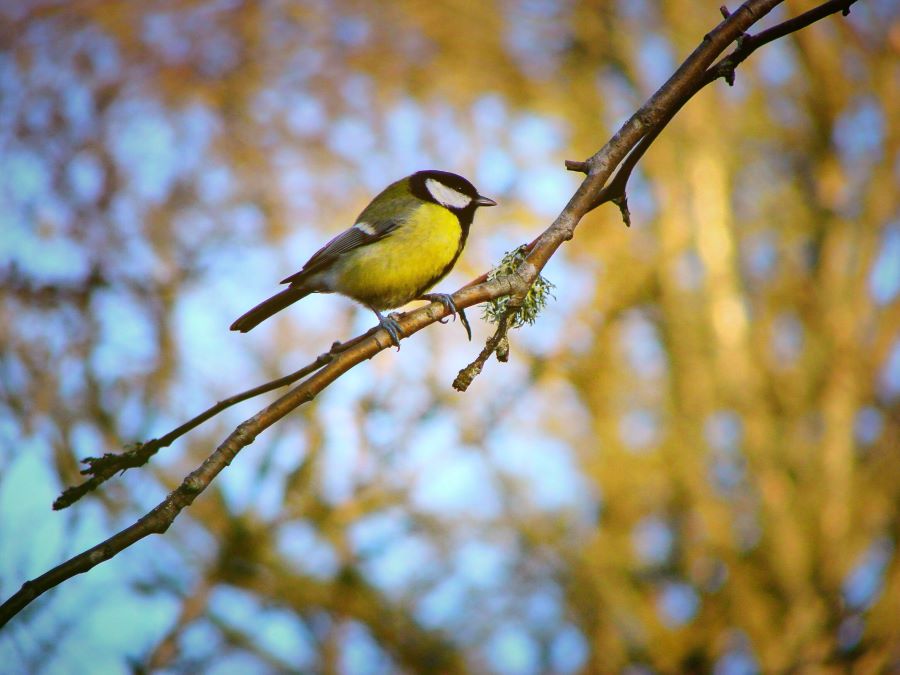
Birds vs. Rodents in Transmitting Tick-Borne Pathogens

https://danielcameronmd.com/birds-rodents-transmitting-tick-borne-pathogens/

Birds vs. rodents in transmitting tick-borne pathogens

birds-tick-borne-pathogens

While white-footed mice are considered to be the primary reservoir for tick-borne pathogens, the role of birds as hosts in transmitting such infectious agents is not fully understood. A new study examines the transmission patterns in Canada between the two groups.

In their study, “Transmission patterns of tick-borne pathogens among birds and rodents in a forested park in southeastern Canada,” Dumas et al. “investigated and compared the role of breeding birds to rodents in local transmission dynamics of Bburgdorferi s.s., Aphagocytophilum and Bmiyamotoi, which are emerging pathogens in southeastern Canada.”¹

Researchers collected ticks and rodents from the Mont Saint-Bruno National Park in Quebec, an area endemic for Lyme disease. They aimed to identify:

  • Distribution of tick-borne pathogens B. burgdorferi, B. miyamotoi, and A. phagocytophylum in ticks and tick hosts;
  • Evaluate the contribution of birds as hosts to B. burgdorferi transmission compared with white-footed mice;
  • Determine risk factors for tick infestation and B. burgdorferi infectivity among hosts.

They collected 25,150 larvae, 4,177 nymphs and 232 adult blacklegged ticks.  And trapped 665 mice, 13 Eastern chipmunks, 15 Northern short-tailed shrew and one Red-backed vole.

The team found 470 (70.68%) mice, 12 (92.31%) chipmunks and 2 (13.33%) shrews infested with at least one tick. Ticks were not found on the only vole captured. Ticks collected from these small mammals were predominantly attached to the ears.

Approximately 70% of mice and 92% of chipmunks were infested with at least one tick, compared with 29% of captured birds.

Additionally, 849 birds belonging to 50 different species were captured. Researchers found ticks on 28.86% of the birds, “with the majority of these ticks removed from members of the Passerellidae (37.41%), Turdidae (31.11%) and Parulidae (17.04%) families,” writes Dumas.

How many hosts were infected with tick-borne pathogens?

When reviewing tick-borne pathogens detected in hosts tissue, the authors found 33.92% of mice were positive for Bburgdorferi, 0.48% for Bmiyamotoi and none for Aphagocytophilum.

Meanwhile, 84.62% of chipmunks were positive for Bburgdorferi, 15.38% for Bmiyamotoi and 7.69% for Aphagocytophilum.

“Pathogens were not detected in any of the bird biopsies (n = 262),” the authors point out. However, birds may not be infected but they are responsible for carrying the ticks to new areas.  They also supply a much needed meal for the ticks.

“Our results support the relevance of considering the role of hosts other than the white-footed mouse in eco-epidemiological studies of tick-borne diseases,” the authors suggest.

References:
  1. Dumas A, Bouchard C, Dibernardo A, et al. Transmission patterns of tick-borne pathogens among birds and rodents in a forested park in southeastern Canada. PLoS One. 2022;17(4):e0266527. Published 2022 Apr 7. doi:10.1371/journal.pone.0266527

For more:

For far too long, the white-footed mouse has been given too much credit for the spread of ticks and TBIs.  Many do not know that reptiles are also reservoirs.  And birds can travel great distances dropping ticks along the way that are from other parts of the globe.

Trainee Pilot Dead After Mosquito Bite

https://www.bbc.com/news/uk-england-suffolk-62065525

Trainee pilot from Suffolk died after mosquito bite, inquest hears

Oriana Pepper at the controls of an airplaneImage source, Family Photo
Image caption,

Oriana Pepper’s family said she “loved nothing better than to go flying”

A trainee commercial airline pilot died after she was bitten by a mosquito and developed an infection that spread to her brain, an inquest heard.

Oriana Pepper, 21, of Bury St Edmunds, Suffolk, died five days after she was bitten while in Antwerp, Belgium last July.

Suffolk’s senior coroner Nigel Parsley said it was an “unfortunate tragedy for a young lady who clearly had a wonderful career ahead of her”.

(See link for article)

____________________

**Comment**

I post this unfortunate story for a few reasons:

  • Ticks aren’t the only bugs that can kill you.
  • Location of the bite, IMO, is important.  If you are bitten on the head, neuro/cognitive issues can develop sometimes within hours.
  • This woman was prescribed antibiotics but had to go back to the hospital where she collapsed and died only three days later.
  • Cause of death was recorded as septic emboli in the brain by staphylococcus aureus which is abundant on the body and usually harmless, but is the leading cause of skin and soft tissue infections such as boils, furnuncles, and cellulitis.
  • The cause of death also mentioned an insect bite to the forehead also contributing.
  • The article says nothing about insect-transmitted pathogens or if they tested her for them but which probably played more of a role than is being given credit.
  • Lyme disease often mimics cellulitis.
  • Mosquitoes carry EEE, whicc can cause severe brain inflammation and has a mortality rate of 30%. Many who do recover continuing to have neurological problems. Six Wisconsin counties have reported cases in horses.

  • Mosquitoes also transmit Western equine encephalitis, St. Louis Encephalitis, and West Nile Fever to humans.
  • Please see the following regarding mosquitoes and Lyme disease:

…results show that DNA of Borrelia afzelii, Borrelia bavariensis and Borrelia garinii could be detected in ten Culicidae species comprising four distinct genera (Aedes, Culiseta, Culex, and Ochlerotatus). Positive samples also include adult specimens raised in the laboratory from wild-caught larvae indicating that transstadial and/or transovarial transmission might occur within a given mosquito population.

BTW: the last study on the potential of other bugs transmitting Lyme (minus the German study on mosquitos) was done over 30 years ago.  And, while no spirochetes were isolated from the hamsters, antibodies were foundeven back then.

I would like to point out the extreme hypocrisy regarding antibodies. Regarding COVID, the PCR, an unmitigated disaster has been used daily for over two years to pick up antibodies. This faulty test which was never intended to diagnose patients has been used to quarantine people even if they aren’t sick.  When it comes to Lyme; however, finding antibodies in anything isn’t enough to prove infection.  Now why is that? 

One little detail is understanding the CDC owns patents on the very tests being used – demonstrating a clear conflict of interest. A few other details: the CDC only allows what serves its vested interests and conveniently disposes anything that doesn’t serve its purpose, and ignores science that doesn’t fit the accepted narrative. While blaming others, it blatantly and continually engages in “misinformation.”

Another ugly fly in the ointment is that according to Igor Kirillov, head of the Russian Armed Forces’ Radiation, Chemical and Biological Protection Unit, Ukrainian biological laboratories researched fever-carrying Aedes mosquitoes, the same genus of insects that the US is thought to have used to start a pandemic of type 2 dengue in Cuba in the 1970s and 1980s which killed 158 people and infected 345,000. The type 2 dengue had never been reported in the Caribbean region and the only location on the island free from the infection was the Guantanamo US military installation.

“The facts of the use of Aedes mosquitoes as biological weapons, exactly the same species with which the US Pentagon worked in Ukraine, were recorded in a class-action lawsuit by Cuban citizens against the US government and were submitted for reviewing of the signatories to the Convention on the Prohibition of Biological Weapons”, Kirillov said.  Source

4 New Published Articles on Ticks

https://lymediseaseassociation.org/news/james-occi-phd-4-new-published-articles-on-ticks/

James L. Occi, PhD: 4 New Published Articles on Ticks

James L. Occi, PhD
James L. Occi, PhD

James L. Occi, PhD, is the lead author of four new published articles regarding ticks over the last three years that have added to the scientific data necessary to understand the spread of ticks and the diseases they carry and transmit in the Northeast and that have provided a basis for moving the field of tick-borne diseases forward.

Jim has been on the Lyme Disease Association’s (LDA) Scientific & Professional Advisory Board since its inception in 1999.  He has been an invaluable resource to the LDA providing lectures, blogs, tick images, and consultations on ticks and the diseases they carry.

LDA Congratulates James Occi (Jim), who recently received his PhD at Rutgers University, the Center for Vector Biology (New Brunswick), and wishes him every success with his future endeavors.  He studied tick-borne diseases in New Jersey tick populations under the direction of Dr. Dina Fonseca and co-authored the below four published research articles for his dissertation.


Annotated List of the Hard Ticks (Acari: Ixodida: Ixodidae) of New Jersey,” J Med Entomol., April 2019, examines documented cases of hard ticks found in NJ.  After a thorough review of the scientific literature, government documents, and evaluation of tick collections (vouchers) in museums and other repositories, the authors determined there were 11 verifiable species of ticks found in NJ.  Nine are native to North America, while two are invasive (Asian longhorned tick and brown dog tick).  In addition, there are seven tick species that may be present or become established in the future, but confirmation with existing NJ vouchers was not found.

Five tick species were reviewed that were reported in NJ but not found in NJ vouchers or that were found within neighboring states.  The importance of vouchers for tick research and surveillance is discussed.

A detailed statewide tick surveillance program would give public health professionals and physicians information to help protect the public from tick-borne diseases.  They would be knowledgeable about what tick species were present, what the principal hosts were and what pathogens the ticks carry and transmit.  (Click here for published article)


“New Jersey-Wide Survey of Rickettsia (Proteobacteria: Rickettsiaceae) in Dermacentor variabilis and Amblyomma americanum (Acari: Ixodida: Ixodidae)” was published in Am J Trop Med Hyg., Sept. 2020, and concludes the increase in Spotted Fever Group Rickettsioses (SFGR) in NJ is unlikely to come from D. variabilis.  Infection with the tick-borne R. rickettsia bacterium causes Rocky Mountain spotted fever (RMSF) which can be fatal if left untreated.

Two tick species, that are considered Rickettsia vectors, were collected from all 21 NJ counties.  560 Dermacentor variabilis Say, American dog tick; 245 Amblyomma americanum L., lone star tick; and an additional 394 D. variabilis were collected at different time periods.   Zero D. variabilis and zero A. americanum were found to be infected with Rickettsia rickettsia.  They detected R. montanensis in D. variabilis and R. amblyommatis in A. americanum.

Collaboration among medical doctors, public health professionals, medical entomologists, and diagnostic laboratories will be needed to understand the causes of SFGR east of the Mississippi. What is causing human cases of SFGR in NJ remains unanswered. (Click here for published article)


Carios kelleyi, tick vector, on hand (Photo Credit: J. Occi, Center for Vector Biology, Rutgers Univ.)
‘Carios kelleyi’ on hand (Photo Credit: J. Occi, Center for Vector Biology, Rutgers Univ.)

“First Record of Carios kelleyi (Acari: Ixodida: Argasidae) in New Jersey, United States and Implications for Public Health,” J Med Entomol., March 2021.  Carios kelleyi is a soft tick that is almost exclusively a parasite of bats and had been found in at least 29 states, Canada, Mexico, Costa Rica, Cuba, and now in New Jersey.  The nymphs and adults take several short blood meals (min. to hrs.), while the larvae remain attached for several days. Relapsing fever Borrelia is known to come from soft ticks that feed on small rodents, and when bats are removed, ticks begin to seek blood meals from humans.

C. kelleyi has been found infected with a novel spotted fever Rickettsia; a novel relapsing fever-related Borrelia;  Bartonella henselae; and a novel relapsing fever spirochete, identified as Borrelia johnsonii.

Although C. kelleyi is not thought to be an important vector of pathogens, its prevalence in bats in New Jersey is increasing.  This creates the possibility for transmission to humans, animals, and livestock.  New Jersey bats and the pathogens they carry should be monitored to assess the risk to the public. (Click here for published article)


“Ixodes scapularis (Ixodida: Ixodidae) Parasitizing an Unlikely Host: Big Brown Bats, Eptesicus fuscus (Chiroptera: Vespertilionidae), in New York State, USA,” was published in J Med Entomol, Jan. 2022.  I. scapularis is a three-host tick found throughout the Northeast, Southeast, and Upper Midwest in the U.S  and is the most common vector of tick-borne diseases to humans in North America.  It feeds on over 150 species of terrestrial vertebrates, yet it had not previously been reported to feed on bats.   During 2019 and 2020, injured big brown bats in four locations in rural NY had larvae and nymphs attached to them.  Bats are known to carry a large number of pathogens and these ticks could go from hosting on a bat to hosting on a human. This poses a significant epidemiological risk and should be investigated further.  It also threatens bat species that are at risk. (Click here for published article)

Tick Bites & Coinfections

https://www.globallymealliance.org/blog/dear-lyme-warrior-help-tick-bites-and-co-infections

Every few months, Jennifer Crystal devotes a column to answering your questions. Do you have a question for Jennifer? If so, email her at lymewarriorjennifercrystal@gmail.com.
Now that tick season is upon us, friends ask me what to do when they find an embedded tick. What should I tell them?

While this question seems like it should have a simple answer, people probably get conflicting information from the internet and even from physicians about what they should do if they find a tick. This is because there is debate about how long a tick needs to be attached to a human or pet in order to transmit the bacteria that causes Lyme disease. The old standard of 36-48 hours doesn’t necessarily apply anymore, now that we know that ticks can transmit bacteria faster if they were already partially fed before biting you, and that some tick-borne diseases can be transmitted much faster than Lyme disease—Powassan virus in as little as 15 minutes.

There are two general rules of thumb that I always tell people: the first is that the longer a tick is attached, the greater chance it has of transmitting pathogens. And unless you see the tick bite you, you can’t really know how long it’s been attached. If you notice it after a long day of hiking, you don’t know if it bit you early in the morning, or just as you were leaving. What if you don’t notice it until the next day, after you’ve done some gardening and walked through the grass? If a tick is engorged, you know it has been feeding, but it can be hard to pinpoint exactly where and when it became attached to you, which makes the certain-number-of-hours recommendation moot.

This leads to my second rule of thumb: with Lyme and other tick-borne diseases, it is always better to be safe than sorry. I tell people that if they find a tick, they should call their doctor and get right on antibiotics. Even if those antibiotics end up being prophylactic, it is safer than the alternative—finding out weeks, months or years later that they’re sick with Lyme and possibly with co-infections, too—and then needing far more extensive treatment than the initial antibiotic course. Waiting for test results (often faulty, especially early in infection), waiting for a rash (which doesn’t appear in up to 30% of people with Lyme), or waiting for other symptoms (different for everyone), is a dangerous approach to Lyme disease. (For more information, see my blog post “The Danger of ‘Waiting and Seeing’ with Lyme Disease”).

The next question is, how long a course of prophylactic antibiotics should you take? The Infectious Diseases Society of America (IDSA) recommendation of a single dose of prophylactic doxycycline is based on one study that showed good efficacy in preventing Lyme rash, but as we’ve established, not everyone with Lyme disease gets a rash. The International Lyme and Associated Diseases Society (ILADS) recommends a 10-20 day course of antibiotics. For me personally, I’d rather have the coverage of a full treatment course that is used for actual Lyme infection, rather than take my chances that a single dose will keep me safe. Each person needs to make their own decision with their doctor, but it’s important that decision be an informed one!

Do other tick-borne diseases have the same treatment as Lyme disease?

This is a great follow-up question to the first, because some people might think, “Well, if I’m taking antibiotics for Lyme disease, then I’ve got other tick-borne diseases covered.” That’s true for some co-infections, but not for all, so this, too, is dangerous thinking. Some co-infections like anaplasmosis and ehrlichiosis are treated with the same antibiotic as Lyme disease, but the length of treatment might be different. Other tick-borne diseases like babesiosis, which is a parasite that infects the red blood cells, require completely different treatment. And still another co-infection, bartonellosis, needs more urgent research for better treatments (learn more about GLA’s Bartonella Discovery Program here). I always tell people, “If you’re being treated for Lyme disease and don’t know you have babesiosis, you’re only fighting half the battle.” If you find a tick attached to you, it’s imperative that you talk to your doctor about other tick-borne diseases, not just Lyme, and know the signs of them (see “Common Tick-Borne Diseases”).

***

The Bartonella Discovery Program:

GLA is currently fundraising for The Bartonella Discovery Program, a research project bringing together some of the top researchers world-wide who are experts on Bartonellosis. These researchers will learn more about the bacteria and which treatments are most likely to cure patients like Beth, who are suffering from Bartonellosis.

None of the work GLA has accomplished would be possible without your support. To learn more and fund this project, click on top link.

Writer

Jennifer Crystal

Opinions expressed by contributors are their own. Jennifer Crystal is a writer and educator in Boston. Her work has appeared in local and national publications including Harvard Health Publishing and The Boston Globe. As a GLA columnist for over six years, her work on GLA.org has received mention in publications such as The New Yorker, weatherchannel.com, CQ Researcher, and ProHealth.com. Jennifer is a patient advocate who has dealt with chronic illness, including Lyme and other tick-borne infections. Her memoir about her medical journey is forthcoming. Contact her via email below.

Email: lymewarriorjennifercrystal@gmail.com

_________________

**COMMENT**

Before you take the 10-20 days of doxy too literally, please read this excerpt from the ILADS website:

Treatment Guidelines