Archive for the ‘Psychological Aspects’ Category

Heartbreaking Connection Between Personality Changes & Lyme Disease

https://www.lymedisease.org/personality-changes-nicole-bell/

The heartbreaking connection between personality changes and Lyme disease

Jan. 13, 2022

By Nicole Danielle Bell

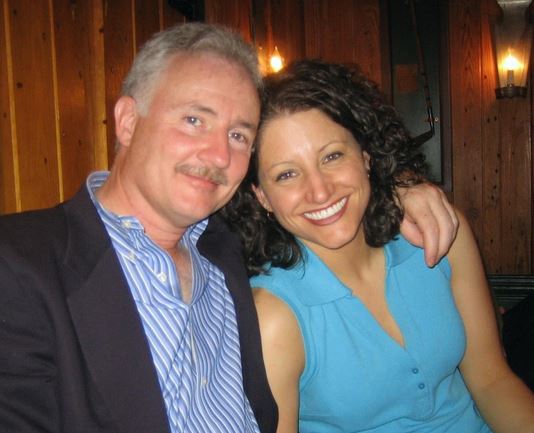
Early in our relationship, my husband, Russ, and I never argued. We were both engineers, so our disagreements felt more logical and debate-like.

But fast forward ten years, and all of that changed. He was irritable, moody, and sometimes outright nasty. The simplest thing caused an argument, and I didn’t understand why.

I figured he was depressed and unhappy. We had two young children, and he had stepped back from his fast-paced career to be “Mr. Mom.”

When that change didn’t seem to fit, I had encouraged him to go back to work — a suggestion that led to more resistance and fighting.

We went to therapy, but it didn’t help. Everything was a struggle, and divorce seemed imminent.

Then one day in 2016, the phone rang, and my entire vantage point changed.

The call was from our security company. Something triggered the house alarm, and they wanted to see if they should send the police. I called Russ, and he had set off the alarm. The problem was, he couldn’t figure out how to shut it off.

After I processed my confusion, I realized that he couldn’t remember the five-digit alarm code. His issue was more than unhappiness. His memory was failing. His irritability wasn’t “just life.” It was a symptom.

The search for answers

The following year was, frankly, a mess. I had to convince Russ that he was sick when we couldn’t even agree on dinner plans. And conventional medicine didn’t help. They ran a series of tests, but everything came back “normal.”

Eventually, he was diagnosed with early-onset Alzheimer’s, but that diagnosis didn’t make sense. Russ was young and had no genetic predisposition to Alzheimer’s. So I continued to dig.

Finally, almost two years after that blaring alarm, we found the root of his issue. And it had all started with a tick bite.

The three B’s

Russ suffered from three tick-borne infections: Borrelia (otherwise known as Lyme disease), Bartonella, and Babesia. They are known as the three B’s for those familiar with tick-borne illness. Each one is nasty, and each one can lead to mood disorders and cognitive decline.

Many folks have heard of Lyme disease. It causes fever, a rash, and is cured by a round of antibiotics, right? Wrong, at least for a lot of people.

Russ never experienced a fever or the characteristic bullseye rash, and this is not unusual.

A CDC report on Lyme carditis, which can be fatal, found that only 42% of cases experienced a rash. Symptoms vary immensely based upon the immune system response and where the infection takes hold. If the bacteria infect the joints, arthritis erupts. If they infect the heart, Lyme carditis develops. And if they infect the brain, neurological symptoms emerge — as they did with Russ.

Bartonellosis is a lesser-known disease but is turning out to be more prevalent than once thought. Fleas, ticks, and lice–as well as cat scatches–can transmit the bacteria, so people regularly in contact with animals are at greater risk.

One study showed that 27% of veterinarians were infected with various species of Bartonella — and the bacteria can lead to a host of psychological symptoms, including irritability, rage, depression, and anxiety. Russ’s symptoms? Check, check, check, and check. Some extreme cases have been linked to schizophrenia and other psychiatric conditions.

And the tick-borne diseases go on.

Babesia is linked to fatigue, sleep disorders, and muscle aches. Ehrlichia can cause seizures, difficulty breathing, and organ failure. Mycoplasma results in fatigue, musculoskeletal symptoms, and cognitive problems. Ticks are nature’s dirty needle and can transmit a long list of bacteria, viruses, and parasites—and they don’t always trigger a fever or a rash, as we’ve been told.

What to do?

So what can you do if you suspect that tick-borne illness is impacting you or your loved ones?

Well, you should get tested, but, unfortunately, that isn’t as easy as it sounds. The big problem is that the antibody-based, standard two-tier test recommended by the CDC is grossly inadequate. A study published in June 2020 demonstrated that only 29% of people known to have Lyme (because they presented with the typical rash) tested positive with the standard CDC method.

Wait, what? Only 29% of people known to have Lyme test positive with the gold standard test? Why is that?

There are many reasons, but a significant contributor is that chronic infection weakens the immune system.

Lower immune function means lower antibody levels, so there aren’t enough to trigger the test. In 2018, Congress established a Tick-Borne Disease Working Group to study the growing problem. Their report highlighted “the need for improved approaches to detecting tick-borne diseases.” Unfortunately, the standard still hasn’t changed.

Russ tested negative for Lyme in 2016 using the standard two-tier approach. Fifteen months later, we retested him using a different method. Instead of testing for antibodies, we tested for the bacteria itself using Polymerase Chain Reaction or PCR, as used for COVID-19. With that test, he was positive.

The moral of the story, in tick-borne illness, the test method matters. Lyme-literate physicians recommend labs such as Igenex, Galaxy Diagnostics, and Vibrant America, which specialize in tick-borne testing. If you get tested, be sure to ask where your sample is going and how it will be analyzed.

Current status

Back to Russ. You may ask, how is he doing? Unfortunately, not well.

We treated his tick-borne diseases for over 18 months, and he had many ups and downs.

In the end, we couldn’t get ahead of the cognitive decline. He is currently in a dementia care unit nearing the end. It has been a heartbreaking journey — one that has left our two children, now 8 and 11, without their dad.

I get asked all the time, “What would you do differently?”

The answer is simple. Personality changes are symptoms. Something has changed, and it is crucial to figure out why. If therapy doesn’t work, think infection, specifically tick-borne infection. Get tested with a Lyme-literate physician as soon as possible.

Ticks can kill, so heed the early warning signs—before it’s too late.

Nicole Danielle Bell is the author of “What Lurks in the Woods: Struggle and Hope in the Midst of Chronic Illness.” Click here to read our review and an excerpt of this gripping memoir.

It wasn’t until I complained to my kids’ coach, who after listening stated:

“This sounds like a page out of my book.  I was just diagnosed with Lyme disease.” 

This information set me on a journey I’m still on.  Learning daily about a complex, misunderstood illness that is affecting nearly 500,000 people yearly, and those are just the acute cases, has been my full-time occupation. There are millions more of us who repeatedly relapse requiring stints of treatment to keep us functioning.

In time, I came down with full-blown symptoms as well, increasing the stress and financial burdens as the two of us required expensive treatment not covered by insurance.

I’m very thankful the author points out the problems with testing as well as the many coinfections that are often present, complicating cases exponentially.  These pathogens also require savvy, synergistic, holistic treatment that addresses the complexity.  Mainstream medicine is hopelessly in the dark on this complexity, similarly with COVID – and with the same conflicts as public health ‘authorities’ are more concerned about creating lucrative tests and lucrative “vaccines” than they are with effective treatments.  The exact same smear campaign that is currently occurring with COVID has occurred in Lymeland for over 40 years.  And biowarfare is a similar refrain.

Unfortunately, Mr. Bell in the story above didn’t get proper help soon enough, and had irreversible damage.  This can happen and does happen.  Everyone now admits that early detection and treatment are the key yet continue to take a “wait and see” approach, or to falsely believe that 1 or two pills of doxycycline prophylactically will cure this.


I’m thankful to report that extended antibiotic treatment, hormones, supplements, nutrition, and many other adjunctive therapies ameliorated mood swings, cognitive decline, pain, and other physical ailments we both suffered with.  We are both in good health and miles from where we started.  We must continually work to keep our immune systems working properly, but the work we’ve done has been fruitful and very much worth it.

Dr. Kinderlehrer: Recovery From Lyme, An Integrative Approach

http://  Approx. 40 Min

Part 1

– @ 5.25 minutes Talk DSF dosing and coinfections.

– @ 19.25 minutes Kinderlehrer talks about MCAS in DSF patients, causing MC Degranulation

– @ 21.45 minutes Kinderlehrer talks about food sensitivities, gut disorders, and elimination diet

– @25.20 minutes Kinderlehrer talks MCS and EMF

– @27.50 minutes Kinderlehrer talks Bartonella

http://  Approx. 36 Min

Part 2

“This is not a horse race, this is a marathon” – Dr. Kinderlehrer –

@ Beginning talk avoidance of alcohol on dsf and tinctures

– @ 3.45 minutes talk dsf and encephalitis brain herx

– @ 6 minutes in talk side effects stopping DSF cold turkey and the psychiatric manifestation

– @ 9.30 minutes approx, talk brain inflammation and remedies

– @ 11.30 Dosing for DSF

– @ 15 minutes talk about the book

– @ 17.00 onwards PTLDS, The Lyme Wars, Co-Infections, and “Lyme Denier Doctors” and talks about his personal story with contracting Lyme and how he was denied care initially like so many other patients find.

_________________

For more:

When Will I Start to Feel Better?

https://www.treatlyme.net/guide/recovery-timeline-for-lyme-bartonella-babesia  Video Here

When You Might Start to Feel Better: The Lyme, Bartonella, and Babesia Timelines

In this video article, Marty Ross MD describes when you should start to feel better in your treatment. As Dr. Ross describes, it all depends on the which infections you are treating.

Resources

__________________

**Comment**

This topic paramount, as patients desperately want their lives back.  At least I did.

I remember finding a man who was infected but had achieved his health back.  In a vast pool of sick people, he appeared to be a lone survivor.  Frantically, I emailed him for answers.  Per usual, he got right back to me with encouragement.  (This has been my experience time and time again.  Infected people “get it,” and immediately help those looking for it).

To be honest, I only remember one thing he said: “Don’t be depressed about feeling depressed.”  You may laugh, but that simple statement probably helped me more than any other advice, because this complex illness will truly sift you like wheat making you question your very sanity and your desire to continue with life.

I would compare having Lyme/MSIDS to being dropped behind enemy lines in an Arctic climate where you are given nothing but a toothpick and a shovel for survival.

I would love to say that I completely agree with Dr. Ross but it just wasn’t our experience.  Since both my husband and I are infected and have both waged this battle (and continue to wage it), I have two narratives I am quite intimate with – plus many other patients who tell me their stories.

Tracking improvement is like catching a greased pig.  Very hard to do.  Nothing about this is linear.  There are forward steps, stalls, and backward steps – sometimes within the same day!

I advise patients to keep a monthly calendar close by with lines on it for writing.  Write down your major symptoms every day.  This will really help if you are tracking others in your family as well.  If you don’t do this you will likely forget much of what you experience.

If possible, then take these notes and write or type up an executive summary noting the main symptoms.  This will help your Lyme literate doctor more than anything.  They are versed in the various symptoms and your documentation will show what infections are dominant at the time (and this varies from time to time.)

It is true that if you are not experiencing change (improvement or worsening) you are likely in a plateau which should indicate you need to change your treatment.  Be honest about this and talk with your LLMD about this so you are in agreement.  This is NOT an illness that you can just ‘trust the experts’ with.  You NEED to be a part of this unique partnership.  Admittedly, in the beginning you won’t know much and won’t be able to be much help, but in time you will become a quasi-expert.  I tell patients that doctors are experts in THE human body but you are the expert with YOUR body.  Your intel is indispensable to your physician.  If they don’t want your intel, it’s time to find a new doctor!

For more:

Bartonella Infection in Mom and Both Sons: Anxiety, Panic Attacks, Insomnia, Inconsolable Crying, Irritability, ADHD, Rage, and of Course Pain

https://www.everywomanover29.com/blog/bartonella-infection-in-mom-and-both-sons-anxiety-panic-attacks-insomnia-inconsolable-crying-irritability-adhd-rage-and-pain/

Bartonella infection in mom and both sons: anxiety, panic attacks, insomnia, inconsolable crying, irritability, ADHD, rage and pain

bartonella infection

A mom and both her sons experienced a variety of emotional/mood and pain symptoms between them as a result of a Bartonella infection: anxiety, panic attacks, insomnia, irritability, inconsolable crying, ADHD, rage, eye pain, joint pain and pain in the legs. This family case study was published in Parasites and Vectors in 2013. I would love to see individual amino acids being used to ease some of these symptoms while the infection is being treated (more on this below).

Here are some of the emotional and mood-related symptoms they experienced:

  • the mother and both sons developed recurrent rash-like skin lesions, disruptive sleep patterns and both boys developed anxiety accompanied by episodes of inconsolable crying, irritability, and panic attacks
  • subsequent to the spider infestation of the apartment, [the mother] developed fatigue, memory difficulties, headaches, irritability, eye pain, insomnia, chest pain, blurred vision, shortness of breath, rash and skin lesions and anxiety attacks.
  • The youngest son… awakened at night crying and complaining of pain in his legs
  • The older son experienced increased irritability and rage episodes. In addition, the boy’s teacher indicated a lack of attention during class, and suggested that the child might have an Attention Deficit Hyperactivity Disorder (ADHD).

The youngest son also developed severe neurological symptoms and was diagnosed with Guillain-Barre syndrome and Chronic Inflammatory Demyelinating Polyradiculoneuropathy.

You can read the full investigation, timing, sequence of events and all the symptoms in the paper: Bartonella henselae infection in a family experiencing neurological and neurocognitive abnormalities after woodlouse hunter spider bites  (For more see link)

___________________

**Comment**

Fantastic article that needs to be shared widely.  I believe Bartonella is much more common than doctors believe, and as in these cases, quite severe and debilitating.

A few points:

  • Please note the spider infestation. See this article for more on transmission.
  • The author mentions Chinese herbs, which in my experience aren’t strong enough to fight this alone.  This is just my experience, and my husband’s and numerous other patients, but and I realize perhaps there are others with a different experience than ours.
  • For us, when we relapse, it’s clearly Bartonella that immediately responds to the combination of rifampin and clarithromycin.  Within 2-3 months of treatment we push the symptoms away.
  • The author also gets into amino acids to address symptoms – of which I have little experience.  When in the midst of the battle, I hear Dr. Hoffman telling me that if I address the infection(s), the symptoms will either disappear entirely or lessen considerably.  I have proven this dictum repeatedly with each successive, treated relapse.  When money is an issue, you must decide the best course of action as many things are needed to successfully fight MSIDS.  As with everything else; however, each case is individual and for those suffering with severe psychiatric, sleep, and other issues, learning about amino acids may be a key part of treatment.
  • My husband has definitely found relief with 5-HTP & Gabapentin for sleep issues.  Strong CBD and melatonin has helped as well as LDN.  Lyme/MSIDS related insomnia is very real.

Please read the article in its entirety, but here’s a highlight on the various amino acids:

Borrelia burgdoeri Co-Localizing With Amyloid Markers in Alzheimer’s Disease Brain Tissues

https://content.iospress.com/articles/journal-of-alzheimers-disease/jad215398

Borrelia burgdorferi Co-Localizing with Amyloid Markers in Alzheimer’s Disease Brain Tissues

Accepted Oct. 24, 2021, Published Dec. 5, 2021