Archive for the ‘Psychological Aspects’ Category

Adjunct Therapies That Have Helped With My Tick-Borne Illneses

https://www.globallymealliance.org/blog/adjunct-therapies-that-have-helped-with-my-tick-borne-illnesses

Jen Crystal discusses the adjunct therapies that helped her in her Lyme disease journey.

Patients write to me every day asking what helped me achieve remission from tick-borne illness. I wish there was a magic answer I could give them, but since every single case is different, there is no set protocol. What worked for me might not work for someone else. Moreover, what worked for me five years ago is not what works for me now. Each case changes over time as spirochetes are killed off and symptoms improve. My Lyme Literate Medical Doctor (LLMD) is always fine-tuning my protocol.

That said, there are several adjunct therapies that have worked in conjunction with my ever-changing protocol of medication and supplements. I call these adjunct or complementary therapies because they supported, but did not replace, my medical protocol. These therapies would not have worked alone, because first and foremost I needed to treat the infections of Lyme disease, babesiosis, ehrlichiosis, and possible bartonella. In fact, before I was accurately diagnosed with these tick-borne illnesses, I tried some alternative therapies and they did not help, because the underlying infections were too severe. Once I started appropriate treatment, the following therapies helped me heal:

Integrative Manual Therapy

Developed by Sharon Giammatteo, Ph.D., this hands-on technique uses light touch to facilitate healing. The therapy combines cranial therapy and neurofascial processing. In her book Body Wisdom: Light Touch for Optimal Health, Giammatteo explains that cranial therapy is “a manual approach to correcting problems of the cranium, as well as the tissues and structures within in. Cranial therapy works by exerting a gentle force on the head and the body. The force decompresses dysfunctional areas and facilitates proper biological rhythms.”[1]

Don’t be alarmed by the word “force”; it’s simply someone gently placing a hand on your head or body, making barely perceptible movements. The technique is lighter than massage. When I’m struggling with brain fog or other symptoms of Lyme brain, my integrative manual therapist might place one hand on my forehead and one hand on my lower back, to enable drainage. This is part of neurofascial processing, which is just placing hands on different parts of the body to get systems working in sync.

The great part about Integrative Manual Therapy is that a lot of it can be done at home, either by yourself or with the help of someone else. Techniques are outlined in Giammatteo’s book. You can also work with a trained facilitator. Some D.O.’s (Doctors of Osteopathic Medicine) do manual therapy, and some physical therapists do it. This means these appointments might be covered by insurance. You can also pay out-of-pocket for a private practitioner. At the height of my illnesses, I did Integrative Manual Therapy twice a week; now I do it twice a month.

Neurofeedback

You may have heard of biofeedback, which uses the body’s own feedback to regulate systems. Neurofeedback works in the same way, except on the brain instead of the body. This non-invasive technique uses your brain’s own feedback to help it work optimally, whether that is being able to rest, thinking more clearly, or having less intrusive thoughts.

During neurofeedback appointments, I sit in a comfortable lounge chair. The practitioner affixes small sensors on my head and ears. These sensors are connected to a computer that receives feedback from my brain, and then relays information back to my brain that helps it work better. During this process, I watch kaleidoscope-style images on a screen (though it’s fine to close your eyes), and listen to soft music. Sometimes as certain feedback is being sent, the music skips. That’s all I notice during the entire session. Otherwise I just sit and relax, and let my brain do its work.

I started neurofeedback when I saw a sleep specialist for insomnia. In conjunction with sleep medication, neurofeedback helped my brain retrain itself to turn off for rest. It toned down, though did not eliminate, my hallucinogenic nightmares. It also helped me to be able to fall asleep for a nap during the day, which my exhausted body desperately needed.

There are different types of neurofeedback. Some work on just one part of your brain at a time, while others work on the whole brain. I do NeurOptimal, which helps the whole brain at once. My practitioner thinks that working on only one part of my brain at a time might actually exacerbate, not help, some of my neurological issues.

Some sleep specialists do neurofeedback, which can be covered by insurance. There are also private practitioners that you can find through NeurOptimal. When my insomnia was raging, I did neurofeedback three times a week. Now that I am in remission, I do it once a month.

Physical Therapy

Physical therapy is an important way to rebuild muscle strength and stamina—when you are ready. I made the mistake of starting physical therapy too early in my treatment, and paid for it. Because infections were ravaging my body, exertion only made them worse. Before my babesiosis was adequately treated, thirty seconds on a stationary bike gave me a migraine and sent me straight back to bed.

When I was bedridden, people used to say to me, “You should get up and go for a walk. It’ll make you feel better.” Just walking to the end of the driveway made me feel much, much worse. You know your body best. If you had the flu, you would not go for a walk. You would wait until you felt better. I had to wait until my infections were cleared up enough before I could do physical therapy consistently, and have it make a positive difference. Talk with your LLMD about when physical therapy would be appropriate for you.

Make sure your physical therapist understands the way your illnesses impact your body, and has you go at a slow pace. You likely won’t be able to do a typical graded physical therapy program where you steadily increase time and weights. Instead, you’ll make progress, take some down turns, then make progress again. When I first started physical therapy, all I did were some gentle stretches and slow manipulations with my fingers and toes. It took months to work up to twelve minutes on a stationary bike. I added weights very, very slowly. Now, after regaining strength and learning to pace myself, I am able to ski, walk, paddleboard, kayak, and swim. (For more on my slow but steady physical therapy, see my poem “Never Say Never”).

Talk Therapy

Being sick, especially for an extended period of time, can take an emotional toll. Moreover, Lyme disease can cause anxiety and depression. Your LLMD or a psychiatrist may prescribe medication to help your mood, but it’s also really helpful to talk about your feelings with an objective professional. You want someone who believes your illness and believes in you. Someone who will allow you to vent on the tough days and, more importantly, give you some coping skills to handle those hard times. My own therapist also helped me examine relationships and patterns from my past that informed my response to illness. She helped me to accept and love my illnesses, and myself. By encouraging me to be gentle with myself, she helped me not to wallow in the past, but to learn from it so I could move forward.

These are the therapies that have helped me. It is not an exclusive or exhaustive list; other therapies that I haven’t tried, like reiki, light massage, rife machines, and hyperbaric oxygen chambers, may be helpful to other patients. I encourage you to discuss possible adjunct therapies with your LLMD to determine which would be best for you.

[1] Giammatteo, Sharon, Ph.D. Body Wisdom: Light Touch for Optimal Health. Berkeley, California: North Atlantic Books, 2002 (21).

Jennifer Crystal

Writer

Opinions expressed by contributors are their own. Jennifer Crystal is a writer and educator in Boston. Her work has appeared in local and national publications including Harvard Health Publishing and The Boston Globe. As a GLA columnist for over six years, her work on GLA.org has received mention in publications such as The New Yorker, weatherchannel.com, CQ Researcher, and ProHealth.com. Jennifer is a patient advocate who has dealt with chronic illness, including Lyme and other tick-borne infections. Her memoir about her medical journey is forthcoming. Contact her via email below.

Email: lymewarriorjennifercrystal@gmail.com


Career & Life Lessons From Survivors of Chronic Lyme Disease

https://www.lymedisease.org/life-lessons-chronic-lyme/

Career and life lessons from survivors of chronic Lyme disease

By Fred Diamond, Nov. 9, 2021

We all know that Lyme disease can cause major career disruption. But what if overcoming the disease can help you find your life’s purpose and mission?

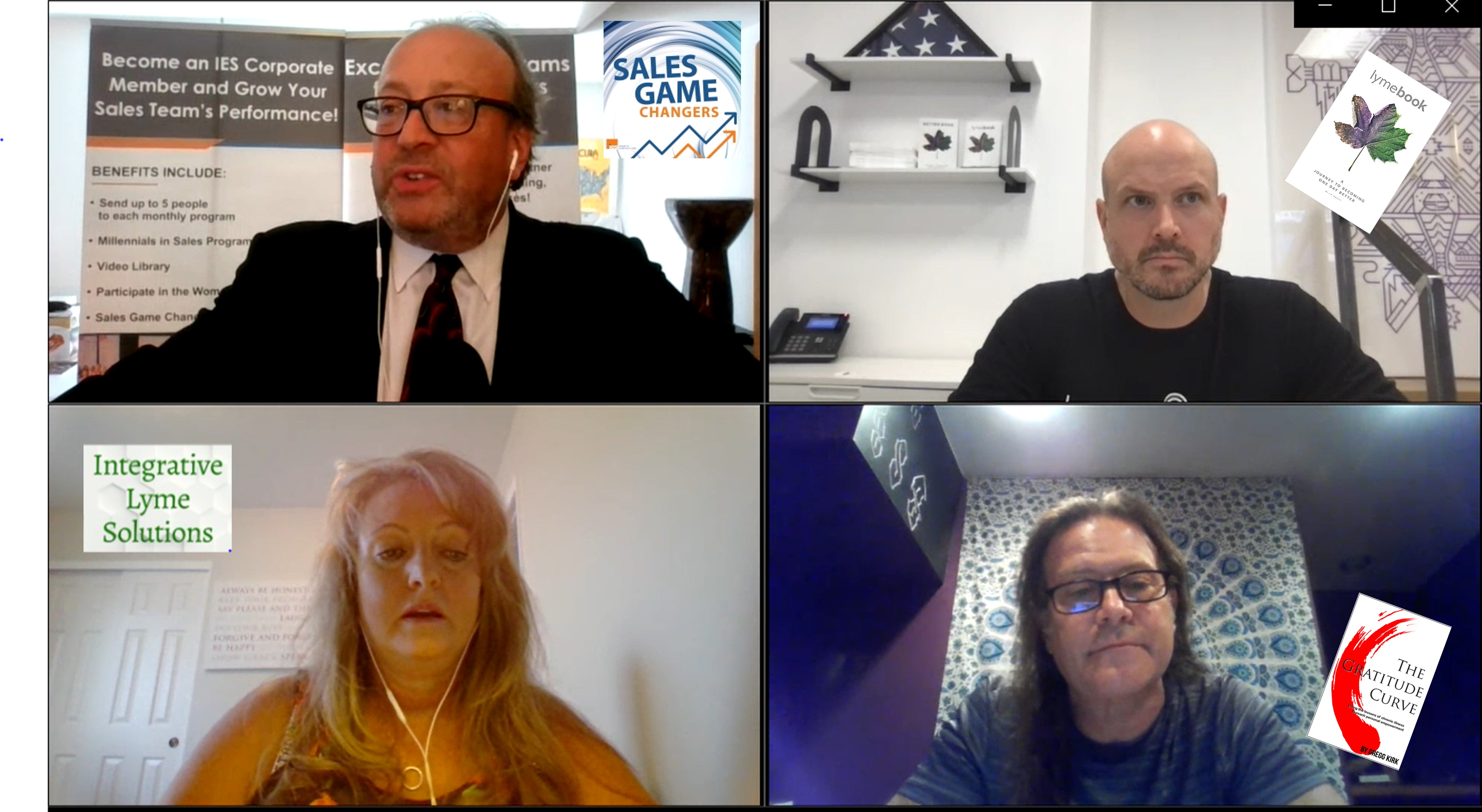
I host The Sales Game Changers Podcast for sales professionals around the globe. I interview sales leaders about tactics, strategies, and ideas. Because someone in my life has chronic Lyme disease, I became interested in learning more about how survivors could transform their lives.

I recently hosted an episode called, “How These Leaders Discovered Their ‘Why’ After Conquering Chronic Illness and How It Applies to Sales.”

I sought out people to interview who had overcome their disease, or at least contained it, and found a more purposeful way to focus their careers and lives.

Great sales professionals are always looking for ways to find their purpose and mission so they can better serve their customers. I knew these lessons would resonate with my audience.

I’ve met some amazing leaders who have battled chronic Lyme and have shifted their career paths and life efforts to helping others suffering from chronic illness. I am inspired by them all.

You can listen to the episode or read the complete transcript. This episode was one of our most listened to ever.

Guests

The guests included:

  • Gregg Kirk, a digital sales support marketing director who switched career paths after his decade-long struggle with Lyme disease. After reaching remission, he wrote the book “The Gratitude Curve” and founded a nonprofit Lyme patient fund called Ticked Off Foundation.
  • Tanya Hoebel, vice-president of The Lyme Center in Chico, California, as well as the co-host of the Integrated Lyme Solution podcast.
  • And JP Davitt, founder of Lymefriends and the author of “LYME BOOK: A Journey to Becoming One Day Better.” After overcoming chronic illness, he’s been focused on helping others make one day better.

All three have found their life’s purpose in helping others who are struggling with Lyme disease.

The shift to recovery

I asked when the shift to recovery took place and then how did this define their mission.

Gregg Kirk said, “The shift started when I was at my worst, I was at the point where I wanted to die. It was one of these weird situations where I wanted to die but I kept hanging around. Then I started looking inward. Why am I still here and why have I gone through this? Is this some kind of weird karma thing? Did I deserve this? Did I kill someone in a past life? Why am I going through all this mental and physical punishment? Then after I had that night, I let everything go. I just felt like my life had burnt to the ground and I started looking at my life in a different way.”

“I started thinking, maybe this disease is pointing me in a direction. Maybe I was going in the wrong direction in my life, as much as I liked my life at the time. I just started to let it happen. And the less I resisted, the more things started changing in very unexpected ways,” he said.

Tanya Hoebel said, “When I was nearing the end of my treatment, that was about 9 years into my illness, I could for the first time see the light at the end of the tunnel. I really had some faith that I was going to get better. I didn’t let it physically or emotionally ruin me because I continued to fight back. I thought, how can I possibly allow another human being go through even one day of what I’ve gone through over the last 9 years? My life changed at that moment.”

JP Davitt said, “When I was sick, I dreamt of a platform that would allow sick people to connect more easily with one another. I imagined a social platform that was more like online dating for wellness. I created an interactive health and wealth advisory practice, and my passion became my niche.”

Mission and meaning

I then asked them specifically what they created to further their mission and how it’s put more meaning into their life.

Tanya said, “I’m so thankful that I found another resource to end my suffering. It proved to me also, that someone on top of the world emotionally, financially, and at the top of their career like I was prior to Lyme can in one moment lose it all. I could have been one of those people homeless on the streets that you see roaming around and you often wonder why they’re there. That is what Lyme disease does physically, emotionally, and financially.”

“Because this positive person, me, contemplated suicide at one point, I thought I’ve got to do something, I’ve got to make a difference. That is when I became so involved in advocating for Lyme. I run a nonprofit organization, it’s called The Lyme Center, it’s based out of Chico, California and our mission is to educate and advocate for Lyme.”

“I’m also the co-founder of an incredible mentoring group on Facebook. This group has proved to be more than I ever dreamt it to be in such a short amount of time. We offer lots of treatment options and help educate them on so many different levels of Lyme because there are so many facets of it. I even managed to find time to cohost a weekly podcast, Integrative Lyme Solutions.”

JP said, “Lymefriends is a platform that acts like a dashboard for people with Lyme disease to go to, a one-stop-shop for all of the resources. I collect resources without worrying about any competition bringing everything together to help them finance sooner.”

“Whenever I was sick and having to streamline my efficiency with my body, it really taught me a lot about processes. Learning a lot about this process as I carried that over to healthcare and I was able to them form a goal to not just help with Lyme disease, but my goal really in the grand picture is to change the literacy and vocabulary of healthcare using technology.”

Gregg said, “There is a patient care problem. People have no money and they’re not getting diagnosed properly. When they finally are, they’re not getting the proper care.”

“I thought, if I had a billion dollars, what would I do? I thought I would create a healthcare system, like an insurance system that funded treatment because most of the treatments that worked for me were not covered by insurance, the herbal treatments and so forth. I thought, I don’t need to wait until I’m a billionaire, I can start a foundation, a nonprofit that people come to us, they get qualified through some documentation, and we give them monthly stipends. We’ve been able to help many people get the treatment they need.”

It was very inspiring to hear from some people who have overcome Lyme disease and have been able to give back in a big way and to give their lives more purpose.

The same can happen for you.

Fred Diamond is based in Fairfax, VA and can be contacted via Facebook. For a living, he runs the Institute for Excellence in Sales and hosts the Sales Game Changers Podcast. Someone close to him is a chronic Lyme survivor, which led to his Lyme-related advocacy.

Lyme Disease & Depression

https://www.globallymealliance.org/blog/lyme-and-depression

“Maybe you’re just depressed.”

It’s a line many Lyme patients have heard from family, friends, co-workers, and even physicians. Particularly for those struggling with undiagnosed Lyme disease, this suggestion is a popular “answer” when patients don’t otherwise fit into an easy diagnostic box. When I was first wrestling with symptoms of tick-borne illness at age 19, a nurse at my college health center said, “Maybe you should see someone in counseling about all of this” when she tired of my frequent visits for hypoglycemia, fatigue, headaches and fevers. At such an impressionable age, I worried she was right.

In some ways, she was. Seeing a counselor might have helped me work through the complex emotions of being sick, not having a diagnosis, and not being able to keep up with my peers academically or socially. Later, when I was being properly treated for Lyme disease, babesiosis, ehrlichiosis, possible bartonella, and chronic active Epstein-Barr virus, a therapist was an important part of my support system.

But seeing a therapist wouldn’t have solved my physical ailments, because depression was an effect of them, not the cause. Anyone who suffers from a long-term illness, who wakes up day after day feeling like they never slept, who can’t get out of bed, is bound to get depressed. For some people, chemical depression is indeed the diagnosis that causes both mental and physiological symptoms. For Lyme disease patients, however, depression is a symptom of that tick-borne infection.

A recent study by Dr. Michael Eriksen of Copenhagen University and Dr. Brian Fallon of Columbia University showed an increased risk of psychiatric illness in Lyme disease patients. Collecting data from over 7 million Danish people over 22 years—including 12,000 people diagnosed with Lyme disease—the researchers found that with a single diagnosis of Lyme disease, there is a 24% increased risk of any mental disorder, including depression. Two or more episodes of Lyme disease increases that risk to 79%. This elevated potential for mental disorders was highest in subjects ages 20-29. Having struggled with depression throughout college and my early twenties, both as a side effect of being sick and as a side effect of Lyme disease itself, I can certainly attest to the particular vulnerability of young people.

Whatever a Lyme disease’s patient’s external situation, the mechanisms of the disease going on in their body can cause depression. This is especially true with neurological Lyme disease, when the Lyme bacteria (spirochetes) have crossed the blood-brain barrier, causing inflammation in the central nervous system. This inflammation can lead to a host of psychiatric manifestations. As psychiatrist Robert Bransfield, M.D. notes in his paper “Neuropsychiatric Lyme Borreliosis: An Overview with a Focus on a Specialty Psychiatrist’s Clinical Practice,” “Lyme Borreliosis causes immune and metabolic effects that result in a gradually developing spectrum of neuropsychiatric symptoms, usually presenting with significant comorbidity which may include developmental disorders, autism spectrum disorders, schizoaffective disorders, bipolar disorder, depression, anxiety disorders (panic disorder, social anxiety disorder, generalized anxiety disorder, posttraumatic stress disorder, intrusive symptoms), eating disorders, decreased libido, sleep disorders, addiction, opioid addiction, cognitive impairments, dementia, seizure disorders, suicide, violence, anhedonia, depersonalization, dissociative episodes, derealization and other impairments.”[i]

If this list seems scary, don’t despair. While Lyme disease, especially when complicated by co-infections, can have devastating effects, those effects can also improve significantly with proper treatment. Antibiotics and complementary therapies helped me battle my tick-borne illnesses into remission. While I do still struggle at times with anxiety and depression, they are much better than they were when I was first sick. Talk therapy, medication, and cognitive behavioral therapy have all helped. So has understanding the derivation of my anxiety and depression, and recognizing that when they do flare up, it generally means that Lyme disease symptoms are flaring, too. For example, I have noticed that when I get over tired, I get very sad. Nothing external triggers this sadness; it’s brought on by inflammation and fatigue. Rest—and occasionally small tweaks to my protocol—help me get back on track.

If you have depression as part of tick-borne illness, please know that this is normal, and that there is help. Speak with your Lyme Literate Medical Doctor (LLMD) about psychiatric treatment and/or talk therapy, and know that things can get better. I am living proof.

[i] Bransfield RC. Neuropsychiatric Lyme Borreliosis: An Overview with a Focus on a Specialty Psychiatrist’s Clinical Practice. Healthcare. 2018; 6(3):104. https://doi.org/10.3390/healthcare6030104

Writer

Jennifer Crystal

Opinions expressed by contributors are their own. Jennifer Crystal is a writer and educator in Boston. Her work has appeared in local and national publications including Harvard Health Publishing and The Boston Globe. As a GLA columnist for over six years, her work on GLA.org has received mention in publications such as The New Yorker, weatherchannel.com, CQ Researcher, and ProHealth.com. Jennifer is a patient advocate who has dealt with chronic illness, including Lyme and other tick-borne infections. Her memoir about her medical journey is forthcoming. Contact her via email below.

Email: lymewarriorjennifercrystal@gmail.com
_________________

**Comment**

Great read and very true.  Depression for me went in tandem with how I felt physically.  The worse I felt physically the worse I felt mentally.  They tend to go hand in hand.

Some; however, struggle more than others and require psychiatric help.  Just make sure you get a psychiatrist who you have vetted and is at least “Lyme friendly, if not “Lyme literate,” as I’ve heard stories of abuse from these professionals who are uneducated and misinformed as to what Lyme/MSIDS can do to your emotions and cognitive/psych issues.

One thing is for sure: proper, appropriate antimicrobial treatment will help alleviate or take away these symptoms all together.

For more:

Revisiting an Anthropologist’s View of Lyme-Related Suicide

https://www.lymedisease.org/revisiting-anthropologists-view/

TOUCHED BY LYME: Revisiting an anthropologist’s view of Lyme-related suicide

I first came across Aaron Jackson in 2018, when he submitted a guest blog for our website. It was titled An anthropologist’s view of Lyme disease and suicide.

Aaron was the anthropologist in question. As a Lyme-infected person who had tried to take his own life, he was uniquely qualified to discuss this topic.

His article clearly hit a responsive chord with our readers. It became one of our website’s most-accessed blogs that year.

I recently heard from Aaron again. He lives and works in Australia now. His research focuses on fatherhood, caregiving, and disability.

He has written a book called “Worlds of Care: The Emotional Lives of Fathers Caring for Children with Disabilities,” recently published by University of California Press.

Aaron was propelled into the world of caregiving after the birth of his severely disabled son, Takoda. The book uses his personal experience caring for Takoda as a springboard for larger discussions about fatherhood, caregiving and our cultural ideas of masculinity.

He also includes some of his personal experience with Lyme disease. The following excerpt of his book talks about how Lyme thrust him into the depths of despair, and what ultimately came of it.

Worlds of Care

My ordinary patterns of everyday life deteriorated. The world around me no longer hummed with vibrancy or possibility. I couldn’t climb a short flight of stairs without almost collapsing, forget about kickboxing. I no longer had the stamina to play with my children or take care of them the way I was used to doing.

The roles and responsibilities that shored up my identity as a father and caregiver were lost to me. I became dependent on my spouse for care.

So, on a quiet morning at the end of summer, I tried to take my life

˜˜˜˜

A poignant epilogue to the book tells us that young Takoda died unexpectedly in his sleep in 2019. He was 8 years old.  (See link for article)

Click here for more information about the book. You can follow Aaron Jackson on Twitter @Kodacruz.

TOUCHED BY LYME is written by Dorothy Kupcha Leland, LymeDisease.org’s Vice-president and Director of Communications. She is co-author of When Your Child Has Lyme Disease: A Parent’s Survival Guide. Contact her at dleland@lymedisease.org .

_____________________

For more:

What’s Behind This Epidemic of Chronic, Inflammatory Conditions?

https://www.lymedisease.org/kinderlehrer-epigenetics/

What’s behind this epidemic of chronic, inflammatory conditions?

by Daniel A. Kinderlehrer MD

I have witnessed many changes in the over 40 years I’ve been a doctor, including epidemic rises in multiple medical conditions.

I’m not talking about the present pandemic, nor am I referring to the opioid crisis, another devastating epidemic that has taken the lives of over 500,000 Americans. I’m talking about chronic conditions that cause a slow burn and sometimes kill.

Lyme disease is but one example.

But think how things have changed since the beginning of the previous century: heart disease was barely on the radar in 1900, but for over 50 years it has been the number one cause of death in the U.S.1

A whopping 69% of Americans are now overweight, with 36.5% obese,2 directly contributing to the skyrocketing incidence of adult-onset diabetes mellitus.3 When I was in training in the 1970s, I never saw a patient with AODM who was under 40 years old. Now, it is being diagnosed in children.

And then there are the dramatic increases in autism spectrum disorder,4 attention deficit hyperactivity disorder (ADHD),5 autoimmune conditions,6 some types of cancer7 and food allergies.8

Food sensitivities, mental health

Twenty-five years ago, when I had a large environmental medicine practice, most of my patients with food sensitivities reacted to one or more of a half dozen foods: milk, corn, eggs, wheat, citrus, or sugar/yeast. It was easy to put patients on an elimination diet: fish, lamb, vegetables, legumes, potatoes and rice. Now people react to avocados, rice, and anything under the sun.

And, of course, there’s the rise in mental health disorders. Even before the Covid pandemic, the World Health Organization predicted that depression would become the leading cause of death globally.9

According to the CDC, in 2019, 19% of Americans suffered from depression and 7% were moderately to severely affected.10 Among adults, suicidal ideation is increasing. Suicide has become the second leading cause of death in children and adolescents ages 13 to 19—and the leading cause of death among 13 year-olds.11 (Among all Americans, it is the tenth leading cause of death.11)

The role of epigenetics

There are a host of factors that determine the how, where and why illness occurs. These include genetic proclivity, lifestyle, trauma, diet, exposures to microbes and toxins. But here is what is further catapulting these seemingly disparate epidemics: a change in the human condition that we now understand as epigenetics.

While it takes millennia of natural selection to change our genes, specific proteins that turn genes on and off can alter gene expression in a single generation. Epigenetics explains how a change in expression of genes can be passed from one generation to the next without actually changing the DNA. There are literally thousands of conditions that can cause epigenetic changes.

Nutrient deficiencies, for example exacerbated by soil depletion, can activate epigenetic changes that result in neurological issues from mood and behavioral disorders to cognitive dysfunction, and these problems are passed on to subsequent generations.12,13 Epigenetics helps explain why the skyrocketing sugar intake in our diets is causing obesity.14,15

Chemical exposures also have epigenetic consequences. Over the past century, we have been exposed to hundreds of thousands of chemicals that are new to human existence. Pesticides, insecticides, herbicides, and other chemicals all have the potential to modify epigenetic activity.16 Countless agents now ubiquitous in daily life, from air pollution to air fresheners and fabric softeners can negatively impact overall health.17,18

Societal changes

But it is not only diet, nutrition, and exposure to toxic chemicals that have changed in the past century. Another factor which has undergone radical transformation is the social milieu. The social sphere, which used to revolve around communities, has devolved to extended families, then to nuclear families, then single-parent families, and now, tragically at times, to homeless families or solitude.

It is no longer routine for people to go next door to be held by grandma, or move in with aunts and uncles when the going at home gets rough. In essence, safe shelter has disappeared. This lack of safety is compounded for survivors of childhood trauma, who often develop epigenetic abnormalities and thus pass the trauma on to their offspring.19

Intergenerational trauma

That’s right—PTSD can be inherited. A review paper by Rachel Yehuda and Amy Lehrner on intergenerational transmission of trauma and the role of epigenetic mechanisms states:

“There is now converging evidence supporting the idea that offspring are affected by parental trauma exposures occurring before their birth, and possibly even prior to their conception. On the simplest level, the concept of intergenerational trauma acknowledges that exposure to extremely adverse events impacts individuals to such a great extent that their offspring find themselves grappling with their parents’ post‐traumatic state.”20

PTSD is not only a psychological disorder, it triggers increasing dysregulation of an individual’s neurobiology.21

Other social factors also have an enormous impact on health and well-being. Social isolation is a major risk factor for depression.22 The chronic stresses of poverty, racism, homophobia, and misogyny not only make for a bad day, they act on our biochemical pathways impacting immune, hormonal, and neurological function.23

The long-term release of the stress hormone cortisol and of proteins called cytokines (which regulate the body’s immune system response) can cause even more damage. These biochemical messengers, in turn, can result in epigenetic changes that are passed on to future generations.24

We’re not born with a clean slate

Epigenetic transmission means that both physical and emotional traumas are cumulative over generations. Newborns are not born with a clean slate. And these alterations in epigenetics are manifesting in a tsunami that is destabilizing individuals’ core regulatory systems.

Increasingly, people respond as if they have continuous PTSD—their nervous and immune systems going haywire at both real and imagined threats, with all the downstream consequences evident in an increasingly sick population.

Which brings us back to PANS, which I have discussed in the past few articles.

I think we are witnessing an epidemic of autoimmune reactivity to multiple agents in the environment—like foods, viruses, bacteria, and mold. We are clearly seeing it with SARS-CoV-2 (COVID-19). When autoimmune reactivity results in neuroinflammation, it can result in cognitive dysfunction, PANS and a panoply of mental health disorders—for generations to come.

We need to become more cognizant of the cumulative stresses that result in combined mental and physical issues, and address them at their core.

Dr. Daniel Kinderlehrer is an internal medicine physician in Denver, Colorado, with a practice devoted to treating patients with tick-borne illness. He is the author of  Recovery From Lyme Disease: The Integrative Medicine Guide to the Diagnosis and Treatment of Tick-Borne Illness.

References

  1. https://pubmed.ncbi.nlm.nih.gov/24811552/
  2. https://www.healthline.com/health/obesity-facts#1.-More-than-one-third-of-adults-in-the-United-States-are-obese.
  3. https://www.cdc.gov/mmwr/volumes/67/wr/mm6712a2.htm
  4. https://www.statista.com/statistics/676354/autism-rate-among-children-select-countries-worldwide/
  5. https://chadd.org/adhd-weekly/is-there-an-increase-in-adhd/
  6. https://www.immunology.org/news/report-reveals-the-rising-rates-autoimmune-conditions
  7. https://www.forbes.com/sites/williamhaseltine/2020/12/09/cancer-rates-are-on-the-rise-in-adolescents-and-young-adults-new-study-shows/?sh=5d56188c3b7b
  8. https://www.news-medical.net/health/Whats-Driving-the-Recent-Rise-in-Food-Allergies.aspx
  9. Tucci V, Moukaddam N. We are the hollow men: The worldwide epidemic of mental illness, psychiatric and behavioral emergencies, and its impact on patients and providers. J Emerg Trauma Shock. 2017;10(1):4-6. doi:10.4103/0974-2700.199517
  10. https://www.cdc.gov/nchs/products/databriefs/db379.htm
  11. https://webappa.cdc.gov/sasweb/ncipc/leadcause.html
  12. Liu J, Zhao SR, Reyes T. Neurological and Epigenetic Implications of Nutritional Deficiencies on Psychopathology: Conceptualization and Review of Evidence. Qi L, ed. Int J Mol Sci. 2015;16(8):18129-18148.
  13. https://www.scientificamerican.com/article/soil-depletion-and-nutrition-loss/
  14. https://www.tasteofhome.com/article/american-sugar-intake/
  15. Ling C, Rönn T. Epigenetics in Human Obesity and Type 2 Diabetes. Cell Metab. 2019;29(5):1028-1044.
  16. Collotta M1, Bertazzi PABollati V. Epigenetics and pesticides. Toxicology. 2013 May 10;307:35-41.
  17. https://www.sciencedirect.com/science/article/pii/S0360132316304334
  18. https://www.scientificamerican.com/article/greener-laundry/
  19. Matosin N, Cruceanu C, Binder EB. Preclinical and Clinical Evidence of DNA Methylation Changes in Response to Trauma and Chronic Stress. Chronic stress (Thousand Oaks). 2017;1:10.
  20. Yehuda R, Lehrner A. Intergenerational transmission of trauma effects: putative role of epigenetic mechanisms. World Psychiatry. 2018;17(3):243-257.
  21. McFarlane AC. The long-term costs of traumatic stress: intertwined physical and psychological consequences. World Psychiatry. 2010;9(1):3-10.
  22. Bhatti AB, Haq A ul. The Pathophysiology of Perceived Social Isolation: Effects on Health and Mortality. Muacevic A, Adler JR, eds. Cureus. 2017;9(1):e994.
  23. Song H et. al. Association of Stress-Related Disorders With Subsequent Autoimmune Disease. 2018;319(23):2388-2400.
  24. Notterman DA, Mitchell C. Epigenetics and Understanding the Impact of Social Determinants of Health. Pediatr Clinics North Am. 2015;62(5):1227-1240.

____________________

**Comment**

I’ve got news for you: vaccines are also stressors.  They can reactivate latent infections including but not limited to Lyme/MSIDS.  They can also be contaminated with retroviruses, viruses, cancer, parasites, metals, graphene oxide, polyethylene glycol (PEG) and ethylene alcohol, and other harmful nanoparticles.  And all gene-based vaccines such as the COVID jabs can be expected to cause blood clotting and bleeding disorders based on their molecular mechanisms of action. Further, the spike protein is a dangerous toxin causing untold damage.

Vaccines have been and are a source of destruction that is being put directly into bodies of millions worldwide. It is the “golden calf” no one wants to talk about, or is censored and bullied if they do, but is THE elephant in the room.