Archive for the ‘Ehrlichiosis’ Category

Analysis of Bacteria in Tropical Cattle Tick

https://link.springer.com/article/10.1007/s10493-023-00851-x

ResearchPublished: 

Analysis of the bacterial community in female Rhipicephalus microplus ticks from selected provinces in Luzon, Philippines, using next-generation sequencing

Sheane Andrea V. HernandezSaubel Ezrael A. Salamat & Remil L. Galay

Abstract

Analysis of the tick microbiome can help understand tick–symbiont interactions and identify undiscovered pathogens, which may aid in implementing control of ticks and tick-borne diseases. The tropical cattle tick Rhipicephalus microplus is a widespread ectoparasite of cattle in the Philippines, negatively affecting animal productivity and health. This study characterized the bacterial community of R. microplus from Luzon, Philippines, through next-generation sequencing of 16s rRNA. DNA was extracted from 45 partially engorged female ticks from nine provinces. The DNA samples were pooled per province and then sequenced and analyzed using an open-source bioinformatics platform. In total, 667 operational taxonomic units (OTUs) were identified. The ticks in all nine provinces were found to have CoxiellaCorynebacteriumStaphylococcus, and Acinetobacter. Basic local alignment search tool (BLAST) analysis revealed the presence of known pathogens of cattle, such as BartonellaEhrlichia minasensis, and Dermatophilus congolensis. The tick samples from Laguna, Quezon, and Batangas had the most diverse bacterial species, whereas the tick samples from Ilocos Norte had the lowest diversity. Similarities in the composition of the bacterial community in ticks from provinces near each other were also observed. This is the first study on metagenomic analysis of cattle ticks in the Philippines, providing new insights that may be useful for controlling ticks and tick-borne diseases.

For more:

1 in 5 Shelter Dogs Infected With Lyme, Co-Infections and/or Heartworm

https://www.lymedisease.org/shelter-dogs-infected-with-lyme/

1 in 5 shelter dogs infected with Lyme, co-infections and/or heartworm

By Leigh Beeson, University of Georgia

Aug. 23, 2023

Long the bane of pet owners’ existence, ticks and mosquitoes are expanding their geographic range due to warming temperatures, frequently bringing disease with them.

new study from the University of Georgia suggests shelter dogs in the Eastern U.S. may be bearing the brunt of that burden.

The researchers analyzed blood samples from 3,750 dogs from animal shelters in 19 states across the Eastern U.S. to determine the prevalence of heartworm and three tick-borne bacteria.

The study found more than one in 10 of the dogs were infected with heartworm. More than 8% of the dogs had been exposed to the bacteria that causes Lyme disease. An additional 10% were infected with bacteria that cause anaplasmosis or ehrlichiosis, which are less well-known diseases contracted from ticks.

Almost 5% of the dogs had multiple infections, meaning many had been exposed to more than one disease-causing agent.

These diseases can easily avoided by using preventive medications. But that often requires access to veterinary care. Unfortunately, many neglected or stray animals that are brought to shelters haven’t received these preventatives for long periods of time, if they’ve had them at all.

For heartworm, infections may be treatable with medication and over even surgery, but it’s an expensive option. Unfortunately, many long-term infections are difficult to treat and may be fatal.

Corinna Hazelrig

Importance of prevention

“This study shows us how important those preventive medications are,” said Corinna Hazelrig, lead author of the study and a current doctoral student in UGA’s College of Veterinary Medicine. At the time of the research, Hazelrig was an undergraduate student in UGA’s Warnell School of Forestry and Natural Resources.

“Preventatives can be expensive, and some pet owners may not want to or be able to invest in them. However, these pathogens are common throughout the Eastern United States, and the best management strategy for your pet’s health is to use preventive medications on a regular basis.”

Climate change increasing range of disease-carrying mosquitoes, ticks

Diseases caused by ticks and mosquitoes pose a significant health risk to humans, their pets and wildlife.

Heartworms can cause lasting damage to the heart, lungs and other arteries in animals if left untreated. Lyme disease commonly results in loss of appetite, fatigue and lameness, but it can also damage the kidneys.

Heartworms aren’t a huge concern for people, but Lyme disease can lead to fever, a rash and joint and muscle aches. Symptoms of anaplasmosis and ehrlichiosis in people range from fever and severe headaches to more severe conditions, such as brain damage and organ failure.

All three tick-borne bacteria require antibiotics to clear the infection.

Due to climate change, the ticks and mosquitoes carrying these diseases are expanding their geographic range.

“People in the Northeastern U.S. don’t think heartworm is in their region, and people in the Southeastern U.S. don’t think Lyme disease is in their region,” Hazelrig said. “However, we detected heartworm in Maine, and we detected exposure to the causative agent of Lyme disease in Virginia. The change in our climate is allowing the geographic range of ticks and mosquitoes to expand.”

Disease-carrying pathogens pose threat to people

Even for people without pets, the increasing presence of disease-carrying ticks and mosquitoes is concerning.

previous UGA study in collaboration with Clemson University found that areas where more dogs are exposed to the bacteria that causes Lyme disease have higher rates of human infection as well.

Michael Yabsley

“Collectively, these studies highlight the importance of dogs as sentinels for some pathogens that infect humans, including the agent of Lyme disease,” said Michael Yabsley, a co-author on that paper and a corresponding author on the present study.

Yabsley is a professor with joint appointments in UGA’s Warnell School of Forestry and Natural Resources and the College of Veterinary Medicine.

“These data help us understand the distribution of these pathogens, how their distributions are changing and where we may expect human infections to occur.”

This work was conducted in collaboration with the Companion Animal Parasite Council (CAPC), which has provided prevalence maps for multiple pathogens of domestic dogs and cats since 2012.

These maps are updated monthly and show what’s happening in every county, including areas where there may not have been a risk for some of these pathogens a decade ago. CAPC makes access to the monthly canine data available in its prevalence maps, a resource available free online.

With around a million test results collected monthly from dogs, these maps allow veterinarians, physicians, pet owners and travelers to assess the risk of exposure across the United States and Canada.

Click here to read the study.

__________________

Please learn about so called ‘climate change,’ and the fact researchers must repeat this dogma in order to get government grants.  It is a fact that a lie repeated often enough becomes “truth.”

Similarly to erroneous modeling used to predict COVID deaths, researchers have used erroneous modeling to push a climate narrative regarding ticks and disease proliferation.  The media then regurgitates fake data as a stick to beat us all over the head to spread fear for a much larger, nefarious agenda.

CDC’s New Online Tool Gives Useful, If Slightly Flawed, Information

https://www.lymedisease.org/cdc-tick-bite-data-tracker/

CDC’s new online tool gives useful, if slightly flawed, information

May 16, 2023

By Lonnie Marcum

The CDC has recently updated its website regarding ticks and their diseases.

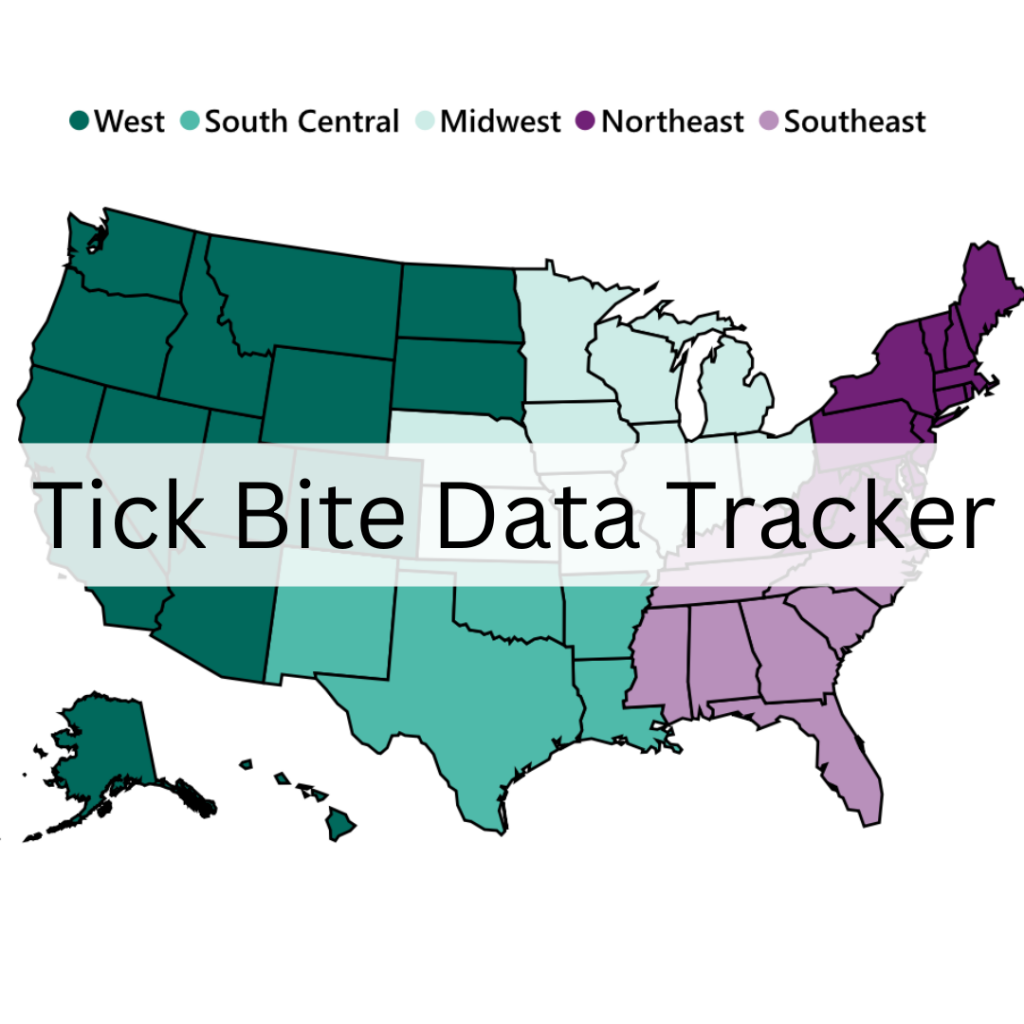
The changes include a new online tool called the Tick Bite Data Tracker.  It allows users to track and visualize tick-borne disease data in the United States, advancing our ability to raise awareness.

The new tool provides information on diseases transmitted by ticks such as Lyme disease, anaplasmosis, Rocky Mountain spotted fever, and ehrlichiosis.

The CDC webpage also gives information on the most common North American types of ticks and 16 known diseases transmitted by ticks such as babesiosis, Borrelia miyamotoi, Powassan virus, STARI, Colorado tick fever and more.

In addition, the CDC offers an updated page on Alpha-gal syndrome, an allergy to red meat and products derived from mammals. The condition is triggered by the bite of a tick.

National collaboration

The Tick Bite Data Tracker is part of the National Syndromic Surveillance Program (NSSP) which is a collaboration among the CDC, local health agencies, state health departments and private sector partners. The NSSP allows these partners to collect, share and analyze electronic healthcare data in near real-time as it is processed.

Because there is no medical diagnostic ICD code for “tick bite,” the emergency department visits for tick bites are identified by specific words used in the medical record. For example, “tick” or “tick” and “bite.”

The Tick Bite Data Tracker includes interactive maps, graphs and tables that allow users to explore the data in different ways. Users can view data on a national or state level, as well as by county or even zip code in some areas.

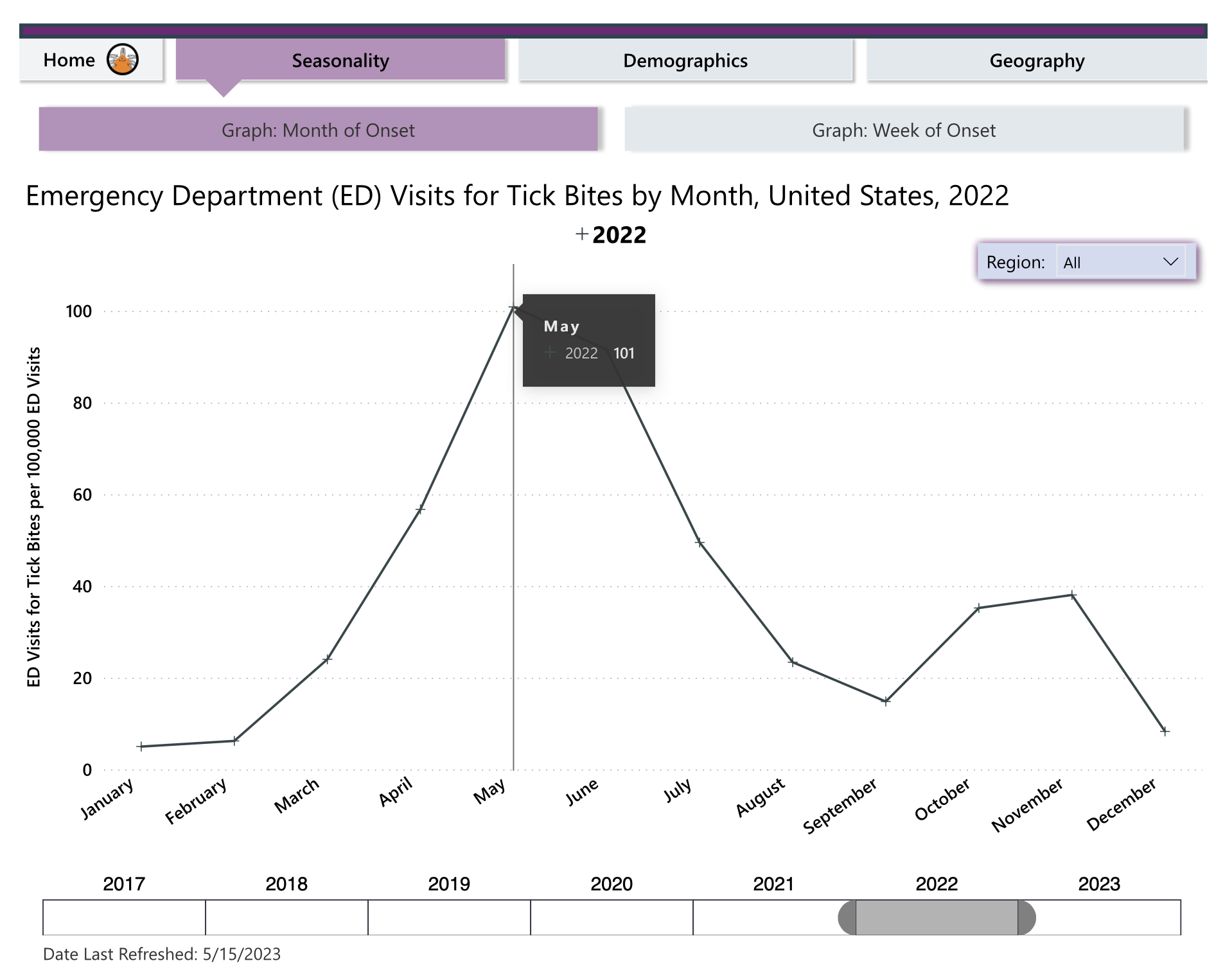
One of the most interesting aspects of this new site is the ability to track emergency department visits for tick bites by week and month. This eliminates the strict reporting criteria that adversely affects statistics in lower incidence states like Florida, Texas and California.

What we see on the Tick Bite Data Tracker is simply the number of persons per 100,000 with reported tick bites who sought care in an emergency room. The new data can indicate when tick bites are most common in a region, and unlike other CDC surveillance data, it is updated weekly, rather than annually.

Tick bites peak in Spring

You can clearly see in the graph below how tick bites peak in the spring in almost all regions of the United States.

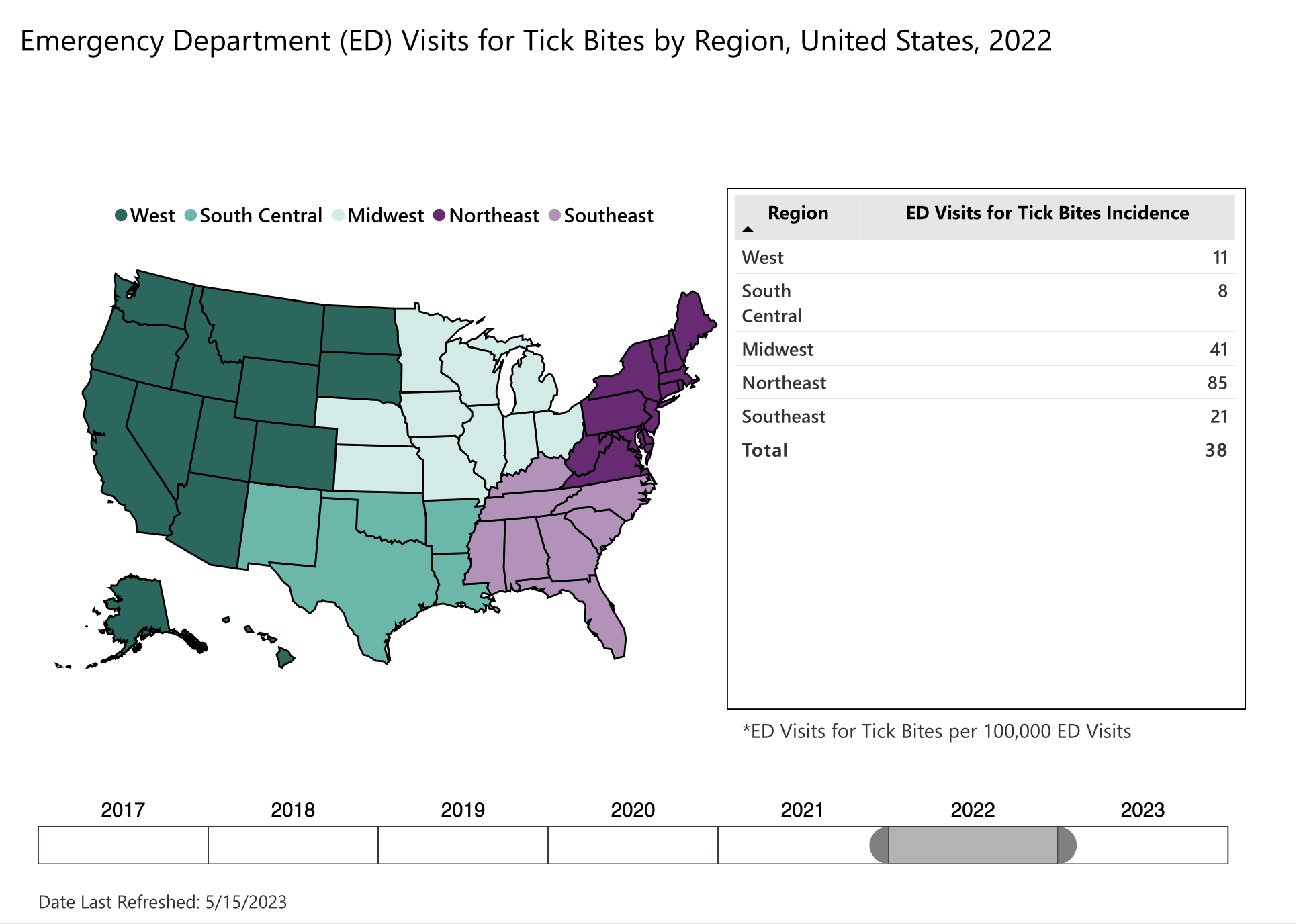
Unfortunately, the CDC lumps every state west of Nebraska as the “West.” Therefore, areas with higher incidence of tick bites, like California, are averaged with areas of lower incidence like Wyoming—giving an inaccurate picture.

In my opinion, at the very least, the CDC should have divided this huge region into the southwest and northwest to offer better representation of what is happening in those zones—but that’s another topic.

The site also points out several limitations of the tracker tool: “Results might not be generalizable to emergency departments that are not contributing data to the BioSense Platform. The keywords used to identify tick bite visits may under- or overestimate emergency department visits related to tick bites because of differences in coding, reporting, and availability of chief complaint text data between jurisdictions or over time. Finally, aggregated data by region might be less useful than state or local data.”

So essentially, you have to take this data for what it is: a slightly flawed tool that gives us a glimpse into what is happening in the tick-borne disease world.

Lyme Awareness Month is an opportunity to educate the public about the risks of Lyme disease and promote strategies for prevention and early detection. I hope you’ll use the Tick Bite Data Tracker, as well as additional information spread throughout the pages of our website to spread awareness.

LymeSci is written by Lonnie Marcum, a Licensed Physical Therapist and mother of a daughter with Lyme. She served two terms on a subcommittee of the federal Tick-Borne Disease Working Group. Follow her on Twitter: @LonnieRhea  Email her at: lmarcum@lymedisease.org.

___________________

**Comment**

A flawed tool that will  continued to be used against patients like the Iron Curtain.

For more:

CPAC Warns: Lyme Risk Higher Than Ever

https://www.lymedisease.org/capc-parasite-forecast-2023/

CAPC warns that Lyme disease risk is higher than ever

April 20, 2023

The nonprofit Companion Animal Parasite Council (CAPC) — the nation’s leading source on parasitic diseases that threaten the health of pets and people — is warning that the risk of Lyme disease is higher than ever.

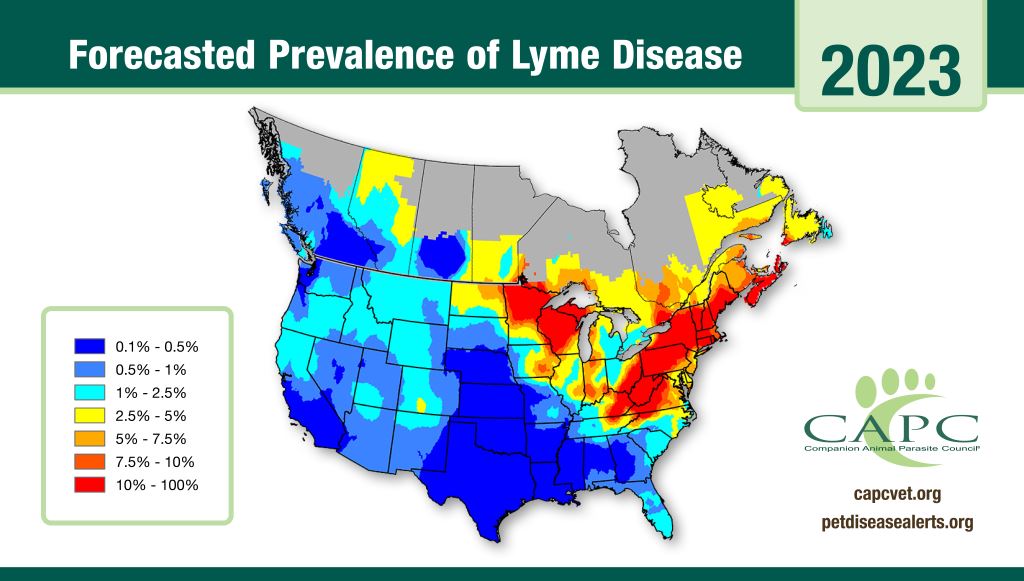
In its 2023 Parasite Forecast, CAPC documents how the blacklegged ticks that spread Lyme disease are expanding into new geographical areas. This increases the risk of Lyme disease outside of historically endemic places like the Northeast and Upper Midwest.

Parasite infections are real and can be harmful and even deadly to pets and people. Lyme disease is a predominant One Health issue, an approach calling for the collaborative efforts of multiple disciplines working to attain optimal health for animals, people and the environment.

11 years of forecasts

“Because of the zoonotic potential of pathogens like Lyme disease, we started providing annual forecasts eleven years ago to alert communities about the risks they pose to people and pets,” says Dr. Christopher Carpenter, DVM, and Chief Executive Officer of CAPC.

“Lyme disease, in particular, is an important One Health pathogen that occurs in both veterinary and human medical settings. CAPC’s Pet Parasite Forecast is critical to alerting pet owners, veterinarians and physicians to the risks this year and reinforcing CAPC’s recommendation that all pets need to be annually tested and protected year-round.”

In its 2023 annual forecast, CAPC reports the risk of acquiring Lyme disease in 2023 is elevated due to the expansive nature of the blacklegged tick vector (Ixodes scapularis).

This increase in Lyme prevalence can be attributed to land use, human population growth, urbanization, and changes in wildlife host density and location. Risks have also increased due to rehoming of pets, as well as changes in:

  • Distribution and prevalence of vector (tick) populations
  • Shifting wildlife populations and their infiltration into newly developed and reclaimed areas
  • Short- and long-term changes in climatic conditions
  • Changes in habitat due to natural or human-induced processes

Lyme Disease Forecast

For 2023, CAPC predicts Lyme disease is a high threat and continues to expand southward and westward outside of the historically high-risk areas in the Northeast and Upper Midwest, including Wisconsin, Minnesota and the upper peninsula of Michigan.
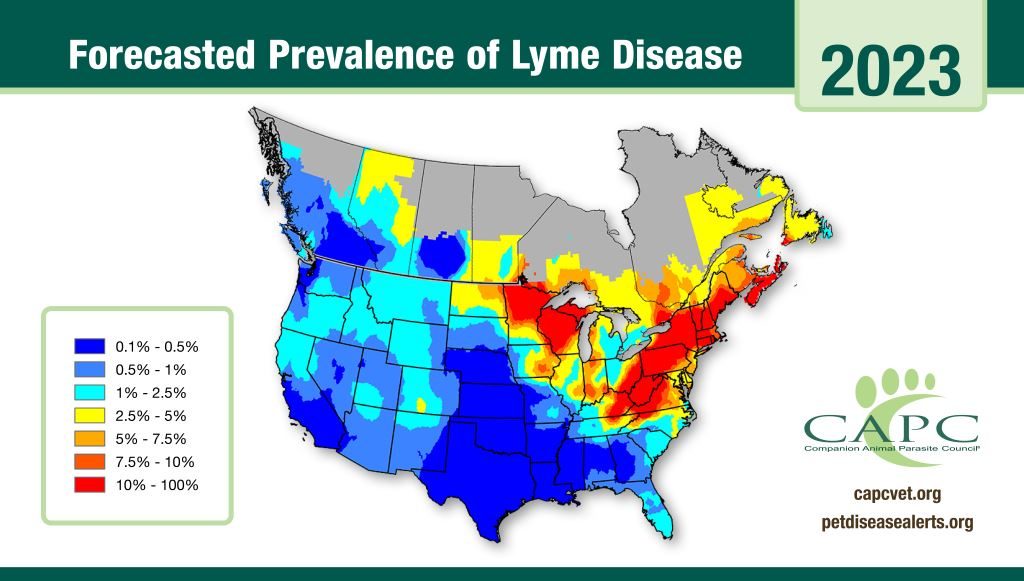
There is a higher-than-average seroprevalence predicted in northeastern Tennessee, western Michigan and Ohio, with high-risk “hot spots” expected in northwestern and southwestern Michigan, and southern and northeastern Ohio.

A higher-than-normal risk is also expected in North Dakota, northeastern South Dakota, Iowa, Illinois, and eastern Kentucky. The southward movement of Lyme is evident in the increasing risk in the Carolinas and Tennessee.

In addition, CAPC reports a northern expansion into Canada, including southern regions of Ontario, Quebec and Manitoba, as well as on New Brunswick and Nova Scotia, due to increased Lyme detection in Canadian dogs. Pets living in or traveling to these areas are considered at high risk.

Testing and Prevention Strategies

The 2023 forecasts – supported by ongoing research by parasitologists and statisticians in leading academic institutions across the United States – highlight areas where more should be done to lower the risk of companion animals’ exposure to disease vectors, such as ticks.

The foundation of these prevention strategies are recommendations that veterinarians and pet owners test their pets annually for disease and protect their pets with products that kill or repel ticks year-round.

A vaccination for Lyme disease should always be considered for pets in high-risk areas. Lyme disease, in particular, is an important One Health pathogen that impacts the health of both pets and people.

Veterinarians play an important role in preventing zoonotic disease in pets, as well as people, by implementing effective parasite control programs. In regions with historically high prevalence and in forecasted regions of increased risk, veterinarians should reinforce their recommendations of aggressive tick control.

CAPC One Health Study

Research conducted by CAPC underscores the value of CAPC’s prevalence maps and emphasizes the importance of a One Health approach to tick-borne diseases. In 2019, a CAPC study confirmed dogs safeguard humans serving as sentinels to alert humans where they are at greatest risk for tick-borne Lyme disease.

“With dogs being tested annually for exposure to the pathogen that causes Lyme disease, we were able to study over seven years of nationwide canine diagnostic data, representing more than 16 million data points — something difficult to achieve when studying ticks and the environment directly. And unlike the challenges with access to human medical records, anonymous veterinary data does not have these privacy concerns,” said Dr. Michael Yabsley, a CAPC Board Member and professor in the Department of Population Health, College of Veterinary Medicine and Warnell School of Forestry and Natural Resources at the University of Georgia.

Results from the study – “Quantifying the relationship between human Lyme disease and Borrelia burgdorferi exposure in domestic dogs” – published in the prestigious, peer-reviewed Geospatial Health quantified the relationship between incidences of tick exposure in domestic dogs to human Lyme disease. The model established in this research broke new ground by giving residents, travelers and health care providers a county-level map to help them identify areas of high Lyme risk across the country.

“By combining sophisticated statistical modeling with this invaluable canine data, we’re enabling veterinary medicine to benefit human medicine,” said Dr. Stella Self, assistant professor in the Department of Epidemiology and Biostatistics at University of South Carolina. “This research represents the first step on the long road to developing a forecast for human Lyme disease.”

30-Day Forecast Maps for Pet Owners

Pet owners who want to monitor the activity in their county throughout the year have access to 30-Day Parasite Forecast Maps at http://www.petdiseasealerts.org. These maps, developed exclusively by CAPC, provide a local forecast for every county in the continental United States on a monthly basis. This free service helps to remind pet owners of the continuous risk in their area and the importance of annual parasite testing and year-round protection.

“Because tick-borne diseases like Lyme are ever-changing, the 30-Day Pet Parasite forecasts at http://www.petdiseasealerts.org are an invaluable tool to protect both pets and people with monthly updates that show the risk for Lyme disease in their area,” said Dr. Rick Marrinson, Past President/Board Member for CAPC and owner of Longwood Veterinary Clinic in Longwood, Florida.

Other Parasite Spread in 2023

In addition to Lyme disease, CAPC forecasts that heartworm disease, which is transmitted by mosquitoes, and tick-borne diseases ehrlichiosis and anaplasmosis, continue to spread throughout the United States in 2023. Veterinarians and pet owners are encouraged to discuss how to effectively address the increased prevalence. Annual testing and year-round use of preventive products remains the best means of providing comprehensive parasite control and disease prevention.

How the Forecasts are Created

The annual CAPC Pet Parasite Forecasts are a collaborative effort between parasitologists and statisticians in leading academic institutions across the United States. These scientists engage in ongoing research and data interpretation to better understand and monitor vector-borne disease agent transmission and changing life cycles of parasites. The forecasts are based on many factors, including temperature, precipitation, and population density.

About the Companion Animal Parasite Council

The Companion Animal Parasite Council is an independent not-for-profit foundation comprised of parasitologists, veterinarians, as well as medical, public health and other professionals, who provide information for the optimal control of internal and external parasites that threaten the health of pets and people.

Formed in 2002, CAPC works to help veterinary professionals and pet owners develop the best practices in parasite management that protect pets from parasitic infections and reduce the risk of zoonotic parasite transmission.

SOURCE OF PRESS RELEASE: The Companion Animal Parasite Council 

3 Reasons Lyme/MSIDS Patients Remain Sick: Dormancy/Persisters, Biofilm, Co-Infection

https://parasitesandvectors.biomedcentral.com/articles/10.1186/s13071-019-3495-7

Metamorphoses of Lyme disease spirochetes: phenomenon of Borrelia persisters

Abstract

The survival of spirochetes from the Borrelia burgdorferi (sensu lato) complex in a hostile environment is achieved by the regulation of differential gene expression in response to changes in temperature, salts, nutrient content, acidity fluctuation, multiple host or vector dependent factors, and leads to the formation of dormant subpopulations of cells. From the other side, alterations in the level of gene expression in response to antibiotic pressure leads to the establishment of a persisters subpopulation. Both subpopulations represent the cells in different physiological states. “Dormancy” and “persistence” do share some similarities, e.g. both represent cells with low metabolic activity that can exist for extended periods without replication, both constitute populations with different gene expression profiles and both differ significantly from replicating forms of spirochetes. Persisters are elusive, present in low numbers, morphologically heterogeneous, multi-drug-tolerant cells that can change with the environment. The definition of “persisters” substituted the originally-used term “survivors”, referring to the small bacterial population of Staphylococcus that survived killing by penicillin. The phenomenon of persisters is present in almost all bacterial species; however, the reasons why Borrelia persisters form are poorly understood. Persisters can adopt varying sizes and shapes, changing from well-known forms to altered morphologies. They are capable of forming round bodies, L-form bacteria, microcolonies or biofilms-like aggregates, which remarkably change the response of Borrelia to hostile environments. Persisters remain viable despite aggressive antibiotic challenge and are able to reversibly convert into motile forms in a favorable growth environment. Persisters are present in significant numbers in biofilms, which has led to the explanation of biofilm tolerance to antibiotics. Considering that biofilms are associated with numerous chronic diseases through their resilient presence in the human body, it is not surprising that interest in persisting cells has consequently accelerated. Certain diseases caused by pathogenic bacteria (e.g. tuberculosis, syphilis or leprosy) are commonly chronic in nature and often recur despite antibiotic treatment. Three decades of basic and clinical research have not yet provided a definite answer to the question: is there a connection between persisting spirochetes and recurrence of Lyme disease in patients?

______________

https://www.ncbi.nlm.nih.gov/pmc/articles/PMC6287027/


Abstract

Lyme borreliosis (LB) is the most common tick-borne disease caused by the spirochete Borrelia burgdorferi in North America and Borrelia afzelii or Borrelia garinii in Europe and Asia, respectively. The infection affects multiple organ systems, including the skin, joints, and the nervous system. Lyme neuroborreliosis (LNB) is the most dangerous manifestation of Lyme disease, occurring in 10–15% of infected individuals. During the course of the infection, bacteria migrate through the host tissues altering the coagulation and fibrinolysis pathways and the immune response, reaching the central nervous system (CNS) within 2 weeks after the bite of an infected tick. The early treatment with oral antimicrobials is effective in the majority of patients with LNB. Nevertheless, persistent forms of LNB are relatively common, despite targeted antibiotic therapy. It has been observed that the antibiotic resistance and the reoccurrence of Lyme disease are associated with biofilm-like aggregates in B. burgdorferi, B. afzelii, and B. garinii, both in vitro and in vivo, allowing Borrelia spp. to resist to adverse environmental conditions. Indeed, the increased tolerance to antibiotics described in the persisting forms of Borrelia spp., is strongly reminiscent of biofilm growing bacteria, suggesting a possible role of biofilm aggregates in the development of the different manifestations of Lyme disease including LNB.

________________

https://www.fortunejournals.com/articles/serological-and-pcr-evidence-of-infection-in-105-patients-with-sppt.html

Serological and PCR evidence of Infection in 105 Patients with SPPT

Alexis Lacout1*, Marie Mas4, Michel Franck2, Véronique Perronne3, Julie Pajaud2, Pierre Yves Marcy5, Christian Perronne3

*Corresponding Author: Alexis Lacout, Centre de diagnostic ELSAN, Centre Médico–Chirurgical, 83 avenue Charles de Gaulle, 15000, Aurillac, France

Received: 11 December 2020; Accepted: 22 December 2020; Published: 05 January 2021

Citation: Alexis Lacout, Marie Mas, Michel Franck, Véronique Perronne, Julie Pajaud, Pierre Yves Marcy, Christian Perronne. Serological and PCR evidence of Infection in 105 Patients with SPPT. Archives of Microbiology & Immunology 5 (2021): 139-150.

Abstract

Introduction: The main aim of this study is to determine the nature of the exposure of patients presenting with polymorphic signs and symptoms to the parasite Babesia, through the study of serology. The secondary aim is to report the different serological or PCR results observed in these patients.

Material and methods: The following serologies were performed in all patients looking for: Babesia divergens, Borrelia, Bartonella, Coxiella burnetii, Anaplasma phagocytophilum. The following PCRs were performed looking for: Borrelia spp, Babesia spp, Bartonella (Bartonella spp, B. quintana, B. Henselae,) Coxiella spp, Anaplasma spp, Ehrlichia spp, Rickettsia spp, most often on several matrices (venous blood, capillary blood, urine and saliva).

Results: In this study, 105 patients were included, 62 females and 43 males, sex ratio F/M was 62/43 = 1.44; mean age was 45.5 year old (range; 5 years, 79 years old).

  • Of the 105 serologies for B. divergens, 41% were found to be positive.
  • Of the 104 serologies for Borrelia, 19.2% were found to be positive.
  • Of the 95 serologies for Anaplasma, 27.3% were found to be positive.

Borrelia spp, Babesia spp, Bartonella spp, Coxiella spp, Anaplasma spp, Ehrlichia spp, Rickettsia spp were found by using rtPCR.

Conclusion: Our study has shown that patients with SPPT/PTLDS, a syndrome close to fibromyalgia, could harbor several tick borne microorganisms. Microbiologic analyses should thus not be merely limited to Borrelia’s research alone.

______________

**Comment**

These relatively recent studies (within the past few years) reveal what Lyme literate doctors and their patients have been experiencing from the beginning.  They also reaffirm what many independent researchers have globally been writing about for years.  There are many other reasons patients remain ill as well but these three are biggies.

Yet, reality is best summed up by the following quote from the first study listed above:

Three decades of basic and clinical research have not yet provided a definite answer to the question: is there a connection between persisting spirochetes and recurrence of Lyme disease in patients?

Isn’t that sad?

The same, of course, can be said of biofilm and coinfections as well. Decades have gone by with no definitive answers because The Cabal doesn’t want the truth to be known. Why? Quite simple: a chronic, relapsing illness doesn’t fit their “vaccine” narrative which is the favored golden calf and cash cow of research institutions and our government, which have a cozy relationship with Big Pharma and Big Media.  This is quite convenient for all of them as they control all the messaging as well as threaten, censor, and ban doctors who dissent.

This has been blatantly exposed during the time of COVID but is nothing new.  Lymeland has been riddled with the exact same issues for 40 years.  Unfortunately, even well-meaning advocates and patients evidently can not see this and continue to demand more money and become giddy when they get it from the very agencies behind this debacle, who are incidentally profiting from it.

It’s a hot-mess for sure, but one thing is certain: we must stop playing into their hands by being ignorant or filled with “hopium,” a term I use to describe how hope can become a drug that stops you from thinking critically, logically, and honestly.

For more: