https://www.globallymealliance.org/blog/the-most-helpful-thing-in-my-lyme-journey

The article discusses the one thing that has helped me most in my Lyme journey.

Lyme warriors write to me every day to ask what helped me get better. Many of them have been suffering from persistent symptoms for months or years. They find inspiration reading about how well I’m doing, and hope I can give them the magic answer. Most ask, “What medication did you take?” I wish there was a magic answer I could give, but the fact is, no two cases of tick-borne illness are alike. What worked for me might not work for others, and my own protocol has changed many, many times over more than 15 years of treatment.

Because it doesn’t help to give out my ever-changing protocol, I have written about various other therapies and lifestyle changes that have worked in conjunction with medication to get my tick-borne illnesses into remission and keep them there. These include adjunct therapies like integrative manual therapy and neurofeedback, talk therapy, and an anti-inflammatory diet. I’ve learned to pace myself physically and cognitively, have set boundaries around my needs, and have reframed my thinking about living with a chronic illness. My wellness is a result of a complex interplay of many factors, changes, and techniques. I can’t point to any one of them as more helpful than another.

Support

Gala PR Image (15)But if I had to name the one thing that has been the most helpful in my Lyme journey, it would be support. Imagine what happens when someone you know is diagnosed with cancer. That person will suffer physically and emotionally, but they will not do it alone. Friends and family will start websites, fundraisers, and meal trains. They’ll drive the patient to appointments, sit with them afterwards, do their dishes, help with their kids, water their plants. They’ll send cards and flowers, and call often to check in. They will never say to the patient, “Aren’t you over that yet?” or, “Maybe you don’t really have cancer. Maybe it’s just all in your head.” The patient will be enveloped in support that will allow them to focus solely on getting well.

If that same person had Lyme disease instead of cancer, the response might be very different. Some Lyme warriors have excellent support networks, but too many are misunderstood by family, friends, and doctors alike. Not only do these patients have to fight to get well, but they also have to fight to be believed. They spend energy they don’t have trying to convince others of their suffering. They often don’t get the help they need, whether it’s running an errand, appealing an insurance denial, or just having a comfortable shoulder to cry on. Lyme patients need and deserve the same outpouring of support that patients with better-known and less-controversial illnesses count on.

When I first got sick with mono that slipped into chronic Epstein-Barr virus, I struggled to get a diagnosis. Two years later, I was also diagnosed with underlying tick-borne infections. I thought I finally had the magic answer—an infection that could be treated! Little did I know what I was up against. The subsequent years were an uphill battle not just for wellness, but for validation. I had to find the right medical support, and figure out who I could talk to that would stand beside me on the journey. I had to learn to brush off the naysayers and to trust that I knew my body best.

My friends supported me unconditionally, even if they didn’t fully understand my illnesses. They started email support chains for me. They came to visit. They called and sent cards. My family had a harder time understanding tick-borne illnesses, and chronic illness in general, at the beginning. They wondered when I would get well, how much longer it would take, whether I had something else entirely. It wasn’t easy for them to have me under their roof as an adult, and it wasn’t easy for any of us to communicate our feelings and needs. Over time, their Lyme literacy—and their understanding—has improved dramatically. We’ve all come to understand what it means for a family member to live with a chronic illness, which has made all the difference in my healing journey.

When I got COVID-19 in 2020, it didn’t take years for me to get the support and understanding I needed. Even with a (false) negative initial test, no one questioned whether I actually had COVID-19. No one chided me for being lazy. People checked in every day, and the whole world was on pause with me. What a difference that camaraderie made! With COVID-19, I was lonely because I was quarantined, but I never felt alone. With tick-borne illness, I wasn’t lonely because I was around other people, but I often felt alone.

I have learned first-hand that any challenge we face in life is easier with support. If you know someone who has Lyme disease, ask them, “How can I best support you?” Or, ask yourself, “If this friend had cancer or COVID-19, what would I do to support them?” The answer will likely make your friend’s journey a little easier.

Writer

Jennifer Crystal

Opinions expressed by contributors are their own. Jennifer Crystal is a writer and educator in Boston. Her work has appeared in local and national publications including Harvard Health Publishing and The Boston Globe. As a GLA columnist for over six years, her work on GLA.org has received mention in publications such as The New Yorker, weatherchannel.com, CQ Researcher, and ProHealth.com. Jennifer is a patient advocate who has dealt with chronic illness, including Lyme and other tick-borne infections. Her memoir about her medical journey is forthcoming. Contact her via email below.  Email: lymewarriorjennifercrystal@gmail.com

Go here for support groups:

https://danielcameronmd.com/can-lyme-disease-trigger-a-cascade-of-costly-unnecessary-tests/

Can Lyme disease trigger a cascade of costly, unnecessary tests?

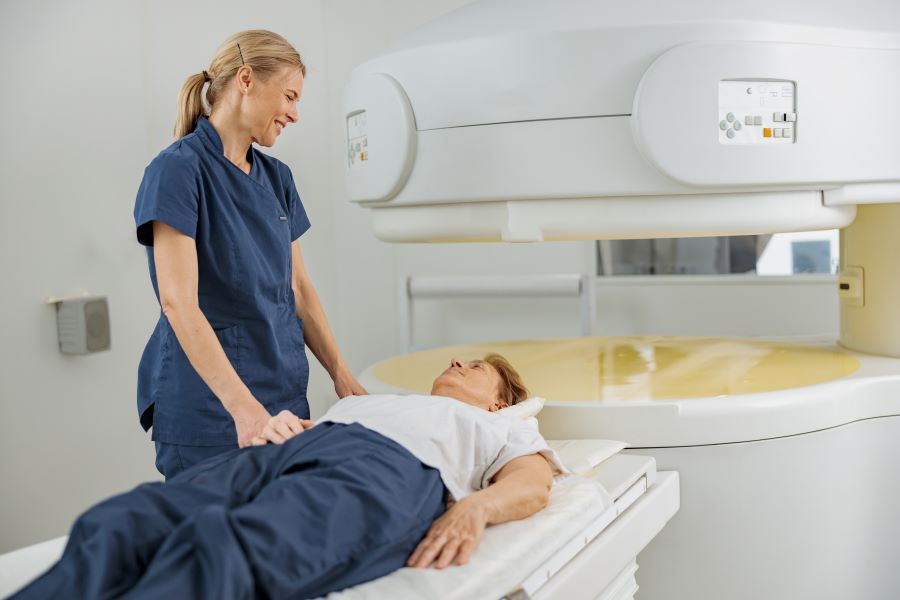
Lyme disease patient getting a costly tests including an MRI.
In an article published in JAMA Internal Medicine, Dr. Meredith Niess described a case where routine medical tests triggered a cascade of costly, unnecessary care.

Dr. Meredith Niess discussed the case in more detail in an NPR story.[1] A man was scheduled for hernia surgery. A preoperative X-ray was ordered despite the paucity of evidence of whether the X-ray was needed. The X-ray suggested a mass. The patient was worried about cancer.

Cancer was ruled out. “In fact, a follow-up CT scan showed a clean lung but picked up another suspicious “something” in the patient’s adrenal gland,” stated Neiss. The second CT scan was negative.

Niess used the case “as an example of what researchers call a “cascade of care” — a seemingly unstoppable series of medical tests or procedures.”

This cascade effect has been described before. “With regard to medical technology, the term refers to a chain of events initiated by an unnecessary test, an unexpected result, or patient or physician anxiety, which results in ill-advised tests or treatments that may cause avoidable adverse effects and/or morbidity,” wrote Deyo.[2]

Deyo cited an example of a cascade effect in his review from the professionals who coined the term.

Mold & Stein offered the story of a patient admitted to the hospital for elective repair of an inguinal hernia.[3] “He had a history of coronary disease with very mild arterial narrowing on a previous cardiac catheterization. Anxious about his cardiac status, the surgeons requested a preoperative cardiology consultation. Perhaps uncertain about his own clinical judgment, the cardiologist suggested obtaining an exercise tolerance test.

This was delayed for six hours while the patient waited outside the test room, during which time he became anxious, agitated, and angry, and had some mild chest discomfort. Because of the chest discomfort, the test was not done and the patient was transferred to a telemetry unit. There he became more anxious and agitated, was found to have some electrocardiogram changes, and received medications.

He underwent another cardiac catheterization, which actually showed slight improvement since his previous test. At that point, the hernia repair could not be performed because of a full operating room schedule, and the primary physician was left to try to reassure the patient that he was in no danger. The procedure had to be delayed for two weeks.

In this example, the chain of events seemed to be fueled by physician anxiety, and it snowballed with the addition of patient anxiety.”

Cascade of tests for Lyme disease patients

In some cases, Lyme disease may go undiagnosed and with its broad array of symptoms and presentations can trigger a cascade of costly, unnecessary tests.

Misdiagnosis and delayed diagnosis have been described in a large Lyme disease database.

“More than half (51%) reported that it took them more than three years to be diagnosed and roughly the same proportion (54%) saw five or more clinicians before diagnosis. These diagnostic delays occurred despite the fact that 45% of participants reported early symptoms of Lyme disease within days to weeks of exposure,” wrote Johnson et al. [4]

Others with recurrent Lyme disease and Lyme encephalopathy have waited an average of 2 years before receiving treatment.[5,6]

These delays can have life-long repercussions. Once the Borrelia burgdorferi (Bb) infection disseminates, symptoms can become more problematic and treatment more difficult.

References:
  1. When routine medical tests trigger a cascade of costly, unnecessary care. https://www.npr.org/sections/health-shots/2022/06/13/1104141886/cascade-of-care
  2. Deyo RA. Cascade effects of medical technology. Annu Rev Public Health. 2002;23:23-44. doi:10.1146/annurev.publhealth.23.092101.134534
  3. Mold JW, Stein HF. The cascade effect in the clinical care of patients. N Engl J Med. Feb 20 1986;314(8):512-4. doi:10.1056/NEJM198602203140809
  4. Johnson L, Shapiro M, Mankoff J. Removing the Mask of Average Treatment Effects in Chronic Lyme Disease Research Using Big Data and Subgroup Analysis. Healthcare (Basel). Oct 12 2018;6(4)doi:10.3390/healthcare6040124
  5. Fallon BA, Keilp JG, Corbera KM, et al. A randomized, placebo-controlled trial of repeated IV antibiotic therapy for Lyme encephalopathy. Neurology. Mar 25 2008;70(13):992-1003. doi:10.1212/01.WNL.0000284604.61160.2d
  6. Cameron DJ. Consequences of treatment delay in Lyme disease. J Eval Clin Pract. Jun 2007;13(3):470-2. doi:10.1111/j.1365-2753.2006.00734.x

Controlling Hurricane Ian?

**UPDATE**

To demonstrate how “climate change” is being used for political purposes, recently Biden claimed Hurricane Ian proves “climate change” despite an expert’s dismissal and a recent study stating otherwise, but truth be damned.  It’s all relative if it forwards the accepted narrative.  An astrophysicist weather expert has also come forward stating the climate has nothing to do with man and that climate “scientists” are on a “gravy train” to secure funds.  Another study demonstrates there’s no climate emergency, while another shows that coal fly ash, utilized in tropspheric aerosol geoengineering is the primary cause of stratospheric ozone depletion, not chlorofluorocarbons.

Is Our Weather Being Manipulated?

The following information is from this short 4 minute report by GeoengineeringWatch.org.

The use of jet aircraft spray to cause cloud seeding to alter a storm is part of a weather modification program known as Project Cirrus, which accomplished the first cloud seeding of a hurricane back in 1947. The list of weather modification patents is in the hundreds and continues to grow.

Weather modification is not new.

Normally using silver iodide, dry ice has also been used for seeding. This first historical seeding caused a reversal of a hurricane’s path, making landfall in Georgia causing local destruction.  Many blamed the seeding and the project was officially canceled, setting seeding research back more than a decade.

In 1962, the US military’s operation STORMFURY picked up where Project Cirrus left off.

During the 1960’s the US military continued to expand its weather warfare effort in Vietnam with project Operation Popeye.

The video shows President Lyndon B. Johnson giving a speech were he states:

“He who controls the weather controls the world.”

National weather service employees are tethered by an illegal, federal gag order so it’s all kept on the down and low.

The scheduled weather forecasting scripts are then passed all the way down to the local meteorologist level.
The official narrative must be controlled.

Is Hurricane Ian in Florida just a random act of nature or is it being manipulated by particulate sprays from jet aircraft and then controlled by radar facilities and microwave transmission towers?

One thing’s for certain, as more and more are waking up, pushing back, and acknowledging a Globalist Agenda which includes the “climate change” agenda, the war in Ukraine, spiraling electricity and gas prices, and food shortages, the globalists are cornered which means an “engineered” disaster is about to strike to manipulate the public by revamping fear to achieve its desired ends.

Don’t fall for it.

For more:

http://  Approx. 1 Min

Sept. 29, 2022

Dr Joseph Fraiman speaks to Mark Steyn after a report is published suggesting the Covid vaccine ‘caused one in 800 adverse events.’

‘Our public officials aren’t speaking about this. It’s their duty to be speaking about the findings in our study.’ ~ Dr. Fraiman
I highly recommend the documentary “Safe and Effective: A Second Opinion.”
____________________

Vaccine Failure Is Not a Reason to Celebrate!

Reporting on a new study, U.S. News & World Report this week published an article, “‘Breakthrough’ Infections After COVID Vaccine Can Help Prevent Future Illness,” which spins vaccine failure as a reason to celebrate.

Let’s pause and read that again: Breakthrough infections … after COVID-19 vaccine … can help prevent future illness.

If you get the disease the vaccine was supposed to prevent, it can help prevent you from getting the disease the vaccine was supposed to prevent … again.  (See link for article)

Is this supposed to be good news?
_____________________
**Comment**
This only makes sense in the Topsy-turvy world of the new normal.
It is clear that this article was written to placate the burgeoning demographic who got the shot but got infected anyway, and who are left remorsefully scratching their heads.
The author points out the steps to placate a questioning public:
  1. Don’t mention the misleading messaging throughout the pandemic
  2. Don’t mention any of the harm that was done
  3. Offer speculation as fact
  4. Don’t mention the unvaccinated
  5. Don’t mention that once you are “vaccinated” you are forever “vaccinated”. There’s no going back.
Again, just repeat “It’s safe and effective”, even though the CDC is hiding data.
For more:

https://theconversation.com/la-crosse-virus-is-the-second-most-common-virus-in-the-us-spread-by-mosquitoes-and-can-cause-severe-neurological-damage-in-rare-cases

La Crosse Virus is the Second-Most Common Virus in the US Spread by Mosquitoes – and Can Cause Severe Neurological Damage in Rare Cases

By Rebecca Trout Fryxell, Assoc, Professor of Medical and Veterinary Entomology, University of Tennessee

Sept. 9, 2022

For the Laudick family of Greensburg, Indiana, life forever changed on Aug. 5, 2013. That was the day 4-year-old Leah Laudick told her mom, Shelly, that she had a bad headache.

Two days later, Leah was hospitalized nearby with worsening headaches and a slightly elevated white blood cell count. She slept for most of the day and by Aug. 9 was largely unresponsive.

That day, during her transfer to Peyton Manning Children’s Hospital in Indianapolis, Leah had her first of several seizures. Doctors were unable to identify her illness – tests for diseases like meningitis, Rocky Mountain spotted fever and herpes simplex all came back negative.

One day later, on Aug. 10, Leah’s brain activity stopped. That evening she passed away in the arms of her grieving parents.  (See link for article)

_________________

**Comment**

A Bill Gates funded factory breeds 30 million mosquitoes to release in 11 countries and genetically modified mosquitoes are now vaccinating humans.

What could possibly go wrong?

Mainstream media & medicine will not connect the fact that millions of mosquitoes are being released all over the world with subsequent changes in ecology, disease transmission, human/animal health, the fact DARPA is involved and where “toxicity is health, and the old crazy is the new normal.”  BTW: it’s happening in Lymeland too.

Just repeat “It’s safe and effective.”

SUMMARY:

  • The only reason we know about this case is due to Leah’s father emailing the author (an associate professor of entomology) asking how he could help with her work and agreeing to tell their story.
  • The family learned a few months after her death that La Crosse virus was the culprit.
  • While West Nile Virus makes up more than 90% of annual viral infections from mosquitoes or ticks, La Crosse is the next most prevalent virus causing 2% of mosqui or tickborne viral infections a year which extrapolates out to 50-150 cases per year.
  • Historically most cases occurred in the upper Midwest but the majority now occur in the southern Appalachia region.
  • Nobody knows why but there’s plenty of trollop about the climate
  • It is carried and transmitted primarily by the eastern tree-hole mosquito, Aedes triseriatus, a native species found throughout most of the Eastern U.S. This mosquito’s preferred habitat is places with obvious tree holes for female mosquitoes to deposit their eggs, such as hardwood forests.
  • It may also be transmitted by two exotic and invasive mosquito species: the tiger mosquito, Aedes albopictus, and the bush mosquito, Aedes japonicus.
  • It’s hard to diagnose because it looks similarly to the flu.
  • The only way to test for it is to send it to the completely and utterly corrupt CDC, which monopolizes testing and maligns any other labs or tests.
  • Cases tend to cluster in local communities so those successfully diagnosed can tell local doctors and officials it is present in their area.
  • Symptoms start with fever, fatigue, vomiting, and headache that lasts nearly 2 weeks.  Most recover; however, like West Nile, it is neuroinvasive and the immunocompromised can have severe cases which are typically discovered in the hospital after experiencing a seizure, coma, partial paralysis of one side, or an altered mental state.  Some experience long term neurological damage and in rare cases, death.
  • Similarly to Lyme/MSIDS, the best antidote is to prevent the bite in the first place:
    • get rid of outdoor objects that catch and contain water to reduce mosquito breeding
    • avoid mosquitoes by staying inside during peak hours in the early evening
    • use repellents like mosquito coils, and bug spray
    • wear light clothing