Archive for the ‘Testing’ Category

New Discovery May Explain Treatment-Resistance in Chronic Lyme Disease

https://biologixcenter.com/uncategorized/new-discovery-may-explain-treatment-resistance-in-chronic-lyme-disaease/

Lyme-lab-test-tube

New Discovery May Explain Treatment-Resistance in Chronic Lyme Disease

By

New, more sensitive, and precise testing reveals a troubling finding in the treatment of Lyme disease. As this study reveals, many doctors may often be prescribing the incorrect antibiotics, due to the narrow focus on B. burgdorferi. In twenty-seven people from sixteen states, 96% were found to have other Borrelia strains than B. burgdorferi, many of which cannot be treated with the same antibiotics.

Limitations of Conventional Lyme Testing

Treatment-resistant, chronic and apparent relapsing Lyme disease (borreliosis), with its oft associated co-infections which worsen the illness, though once debated, is now well-documented in the scientific literature. Chronic Lyme disease has reached the true status of a global pandemic, though largely unappreciated by the media and mainstream medicine.

Conventional iagnostic lab testing, such as Western Blot, ELISA, and Conventional Bacteria PCR testing for the dectectin of Borrelia spirochete of Lyme disease has had limited success. Most types of conventional tests having high false-negative results, with as little as 30% sensitivity, meaning as much as 70% of people tested, actually have the infection, but never get treatment due to their lab test coming back negative. These people fall between the cracks of medicine as their body and lives fall apart as doctors do not know what is wrong with them, assuming the tests were correct. (See Fig. 1)
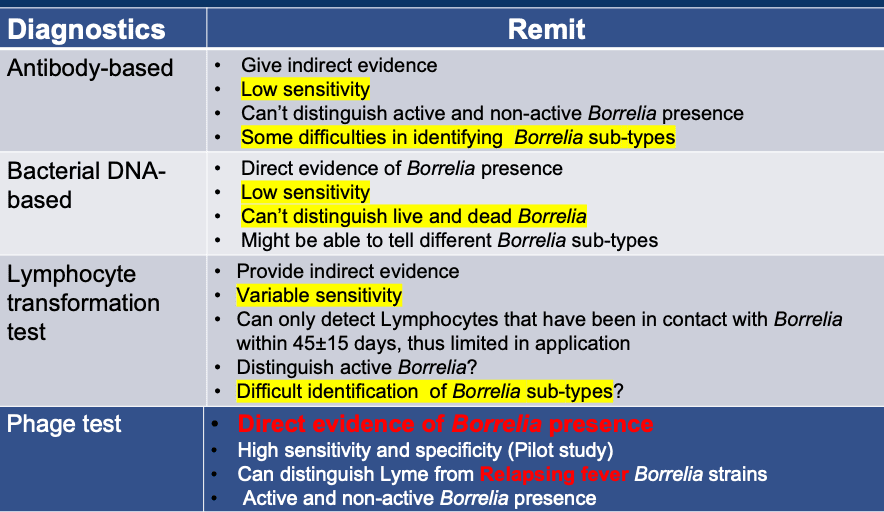
image001-e1600465037956

Fig. 1

The painful reality is that conventional labs which are not focused solely on testing for Lyme disease, often are not as diligent in their testing, not getting paid more to find the bacteria or not, and seeming to forget that there is a real and desperate person at the other end of the blood test. Unfortunately beyond this, the medico-political environment regarding the existence of chronic Lyme disease also gets in the way of getting many, if not most conventional physicians to order the test, even at the pleading of their patients.

New Testing Pinpoints Acute and Chronic Infections

In 2019 a new, highly sensitive test (See Fig. 1 Phage Test) was developed by the University of Leicester, in England, and performed by the R.E.D Laboratory, for the diagnosis of Borrelia infections. This test is so sensitive and the testing process so rigorous, that the test is nearing 100% accurate, at >80% sensitivity to detecting not just the presence of Borrelia burgdorferi, but all of the 20 types of Borrelia that can cause tick-borne and vector-borne illness. This test is call the Phelix Borrelia-Phage Test, and is such a breath of fresh air in that the test results come back not with encrypted, hard to determine bands, as in Lyme Western Blot tests, but instead clearly state, Positive or Negative and the exact type of Borrelia infection or multiple types of Borrelia strains that you have, without needing your doctor to interpret the results. Doctors in the United States or any other country can order this test.

Testing from Many Regions and States in the U.S.

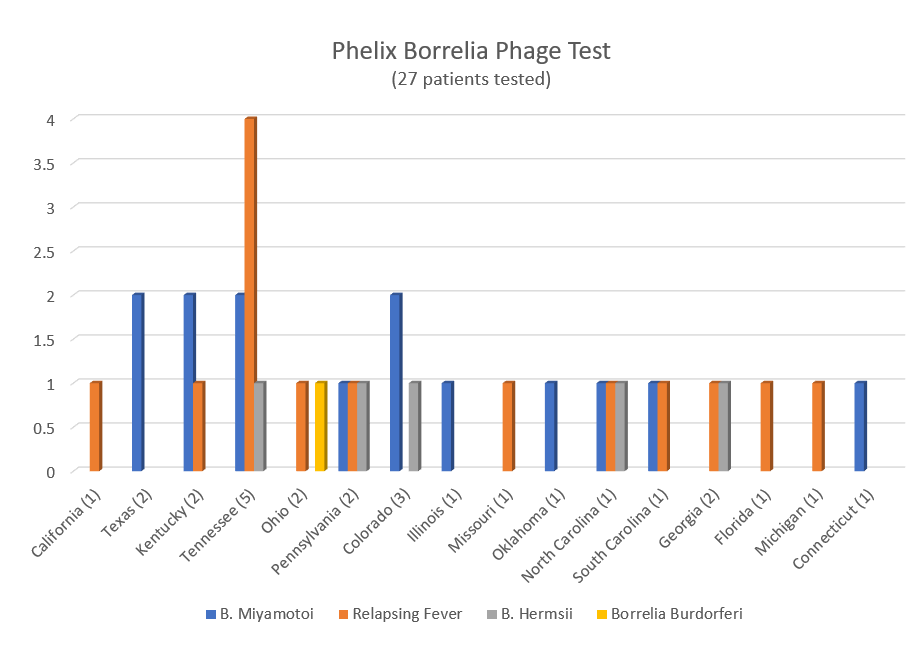
The world is a much smaller place than many appreciate. It is commonly, although mistakenly thought that some of the twenty Borrelia bacteria strains are only in Europe, or only in Asia, or only in certain regions of the U.S. As this study demonstrates, only one person had B. burgdorferi in the group of 27 people in this study.

Armed with the newest and most sensitive Borrelia test, we undertook a retrospective study of 27 people from 16 different states (see Fig. 2) to achieve a wide view of what types of Borrelia infections people actually had in the different parts of the country. The results were unexpected, as the graphs and figures in this article demonstrate. The pre-study expectation was that people with chronic Lyme disease, especially in the U.S., would be infected with Borrelia burgdorferi.
Phelix-test-results-by-state-graph

Fig. 2

Results of 27 People with Positive Borrelia-Phage Tests

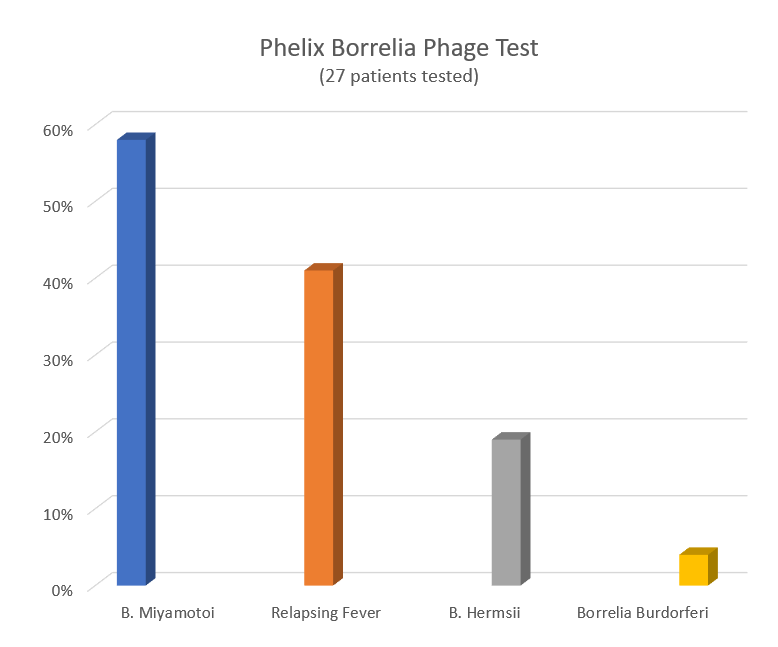
As seen in Fig. 3 below, many people had one or multiple strains of Borrelia. The vast majority, 52% (14 people) had Borrelia miyamotoi, followed by 42% (11 people) having Borrelia strains that fall under the category of Relapsing Fever group. Relapsing Fever group is illness from one or more of the following strains of Borrelia, B. hermsii, B. recurrentis, B. crocidurae, B. duttonii. After the Relapsing Fever group, 19% (5 people) had Borrelia hermsii, and only one person in the group had B. burgdorferi.
Phelix-test-results-graph

Fig. 3

Conclusion

The implications of this review are that Borrelia burgdorferi is likely not the primary culprit in many cases of chronic Lyme disease in the United States, as was previously thought. The other huge takeaway from this study is that many if not most people are not receiving the correct treatment, since the antibiotics typically used for B. burgdorferi are not the same as those used for other strains of Borrelia.

The specific strain of Borrelia bacteria cannot reliably be determined using bands on a Western Blot test. Any lab test that is focusing only upon B. burgdorferi, will miss the true diagnosis of other strains of Borrelia.

The Phelix Borrelia-Phage test is just one of a new breed of phage-based lab tests that will likely become the gold-standard of all bacterial testing. It would be advisable for anyone who suspects that they have or had Lyme disease, yet have either been told they are negative, or who have lingering symptoms to be tested again with the Phelix test.

Our view of what symptoms are typical of classic Lyme disease, based upon the B. burgdorferi model, needs to be expanded to include the symptoms that are unique to the other strains of Borrelia, as their presentation can be quite different, as well as their vectors not being always a tick.

Phage-based Testing and Now Phage-based, Strain-Specific Treatment

Treatments for B. burgdorferi, should be expanded to include the actual type or multiple types of Borrelia actually infecting a person. Although antibiotics, which can be likened to carpet-bombing, killing many bad bacteria, the Borrelia always causes the bad bacteria to mutate. This means the all types of bacteria lose some of their aspects that make it vulnerable to the antibiotics, not to mention the fact that antibiotics are notorious damaging to irreparably upset the populations of the friendly flora (microbiome) of the body, and cause prolonged and severe suffering through Jarische-Herxheimer reactions (Herx). A new Borrelia-phage-based targeted treatment has been developed that has been documented by repeated Phelix Borrelia-Phage testing, to rapidly eliminate only the types of Borrelia a person has been found positive, with no harm to the body, with minimal Herx reactions, and no harm to good bacteria.

Ruling out False-Positives and False-Negatives with Phelix Borrelia-Phage Testing

The Phelix Borrelia-Phage test is the premier, newest, most sensitive Borrelia lab test available. The Phelix test is statistically the most accurate test, as each blood sample undergoes quadruplicate real-time PCR tests for 3 different targets (B. burgdorferi sl, B. miyamotoi, Relapsing fever) for a total of 12 assessments. All positive-like samples are submitted to confirmatory sequencing to rule out false positive results. Before the Phage real-time PCRs, each sample is submitted to 2 rounds of QC to rule out false-negative results that would relate to the technical flaws: (i) to assess the quality of extracted DNA by performing low cycles actin PCR, and (ii) to assess the absence of PCR inhibitors by doing a real-time PCR for IAC (internal amplification control).

Ongoing Development of INPT at the Biologix Center

INPT was developed by Phagen Corp. and is being used at the Biologix Center for Optimum Health, as a part of an IRB study, to go beyond Borrelia and target any microbial issue, including all of the co-infections associated with Lyme disease, as well as Candida sp., mold, and parasite infections, however at this time the only lab test for detecting bacteria-specific phages is for Borrelia strains.

The future of INPT includes intravenous and injectable forms of application, in addition to the oral medication, through doctors only. INPT is not projected to be sold directly to the public at this time.

To Get Treatment:

If you would like to participate in our one to two week INPT programs please contact us at www.biologixcenter.com/get-treatment/. Financial assistance is available for those with chronic illness of any type, who desire treatment at Biologix Center and are struggling financially.

A more detailed report of these findings are presently being edited for publication in peer-reviewed article submission.

Bartonella Research Collaboration

The Biologix Center is collaborating with researchers who are working to develop phage lab tests for Bartonella and other types of microbes. The Phelix Bartonella-Phage Test is hoped to be offered before the end of 2020. If you have been diagnosed with Bartonella and would like to contribute a blood sample for the development of this new test, please let us know. Offer available only to patients of the Biologix Center who have been pre-qualified by our testing.

To learn more about Bacteriophages and INPT please click on the hyperlink.

*INPT is a patent-pending innovation developed by Phagen Corp, and is being researched at the Biologix Center for Optimum Health, in Franklin, Tennessee. A patient-funded, Retrospective Registry IRB is in place to publish peer-reviewed articles as this clinical work progresses. Approximately 98% of funds go to support the ongoing research.

There are no financial or academic conflicts to be reported between Biologix Center for Optimum Health and RED Laboratories.

_____________________

For more:  https://madisonarealymesupportgroup.com/2020/11/30/neglected-infections-gastrointestinal-issues-in-patients-with-late-vector-borne-infections/  The Borrelia-phage test is discussed within this link as well as the research showing:

  • Among positive ticks, 60% were for B. miyamotoi.
  • Testing on over 2,000 humans (mainly late stage/chronic patients) showed 30% negative results and 70% positive, among which over 60% indicated the presence of specific Borrelia miyamotoi phages.
It appears Borrelia Miyamotoi is far more prevalent than thought, and is yet another example of something our public ‘authorities’ have labeled ‘rare’ that isn’t.


Ten Million Screened Post-Lockdown in Wuhan. Prevalence of COVID-19 Very Low & No Evidence of Asymptomatic Transmission to Close Contacts

https://www.nature.com/articles/s41467-020-19802-w

Open Access

Published:

Post-lockdown SARS-CoV-2 nucleic acid screening in nearly ten million residents of Wuhan, China

Nature Communications volume 11, Article number: 5917 (2020)

Abstract

Stringent COVID-19 control measures were imposed in Wuhan between January 23 and April 8, 2020. Estimates of the prevalence of infection following the release of restrictions could inform post-lockdown pandemic management. Here, we describe a city-wide SARS-CoV-2 nucleic acid screening programme between May 14 and June 1, 2020 in Wuhan. All city residents aged six years or older were eligible and 9,899,828 (92.9%) participated. No new symptomatic cases and 300 asymptomatic cases (detection rate 0.303/10,000, 95% CI 0.270–0.339/10,000) were identified. There were no positive tests amongst 1,174 close contacts of asymptomatic cases. 107 of 34,424 previously recovered COVID-19 patients tested positive again (re-positive rate 0.31%, 95% CI 0.423–0.574%). The prevalence of SARS-CoV-2 infection in Wuhan was therefore very low five to eight weeks after the end of lockdown.

Excerpts:

Virus cultures were negative for all asymptomatic positive and repositive cases, indicating no “viable virus” in positive cases detected in this study.

The citywide nucleic acid screening of SARS-CoV-2 infection in Wuhan recruited nearly 10 million people, and found no newly confirmed cases with COVID-19. The detection rate of asymptomatic positive cases was very low, and there was no evidence of transmission from asymptomatic positive persons to traced close contacts. There were no asymptomatic positive cases in 96.4% of the residential communities.

Previous studies have shown that asymptomatic individuals infected with SARS-CoV-2 virus were infectious3, and might subsequently become symptomatic4. Compared with symptomatic patients, asymptomatic infected persons generally have low quantity of viral loads and a short duration of viral shedding, which decrease the transmission risk of SARS-CoV-25. In the present study, virus culture was carried out on samples from asymptomatic positive cases, and found no viable SARS-CoV-2 virus. All close contacts of the asymptomatic positive cases tested negative, indicating that the asymptomatic positive cases detected in this study were unlikely to be infectious.

_______________________

For more:  

New IDSA Guidelines for Prevention, Diagnosis, and Treatment of Lyme Disease

https://www.newswise.com/articles/idsa-aan-and-acr-release-guidelines-for-prevention-diagnosis-and-treatment-of-lyme-disease

IDSA, AAN, and ACR Release Guidelines for Prevention, Diagnosis, and Treatment of Lyme Disease

Newswise — New evidence-based clinical practice guidelines for the prevention, diagnosis, and treatment of Lyme disease have been developed by a multidisciplinary panel led by the Infectious Diseases Society of America, the American Academy of Neurology, and the American College of Rheumatology. Representatives from an additional 12 medical specialties and patients also served on the panel.

The guidelines provide practical recommendations for clinicians treating patients with Lyme disease, including, but not limited to, primary care physicians, infectious diseases specialists, emergency physicians, internists, pediatricians, family physicians, neurologists, rheumatologists, cardiologists, and dermatologists.

These recommendations aim to serve as a meaningful resource for the safe, effective, evidence-based care of people with Lyme disease. They address clinical questions related to the prevention, diagnosis, and treatment of Lyme disease; complications from neurologic, cardiac, and rheumatic symptoms; disease expression commonly seen in Eurasia; and complications from coinfection with other tick-borne pathogens.

The guidelines include 43 recommendations related to diagnostic testing, including testing scenarios (such as for certain neurologic, psychologic, behavioral, cardiac, and rheumatologic syndromes); detailed recommendations about Lyme carditis; and a discussion of “chronic Lyme disease.”

Among the diagnostic testing recommendations, the guidelines recommend clinical diagnosis without laboratory testing for people with a skin rash characteristic of early Lyme disease. For people with other signs of Lyme disease, such as swollen joints or meningitis, the guidelines recommend antibody testing.

Among the treatment recommendations, the guidelines recommend oral antibiotic therapy for most patients with Lyme disease. The recommended duration of therapy is 10 to 14 days for early Lyme disease, 14 days for Lyme carditis, 14 to 21 days for neurologic Lyme disease, and 28 days for late Lyme arthritis. Retreatment may be indicated for individuals with arthritis who have failed a first course of treatment.

The recommendations are grounded in a rigorous, systematic review of available evidence surrounding prevention, diagnosis and treatment of the disease. The panel adhered to the Grading of Recommendations Assessment, Development and Evaluation (GRADE) approach to assess the certainty of the evidence and strength of recommendations. The guidelines are voluntary and it is up to clinicians to determine which treatments are best for individual patient scenarios. 

Each of the three sponsoring organizations elected a co-chair to lead the guideline panel. A fourth co-chair was selected for their expertise in guideline methodology. A total of 36 panelists comprised the full panel, and the panel also included three patient representatives and one health care consumer representative.

About 30,000 cases of Lyme disease are reported annually, but the Centers for Disease Control and Prevention estimates there are more than 300,000 cases in the United States each year.

About IDSA

The Infectious Diseases Society of America is a community of over 12,000 physicians, scientists, and public health experts who specialize in infectious diseases. Its purpose is to improve the health of individuals, communities, and society by promoting excellence in patient care, education, research, public health, and prevention relating to infectious diseases. Learn more at https://www.idsociety.org/.

About AAN

The American Academy of Neurology is the world’s largest association of neurologists and neuroscience professionals, with more than 36,000 members. The AAN is dedicated to promoting the highest quality patient-centered neurologic care. Learn more at https://www.aan.com/.

About ACR

The American College of Rheumatology (ACR) is an international medical society representing over 7,700 rheumatologists and rheumatology health professionals with a mission to empower rheumatology professionals to excel in their specialty. In doing so, the ACR offers education, research, advocacy, and practice management support to help its members continue their innovative work and provide quality patient care. Learn more at https://www.rheumatology.org/

Paper here:

https://academic.oup.com/cid/advance-article/doi/10.1093/cid/ciaa1215/6010652

___________________

**Comment**

For those of you new to the world of tick-borne illness, please read:  https://madisonarealymesupportgroup.com/2020/09/25/why-should-we-care-about-lyme-disease-a-colorful-tale-of-government-conflicts-of-interest-probable-bioweaponization-and-pathogen-complexity/  This article will fill you in on the ugly, sordid back-story of Lyme/MSIDS.  It will educate you on the polarization within the medical community and that your best help will come from Lyme literate doctors trained by ILADS.  They appreciate the complexity of this illness and that it takes numerous anti-microbials for a longer period of time than what the IDSA/CDC state.  

For ILADS 2014 Guidelines:  https://www.tandfonline.com/doi/full/10.1586/14787210.2014.940900

ILADS Lyme 101 Series:  https://www.ilads.org/research-literature/lyme-101-series-at-iladef/

ILADS Basics for Providers:  https://www.ilads.org/research-literature/lyme-disease-basics-for-providers/

https://madisonarealymesupportgroup.com/category/lyme-disease-treatment/  Within this link is a link that leads you to an article in Antibiotics on : “Chronic Lyme Disease: An Evidence-Based Definition by the ILADS Working Group“.  It also includes an article utilizing numerous Lyme literate doctors’ clinical experience with treatment.


Understanding Borrelia: Symptoms, Testing & Treatment for the Primary Lyme Bacteria

https://rawlsmd.com/health-articles/understanding-borrelia-symptoms-testing-treatment-for-the-primary-lyme-bacteria

Understanding Borrelia: Symptoms, Testing & Treatment for the Primary Lyme Bacteria

Understanding Borrelia: Symptoms, Testing & Treatment for the Primary Lyme Bacteria

by Dr. Bill Rawls
Posted 11/25/2020

In 1975, a mysterious illness causing arthritis in children showed up in Lyme, Connecticut and adjacent communities in the United States. It might have flown under the radar if not for one significant detail: A cluster of people (39 children and 12 adults), all bitten by ticks, also suddenly became ill simultaneously. Incidentally, it was at a time when more and more people were moving out of cities and into the suburbs to build homes in the tick-filled wooded countryside.

The illness, characterized by arthritis and an unusual rash around the tick bite, was first thought to originate from a viral agent. The real offender wouldn’t enter the spotlight until 1981, when a researcher named Dr. Willy Burgdorfer noticed that the symptoms of this new illness had striking similarities to a tick-borne condition long recognized in Europe called erythema migrans (EM), named for the associated rash migrating from a tick bite. Dr. Burgdorfer and his colleagues isolated the microbial culprit, a corkscrew-like organism (called a spirochete), from the blood of the victims, and a new pathogen rose to the forefront.

The microbe was named Borrelia burgdorferi (after Dr. Burgdorfer), and the illness was aptly termed Lyme disease after its place of origin. Once people became aware of the new microbe and the illness it caused, cases started popping up all over New England and beyond. Lyme disease seemed to be the newest plague.

In actuality, however, for more than 100 years, physicians in both North America and Europe had long-recorded illness associated with a migrating rash surrounding tick bites. But because they lacked a Lyme disease vaccine and effective treatment options, and because the illness was debilitating but not life-threatening, tick-borne diseases never garnered much attention.

Unfortunately, not much has changed since then in the medical community. Though Lyme is the most common vector-borne disease in the U.S., it’s still difficult to define and difficult to treat. It’s rarely life-threatening, though. Thus, many doctors today turn a blind eye to it. At the heart of this dilemma is a fundamental lack of understanding of the true nature of Borrelia burgdorferi.

3d illustration of red colored lyme disease pathogens on red underground

What has changed, however, is public awareness. Many people not only know about Lyme disease, but there is more public interest in it than ever before. This is largely due to vigorous advocacy efforts of patients, organizations, and celebrities openly sharing their stories about navigating the illness.

Borrelia burgdorferi is a stealth microbe that insidiously makes people chronically miserable, often for a lifetime. People no longer accept that they have to live with a chronic debilitating illness — rightfully, they want solutions.

Here, we’ll take a closer look at this covert pathogen, the symptoms of Lyme disease, testing and diagnoses, and solutions for overcoming it and restoring your health.

Symptoms Associated with Borrelia

Lyme disease symptoms will differ from one person to another. Some people may hardly experience any symptoms, while others become severely ill or have persistent, debilitating symptoms.

Despite the politicized and controversial nature of Lyme, there is one thing nearly everyone can agree on: The earlier you catch the illness, the better the chances for a successful outcome. If it goes untreated due to such factors as misdiagnosis or delayed diagnosis, you could be in for an uphill battle to regain your health.

Acute (Early-Stage) Lyme Disease

Symptoms of Acute Lyme Disease

One of the most well-known of the early signs and symptoms of Lyme disease is the classic “bull’s-eye” rash (erythema migrans) that appears several days, or sometimes weeks, after getting a tick bite. For the bull’s-eye rash, redness extends outward from the tick bite with an outer, more prominent red ring.

bulls eye rash on mans arm

Although the bull’s-eye rash has long been considered definitive proof of Lyme disease and more accurate than laboratory blood tests, even the rash may not be absolute. Only half to a third of people with Lyme disease will get a classic-looking rash, and only 10% of reported bull’s-eye rashes are associated with the presence of borrelia in the blood.

Other acute Lyme disease symptoms include:

  • Fatigue or tiredness
  • Chills
  • Headache
  • Neck stiffness
  • Muscle aches
  • Low-grade fever
  • Cardiac symptoms such as chest pain, shortness of breath, and feeling faint, which can be indicative of Lyme carditis, a serious heart manifestation of the disease

Note: A high fever and swollen lymph nodes generally indicate a coinfection with another microbe is present as well.

Having a history of tick bites, along with the bull’s-eye rash and other Lyme disease symptoms, is the most reliable way to diagnose infection with borrelia. If it looks like a duck and walks like a duck, it probably is a duck. However, even this type of diagnosis is far from absolute.

Chronic (Late-Stage) Lyme Disease

Chronic Lyme disease is rarely fatal, but it can make you miserable for a lifetime. Typically, people with chronic Lyme disease look normal on the outside. Routine screening labs at the doctor’s office often come back as normal, which can be extremely frustrating for patients because they are often discounted as not being ill.

Inside, however, deep in tissues, a chronic war is going on between a hidden microbe (or microbes) and the person’s immune system. This results in a broad spectrum of seemingly unrelated symptoms.

Symptoms of Chronic Lyme Disease

When Lyme disease becomes late-stage, persistent, or chronic, a different set of symptoms may emerge from the initial onset of the infection. These symptoms can include:

  • Tooth pain
  • Chronic infection
  • Chronic fatigue
  • Chronic pain
  • Migrating arthritis or joint pain
  • Muscle pain
  • Chronic flu-like symptoms
  • Headache
  • Neck stiffness and creaking
  • Bell’s palsy (paralysis or weakness in the facial muscles of one side)
  • Brain fog or loss of cognitive function
  • Heightened sensitivity and agitation to noise and sound
  • Ringing in the ears
  • Sleep disorders or trouble sleeping
  • Visual changes or blurry vision
  • “Floaters” in vision and eye discomfort
  • Dizziness and instability
  • Muscle twitching
  • Paresthesias (burning or tingling in feet and hands)
  • Tremors (head and hands)
  • Chest pain
  • Irregular heart beats
  • Shortness of breath or difficulty catching breath
  • Unstable bladder
  • Gastrointestinal (GI) or digestive dysfunction

The severity of a person’s symptoms is highly dependent on the person’s genetic makeup and the strength of their immune system. In symptomatic chronic Lyme disease, the immune system and the microbes reach a standoff. If the balance is tipped more in favor of the immune system, symptoms are less. If the balance is tipped more in favor of the microbe, symptoms will be greater.

Disease progresses, not because the microbe is winning, but because the chronic tug-of-war between the immune system and microbes accelerates the aging process. Tissues break down faster, and the individual becomes more susceptible to other chronic diseases. People who have had chronic Lyme disease for a long time have more difficulty overcoming it because there is more accumulated damage that must be reversed.

Coinfections with other microbes like bartonella, babesia, mycoplasma, and different strains of borrelia can also complicate the picture of chronic Lyme disease.

Diagnosing Borrelia

Developing tests to detect and diagnose Borrelia burgdorferi is a real challenge for a number of reasons that have to do with the qualities of the bacteria itself. Borrelia burgdorferi:

  • Hides deep in tissues, making the stealth pathogen difficult to diagnose
  • Can live inside cells (intracellular)
  • Has elaborate ways of tricking the immune system
  • Changes its genetic signature readily
  • Doesn’t require high concentrations of microbes to cause illness

In the United States, mainstream Lyme testing is specific for Borrelia burgdorferi, but there are approximately 21 other species of borrelia that fall within the category of Lyme disease, as reported in the journal Healthcare (Basel). In Europe, two different species of borrelia — Borrelia afzelii and Borrelia garinii — are more common than Borrelia burgdorferi as a cause of Lyme disease.

gloved hand pulling blood vile from several dozen. pulled vile says borrelia

Because of the mobility of people, different borrelia species are circulating around the world. This contributes another layer of difficulty to accurate diagnosis. It is becoming evident that other species are much more common than once thought.

Signs and Labs

Bull’s-Eye Rash (Erythema Migrans)

The classic bull’s-eye rash is signified by redness extending outward from the tick bite site with an outer, more prominent red ring. Symptoms of Lyme disease associated with a history of tick bite and bull’s-eye rash are the most reliable way to diagnose infection with borrelia, but even that is far from being absolute.

There are likely other types of microbes that can cause a bull’s-eye rash. And remember that more than half of people with Lyme disease won’t have a classic presentation of a bull’s-eye rash, and only one in 10 bull’s-eye rashes are associated with the presence of borrelia in the blood.

Blood/Tissue Culture

The most definitive test for proving the presence of a microbe is growing it in a lab from a tissue or blood sample. Because borrelia exists in such low concentrations in blood and tissues, and because borrelia is so difficult to grow under artificial conditions, cultures are generally not useful for diagnosing Lyme disease.

EIA tests (ELISA and ELFA)

This tests the host’s blood for antibodies produced against borrelia. The Centers for Disease Control (CDC) defines this test as an important screening test for Lyme disease. But in clinical practice, most healthcare providers who treat Lyme disease find that this Lyme disease test has poor predictive value and limited usefulness. It has no value for diagnosing persistent or chronic Lyme.

PCR for B. burgdorferi

Short for polymerase chain reaction, PCR tests directly for borrelia DNA in the host’s blood, tissues, or urine. Historically, PCR has had limited accuracy, but improvements in the technique are positioning PCR for microbial DNA as the future of testing. At some point, it may be possible to define a person’s entire microbiome.

For now, testing is available for the most common species of borrelia and many common species of coinfections with other stealth microbes. Testing is most accurate during acute infection and much less precise during chronic infection.

Many companies are offering microbial DNA testing, but a few are leading the charge. One, DNA Connexions, tests DNA in either blood or urine specimens for Borrelia burgdorferi and 10 of the most common coinfections. Testing kits are available online for $650.

Western Blot

The Western blot for Borrelia burgdorferi relies on the production of antibodies by the host’s immune system for different parts (antigens) of the bacteria. Antibody production may not kick in for several days to weeks after an infection has been acquired, and it’s dependent on the host’s ability to mount an immune response.

The Western blot test may provide a more accurate diagnosis of Lyme disease than most other available tests, but testing is more valuable for the late acute stage than with chronic illness. In addition, the test is oriented toward a diagnosis of Borrelia burgdorferi — not other species of borrelia that may cause Lyme disease.

Because borrelia shares antigens with other bacteria, multiple positive antibodies (called bands) are required for a true positive test. The Western blot is performed for both IgM and IgG antibiotics in an effort to separate acute from chronic illness.

IgM Antibody Response

IgM antibodies show acute Lyme disease. Testing can be positive as early as one week after infection and remains positive for six to eight weeks after initial exposure. CDC guidelines require two positive bands out of three (bands 23-25, 39, 41). But IGeneX labs add three extra bands (31, 38, 83-93), making it a more sensitive test. Note that bands 31 and 38 were removed from the CDC criteria during the development of an unsuccessful vaccine and were never replaced.

IgG Antibody Response

The IgG antibody becomes present a few months after initial infection. IgG antibodies are more indicative of chronic disease. CDC guidelines require five positive bands out of 10 (18, 23-25, 28, 30, 39, 41, 45, 58, 66, 83-93). However, the IGeneX criteria is two bands out of those same six. Note: Band 41 is specific for the flagella (tail) of spirochetes, but it is not absolutely specific for borrelia.

False Test Results

Acute viral infections can cause false-positive results. Recent data reported from IGeneX shows that some Lyme patients may have only restricted IgM response to Borrelia burgdorferi. Because Lyme patients have different immune systems, only approximately 70% of those with Lyme disease will generate a positive Western blot. Patients who test positive for rheumatoid factor or Epstein-Barr virus may have false-negative tests.

IGeneX Western Blot is around $125. IGeneX is now offering PCR testing for Borrelia miyamotoi (associated with relapsing fever) for between $265 and $295, as well as immunofluorescence testing (FISH) for bartonella, babesia, anaplasma, ehrlichia, and rickettsia.

Aperiomics

Aperiomics testing uses metagenomic sequencing with blood samples, tissue swabs (oral and nasal), urine specimens, or fecal samples to identify every known bacteria, virus, fungus, and parasite — their database alone contains more than 37,000 microorganisms.

Petri dishes with samples for DNA sequencing,3d rendering.

Aperiomics tests for both Lyme disease and coinfections, but it will likely come with a hefty price tag. Since stealth microbes often hide in various tissues throughout the body, the company recommends testing kits that collect blood, swab, urine, and fecal samples, which can cost upwards of a few thousand dollars.

Remember that no test is entirely definitive, and the results might not change the trajectory of your treatment. Before you splurge on costly testing, talk with your healthcare provider about how new information can be used to advance your recovery.

ArminLabs

Developed by Armin Schwarzbach, MD, PhD, ArminLabs offers Lyme testing for several species of borrelia. The tests measure such markers as T-cell function (Elispot), B-cell function (IgA, IgM, and IgG antibodies), and natural killer cells (CD57 and CD56). Additionally, they offer testing for several coinfections, viruses, parasites, and fungi. A typical panel of tests could cost several hundreds of dollars.

Direct Tick Testing

If you kept the tick that bit you, it is possible to have the tick checked for certain microbes. Though not a medical diagnostic tool, tick testing helps to identify whether or not the tick is infected with Borrelia burgdorferi. Some companies test for other borrelia species and coinfections, but no test covers all possible tick-borne disease.

Testing from TickReport ranges from $50 for a basic panel of borrelia species to $200 for a more comprehensive panel for borrelia species and coinfections.

Also, IGenex and ArminLabs have tick-test kits, which look for pathogens like borrelia, tick-borne relapsing fever (TBRF), babesia, anaplasma, ehrlichia, bartonella, and rickettsia.

Finally, local or state agencies, such as universities, may offer tick testing at little to no cost as part of research and data collection projects. But availability often depends on funding and differs from state to state.

Conventional Medical Solutions

In the acute stage of Lyme disease, antibiotics are the appropriate standard of care. During the first two weeks after a tick bite, there is an opportunity to reduce the concentration of microbes within the host using conventional antibiotics before the microbes disseminate deeper into tissues.

Blue medication, pills and blister pack from above on grey wooden background. Top view, frame. Painkillers, tablets, generic pills, drugs.

Healthcare professionals routinely recommend 100 mg of doxycycline taken twice daily for 2 to 3 weeks. Metronidazole (500 mg) or tinidazole (500 mg) taken twice daily can be added to cover borrelia in a cyst form (borrelia bacteria that coats itself with a protein as a protective measure against antibiotic therapy) or for a wider range of possible coinfections.

Some providers prescribe clindamycin as an oral antibiotic treatment, which has a high association with overgrowth of Clostridium difficile in the gut (a pathogen that causes bloody diarrhea). Clindamycin should only be used topically or intravenously.

Because 10% to 20% of people treated for acute Lyme disease will continue to have lingering symptoms, some healthcare providers may consider turning to a combination drug regimen like that mentioned in the journal Discovery Medicine. For example, the research indicates an antibiotic cocktail of daptomycin, doxycycline, and ceftriaxone was able to eradicate borrelia in mice. While the study is certainly encouraging for improved treatment outcomes, human clinical trials are still needed to determine the safety and efficacy of the three-drug cocktail.

It’s unlikely antibiotic therapy will ever eliminate all of the microbes; it just helps to give the immune system the upper hand. After the microbes have disseminated into tissues, antibiotic therapy is less likely to eradicate the infection.

Aside from antibiotics, a healthy immune system is essential for preventing chronic disease. If symptoms like fatigue or migrating arthritis persist, repeat antibiotics generally provide a transient benefit or no benefit at all.

Natural Solutions for Borrelia

The best approach to overcoming chronic Lyme disease is one that suppresses harmful microbes, supports immune system functions, enhances the body’s innate healing properties, and has a low potential for toxicity. Enter herbal therapy.

When it comes to chronic Lyme disease, herbs are essential components of getting well. Herbal therapy works for a number of reasons, including:

  • Herbs enhance immune function and healing, a necessary key to getting well.
  • Herbs contain antimicrobial, anti-inflammatory, antioxidant, and other health-enhancing properties without causing harm to the body.
  • The antimicrobial properties of herbs also support the friendly bacteria of your microbiome.
  • Multiple herbs can be used to gain overlapping benefits because the potential for toxicity is very low.
  • Many herbs provide activity against bacteria, viruses, protozoa, and yeast — characteristics not found in synthetic antibiotics.
  • Herbs and other natural therapies can slowly etch away at any biofilms (clusters of bacterial microorganisms that stick to surfaces) that are present; some herbs enhance the ability of the immune system to do the work.
  • Herbs have the ability to balance hormones and improve energy and stress tolerance.

Which herbs are the best options to support the body’s healing efforts? The following natural remedies will assist you on your road to recovery.

cats claw wood

Cat’s Claw

Native to the Amazon, cat’s claw contains immune-modulating properties to calm an overtaxed immune system and decrease inflammation. The herb is a staple among Lyme disease protocols due to its antimicrobial qualities. It has historical use in easing arthritis pain as well.

Suggested dosage: 400-800 mg two to three times daily (inner bark standardized to 3% alkaloids or 10:1 concentrate inner bark is preferred). It is especially important to take this herb with food, as it is activated by stomach acid. If you take acid-blocking drugs, cat’s claw won’t have a significant impact on you.

Side effects: The herb is generally well tolerated, but occasional stomach upset has been reported.

andrographis white flower

Andrographis

With antibacterial, antiviral, and antiparasitic properties, andrographisdefends against a wide range of microbes. The multi-tasking herb has immune-enhancing, cardioprotective, and liver-protective qualities. Like cat’s claw, andrographis is a mainstay among natural Lyme protocols.

Suggested dosage: 200-800 mg (extract standardized to 10-30% andrographolides) two to three times daily

Side effects: Approximately 1% of people who take andrographis develop an allergic reaction with whole-body hives and itching skin. This is a higher percentage than most other herbs. The reaction will resolve gradually over several weeks once the herb has been discontinued.

japanese knotweed white flowers

Japanese Knotweed

Used for centuries in traditional Asian medicine, Japanese knotweed has powerful antimicrobial activity and may fight against a range of stealth microbes. Additionally, the herb crosses the blood-brain barrier, which can be useful for addressing neurological Lyme disease. It also protects the central nervous system, contains anti-inflammatory properties, and supports immune function.

Suggested dosage: 200-800 mg Japanese knotweed (standardized to 50% trans-resveratrol) two to three times daily

Side effects: Exercise caution when using Japanese knotweed if you’re taking anticoagulants — resveratrol has blood-thinning properties. Avoid the herb if you’re pregnant.

garlic bulbs on dark wood

Garlic

Since the beginning of recorded time, garlic has been used for medicinal purposes. The active ingredient in garlic is called allicin, and it contains antiprotozoal, antiviral, and antifungal properties. Additionally, it assists in supporting the immune system and balances the flora of the microbiome.

Suggested dosage: 180-1200 mg of stabilized allicin product two to three times daily (dosage is dependent on the garlic preparation used)

Side effects: Although raw garlic can cause stomach upset, stabilized allicin products are associated with few side effects and are generally well tolerated.

orange reishi mushroom

Reishi Mushroom

Considered a medicinal mushroom, reishi is a strong adaptogen known for its antimicrobial and immune-modulating properties. It helps to mitigate inflammatory cytokines and supports the immune system’s ability to deal with pathogenic microbes. Reishi offers protective qualities to the liver and heart as well.

Suggested dosage: 1-2 grams (1000-2000 mg) whole mushroom powder or 150-500 mg standardized extract (minimum 20% beta-glucans preferred) two to three times daily.

Side effects: Typically, reishi is extremely well tolerated with rare side effects and no known toxicity.

purple chinese skullcap flowers

Chinese Skullcap

This herb has antimicrobial properties, dulls cytokines, and bolsters immune health. Chinese skullcap works synergistically with other herbal remedies to enhance their effectiveness. It also has naturally-occurring melatonin, which may help to induce sleep.

Suggested dosage: 400-1000 mg two to three times daily. Root extract, preferably 3-year old plant with pronounced yellow color, standardized to >30% baicalin is preferred. (Note that American skullcap does not offer the same antimicrobial properties and should not be substituted.)

Side effects: Even at high doses, side effects are rare and most often limited to gastrointestinal discomfort.

The Bottom Line

Depending on the stage at which you’ve been diagnosed with Lyme disease, you may require a combination of conventional and natural solutions to get a handle on borrelia and potential coinfections and get well. The most important part of recovery is making a long-term commitment to yourself. Although it may take several months to begin experiencing a change in your health, if you stay committed, better health is certainly within reach.

Dr. Rawls is a physician who overcame Lyme disease through natural herbal therapy. You can learn more about Lyme disease in Dr. Rawls’ new best selling book, Unlocking Lyme. You can also learn about Dr. Rawls’ personal journey in overcoming Lyme disease and fibromyalgia in his popular blog post, My Chronic Lyme Journey.

REFERENCES
1. Buhner SH. Healing Lyme: Natural Healing and Prevention of Lyme Borreliosis and Its Coinfections. Raven Press. Silver City, N.M. Copyright 2005.
2. Diagnosis and Testing. Centers for Disease Control and Prevention website. https://www.cdc.gov/lyme/diagnosistesting/index.html
3. Feng J, Li T, Yee R, et al. Stationary phase persister/biofilm microcolony of Borrelia burgdorferi causes more severe disease in a mouse model of Lyme arthritis: implications for understanding persistence, Post-treatment Lyme Disease Syndrome (PTLDS), and treatment failure. Discov Med. 2019 Mar;27(148):125-138. PMID: 30946803
4. Fesler MC, Shah JS, Middelveen MJ, Du Cruz I, Burrascano JJ, Stricker RB. Lyme Disease: Diversity of Borrelia Species in California and Mexico Detected Using a Novel Immunoblot Assay. Healthcare (Basel). 2020;8(2):97. Published 2020 Apr 14. doi: 10.3390/healthcare8020097
5. Lyme disease. Centers for Disease Control and Prevention website. https://www.cdc.gov/lyme/index.html
6. Parola P, Raoult D. Ticks and tickborne bacterial diseases in humans: an emerging infectious threat. Clin Infect Dis. 2001 Mar 15;32(6):897-928. doi: 10.1086/319347
7. Steere AC, Coburn J, Glickstein L. The emergence of Lyme disease. J Clin Invest. 2004;113(8):1093-1101. doi: 10.1172/JCI21681
 
_______________________
 
**Comment**
 
Very good article.  Just a few points for consideration:
 
  1. I cringe whenever I hear the word “rare” being used regarding any aspect of Lyme/MSIDS.  They’ve been using this word with abandon since Lyme was “discovered” over 40 years ago and they’ve had to recant that word often.  Since doctors are not actively looking for tick-borne illness, and are woefully uneducated on how to diagnose clinically, as well as the fact testing is so abysmal but still heavily relied upon, there is no way of truly discerning prevalence. It might be “rarely ” reported on in the literature, but that is world apart from what happens in the real world.  Words matter.  We desperately need post-mortem work done:  https://madisonarealymesupportgroup.com/2018/04/13/chronic-lyme-post-mortem-study-needed-to-end-the-lyme-wars/  For a great read:  https://madisonarealymesupportgroup.com/2020/11/21/can-tick-borne-diseases-be-fatal-what-you-should-know-about-tick-related-deaths/  and https://madisonarealymesupportgroup.com/2019/12/21/patients-can-die-when-lyme-carditis-is-not-treated/
  2. Regarding the issue of persisting symptoms, that too has been very under-reported for the same reasons.  Our public ‘authorities’ won’t even admit persistence exists, and patients are falling through the cracks like cookie crumbs.  How can prevalence be estimated when testing misses over 70% of cases?  For a great read on the numbers of those that go on to suffer with symptoms:  https://madisonarealymesupportgroup.com/2019/02/25/medical-stalemate-what-causes-continuing-symptoms-after-lyme-treatment/
  3. Dr. Rawls states that it is highly unlikely antibiotics will ever eradicate the Lyme organism entirely.  I could say the same, exact thing about herbs or ANY other treatment as Lyme/MSIDS is relapsing and persistent in nature and extremely resistant and stealthy.  I DO agree it often takes many things to get on top of this illness and that keeping an open mind about treatment is imperative.  Like so many other health issues, obtaining balance in the body is also a key with tick-borne illness.  Unfortunately, these pathogens overwhelm the body and they need to be seriously dealt with before you can ever hope to regain homeostasis.  So while antimicrobial treatment is not the only key to treatment, it’s an important one.

For more:  https://madisonarealymesupportgroup.com/2016/02/13/lyme-disease-treatment/

https://madisonarealymesupportgroup.com/2020/06/26/new-treatments-for-lyme-disease-on-the-horizon/

https://madisonarealymesupportgroup.com/2020/11/03/success-of-prescription-alternative-medicine-lyme-treatments/


Lyme Disease: The Other Epidemic No One Is Talking About

https://www.aljazeera.com/features/2020/04/15/lyme-disease-the-other-epidemic-no-one-is-talking-about/

Lyme disease: The other epidemic no one is talking about

Lyme disease, caused by the bacteria Borrelia burgdorferi, is spread by infected ticks [Getty Images]
Excerpts from article below.  (See link for article)

“I can’t move this side of my face,” she slurred, pointing to her right side…. Half of her flushed face was mysteriously paralysed.

Her experience of Bell’s palsy was just a new bullet point in an elongating list of symptoms of a then-undiagnosed condition that my typically healthy 41-year-old mother endured that year. After months of malaise, shooting pains throughout her body, dizziness, vomiting, leg paralysis, and inaccurate speculations by doctors about whether she had kidney disease, Lou Gehrig’s disease, thyroid disease, or a mental illness, an infectious disease doctor finally diagnosed her with neurological Lyme disease, which is caused by the spiral-shaped bacteria Borrelia burgdorferi and spread by deer ticks.

Almost as soon as my mother recovered, my father also contracted Lyme disease. He woke up one day with numbness in his arms, excruciating nerve pain throughout his body, and puzzling neurological symptoms including confusion, memory issues, and distorted vision.  His symptoms did not abate until a decade later.

My three siblings were next.

_______________________

**Comment**

Unfortunately, the author of the article succumbed next with fevers, aches, chronic daily headaches, rashes, and fatigue.  She points out one sibling had serious memory issues and joint paincommon symptoms of Lyme/MSIDS.

The author goes onto compare COVID-19 with Lyme and I’d like to make a few points:

  • While COVID-19 is transmissible from person to person, it has not proven to be highly deadly but has shown a mortality rate nearly identical to seasonal flu.  

I agree completely with the author’s statement that the CDC has bungled testing for both diseases, but there’s an explanation for this.  They own the patents on the organisms as well as tests & treatments.  This way they can control the entire narrative, and monopolize the market: https://madisonarealymesupportgroup.com/2020/04/26/cdc-playbook-learning-from-lyme/

https://madisonarealymesupportgroup.com/2020/09/19/yes-fauci-and-gates-do-have-ties-to-covid-19-vaccine-maker/

https://madisonarealymesupportgroup.com/2020/10/01/gilead-big-pharma-and-the-who-an-unholy-trifecta-of-corruption-and-bioterrorism/

The author incorrectly states there are no treatments for COVID.  Here is the long list of things that have been proven:

Unfortunately, the ‘powers that be’ do not want people to recover from COVID as it would dampen their fear-mongering campaign so that everyone agrees to get their experimental, fast-tracked mRNA vaccine which will monitor you utilizing WiFi (hence the push for 5G), change your DNA, cause sterility (as reported by a GSK whistleblower) and give them a hefty pay-check:  https://madisonarealymesupportgroup.com/2020/04/21/inovio-covid-19-vaccine-uses-electricity-to-drive-dna-into-body-cells/

https://madisonarealymesupportgroup.com/2020/09/22/a-darpa-funded-implantable-covid-19-detecting-biochip-to-use-5g/

https://madisonarealymesupportgroup.com/2020/10/05/covid-19-vaccine-explained/

https://madisonarealymesupportgroup.com/2020/08/24/gsk-whistleblower-covid-vaccine-caused-sterility-in-97-of-women/

They’ve already created a new court for vaccine injuries which will make it even harder to collect if you are injured:  https://madisonarealymesupportgroup.com/2020/10/24/new-court-created-for-covid-vaccine-injuries/

They’ve already tipped their hand that they expect many adverse reactions due to a request for a vaccine specific AI tool to “handle the volume of ADRs generated by a COVID-19 vaccine”: https://madisonarealymesupportgroup.com/2020/11/14/pfizer-covid-vaccine-frenzy-high-volume-of-adverse-reactions-expected/