Author Archive

5G Worse Than We Thought

https://worldcouncilforhealth.substack.com/p/is-5g-even-worse-than-we-thought?

Is 5G Even Worse Than We Thought?

A weapon, a warfare system and a threat to life itself? In Part 2 of our series on 5G, we explore the more sinister side of this new technology.

Today, we’re diving into the claims that 5G is more than just a faster internet connection—it’s an urban radar system, a potential weapon, and a threat to privacy, critical infrastructure, and the environment. Buckle up, because this is a wild ride through science, speculation, and some seriously bold claims.

5G as Urban Radar: Directed Energy in the Air?

5G is unlike its predecessors in one key way: it uses beamforming technology to focus energy into directed signals. This allows for faster data transmission, but it’s also what has sparked concerns about its potential as a directed energy weapon (DEW).

These antennas emit focused, coherent signals that sweep across urban areas, targeting specific devices and creating a network of interconnected beams (ICNIRP, 2020). The technology isn’t entirely new—similar systems have been used in military radar and DEWs to disrupt enemy hardware and even biological targets (Roman et al., 2018). Critics argue that 5G is essentially a civilian repurposing of military tech, raising questions about its true intent.

But here’s the kicker: the International Commission on Non-Ionizing Radiation Protection (ICNIRP) guidelines, which set safety limits for RF exposure, are being called into question. Critics argue that the 61V/m limit for short-term exposure is far too high and doesn’t account for the cumulative effects of multiple 5G antennas in urban areas (Hardell, 2020).

Are we being slowly cooked by a network we can’t see?

Radiation Risks: A Slow Burn?

The debate over 5G’s safety often centers on its radiation emissions. While 5G operates in the non-ionizing radiation spectrum, critics point to studies suggesting that long-term exposure to even low levels of RF radiation can have biological effects. The Council of Europe and other bodies have called for much stricter limits, arguing that current guidelines are based on outdated science and don’t reflect the real-world risks of 5G’s focused, high-power emissions (Council of Europe, 2011).

Even the aviation industry is concerned. Companies like Boeing and Airbus have warned that 5G emissions could interfere with aircraft communication systems, posing a risk to passenger safety (The Guardian, 2021). If 5G can disrupt planes, what’s it doing to us on the ground?

The 60 GHz Oxygen Issue: A Hidden Danger?

At 60 GHz, oxygen molecules absorb electromagnetic waves, crippling signal strength over short distances. While this phenomenon enables some unique benefits for the technology, like reduced interference, it also raises concerns. Critics speculate that the resonant absorption of 60 GHz radiation by oxygen molecules could theoretically alter the behavior of oxygen in biological systems, potentially affecting cellular respiration (PMC, 2021). The long-term effects remain unknown, and the lack of conclusive research is troubling.

Critical Infrastructure Risks: A House of Cards?

The rollout of 5G isn’t just a health concern—it’s also a critical infrastructure risk. The energy demands are staggering, requiring a massive increase in antennas and higher power consumption. This puts additional strain on the electrical grid, which wasn’t designed to handle such a load (Lehto, 2019). The microwave radiation emitted by 5G antennas can also contribute to urban heat islands, raising temperatures in cities and increasing energy consumption for cooling (EPA, 2021). Even building materials aren’t safe—constant bombardment by 5G signals could weaken structures over time, leading to potential failures (Sivani & Sudarsanam, 2012).

And then there’s the electromagnetic pulse (EMP) risk. The latent power capacitance built into 5G hardware could make it vulnerable to electromagnetic pulse attacks, which could cripple entire cities by disrupting communication systems and the electrical grid (DHS, 2020). Are we building a house of cards?

The Bigger Picture: 5G as a Warfare System?

Perhaps the most alarming claim is that 5G is being deployed as a psychological and physical warfare system. The technology’s ability to interrogate and digitize data from entire populations raises serious privacy concerns, but it also opens the door to mass surveillance and targeted attacks. The integration of metamaterials into 5G antennas could allow for the tagging and tracking of individuals, turning cities into battlefields where the enemy is anyone who opposes the regime (Zuboff, 2019). The same technology that powers 5G could be used to disable or eliminate targets with precision, all while maintaining the facade of a harmless telecommunications network (Roman et al., 2018). This isn’t just science fiction—it’s a real-world concern that’s being discussed in military and defense circles. Who’s controlling this technology, and what are their intentions?

The Absence of Accountability

One of the most troubling aspects of the 5G rollout is the lack of oversight. Telecom companies are largely self-certifying their compliance with safety guidelines, and there’s no independent body ensuring that these guidelines are being followed. Meanwhile, the insurance industry has refused to cover 5G-related harms, citing the unknown risks of the technology. Governments are rushing to deploy 5G without conducting obligatory environmental impact assessments, leaving the public exposed to potentially harmful levels of radiation (Principia Scientific, 2021). If 5G does cause harm, who’s responsible? The answer, it seems, is no one (Taylor & Meissner, 2020).

Caution Over Convenience

The debate over 5G is far from over. While the technology promises faster internet speeds and greater connectivity, the potential risks to health, privacy, and critical infrastructure cannot be ignored. What’s needed is transparency, independent research, and robust regulatory frameworks to ensure that 5G is deployed safely and responsibly. Until then, the question remains: is 5G a technological leap forward or a Pandora’s box of unintended consequences? Only time—and science—will tell.

This critical take on 5G underscores the urgent need for caution. The dangers are real, and ignoring them could have dire consequences for humanity and the planet. The World Council for Health demands a moratorium on the technology.  (See link for article and references)

For more:

Pfizer Sold $20 Billion of Drugs But Paid No Taxes

https://childrenshealthdefense.org/defender/pfizer-tax-dodging-scheme-offshore-profit-reporting-big-pharma/

‘Largest Tax-dodging Scheme in the History of Big Pharma’: Pfizer Sold $20 Billion of Drugs to Americans in 2019, Paid No Taxes

Pfizer used an “egregious tax gimmick” to avoid paying taxes, joining a growing list of Pharma giants who have shifted their U.S.-based profit reporting offshore, according to a new Senate Finance Committee report.

pfizer logo inside magnifying glass

By shifting profits offshore, Pfizer carried out what lawmakers say may be the ‘largest tax-dodging scheme in the history of big pharma,” according to Senate Finance Committee Ranking Member Ron Wyden (D-Ore.).

In 2019, Pfizer sold $20 billion worth of drugs to American consumers but reported zero dollars in taxable income to the U.S. government — the drugmaker claimed that all of its profits were earned offshore, according to a new investigation into the company published by the committee last week.

The scheme allowed Pfizer to avoid billions of dollars in taxes in a single year, Wyden said.

The company also signed nondisclosure agreements with the governments of Singapore and Puerto Rico about special tax deals in a move to conceal from Congress the details of its tax-avoidance plan.

Since 2021, Wyden has been spearheading investigations into large drugmakers’ tax strategies. He said Pfizer’s scheme was even larger than those of other Pharma giants, including AbbVieMerck, Bristol Myers Squibb and Amgen. The committee’s investigation of the other drug companies uncovered similar large schemes to avoid paying corporate income tax rate on profits from drug sales to U.S. patients.

“Pfizer joins a growing list of massively-profitable pharmaceutical corporations that show little-to-zero U.S. profits on tax returns, even though the U.S. is big pharma’s largest customer market,” the report said.

The report focused on 2019 returns but noted that Pfizer also reported no taxable income in the U.S. in 2018 or 2020.

A recent review by The Lever also found that Big Pharma routinely engages in tax avoidance. In 2022, major U.S. pharmaceutical companies reported over $214 billion in revenue but only $10 billion in profits in the U.S.

Those same companies reported over $171 billion in revenue outside of the U.S. and over $90 billion in profits — but U.S. consumers pay the highest pharmaceutical costs.  (See link for article)

______________

**Comment**

Important excerpt:

Pfizer is headquartered in New York. It has more than 300 subsidiaries in more than 60 different countries, according to The Lever, with 98 subsidiaries based in known tax havens such as Ireland, Switzerland, the Netherlands, the British Virgin Islands, Singapore and Puerto Rico.

This is only one of many problems.
  • “Vaccine” Manufacturers are free from liability.

Since 1988 42 U.S. Code 300aa-22 states:

No vaccine manufacturer shall be liable in a civil action for damages arising from a vaccine-related injury or death associated with the administration of a vaccine after October 1, 1988, if the injury or death resulted from side effects that were unavoidable even though the vaccine was properly prepared and was accompanied by proper directions and warnings.”

Then there’s the nagging little factoids that those doling out federal research grants actually control research by holding all the cards, forcing researchers to comply with an accepted narrative to get government money, as well as the fact public health ‘experts’ and politicians also own patents on the very things (drugstestsvaccines, etc) they are entrusted to protect the public from as well as set treatment guidelines.

Gee, what could go wrong?

Pfizer is a cess-pool.

For more:

The ruling by the Prescription Medicines Code of Practice Authority (PMCPA) follows a complaint about a message posted on social media in November 2020 by senior Pfizer employees. The complaint raised concerns about Pfizer’s improper use of social media to promote their Covid vaccine in violation of regulations. This behavior was found to be more widespread than initially believed and extended to the highest levels of Pfizer’s UK operation.

Evidently, Pfizer is deeply sorry.

Piperacillin Kills Lyme Bacteria in Mice, Leaves Gut Microbiome Alone

https://www.lymedisease.org/piperacillan-kills-lyme/

Piperacillin kills Lyme bacteria in mice, leaves gut microbiome alone

From Northwestern University:

Lyme disease, a disease transmitted when deer ticks feed on infected animals like deer and rodents, and then bite humans, impacts nearly half a million individuals in the U.S. annually.

Even in acute cases, Lyme can be devastating; but early treatment with antibiotics can prevent chronic symptoms like heart and neurological problems and arthritis from developing.

Scientists from Northwestern University have identified that piperacillin, an antibiotic in the same class as penicillin, effectively cured mice of Lyme disease at 100-times less than the effective dose of doxycycline, the current gold standard treatment.

At such a low dose, piperacillin also had the added benefit of “having virtually no impact on resident gut microbes,” according to the study, in the journal Science Translational Medicine.

Doxycycline and other generic antibiotics, on the other hand, wreak havoc on the microbiome, killing beneficial bacteria in the gut and causing troubling side effects even as it kills the Borrelia bacteria that causes Lyme.

In addition to its negative impact on the gut, doxycycline also fails to help between 10 and 20% of individuals who take it, and it is not approved for use in young children — who are at the highest risk of tick bites, and therefore, of developing Lyme.

More effective, or at least more specific, treatment options are needed as climate change extends tick seasons and Lyme becomes more prevalent.

The need for customized medicine

“Powerful, broad-spectrum antibiotics that kill extracellular bacteria are seen as the most effective medication because physicians want to just kill the bacterium and don’t care how,” said Brandon L. Jutras, who led the research.

“This is certainly a reasonable approach, but I think the future for Lyme disease patients is bright in that we are approaching an era of customized medicine, and we can potentially create a particular drug, or a combination to treat Lyme disease when other fail. The more we understand about the various strains and species of Lyme disease-causing Borrelia, the closer we get to a custom approach.”

Jutras is an associate professor in the microbiology-immunology department of Northwestern University Feinberg School of Medicine, and a member of Northwestern’s Center for Human Immunobiology.

Jutras’s lab was recently named a Phase 3 winner in LymeX Diagnostics, the Steven & Alexandra Cohen Foundation’s $10 million competition to accelerate the development of Lyme disease diagnostics, and in 2021 he won the Bay Area Lyme Foundation Emerging Leader Award.

Piperacillin has already been FDA-approved as a safe treatment for pneumonia.

To reach the conclusion that the penicillin relative would be the most effective and targeted treatment, the team screened nearly 500 medicines in a drug library, using a molecular framework to understand potential interactions between antibiotics and the Borrelia bacteria.

Once the group had a short list of potentials, they performed additional physiological, cellular and molecular tests to identify compounds that did not impact other bacteria.

Prevents bacteria from growing

They found that piperacillin exclusively interfered with the unusual cell wall synthesis pattern common to Lyme bacteria, preventing the bacteria from growing or dividing and ultimately leading to its death.

Historically, piperacillin has been administered as part of a two-drug cocktail to treat severe strep infections because strep can break down beta-lactams (piperacillin’s class of antibiotics) unless accompanied by tazobactam, which is an inhibitor of the enzyme that inactivates piperacillin.

Jutras wondered if using the same two medications, rather than piperacillin alone, would be a more effective bacteria killer.

“Bacteria are clever,” Jutras said. “Strep and some other bacteria combat antibiotics by secreting beta-lactamases that inactivate piperacillin. We found the approach is totally irrelevant in the context of Lyme disease and another way that makes piperacillin more specific. Adding the beta-lactamase inhibitor doesn’t improve the therapy because Lyme Borrelia don’t produce beta-lactamase, but the cocktail does negatively impact the microbiome by becoming more broadly functional against beneficial residents.”

The study was supported by the Bay Area Lyme Foundation and United States Department of Agriculture (VA-160113), the Dennis Dean Research Grant (Virginia Tech), the National Institutes of Allergy and Infectious Disease (R01AI173256, R01AI178711), the Steven & Alexandra Cohen Foundation and the Global Lyme Alliance.

Click here for more about the study.

SOURCE: Northwestern University

_______________

**Comment**

A few points:

  1. Early treatment CAN prevent neurological problems, arthritis, & other chronic symptoms, but fails to do so in a subset of patients.
  2. Doxycycline does has a negative impact upon the gut, but far more than 10-20% go on to suffer long-term symptoms (chronic Lyme), with one researcher estimating the percentage to be more like 60%.  A little factoid: the current research which comes up with 10-20% doesn’t include patients who are diagnosed and treated late, and this is somewhere between 30-40% of patients!
  3. Independent research has proven the climate has nothing to do with tick and disease proliferation.  Further, the entire climate narrative is fraught with fraud and deceit and many experts continue to state there is no climate crisis, atmospheric CO2 emissions can not cause ‘global warming’, and that green energy policies have made the climate worse. Researchers really need to cease and desist with the climate mantra.  
    1. But this ‘tell’ reveals that those doling out federal research grants hold all the cards, and researchers know they must comply with the narrative to get the dollars. These same public health ‘experts’ and politicians also own patents on the very things (drugs, tests, vaccines, etc) they are entrusted to protect the public from as well as set treatment guidelines.
  4. Researcher Kim Lewis out of Northeastern University has also identified compounds that are highly active and selective against Lyme disease in the mouse model. Going all the way back to 2015, he found hygromycin A to be highly effective against Lyme, yet here we are in 2025 with nadda.
  5. Lewis also proved what Dr. Burrascano clinically discovered – that by treating with antibiotics for a period and then stopping for a period (cycling) – if they did this four times, they discovered no bacteria in the petri dishes.
    1. Burrascano and Dr. Alan McDonald also proved patients can test negative but still be actively infected as well as the fact that dosage makes a difference as well.  Mainstream research and medicine are clueless about these nuances and just continue to use a completely antiquated and faulty paradigm.
    2. This is why I hold little hope in any research that is federally funded.  While advocates continue to bemoan lack of federal funding, I say good riddance.  Nothing good ever comes from that quarter anyway.  As long as federal funding is involved, the fraudulent Lyme narrative will taint everything that is done.
    3. Further, the federal government is complicit in tick research that purposely weaponized ticks to deliver deadly bacteria to be incapacitating and dropped them out of airplanes.  Hello!
  6. Don’t believe me?  Listen to Willy Burgdorfer, the “discoverer” of Lyme disease himself:

“The controversy in Lyme disease research is a shameful affair. I say that because the whole thing is politically tainted. Money goes to people that have for the past 30 years produced the same thing. NothingSerology or serology plus has to be started from scratch with people that don’t know beforehand the results of their research.

BOOM.

Sadly, the current research above is taking the same old tack that people are simply struggling with inflammation (PTLDS) – not an active infection.  While this is always true, it is often only a partial truth, with active infection being the driver to the inflammation.  In other words, treat the infection and symptoms get better or go away entirely.  If only inflammation is treated, symptoms will continue until the infection(s) is/are dealt with.  And this brings up another point entirely dismissed by mainstream research and medicine: this is commonly a polymicrobial issue – meaning more than one infectious organism is involved requiring yet more savvy, complex treatments.  

Until these issues are addressed, I don’t want another dime of my money going to the same people that have done nothing for the past 40 years.

For more:

http://  Approx. 3 Min

Could Piperacillin Be the Lyme Breakthrough We Need?

Dr. Danial Cameron

May 6, 2025

Study: Seed Oil Fats Fuel Aggressive Breast Cancer Growth & What if Everything We’ve Been Told About Sunscreen Was a Lie?

https://www.thefocalpoints.com/p/new-study-seed-oil-fats-fuel-aggressive?

NEW STUDY – Seed Oil Fats Fuel Aggressive Breast Cancer Growth

Omega-6 fatty acids increase triple-negative breast cancer growth through mTORC1 pathway; population data links high omega-6/omega-3 ratio to increased all-cause and cancer mortality.

By Nicolas Hulscher, MPH

The study titled, Direct sensing of dietary ω-6 linoleic acid through FABP5-mTORC1 signalingwas recently published in the journal Science:

RATIONALE

ω-6 linoleic acid (LA) is the most abundant unsaturated fat in Western-style diets and is derived from animal products [grain-fed instead of grass-fed] and processed foods containing vegetable oils, such as safflower oil. Many case-controlled retrospective and prospective studies have been conducted that explore associations between ω-6 LA intake and breast cancer incidence, but the conclusions are often contradictory. Adding to this complexity is breast cancer heterogeneity: Patients are stratified into four main clinical subtypes on the basis of expression of hormone receptors or lack thereof, each with distinct molecular characteristics and therapeutic sensitivities. Because ω-6 LA is an essential nutrient, we hypothesized that the mTOR pathway senses and is activated by its availability, leading to increased breast cancer cell proliferation in a subtype-specific manner.

RESULTS

By leveraging an extensive panel of breast cancer cell lines and patient-derived xenograft (PDX) tumors, we observed that ω-6 LA could activate mTORC1 but only in models of triple-negative breast cancer (TNBC), which is the most aggressive subtype that lacks any targeted therapy. We found that levels of the lipid chaperone fatty acid–binding protein 5 (FABP5) were significantly higher in TNBC compared with hormone receptor–positive tumors and that FABP5 directly interacted with mTORC1 to regulate complex formation, substrate binding, and subcellular localization. Notably, we demonstrated the relevance of this FABP5-mTORC1 signaling pathway in vivo by feeding animals a diet enriched for safflower oil that promoted TNBC tumor growth. FABP5 and ω-6 PUFAs appear to trigger a “perfect storm” of nutrient-driven signaling events, and both factors are also elevated in the serum of newly diagnosed TNBC patients.

CONCLUSION

Accumulating evidence suggests that dietary patterns may influence cancer outcomes, and there is substantial clinical interest in understanding the molecular mechanisms behind these associations to better inform nutritional recommendations. Our findings not only provide a mechanistic explanation for the heterogeneous responses of distinct breast cancer subtypes to dietary fats but also reveal an important perspective on how interactions between ω-6 LA intake and breast cancer need to be studied. Future nutritional studies might consider stratifying patients on the basis of FABP5 expression and triple-negative status.

http://

Seed Oils: Toxic & Inflammatory

It takes EIGHT years to completely detox from linoleic acid! Soybean oil causes the most damage to the body, followed by corn oil, sunflower oil, and canola oil. Healthier cooking oils for frying include avocado oil, coconut oil, palm oil, olive oil, beef tallow, butter, and ghee. It’s best to cook over low or medium heat. Pan-frying, air-frying, and stir-frying are healthier options than deep-frying over high heat.

_______________

https://imahealth.substack.com/p/heres-a-thought-what-if-everything?

Here’s A Thought… What If Everything We Were Told About Sunscreen Was a Lie?

While sunscreen does reduce the risk of some non-lethal skin cancers, the promise that it is the holy grail of preventing the killer ones is questionable at the very, most generous best.

While sunscreen does reduce the risk of some non-lethal skin cancers, the promise that it is the holy grail of preventing the killer ones is questionable at the very, most generous best.

Perhaps more importantly, sunscreen—not to mention the fear of the sun that keeps some folks indoors or completely covered up—can also reduce vitamin D production and lead to a deficiency of the vitamin, which itself has been linked to higher incidence of cancer. In fact, a study published in 2016 in the Journal of Internal Medicine found that avoiding the sun might be as bad for you as chain-smoking on the beach. Nonsmokers who shunned sunlight had the same life expectancy as smokers who soaked up the rays, suggesting that dodging the sun could be as dangerous as regularly lighting up.

Not only has sunscreen never been conclusively proven to prevent melanoma, some studies even suggest that excessive sunscreen use might increase the odds of developing the deadly cancer by encouraging longer sun exposure.

But the reality is, most sunscreens focus on blocking UVB rays, which cause sunburn, but don’t offer much protection from UVA rays, which penetrate deeper into the skin and can trigger oxidative stress, potentially contributing to melanoma risk. This means you might spend longer in the sun (because you’re not burning!) while still suffering DNA damage and increasing your chances of developing melanoma(See link for article)

______________

**Comment**

As I have been in a battle for over 6 months with basal cell carcinoma on my face and inner thigh, this topic is something I’ve been forced to learn about.

You won’t find it in mainstream media but many in alternative health and several cancer researchers have concluded that increasing omega-6 linoleic acid (PUFAs) intakes better explain the phenomenon of rising melanoma rates than increases in sun exposure over the same period. These oils have been linked to inflammation and chronic disease.

What dermatologists and mainstream medicine isn’t telling you is that full spectrum sunlight is probably the most important nutrient for the human body.  We are now bombarded with unhealthy blue light from technology as well as damaging fake, narrow spectrum lighting in LED lights that have completely replaced incandescent lighting.

Besides the importance of grounding, I’ve learned the importance of taking off all glasses and letting natural light into the eyes daily.

In fact, Dr. Richard Weller’s research suggests that sunlight exposure may trigger the release of nitric oxide in the skin, providing cardiovascular benefits and potentially other health advantages.  When the skin is exposed to sunlight, it triggers the release of nitric oxide, which has various health benefits:

  1. Lowered blood pressure: Nitric oxide helps to dilate blood vessels, reducing blood pressure and promoting better cardiovascular health.
  2. Improved immune system function: Nitric oxide modulates immune responses and protects the body against infections.
  3. Enhanced wound healing: Nitric oxide is involved in various stages of wound healing, such as inflammation, tissue regeneration, and remodeling.

Weller and other researchers have hypothesized that not wearing sunglasses could enhance the skin’s natural photoprotection mechanisms, leading to increased melanin production. This hypothesis is based on the idea that our eyes play a role in signaling our skin to produce melanin in response to sunlight. This work substantiates Dr. Otts work.

A 20-year study of nearly 30,000 Swedish women found that those who avoided the sun had a 60% higher risk of death than those who regularly got sunlight. Non-smokers who avoided the sun had the same mortality risk as smokers who got sun exposure.

The Myth That Sun Exposure Causes Deadly Skin Cancer

The numbers say otherwise:

  • Most skin cancers aren’t deadly. Basal cell carcinoma (BCC) and squamous cell carcinoma (SCC) are common but rarely life-threatening.
  • Melanoma, the deadliest skin cancer, isn’t primarily caused by sun exposure.
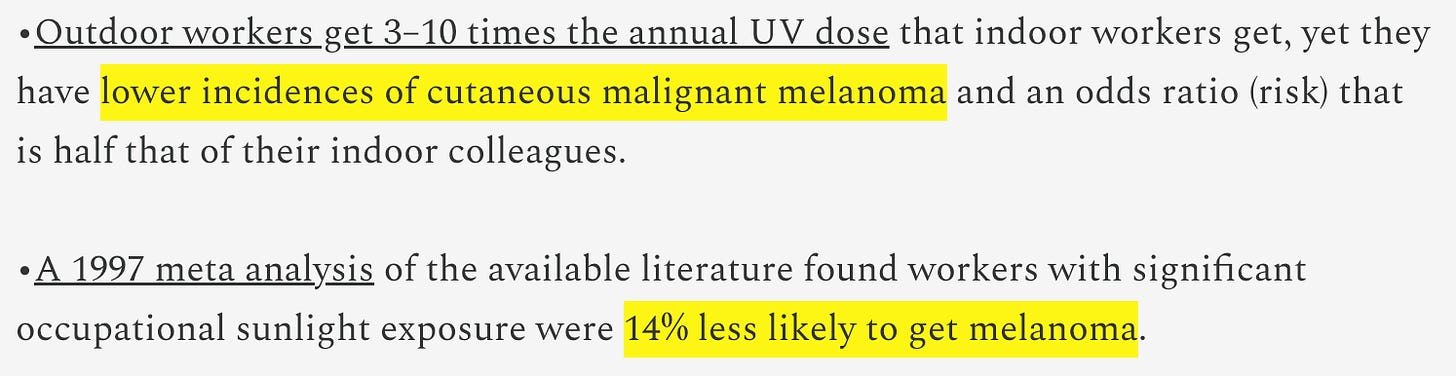
  • Outdoor workers get 3–10 times more UV exposure than indoor workers—yet have lower rates of melanoma.

A Midwestern Doctor calls out this contradiction:

“SCC (squamous cell carcinoma) and BCC (basal cell carcinoma) occur in sun-exposed areas, but melanoma is overwhelmingly found in areas that get almost NO sunlight.”

Go here to listen to Jimmy Dore discuss AMD’s article on dermatology’s war against the sun.

Also read AMD’s Hundreds of Studies Show DMSO Transforms the Treatment of Cancer  as well as how DMSO Revolutionizes skin care and Dermatology

Personally I’ve had two MOHS surgeries on my face (not fun) where they cut out cancer, send samples to pathology and keep cutting until every cell is removed.  You are then sent home with a wound you must keep open and wet which means you look pretty gruesome for a spell.  It’s painful, takes time to heal, and can leave scars.  When done on the face it can interfere with blinking and producing tears.  Go here for my article on MSM and DMSO, and here for how people are using ivermectin and fenbendazole for many types of cancer.

Now, I am using CURADERM BEC5, an eggplant based cream that targets and destroys cancer cells and salicylic acid sloughs off the dead skin eventually leaving new virgin skin.  This process, I’m not going to lie, is also painful.  Think of burning acid ….. but it does not involve removing skin from vulnerable places or leaving scars.  It can also take time depending on how deep the cancer goes.  There can also be pus and sores until the cancer cells are all removed.  Depending upon the size of the area you can also really go through the tiny tubes which are $200 a pop.  Go here for a video on my process:   https://madisonarealymesupportgroup.com/2018/03/02/dmso-msm-for-lyme-msids/

Since this self-experiment using CURADERM I’ve read some promising testimonials on Dr. Makis’ Substack where people are using ivermectin paste successfully on cancers that are topical.  Unlike CURADERM, this paste isn’t painful to use.  This will be my next experiment.

NOTE: If you have a scab or skin area that will not heal, have it checked out.  All of my basal cell carcinomas where little areas that wouldn’t heal over time.  In nearly every case the cancer was deeper and wider than the initial spot.  Now, if I have a suspicious spot, I simply apply a tad of CURADERM and wait.  If it becomes red and inflamed I know I’m dealing with cancer.

Targeting the “Motor” That Helps Lyme Spread Through the Body

https://www.lymedisease.org/motor-behind-lyme-and-syphilis/

Targeting the “motor” that helps Lyme spread through the body

By Stephen D’Angelo, Cornell Research & Innovation

3/31/25

Researchers have identified a new way to fight infections like Lyme disease and syphilis by disrupting the bacteria’s ‘motor,’ preventing it from spreading through the body.

The findings could have wide-ranging impacts on the treatment of infections in the future as concern about antibiotic-resistant strains grows. The study was published in ACS Chemical Biology.

“Many types of bacteria must be able to move to infect their host organisms, including humans,” said Brian Crane, director of the Weill Institute for Cell and Molecular Biology, corresponding author on the publication.

“Motility can be important to move between hosts—ticks to humans, for example—and also for disseminating within the host, colonizing the most advantageous tissue, and evading the immune system.”

Disrupting the ability to move

In the study, funded by the National Institutes of Health and the Bay Area Lyme Foundation, the researchers exploited a crucial relationship in the bacteria’s movement system by disrupting the germ’s ability to propel itself through tissues, and significantly weakening its chances to spread and infect.

Click here to see video of the Lyme Disease bacterial spirochete in action. 

Spirochetes are thin, corkscrew-shaped bacteria that spiral through body tissues using a hidden propeller-like motor, protected by a membrane that shields it from the host’s immune system.

Central to its ability to accelerate is a long strand called a flagella that is joined by a hook to the organism’s motion-generating machinery. Built from self-assembled protein subunits called FlgE, the hook is tightly held together by molecular bridges known as lysinoalanine (LAL) cross-links.

“When LAL formation is disrupted, a spirochetes’ flagella hook and motor are unable to work together to move effectively. This, in turn, prevents the spirochete from swimming through body tissues and significantly reduces the ability to spread and infect,” said Michael Lynch, research associate in the Crane Group (A&S), a Cornell Weill Institute lab, and the study’s first author.

After testing a collection of existing, clinically approved drug compounds, the researchers identified three—hexachlorophene, triclosan, and dichlorophene—that could be used as inhibitors to interfere with the connections between LAL molecules and the flagella hook.

A new way to fight infections

In one experiment on the spirochete linked to gum disease, treatment with hexachlorophene significantly reduced the bacteria’s ability to move, demonstrating that stopping their motility could be a powerful new way to fight infections.

Spirochetes, including Borrelia (Lyme disease), Treponema (syphilis), and Leptospira (leptospirosis, a bacterial infection that causes mild flu-like illness to severe kidney or liver damage), are highly invasive and capable of penetrating virtually every tissue in the human body, even crossing the blood-brain barrier.

According to the researchers, many of these infections are persistent, difficult to diagnose early, and sometimes resistant to standard medicines. Current treatments rely primarily on antibiotics, which target bacteria and cells indiscriminately, affecting both harmful and beneficial bacteria.

“In contrast, our approach is highly specific, targeting the formation of LAL in flagella within pathogenic spirochetes—the only known bacteria that catalyze the formation of LAL cross-links between flagella subunits,” Lynch said. “This specificity has the potential to reduce collateral damage to beneficial bacteria, such as microbiota in the gut microbiome, which is a significant advantage over conventional antibiotic treatments.”

Antibiotic resistence

According to the researchers, the need for novel antimicrobial strategies to combat spirochetes is pressing, as antibiotic-resistant strains evolve and emerge. This puts available drug options for individuals, and even public health efforts combating certain diseases, at risk, they said.

The researchers’ approach focusing on bacteria mobility could expand the number of targets for antibiotic drug development, helping to address the challenge that disease-causing bacteria are developing resistance to today’s common antibiotics.

“While bacterial motility has been studied extensively, this is the first research to target LAL cross-links in the flagella hook as an antimicrobial strategy,” Crane said. “Ultimately, because motility is widely recognized as an enhancement in pathogenic spirochetes’ ability to cause disease, our results establish LAL cross-linking as a legitimate target for antimicrobial therapeutic development.”

SOURCE: Cornell Research & Innovation

_____________

For More: