**UPDATE Jan. 15, 2022**

It appears HELP Committee votes 13-8 in favor of Califf’s return to the agency despite Bog Pharma ties.  Well, he’ll be in good company with all the rest who have Big Pharma ties…..

https://www.activistpost.com/2021/12/bidens-pick-for-fda-chief-formerly-worked-as-a-big-pharma-consultant-has-millions-in-big-pharma-investments

Biden’s Pick for FDA Chief Formerly Worked as a Big Pharma Consultant, Has Millions in Big Pharma Investments

By B.N. Frank

The Food and Drug Administration (FDA) is supposed to protect Americans from unsafe products.  They have a long history of not doing so.  One glaring example, earlier this year, the agency approved an Alzheimer’s drug that:

Recently the drug company cut the price for the controversial drug in half.  But I digress.

Decisions that benefit industries while putting Americans at risk seem to be the norm at the FDA.  Experts continue to blame the agency for significantly contributing to the Opioid Crisis.  Nevertheless, Biden’s pick for the new chief has considerable ties to Big Pharma and it’s not going unnoticed. (See link for article)

__________________

Summary:

  • Dr. Robert Califf was FDA commissioner during the last year of the Obama administration.
  • According to the article he “skated” through a congenial Senate confirmation hearing on Tuesday with the only stumble occurring when pressed about the FDA’s role and failings in the opioid crisis.
  • Califf has made millions as a consultant for more than a dozen pharmaceutical corporations and holds millions more in pharmaceutical investments (at least 8 million).
  • Nine out of the last 10 FDA commissioners went on to work for Big Pharma or serve on a prescription drug company’s board of directors.
  • Go to top link for the senate confirmation hearing.

For more: 

https://www.sciencedirect.com/science/article/pii/S221425092100322X

A case of Bartonella henselae native valve endocarditis presenting with crescentic glomerulonephritis

Received 8 June 2021, Revised 29 November 2021, Accepted 15 December 2021, Available online 16 December 2021.

https://doi.org/10.1016/j.idcr.2021.e01366Get rights and content
Under a Creative Commons license
open access

Abstract

Bartonella endocarditis is often an elusive diagnosis, usually derived from evaluating multiple laboratory tests and assessment of presenting symptoms. Herein we describe a case of Bartonella henselae native mitral valve endocarditis with an initial presentation of volume overload and renal failure. The Bartonella organism is tedious to isolate from culture medium, causing most diagnoses to be delayed. Due to the destructive nature of B. henselae endocarditis, the need for rapid identification remains prudent. This therefore creates an opportunity for Next Generation Sequencing (NGS) to be used. We further summarize the varied presentations that may be associated with B. henselae endocarditis, and hope that this will heighten the clinicians’ awareness of this entity when presented with acute onset renal failure and culture negative vegetations.

For more:  https://madisonarealymesupportgroup.com/2016/01/03/bartonella-treatment/

https://www.the-scientist.com/news-opinion/harvard-chemist-found-guilty-of-lying-about-chinese-funding

Harvard Chemist Found Guilty of Lying About Chinese Funding

In a win for the US Department of Justice’s China Initiative, Charles Lieber was convicted of hiding his financial ties to China from federal agencies.
Chloe Tenn
Dec 22, 2021

Yesterday, after deliberating for just under three hours, a Boston jury found renowned Harvard chemist and nanoscientist Charles Lieber guilty of lying to the US Defense Department and National Institutes of Health about financial support from a Chinese foreign talent program, reports Science. The verdict, which was unanimous, also convicted Lieber for failing to report income from the program on his federal income tax forms or to disclose a Chinese bank account that was used for the payments.  (See link for article)

https://www.newstarget.com/2021-12-22-harvard-scientist-dr-charles-lieber-nanowires-dod-ccp-wuhan-covid-5g-vaccine-bioweapons

Harvard scientist Dr. Charles Lieber, nanowires, DoD, CCP, Wuhan, covid, 5G, carbon nanotubes (CNT), military vaccines, SpFN Spike Ferritin Nanoparticles and more

12/22/2021 / By Mike Adams

File all this under “true conspiracies.” See the two podcasts below for even more details on this breaking story. I went on the Alex Jones Show today for 5 segments to discuss this in more detail. Those segments will be posted below as they are available via Brighteon.

You need to listen to at least the Part 1 Situation Update podcast below to get up to speed (about 45 min) in order to get the full background on this story.

The quick summary summary of the story is that Harvard scientist Dr. Charles Lieber was convicted yesterday on all six counts after lying to authorities about receiving millions of dollars from communist China as he shared his groundbreaking technology with a Wuhan technology institute. (See RT.com) Also arrested were two Chinese nationals, one was a female “academic” who was also a lieutenant in the People’s Liberation Army, and another person caught trying to smuggle biological weapons out of Boston’s Logan airport (MERS and SARS strains).

Dr. Lieber is a genius-level scientist who specializes in exotic nanowire technology and how it interfaces with human neurology and biology. (See link for article)

________________

For more: 

Excerpt:

So, it’s SARS, which is genetically engineered biowarfare agent to begin with. Second, it has gain-of-function properties, which makes it more lethal, more infectious. It has HIV in there. That was confirmed by an Indian scientist … and it looks like nanotechnology [has been used] … An MIT scientist who did a study found that it traveled 27 feet through the air. And that, I guess, was in lab conditions.

https://jessicar.substack.com/p/the-bnt162b2-mrna-vaccine-against

‘The BNT162b2 mRNA vaccine against SARS-CoV-2 reprograms both adaptive and innate immune responses’

It’s all in the title…


A brand new medRxiv pre-print study entitled: “The BNT162b2 mRNA vaccine against SARS-CoV-2 reprograms both adaptive and innate immune responses” has graced our world. This paper is so important and it provides evidence to support what many prominent immunologists and vaccinologists have been saying for a long time, including myself. These COVID-19 mRNA injectable products are causing, yes, causing, immune system dysregulation – and not just in the context of the adaptive system, but in the context of the innate system. Not only that, but these findings provide very good reasons as to why we are seeing resurgences of latent viral infections and other adverse events reported in VAERS (and other adverse event reporting systems) and perhaps more importantly, why we should under no circumstances inject this crap into our children. Children are fine in the context of COVID-19 (for the 80 millionth time – this well documented) and this is due to their extraordinary innate immune response systems.

(See link for article)

__________________

**Comment**

Rose walks us through how the immune system works and specifically that the COVID jabs are modulating production of inflammatory cytokines by innate immune cells upon stimulation with specific (SARS-CoV-2) and non-specific (viral, fungal, and bacterial) stimuli where the response of the innate cells was weaker AFTER the injections, while fungi-induced cytokine responses were stronger.

That should scare you.

Rose painstakingly details how the body is equipped to handle invaders giving a visual comparison between the nasal cavity and the runnel full of spider webs Frodo Baggins encountered trying to escape the clutches of Sheila.

When COVID or any other invader manages to skirt past the mucosa, dendritic cells frisk the invader to determine how dangerous it is which can result in a launch of a serious army intent on removing it using all sorts of internal and external armaments to clear it out.
 
Result: not enough cells get infected fast enough for an infection to occur, thanks to a robust innate immune system.
She then compares the same process in the “vaccinated” who are getting mRNA wrapped in a lipid nano particle injected into arm muscle.

She points out a mistake those giving the injections have been making: they don’t aspirate to check if it was injected into the muscle. What has happened is many injections have hit a vein or capillary and go straight into the blood stream.  They believe this is what is causing many to have near immediate clotting and heart issues.

By design, the lipid nano particle slimes its way into a cell. There, the mRNA finds ribosomes and begins translating into spike proteins – literally “swarming” the human body.  They then embed into monocytes4 and other cells like epithelial cells5 due to their proclivity to express ACE-26. Then, they cause serious micro-clotting issues all over this person’s body by binding all these ACE-2 and CD147 receptors. The inflammatory mediators produced are in overdrive and the entire system is on fire, resulting in hyperinflammation. The normal systems that regulate the anti-inflammatory response don’t react. Due to the specific (think narrow) SARS-CoV-2 stimuli injected, the normal immune response is avoided, allowing the nano-particles directly inside.

This explains why the “vaccinated” have severely dysregulated inflammation, which plays an important role in the severity of COVID.

Important excerpt:

The bottom line here is this. We know that innate responses are vital to a healthy and optimally-functioning immune system. They are vitally integrated with and into the adaptive responses as these two branches work in impeccable, complex harmony. We also know that there are cases where vaccines have caused dysregulation of innate responses in humans. We also know that something is very, very wrong with these COVID-19 injectable products with regards to persistent hyperinflammation and a plethora of systemic and physiologically-comprehensive adverse events including death from micro-emboli formation and clotting. We also know that these authors have now provided evidence to support that these COVID-19 injectable products are modulating innate responses and that this isn’t limited to problems with COVID-19. Problems with fungi, other viruses and bacteria can be anticipated. VAERS has hundreds of thousands of reports of adverse events related to fungal infections, plagues of herpes zoster occurrences (shingles) indicating weakened immunity, cancers coming out of remission, and the list goes on. And most of these reports are made for adults.

Since children have extraordinary capabilities with regards to dealing with COVID-19 via their innate immune system responses, what will happen to them if these are not only by-passed by these injections, but knocked down by them?

Having read this, what do you think these jabs are going to do in the body of a Lyme/MSIDS patient? 

Food for thought…..

For more:


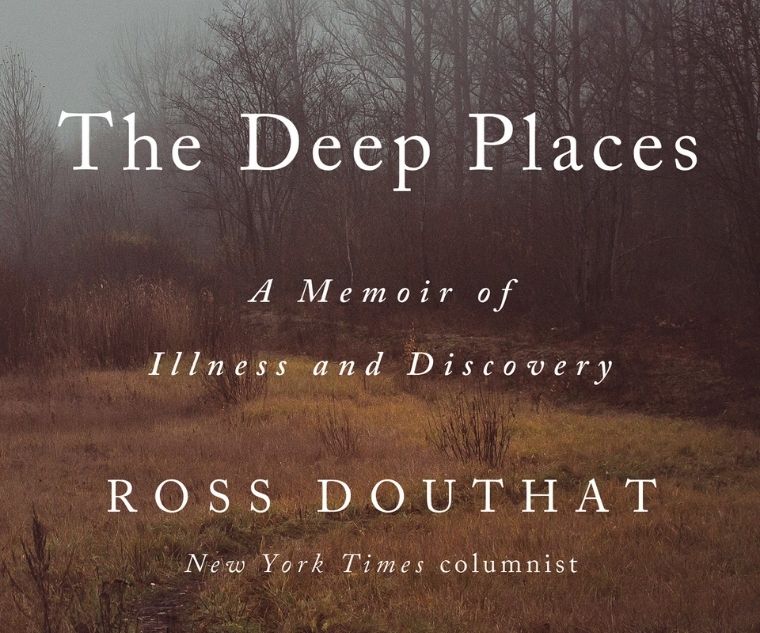
https://www.globallymealliance.org/blog/global-lyme-alliance-interview-with-ross-douthat-new-york-times-columnist-and-author-of-the-deep-places?

Global Lyme Alliance (GLA) and Ross Douthat, New York Times Columnist, discuss his journey with Lyme disease and the publication of his new book.
GLA: Can you briefly summarize your experience with Lyme disease?

RD: I first got sick in the summer of 2015, when I was moving with my family from Washington DC to what we thought was our dream house in the Connecticut countryside; I was almost certainly tick-bitten while we were doing the inspection on the house, and I unwisely wandered down into the meadows. But we were still in Washington when I fell apart: It started with a red spot on my neck, which was diagnosed as a boil; them came neck stiffness and headaches, and then a full-body collapse, with terrible migratory pain, insomnia, phantom heart attack, the works. And the doctors in D.C. couldn’t see anything wrong in my bloodwork – my first Lyme tests were negative – and they had no idea what was wrong with me, so they prescribed Xanax and sleeping pills and sent me to a psychiatrist (who, to his credit, told me I probably had a physical illness).

Only when we actually managed to make the move to the northeast, when I had been sick for months, did I see doctors who knew something about Lyme and prescribed a trial of antibiotics. That stabilized me: I was able to sleep and eat again, I stopped going to the ER. But the illness didn’t go away: I was still in pain all of the time, with constantly shifting symptoms all around my body. So at that point I entered the strange world of chronic-Lyme treatment, shuttling between doctors and treatment protocols until – after about eighteen months of simple misery – I finally found one that helped me start to make progress, very slowly, toward the health that now six years later I mostly, but not completely, regained.

GLA: Tell us about your new book. What can others with Lyme & chronic illness hope to get out of reading it? How about those without?

RD: It’s a memoir of the experiences described above, with some details on the history of the Lyme disease debate worked in: It’s partially a medical odyssey, partially a family drama, partially a real-estate horror story with our dream house playing the role of Hill House or the Overlook, and partially a psychological and sometimes spiritual story about what it’s like to live with a disease that official medicine isn’t even sure exists. To people with chronic illness, I hope that it offers a mixture of recognition – meaning that they’ll be able to see their own experiences mirrored in some of my mine – and encouragement, evidence that it’s actually possible to make real progress against even the most intractable-seeming disease. To people outside this world, I hope its testimony will make it possible to see a little more clearly just how serious these mysterious chronic illnesses can be: Whether or not they’re fully convinced of the reality of Chronic Lyme specifically, I want them to be convinced that these kind of illnesses aren’t just a matter of a few aches and pains blown out proportion, that they can really steal your life away, and that they deserve an attention from official medicine that they do not currently receive.

GLA: When and where can we buy it?

RD: Anywhere and everywhere (hopefully), from Amazon to your local bookstore.

GLA: What made you speak out and share your story?

RD: Well, I write for a living, so having something this interesting and harrowing happen to me was natural fodder for my work. They say that you should write what you know, and I now know more about this subject than I ever expected, and it’s one of those stories that you just feel like you have to tell – indeed it’s kind of a relief to have it finally out in the world, after I’ve lived inside it for so long.

So that’s the personal side. And then more practically I felt that the only way that our understanding and treatment of these kind of conditions will get better is if people speak out and describe what it’s like to actually go through it, what chronic Lyme is like from the inside – so I hope I’ve helped with that kind of public understanding, even a little bit, by putting my story out in public. And then finally, regardless of what happens with the medical establishment or the culture, I hope that people who are going through the experience themselves will be able to take a certain kind of help and solidarity from my story, and feel a little more encouraged, a little less alone.

~Ross Douthat (C) Abigail Douthat
GLA: How did your experience with Lyme change you? How did your family and friends act during this time?

RD: My friends and family acted as well as anyone could be reasonably expected to act, confronted with a mysterious and medically-controversial illness that for months and years I couldn’t figure out how to treat. Which is to say that people who have to live with the chronically ill have their own kind of challenges, and in the cases of spouses and family, their own particular afflictions, the burden of which needs to be taken seriously in thinking about the scope of suffering caused by this kind of disease.

As for how it changed me – well, at my best I would say that it has made me more appreciative of the ordinary graces of life, the kind of simple things that you take for granted until they’re taken from you. I would also say that it’s made me considerably more open-minded about the sheer weirdness and mystery inherent in reality, all the things that still fall outside, or on the fringes, of what the current scientific consensus understands. Which is not to say that I’ve become anti-science; most of the things that helped me get better were, in their own way, scientific, the results of research or experimentation or both. But I have a new appreciation, shall we say, for the ways in which actual science and the current scientific consensus aren’t always one and the same.

GLA: Were you surprised about the reaction to the recent op-ed and the amount of attention it received?

RD: No, not really: These kind of conditions are extremely common, hard to talk about, and surrounded by clouds of skepticism, so I took it for granted that once I wrote about the full weirdness of my experience I would get some kind of strong reaction – and I wasn’t disappointed!

GLA: What if any recommendation do you have for convincing the NIH, CDC, and IDSA that Lyme and tick-borne diseases are chronic in nature and constitute a major, growing epidemic in the United States?

RD: The simplest answer is that they should consider funding tests of antibiotic treatment for chronic Lyme symptoms that actually follow the methods that doctors who have had success treating chronic patients. Doing this is difficult, as I write in my book, because the treatment protocols are so complex, so tailored to the individual patient, and take so long to really work that it’s hard to design a normal controlled study. But I think we can do better than the current alleged “gold standard” studies, which have looked at the effects of taking a single antibiotic for an extra 4-11 weeks. We need studies that look at the effects of multiple antibiotics, over longer periods of time, which “pulsing” and other mechanisms worked in, and with coinfection diagnosis and appropriate treatment included as well. Those would take work and effort and funding, but it should be possible to set them up. From what I’ve seen and read and experienced, it’s no surprise that studies that just give chronic patient an extra few weeks of antibiotics, even IV antibiotics, don’t show results, because for doctors who treat long term, that’s not what usually *gets* results.

GLA: Will you make any changes in your lifestyle or behavior now that you’ve been through this?

RD: You mean, besides showering more often after going in the woods? I think the biggest changes I’ve tried to make are psychological – trying to sustain the feeling of gratitude and appreciation that I get from ordinary experience on the days when I’m feeling a lot better.  Of course I try to eat healthier and get more exercise, but I’m not sure I’m that much more successful at either now than before. I do think – or hope, at least – that in addition to being more open-minded than I used to be, I’m also somewhat more charitable: Because the cliché, that you never know what someone is going through in secret, is really, really true.

GLA: Ultimately, these advances will allow us to find a cure for Lyme disease and other tick-borne illnesses. How would you encourage patients embarking upon their Lyme journey? What do you wish you had known when you first started out?

RD: Honestly I hesitate with this kind of question because if I’d known when I started out exactly how hard the road back toward would health would be, it would have been the opposite of encouraging! But I suppose the best thing to say is that you need to be realistic and optimistic at the same time. If you get very sick before you get diagnosed, it really can be difficult to get better, and nobody should sugar-coat that for you. At the same time, you really *can* get better, which on the worst days can be impossible to believe. So being able to keep going over a long haul of recovery – months when you hope for weeks, years when you hope for months – is really essential, and one of the things that you should keep you going is the knowledge that so many other people have made this journey, or are making it right now, and their experiences prove that progress is possible, recovery is possible, and everything that you need to do and try in order to get there will seem worth it, eventually, in the future that’s waiting for you even now.

For more: https://madisonarealymesupportgroup.com/2021/12/07/deep-places-explores-one-mans-lyme-fight/