Archive for the ‘Uncategorized’ Category

Could A Major Chronic Infection Be Underlying ME/CFS?

https://www.healthrising.org/blog/2022/10/18/borrelia-miyamotoi-chronic-fatigue-syndrome/

B. miyamotoi is a prime candidate to be the major chronic infection underlying ME/CFS”

The fifth in a series of blogs reporting on the 2022 IACFS/ME Conference focuses on an intriguing possibility: that heretofore unknown infection is present in most people with chronic fatigue syndrome (ME/CFS).

Talk about a jaw-dropping statement. With the exception of Dr. Chia’s work on enteroviruses and Ariza’s work on the Epstein-Barr virus, most researchers have pretty much given up on finding “the chronic infection” underlying ME/CFS. Repeated failures to find evidence of a pathogen have led to the conclusion that while ME/CFS can be triggered by a variety of infection, the pathogen is likely long gone. With the emergence of long COVID, though, the idea of viral persistence has caught hold and the question is back – could a persistent pathogen or bits of a pathogen be causing ME/CFS?

It got a bit more interesting when De Meirleir looked where no one has looked before –  at tick-borne pathogens and at ones other than the Lyme disease-causing bug (Borrelia) at that. Plus, he used a new testing approach using bacteriophages to find them.

My numbers may not be correct, but the gist is that in this rather large study, a very large percentage of ME/CFS patients tested positive for B. miyamotoi while few of the healthy controls did. My jumbled notes stated that 81% of people with ME/CFS tested positive while 20% of the healthy controls did.  (See link for article)

________________

**Comment**

Very interesting article.  Important gold nugget:

…he focused on the ileocecal valve that separates the small intestine from the large intestine. I didn’t write down the possible connection between B. miyamotoi and the ileocecal valve, but the last time I remember hearing about it was decades ago from Dr. Cheney who pointed to a spot on my lower right abdomen which he said was almost always painful in ME/CFS. (Mine is).

When Alpha-Gal Syndrome is NOT Related to a Tick Bite

https://www.lymedisease.org/alpha-gal-syndrome-no-tick-bite/

When alpha-gal syndrome is NOT related to a tick bite

Oct. 27, 2022

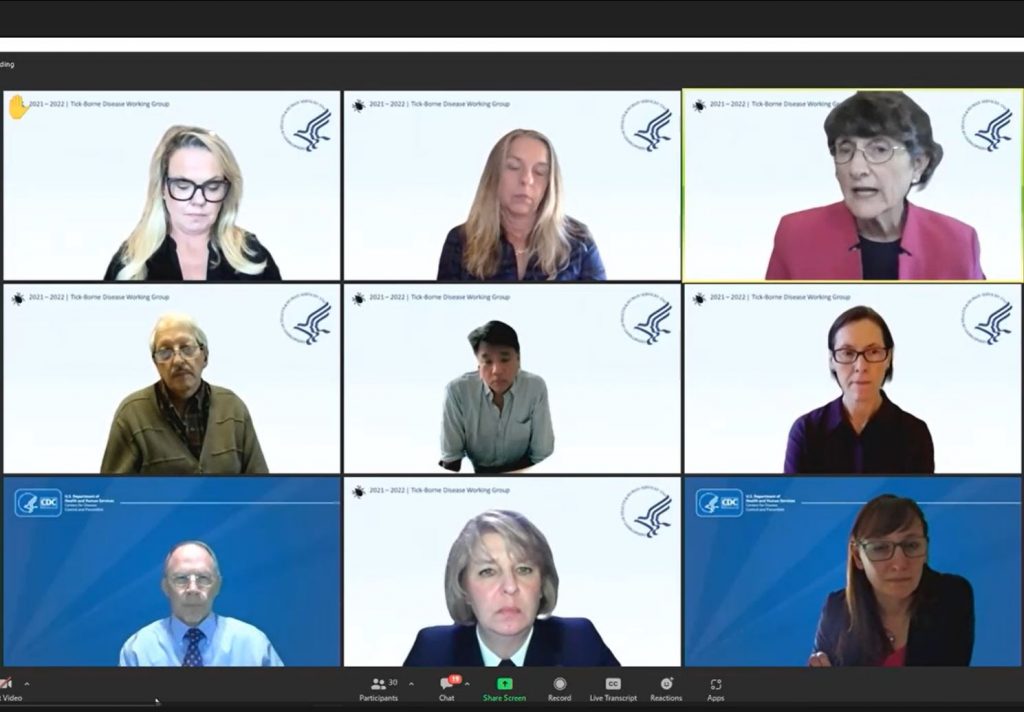
Typically, alpha-gal syndrome is associated with the bite of a lone star tick, and can result in a life-threatening allergy to red meat. But, according to Pamela Traina, the picture can be more complicated than that. She delivered the following public comments at the Oct. 25 meeting of the federal Tick-Borne Disease Working Group.

Good morning. My name is Pamela Traina. I am 55 years old and live in Los Angeles, California.

My alpha-gal diagnosis came three years ago after spending several years in and out of hospitals due to idiopathic anaphylactic reactions.

I was lucky to have an allergist who never discounted my unusual symptoms, negative allergy tests, and numerous anaphylactic reactions. It still took over two years to pinpoint the cause.

Alpha-gal is virtually unheard of in California because most people who have received an alpha-gal diagnosis live in the southeastern United States and have been infected due to being bitten by the lone star tick. The lone star tick is not found in California. I have not been to the southeastern United States and do not remember ever being bitten by a tick. Yet, I have alpha-gal syndrome. More research is required to pinpoint other possible vectors of how this condition is contracted.

Since my alpha-gal diagnosis, I have been diagnosed with multiple other food and medication allergies, including an uncommon allergy to PEG (polyethylene glycol) and polysorbate. Neither one has a diagnostic test. In addition, my Alpha-Gal test is now negative, but my sensitivity and reactions are still severe.

We need better testing, more education

Current testing is inadequate. We need more accurate testing for Alpha-Gal and other food allergies. We need answers as to why other allergies and conditions emerge after an alpha-gal diagnosis and what are the possible long-term effects of alpha-gal. We also need transparency on all medication and product labels to include inert ingredients.

Finally, hospitals and emergency staff must be educated to treat alpha-gal patients adequately. The hospital and emergency room are extremely dangerous for me due to a lack of awareness of alpha-gal.

I have had eight significant reactions since my alpha-gal diagnosis requiring er visits and hospital stays. I have endured numerous invasive and expensive tests while they search for the cause, discounting my alpha-gal diagnosis.

I have been asked if I was taking drugs and denied breathing treatments and Benadryl during a reaction because they were going to “observe” me since my symptoms didn’t present like typical anaphylaxis.

Education is required for all healthcare providers in the United States, including pharmacists, dieticians, doctors, dentists, and EMS providers, so they are aware of this condition and know how to treat it safely. It is so much more than an allergy to red meat.

Thank you for your time and the work you’re doing for the alpha-gal community.

_______________

For more:

9 EpiPens in a Month: The Burden of Lyme, AGS, & More

https://www.lymedisease.org/9-epi-pen-a-month-mccord/

“Nine EpiPens in a month.” The burdens of Lyme, AGS, and more.

Cortney McCord delivered the following public comment at the Oct. 25 meeting of the federal Tick-Borne Disease Working Group.

I’m Cortney McCord, a registered nurse from Tupelo, Mississippi. Since May 8, 2021, I have been in a battle for my life against alpha-gal syndrome, Lyme borreliosis, bartonellosis, babesiosis, and mast cell activation syndrome.

I developed the most severe clinical presentation of alpha-gal syndrome: I react to airborne and contact exposures as well as dietary exposures to alpha-gal.

For me, it’s way more than just a meat allergy.

In January 2022, my infectious burden grew after I contracted COVID. COVID sent me into full-blown mast cell activation syndrome and made asthma and chronic urticaria a part of my daily life.

After being gaslighted by a local allergist who was ignorant of mast cell activation syndrome and airborne alpha-gal reactions, I made an appointment with expert allergist and former Working Group member Dr. Scott Commins. I am thankful to have him in my corner even if it takes a 12-hour drive to see him..

Patients like me do not have the luxury of time to sift through a myriad of ignorant doctors to find someone familiar with their condition. Because symptoms of tick-borne infections, alpha-gal syndrome, and mast cell activation syndrome are manifested in every organ system, physicians in every medical discipline should be literate in these conditions. Nobody deserves to be gaslighted because of a lack of physician education.

Another tick bite

I was bitten by another larval lone star tick at the end of this past August. In September alone, I had to use nine EpiPens. All of this from a tick the size of a speck of dirt.

In addition to long Lyme, I believe I have long COVID complicating my clinical picture.

Long COVID and long Lyme are very similar. Both Sars-CoV-2 and Borrelia burgdorferi are persistent in tissues. Both affect the host’s immune system. Both can cause mast cell activation syndrome. The medical world has no problem saying that COVID is a persistent “long” disease. Why is that not the case for persistent ‘long” Lyme borreliosis? There are stacks of good science supporting persistent “long” Lyme infection–some of which was done by current working group member Dr. Monica Embers.

I refuse to believe that this is the best that our medical and scientific community can do. Testing for both mast cell activation syndrome and tick-borne diseases is abysmal. That has to change. There should be a law requiring alpha-gal to be listed as a major allergen on every medicine, food, and consumable product that Americans have contact with. We need the Tick-borne Disease Working Group to continue in perpetuity because tick-borne conditions will affect more and more Americans as our planet warms.

Please help me. Ask Congress to address these needs. Thank you.

_________________

**Comment**

This is truly a complicated case, but most are in my experience.

While all patients deserve to be heard and treated properly, throwing yet more money at the TBDWG which is filled with people who do not believe in chronic infection, and which has done ZERO to help  patients is not helpful.  IF, and I mean IF any money is appropriated to study this, IMO – whoever is doing the work needs needs to be independently funded.  Researchers can not be the regular cast of characters – receiving grants from corrupt public health agencies, that is literally a Cabal regurgitating old, outdated, highly myopic work which is designed for a pre-determined outcome and completely ignores a huge subset of people.

Unfortunately many patients and even advocates are oblivious to the sordid backstory of the corrupt agencies controlling research and funding.  Insanity truly is doing the same thing over and over and expecting different results.  Time to ditch the public health monopoly and public health agencies controlling research, funding, doctors, testing, treatments, and “vaccines.”

For more:

Deadly Disease Spread By Ticks Found in Queensland For the First Time

https://www.9news.com.au/national/brown-dog-tick-found-in-queensland-pet-owner-warning

Deadly disease spread by ticks found in Queensland for the first time

A deadly disease spread by ticks has arrived in Queensland for the first time, sparking a warning for pet owners to remain vigilant this summer.
Canine Ehrlichia is spread by brown dog ticks and can go undetected for weeks.
The dangerous disease has been detected in North Queensland.  (See link for article)
___________________
SUMMARY:
  • Ehrlichiosis can cause serious illness, including death.
  • Symptoms include fever, lethargy, loss of appetite, weight loss, cloudy eyes/conjunctivitis, pain and stiffness, bleeding disorders including bruising, and swelling of the chest or front legs.
  • It can lay dormant but attacks the immune system, even infecting bone marrow making treatment difficult.
  • It’s important to vigilantly and regularly check pets for ticks including in between toes, ears, nose, mouth, and stomach.
  • It’s also important to keep diligent with tick treatments and to avoid shrubby areas, although ticks can be found in wide-open spaces.

According to this, the disease seems to be particularly severe in German Shepherds and Doberman Pinschers; however, people can be infected with it as well, although the article states the disease is ONLY transmitted through tick bites, not through contact….

I remain skeptical of this tenet.

For more:

Proof Working With The Government Hasn’t Helped Lyme/MSIDS Patients

https://www.lymedisease.org/still-stuck-with-idsa-guidelines/

After 6 years of TBDWG, are we still stuck with IDSA guidelines?

By Dorothy Kupcha Leland

Oct. 11, 2022

When I was watching last week’s online Tick-Borne Disease Working Group meetings, I got a sick feeling in my stomach.

It came at the end of the first day, when after hours of watching this stuff on my computer screen, my brain was turning to mush anyway.

Then, my ears perked up. Dr. Elizabeth Maloney—who ably represents the interests of Lyme patients and their treating doctors on this panel—asked a question of the CDC’s Sue Visser.

Earlier in the meeting, Visser had given a presentation about the US Department of Health and Human Services’ national strategy to combat vector-borne diseases (which the CDC plays a big role in).

Vector-borne diseases (VBD) include those carried by mosquitoes, fleas and ticks—so Lyme disease is part of that mix.

Maloney wanted to know more about the role of medical guidelines in the VBD strategy. Specifically, she asked if the agencies included public stakeholders in the process of developing guidelines.

“Yes, we do,” Visser answered firmly.

(Let me emphasize how important public input is to the Lyme community. For years, the CDC and other federal entities have endorsed the IDSA’s Lyme guidelines—which allow no meaningful input from public stakeholders while at the same time actively HARMING Lyme patients. The need for public input was a driving force in the Lyme community’s push for the formation of the TBDWG in the first place.)

When Maloney asked Visser to elaborate on the public input process, the CDC employee said:

There’s certain guidance that’s developed by other professional organizations and we rely upon them because they have convened the experts and they publish guidance and then we reference that guidance. In the area where there is not development by appropriate clinical professional society, for example, Rocky Mountain spotted fever, we waited and we put out clinical guidance for that…If we are developing from scratch the guidance, there’s actually a protocol for patient involvement, external feedback, external participation in the process…but in the case of an issue or disease where there is already lots of clinical interest and leadership, then we defer.

“Then we defer…”

That’s kind of wordy, don’t you think? Let me drill down to what she’s basically saying: The VBD national strategy will use the IDSA Lyme guidelines, period. Because, hey, they’re the experts. When they speak, then we defer…

Maloney tried to press the point about the IDSA guidelines not following accepted guidelines development practices (for example, allowing public input). But Visser sidestepped the question, and for the moment, the subject was dropped.

Getting back to that queasy feeling in my stomach: Have we really slogged through six years of Working Group effort, only to be stuck with the dangerous, anti-patient IDSA Lyme guidelines? (See: 10 things you should know about the IDSA Lyme guidelines.)

The CDC and its sister agencies have deferred to the IDSA’s Lyme guidelines for years now. That’s a huge factor in why Lyme patients can’t get the care they need. And a big reason that the CDC website continues to have inaccurate, damaging information on its Lyme-related web pages.

The Tick-Borne Disease Working Group is nearing the end of its run. As the current (third) iteration of the panel prepares to submit its Report to Congress in December, the big question is “what happens next?”

The TBDWG still has decisions to make. It convenes again on October 25.

Stay tuned.

TOUCHED BY LYME is written by Dorothy Kupcha Leland, Board President of LymeDisease.org. She is co-author of When Your Child Has Lyme Disease: A Parent’s Survival Guide. Contact her at dleland@lymedisease.org.

____________________

**Comment**

I really wish I was wrong.  I desperately want to believe that working with government agencies will yield positive results, but I’m a pragmatist and the proof truly is in the pudding.

Six years is long enough to determine outcome.

And yes, advocates have slogged through 6 years of working group effort only to be stuck with antiquated, unscientific, damaging IDSA guidelines.

Time to move on and choose another avenue for change.

Insanity is doing the same thing over and over and expecting different results.