Archive for the ‘research’ Category

Primary Detection of the Establishment of Blacklegged Ticks, Ixodes Scapularis, in British Columbia, Canada

https://www.jelsciences.com/articles/jbres1754.pdf

Primary Detection of the Establishment of Blacklegged Ticks, Ixodes scapularis, in British Columbia, Canada

John D Scott* and Catherine Scott

Upper Grand Tick Centre, 365 St. David Street South, Fergus, Ontario N1M 2L7, Canada

*Corresponding author(s) John D Scott, Upper Grand Tick Centre, 365 St. David Street South, Fergus, Ontario N1M 2L7, Canada Email: jkscott@bserv.com DOI: 10.37871/jbres1754 Submitted: 23 May 2023 Accepted: 30 May 2023 Published: 31 May 2023 Copyright: © 2023 Scott JD, et al. Distributed under Creative Commons CC-BY 4.0 OPEN ACCESS

North America VOLUME: 4 ISSUE: 5 – MAY, 2023 BIOLOGY GROUP PARASITOLOGY

Abstract

Ticks transport and transmit microbial pathogens that inflict malevolent diseases on domestic and wildlife animals, and humans. We reveal the first-time record of the blacklegged tick, Ixodes scapularis, in British Columbia (BC) and, concurrently, far western North America. We unveil the primary tick-host record of I. scapularis parasitizing a Mallard duck, Anasplatyrhynchos. In our study, the most pronounced Ixodes species was I. scapularis (61%) followed by the western blacklegged tick, Ixodes pacificus (34%). The most frequently occurring mammalian host parasitized by I. scapularis was the eastern cottontail, Sylvilagus floridanus, a lagomorph of grassland habitats. Healthcare professionals must be aware that both I. pacificus, and I. scapularis bite humans in BC, and transmit at least six tick-borne human zoonotic pathogens that cause insidious diseases.

__________________

**Comment**

Yet more proof ticks are everywhere and parasitizing virtually everything.  Continuing to regurgitate that patients can’t be infected with Lyme/MSIDS because ticks and disease don’t exist in certain geographical areas is foolishness that is killing people or dooming them to a life of misery.  Please educate others on this fact because mainstream medicine and the media are lying to the public and are not to be trusted.

For more:

Relocated Cats & Disseminated Vector-Borne & Other Pathogens of Potential Relevance

https://parasitesandvectors.biomedcentral.com/articles/10.1186/s13071-022-05553-8

Vector-borne and other pathogens of potential relevance disseminated by relocated cats

Abstract

Large populations of unowned cats constitute an animal welfare, ecological, societal and public health issue worldwide. Their relocation and homing are currently carried out in many parts of the world with the intention of relieving suffering and social problems, while contributing to ethical and humane population control in these cat populations. An understanding of an individual cat’s lifestyle and disease status by veterinary team professionals and those working with cat charities can help to prevent severe cat stress and the spread of feline pathogens, especially vector-borne pathogens, which can be overlooked in cats. In this article, we discuss the issue of relocation and homing of unowned cats from a global perspective. We also review zoonotic and non-zoonotic infectious agents of cats and give a list of practical recommendations for veterinary team professionals dealing with homing cats. Finally, we present a consensus statement consolidated at the 15th Symposium of the Companion Vector-Borne Diseases (CVBD) World Forum in 2020, ultimately to help veterinary team professionals understand the problem and the role they have in helping to prevent and manage vector-borne and other pathogens in relocated cats.  (See link for article)

__________________

For more:

Could ‘New’ Antibiotic Prevent Chronic Lyme Disease?

https://news.northeastern.edu/2023/05/26/lyme-disease-treatment/

Could ‘new’ antibiotic treatment prevent chronic Lyme disease?

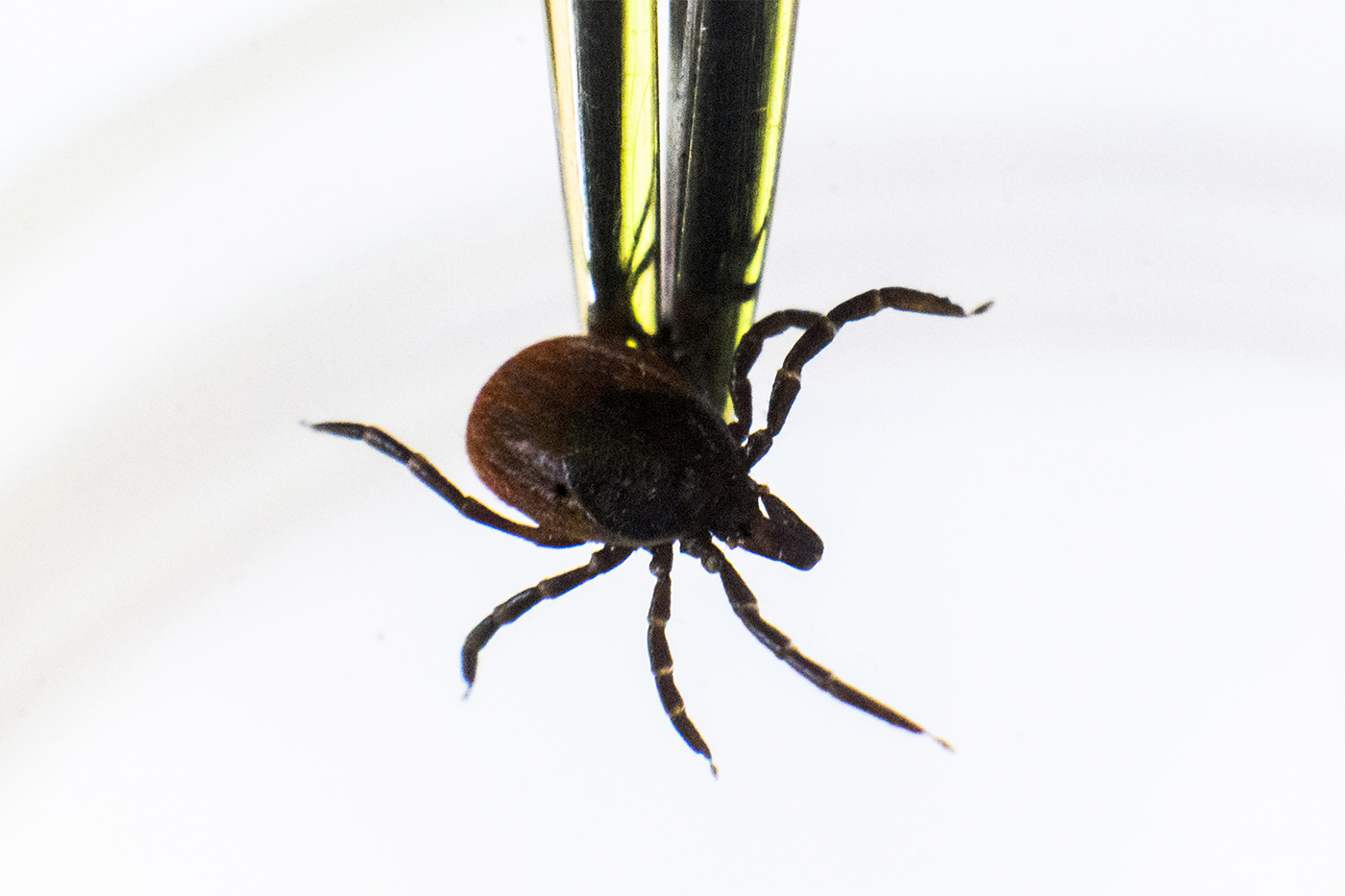
A tick is held by a pair of tweezers

Every year, tens of thousands of new Lyme disease patients find that their symptoms persist even after the standard course of antibiotic treatment.

Instead of being cured, they find their lives upturned by chronic Lyme, also called persistent or post-treatment Lyme. Symptoms include bone-deep fatigue, cognitive difficulties, arthritis, muscle and joint pain and intermittent fevers, chills and sweats that can go on for months or years.

While medical solutions have proved elusive, a researcher at Northeastern University says he has developed a treatment for Lyme disease that could prevent chronic Lyme from developing in the first place.

Kim Lewis, distinguished professor of biology and director of Northeastern’s Antimicrobial Discovery Center, says human trials of his discovery may begin as early as next year.

Final toxicity trials will continue this summer, but so far the treatment—an antibiotic known as hygromycin A—has not been toxic in animals and has effectively cleared Lyme disease in mice, Lewis says.

He says the real promise of hygromycin A in preventing chronic Lyme is that it is a targeted antibiotic that selectively kills Lyme disease-causing bacteria without damaging the beneficial bacteria in the patient’s microbiome.

According to Lewis’ theory, the broad spectrum antibiotics traditionally prescribed for Lyme disease, doxycycline and amoxicillin, cause havoc in the gut by wiping out the healthy balance of bacteria.

“The microbiome has now been linked to almost every aspect of our health, especially the development of the immune system,” Lewis says.

(See link for article)

________________

A few points:

  • While Lewis regurgitates that only 10% go on to develop chronic Lyme, the Bay Area Lyme Foundation, states that it’s closer to 34%.  Microbiologist Holly Ahern shows it may be 60% or more.  This matters because the greater the number, the more research money will be designated for it.
  • Hygomycin A is found in the soil and it is weak against most bacteria but very potent against spirochetes.
  • The final stage of animal toxicity studies will take place this summer and human trials may start next year.

For more:

MS & COVID Gene-Therapy Shots

http://

MS and COVID Shots

May 29, 2023

Two cases of multiple sclerosis (MS), with clinical and new radiological signs, beginning in close temporal relation to spike (S) protein mRNA based vaccinations.

Conclusion

Detailed studies of both peripheral blood, and CSF derived CD4+ T cells show that the onset of MS in these two cases is very likely caused by CD4+ T cell clones that cross-recognize SARS-CoV-2 S protein derived peptides and peptides derived from myelin proteins, which have previously been implicated in MS.  Go here for John Campell’s Substack article for the sequence of events.

https://pesquisa.bvsalud.org/global-literature-on-novel-coronavirus-2019-ncov/resource/pt/covidwho-2138820?lang=en

Covid-19 vaccination can induce multiple sclerosis via cross-reactive CD4+ T cells recognizing SARS-CoV-2 spike protein and myelin peptides

Multiple Sclerosis Journal ; 28(3 Supplement):776, 2022.
Article in English | EMBASE | ID: covidwho-2138820

“Fact-checkers” say everyone is misrepresenting this research.

Please read Walter Chesnut’s paper: The Spike Protein and SADS: Evidence of the Brainstem Demyelination/Destruction Hypothesis

SARS induced Death in mice via dysfunction of the Medulla via the OLFACTORY NERVE

I urge clinicians to perform autopsies on all those under 60 that die suddenly. We must know if the Brainstem has undergone demyelination/neuronal death. ~ Walter Chesnut

This will never happen.  Remember, Fauci ordered against autopsies on those who succumbed to COVID.  They simply don’t want to know.

Study: How the COVID Pandemic Response Harmed Society

**NOTE**

This paper does not even include C19 injection policies or harms and deaths.

https://papers.ssrn.com/sol3/papers.cfm?abstract_id=4447806

How Did the COVID Pandemic Response Harm Society? A Global Evaluation and State of Knowledge Review (2020-21)

Posted: 22 May 2023

Kevin Bardosh

University of Washington; University of Edinburgh – Edinburgh Medical School

Date Written: May 14, 2023

Abstract

Early in the Covid pandemic concerns were raised that lockdown and other non-pharmaceutical interventions would cause significant multidimensional harm to society. This paper comprehensively evaluates the global state of knowledge on these adverse social impacts, with an emphasis on their type and magnitude during 2020 and 2021. A harm framework was developed spanning 10 categories: health, economy, income, food security, education, lifestyle, intimate relationships, community, environment and governance. The analysis synthesizes 600 publications with a focus on meta-analyses, systematic reviews, global reports and multi-country studies. This cumulative academic research shows that the collateral damage of the pandemic response was substantial, wide-ranging and will leave behind a legacy of harm for hundreds of millions of people in the years ahead. Many original predictions are broadly supported by the research data including: a rise in non-Covid excess mortality, mental health deterioration, child abuse and domestic violence, widening global inequality, food insecurity, lost educational opportunities, unhealthy lifestyle behaviours, social polarization, soaring debt, democratic backsliding and declining human rights. Young people, individuals and countries with lower socioeconomic status, women and those with pre-existing vulnerabilities were hit hardest. Societal harms should challenge the dominant mental model of the pandemic response: it is likely that many Covid policies caused more harm than benefit, although further research is needed to address knowledge gaps and explore policy trade-offs, especially at a country-level. Planning and response for future global health emergencies must integrate a wider range of expertise to account for and mitigate societal harms associated with government intervention.

Go here for a cliff-notes version of the study.

For more: