Archive for the ‘research’ Category

PTSD, COVID-19 & Lyme Disease: A Perspective

https://danielcameronmd.com/ptsd-covid-19-and-lyme-disease-a-perspective/

PTSD, COVID-19 AND LYME DISEASE: A PERSPECTIVE

man with PTSD and COVID-19 getting console in therapy

“Post-traumatic stress disorder (PTSD) is a severe mental health condition caused by a terrifying event outside the normal range of usual human experience.”[1] While it is often associated with events such as an assault or disaster, post-traumatic stress disorder can occur in people with severe health problems.

Patients with chronic Lyme disease have reported symptoms of PTSD. Now, an article entitled “PTSD as the second tsunami of the SARS-Cov-2 pandemic,” by Dutheil et al. indicates that some COVID-19 patients are experiencing post-traumatic stress disorder, as well.¹

The authors highlight several observations on the SARS-Cov-2 pandemic and PTSD that would also apply to Lyme disease patients that I have seen in my practice.

PTSD in COVID-19 pandemic

  • “With a poor understanding of viruses and spreading mechanisms, the evocation of SARS is generating a great anxiety contributing to promote PTSD.”
  • “In the families of cases, the brutal death of family members involved a spread of fear and a loss of certainty, promoting PTSD.”
  • “PTSD symptoms involve chronic severe anxiety with re-experiencing the traumatic event, flashbacks, nightmares, increased arousal, and reduced social life.”
  • “People suffering from PTSD are prone to not seek care, because of barriers such as lack of information and cost of mental health care, being afraid of stigmatization, or beliefs that symptoms may increase with time.”
  • “PTSD individuals are more at-risk of suicidal ideation, suicide attempt, and deaths by suicide, in huge proportions.”

PTSD in chronic Lyme disease

  • The poor understanding of Lyme disease and associated tick-borne illnesses has generated a great deal of anxiety.
  • The severity of chronic illness following Lyme disease involves a spread of fear and a loss of certainty.
“People suffering from PTSD are prone to not seek care, because of barriers such as lack of information and cost of mental health care, being afraid of stigmatization, or beliefs that symptoms may increase with time.”
  • I have Lyme disease patients who re-experience the traumatic event, flashbacks, nightmares, increased arousal, and reduced social life, as described by the authors.
  • I have seen Lyme disease patients who “are prone to not seek care, because of barriers such as lack of information and cost of mental health care, being afraid of stigmatization, or beliefs that symptoms may increase with time.”
  • I have seen suicidal ideation in patients I have treated. Dr. Robert Bransfield, a psychiatrist specializing in tick-borne illnesses, has described suicidal ideation, suicide attempt, and deaths by suicide in patients in his practice.²

Author’s perspective: I hope that a better understanding of post-traumatic stress disorder in COVID-19 patients will lead to a better understanding of PTSD in Lyme disease.

References:
  1. Dutheil F, Mondillon L, Navel V. PTSD as the second tsunami of the SARS-Cov-2 pandemic. Psychol Med. Apr 24 2020:1-2. doi:10.1017/S0033291720001336
  2. Bransfield RC. Aggressiveness, violence, homicidality, homicide, and Lyme disease. Neuropsychiatr Dis Treat. 2018;14:693-713. doi:10.2147/NDT.S155143

______________________

**Comment**

PTSD is very, very real.  I’ve had it myself.  My husband had it. People don’t typically understand that Lyme/MSIDS IS a brain disease and can affect you psychologically in many ways.  You can hear voices, hallucinate, have PTSD or OCD, depression, de-personalization, and so many other mental issues.

It’s important to get to the root of the issue – and that’s treating the infections; however, you may also need to address the mental health aspects as well with a trained professional.  A word of warning; however, I would highly recommend a Lyme literate professional as many patients have been abused at the hands of uneducated professionals who blindly follow the CDC/IDSA ideology.  These people can cause more harm than good.  I would also seek to get a referral from either a knowledgable patient or health professional you know and trust.

For more:

Study Shows ADE in Those Getting COVID JABS

https://www.journalofinfection.com/article/S0163-4453(21)00392-3/fulltext

Infection-enhancing anti-SARS-CoV-2 antibodies recognize both the original Wuhan/D614G strain and Delta variants. A potential risk for mass vaccination?

Published: August 09, 2021DOI:https://doi.org/10.1016/j.jinf.2021.08.010

Abstract

Antibody dependent enhancement (ADE) of infection is a safety concern for vaccine strategies. In a recent publication, Li et al. (Cell 184 :4203–4219, 2021) have reported that infection-enhancing antibodies directed against the N-terminal domain (NTD) of the SARS-CoV-2 spike protein facilitate virus infection in vitro, but not in vivo. However, this study was performed with the original Wuhan/D614G strain. Since the Covid-19 pandemic is now dominated with Delta variants, we analyzed the interaction of facilitating antibodies with the NTD of these variants.
Using molecular modeling approaches, we show that enhancing antibodies have a higher affinity for Delta variants than for Wuhan/D614G NTDs. We show that enhancing antibodies reinforce the binding of the spike trimer to the host cell membrane by clamping the NTD to lipid raft microdomains. This stabilizing mechanism may facilitate the conformational change that induces the demasking of the receptor binding domain. As the NTD is also targeted by neutralizing antibodies, our data suggest that the balance between neutralizing and facilitating antibodies in vaccinated individuals is in favor of neutralization for the original Wuhan/D614G strain. However, in the case of the Delta variant, neutralizing antibodies have a decreased affinity for the spike protein, whereas facilitating antibodies display a strikingly increased affinity.
Thus, ADE may be a concern for people receiving vaccines based on the original Wuhan strain spike sequence (either mRNA or viral vectors). Under these circumstances, second generation vaccines with spike protein formulations lacking structurally-conserved ADE-related epitopes should be considered.
_____________________
Important points:
  • Antibodies developed from the current COVID injections cause the body to overreact to mutations like Delta, proving ADE.
  • While the author recommends scrapping current jabs with newer ones, can we just admit they are all unnecessary, ineffective, and unsafe?
  • Mutations/variations are a normal, mundane aspect of viral evolution, but experts are stating that mass vaccination campaigns are causing them as they push the virus to mutate to survive.
  • Logic would indicate these vaccination campaigns should be stopped for this very reason, along with the fact these jabs have caused more reports of adverse reactions and death than any other jabs in the history of VAERS, and VAERS typically only captures 1% of reports, so it’s actually far, far worse in reality.
  • Dr. Lee Merrit explains that ALL animals in previous mRNA biologic studies DIED from ADE (antibody dependent enhancement).  Key word:  ALL
  • Natural immunity should be accepted and embraced, as historically it is the only thing that confers lasting immunity.

New Study Finds Evidence of Lyme Bacteria in Brain Tissue

https://www.newscentermaine.com/article/news/health/new-study-finds-evidence-of-lyme-bacteria-in-brain-tissue-news-center-maine-tick-week-deer-dog-cdc-tulane-university-borrelia-burgdorferi-lab-disease/97-

New study finds evidence of Lyme bacteria in brain tissue

The research shows how pathogens that cause Lyme can linger in the body despite early treatment.
 

MAINE, Maine — According to the U.S, Centers for Disease Control & Prevention, Lyme disease can cause long-term health effects including fatigue, chronic pain, heart issues, and neurological problems.

The CDC says most symptoms caused by the tick-borne illness can be treated successfully with antibiotics if caught early.

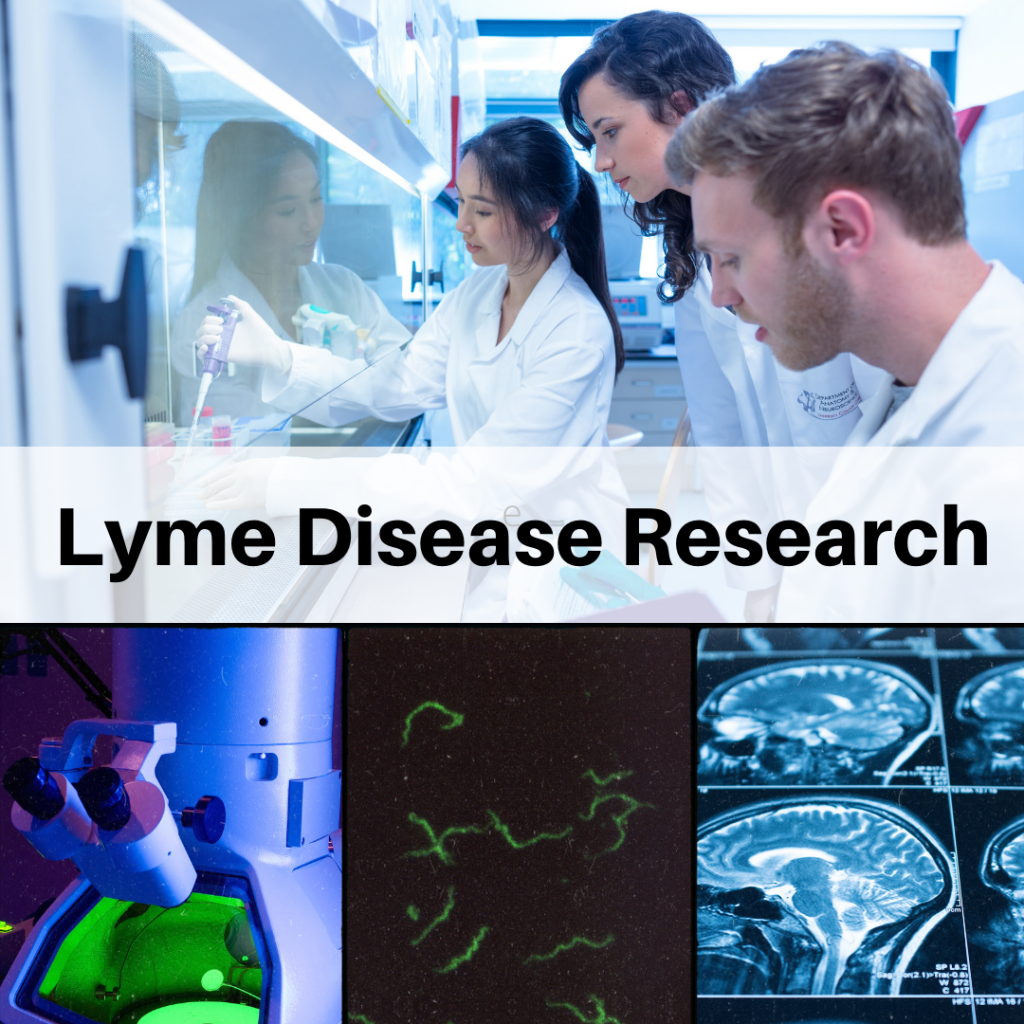
A new study by Tulane University shows that Lyme bacteria can persist in a patient’s brain. Researchers found Lyme bacteria in the brain tissue of an elderly woman even after she had received 10 days of antibiotics following a tick bite.

Dr. Monica Embers, Ph.D., is an associate professor of microbiology and immunology at Tulane University School of Medicine in New Orleans. She and other researchers at the Tulane National Primate Research Center conducted the study in collaboration with the Lyme and Tick-Borne Diseases Research Center at Columbia University Irving Medical Center. 

The study was recently published in “Frontiers in Neurology,” the leading peer-reviewed journal for neurologists. It’s a breakthrough that could lead to changes in recommendations for treatment, including longer courses of antibiotics to address a growing public health crisis. (See link for article)

________________________

**Comment**

Excerpt:

“This is not a pathogen you want in your brain,” she said.

But that’s exactly what researchers found in a 69-year-old woman who donated her brain to Columbia University for research before she died from dementia-related complications.

The woman received 10 days of antibiotics.  She went on to develop late-stage Lyme.

Despite years of IV treatment, the woman suffered from sleep disorders, personality changes, and dementia. Lyme pathogens were also found in her spinal cord. 

Embers states that Borrelia evades the immune system by changing its proteins and burying into the body.  It can also evade antibiotics.

Lyme bacteria is persistent and evasive in the human body.

A doctor goes onto state that blood testing is often negative.


Another woman was mentioned in the article who had to hunt to find practitioners willing to treat her.  After finding two, she finally got relief after going on a regimen of antibiotics, anti-viral medications, and supplements; however she still suffers from numbness & leg pain.

Her Lyme journey is featured in the book, “The Waiting Room: Invisible Voices of Lyme.”  

Watch Dr. Embers’ full interview below.

For more:

None of this is new, and everything experienced by these patients has been experienced by thousands of others for 40 years.  Spirochetes were found in Vicky Logan decades ago.

Vicky’s doctor, Dr. Kenneth Liegner wrote a lengthy book chronicling Vicky’s story and his unrelenting efforts to get her IV treatment which kept her alive.  

He also gave details about a 2001 International Lyme Conference in New York where attendees were censored by having their microphones shut off whenever they brought up the issue of chronic Lyme disease. Wormser denied to Liegner that the event was CDC sponsored, which is an important detail as it possibly could have been opened up by legislators; however, distributed materials showed the event was in fact CDC-sponsored.

But the real zinger occurred when Liegner requested an autopsy on Vicki and the pathologist not only refused, he refused to even let an outside pathologist use the facilities to perform it.  

The reason?  Wait for it…..

……danger of infection to himself and his staff.

But, I thought Lyme disease was benign and similar to the common cold – easily cured with 21 days of doxy?

Liegner wasn’t about to let the ball drop and found a way to get Vicki to the Chief of Neuropathology at Columbia Presbyterian where her autopsy results are now available to all.  Without this critical step, propelled by Liegner, the pathologist at Hudson Valley Hospital would have successfully prevented medical knowledge of chronic and neurologic Lyme disease as well as the cause of her hypotension, a missed diagnosis of myocardial infarction.

Under “Microscopic Description” it states, “The autopsy shows histopathologic findings consistent with the neurological manifestations of chronic Lyme disease.”

In the 1800’s, Texans had the battle cry, “Remember the Alamo.”

For Lyme patients, advocates, and the doctors who dare to treat them, we have a battle cry too:

“Remember Vicki Logan.”

Call me crazy, but the continued denial of Borrelia persistence despite a plethora of research demonstrating it in both animals and humans is akin to the current COVID madness despite effective treatments, and denial of COVID injection adverse reactions and deaths.  Our corrupt public health ‘authorities’ and conflict-riddled researchers have already determined what fits in their accepted narrative and a persistent infection just doesn’t fit, as it would render the need for lucrative Lyme vaccines null and void and we certainly can’t take away that lucrative cash cow.

Babesia Symptoms Can Be Deadly: A Family’s Story

https://danielcameronmd.com/babesia-symptoms-can-be-deadly-a-familys-story/

BABESIA SYMPTOMS CAN BE DEADLY: A FAMILY’S STORY

babesia-symptoms-deadly
The number of Babesia cases appears to be rising and as a recent article in the Washington Post reports, the tick-borne infection can be deadly when symptoms go unrecognized.

Babesia symptoms can be wide-ranging and difficult to recognize by clinicians and a missed or delayed diagnosis can be deadly.

In hopes of raising awareness, one family shares their story of a Babesia diagnosis that came just a little too late.

Jeff, a 51-year-old husband and father, was hospitalized with symptoms of jaundice, agitation and inability to urinate. It took 3 days before he was diagnosed with Babesia. But his symptoms had been present for at least one month — unrecognized, as the infection progressed.

Tiny tick leads to deadly infection

As his wife tells writer Abby Schwartz from the Washington Post,¹ Jeff frequently hiked outdoors near their home in Bucks County, Pennsylvania. About a month prior to being admitted into the hospital, he had removed a tick, “no bigger than a poppy seed.”

In hindsight, “he may have had Babesia for a month,” Schwartz writes.

Diagnosis comes too late

For several weeks, Jeff reportedly had Babesia symptoms including fevers and night sweats. But clinicians presumed he had a kidney infection and prescribed a course of antibiotics. He improved briefly.

Then, he took a turn for the worst. “Jeff was weaker, sweating, unable to sleep,” his wife explains. “His breathing was labored. The whites of his eyes had yellowed, and his bilirubin was climbing, a sign that red blood cells were breaking down at an unusual rate or of liver trouble.”


READ MORE: Babesia cases among the elderly are rising, may require longer treatment


He was moved to the ICU and placed in a medically-induced coma and put on a ventilator. Doctors noted that his symptoms resembled malaria, but still did not suspect a tick-borne infection.

“His team periodically woke him, and he would squeeze his wife’s hand.”

On Tuesday, an infectious disease doctor shared some positive news. “We think we have a diagnosis.”

They suspected that Jeff had Babesiosis, a potentially deadly infection caused by parasites Babesia microti, which is typically transmitted through a tick bite.

He was prescribed an antibiotic (azithromycin) and antiparasitic (Atovaquone) medication for 7 to 10 days.

On Thursday, he died — just 2 days after starting treatment.

“If Jeff had been diagnosed early, when he first complained of night fevers, it might have been different for him,” writes Schwartz.

Since Jeff’s death, his wife and family have worked to raise awareness about Babesia.

Babesia signs and symptoms

Most people infected with Babesia do not show symptoms or have mild to moderate flu-like symptoms such as fatigue, chills, sweats, headache, body aches, nausea, and loss of appetite, which can appear days or even months later. (There is no telltale rash as with Lyme disease.)

Individuals most at-risk include the elderly and people with immunocompromised conditions. In fact, the death rate among those with an impaired immune system is as high as 20%, explains Peter Krause, a senior research scientist at Yale School of Public Health and Yale School of Medicine.

Although it is usually transmitted through a tick bite, Babesia can be acquired through a tainted blood transfusion.

Babesia cases are reported mostly in the Northeast and Upper Midwest but the disease is “increasing in frequency and geographic range,” warns Krause.

Babesia: Not recognized by all doctors

“It has to step up to the level of an infectious-disease specialist being brought in before it might get diagnosed, whereas in an area where it’s more prevalent, some of the front-line people, the emergency room doctors or urgent care doctors, might be a little more attuned to it,” says Sorana Segal-Maurer, an infectious-disease specialist at New York-Presbyterian Queens Hospital.¹

Editor’s notes:

I disagree with three statements made by doctors interviewed for the story:

  1. I have Babesia patients who do not improve with only 7 to 10 days of treatment.
  2. I have Babesia patients who are sick who do not meet the risk criteria described above.
  3. I have Babesia patients who removed the tick in less than 24 hours and still became ill.
References:
  1. Babesiosis, a dangerous tick-borne infection that attacks red blood cells, appears to be a growing problem. Abby Schwartz, Washington Post, 5/29/21.

______________________

For more:

Vaccine-Induced Thrombocytopenia & Thrombosis

https://www.nejm.org/doi/full/10.1056/NEJMoa2109908?

Clinical Features of Vaccine-Induced Immune Thrombocytopenia and Thrombosis

List of authors.

  • Sue Pavord, F.R.C.Path., 
  • Marie Scully, M.D., 
  • Beverley J. Hunt, M.D., 
  • William Lester, M.D., 
  • Catherine Bagot, M.D., 
  • Brian Craven, M.B., B.Ch., 
  • Alex Rampotas, M.R.C.P., 
  • Gareth Ambler, Ph.D., 
  • and Mike Makris, M.D.

Abstract

BACKGROUND

Vaccine-induced immune thrombocytopenia and thrombosis (VITT) is a new syndrome associated with the ChAdOx1 nCoV-19 adenoviral vector vaccine against severe acute respiratory syndrome coronavirus 2. Data are lacking on the clinical features of and the prognostic criteria for this disorder.

METHODS

We conducted a prospective cohort study involving patients with suspected VITT who presented to hospitals in the United Kingdom between March 22 and June 6, 2021. Data were collected with the use of an anonymized electronic form, and cases were identified as definite or probable VITT according to prespecified criteria. Baseline characteristics and clinicopathological features of the patients, risk factors, treatment, and markers of poor prognosis were determined.

RESULTS

Among 294 patients who were evaluated, we identified:

  • 170 definite cases of VITT
  • 50 probable cases of VITT
  • All the patients had received the first dose of ChAdOx1 nCoV-19 vaccine and presented 5 to 48 days (median, 14) after vaccination. The age range was 18 to 79 years (median, 48), with no sex preponderance and no identifiable medical risk factors
  • Overall mortality was 22%
  • The odds of death increased by a factor of
    • 2.7 (95% confidence interval [CI], 1.4 to 5.2) among patients with cerebral venous sinus thrombosis
    • 1.7 (95% CI, 1.3 to 2.3) for every 50% decrease in the baseline platelet count
    • 1.2 (95% CI, 1.0 to 1.3) for every increase of 10,000 fibrinogen-equivalent units in the baseline d-dimer level
    • 1.7 (95% CI, 1.1 to 2.5) for every 50% decrease in the baseline fibrinogen level
    • Multivariate analysis identified the baseline platelet count and the presence of intracranial hemorrhage as being independently associated with death
    • observed mortality was 73% among patients with platelet counts below 30,000 per cubic millimeter and intracranial hemorrhage
CONCLUSIONS

The high mortality associated with VITT was highest among patients with a low platelet count and intracranial hemorrhage. Treatment remains uncertain, but identification of prognostic markers may help guide effective management. (Funded by the Oxford University Hospitals NHS Foundation Trust.)

_____________________

**Comment**

The numbers don’t lie.  

A majority of these “vaccinated” patients had VITT which explains what is happening in reality – blood clotting issues.  

  • We’ve been warned by a Canadian doctor doing D-dimer tests on his “vaccinated” patients that 62% show microscopic blood clotting.
  • A pathologist also states these injections cause severe inflammation due to the “spike protein” which is a dangerous toxin that crosses the blood-brain barrier and disrupts blood vessels throughout the body and brain.  He also reiterates that these injections are not “vaccines.”

Please notice the overall mortality of 22% and significant increased odds of death on these fully “vaccinated” individuals that have been told ad nauseam that these injections will be protective and keep you from hospitalization and death.

For a mounting list of adverse reactions and death (with many examples of blood clotting & cardiovascular issues – even in young people):  https://madisonarealymesupportgroup.com/2020/12/21/warning-3150-injuries-in-1st-week-of-covid-vaccines-among-american-healthcare-workers-pregnant-women-included/