Archive for the ‘mosquitoes’ Category

Massachusetts Officials Approve Curfew Due to EEE & Fauci Recovering from West Nile Virus

https://www.boston25news.com/news/local/despite-parental-pushback-officials-approve-curfew-mass-town-amid-critical-eee-risk

Despite parental pushback, officials approve curfew in Mass. town amid critical EEE risk

OXFORD, Mass. — Health officials in one of four Massachusetts communities facing a critical risk for Eastern Equine Encephalitis met Wednesday night at a special meeting to discuss measures to keep residents safe, ultimately approving a townwide curfew.

As of Wednesday, the towns of Oxford, Douglas, Sutton, and Webster were considered at critical risk for EEE, according to the latest Massachusetts arbovirus risk map.

The towns were elevated to the high-risk level after a man in his 80s recently tested positive for EEE last week.  (See link for article)

______________

**Comment**

The curfew set at 6pm will shift to 5pm starting Oct 1 and will last through the first frost.

Please note all of this due to one 80 year old man testing positive.

Please note that EEE is a nationally notifiable condition.  This means they are counting cases and keeping track of it.  Bartonella, on the other hand, isn’t, yet can make you miserable or kill you just the same.

The CDC webpages state:

  • Eastern equine encephalitis virus IgM testing is available commercially, at some state health departments, and at CDC.
  • A positive eastern equine encephalitis virus IgM test result should be confirmed by neutralizing antibody testing at a state public health laboratory or CDC.
  • Some patients who are severely immunocompromised might require molecular (e.g., RT-PCR) testing for diagnosis.
  • Most persons infected with eastern equine encephalitis virus have no apparent illness. Symptomatic persons typically develop a systemic febrile illness that can progress in <5% of individuals to meningitis or encephalitis. The incubation period for eastern equine encephalitis ranges from 4 to 10 days but can be several weeks in patients who are immunocompromised.
  • Signs and symptoms in patients with neuroinvasive disease can include headache, meningismus, confusion, focal neurologic deficits, seizures, and coma.
  • Eastern equine encephalitis should be considered in any person with an acute febrile or neurologic illness who has had recent exposure to mosquitoes, especially during the summer months in areas where virus activity has been reported.
  • EEE has a fatality rate of 30%.  Of those that recover, more than half are left with physical or neurologic sequelae.

The article doesn’t state how this elderly man was tested but I’ll bet my hat it was PCR, which inventor Kary Mullis states should never be used to diagnose anybody.

The article also doesn’t state whether this man even has symptoms or how severe they symptoms are.

Does all of this look and feel like deja vu?

It should.

________________

https://www.theguardian.com/us-news/article/2024/aug/24/anthony-fauci-west-nile-virus

Anthony Fauci recovering at home after hospitalization for West Nile virus

Former head of the NIH’s National Institute of Allergy and Infectious Disease is expected to make a full recovery

Anthony Fauci is recovering at home from a West Nile virus infection, a spokesperson told news outlets on Saturday.

The former head of the National Institutes of Health’s (NIH) National Institute of Allergy and Infectious Disease was hospitalized for six days with the virus. Fauci, 83, is expected to make a full recovery.

“Tony Fauci has been hospitalized with a case of West Nile virus. He is now home and is recovering. A full recovery is expected,” a spokesperson told multiple outlets.

Fauci retired from his role at the NIH in 2022 after achieving widespread recognition for his role in public health communication during the Covid-19 pandemic. He now serves as a distinguished professor at Georgetown University’s School of Medicine. (See link for article)

______________

**Comment**

CDC webpages state:

  • West Nile virus is the leading cause of mosquito-borne disease in the U.S.
  • Most people with West Nile do not feel sick.  (About 1 in 5 have fever and symptoms)
  • Symptoms include fever, headache, body aches, vomiting, diarrhea, or rash.
  • There are no vaccines to prevent or medicines to treat West Nile virus disease (West Nile) in people.

For more:

Please note that all sorts of shenanigans have been done for decades against mosquitoes and nobody knows the effects of these interventions.  As in the case of ‘vaccines,’ man-made interventions to kill bugs often have deleterious effects on biological health, which few are tracking.

LSU Obtains Grant to Synthesize Affordable Nootkatone

https://www.lsu.edu/eng/news/2024/03/che-nsf-pfi-grant-lyme-disease.php

Chemical Engineering, Biological Sciences Faculty Receive Largest NSF PFI Grant Ever Awarded to LSU

Mike Benton, Kerry Dooley, Roger Laine
Nootkatone Studies Could Lead to Prevention of Lyme Disease

March 25, 2024

BATON ROUGE, LA – Thanks to a $550,000 National Science Foundation Partnership for Innovation grant—the largest NSF PFI grant ever awarded to LSU—LSU Chemical Engineering (ChE) Professor Kerry Dooley, LSU ChE Department Chair and Professor Mike Benton, and LSU Department of Biological Sciences (Biol. Sci.) Professor Roger Laine will continue their work on a project that could bring affordable and effective insect repellent to the masses, possibly decreasing the number of Lyme disease, malaria, and West Nile virus cases around the world.

The project involves the use of nootkatone, an FDA-approved organic compound found in grapefruit skin and Alaska yellow cedar trees that is a natural deterrent for many insects, including the deer tick responsible for Lyme disease. The LSU researchers propose decreasing the cost of the nootkatone synthesis, making any products made with the compound affordable to the general public.

“The family of compounds that make up nootkatone is already proven to be both safer and more effective than existing commercial repellents,” principal investigator Dooley said. “However, it’s now too expensive for consumer insect repellents. We plan to greatly streamline, optimize, and reduce the costs associated with the synthesis.”

According to Laine, there have been few insect repellents on the market since DEET, which is found in most insect repellent sprays and creams currently available. However, a mosquito test showed that nootkatone at 5% in rubbing alcohol was superior to DEET, which usually needs to be administered at greater than 20% concentration, even six hours after application.

Years ago, Laine discovered the efficacy of nootkatone as an insect repellent while collaborating with retired LSU AgCenter Entomologist Gregg Henderson in Laine’s lab. They found that nootkatone repelled insects like mosquitos, gnats, wood ticks, fleas, termites, lice, and fire ants because the insects weren’t eating the vetivone grass that, unbeknownst to them, contained nootkatone. Former LSU Biol. Sci. Senior Research Associate Betty Zhu tested 15 other compounds that resembled the structure of the vetivone and discovered that nootkatone was the best repellent compound. Nootkatone had already been approved by the FDA at the time, with the CDC later discovering that it also repels deer ticks.

Though nootkatone was found to be the best repellent, the problem was the cost to buy it in pure form.

“Nootkatone costs $2,500/kg, which is too costly for insect repellent,” Laine said. “It should be $200-$300/kg, then you can add it to lotions and sunscreens.”

Dooley discovered that one important way to save on the cost would be to modify a step in the eight-step synthesis of nootkatone.

“I did a cost analysis of the synthesis process, and 70% of the cost is concentrated in the fourth step of the eight-step process,” Dooley said. “I decided this step in particular could be significantly reduced in cost.”

The eight-step synthesis was created in just two years by former LSU Chemistry Graduate Student Anne Sauer, who was working under retired professor William Crowe as a collaboration with Laine and Henderson. To simplify two oxidation steps in the eight-step synthesis, which is patented by LSU, Laine subsequently obtained a Board of Regents seed grant and hired synthetic chemist Xuefeng Gao to successfully modify the synthesis using ozone, now covered by new U.S. and Japanese LSU patents authored by Laine.

In the fourth step, the original paper and patent uses potassium hydride and 18-Crown-6 ether, along with tetrahydrofuran, as a solvent. Dooley read up on how people were trying to execute this step without using these expensive components and thought he and Benton should come up with a catalyst and solvent that could significantly reduce the cost of this step.

“It’s incredibly complicated and it takes a long, sustained effort to go from making a few grams of something to making kilograms or kilotons,” Dooley said. “There’s a lot of work on optimizing separations, minimizing the solvent use, getting certain impurities down, and getting yields slightly up. These things take a lot of time and effort.”

The LSU research team hopes to sell their synthesis process to a manufacturing company, who would then be able to mass produce affordable nootkatone products that could save people’s lives by preventing bites from infectious insects.

A 2024 CDC report states that there were 62,551 Lyme disease cases in 2022. Recent estimates using new data collection methods suggest approximately 476,000 people may be diagnosed with Lyme disease each year in the U.S.

“The deer tick is spreading throughout the U.S.,” Dooley said. “It’s not just prevalent in the Northeast.”

In other words, insects are going nowhere. A 2023 CDC report states there were 2,406 cases of West Nile virus across 43 states with the number of cases expected to increase in 2024. Per the World Health Organization, there were a reported 249 million cases of malaria worldwide last year.

“Sixty million people die of malaria each year,” Laine said. “It’s possible that if this eight-step synthesis process could produce nootkatone products that get to poorer countries, then WHO could possibly fund it. Mosquito nets could be covered with it, or they could have cloth ankle bands with nootkatone so ticks can’t crawl up your leg. The Department of Defense is also interested in ways to protect military personnel against tick-borne diseases. There are a lot of marketing niches with this.”

Contact: Libby Haydel
Communications Manager
225-578-4840
ehaydel1@lsu.edu

For more:

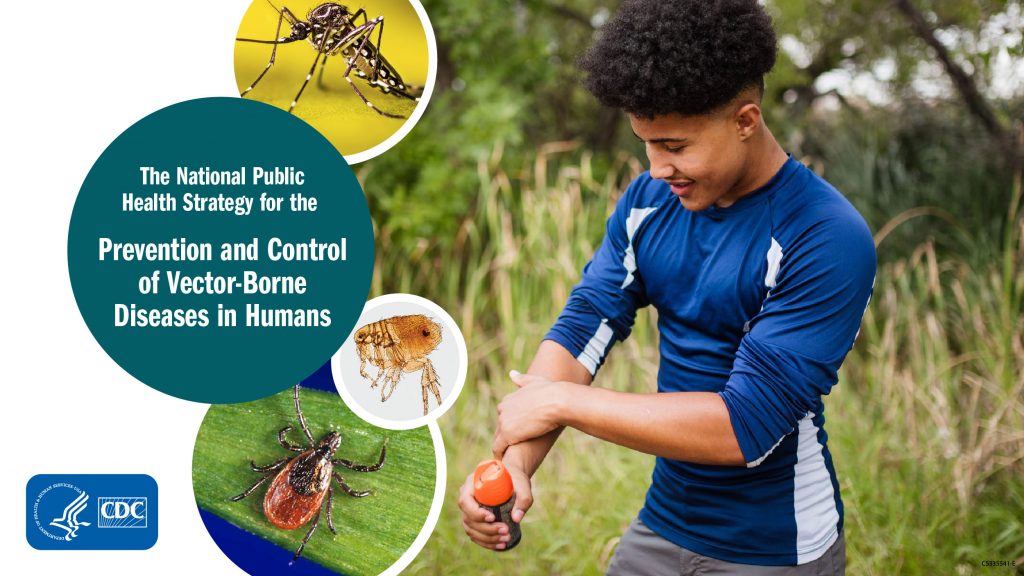
HHS Releases Vector-borne Disease National Strategy

https://www.lymedisease.org/hhs-vector-borne-disease-strategy/

HHS releases vector-borne disease national strategy

The U.S. Department of Health and Human Services has released the National Public Health Strategy to Prevent and Control Vector-Borne Diseases in People (VBD National Strategy).

As directed by the 2019 Kay Hagan Tick Act—named after the U.S. Senator who died due to complications from a tickborne illness—HHS led a four-year process with civilian agencies and defense departments to deliver this strategy.

Co-led by the HHS Office of the Assistant Secretary for Health and the Centers for Disease Control and Prevention, the strategy identifies and describes federal priorities to detect, prevent, respond to, and control diseases and conditions caused by vectors in the United States.

This VBD National Strategy represents the largest formal federal coordination effort focused on vector-borne disease prevention and control with contributions by over 50 representatives across 17 federal agencies. This collaborative effort will help

  • Address the significant public health challenges related to vector-borne diseases;
  • Incorporate a One Health approach to enhance coordination and communication across human, animal, and environmental areas; and
  • Reverse the upward trends in illness, suffering, and death.

Growing Problem of Vector-Borne Diseases

Vectors—biting insects and arachnids like mosquitoes, ticks, fleas, and lice—can spread germs that make people sick. These diseases are major causes of death and illness worldwide, and they increasingly threaten the health and well-being of people in the United States.

Diseases and conditions spread by vectors include Lyme disease, Zika virus, West Nile virus, dengue, malaria, plague, Rocky Mountain spotted fever, and alpha-gal syndrome.

According to CDC, reported cases of these diseases doubled over the last two decades. Due to shifting land use patterns, global travel and trade, and a changing climate, the threat of existing and emerging vector-borne diseases continues to grow.

As geographic ranges of vectors expand, the number of pathogens spread by vectors continues to climb—yet only one vaccine is available to protect people against almost 20 domestic threats.

Goals of the Vector-Borne Disease National Strategy

The rising public health threat of vector-borne diseases requires a comprehensive and sustained national effort to protect people. In 2020, the U.S. government published a framework responding to this need, titled A National Public Health Framework for the Prevention and Control of Vector-Borne Diseases in Humans (Framework). A consortium expanded the Framework into this comprehensive strategy.

As stipulated in the Kay Hagan Tick Act, HHS and CDC consulted the Tick-Borne Disease Working Group while developing the interagency strategy. The strategy incorporates recommendations from the now sunset Working Group.

In addition to identifying challenges and opportunities to enhance the prevention and control of vector-borne diseases, the strategy lays out an ambitious national public health approach to develop diagnostics, drugs, and treatments for coexisting conditions. Although critical to public health and wellness, clinical and healthcare services, access to care, legal protections, and reimbursement or payment for clinical services are outside the scope of this strategy.

Implementing the VBD National Strategy

The federal government envisions a nation where vector-borne diseases no longer threaten the health and well-being of people. Agencies and departments are proactively working to protect people from illness, suffering, and death due to vector-borne diseases by

  • Better understanding when, where, and how people are exposed to and get sick or die;
  • Developing, evaluating, and improving tools, methods, and guidance to diagnose diseases and their pathogens;
  • Developing, evaluating, and improving tools, methods, and guidance to prevent and control disease;
  • Developing and assessing drugs and treatment strategies; and
  • Disseminating and implementing public health tools, programs, and collaborations to prevent, detect, diagnose, and respond to threats.

Federal Government to Develop New Approaches to the Threat

Vector-borne diseases are a global threat, with national security, economic, and health implications for the United States. As the federal government continues to proactively strengthen its response to this threat, HHS and CDC plan to develop future iterations of the VBD National Strategy with opportunities for public engagement.

Read the VBD National Strategy.

SOURCE: US Department of Health and Human Services

______________

**Comment**

It’s quite easy to see where this is going.

  1. They emphasize there’s only 1 vaccine. Vaccines are the only thing these people care about because they are big business and quite lucrative.
  2. Despite more and more experts defying the climate narrative, and proof that the entire paradigm is corrupt, and being used for a much bigger agenda, it is mentioned here because it too is big business and quite lucrative.
  3. While the article mentions diagnostics, drugs, and treatments for coexisting conditions – they won’t lift a finger regarding Lyme/MSIDS, unless it’s a vaccine.  No money in these other things.
  4. The buzz word of the day – ‘One Health’ has been hijacked by the corrupt WHO as an ultimate power grab, which would give them unlimited control over humans, animals, and the environment.
  5. Similarly to the completely unobtainable goal of a ZERO COVID policy, the federal government’s vision of a nation where vector-borne diseases no longer threaten the health and well-being of people is seriously a joke.
  6. The mention that vector borne diseases are a national security threat is code for: we are going to keep working on vector bioweapons.
Again, the only thing the HHS is going to release is a lot of hot air.

It is not going to do ONE thing to help the plight of Lyme/MSIDS patients. It will gladly spend even more of our tax-dollars to do yet more worthless research showing the same things they’ve been showing for 40 years.

MMR Fails to Protect Against Measles & Destroys Natural Immunity and Dengue Vaccine Trial: More Vaccinated Kids Died Than Unvaccinated

https://popularrationalism.substack.com/p/the-2024-narrative-on-measles-

The 2024 Narrative on Measles and Measles Vaccines Falls Flat on Facts: MMR Fails to Protect Against Measles Infection and Destroys Natural Immunity

Surprising facts to put things into perspective. Measles vaccines took longer, but have failed for the same reason COVID19 vaccines have failed.

By James Lyons Weiler and Alison Fujito

More recently, in 2012, MMR vaccine coverage was 90.6%, and in 2018/19, according to the CDC, it was 91.6%. With the latest data, the CDC states that MMR vaccination rates were 93% in the 2021/2022 and 2022/2023  school years. This thoroughly refutes any claims of a “dangerous shift” (or any shift), a new movement driving it, and “political infiltration.”

Journalism used to mean “reporting the facts.” Somewhere along the way, the definition changed; the Cambridge Dictionary now defines journalism as “the work of collecting, writing, and publishing news stories and articles in newspapers and magazines or broadcasting them on the radio  and television,”  without a word about facts.  (See link for article)

______________

**Comment**

Weiler completely dismantles the CDC narrative on measles, and “vaccine” hesitancy has nothing to do with measles cases or outbreaks.

Specifically, the alleged “rise” is not a rise. It’s a 3-4 year cycle, which occurs naturally and is also due to vaccine failure and the loss of passive immunity in infants and toddlers from pregnant and breastfeeding women.

OOPs!  There’s an inconvenient truth.

Here’s another:

The article’s title and content paint vaccine-hesitant people, regardless of reason, as an “infiltrating”organized political movement. But in fact, the exact opposite is true: vaccination mandate proponents, including vaccine manufacturers, are not only an “organized political movement;” US state vaccine policies are actually driven by well-funded national political organizations like Immunization Coalition, which counts 10 vaccine manufacturers among their “corporate members,” whose state groups advertise that they meet with their state legislators to advocate for stricter vaccination laws. Pfizer and other vaccine manufacturers have donated to the campaigns of at least one state senator who proposed a state bill to require all children to be vaccinated against Covid.  

Well now.  That explains some things.

For more:

https://childrenshealthdefense.org/defender/wsd-dengue-vaccine-trial-kids-deaths-childhood-obesity-lead/

Dengue Vaccine Trial: More Vaccinated Kids Died Than Unvaccinated

The Defender’s Weekly Science Digest delivers a roundup of the latest research on children’s health, including studies on vaccines, drugs, chemicals, pesticides and lead exposure.

3/8/24

The vaccine worked — but the kids died

Long-term efficacy and safety of a tetravalent dengue vaccine (TAK-003): 4·5-year results from a phase 3, randomised, double-blind, placebo-controlled trial; The Lancet Global Health, February 2024.

The good news: the vaccine was 61.2% effective in preventing dengue and 84.1% effective in preventing dengue-associated hospitalization.

The bad news? Nearly twice as many vaccinated as unvaccinated children died during their clinical study.

Investigators enrolled 20,099 children, ages 4-16, 50.5% males, from 26 medical or research centers in “dengue territory” — Brazil, Colombia, Dominican Republic, Nicaragua, Panama, Philippines, Sri Lanka and Thailand.

Sick or highly allergic children were excluded.

The researchers administered two doses, three months apart, of an experimental, live-attenuated  dengue vaccine to 13,401 children. The vaccine, TAK-003, was developed by Cambridge, Massachusetts-based Takeda Pharmaceuticals.

TAK-003’s slightly superior side effect profile did not translate into the most significant safety signal of all — death — as 11 vaccinated children died during follow-up versus just 6 unvaccinated children.

In July 2023, Takeda “voluntarily” withdrew its application to sell TAK-003 in the U.S. due to discrepancies in its data collection practices, according to a Takeda press release.

Military Report: Most Frequently Diagnosed Vector-borne Diseases

https://health.mil/News/Articles/2024/01/01/MSMR-Vector-Diseases

Brief Report: The Four Most Frequently Diagnosed Vector-borne Diseases Among Service Member and Non-Service Member Beneficiaries in the Geographic Combatant Commands, 2010–2022

Vector-borne diseases may pose an increased risk for U.S. service members during recurring military training exercises, operations, and response missions, in addition to residence in endemic regions within and outside the continental U.S.1,2 Prior MSMR reports address VBD surveillance, described by surveillance data for 23 reportable medical events, among active duty and reserve component service members.3,4 This report covers a 13-year surveillance period, from January 2010 to December 2022, and provides linear trends of selected VBDs among Armed Forces service and non-service member beneficiaries diagnosed at installations within the Northern Command (NORTHCOM), Africa Command (AFRICOM), Central Command (CENTCOM), European Command (EUCOM), Indo-Pacific Command (INDOPACOM), or Southern Command (SOUTHCOM). Trends of only the four most frequently reported VBDs were evaluated, as Lyme disease, malaria, Rocky Mountain Spotted Fever, and dengue fever comprised 90% (n=5,199) of all 23 VBDs (n=5,750) among Military Health System beneficiaries documented as RMEs during the surveillance period.

Methods

This study includes all MHS beneficiaries from January 2010 through December 2022. Data were acquired from RME records of 23 VBDs from the Defense Medical Surveillance System, limited to the four most-diagnosed VBDs in DMSS during the surveillance period; a full listing of VBD RMEs are available in a prior MSMR report.3 A VBD case was defined as an individual identified through a RME report, classified as “confirmed,” “probable,” or “suspect” by having met specified laboratory or epidemiologic criteria.5

Demographic information including military component (active, reserve, guard), beneficiary status (service members or non-service member), and U.S. Combatant Command at time of diagnoses were included. Non-service member beneficiaries included dependents, former service members, and retirees. MHS beneficiaries diagnosed as a case before the surveillance period were excluded. An individual could qualify as a case once for each RME type. Incidence date was the earliest event date, with classification determined by utilizing all available data, prioritizing confirmed over probable or suspect records.

Results

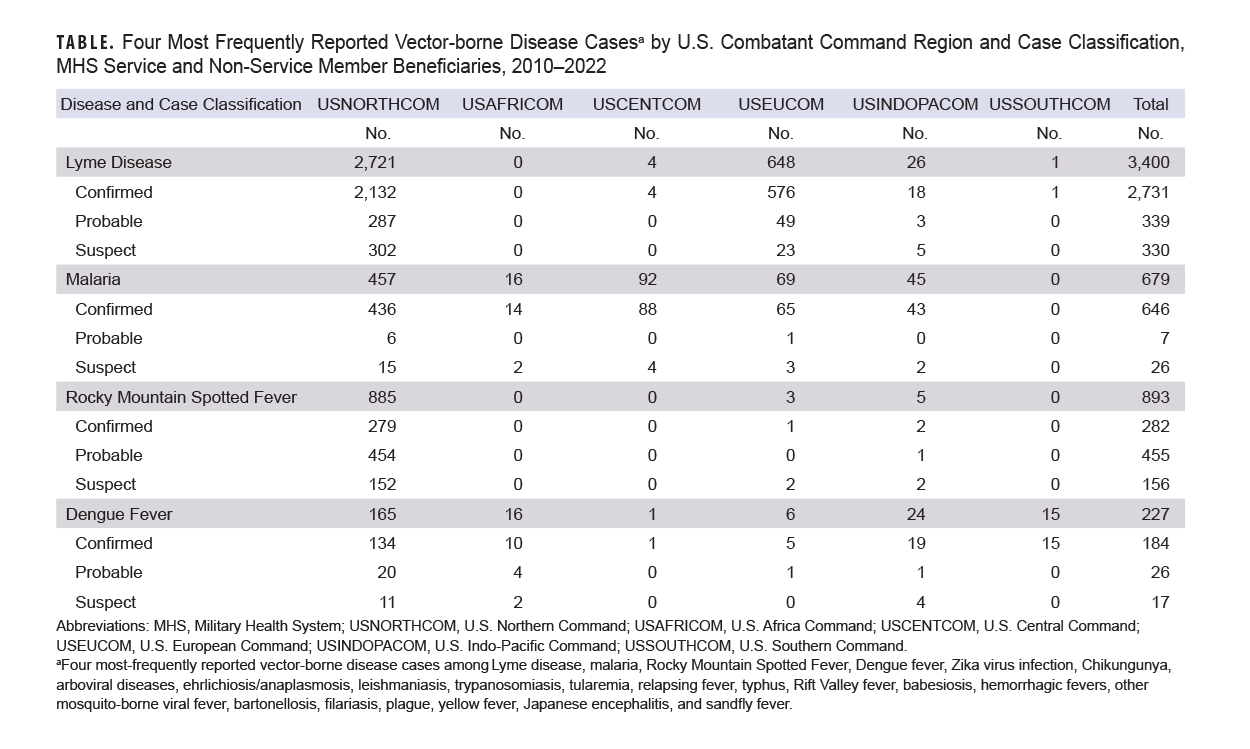
Click on the table to access a 508-compliant PDF versionClick on the table to access a 508-compliant PDF version

A total of 5,199 confirmed, probable, and suspect cases of Lyme disease (n=3,400), RMSF (n=893), malaria (n=679), and dengue fever (n=227) were identified among MHS beneficiaries from January 2010 through December 31, 2022 (Table). Of those confirmed, probable, and suspect cases, 2,343 were diagnosed in service members and 2,918 were diagnosed in non-service member beneficiaries (data not shown). Lyme disease and RMSF, both caused by tick-borne pathogens, accounted for 83% of cases, while malaria and dengue fever, transmitted by mosquito vectors, comprised the remainder.

Since Lyme disease was the most common VBD of the four diseases evaluated during the surveillance period, trends of confirmed and probable cases of Lyme disease over time by CCMD are presented in the Figure. Confirmed Lyme disease cases peaked in 2012 (n=455) and then gradually decreased over the study period to a low of 75 cases in 2022; probable cases peaked in 2017 (n=53) and steadily decreased to a low of 15 cases in 2022; suspect cases peaked in 2016 (n=73) and progressively declined to a low of 8 cases in 2022 (data not shown). Cases from NORTHCOM represented the greatest number of confirmed and probable Lyme disease cases during the entire surveillance period (Figure). The annual number of confirmed and probable Lyme disease cases from EUCOM were greatest in 2011 and lowest in 2017; Lyme cases were very low in all other CCMDs, ranging from 0 to 6 cases annually (data not shown).

The Atlantic and central regions of the U.S contributed 85% of NORTHCOM’s reported RMSF cases (data not shown). NORTHCOM averaged 30 RMSF cases annually between 2010 and 2016, dramatically increasing to an average of 149 cases between 2017 and 2019 (data not shown). NORTHCOM was only able to confirm 32% of RMSF cases reported during the surveillance period (Table).

Discussion

Lyme disease cases constituted the largest proportion of overall RMEs in this report, with highest numbers occurring in 2012. A substantial proportion of Lyme disease cases were reported from locations in the northeastern U.S., where Lyme disease is known to be endemic: 43% of service members and non-service beneficiaries were diagnosed at NORTHCOM Groton (New London Submarine Base, CT) and NORTHCOM New England. The New London Submarine Base is close to Lyme, Connecticut, where an epidemiological evaluation of a cluster of children with arthritis resulted in the first complete description of the infection in 1976, giving the disease its name.6 Connecticut still ranks in the top 10 states for reported Lyme disease cases.7 No Lyme disease cases were reported in AFRICOM during the surveillance period, because the vectors (Ixodes pacificus and Ixodes scapularis) are not present in the region.

In 2017, the armed forces expanded its RME guidelines to include all spotted fever rickettsioses (SFR), to better align with CDC case definitions.2 Diagnoses and reports of rickettsial diseases at military hospitals and clinics in NORTHCOM (where RMSF is endemic) significantly increased after the surveillance requirement expansion from only RMSF to the broader SFR group. In this review, all SFR cases were RMSF diagnoses (n=893).

Approximately 68% of RMSF cases reported during the surveillance period could not be confirmed. All laboratory tests performed at military health facilities for RMSF were Indirect Fluorescent Antibody (IFA) assay and other antibody tests, and no records of testing with PCR of blood or eschar specimens were found. Definite identification of Rickettsiae is not feasible solely by IFA due to considerable serologic cross-reactivity, particularly when high-endpoint titers are seen for more than 1 rickettsial antigen.8 Increased use of molecular assays (i.e., real-time PCR) can both confirm and offer species-specific diagnosis in a single sample, facilitating identification and management of rickettsial diseases in both service members and non-service beneficiaries.

The observed decline in the incidence of mosquito-borne cases, such as malaria and dengue, among deployed service members over the last decade is likely due to reduced deployments to endemic regions, with the exception of EUCOM.4 Although dengue fever is not represented significantly in EUCOM in this study, there is a rising risk of dengue and other VBDs due to environmental changes and expanding global travel and trade.9,10,11

VBDs often manifest with non-specific symptoms, and when unconfirmed could constitute a number of other infections or health conditions. Lyme disease is frequently misdiagnosed as chronic fatigue syndrome, fibromyalgia, or multiple sclerosis. This non-specificity of symptoms and related issues such as diagnostic availability and cross-reactivity in diagnosis confirmation can pose challenges for accurate case identification and classification, resulting in the major limitations to this study’s findings.

This report summarizes data from electronic reports of RMEs and examines the incidence and geographic distribution of the top four vector-borne infectious diseases among service members and non-service MHS beneficiaries in the CCMDs during a recent 13-year period. Awareness of the risk of these VBDs will help senior leaders develop and employ strategies to decrease avertable medical problems in MHS beneficiaries, maximizing the productivity and readiness of the medical force.

Author Affiliations

Epidemiology and Disease Surveillance Department, U.S. Army Public Health Command–West, Joint Base San Antonio–Fort Sam Houston, TX: Dr. Stidham; Human Health Services, U.S. Public Health Command–Pacific, Tripler, HI: COL Cole; Epidemiology and Analysis Branch, Armed Forces Health Surveillance Division, Defense Health Agency: Dr. Mabila

(See link for article and graphs)

________________

For more: