Archive for the ‘Lyme’ Category

Long COVID Looks Just Like Lyme/MSIDS

https://www.eatthis.com/news-sure-signs-covid-infection/

Sure Signs You’ve Already Had a COVID Infection

The signs of Long COVID are ones we all need to know.
 

Article Summary:

  1. Persistence of Fatigue
  2. Shortness of Breath
  3. Unusual Pain Syndromes
  4. Loss of Smell or Taste for Long Periods of Time
  5. Profound Cardiovascular Disability
  6. Lack of Mental Cognitive—Cognitive Fog
  7. Auto-Immune – Like Issues
  8. Anxiety and Depression

_________________

**Comment**

While the world has come to a screeching halt over a coronavirus, Lyme/MSIDS patients continue to suffer in silence, unbelieved. Patients deal with all of the above symptoms and much, much more, but are told that they are imagining it. Most are suffering with a multitude of pathogens, each with the ability to make them miserable, but together serve as a one, two, punch and you are out. Cases are wildly variable and very difficult to treat.  The same medical establishment, led by the same corrupt public health ‘authorities’ continue to follow an unscientific, biased narrative that is slowly and painfully debilitating and killing people.

PCR HPV testing leads to >95% unnecessary colposcopic (cervical) biopsies on hundreds of thousands of healthy women each year.  The PCR test appears to have just as high of a false positive rate for COVID. 

Lyme testing, on the other hand, misses anywhere from 7086% or more of patients.


Clinical Presentation of Lyme Disease in Patients Living in Germany – Same Story, Different Country

https://danielcameronmd.com/presentation-lyme-disease-patients-germany/

Clinical presentation of Lyme disease in patients living in Germany

Lyme disease presentation in man from Germany holding his hands over his face.
In their article, entitled “Neuropsychiatric and Psychological Symptoms in Patients with Lyme Disease: A Study of 252 Patients,” Hündersen and colleagues describe the clinical presentation, diagnostic process and treatment regimens for 252 Lyme disease patients. [1]

The authors collected data via an online questionnaire from 252 Lyme disease patients and a control group of 267 healthy individuals living in Germany to examine the clinical presentation, including neuropsychiatric and psychological symptoms.

The findings revealed that “Lyme disease can cause diverse psychological and neuropsychiatric symptoms. These include limitations in quality of life, sleep, attention, and memory, as well as depressive symptoms.

Time to diagnosis

The majority of the patients were diagnosed with Lyme disease based on ELISA (53.2%), Western blot (43.7%), and lymphocyte transformation test results (41.7%).

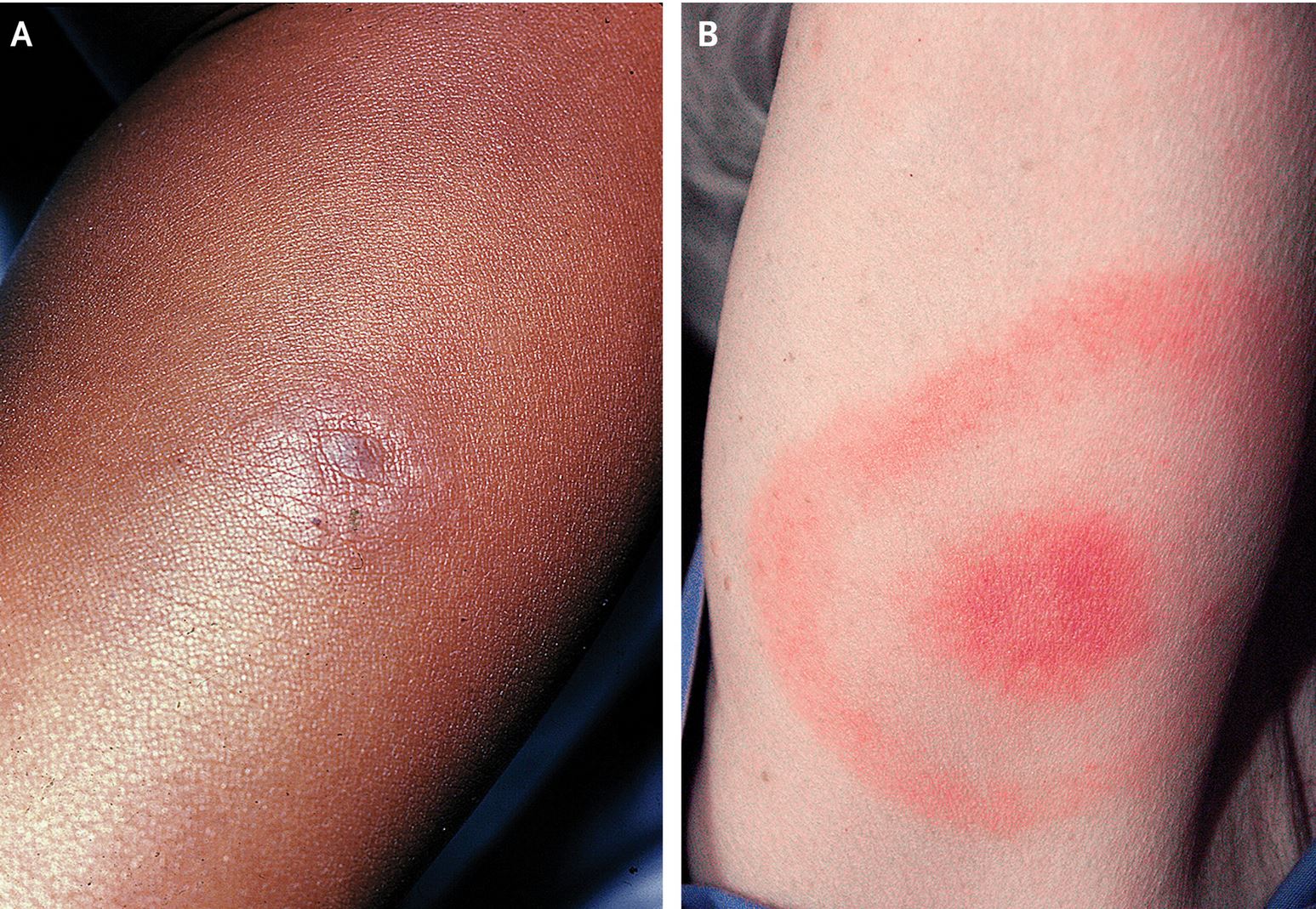
Out of the 252 participants, nearly half (45.5%) recalled an erythema migrans rash, while 74% recalled a tick bite “that possibly triggered Lyme disease.”

It took approximately 8 years to receive a diagnosis following the tick bite.

On average, patients visited almost 8 physicians to obtain a diagnosis.

It took approximately 8 years to receive a diagnosis following the tick bite.  Less than half (46%) received their diagnosis within the first 5 years after the onset of symptoms.

Co-infections

The majority of participants were not diagnosed with or tested for a co-infections.

“A total of 25% of the sample stated that they had (exactly one) co-infection,” the authors explain, while 15% reported having 2 co-infections.

“For patients that suffered from co-infections, Chlamydia infection was particularly common (34.9%), as was the Epstein–Barr virus (34.9%).”

Treatment

Out of the 252 participants, 168 received antibiotic treatment that lasted at least 3 weeks.

Symptoms improved for nearly 73% of these patients.

93% of participants reported a relapse of symptoms after the completion of antibiotic therapy.

“The type of treatment was oral in most cases (47.6%), or a combination of oral and intravenous therapy (48.8%),” according to the authors.

Intravenous antibiotic therapy was prescribed in only 3.6% of the cases.

Authors Conclude:

  • “It became clear that Lyme disease is often diagnosed very late.”
  • “It appears that people suffering from Lyme disease have significantly lower quality of life and sleep and show cognitive impairments when it comes to attention and memory.”
  • “This study shows that 3.1% of Lyme patients were satisfied with their lives and that 37% scored in the lower third of the quality-of-life scale.”
  • “It was also shown that Lyme patients tend to have depressive symptoms.”
References:
  1. Hündersen F, Forst S, Kasten E. Neuropsychiatric and Psychological Symptoms in Patients with Lyme Disease: A Study of 252 Patients. Healthcare (Basel). 2021 Jun 14;9(6):733. doi: 10.3390/healthcare9060733. PMID: 34198647; PMCID: PMC8232147.

________________

**Comment**

This article, right here, encapsulates dire issues that have remain untouched for over 40 years.

  • Abysmal testing is still relied upon for diagnosis
  • Having the EM rash and remembering a tick bite happen far less than we are being told
  • People are still diagnosed and treated late, even though everyone and their dog knows this is a problem
  • Eight years is a long time to suffer, allowing pathogens to travel everywhere in the human body causing untold damage
  • Three weeks of antibiotics is a complete JOKE and is laughable if the consequences weren’t so dire
  • Most were not tested for coinfections Since testing for coinfections is just as abysmal as for Lyme – these patients saved a lot of money.  The minus, of course, is not understanding that cases with coinfection involvement are far more difficult to treat and require far more medications for a longer period of time. Lyme literate doctors understand this fact and will diagnose and treat clinically (based upon symptoms – not tests alone)
  • The fact their symptoms improved in 3 weeks doesn’t mean they should end treatment.  In fact, for those with a brain, it indicates antibiotic treatment works and should be continued until they don’t work, and then, they should be changed, not stopped as coinfections often need addressing and require different meds
  • 93% relapsing should prove to the deniers once and for all that the measly 21 days of doxycycline clearly isn’t working. 
  • 93% relapsing should also put to rest the myth that only 10-2-% go onto suffer persistent symptoms. When you count those who were diagnosed and treated late, as these patients were, it is an astounding 60% that go on to suffer debilitating symptoms.
  • The life-altering, debilitating symptoms these poor people suffer with show that this 40-year old experiment must end.  This is barbarism on a scale similar to the Tuskagee experiment

TMJ Arthritis Triggered by Lyme Disease

https://danielcameronmd.com/tmj-arthritis-triggered-by-lyme-disease/

TMJ arthritis triggered by Lyme disease

woman with TMJ from Lyme disease holding her jaw

A case report by Weise and colleagues demonstrates that Lyme disease can induce temporomandibular joint (TMJ) pain and may be misdiagnosed as a common temporomandibular disorder (TMD).

In the article, “Acute arthritis of the right temporomandibular joint due to Lyme disease: a case report and literature review,” the authors describe a 25-year-old patient who presented to a medical center with acute pain in the right temporomandibular joint and mouth opening disorders.¹

Over a 5-year period, the woman’s distal bite was treated with removable and fixed orthodontic appliances. Three months after the first symptoms, “the patient developed increasing pain in the right TMJ, increasing active mouth opening restriction to 20 mm and a habitual deviation of the lower jaw to the left.”

The patient was initially diagnosed with a total ventral deviation of the discus on the right side without reduction. Treatment with anti-inflammatory medications, a bite splint and a corticosteroid injection, however, were not effective and the woman’s symptoms continued.

Although the patient did not recall a tick bite or EM rash, testing for Lyme disease was positive and she was diagnosed with Lyme arthritis affecting the right temporomandibular joint.

“Early interdisciplinary diagnosis of Lyme disease and early antibiotic therapy are essential to avoid misdiagnosis and unnecessary, sometimes invasive, therapies.”

The patient was prescribed a 3-week course of Cefuroxime. After one week of antibiotic treatment, her symptoms improved.

“It can be assumed that there must have been an infection with Borrelia in the right temporomandibular joint for a longer period of time before the symptoms occurred.”

Lyme disease presenting with TMJ “very often is misinterpreted as a temporomandibular disorder,” the authors state.

“In the case of unclear TMJ problems and when the TMD treatment is not successful,” the authors stress, “the possibility of a [Lyme disease] infection should definitely be considered as a differential diagnosis.”

_______________

**Comment**

This condition is extremely painful.  I’ve had it.

A Lyme disease infection should definitely be considered as a differential diagnosis when ANY joint becomes painful and inflamed, particularly when there’s a fever present.

For more:

Why Patients Need Government Investigation into Lyme’s Origins & Any Biowarfare Experiments

https://lymediseaseassociation.org/home-page-featured/lda-presidents-blog-why-patients-need-government-investigation-into-lymes-origins-any-biowarfare-experiments/

LDA President’s Blog – Why Patients Need Government Investigation into Lyme’s Origins & Any Biowarfare Experiments

By Pat Smith

HISTORY-Forty-six years after a mother alerted public health about an unknown disease affecting her Connecticut neighborhood, patients still await answers about Lyme disease and help from the federal government− little has been forthcoming. It’s been 37 years since I first saw Lyme as a board of education member and 29 years since I first contacted Congressman Chris Smith for help regarding Lyme disease.

I approached him because my district had many seriously ill students and staff members who could find little medical help and no assistance for disrupted educations. Congressman Smith set up a DC meeting for me with CDC and NIH officials to present a report on 9 Monmouth/Ocean NJ school districts in the same situation, yet no public health authorities were involved to help the district. Officials were shocked and could not believe the devastation I described to them. They subsequently came to NJ and did their own study of 5 of the school districts which confirmed the effects on the districts and these children. Congressman Smith held a Congressional meeting In Wall Township which overflowed the room and CDC presented their study, and I spoke at this meeting as did my daughter who was then suffering seizures from Lyme.  The CDC refused to publish its school study, continuing to tell me they would, so the LDA asked Lyme Times, a lay journal, to publish it a few years ago for all to read, as it had been presented publicly by CDC.

Patients and advocates have been benefiting from Mr. Smith’s efforts to help us change that situation. Working with Congressman Smith, the Lyme Disease Association has been able to get bills introduced and passed over decades; educate federal & state legislators; set up a HHS Working Group on tick-borne disease; help parents threatened with Munchausen by Proxy (making child sick) whose children were going to be removed because of long-term treatment with antibiotics; and help doctors whose licenses were threatened for treating with antibiotics. Sadly, some still have had their children removed and physicians continue to be harassed.

UNANSWERED QUESTIONS-Uncomprehendingly, we are left with many asked but unanswered questions. There continues to be government resistance to solving even the most basic issues such as the continued use of tests discussed during a 1994 meeting where dissenting researchers were refused the right to present a minority report—tests which studies have shown are less than 50% accurate, whereby a person can test negative and still have the disease. Scientists have come forth over time with tests to be examined, but CDC has appeared to have neither considered them nor recommended them for further study to our knowledge.

Why do CDC and NIH continue to rely on one set of treatment guidelines for Lyme disease which recommend (read: allow) only a few weeks of doxycycline for a complex organism such as Borrelia burgdorferi bacteria that causes Lyme disease, when there is another set of guidelines that permit doctor discretion? Why are patients still told, it’s in your head; you need a psychiatrist;  you’re cured, you had two weeks; you have to learn to live with it; don’t use alternative therapies; it’s not Lyme (what is it you ask,  a shrug)? Why are some patients being misdiagnosed with MS, ALS, CFS, FM, lupus, ADD, RA, Alzheimer’s, and Parkinson’s which turn out to be Lyme and other tick-borne diseases apparently causing these symptoms in a number of cases? Why are doctors helping patients get better with long-term and combinations of antibiotics still called quacks, unable to be a part of insurance plans, and subject to medical board actions? Why is research being privately funded in prestigious institutions investigating antibiotic treatment options and government says research is done, long-term antibiotics don’t work and can be harmful?

CHRONIC LYME DENIAL-Many doctors, scientists, patients, and advocates have known for decades it’s “chronic Lyme”—persisting symptoms after short-term treatment which occurs in 20% or more of Lyme patients−often combined with other tick-borne diseases (TBD), almost 20 of which are now found in the US, and can be acquired singly or in combinations. Those suffering or helping these patients have been ridiculed in media over the decades, with Lyme called a housewife’s disease, a yuppie disease, mass hysteria, conspiracy theory, hoax perpetrated by those anti science.  In 2021, the “long haulers” of COVID 19 have thankfully not been scorned or shamed, why are “chronic Lyme” sufferers singled out for this abuse?

WHY INVESTIGATE ANY BIOWARFARE ORIGINS-The origins of COVID19 have already been investigated and linked  with the NIH having been shown to have funded “gain of function” research—modifying a biological agent to confer new or enhanced activity to that agent. Why is it then a conspiracy theory to investigate the murky origins of Lyme?

Biowarfare has been out there for hundreds of years.

“Man has used poisons for assassination purposes ever since the dawn of civilization, not only against individual enemies but also occasionally against armies. However, the foundation of microbiology by Louis Pasteur and Robert Koch offered new prospects for those interested in biological weapons because it allowed agents to be chosen and designed on a rational basis.”  (F. Frischnecht, Pasteur Institute: 2003, EMBO, “The History of Biological Warfare”-see NIH website)

It’s time for government transparency.  Provide whatever the truth is about tick releases and other TBD experiments that some US scientists have come forth with and that government documents appear to support. 476,000 people are diagnosed and treated annually in the US according to CDC. They and the general public deserve to know what happened in the past to aid in the search for prevention and cure of Lyme and other TBD.

________________

**Comment**

A few points for consideration:

  • Far more than 20% go on to suffer long-term symptoms.  According to microbiologist Holly Ahern, this 10-20% that continues to be repeated ad nauseum only includes those diagnosed and treated early.  There is a far larger group of 30-40% of patients who are diagnosed and treated late.  By simply combining the two groups, a whopping potential of 60% of all infected patients suffer with long-term, debilitating symptoms.  This is important to note for numerous reasons, one of which is typically research monies are allocated to the biggest problems affecting the most people. 
  • Advocacy groups like this one continue to believe the government is going to fix this.  I completely disagree.  We’ve been raising money for our corrupt government for far too long to continue to do biased research which hasn’t helped patients at all, but in fact, continues to hurt them.
  • Do we really expect the government to call itself out?  Fauci (NIAID) and Collins (NIH) have lied for over a year on the ‘gain of function’ research they funded, but that’s just the tip of the iceberg.  Fauci’s been lying since he started as head of NIAID 40 years and 7 presidencies ago.  This is far from his first rodeo.  Please note that the time-line of his heading NIAID nearly perfectly aligns with the start of the debacle in Lyme-land.
    • I just posted an interview with Robert Kennedy on some of Fauci’s other grizzly research he funded.  RFK states Fauci’s been funding these gruesome experiments for decades which includes the recent one on puppies, as well as attaching aborted fetal scalps on rats, and forced chemotherapy drugs on children, many of which were perfectly healthy.  The ones that rebelled were given feeding tubes to force the drugs down.  At least 85 children died.
    • This astutely written article goes back in time and exposes decades of fraud, collusion, mismanagement, and the fact Fauci is the gatekeeper of NIAID’s annual $5 billion budget given for research.  RFK delineates in the interview how Fauci has played a large role in governmental regulatory capture.
    • This article shows how there have been numerous “mysterious” deaths under Fauci.  The article reads:

At least twelve, and perhaps as many as twenty eminent scientists, leaders in their particular field of scientific research, dead in the last few months….

I could literally go on to infinity with this, but you get the idea.

Update on Federal Lyme Funding For Fiscal Year 2022

https://www.lymedisease.org/lyme-funding-fy2022-cla/

Update on federal Lyme funding for Fiscal Year 2022

The Center for Lyme Action (CLA), a nonprofit based in Washington, D.C., lobbies on behalf of the Lyme community.   Its goal is to expand federal funding for Lyme disease and other tick-borne illnesses.  Here’s CLA’s latest message about what’s happening in Congress.

We’d like to update you on the Fiscal Year 2022 Congressional appropriations process for Lyme and tick-borne diseases.

As you may know, the House approved the following FY22 Lyme funding in late July:

  • $24 million for Centers for Disease Control and Prevention (CDC) Lyme & Tick-borne Disease (TBD) (+50% over FY21)
  • $7 million for Congressionally-Directed Medical Research Program (CDMRP) TBD Research Program (+$0% over FY21)
  • $5 million for LymeX Innovation Accelerator through a House Floor amendment with many of you weighing in with your support

We are now writing to let you know that the Senate Appropriations Committee last week — similar to last year– released “Explanatory Statements” for the Labor, Health and Human Services and Defense Appropriations with significant increases for Lyme disease:

+$20,000,000 increase for NIH NIAID (+50% over FY21) specifically Lyme disease and other tick-borne illnesses research.

+$2,000,000 for CDC (+12.5% over FY21) to support surveillance and prevention of Lyme disease and other high consequence tick-borne diseases in endemic areas as well as areas not yet considered endemic. (This includes funding for CDC’s vector-borne diseases program to expand the programs authorized under the Kay Hagan Tick Act.)

+$10,000,000 (+250% over FY21) for the Kay Hagan Tick Act, to address the increase in the incidence of vector-borne diseases and sustain the Regional Centers of Excellence program. (This includes state and local-level surveillance and research being conducted by partners.)

Additionally, both the House and Senate Appropriators released identical language calling for a plan to conquer Lyme and tick-borne diseases:

“The Committee looks forward to receiving the multi-year plan outlining innovation initiatives for conquering Lyme disease, which is due in December 2021.”

This is great news, but we’re not done yet with the FY22 appropriations work. The Senate and the House will go into negotiations soon. The only appropriations measures standing in the way are the $1.2 trillion infrastructure bill and the $3.5 trillion reconciliation bill with social and climate spending. And if the appropriations schedule is similar to last year, we may know the final result of the FY22 Appropriations for Lyme and tick-borne disease by the end of December.

We will continue to keep you posted on any additional developments as they come our way.

Best regards,

Jeff Crater, Bonnie Crater and Meredith Faucette
The Center for Lyme Action

P.S. For those of you interested in the details, below is the Explanatory Statement related to these Lyme Appropriations. This is the explanation from the Senate Appropriations Committee accompanying these increases for Lyme and TBD.

FY22 SENATE LABOR HHS APPROPRIATIONS

Centers for Disease Control and Prevention (CDC), Emerging and Zoonotic Infectious Diseases (NCEZID)

p. 82-83

Lyme Disease.—The Committee recommendation provides an increase of $2,000,000 in recognition of the importance of prevention and control of Lyme disease and related tick-borne diseases, and encourages CDC to support surveillance and prevention of Lyme disease and other high consequence tick-borne diseases in endemic areas as well as areas not yet considered endemic. The Committee includes funding for CDC’s vector-borne diseases program to expand the programs authorized under the Kay Hagan Tick Act (Public Law 116–94) to promote a public health approach to combat rising cases of tick-borne diseases. The Committee directs CDC to develop and implement methods to improve surveillance to more accurately report the disease burden, including through the development of real time data for reporting Lyme disease and other tick-borne diseases, as well as a process for estimating the prevalence of Post-Treatment Lyme Disease Syndrome. The Committee directs CDC to direct funding to improve early diagnosis of Lyme and related tick-borne diseases to prevent the development of late stage disease and more serious and long-term disability. The Committee encourages CDC to coordinate with NIH, the National Institute of Mental Health [NIMH], and the National Institute of Neurological Disorders and Stroke [NINDS] on publishing reports that assess diagnostic advancements, methods for prevention, the state of treatment, and links between tick-borne disease and psychiatric illnesses. The Committee urges CDC, in coordination with NIH, to include in their surveillance the long-term effects on patients suffering from post-treatment Lyme disease syndrome, or ‘‘chronic Lyme disease.’’ Additionally, given the impact of Lyme disease and the status of ongoing clinical trials, the committee requests a report within 180 days on CDC’s research to date and recommendations on actions needed to facilitate a successful Lyme disease vaccine rollout that will build confidence and encourage uptake should a vaccine be approved by the FDA.

p. 84
Vector-Borne Diseases [VBD].—The Committee includes an increase of $10,000,000 to address the increase in the incidence of VBD and sustain the Regional Centers of Excellence program, including State and local-level surveillance and research being conducted by partners. The Committee urges CDC to examine options to provide greater coverage in the Northwest region for VBD resources.

The National Institute of Health (NIH), National Institute of Allergy and Infectious Diseases (NIAID)

p. 122

Lyme Disease and Related Tick-Borne Illnesses.—The Committee includes a $20,000,000 increase for Lyme Disease and other tick-borne illnesses research. The Committee encourages NIAID to use these funds to prioritize the support of meritorious research that informs a better understanding of Lyme disease pathogenesis and encourages the development of improved diagnostics and vaccines. The Committee directs NIH to leverage this understanding to develop new tools that can more effectively prevent, diagnose, and treat Lyme disease, including long-term effects, and other tick-borne diseases. The Committee encourages the promotion and development of potential vaccine candidates for Lyme disease and other tick-borne diseases. The Committee directs NIH to conduct research to better understand modes of transmission for Lyme and other tick-borne diseases, including vertical transmission. The Committee urges NIH to incentivize new investigators to enter the field of Lyme disease and other tick-borne disease research. The Committee directs NIH to coordinate with CDC on publishing reports that assess diagnostic advancements, methods for prevention, the state of treatment, and links between tick-borne disease and psychiatric illnesses.

Office of the Secretary, General Departmental Management

p. 219

LymeX Innovation Accelerator.—The Committee commends the Office of the Secretary and its Chief Technology Officer for the Lyme Innovation Initiative, launched November 2018, and the LymeX Innovation Accelerator announced in October 2020. LymeX is a $25,000,000 public-private partnership to accelerate innovation in prevention, diagnostics, and treatments for Lyme and other tickborne diseases. The Committee looks forward to receiving the multi-year plan outlining innovation initiatives for conquering Lyme disease, which is due in December 2021.

FY22 SENATE DEFENSE APPROPRIATIONS

Other Department of Defense Programs, Defense Health Program

p. 223

Peer-Reviewed Medical Research Program.—The Committee recommends $370,000,000 for the Peer-Reviewed Medical Research Program. The Committee directs the Secretary of Defense, in conjunction with the Service Surgeons General, to select medical research projects of clear scientific merit and direct relevance to military health. Research areas considered under this funding are restricted to: Alzheimer’s, arthritis, autism, burn pit exposure, cardiomyopathy, congenital heart disease, diabetes, Duchenne muscular dystrophy, dystonia, eating disorders, emerging viral diseases, endometriosis, epidermolysis bullosa, familial hypercholesterolemia, fibrous dysplasia, focal segmental glomerulosclerosis, food allergies, Fragile X, frontotemporal degeneration, Guillain-Barre syndrome, gulf war illness, hemorrhage control, hepatitis B, hydrocephalus, hypercholesterolemia, hypertension, inflammatory bowel diseases, interstitial cystitis, lupus, malaria, metals toxicology, mitochondrial disease, multiple sclerosis, myalgic encephalomyelitis/chronic fatigue syndrome, myeloma, myotonic dystrophy, nephrotic syndrome, neurofibromatosis, non-opioid therapy for pain management, nutrition optimization, Parkinson’s, pathogen-inactivated blood products, peripheral neuropathy, plant-based vaccines, platelet like cell production, polycystic kidney disease, pressure ulcers, pulmonary fibrosis, reconstructive transplantation, respiratory health, Rett syndrome, rheumatoid arthritis, sleep disorders and restriction, suicide prevention, sustained release drug delivery, tick-borne diseases [emphasis added], trauma, tuberous sclerosis complex, vision, vascular malformations, and women’s heart disease. The Committee emphasizes that the additional funding provided under the Peer-Reviewed Medical Research Program shall be devoted only to the purposes listed above.

p. 224-225

Chronic Pain Management Research.—The Committee recommends $15,000,000 for a chronic pain management research program to research opioid-alternative or non-addictive methods to treat and manage chronic pain. Chronic pain is defined as a pain that occurs on at least half the days for 6 months or more and which can be caused by issues, including but not limited to: combat- and training-related physical or mental stress and trauma, migraines and chronic headaches, traumatic brain injury, arthritis, muscular-skeletal conditions, neurological disease, tick and vector-borne disease, other insect-transmitted or tropical disease, and cancer. The funds provided in the chronic pain management research program shall be used to conduct research on the effects of using prescription opioids to manage chronic pain and for researching alternatives, namely non-opioid or non-addictive methods to treat and manage chronic pain, with a focus on issues related to military populations. The Committee encourages the Department to collaborate with non-military research institutions, such as the institutions of the National Institutes of Health Pain Consortium and the institutions represented in the Interagency Pain Research Coordinating Committee, to address the efforts outlined in the 2016 National Pain Strategy.