“Overall, 181 or (13 percent of the total survey takers) reported testing positive for COVID-19, and 52 percent of the COVID-positive responders indicated it was their first known bout of COVID-19. Nearly all of the survey takers, 1,435 (99.4 percent), reported having received at least one COVID-19 vaccine.”
Reynolds, Catherine J., et al. “Immune boosting by B. 1.1. 529 (Omicron) depends on previous SARS-CoV-2 exposure.” Science 377.6603 (2022): eabq1841.
The Cleveland Clinic Study is now published as peer-reviewed science. It shows that the more doses of the COVID shots you get, the higher your risk of contracting COVID.
“Risk of COVID-19… increased with time since most recent prior COVID-19 episode and with the number of vaccine doses previously received.’
What matters most is notwho is shedding the most virus.What matters is the type of immune pressure that is put on the virus. The “vaccinated” are the ones putting immune pressure on the virus causing more infectious variants.
Which means the argument for “vaccine” mandates is destroyed.
Apple Files More Patents on Biometric IDs – Is the iPhone the Most Evil Device on the Planet Now?
by Brian Shilhavy Editor, Health Impact News
The Apple iPhone is currently used by over 120 million people in the U.S., capturing almost 50% of the mobile smart phone market. (Source.)
Worldwide, about 1 billion people use Apple iPhones. (Source.)
If you own an Apple iPhone, do you have any idea how much of your personal life and data are now owned by Apple in exchange for allowing you to purchase and use one of their devices?
Apple works hand in hand with the U.S. Government and their intelligence agencies to track as much information about you as possible.
In an article published today, June 1, 2023, Reuters reports that the Russia’s Federal Security Service (FSB) is claiming that the U.S. NSA has used Apple iPhones for an American espionage operation inside Russia.
Russia says US hacked thousands of Apple phones in spy plot
MOSCOW, June 1 (Reuters) – Russia’s Federal Security Service (FSB) said on Thursday it had uncovered an American espionage operation that compromised thousands of iPhones using sophisticated surveillance software.
Moscow-based Kaspersky Lab said dozens of its employees’ devices were compromised in the operation.
The FSB, the main successor to the Soviet-era KGB, said in a statement that several thousand Apple Inc (AAPL.O) devices had been infected, including those of domestic Russian subscribers as well as foreign diplomats based in Russia and the former Soviet Union.
“The FSB has uncovered an intelligence action of the American special services using Apple mobile devices,” the FSB said in a statement.
The FSB said the plot showed “close cooperation” between Apple and the National Security Agency, the U.S. agency responsible for cryptographic and communications intelligence and security.
Kaspersky CEO Eugene Kaspersky said on Twitter that dozens of his employees’ phones were compromised in the operation, which his company described as “an extremely complex, professionally targeted cyberattack” that had targeted workers in “top and middle-management.”
Kaspersky researcher Igor Kuznetsov told Reuters that his company had independently discovered anomalous traffic on its corporate Wi-Fi network around the start of the year. (Read the full article.)
Apple has been awarded dozens of patents in the past few weeks for biometrics to be used with a national ID, including fingerprints, faces, and irises from your eyes.
Apple patents multi-function digital ID with liveness, other security features
A U.S. patent has been awarded for binding biometric authentication to a person’s digital ID. It likely will be combined with a patent-pending way to record biometrics from under a display.
Apple was given that patent this week. It covers Face and Touch ID authentication and automates many processes that involve a digital ID in the company’s digital wallet app.
Earlier this year, Apple applied for a patent to capture face, finger and iris biometrics through a device’s display.
The granted patent’s diagrams show how the owner of a phone, having enrolled in a state or federal ID program using their government ID and a selfie biometric check, would choose from a pick list of government ID agencies. That is where the person would link the identification data on the phone or other device to their state profile. (Read the full article.)
Apple won 65 patents today covering Apple Wallet’s Driver’s License & State ID Credentials, iPhone Sidewall Displays & Virtual Buttons
In September 2020 Patently Apple posted an IP report titled “Apple Patent Reveals a Developing Security ID System tied to a National Database to assist Brick and Mortar Merchants & more.”
It was the beginning of Apple’s move toward a national ID and driver’s license app for Apple Wallet.
In April 2021 Apple received their first granted patent for this project on a different technological aspect prior to Apple making this project public at WWDC-2021.
In December 2022 Patently Apple posted a report titled “A new Digital ID patent from Apple has come to light adding a new ‘Liveliness Check’ procedure plus adding ‘Touch ID’ to Credentials.”
Back in April we reported how Apple was teaming up with banking giant Goldman Sachs by offering attractive rates on savings accounts through their Apple Wallet. See:
Within four days of Apple’s launch of their high yield savings account, almost 1$billion was deposited into the new account by Apple iPhone users. (Source.)
This made Apple an overnight success in online banking services, threatening Paypal and other competing companies.
Apple Is Reaching Deeper Into Your Pocket. Why PayPal and Other Fintechs Should Be Scared.
Banks have lost nearly $1 trillion in deposits over the past year as money flowed into higher-yielding money-market funds. One company grabbing some of the cash: Apple. The iPhone maker recently launched a savings account with a 4.15% yield, 10 times the national average for banks. “We are very pleased with the initial response,” Apple CEO Tim Cook told analysts in early May.
Apple doesn’t aspire to be a bank, but it’s pushing deeper into financial services, aiming to generate extra income while keeping its one billion-plus iPhone users hooked on the Apple ecosystem.
The company is expanding into payments with its Apple Pay service. It has built a credit-card business with Goldman Sachs Group (GS), its partner for the savings accounts, and it’s muscling into buy now, pay later, facing off against companies like Affirm (AFRM), Block (SQ), and PayPal Holdings (PYPL). (Full article.)
But now, more than a month later, many iPhone users are complaining that while it was very easy to deposit funds into the new Apple account, getting those funds out of the account has often proved difficult.
‘A Total Nightmare’: Transfer Delays With New Apple-Goldman Savings Accounts Prompt Complaints
When Kevin Smyth learned in April that Goldman Sachs and Apple were offering a savings account with higher yields than anyone else, he jumped at the chance to shift money that was earning less at another online bank. But within a few weeks, when he had to withdraw a small portion of the funds to pay for a home renovation, everything went awry.
A transaction that was supposed to take one to three business days ended up taking nearly two weeks to clear, forcing Smyth to sell stock through a Fidelity account to get the money for the renovation. Smyth now says he plans to close his Apple Savings account, disappointed in Apple and Goldman and the way customer service staff treated him.
He described being “lectured” by representatives who scolded him for moving money in and out of savings accounts so quickly, even though the account’s terms and conditions didn’t describe any restrictions on doing so.
“I looked at the interest rate and I thought, ‘Well, it’s Apple and Goldman Sachs, it should be great. I should open an account,’” he said in an interview. “Like an idiot, I moved all my money over there.”
Smyth is part of a wave of Apple Savings customers who have made similar complaints after moving to the lucrative deposit account: Money moves into it quickly, but getting funds out can occasionally turn into a time-consuming, confusing and infuriating ordeal. (Full article.)
A couple of weeks ago we reported on Sam Altman’s World ID and WorldCoin company that is rapidly using an “Orb” to scan eyeballs of people across the globe to create a new “World ID” in return for “free” cryptocurrency, which they plan to use as “universal basic income” (UBI). See:
They created the “Orb” to scan irises because the camera technology in smart phones was not advanced enough yet to use for this kind of biometrics ID.
But Apple is clearly in the process of developing the same thing now for the iPhone, and how much longer will it be before these technologies converge together and are then used by Government sources to link everyone together for a World ID into one database in the new Beast marketing system?
Apple’s iPhone devices are already in the hands of over a billion people, including half of the population in the U.S. who own smart phones, so you can be sure that Apple will be a big part of this. (See link for article)
Large populations of unowned cats constitute an animal welfare, ecological, societal and public health issue worldwide. Their relocation and homing are currently carried out in many parts of the world with the intention of relieving suffering and social problems, while contributing to ethical and humane population control in these cat populations. An understanding of an individual cat’s lifestyle and disease status by veterinary team professionals and those working with cat charities can help to prevent severe cat stress and the spread of feline pathogens, especially vector-borne pathogens, which can be overlooked in cats. In this article, we discuss the issue of relocation and homing of unowned cats from a global perspective. We also review zoonotic and non-zoonotic infectious agents of cats and give a list of practical recommendations for veterinary team professionals dealing with homing cats. Finally, we present a consensus statement consolidated at the 15th Symposium of the Companion Vector-Borne Diseases (CVBD) World Forum in 2020, ultimately to help veterinary team professionals understand the problem and the role they have in helping to prevent and manage vector-borne and other pathogens in relocated cats. (See link for article)
CDC’s new online tool gives useful, if slightly flawed, information
May 16, 2023
By Lonnie Marcum
The CDC has recently updated its website regarding ticks and their diseases.
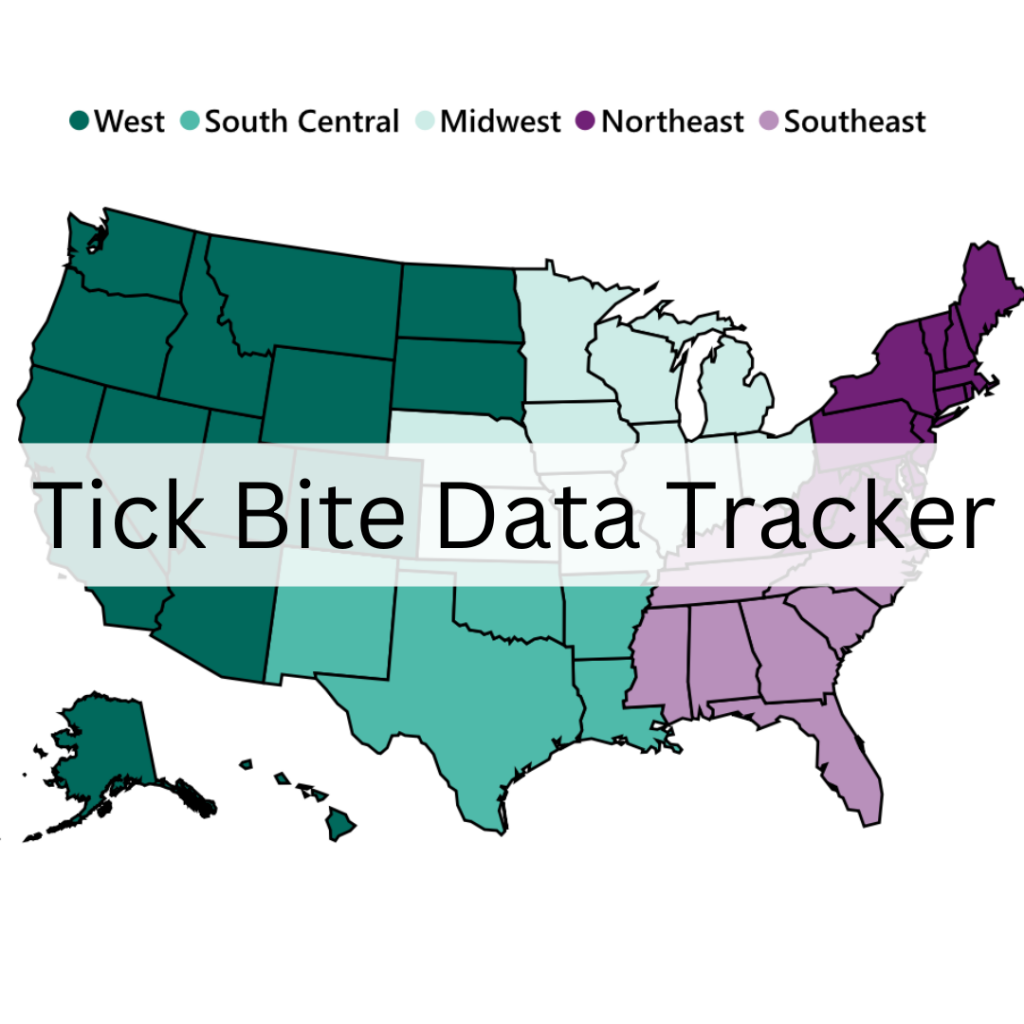
The changes include a new online tool called the Tick Bite Data Tracker. It allows users to track and visualize tick-borne disease data in the United States, advancing our ability to raise awareness.
The new tool provides information on diseases transmitted by ticks such as Lyme disease, anaplasmosis, Rocky Mountain spotted fever, and ehrlichiosis.
The CDC webpage also gives information on the most common North American types of ticks and 16 known diseases transmitted by ticks such as babesiosis, Borrelia miyamotoi, Powassan virus, STARI, Colorado tick fever and more.
In addition, the CDC offers an updated page on Alpha-gal syndrome, an allergy to red meat and products derived from mammals. The condition is triggered by the bite of a tick.
National collaboration
The Tick Bite Data Tracker is part of the National Syndromic Surveillance Program (NSSP) which is a collaboration among the CDC, local health agencies, state health departments and private sector partners. The NSSP allows these partners to collect, share and analyze electronic healthcare data in near real-time as it is processed.
Because there is no medical diagnostic ICD code for “tick bite,” the emergency department visits for tick bites are identified by specific words used in the medical record. For example, “tick” or “tick” and “bite.”
The Tick Bite Data Tracker includes interactive maps, graphs and tables that allow users to explore the data in different ways. Users can view data on a national or state level, as well as by county or even zip code in some areas.
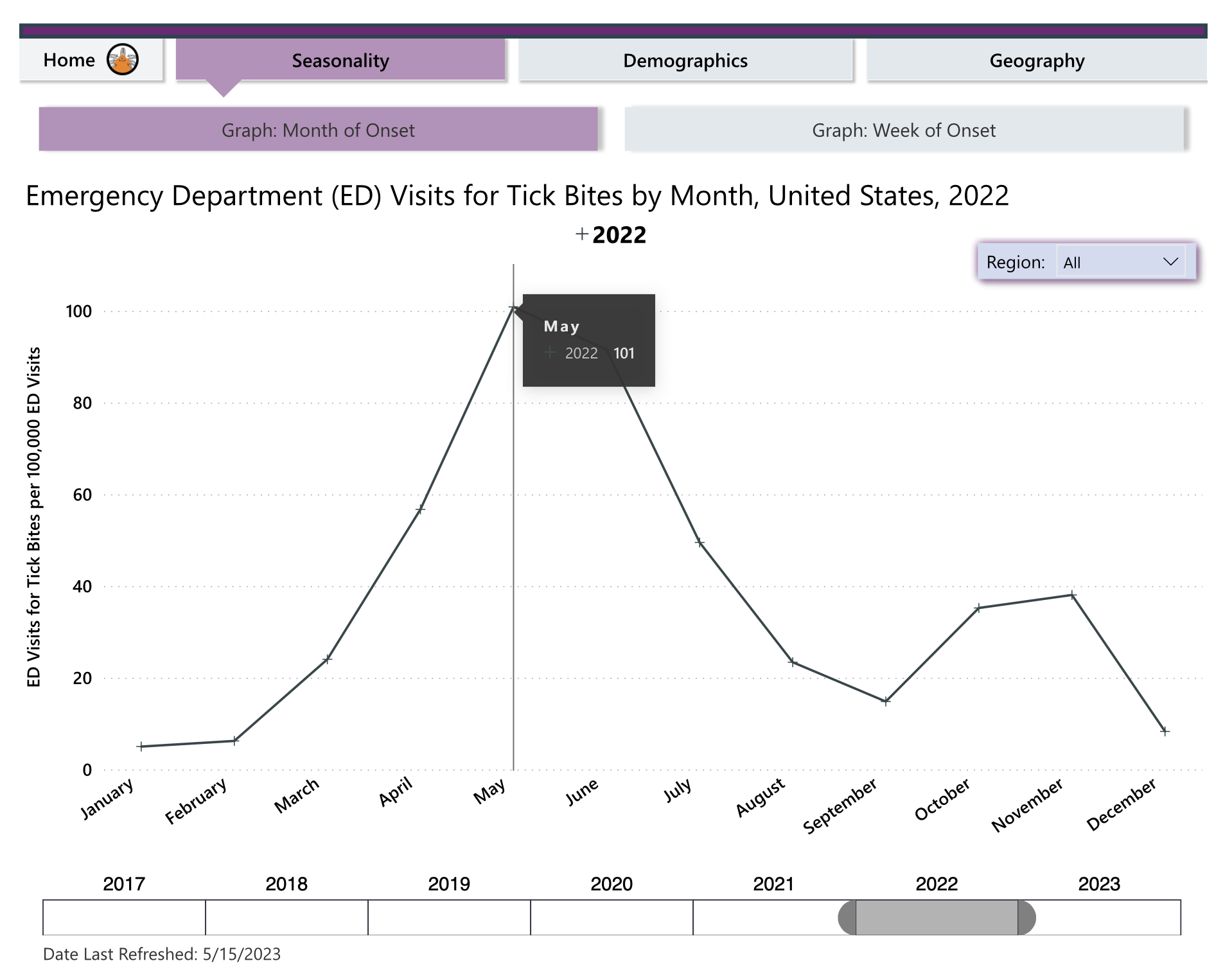
One of the most interesting aspects of this new site is the ability to track emergency department visits for tick bites by week and month. This eliminates the strict reporting criteria that adversely affects statistics in lower incidence states like Florida, Texas and California.
What we see on the Tick Bite Data Tracker is simply the number of persons per 100,000 with reported tick bites who sought care in an emergency room. The new data can indicate when tick bites are most common in a region, and unlike other CDC surveillance data, it is updated weekly, rather than annually.
Tick bites peak in Spring
You can clearly see in the graph below how tick bites peak in the spring in almost all regions of the United States.
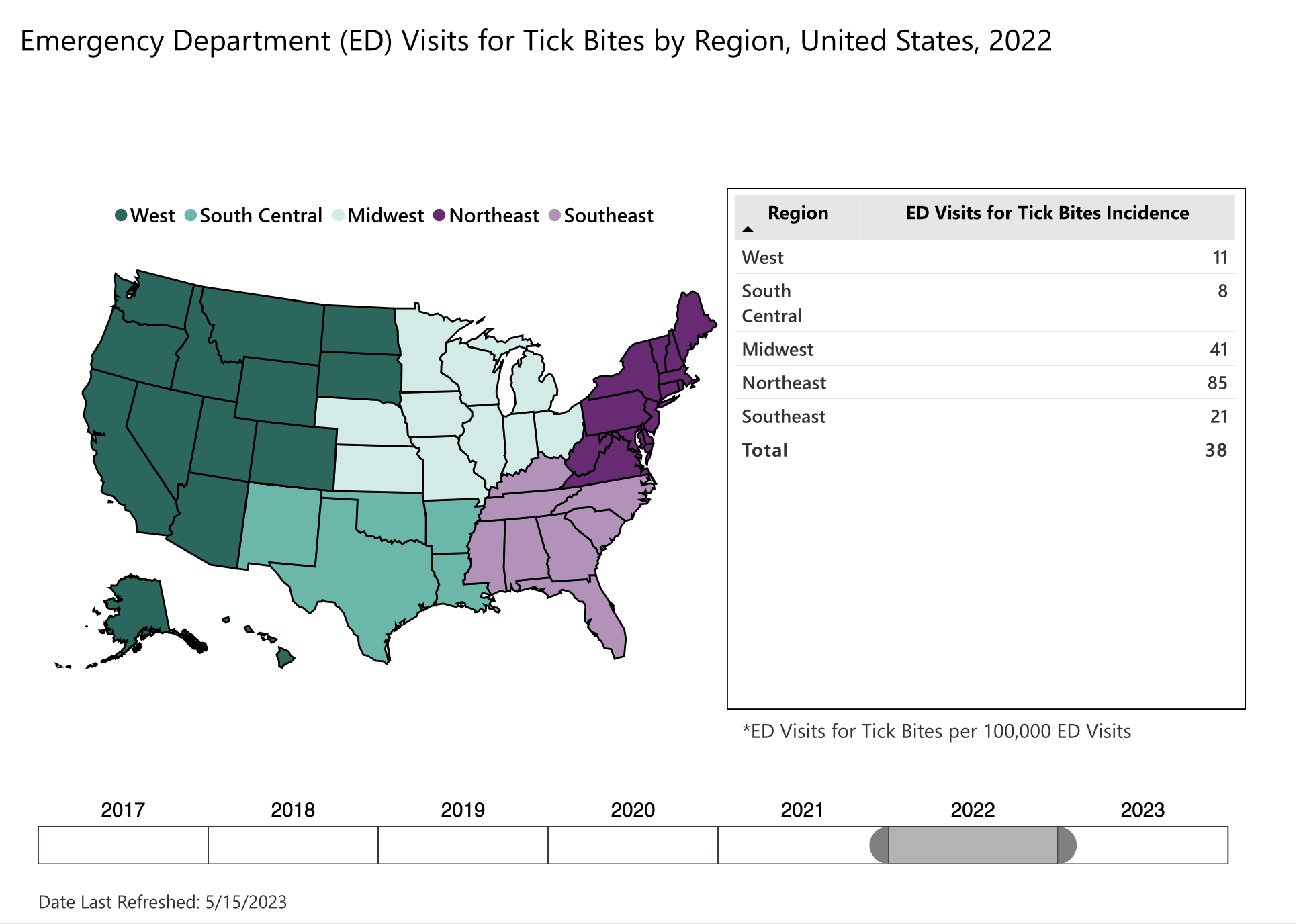
Unfortunately, the CDC lumps every state west of Nebraska as the “West.” Therefore, areas with higher incidence of tick bites, like California, are averaged with areas of lower incidence like Wyoming—giving an inaccurate picture.
In my opinion, at the very least, the CDC should have divided this huge region into the southwest and northwest to offer better representation of what is happening in those zones—but that’s another topic.
The site also points out several limitations of the tracker tool: “Results might not be generalizable to emergency departments that are not contributing data to the BioSense Platform. The keywords used to identify tick bite visits may under- or overestimate emergency department visits related to tick bites because of differences in coding, reporting, and availability of chief complaint text data between jurisdictions or over time. Finally, aggregated data by region might be less useful than state or local data.”
So essentially, you have to take this data for what it is: a slightly flawed tool that gives us a glimpse into what is happening in the tick-borne disease world.
Lyme Awareness Month is an opportunity to educate the public about the risks of Lyme disease and promote strategies for prevention and early detection. I hope you’ll use the Tick Bite Data Tracker, as well as additional information spread throughout the pages of our website to spread awareness.
LymeSci is written by Lonnie Marcum, a Licensed Physical Therapist and mother of a daughter with Lyme. She served two terms on a subcommittee of the federal Tick-Borne Disease Working Group. Follow her on Twitter: @LonnieRhea Email her at: lmarcum@lymedisease.org.
___________________
**Comment**
A flawed tool that will continued to be used against patients like the Iron Curtain.
Microbiologist Kevin McKernan — a former researcher and team leader for the MIT Human Genome project — has discovered massive DNA contamination in the mRNA COVID shots, including simian virus 40 (SV40) promoters
SV40 has been linked to cancer in humans, including mesotheliomas, lymphomas and cancers of the brain and bone. In 2002, the Lancet published evidence linking polio vaccines contaminated with SV40 to Non-Hodgkin’s lymphoma. According to the authors, the vaccine may be responsible for up to 50% of the 55,000 Non-Hodgkin’s lymphoma cases diagnosed each year
The level of contamination varies depending on the platform used to measure it, but no matter which method is used, the level of DNA contamination is significantly higher than the regulatory limits in both Europe and the U.S. The highest level of DNA contamination found was 30%
The finding of DNA means the mRNA COVID shots may have the ability to alter the human genome
Even if genetic modification does not occur, the fact that you’re getting foreign DNA into your cells poses a risk in and of itself. Partial expression could occur, or it might interfere with other transcription translations that are already in the cell. Cytoplasmic transfection can also allow for genetic manipulation, as the nucleus disassembles and exchanges cellular components with the cytosol during cell division
In this video1 , Dr. Steven E. Greer interviews microbiologist Kevin McKernan — a former researcher and team leader for the MIT Human Genome project2 — and Dr. Sucharit Bhakdi about the DNA contamination McKernan’s team has found in the Pfizer and Moderna mRNA shots.
As it turns out, spike protein and the mRNA are not the only hazards of these injections. McKernan’s team have also discovered simian virus 40 (SV40) promoters that, for decades, have been suspected of causing cancer in humans, including mesotheliomas, lymphomas and cancers of the brain and bone.3 The findings4,5,6,7 were posted on OSF Preprints in early April 2023. As explained in the abstract:8
“Several methods were deployed to assess the nucleic acid composition of four expired vials of the Moderna and Pfizer bivalent mRNA vaccines. Two vials from each vendor were evaluated … Multiple assays support DNA contamination that exceeds the European Medicines Agency (EMA) 330ng/mg requirement and the FDAs 10ng/dose requirements …”
As noted by Greer,9 this means that governments and drug companies “have misled the world to a far greater extent than previously known.” If these findings are correct, it would also mean that “the so-called ‘vaccines’ are actually altering the human genome and causing permanent production of the deadly spike protein,” and this internal production of spike protein would, in turn, “trigger the immune system to attack its own cells,” Greer says.
In the interview, McKernan explains how the DNA contaminants found in the COVID jabs can result in the genetic modification of the human genome, and Bhakdi reviews how and why the shots can trigger autoimmune diseases.
Background: What Is SV40?
In 2002, the Lancet published10 evidence linking polio vaccines contaminated with SV40 to Non-Hodgkin’s lymphoma. According to the authors, the vaccine may be responsible for up to half the 55,000 Non-Hodgkin’s lymphoma cases diagnosed each year.
How did this simian (monkey) virus get into the human population? According to the late Dr. Maurice Hilleman, a leading vaccine developer, Merck inadvertently unleashed the virus via their polio vaccine.11 It’s unclear exactly when SV40 was eliminated from the polio vaccine. The timing also varies from country to country. For example, SV40-contaminated polio vaccines were administered in Italy as recently as 1999.12
As reported in a Lancet book review of “The Virus and the Vaccine: The True Story of a Cancer-Causing Money Virus, Contaminated Polio Vaccine and the Millions of Americans Exposed”:13
“By 1960, scientists and vaccine manufacturers knew that monkey kidneys were sewers of simian viruses. Such contamination often spoiled cultures, including those of an NIH researcher named Bernice Eddy, who worked on vaccine safety … Her discovery … threatened one of the USA’s most important public-health programs …
Eddy tried to get word out to colleagues but was muzzled and stripped of her vaccine regulatory duties and her laboratory … [Two] Merck researchers, Ben Sweet and Maurice Hilleman, soon identified the rhesus virus later named SV40 — the carcinogenic agent that had eluded Eddy.
In 1963, U.S. authorities decided to switch to African green monkeys, which are not natural hosts of SV40, to produce polio vaccine. In the mid-1970s, after limited epidemiological studies, authorities concluded that although SV40 caused cancer in hamsters, it didn’t seem to do so in people.
Fast forward to the 1990s: Michele Carbone, then at NIH, was working on how SV40 induces cancers in animals. One of these was mesothelioma, a rare cancer of the pleura thought in people to be caused mainly by asbestos. The orthodoxy held that SV40 didn’t cause human cancers.
Emboldened by a 1992 NEJM paper that found DNA ‘footprints’ of SV40 in childhood brain tumors, Carbone tested human mesothelioma tumor biopsies at the National Cancer Institute: 60% contained SV40 DNA. In most, the monkey virus was active and producing proteins.
He published his results in Oncogene in May, 1994, but the NIH declined to publicize them … Carbone … moved to Loyola University. There he discovered how SV40 disables tumor suppressor genes in human mesothelioma, and published his results in Nature Medicine in July, 1997. Studies in Italy, Germany, and the USA also showed associations between SV40 and human cancers.”
mRNA COVID Jabs Contaminated With Double-Stranded DNA
With that background, let’s get back to McKernan’s findings, which in addition to the featured video are also discussed in Daniel Horowitz’s podcast above. In short, his team discovered elevated levels of double-stranded DNA plasmids, including SV40 promoters (DNA sequence that is essential for gene expression) that are known to trigger cancer development when encountering an oncogene (a gene that has the potential to cause cancer).
The level of contamination varies depending on the platform used to measure it, but no matter which method is used, the level of DNA contamination is significantly higher than the regulatory limits in both Europe and the U.S., McKernan says. The highest level of DNA contamination found was 30%, which is rather astounding.
As explained by McKernan, when using a typical PCR test, you’ll be considered positive if the test detects the SARS-CoV-2 virus using a cycle threshold (CT) of about 40. In comparison, the DNA contamination is detected at CTs below 20.
That means the contamination is a million-fold greater than the amount of virus you’d need to have in order to test positive for COVID. “So, there’s an enormous difference here with regards to the amount of material that’s in there,” McKernan says.
In his Substack article,14 he also points out that people who argue that double-stranded DNA and viral RNA is a false equivalency because viral RNA is replication competent, are wrong.
“The majority of the sgRNA you are detecting in a nasal swab in your nose is NOT REPLICATION COMPETENT as shown in Jaafar et al.15 It is just an RNA fragment that should have lower longevity in your cells than dsDNA contaminating fragments,” he writes.
In that Substack article, McKernan has also copied a 2009 study discussing how DNA in vaccines can cause cancer and highlighted the most relevant parts. It’s a helpful resource if you want to learn more.
Quality Control Is Sorely Lacking
As for how SV40 promoters ended up in the mRNA shots, it appears to be related to poor quality control during the manufacturing process, although it’s unclear where in the development SV40 might have sneaked in. Quality control deficiencies may also be responsible for the high rate of anaphylactic reactions we’ve been seeing. McKernan tells Greer:
“It’s in both Moderna and Pfizer. We looked at the bivalent vaccines for both Moderna and Pfizer and only the monovalent vaccines for Pfizer because we didn’t have access to monovalent vaccines for Moderna. In all three cases, the vaccines contain double-stranded DNA contamination.
If you sequence that DNA, you’ll find that it matches what looks to be an expression vector that’s used to make the RNA … Whenever we see DNA contamination, like from plasmids, ending up in any injectable, the first thing people think about is whether there’s any E. coli endotoxin present because that creates anaphylaxis for the injected.
And, of course … there’s a lot of anaphylaxis going on, not only on TV but in the VAERS database. You can see people get injected with this and drop. That could be the background from this E. coli process of manufacturing the DNA …”
Regulatory Agencies Knew There Was a Contamination Problem
In a May 20, 2023, Substack article,16 McKernan points out that Pfizer itself submitted evidence to the European Medicines Agency (EMA) showing sampled lots contained vast differences in the levels of double-stranded DNA contamination.
The arbitrary limit for dsDNA that the EMA came up with was 330 nanograms per milligram (ng/mg). Data submitted to the EMA by Pfizer shows sampled lots had anywhere from 1 ng/mg to 815 ng/mg of DNA. McKernan adds:17
“This limit likely did not consider the potency of this dsDNA contamination if it was packaged in an LNP [lipid nanoparticle]. Packaged dsDNA is more potent as a gene therapy. We now know this DNA is packaged and transfection ready.18 Even lower limits should be applied if the DNA is packaged in transfection ready LNPs …
Even with Pfizer being able to cherry pick the data they provided to the EMA for 10 lots, they see a 1 to 815ng/mg variance. If you were to expand this study to 100 or 1000 lots, you’d likely see another order or two of magnitude variance.”
Double-Stranded DNA May Integrate Into Your Genome
The presence of double-stranded DNA also brings up another major concern, and that is the possibility of genomic integration.
“At least on the Pfizer side of things, it has what’s known as an SV40 promoter. This is an oncogenic virus piece. It’s not the entire virus. However, the small piece is known to drive very aggressive gene expression.
And the concern that people, even at the FDA, have noted in the past whenever injecting double-stranded DNA, is that these things can integrate into the genome,” McKernan says.
While McKernan’s paper does not present evidence of genome integration, it does point out that it’s possible, especially in the presence of SV40 promoters:19
“There has been a healthy debate about the capacity for SARs-CoV-2 to integrate into the human genome … This work has inspired questions regarding the capacity for the mRNA vaccines to also genome integrate. Such an event would require LINE-1 driven reverse transcription of the mRNA into DNA as described by Alden et al.
dsDNA [double-stranded DNA] contamination of sequence encoding the spike protein wouldn’t require LINE-1 for Reverse Transcription and the presence of an SV40 nuclear localization signal in Pfizer’s vaccine vector would further increase the odds of integration.”
Manifold Risks
That said, even if genetic modification does not occur, the fact that you’re getting foreign DNA into your cells poses a risk in and of itself, McKernan says. For example, partial expression could occur, or it might interfere with other transcription translations that are already in the cell.
Bhakdi also points out that the SV40 promoters do not need to be present in the nucleus of the cell for problems to occur. Cytoplasmic transfection can, in and of itself, allow for genetic manipulation, because the nucleus disassembles and exchanges cellular components with the cytosol during cell division.
In addition to having DNA floating around and causing potential problems, the RNA in the COVID jab is also modified to resist breakdown. “So, we have TWO versions of the spike protein floating around that can persist longer than anticipated,” McKernan says, and the spike protein, of course, is the most toxic part of the virus that can cause your body to attack itself.
Both McKernan and Bhakdi are adamant that ALL mRNA “vaccines” must be immediately stopped, whether for human or animal use, due to the magnitude of the risks involved.
‘Alarming Problems’
In this video20, Yusuke Murakami, a professor at Tokyo University, expresses alarm over the finding of SV40 promoters in the COVID jabs. The interview is in Japanese but has English subtitles. I’ve included it because I think he does a good job of putting the problem into layman’s terms:
“The Pfizer vaccine has a staggering problem,” Murakami says. “This figure is an enlarged view of Pfizer’s vaccine sequence. As you can see, the Pfizer vaccine sequence contains part of the SV40 sequence here. This sequence is known as a promoter.
Roughly speaking, the promoter causes increased expression of the gene. The problem is that the sequence is present in a well-known carcinogenic virus. The question is why such a sequence that is derived from a cancer virus is present in Pfizer’s vaccine.
There should be absolutely no need for such a carcinogenic virus sequence in the vaccine. This sequence is totally unnecessary for producing the mRNA vaccine. It is a problem that such a sequence is solidly contained in the vaccine.
This is not the only problem. If a sequence like this is present in the DNA, the DNA is easily migrated to the nucleus. So it means that the DNA can easily enter the genome. This is such an alarming problem.
It is essential to remove the sequence. However, Pfizer produced the vaccine without removing the sequence. That is outrageously malicious. This kind of promoter sequence is completely unnecessary for the production of the mRNA vaccine. In fact, SV40 is a promoter of cancer viruses.”
Resources for Those Injured by the COVID Jab
The more we learn about the COVID jabs, the worse they appear. While they suck as vaccines, they’re truly masterful bioweapons, as they’re capable of destroying health in any number of ways, through myriad mechanisms.
If you got one or more jabs and are now reconsidering, first and foremost, never ever take another COVID booster, another mRNA gene therapy shot or regular vaccine. You need to end the assault on your body. Even if you haven’t experienced any obvious side effects, your health may still be impacted long-term, so don’t take any more shots.
If you’re suffering from side effects, your first order of business is to eliminate the spike protein that your body is producing. Two remedies that can do this are hydroxychloroquine and ivermectin. Both of these drugs bind and facilitate the removal of spike protein.
The Front Line COVID-19 Critical Care Alliance (FLCCC) has developed a post-vaccine treatment protocol called I-RECOVER. Since the protocol is continuously updated as more data become available, your best bet is to download the latest version straight from the FLCCC website at covid19criticalcare.com21 (hyperlink to the correct page provided above).
For additional suggestions, check out the World Health Council’s spike protein detox guide,22 which focuses on natural substances like herbs, supplements and teas. To combat neurotoxic effects of spike protein, a March 2022 review paper23 suggests using luteolin and quercetin. Time-restricted eating (TRE) and/or sauna therapy can also help eliminate toxic proteins by stimulating autophagy.