Fauci in Hot Seat as Emails Reveal His Lies
https://articles.mercola.com/sites/articles/archive/2021/06/09/faucis-emails.aspx?
Fauci in the Hot Seat as Emails Reveal His Lies
June 09, 2021
STORY AT-A-GLANCE
- Dr. Anthony Fauci — whose expertise has been held as indisputable by mainstream media since the beginning of the COVID-19 pandemic — is now facing mounting scrutiny and critique as correspondence obtained through a Freedom of Information Act request reveals he’s lied both to the public and the U.S. Senate on a number of issues
- Emails show Fauci supported the kind of dangerous research that likely created the COVID-19 pandemic, and that he helped cover up the lab origin theory
- Fauci, until very recently, exclusively promoted the natural origin theory. We now find he assisted in the creation of a paper in Nature Medicine that came to underpin the entire natural origin theory, all while being informed of the fact that there were indications the virus had engineered features
- The FOIA documents also show Fauci has lied about masks being an effective form of protection
- Fauci has also failed to acknowledge that natural immunity is acquired when you recover from COVID-19, which makes vaccination completely unnecessary, and has yet to oppose recommendations to vaccinate recovered COVID-19 patients even though they’re immune and appear to be more prone to vaccine damage
Saint Anthony’s halo is tarnishing and hanging more crooked by the day. Dr. Anthony Fauci — whose medical expertise has been held as indisputable by mainstream media since the beginning of the COVID-19 pandemic — is now facing mounting scrutiny and critique as correspondence obtained through a Freedom of Information Act (FOIA) request by Buzzfeed reveals he’s lied both to the public and the U.S. Senate on a number of issues.
The emails were released to the public in the early-morning hours of June 2, 2021. All 3,234 pages of emails can be found on Document Cloud.1 News media pounced on the release, with each reporter offering their own spin on what the fallout of the emails might be.
https://video.foxnews.com/v/embed.js?id=6257693457001&w=466&h=263<noscript>Watch the latest video at <a href=”https://www.foxnews.com”>foxnews.com</a></noscript>”>http://https://video.foxnews.com/v/embed.js?id=6257693457001&w=466&h=263
Important Video Here (Approx. 10 Min):
“The Next Revolution” by Steve Hilton
In the video above,2 “The Next Revolution” host Steve Hilton details how Fauci and National Institute of Health director Dr. Francis Collins have both repeatedly lied about the origins of SARS-CoV-2.
‘Utter Fraudulence’
In a no-holds-barred monologue Wednesday, June 2, 2021, Fox News host Tucker Carlson (above) called for a criminal investigation of Fauci in the aftermath of the release of thousands of emails, exchanged in the early days of the pandemic between Fauci and numerous individuals, including Facebook’s Mark Zuckerberg and billionaire Bill Gates.
Carlson blasted Fauci for what he said was “utter fraudulence” that should put Fauci under criminal investigation. After previously hosting him on many Fox newscasts, including Carlson’s own, the emails show Fauci is “just another sleazy federal bureaucrat — deeply political and often dishonest,” Carlson said.
What’s worse, the emails implicate Fauci “in the very pandemic he’d been charged with fighting.” While Fauci has denied funding gain-of-function research, emails now reveal he did indeed support “the grotesque and dangerous experiments that appeared to have made COVID possible,” Carlson said, adding that the emails are so damning that “in retrospect it looks a lot like perjury.”
Sen. Rand Paul apparently agrees. In a recent Fox News interview (below), Paul said the released emails reveal a “disturbing picture” that “should preclude [Fauci] from the position that he’s in.”
Fauci Lied About Not Funding Gain-of-Function Research
Some of the emails show Fauci, early in 2020, was concerned that Americans might think the virus came from the Wuhan Institute of Virology (WIV) in China. Why would he be concerned about that? As noted by Carlson, this makes perfect sense if he knew he had funded the very research that now looked like the source of the pandemic.
January 31, 2020, Kristian Andersen, a virologist at the Scripps Research Institute in California, emailed Fauci stating that “The unusual features of the virus make up a really small part of the genome (<0.1%) so one has to look really closely at all the sequences to see that some of the features (potentially) look engineered.”
He later wrote that he and his team “all find the genome inconsistent with expectations from evolutionary theory.” Interestingly, some six weeks later, Andersen published a paper in which he and his team insisted the virus could not have been created in a lab. I’ll have more to say on this later, as the email cache also reveals Fauci had a hand in the creation of that paper. On a side note, four days after the release of the emails, Andersen deleted his entire Twitter account.3
The next day, Fauci sent an urgent email to Dr. Hugh Auchincloss, the principal deputy director of the National Institutes of Allergy and Infectious Diseases (NIAID), titled “IMPORTANT.” “It is essential that we speak this AM,” Fauci wrote. “Keep your cell phone on … Read this paper as well as the e-mail that I will forward to you now. You will have tasks today that must be done.”
Attached to the email was a file titled “Baric, Shi et al – Nature medicine – SARS Gain of function.pdf.” This paper was written by Ralph Baric, Ph.D., a virologist in the U.S., and Shi Zhengli, a researcher at the WIV who specializes in bat coronaviruses.
May 11, 2021, Fauci testified before the Senate Health, Education, Labor, and Pensions Committee.4 During an exchange with Sen. Rand Paul, Fauci insisted that “the NIH has not ever and does not now fund gain-of-function research in the Wuhan Institute of Virology.” He also insisted that Baric does not engage in gain-of-function research. This is the same Baric whose paper Fauci sent to Auchincloss, clearly marked as “SARS gain-of-function.”
As reviewed in “The Biggest Flip-Flop Ever — Who’s Going to Jail?” the kind of research Fauci funded has long been referred to as gain-of-function, yet now he’s trying to redefine what’s covered by that term.
As noted by Carlson in his June 2, 2021, report, social media platforms aggressively censored and deplatformed people for the “crime” of talking about the possibility of SARS-CoV-2 being a lab creation that got loose, and they did so largely based on the word of Fauci himself. Fauci said it wasn’t so, and that became the gospel repeated by fact checkers everywhere.
Now all of a sudden, there appears to have been a coordinated U-turn. The question is, why did they lie to us for so long? In the video report above, Carlson reveals part of the answer: Scientists were afraid to lose their funding, funding which, by the way, comes from the American taxpayers.
Fauci Lied About the Origin of the Virus
In an April 17, 2020, White House press briefing, Fauci lied again, when he said the science was “totally consistent with a jump from an animal to a human.” Yet “what he asserted as conclusively known could not have been known,” Carlson points out.
Two days after this press briefing, EcoHealth Alliance president Peter Daszak, Ph.D., wrote to Fauci thanking him for his help in deflecting the lab origin theory. The email reads:
“As the PI of the R01 grant publicly targeted by Fox News reporters at the Presidential press briefing last night, I just wanted to say a personal thankyou on behalf of our staff and collaborators, for publicly standing up and stating that the scientific evidence supports a natural origin for COVID-19 from a bat-to-human spillover, not a lab release from the Wuhan Institute of Virology.”
Who is Daszak? He’s none other than the middle-man between Fauci’s NIAID/NIH and the WIV. EcoHealth Alliance received several NIH grants for millions of dollars involving gain-of-function research on coronaviruses, which were then farmed out to Zhengli and others at the WIV. So, Daszak certainly had cause to want to deflect attention from the lab leak theory.
He was also well aware of how risky this research was. In 2015, he spoke at a National Academies of Science seminar on reducing risk from emerging infectious diseases, warning of the danger of experimenting on “humanized mice,”5 meaning lab mice that have been genetically altered to carry human genes, cells or tissues.
That same year, Daszak also published a paper in which he warned a global pandemic might occur from a laboratory incident and that “the risks were greater with the sort of virus manipulation research being carried out in Wuhan.”6
January 2, 2020, he sent out a tweet announcing he’d successfully isolated SARS coronaviruses “that bind to human cells in the lab,” and that the work of other scientists show some of these viruses have pandemic potential as they can infect humanized mice.7
Yet, from the get-go, Daszak did everything he could to dispel discussion about SARS-CoV-2 being anything but all-natural. He went on record dismissing the lab-origin theory as “pure baloney.”8,9
He was also the mastermind behind the publication of a scientific statement published in The Lancet10 condemning such inquiries as “conspiracy theory,”11,12 which was then relied on by the media to “debunk” theories and evidence showing the pandemic virus most likely originated from a laboratory.
To further ensure the lab-leak theory would die out, Daszak was chosen to be on two separate commissions charged with investigating the origin of SARS-CoV-2, one by the World Health Organization13 — which, of course, dismissed the lab theory out of hand — and one by The Lancet.14
‘Hidden Hand’ Behind Natural Origin Theory Revealed
Now, finally, all these efforts to obfuscate the truth are falling apart. Fauci’s role in the obfuscation is also becoming much clearer. In the documentary “Plandemic — Indoctornation,” Dr. Meryl Nass stated there had to have been “a hidden hand behind the Nature Medicine paper”15 that became the basis for the natural, zoonotic origin theory.
This paper is not to be confused with the other Nature Medicine paper cited earlier, published by Baric and Shi. The paper Nass is referring to was created by Scripps researcher Kristian Andersen who, in January 2020, told Fauci that some of the features of the genomic sequence “(potentially) look engineered.”
Andersen’s paper “The Proximal Origin of SARS-CoV-2”16 — published March 17, 2020, and co-written by Andrew Rambaut, Ian Lipkin, Edward Holmes and Robert Garry — became the preeminent “proof” that SARS-CoV-2 had a natural origin and couldn’t possibly come from a lab.
“Our analyses clearly show that SARS-CoV-2 is not a laboratory construct or a purposefully manipulated virus,” the paper states.17 The email cache now identifies who comprised the “hidden hand” behind this paper. They were none other than Fauci himself, NIH director Collins and Jeremy Farrar, head of the Wellcome Trust.
In the email on page 2,401, dated March 6, 2020, Andersen thanks Fauci, Collins and Farrar for their “advice and leadership” on the paper. His four co-authors are cc’d, along with the Salk Institute’s communications director, Chris Emery.
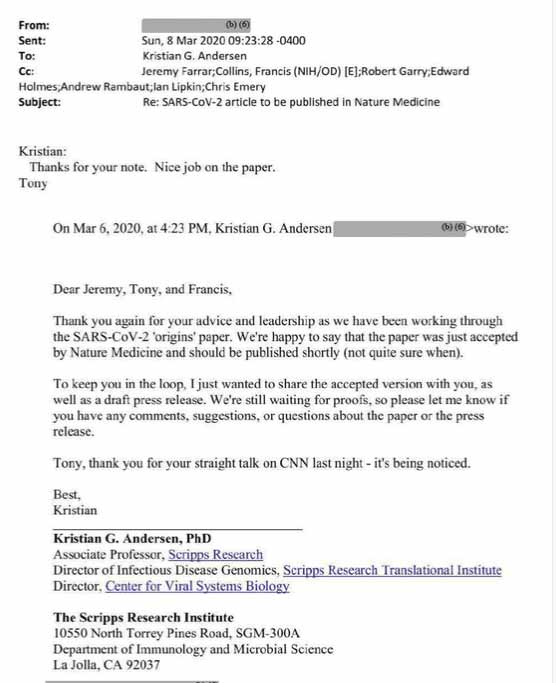
Fauci, Collins and Farrar — A Tag-Team of Coverup Artists
This is huge. “The Proximal Origin of SARS-CoV-2”18 was the scientific underpinning of the natural origin claim, and now we find out Fauci himself was involved in its creation. Farrar and Collins are also neck-deep in this cover-up.
Farrar cosigned the scientific statement in The Lancet,19 which turned out to have been orchestrated by Daszak, as mentioned earlier. Farrar was also involved in the WHO Solidarity Trial,20 which poisoned patients with toxic doses of hydroxychloroquine (HCQ). In this trial, which was clearly designed to prove HCQ was “dangerous,” they used a cumulative dose of 8,800 mg over 10 days.
Meanwhile, doctors across the world who reported success with the drug were using standard doses around 200 mg per day for just a few days. Farrar, having spent 18 years leading a clinical research unit in Vietnam,21 would have (or should have) been aware that such high doses of HCQ — a widely used anti-malaria medication — would be toxic.
As for Collins, he promoted the cover-up by publishing a March 26, 2020, blog post22 in which he said Andersen’s Nature Medicine paper proved a natural origin, and to ignore rumors to the contrary. What’s more, after Fauci unconvincingly tried to claim that the NIAID/NIH has never funded any gain-of-function research, Collins came to his rescue with a public NIH statement23in which he backed Fauci’s claim.
Bombshell Emails on What Fauci Knew
In a June 3, 2021, report, Carlson reviewed Fauci’s “surreal” media appearances following the release of the emails. As just one example, he simply laughed off the question of why so much of a particular email between him and Collins was redacted.
In the unredacted part, Collins warns Fauci that a “conspiracy theory” about the virus’ origin is gaining speed. Why, exactly, was this email redacted? What did the remainder of the email say? Fauci claims ignorance on the matter, and the mainstream media are letting him off the hook.
Now, when a document is redacted, a classification is assigned, explaining why parts must remain secret, and in this case, those classifications are interesting indeed. Redacted emails between Fauci and nongovernment individuals such as Zuckerberg and Daszak bear codes such as:24,25
- (b)(4), which refers to information that would impair the application of state-of-the-art technology within a U.S. weapon system
- (b)(6), which refers to information, including foreign government information, that would cause serious harm to relations between the U.S. and a foreign government, or to ongoing diplomatic activities of the U.S.
- (b)(7), which refers to information that would impair the current ability of U.S. government officials to protect the president, vice president and other protectees for whom protection services, in the interest of national security, are authorized
Fauci Lied About Masks
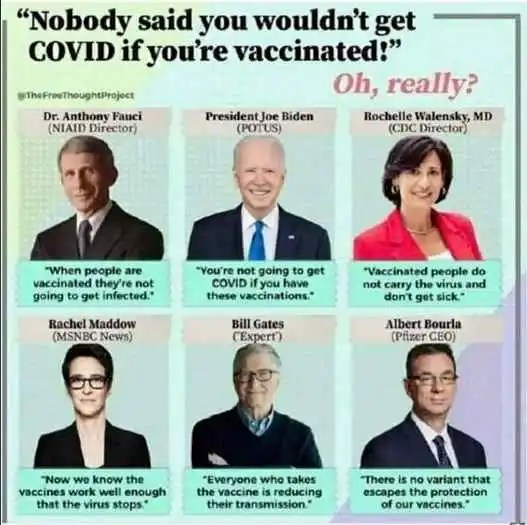
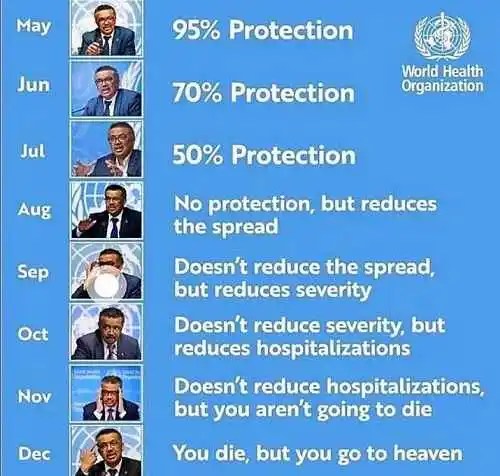
The email cache also shows Fauci lied about other things, including masks and vaccines. In one email, Fauci explained that surgical masks don’t work against viruses because the viruses slip right through the material, which is the truth. But when it comes to his public statements about masks, Fauci has been a serial liar.
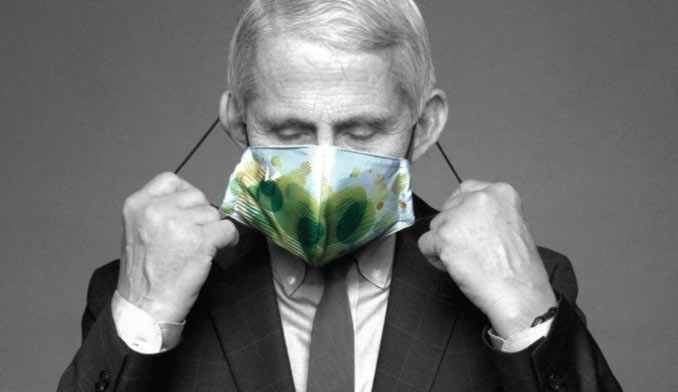
He started off saying Americans shouldn’t wear them because they offer little to no protection — which is true — and the benefits are mostly psychological, as it might make you feel safer. Then he changed his mind, urging everyone to wear a mask all the time. When confronted about this U-turn, he said he lied about masks not being effective because he wanted to make sure there would be enough for frontline workers.
Well, in reality, he lied about lying, because he told the truth that first time. Everything since then, however, has been one fib after another. One mask wasn’t even sufficient. Fauci started recommending two. Then he insisted people had to keep wearing them even after they get vaccinated. There’s no scientific rationale for this at all, and Fauci knows it.
Fauci Still Has Not Told the Truth About Natural Immunity
Fauci has also been dishonest about the need for COVID-19 vaccination. In early March 2020, a former Obama official emailed Fauci asking if people who recover from COVID-19 can expect to be immune thereafter. Fauci replied, “No evidence in this regard, but you would assume that their [sic] would be substantial immunity post infection.”
Here, it’s fairly safe to make assumptions because it’s a well-established medical fact that when you recover from a viral infection, you are immune, and that immunity can be lifelong in many cases. It would be quite unusual if immunity were not incurred after recovering from a viral infection. As noted by Carlson, that robust immunity occurs post-COVID-19 has also been confirmed in studies over the past year.
Now, if you have natural immunity against an illness, you do not need to be vaccinated. Period. Yet to this day, Fauci has never admitted this publicly, and he has not publicly opposed recommendations to vaccinate those who have recovered from COVID-19, even though there’s evidence to suggest such individuals are at higher risk of vaccine injury. Not even those who can prove they have antibodies are excluded from the vaccine push.
Fauci Tried to Derail Florida
Other emails from March 2020, discussed in The Beltway Report,26 show Fauci also promised to put pressure on Florida Gov. Ron DeSantis to close down gyms, bars and beaches.
The recipient of this email exchange was a Florida HIV specialist named Doug Brust, who wrote, “I’m the HIV doc here. I’m it … I am putting my life on the line so folks can go pump iron, drink beer, have a burger, and get a tan.” In response, Fauci wrote, in part:27
“Regarding the bars and beaches, I have been screaming on TV 2 to 5 times per night to tell the younger generation to start taking this seriously … I am very surprised that Gov. DeSantis has not completely closed the bars, even if they serve food. Take out only. I will bring this up at the Task Force meeting tomorrow.”
Fauci’s Book Release Scrubbed Amid Backlash
In light of Fauci’s rapidly waning star power, his book, “Expect the Unexpected: Ten Lessons on Truth, Service, and the Way Forward,” slated for release in November 2021, has now been scrubbed from Amazon and Barnes & Noble. We found an archived copy of the original Amazon listing, but even the cached version disappeared within a week. If you search for the book on either of these book vendors now, you won’t find it. As reported by Just the News June 2, 2021:28
“The scrubbing of the book comes after backlash from critics who accused Fauci of profiting off of the deadly pandemic the U.S. response to which he has overseen.
Among those criticizing Fauci is Fox News Channel contributor Joe Concha, who compared him to New York Democratic Gov. Andrew Cuomo signing a seven-figure book deal about his efforts during the pandemic, which resulted in a high number of death among assisted-living residents.
‘If you look at the numbers again, you had Cuomo profiting off a pandemic, a government official,’ said Concha, also a media reporter for The Hill newspaper. ‘Now we have Fauci doing it as well. I think this is appalling.’
Daily Caller writer Greg Price slammed Fauci for ‘publishing a book and [becoming] the highest paid federal government employee while you lost your business and had your kids out of school for a year.'”
Truth may be slow to surface, but eventually, the truth usually breaks through. And that certainly appears to be the case here. The truth about the lab leak theory — that it’s actually the most plausible and not a wild goose-chase — is now emerging just about everywhere. I’m sure many of you remember we have been exposing this information since early last year.
Even Vanity Fair29 has an in-depth article detailing the drama. The theory that mere weeks ago was derided as debunked hogwash conspiracy theory, if acknowledged at all, is now suddenly getting the level-headed attention it should have, and probably would have, received all along, had it not been for Fauci and his co-conspirators. This case ought to establish one thing, and that is that “conspiracy theories” are not automatically untrue.
_______________________
**UPDATE**
GreatGameIndia just reported that Fauci’s emails reveal he threatened Indian scientists who discovered the COVID jabs are engineered with AIDS like insertions, which Nobel Prize winner Dr. Montagnier also asserts.
There is also evidence from another email showing that Fauci was told last March precisely how the Wuhan coronavirus (Covid-19) “was created.” Research partner Adam Gaertner gave Fauci a play-by-play and still Fauci stood before the world and lied about everything for an entire year.
Fauci was also told by leading infectious disease expert Kristian Andersen that the Indian studies exposing the AIDS-like features of the Chinese Flu did, in fact, make a strong case about its bioengineered nature. Fauci proceeded to ignore both of these men while peddling the fake narrative that the virus came from bats at a wet market.
The following YouTube video (Approx 6 min) reveals another horror from Fauci’s emails.
Fauci Tied to Scandal Involving Human-Animal Hybrid Experiments with Aborted Fetal Parts
For more news videos on this go here.
For more:
- https://madisonarealymesupportgroup.com/2021/06/08/us-state-department-covered-up-that-china-was-responsible-for-covid/
- https://madisonarealymesupportgroup.com/2021/05/25/us-intelligence-wuhan-lab-researchers-hospitalized-with-covid-in-2019/
- https://madisonarealymesupportgroup.com/2021/06/04/fauci-knew-in-2020-research-he-backed-may-have-led-to-covid-foia-shows/
- https://madisonarealymesupportgroup.com/2021/03/04/emails-show-fauci-nih-who-accommodated-china-on-covid-confidentiality-terms/