Archive for the ‘Transmission’ Category

Chlamydia Trachomatis & Lyme Disease

https://natemat.pl/blogi/borelioza/120559,borelioza-objawy-koinfekcji-boreliozy-cz-3-chmamydia-trachomatis

The following is taken from the above website and translated by a Lyme/MSIDS patient.

Chlamydia Trachomatis

Today on the blog about Lyme disease, a text about another co-infection to Lyme disease – chlamydia trachomatis. From the experience of our Center, it appears more and more often among our clients as “accompanying” Lyme disease. Its symptoms cause a number of female ailments, but the male gender is also not free from them. All the time on our blog, readers may notice that the catalog of symptoms that may indicate Lyme disease is growing dynamically and at the same time the catalog of symptoms that may indicate specific co-infections to Lyme disease is also growing dynamically. A natural question may arise: Is it possible to realistically have so many different symptoms? Answer: yes, it is possible.
 
Chlamydia trachomatis (bacteria), like other co-infections to Lyme disease, which we wrote about earlier on the blog, can be transmitted, among others, by a tick. Infection can also occur through intimate contact.

At the initial stage, such an infection does not show any clinical symptoms, which does not mean that such an infection does not develop in the body. At this point, our common belief bows – no symptoms, e.g. no pain – no disease. In many cases, then we are dealing with an asymptomatic infection.
The characteristic symptoms of an infection – chlamydia trachomatis – mainly concern the genitourinary system, including:
  • urethritis
  • epididymitis
  • prostatitis
In contrast, the symptoms that affect women are increased
  • vaginal discharge
  • vaginal bleeding
  • bleeding after intercourse
  • cervical erosion
  • cyst formation
  • secondary infertility
The occurrence of the infection in question and its symptoms causes a significant decrease in the comfort of life, including the comfort of intimate contacts. That is why it is so important to recognize it properly and early. Then there is a chance to use the right therapy – about which we will write on our blog.
An important point worth mentioning here is that the occurrence of chlamydia trachomatis with Lyme disease is not an “absolute relationship”. This means that the presence of this infection is not an automatic indication that we are also dealing with a Lyme infection.
Intimate infections in men and women related to specific pathogens are a wide issue that goes far beyond the scope of the blog. By presenting the problem of tick-borne disease – Lyme disease, or rather the problem of tick-borne diseases – Lyme Disease – on our blog, we want to draw the attention of natemat.pl readers that you need to look at specific symptoms and disease states in a much wider perspective. Only in this way are we able to more effectively counteract infections that attack us and our loved ones.
Finally, I would like to point out one more symptom that, based on the experience of our Center, can and does cause chlamydia trachomatis – eye problems:
  • burning
  • itching
  • tearing
  • feeling of sand in the eyes

These symptoms can last for months and no drops can solve the problem.

_________________

For more:

Co-infecting agents can be transmitted together with Borrelia burgdorferi by tick bite resulting in multiple infections but a fraction of co-infections occur independently of tick bite. Clinically relevant co-infections are caused by Bartonella species, Yersinia enterocolitica, Chlamydophila pneumoniae, Chlamydia trachomatis, and Mycoplasma pneumoniae…..Chlamydia trachomatis primarily causes polyarthritis.  Chlamydophila pneumoniae not only causes arthritis but also affects the nervous system and the heart, which renders the differential diagnosis difficult.

Fluorescent immunohistochemical and in situ hybridization methods demonstrated the presence of Chlamydia antigen and DNA in 84% of Borrelia biofilms. Confocal microscopy revealed that Chlamydia locates in the center of Borrelia biofilms, and together, they form a well-organized mixed patho-
genic structure.

Seeking to Unlock the Mysteries of Lyme Arthritis

https://www.lymedisease.org/unlock-mysteries-lyme-athritis/

Seeking to unlock the mysteries of Lyme arthritis

By Richard Harth
Biodesign Institute at Arizona State University

A nature lover from early childhood, Karie Behm found peace and renewal through hiking and cross-country running. She spent much of her time exploring the forested terrain of her native Kansas, as well as Minnesota and Colorado, during family vacations.

She did not suspect that on one unremarkable day, microscopic, corkscrew-like pathogens known as spirochetes would stealthily invade her body, causing a succession of painful, debilitating and perplexing disease symptoms. It would take physicians over six years to untangle the mystery.

Behm had contracted Lyme disease, following a tick bite.

A recent doctoral graduate from the School of Molecular Sciences and the Biodesign Institute at Arizona State University, Behm has devoted her energies to unlocking some of the secrets of Lyme disease, a tenacious ailment affecting some 500,000 Americans every year.

“People have finally come to the realization that Lyme disease has been around a long time and has been affecting a lot of people who have been chronically ill and couldn’t get help,” Behm says. “Patient advocacy groups have been working tirelessly for the last 20 years to try to bring attention to this problem. It’s not a little thing and it’s not a joke. It can affect you your entire life.”

Studying the disease that debilitated her

Behm came to ASU in 2016, with a personal goal in mind — to study the disease causing her often incapacitating symptoms. A highly motivated scholar and researcher, she managed to convince her advisor, Debra Hansen, of the importance of studying this underreported and misunderstood ailment.

Behm and Hansen, both researchers with the Biodesign Center for Applied Structural Discovery (CASD), then consulted Petra Fromme, director of the center and an authority on the structural characterization of proteins, including those associated with infectious disease.

The team hatched a plan to study Lyme arthritis, a pervasive symptom found in many Lyme disease cases. “Petra loves students who share her passion,” Behm says.

“During my first interview with her, she got really excited about how the lab’s structural techniques could be applied to Lyme disease.” Prior to her arrival at the lab, Behm, working independently, had already completed an NSF proposal to study Lyme disease.

The project gathered momentum when Behm conducted a literature search, identifying a suite of proteins believed to decorate the surface of Borrelia burgdorferi, the bacterial parasite transmitted by a tick bite that causes Lyme disease.

Drawing on a recent award from ASU Women and Philanthropy, the team is advancing its efforts by using a powerful method known as cryo-EM to observe membrane proteins found on the surface of the Borrelia parasite in stunning detail.

A remarkable discovery

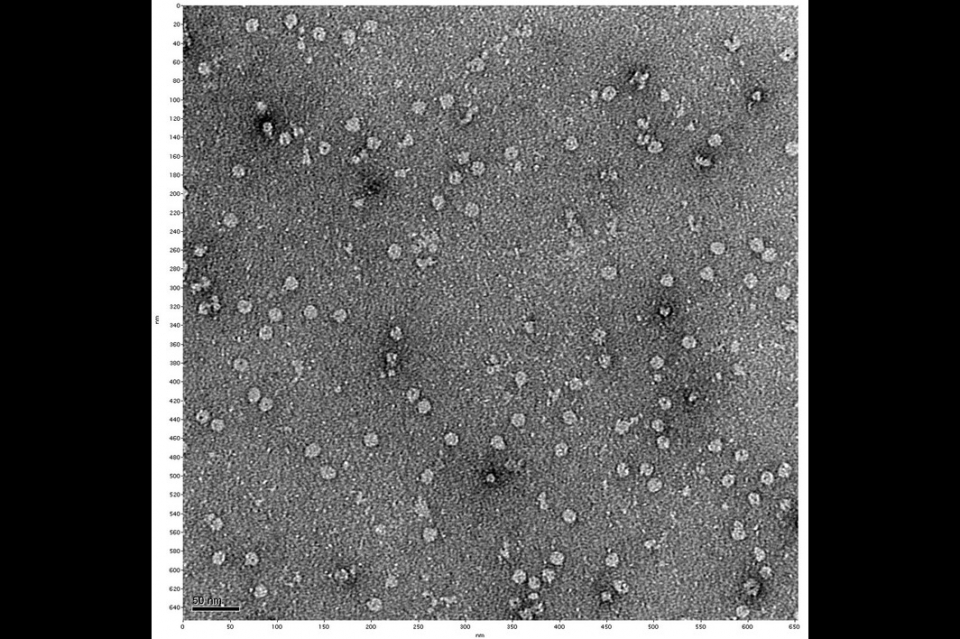
Eureka moment: Behm’s negative stain electron microscopy image, offering the first visual evidence of a membrane pore identified by the researchers. This pore may provide an attractive therapeutic target for future drug design against Lyme arthritis. Photo courtesy Biodesign Institute.

The research has already led to a remarkable discovery. One such membrane protein, known as BBA57, binds to copies of itself to form a complex at the membrane surface. The result appears to be a portal to and from the cell’s interior — a pore.

The discovery arrived late one night in the lab, in the form of fresh electron microscope images. It was the culmination of years of dogged research and opens the door to effective therapies against Lyme disease, and potentially other serious afflictions as well.

Of the 100 or so membrane proteins recognized in B. burgdorferi, BBA57 is special. Its presence is linked to Lyme arthritis, a painful, untreatable and often lifelong affliction occurring in 20% of Lyme disease patients.

The discovery of the membrane hole may be a turning point, as it provides an ideal site to attack Lyme arthritis by designing a drug that can plug up the pore.

“This project aims to discover the first structure of the major protein responsible for Lyme arthritis, BB57, which forms a pore-like structure in the membrane,” Fromme says. “When we unravel the structural basis for Lyme arthritis, new drugs can be developed to fight the condition and prevent the lifelong suffering of hundreds of thousands of patients.”

Climate change and Lyme disease

The bacteria responsible for Lyme disease are carried in the saliva of several tick varieties. In the Northeast and upper Midwestern U.S., the disease is transmitted by the blacklegged tick (Ixodes scapularis), and by the western blacklegged tick (Ixodes pacificus) along the Pacific Coast.

Lyme-carrying ticks operate by stealth. They are not able to fly or jump, instead finding their targets through a process known as questing. Resting atop grasses or shrubs, the ticks hold fast to leaves or grass using their lower legs. The upper pair of legs is kept outstretched, awaiting an unsuspecting passerby. When a suitable host brushes past the place where the tick lies in wait, it quickly climbs onto the host and locates a place to bite and feed on blood.

Ticks may attach themselves to any part of the human body but are often found in well-concealed regions, including the groin area, armpits and scalp. Once a tick has attached and begun feeding, it usually takes 36–48 hours for the Lyme bacteria to be transmitted.

While Borrelia bacteria can cause severe illness in their human hosts, in a diabolical twist, they may improve the tick’s fitness by modifying its central nervous system, extending the length of time the tick spends questing and making it more resistant to extremes of temperature and dryness. To make matters worse, many Lyme disease patients become co-infected with other pathogenic microbes lurking in ticks.

Another area of concern is the fact that reported cases of the disease have roughly doubled since 1991. This is likely due to a combination of factors, including more awareness of the disease and better diagnostic approaches. But there is also mounting evidence that the geographic range over which Lyme-carrying ticks wander may be expanding due to climate change.

Disease of a thousand faces

Many factors may affect the timing and nature of symptoms of Lyme disease, which typically begin three to 30 days following infection. Such symptoms may include fever, chills, headache, fatigue, muscle and joint aches, and swollen lymph nodes, with or without an accompanying rash.

One reason Lyme disease is so vexing to properly diagnose is that it can manifest in many ways in different patients. While 70% of Lyme cases develop the signature circular rash according to reporting, even this figure remains a topic of fierce controversy, and the CDC believes there may be a significant overreporting of rashes. This is because without the rash, Lyme cases are less likely to be diagnosed and treated in a timely manner by physicians.

Should the telltale rash known as erythema migrans occur, it will appear at the site of the tick bite, expanding gradually over several days. The rash may feel warm to the touch but is usually not painful or itchy. The rash sometimes clears as it enlarges, producing a characteristic bullseye appearance, but can assume different shapes, if it is present at all.

An array of further symptoms can develop days or months after infection, including facial palsy; neck stiffness; severe headache; intermittent pain in tendons, muscles, joints and bones; heart palpitations or an irregular heartbeat (known as Lyme carditis); nerve pain and inflammation of the brain and spinal cord; episodes of dizziness; and shortness of breath.

Behm recalls the perplexing constellation of symptoms at the start of her illness: “As a younger teenager, I had random medical issues that came up that just didn’t seem to make sense,” she says.

“There were visits to a lot of medical facilities. They knew something was wrong but couldn’t figure out what it was. I got passed around to specialists until I was officially diagnosed my senior year of high school.”

Lyme arthritis can cause severe pain and permanent joint damage

Approximately one in four Lyme disease patients may develop Lyme arthritis, involving chronic joint pain and swelling, particularly the knees and other large joints. The disorder occurs when the Lyme disease bacteria migrate to joint tissues, causing inflammation.

If left untreated, Lyme arthritis causes permanent damage to joints. While knees are the most commonly affected area, other large joints may be involved, including the shoulder, ankle, elbow, jaw, wrist or hip.

Following diagnosis, Lyme disease is treated with a course of antibiotics, which can work to eliminate the spirochete bacteria and gradually relieve symptoms. Yet, there is an important caveat: time is of the essence.

“The existing treatments generally don’t work if you’ve been infected more than two to six months prior,” Hansen says.

By this time, “the bacteria have disseminated in your body, and go into a persistent, antibiotic-resistant form. So if you’re diagnosed six years later, like Karie, and you’re treated for the disease, that treatment probably doesn’t work because the bacteria are resistant,” she says.

The result can be a collection of symptoms referred to [by some] as Post-Treatment Lyme Disease Syndrome. The causes are varied and remain poorly understood. It may be that the bacterium has changed form and sequestered itself in ways that evade detection. In other cases, autoimmune responses may be involved. To date, no treatment exists for these common complications.

Roughly 70,000 people in the U.S. each year experience lifelong, untreatable Lyme disease. Among these are some 42,000 who develop Lyme arthritis. Currently, physicians have had little to offer such patients, but that may be about to change.

Protein components of Lyme unmasked

Using electron microscopy, Behm, Hansen and Fromme were able to zero in on a protein that had been identified in previous research as an essential element in the process leading to Lyme arthritis. This work had been carried out by Dr. Uptal Pal, a Lyme disease authority from the University of Maryland, who is now collaborating with the ASU group.

The Lyme disease protein complex at the membrane surface of B. burgdorferi is comparatively large, tricky to crystallize and not easily amenable to X-ray crystallography, the conventional gold standard for protein structural analysis. Instead, a relatively new and powerful method known as cryo-EM, ideal for large proteins, was used.

Cryo-EM, a groundbreaking method for investigating 3D protein shapes, has racked up a long list of impressive achievements since 2017, when its discoverers were awarded the Nobel Prize in Chemistry. Nevertheless, the new study marks the first time it has been applied to the study of Lyme disease.

The technique involves flash-freezing solutions of proteins or other biomolecules in vitreous ice, then bombarding them with electrons to produce images of individual molecules suitable for electron microscopy. The images are used to reconstruct the 3D structure of the molecule, an essential step in understanding how proteins work, how their dysfunction (or use by pathogens) can trigger disease and how drugs may be custom engineered to target them.

Molecular mugshot spurs eureka moment

Peering at the specimens through electron eyes, the researchers began to produce a molecular portrait of the suspect believed to be responsible for Lyme arthritis, through the acquisition of thousands of cryo-EM snapshots.

Research by Pal had already shown that strains of Borrelia engineered to lack BBA57 did not produce Lyme arthritis, though the reasons for this remained obscure. It was only through the work of Behm and her team that a plausible mechanism gradually came into focus.

In addition to complex sample preparation, thousands of images had to be carefully assembled. Often, it seemed the researchers were feeling their way through the dark. But late one evening in the lab, a new set of negative stain electron microscopy images were developed, and the results were riveting. At long last, the team had pictures with just enough resolution to make out what unmistakably appeared as a small hole in the membrane, composed of protein subunits.

It was the break they had been waiting for, after three years of work.

The team had theorized that perhaps Borrelia causes Lyme arthritis by transporting some disease factor from within the cell, out into the extracellular environment. And here, before their eyes, was the transport tunnel likely used as a passageway from inside the cell to outside, into the host’s bloodstream.

“Debbie, Petra and I were all there, having a late-night meeting when we saw the images. And everyone shouted, ‘Yay!’” Behm recalls.

The elusive pores they had long suspected had materialized with unmistakable clarity.

The race for a cure

The most gratifying news for the group was not simply that their hard work was rewarded with an important insight into the structure of BBA57, but that the finding suggests a promising approach for preventing Lyme arthritis.

The basic idea is simple: Design a drug that plugs up the hole on the Borrelia membrane surface. But to accomplish this, the protein structure of BBA57 will require much more refinement.

The team has calculated that the images of a million pores will be needed to visualize the protein with sufficient resolution to permit drug design. The researchers are using the new award from ASU Woman and Philanthropy to achieve this feat, collecting the mass of images that will permit structural determination down to the locations of atoms.

Achieving atomic resolution will allow the researchers to see where each of the roughly 800,000 atoms making up each pore-forming molecule are situated.

“We’ll know the position of each of those atoms, and that kind of intimate detail is enough to be able to computationally look for drug binders, with existing drug libraries,” Hansen says.

Teaming up with Pal, the researchers are pursuing long-term funding through a $3 million grant proposal to NIH, due to begin as early as 2023. The funding will be contingent on the early results the group is producing now, so the pace of study is hectic.

Once the final structural determination of a given protein has been made, drug companies can take the 3D data and use high-performance computers to begin designing drugs to act on it.

The long and winding road ahead

BBA57 is just one protein active in Lyme disease. Many others exist, and once they have been characterized, may also be targeted by smart drugs. The possibility of preventing Lyme disease altogether may be on the horizon, and the general approach pursued by Behm and her colleagues may be applicable to other tick-borne diseases or, possibly, other spirochete afflictions, such as syphilis, yaws and relapsing fever.

Having suffered through the ups and downs of this enigmatic illness, Behm is doubly committed to finding answers. She describes the early days of her pitched battle with the disease as a mixture of fear and determination.

Behm continues her explorations of Lyme disease at her new position as ORISE Fellow at the CDC in Atlanta.

__________________

**Comment**

I have numerous issues with this article:

  1. Lyme arthritis IS treatable.  Please see the comment section after the article:  https://madisonarealymesupportgroup.com/2022/05/04/why-do-some-people-develop-severe-lyme-arthritis-others-dont/  I must also add that chelation (pulling heavy metals out of the body) is another strategy I am currently using. I have also found the following form of curcumin completely eradicated my pain. Dealing with inflammation is a must.
  2. Minimum transmission times have never been studied and to continue to regurgitate the mantra that it “usually takes 36-48” hours for it to happen is causing untold suffering.
  3. There is often more than Lyme at play and transmission time can be within minutes.
  4. “Climate change” has NOTHING to do with tick and disease proliferation but continues to be chanted like a mantra from research institutions who depend upon government grants.  It is part of a much larger scheme for power and money.
  5. Pigeon-holing symptoms happening three-30 days after infection is mythology also dooming thousands.  Nothing is said about psychological issues often experienced.
  6. It is a complete LIE that 70% develop the EM rash. It is highly variable & often not there.
  7. We need to drop the PTLDS label like a bad habit.  It does not explain a huge subset of patients but is still being used to put patients into a four-cornered box.
  8. To throw out that 70,000 in the US experience untreatable Lyme is complete guesswork.  According to this, the actual number is much, much higher.  No research is done on this group.  They simply don’t exist because mainstream medicine/research, led by the nose by the CDC/NIH/IDSA, don’t believe chronic/persistent Lyme exists.  Nobody even talks about the coinfections and the ramifications of having both.
  9. While researchers are riveted on finding/creating an expensive pharmaceutical “smart” drug (with patents to go all around making everyone wealthy) to plug up the elusive “pore” or conduit through which supposedly arthritis is created from, they ignore cheaper, safer, options such as nutraceuticals which desperate Lyme patients have had to discover, often on their own, to be effective.  Unfortunately, this myopic patent-oriented thinking is the “new norm” in research – even led by a patient who should know better due to the prolific and blatant corruption in all things in Lymeland.

Chronic Toxoplasmosis: Debilitating, Stealth, Underdiagnosed

https://articles.mercola.com/sites/articles/archive/2022/09/16/chronic-active-toxoplasmosis

By Dr. Mercola

Sept. 16, 2022

Story at-a-glance

  • At least one third of all people on Earth are infected with the parasite Toxoplasma gondii, averaging from 11-20% in the United States to 50% and higher in some Western European countries
  • The parasite has been implicated in ocular issues, schizophrenia, epilepsy, Alzheimer’s disease and various other neurological disorders, as well as in heart disease, pneumonia, recurrent headaches, even cancer; it is also known for causing psychological changes in its hosts
  • While the official word is that most toxoplasma infections are harmless and asymptomatic, the impact of the parasite could be much more devastating than the current mainstream medical convention presumes; it may also be cross-reacting with the spike protein and possibly contributing to the mystery of “long COVID”
  • According to recent research and clinical evidence, toxoplasma tissue cysts, previously considered harmless in immunocompetent patients, are capable of causing major health issues without converting to the cell-blasting form
  • Commonly used antibody tests can only detect antibodies for the “tachyzoite” (cell-blasting) form of the parasite but not the “bradyzoite” (tissue cyst) form
  • Dr Uwe Auf der Straße in Germany has done an important clinical investigation of the parasite, and his findings could shed light on “mystery” symptoms in many patients

Toxoplasma gondii, an intracellular protozoan organism, is a very “successful” parasite with extremely diverse host base and sophisticated, almost diabolical, methods of survival and proliferation.

It is found worldwide and is capable of infecting most warm-blooded animals as intermediate hosts, including people. It has also been found in some cold-blooded animals, such as fish. Its final hosts, inside which the parasites can sexually reproduce, are felines, including domestic cats. In the environment, toxoplasma can be found in soil, water, and other substances that have come in contact with the parasite, such as fertilizers.

At the moment, the predominant medical opinion is that at least one third of all people on Earth are in some way infected with this parasite1,2 averaging from 11-20% in the United States to 50% or higher in a number of Western European countries, for example in Germany.3 In Germany, the frequency of positive Toxoplasma detection increases from about 20% in the group of 18-29 year-olds, up to 77% in the group of 70-79 year-olds and for over 79 year-olds the frequency is 84%.4

The commonly known infection routes for people are eating uncooked meat, drinking contaminated water, or accidentally ingesting the parasite after cleaning a cat litter box.

While the official word is that most infections are harmless and asymptomatic, the impact of the parasite could be much more devastating than the current mainstream medical convention gives it credit for.

A few physicians and researchers who have been looking into Toxoplasma are challenging the conventional view on several counts. And while a number of “bombshell” scientific works on the topic have been published, the new discoveries have not yet made their way into the everyday medical practice.

It is extremely important that more doctors and researchers look into this right now — especially given the fact that an encounter with the spike protein has been shown to amplify latent or slow-developing biological malfunctions in people, and thus it is possible that “spike protein assisted” Toxoplasma may be wreaking havoc in many unsuspecting patients and contributing significantly to the mysterious “long COVID” or its injection-induced manifestation.

Toxoplasma Life Cycle

With a degree of oversimplification, there are three main forms in which this parasite exists during different phases of its life cycle. They are known as oocysts (eggs), tachyzoites (the actively proliferating adult form), and bradyzoites (tissue cysts).

The sexual reproduction of Toxoplasma gondii occurs within feline hosts. The cycle starts when the host ingests oocysts (“eggs”) or eats an animal infected with bradyzoites (tissue cysts).

Upon ingestion of the cysts, their protective wall is dissolved by proteolytic enzymes in the stomach and small intestine to release bradyzoites. The free bradyzoites then penetrate epithelial cells lining the small intestine where they proliferate to form new generations that can undergo sexual and asexual cycles. Following fertilization of the female gametes, a wall starts to form around the oocysts. The oocysts are then released to the environment along with feces.

Depending on the environment, it usually takes several days for the oocysts in feces to become infectious. Infectious oocysts can survive for up to several years in soil etc., until they are ingested by an intermediate host. Once they are ingested, their protective shield is also dissolved by proteolytic enzymes thus releasing the eggs into the intestine of the intermediate host.

They then penetrate epithelial cells lining the small intestine where they undergo a form of asexual reproduction to form tachyzoites. The newly formed tachyzoites then spread and actively penetrate other cells of the intermediate host where they are surrounded by a parasitophorous vacuole protecting them from the hosts’ immune system.5

The interesting thing about the parasitophorous vacuole is that the parasite uses a part of the membrane of the invaded host cell’s to form it, with the purpose of “hiding” from the host’s immune system.6

From there tachyzoites disseminate throughout the body and reach immunologically protected sites including brain, retina and fetus. In vitro studies revealed that tachyzoites can invade astrocytes, microglia and neurons of the mouse brain with subsequent formation of tissue cysts within these cells.7,8,9,10,11

As they continue dividing, tachyzoites ultimately cause the cell to break, releasing as many as 32 tachyzoites that then infect new cells. However, that activity usually attracts the attention of the immune system, which ultimately slows down tachyzoite multiplication. In response, the tachyzoites convert into bradyzoites (tissue cysts).12

In doing so, they change their surface structure nearly completely, which is a “major factor in the parasite’s strategy of survival” since the host’s immune system identifies microorganisms according to their surface structure, and by modifying its surface structure, toxoplasma increases its chance of successfully tricking the host’s immune system.13,14,15

The tissue cysts are common in a number of body tissues and organs including the eyes, cardiac muscle, neural tissue, and various visceral organs where they can last for the hosts’ entire lifetime.16

Houston, We Have a Problem

The general medical consensus (challenged by a small group of doctor and researchers) is that while the most active form of Toxoplasma, known as “tachyzoites” (the one that multiplies very fast and blasts host cells), can cause significant health issues, predominantly in immunocompromised hosts, the tissue cyst form (“bradyzoites”) is mostly innocuous, and, once the parasite succumbs to the attack by the host’s immune system and retreats into its tissue cysts, it just quietly sits inside those intracellular cysts and does very little.

Per mainstream medial convention, the vulnerable demographics are immunocompromised patients who can succumb to acute toxoplasmosis and develop potentially lethal inflammation of the brain (or become victims of a “reactivation,” where tissue cysts convert back to the fast-proliferating form, to the same effect), and newly infected pregnant women.

However, recent research has shown that bradyzoites, the toxoplasma tissue cysts, are not innocuous at all, and that they do reproduce inside the cysts and can cause inflammation and other issues without converting to tachyzoites, including in otherwise immunocompetent patients.

What complicates the issue even further is that nearly all commercially available tests (antibody blood tests and even PCR tests), are specific to the cell-blasting tachyzoite form of toxoplasma and do not detect the presence of tissue cysts.

And if that is the case — we are looking at a potentially large number of people ailing from “chronic active toxoplasma” that cannot be diagnosed by any of the commonly used methods. As a result — especially given that toxoplasma loves living in the brain — their very real and possibly exhausting physical disease may be classified or psychosomatic or straight out psychiatric.

They could be suffering from slow-developing brain inflammation, autism-like symptoms, dementia-like symptoms, or even pulmonary and heart issues — and the doctors might not even be looking in the direction of toxoplasma or ruling it out, based on negative antibodies.

(In its active form, the parasite has been implicated in ocular issues,17 heart disease,18 pneumonia,19 recurrent headaches,20,21 even cancer22 — as well as in addiction, schizophrenia, epilepsy, Alzheimer’s disease, and various neurological disorders.23,24,25 And even in its latent form, it is believed to cause psychological changes in its hosts, ranging from entrepreneurial26 to suicidal tendencies.27

Among the researchers doing groundbreaking research in Toxoplasma are Dr. Jaroslav Flegr in the Czech Republic, Dr. Robert Yolken and Dr. Vernon Carruthers in the U.S., Dr Uwe Auf der Straße in Germany, and others.

The Work of Dr. Uwe Auf der Straße in Germany

Dr Uwe Auf der Straße is a GP in Germany and the author of the book titled, “Shadow Disease Chronic Active Toxoplasmosis.”28 Here is what he has to say about the “limits of our current laboratory medicine”:

“The current medical opinion is still that a negative IgM excludes an active toxoplasmosis and thus the need of a therapy. Due to research having hinted repeatedly of a significant effect of bradyzoite activity, and due to my own observations, I definitely cannot agree with that.

Tests only react to tachyzoite-specific antibodies and the sensitivity of a standard test system in case of an initial infection is only 81.8%.29 Basic research has done further substantial work which questions the accuracy of Toxoplasma antibody assays.

‘The currently available solid phase immunoassays were developed in the 1970’s to detect strains which were circulating at that time and there are strong indications, that … standard assays may substantially underestimate the prevalence of Toxoplasma infection in a population and its effect on health and disease.’30

Further it has been proven that, in cases of a Toxoplasma infection, tachyzoite–specific IgG, IgM and even PCR can render negative results.31,32,33

In a chronic active course of the disease, reliability of our currently used lab methods has not been proven and these are most likely not suitable to detect Bradyzoites or their activity, let alone the cyst burden.

Research still focuses predominantly on acute rather than chronic toxoplasmosis and it is only a general assumption, that cases with chronically active courses of the disease as presented here could be diagnosed by using the usual antibody assays – to my knowledge this has never been proven.

The number of Toxoplasma carriers without detectable tachyzoites antibodies, who can potentially become ill from a chronic active toxoplasmosis based on an increased activity within the cysts is unclear.

From my observations it can be assumed that the number is significant, otherwise there would not appear so many younger patients in my case collection (about 40%), who suffer from a chronic active toxoplasmosis without any detectable tachyzoite antibodies.

If the immune system ceases to produce Tachyzoite antibodies after some years, the disease will no longer be detectable in the blood. This does not mean that the Toxoplasma in the cysts are inactive.

There are numerous indications that an increased activity in the cysts can trigger a symptomatic illness, since, contrary to older assumptions, bradyzoites do not rest, but can be active and can reproduce and cause illness. This refers to the findings of Fergusson et al. (1989), McLeod et al. (2008) and Watts et al (2015).”34,35,36

Dr. Uwe Auf der Straße has observed that there was no significant difference in observed symptoms between his patients with positive antibody tests and his patients with negative antibody tests in whom he suspected chronic active toxoplasmosis, based on the preliminary diagnostic method he developed and ruling out other illnesses that can produce similar symptoms. (He also took into consideration their positive reaction to toxoplasma therapy.)

“I am convinced that a significant activity within the cysts, predominantly of the bradyzoites, is the decisive reason for the illness in both groups of patients who all have inconspicuous IgM values with regards to tachyzoites, and whose IgG values, if indeed there are any, don’t show any direct correlation to the severity of the illness.

The clinical pictures in both groups are identical, and the toxoplasmosis therapy is even more effective in group B [negative antibody tests]. The bradyzoites, the activity of which we cannot measure, are currently underrated strongly, and our established laboratory values produce only a pretended security.

It is difficult to develop reliable bradyzoite-specific tests, since bradyzoites reveal themselves only rarely to the immune system and only lead to a limited antibody production.”37

“Thankfully, basic research has begun to address this problem, and there are new and promising methods being developed, with the aim of getting a grip on this problem and reveal hitherto not detectable toxoplasma presence and even to determine the cyst burden.”38

Toxoplasma and the Mind

According to Kathleen McAuliffe, author of the book “This Is Your Brain on Parasites,”39 researchers have noticed a strong correlation between toxoplasma infection and schizophrenia and other mental disorders in humans. She also notes studies where anti-psychotic drugs inhibited toxoplasma in vitro.

In fact, the mind-controlling ability is Toxoplasma’s “trademark.” I wrote about it earlier in the article titled, “Don’t Underestimate Mind-Controlling Parasites.”

To quote Dr. Uwe Auf der Straße again, whose book I can’t recommend enough, “symptoms comprise an increased risk for the occurrence of schizophrenia40,41,42,43 psychoses44 or aggressive behaviour, also a doubling of the risk for accidents in cases where Toxoplasma antibodies have been detected.45

Explanations for that may point to the mentioned behavioural changes and the decreasing psychomotor resilience46 due to Toxoplasma infections. It is scary that even an increase in the number of attempted suicides has been correlated with antibody detection in toxoplasmosis.”47,48

“It fits this bill that toxoplasmosis infected rats are known to lose all fear of cats. They literally seek them out in broad daylight, to be eaten in the end, a behaviour that is very advantageous for the spreading of Toxoplasma, but not so good for the rat. The consequence is clear.

When the host is ‘ripe’ and contains many bradyzoite – cysts, it is simply more useful for the parasite when dead instead of alive, particularly if the death is caused by a cat. Death by car accident or suicide are thus somehow “inappropriate”, but can be regarded as a somewhat macabre continuation of such behavioural disturbances in the present.”

Many Tricks of Toxoplasma

The tricks of this parasite are endless. For example, it knows how to hijack the host’s macrophages — and instead of being destroyed by a macrophage,49 take over it and use it as a temporary home to transform into the active form and then use it as a cab to travel around the host’s body!

According to the accepted view, the release of actual “eggs” from the ingested oocysts into the host’s system happens due to the processes in the host’s digestive system. However, a study came out showing that the process can happen in the absence of digestive factors, and that the parasite can not only survive but also transform into its most active form inside macrophages, after being “eaten”:

“Our results show that the oocyst internalization kinetics can vary among a given population of macrophages, but similar processes and dynamics could be observed. Most of the cells manipulate oocysts for ~15 min before internalizing them in typically 30 min … Liberated sporozoites within macrophages then differentiate into tachyzoites within 4-6 h following oocyst-macrophage contact.”

Another paper, titled, “Inhibition of nitric oxide production of activated mice peritoneal macrophages is independent of the Toxoplasma gondii strain,” shows that Toxoplasma is capable of inhibiting nitric oxide production. Nitric oxide, that plays an important role in immune response50,51 and is frequently mentioned in the context of COVID.

It’s an “enzyme that is expressed in activated macrophages, generates nitric oxide (NO) from the amino acid L-arginine, and thereby contributes to the control of replication or killing of intracellular microbial pathogens.”52

The overall mechanism that the parasite uses to invade host cells is beyond of the scope of this article but if you are curious, you can check out the paper titled, “How does Toxoplasma gondii invade host cells?” If you want to learn more about how it modulates host cell’s responses, there is another technical paper titled, “Toxoplasma gondii Modulates the Host Cell Responses: An Overview of Apoptosis Pathways.”

And if you want to learn more about Toxoplasma and brain blood barrier, you can read this paper, “Toxoplasma gondii and the blood-brain barrier.”

Toxoplasma and the Spike Protein: A Possible Connection?

According to Dr. Uwe Auf der Straße, a patient could be potentially simultaneously infected with Toxoplasma and with one or more other pathogens, some of the them kicking in as opportunistic infections.

In that case, the clinical picture may be even more confusing, and the condition of the patient may be more severe, even though Toxoplasma is capable of causing enough trouble if it manages to sufficiently proliferate — whether in its active form or inside the tissue cysts — all on its own.

Dr. Uwe Auf der Straße’s book was published in 2019, so there is nothing about COVID in the book — but it is not illogical to presume that when a person with latent or relatively slowly developing Toxoplasma encounters the spike protein, whether it’s from infection or from the COVID injection, it may create a “perfect storm” and kick Toxoplasma in high gear, creating debilitating and/or mysterious symptoms, resulting in vaccine injury or “long COVID.”53

If the percentage of people with chronic active Toxoplasma is as high as Dr. Uwe Auf der Straße suspects, it is also not illogical to assume that due to the deficiencies in the current diagnostic standards and tools, a lot of people suffering from chronic active Toxoplasma may not be properly diagnosed, and their maladies may be attributed to psychosomatic factors or remain a medical mystery.

An additional complication is that “atypical mixed forms of the known Toxoplasma strains, which are significantly more aggressive than the previously known Toxoplasma strains have been detected in Germany, and this might happen worldwide.”54,55,56

Anecdotally, per Dr. Uwe Auf der Straße, patients with chronic active toxoplasma could experience increased irritability where they “blow up” out of nowhere even though they realize that there is no good reason and don’t feel good about being so irritable — as well as anxiety or depression, with men more prone to irritability, and women more prone to anxiety and depression.

At the same time, also anecdotally, increased irritability has been observed in some recipients of the COVID injection. And while there can be lots of factors causing mood changes, it could be something to look into.

Curiously, there is an overlap between the list of natural remedies that have been studied as potentially treatments against toxoplasma and showed improvements — and the list of “alternative” COVID and “long COVID” treatments.57,58,59,60 Due to the tremendous complexity of the issue and the fact that myriads of factors impact our immune response and reactions to treatments, further investigation of the correlation by honest and curious is urgently needed.

Conventional toxoplasma treatments are considered effective in treating tachyzoites but there is no known conventional treatment for the tissue cyst form.61

Better Diagnostics: Some Hope

According to Dr Uwe Auf der Straße, in his practice, he found one particular testing method to be more reliable than the conventional ones:

“The Lymphocyte-Transformation-Test (LTT) has made my work on Toxoplasmosis easier in the last months, but is not (yet) used for the diagnose of toxoplasmosis on a wider scale. By means of this test, we can detect activity of our immune system’s T-lymphocytes, which react specifically towards certain pathogens.

While the immune system is dealing with certain pathogens, T-lymphocytes become specifically reactive to this pathogen, and the intensity of this reactivity can be measured pathogen-specifically.”

“This is measurable for about 4 weeks, and thus the LTT mirrors the current activity of pathogens. A more than threefold elevated stimulating index (SI) indicates, that specific T-cells are present in the blood and thus an active confrontation of the immune system and the tested germ takes place.

A validation concerning chronic active toxoplasmosis has not yet been performed, but according to both Dr. Hopf-Seidel and my own experiences with patients suffering from a chronic active toxoplasmosis, it is most likely more sensitive than the Toxoplasma IgM.”

Dr Uwe Auf der Straße also speaks highly of the work of Dr. Yolken’s team:

“I consider a new approach of the scientific group led by Professor Yolken in Baltimore to be promising. A paper on this approach has been published in June, 2018.62 The scientists used a known detection method (a Western blot test) for the detection of Toxoplasma proteins, which also give proof of the presence of Toxoplasma.

Of 25 patients, who were suffering from severe psychic disorders, 3 patients (8.2%) were diagnosed as positive with Toxoplasma IgG. Four times as many, 12 patients (35.3%) were then diagnosed with Toxoplasma by detection of Toxoplasma protein in their blood.

The detection of these proteins seems to offer a significantly more sensitive method to diagnose toxoplasmosis than the usual available antibody tests. Until this can be used as a routine procedure, the tests will have to be examined in further studies.”

“The same group of scientists is currently developing another highly-sensitive method, which can detect Toxoplasma cysts in every stage of the disease. This concerns the MAG1 antigen, which occurs in great numbers inside the bradyzoite cysts and in their outer membrane. Antibodies which are directed against this MAG1 antigen can be detected in the laboratory.

The scientist could prove in mice that the amount of MAG1 antibodies detectable in the blood showed a significant correlation to the amount of bradyzoite cysts inside the brain. It was also shown that in case of negative MAG1 antibody detection, no bradyzoite cysts were found.

This marker could possibly be used as a scale for a chronic infection and for the burden with bradyzoite cysts in the future. This would be a huge step for laboratory diagnostics and for affected patients even more so.”

“Another approach is that clues for a disturbed metabolism in patients with Chronic Fatigue Syndrome (CFS) are being investigated intensively. In 2016 it was proven that CFS patients share anomalies in 20 metabolic pathways of their mitochondria.63 One might picture mitochondria best as our cells’ power plants.

The intensity of the illness in CFS patients negatively impacts the activity of the metabolic pathways and the quantity of metabolites, which result from the mitochondria’s work. This “shutdown” of the metabolism has been interpreted as a shifting of the mitochondrial metabolism into “survival mode.”

Toxoplasma can also very severely affect the mitochondria,64 and the intensity of affliction is probably related to the strain of Toxoplasma which has infected the patient.65 It would be of utmost interest if the deviations in mitochondria metabolism during a chronic active toxoplasmosis might resemble those detected in ME/CFS patients, as there is strong overlap in the symptoms of both diseases. They might even be identical in some cases.”

Conclusion

It is possible that due to imperfect diagnostics and insufficient understanding of this parasite in the medical community, a lot of people with chronic active toxoplasma remain undiagnosed or diagnosed incorrectly, and suffer profoundly from the lack of proper treatment.

It is also possible that Toxoplasma is a significant factor, contributing to complications from spike protein toxicity. I believe that understanding this issue is important. It requires time and attention of researchers and doctors, and my prayer is for solid knowledge to come, and for the “mystery” suffering to end.

About the Author

To find more of Tessa Lena’s work, be sure to check out her bio, Tessa Fights Robots.

___________________

For more:

Toxoplasmosis causes many mental issues and psychiatrist E. Fuller Torry believes that 75% of schizophrenia is associated with infections, with Toxo a significant portion.  https://madisonarealymesupportgroup.com/2016/05/21/toxoplasmosis/

Tickease Founder On Dangers of Ticks, What We Need to Know About Prevention

https://www.wideopenspaces.com/tickease-founder-on-ticks/

TickEase Founder Dan Wolff on Dangers of Ticks, What We Need to Know About Prevention


Dan Wolff, aka: “Tick Man Dan,” wore a tie emblazoned with images of ticks to his wedding. He regularly wears shirts and even a wristwatch with pictures of the arachnids on them. He has two tattoos of the creepy, blood-sucking pests permanently inked onto his left leg. He even goes on tick hunting expeditions, and he keeps jars of them around his home. This may strike some people as weird, but for Wolff, they’re conversation starters on a subject he’s passionate about. Plus, it’s part of how he makes his living. Tick Man Dan’s mission is simple: to educate the public on the dangers posed from the diseases and parasites carried by ticks, and to promote his brand, TickEase. The company makes a set of specialty tweezers designed by Wolff himself that are meant specifically for the removal of ticks and their nymphs once embedded in a person.

When I spoke to Wolff via Zoom from his home in Massachusetts, I learned more about ticks in one 40-minute sitting than I had learned my whole life. We spoke about TickEase and their Tick-Kits, proactively preventing issues, and his general enthusiasm for these tiny creatures that are capable of causing such big problems.  (See link for article)

___________________

SUMMARY:

  • Out of necessity, Wolff created Tickease when he couldn’t find a good tick removal device – particularly for an embedded nymph (which is as small as a poppy seed).
  • Unfortunately Wolff regurgitates the “warmer weather gets more ticks” mantra – essentially propelling the ‘climate change’ myth regarding tick and disease proliferation. 
    • Ticks are marvelously ecoadaptive and can survive virtually all weather by burrowing under leaf litter and snow – and anything else they can find. 
    • The repeated mantra of “climate change”, wildlife proliferation, and surburban sprawl ignores the very real spreading of ticks by our own government who has experimented on ticks for decades.
    • Willy Burgdorfer, the “discoverer” of Lyme disease was a researcher at the Rocky Mountain laboratory where he weaponized ticks by force-feeding them numerous pathogens.
  • Ticks can be active year-roundproving their ecoadaptability.  They can go into a dormant state called diapause due to a anti-freeze-like substance in their bodies which actually feeds the Lyme bacteria.
  • Wolff found ticks can wake up fast with a feeding frenzy if there are periods of cold interrupted by a sudden increase in temps. Please watch this short video demonstrating how quickly this can happen.
  • Wolff dispels the myth that it takes 36 hours for ticks to transmit Lyme.  (It can happen in a few of mere hours)
  • He also points out that viruses can be transmitted in minutes and that ticks carry far more than just Lyme.
  • When removing a tick, do not agitate it or get the contents of the abdomen on you.

For more:


Deer Keds, Flying Ticks?

https://www.iamexpat.de/expat-info/german-expat-news/tick-season-germany-look-out-flying-ticks

Tick season in Germany: Look out for “flying ticks”

Excerpts:

Ticks can cause similar problems amongst humans, spreading diseases like tick-borne encephalitis (TBE) and Lyme disease, as well as some other, lesser-known diseases like babesiosis and boutonneuse fever. In 2019, a Hyalomma tick even infected a man in North Rhine-Westphalia with typhus.

Beware of “flying ticks”

Between July and October, the deer louse fly is also active in Germany. Sometimes known as a “flying tick”, these critters make a beeline for their target and then shed their wings when they land, burrowing down, biting and sucking blood from their victims. The ticks usually target animals, but attacks on humans have been recorded. They prefer to bite humans on the scalp or neck and can cause allergic reactions and even heart infections.

Deer louse flies are usually found in forests in the summer and autumn. It is recommended to thoroughly check any pets after walks in case they have been bitten by ticks. Ticks can be located using a flea comb and removed with adhesive tape or washed away. Any animal that has been infested with ticks should be bathed and washed.

(See link for article)

_____________________

The deer ked (Lipoptena cervi) mainly parasitize elk and deer but also bite humans.  It is unknown whether it serves as a vector for transmission but the following have been detected:

Remains of L. cervi have been found on Otzi, the Stone Age mummy.

Read the following on the deer fly (200 species in the Chrysops genus):

While male deer flies collect pollen, female deer flies feed on blood, which they require to produce eggs.[4] Females feed primarily on mammals. They are attracted to prey by sight, smell, or the detection of carbon dioxide. Other attractants are body heat, movement, dark colours, and lights in the night. They are active under direct sunshine and hours when the temperature is above 22 °C (71.6°).[4] When feeding, the females use scissor-like mandibles and maxillae to make a cross-shaped incision and then lap up the blood. Their bite can be painful. Anti-coagulants in the saliva of the fly prevents blood from clotting and may cause severe allergic reactions. Parasites and diseases transmitted by the deer fly include tularemia, anthrax, anaplasmosis, equine infectious anemia, hog cholera, and filiariasis. DEET is not an effective repellent.[2]

_________________

https://www.sciencedaily.com/releases/2019/05/190531135826.htm

New records show spread of parasitic deer flies across the United States

Date:
May 31, 2019
Source:
Penn State
Summary:
With flattened bodies, grabbing forelegs and deciduous wings, deer keds do not look like your typical fly. These parasites of deer — which occasionally bite humans — are more widely distributed across the US than previously thought, according to entomologists, who caution that deer keds may transmit disease-causing bacteria.

With flattened bodies, grabbing forelegs and deciduous wings, deer keds do not look like your typical fly. These parasites of deer — which occasionally bite humans — are more widely distributed across the U.S. than previously thought, according to Penn State entomologists, who caution that deer keds may transmit disease-causing bacteria.

“It was more or less known where deer keds are found, but very broadly,” said Michael Skvarla, extension educator and director of the Insect Identification Lab in the Department of Entomology at Penn State. “We don’t know if deer keds transmit pathogens (disease-causing microorganisms), but if they do, then knowing where they are at more precisely could be important in terms of telling people to watch out for them.”

The researchers collated records of the four North American deer ked species and produced the most detailed locality map of these flies to date, documenting ten new state and 122 new county records. The researchers published their results in a recent issue of the Journal of Medical Entomology. They also provided an illustrated species-identification key.

The team harnessed citizen science — collection of data by the public — to gather deer ked records from the U.S. and Canada. In addition to scouring museum databases and community websites like BugGuide and iNaturalist, the team distributed deer ked collection kits to hunters as part of the Pennsylvania Parasite Hunters community project. The researchers also collected flies directly from carcasses at Pennsylvanian deer butcheries.

“I really like using citizen science information,” said Skvarla. “It often fills in a lot of gaps because people are taking photographs in places that entomologists may not be going. Deer keds are the perfect candidate for citizen science. They’re easy to identify because there’s only four species in the country and because they’re mostly geographically separated. And as flat, parasitic flies, they’re really distinctive. You couldn’t do this with a lot of insect groups because they’d be too difficult to identify from photographs.”

The European deer ked, Lipoptena cervi, thought to have been introduced from Europe, previously was reported to occur throughout the Northeast region. The researchers newly report this species from Connecticut, Rhode Island, Vermont, and as far south as Virginia. In Pennsylvania, it occurs throughout the state, with 26 new county records.

The researchers also describe new records of the neotropical deer ked, L. mazamae, from North Carolina, Tennessee and Missouri — increasing its range further north and east than had previously been reported.

In western North America, two deer ked species, L. depressa and Neolipoptena ferrisi, are found from British Columbia through the U.S. and into Mexico — and as far east as South Dakota. The researchers newly report these species from Nevada and Idaho.

Deer keds are usually found on deer, elk and moose, but occasionally bite humans and domestic mammals. Although several tick-borne pathogens — including bacteria that cause Lyme disease, cat scratch fever and anaplasmosishave been detected in deer keds, it is unknown whether they can be transmitted through bites.

“In Pennsylvania you have a lot of hunters,” said Skvarla.

“Deer keds can run up your arm while you’re field dressing a deer and bite you. If these insects are picking up pathogens from deer, they could transmit them to hunters. With two million hunters in the state, that’s not an insignificant portion of the population. We don’t want to scare people, but people should be aware there is the potential for deer keds to transmit pathogens that can cause disease.”

The researchers will next screen hundreds of deer keds for pathogens. They will also dissect some insects to screen the salivary glands and guts separately. According to Skvarla, this approach will give a good indication of whether deer keds could transmit pathogens through bites, or whether the bacteria are merely passed through the gut after a blood meal.

In Pennsylvania, after deer keds emerge from the soil each fall, they fly to a host and immediately shed their wings, usually remaining on the same host for life. Females produce just one egg at a time — it hatches inside her, and she feeds the growing larva with a milk-like substance. When the larva is almost fully developed, it drops to the soil and forms a pupa, eventually emerging as a winged adult. If disease-causing bacteria are transmitted from mother to offspring, newly emerged flies could pass on pathogens to hosts. Pathogens could also be spread when bacteria-harboring flies jump between animals in close contact.

The other researcher working on this project was Erika Machtinger, assistant professor of entomology at Penn State.

___________________

https://www.mdedge.com/dermatology/article/171732/infectious-diseases/deer-ked-lyme-carrying-ectoparasite-move

Deer Ked: A Lyme-Carrying Ectoparasite on the Move

Lipoptena cervi, known as the deer ked, is an ectoparasite of cervids traditionally found in northern European countries such as Norway, Sweden, and Finland. Although rarely reported in the United States, this vector recently has been shown to carry Borrelia burgdorferi and Anaplasma phagocytophylum from specimens collected domestically. Importantly, it has been suggested that deer keds are one of the many disease-carrying vectors that are now found in more expansive regions of the world due to climate change. We report a rare sighting of L cervi in Connecticut. Additionally, we captured a high-resolution photograph of a deer ked that can be used by dermatologists to help identify this disease-carrying ectoparasite.

Practice Points

  • There are many more disease-carrying arthropods than are routinely studied by scientists and physicians.
  • Even if the insect cannot be identified, it is important to monitor patients who have experienced arthropod assault for signs of clinical diseases.

Case Report

A 31-year-old man presented to the dermatology clinic 1 day after mountain biking in the woods in Hartford County, Connecticut. He stated that he found a tick attached to his shirt after riding (Figure). Careful examination of the patient showed no signs of a bite reaction. The insect was identified via microscopy as the deer ked Lipoptena cervi.

Comment

Lipoptena cervi, known as the deer ked, is an ectoparasite of cervids traditionally found in Norway, Sweden, and Finland.1 The deer ked was first reported in American deer in 2 independent sightings in Pennsylvania and New Hampshire in 1907.2 More recently deer keds have been reported in Massachusetts, New York, Pennsylvania, and New Hampshire.3 In the United States, L cervi is thought to be an invasive species transported from Europe in the 1800s.4,5 The main host is thought to be the white-tailed deer (Odocoileus viginianus). Once a suitable host is found, the deer ked sheds its wings and crawls into the fur. After engorging on a blood meal, it deposits prepupae that fall from the host and mature into winged adults during the late summer into the autumn. Adults may exhibit swarming behavior, and it is during this host-seeking activity that they land on humans.3

Following the bite of a deer ked, there are reports of long-lasting dermatitis in both humans and dogs.1,4,6 One case series involving 19 patients following deer ked bites reported pruritic bite papules.4 The reaction appeared to be treatment resistant and lasted from 2 weeks to 12 months. Histologic examination was typical for arthropod assault. Of 11 papules that were biopsied, most (7/11) showed C3 deposition in dermal vessel walls under direct immunofluorescence. Of 19 patients, 57% had elevated serum IgE levels.4

In addition to the associated dermatologic findings, the deer ked is a vector of various infectious agents. Bartonella schoenbuchensis has been isolated from deer ked in Massachusettes.7 A recent study found a 75% prevalence of Bartonella species in 217 deer keds collected from red deer in Poland.5 The first incidence of Borrelia burgdorferi and Anaplasma phagocytophylum in deer keds was reported in the United States in 2016. Of 48 adult deer keds collected from an unknown number of deer, 19 (40%), 14 (29%), and 3 (6%) were positive for B burgdorferi, A phagocytophylum, and both on polymerase chain reaction, respectively.3

A recent study from Europe showed deer keds are now more frequently found in regions where they had not previously been observed.8 It stands to reason that with climate change, L cervi and other disease-carrying vectors are likely to migrate to and inhabit new regions of the country. Even in the current climate, there are more disease-carrying arthropods than are routinely studied in medicine, and all patients who experience an arthropod assault should be monitored for signs of systemic disease.