Archive for the ‘research’ Category

Formidable Evidence For Sexual Transmission of Lyme Disease – First Study to Document ACA Rashes in Canadian Patients

healthcare-08-00157-v2 Full study Here

Presentation of Acrodermatitis Chronica Atrophicans Rashes on Lyme Disease Patients in Canada

John D. Scott

International Lyme and Associated Diseases Society, 2 Wisconsin Circle, Suite 700, Chevy Chase, MD 20815-7007, USA; jkscott@bserv.com; Tel.: +1-519-843-3646 Received: 13 May 2020; Accepted: 29 May 2020; Published: 4 June 2020

Abstract:

Lyme disease (Lyme borreliosis) is a complex multisystem illness with varying clinical manifestations. This tick-borne zoonosis is caused by the spirochetal bacterium, Borrelia burgdorferi sensu lato (Bbsl) and, worldwide, presents with at least 20 different types of rashes. Certain cutaneous rashes are inherently interconnected to various stages of Lyme disease. In this study, five Canadian Lyme disease patients from a multi-age range presented various phases of the acrodermatitis chronica atrophicans (ACA) rash. In each case of ACA, the underlying etiological pathogen was the Lyme disease spirochete. Although ACA rashes are normally found on the lower extremities, this study illustrates that ACA rashes are not directly correlated with a tick bite, geographic area, age, Bbsl genospecies, exercise, or any given surface area of the body.

  • Case 4 provides confirmation for an ACA rash and gestational Lyme disease (club feet at birth).  Both parents tested positive for Bbsl.
  • One patient (Case 5) puts forth a Bbsl and Bartonella sp. co-infection with a complex ACA rash.
This study documents ACA rashes on Lyme disease patients for the first time in Canada.

**Comment**

The study states that about 63% of patients infected with Lyme develop chronic Lyme disease.  Authorities keep telling us it’s only 10-20%. It also states Lyme colonizes in many immune-privileged sides including bone, brain, eye, ligaments & tendons, heart, kidney, bladder, liver, muscle, synovial cells, central nervous system, claim and neuronal cells, and fibroblasts/scar tissue.  It states Lyme can be an insidious neurologic pathogenesis with demyelination, and even fatal.

The study points out that Bb is pleomorphic with diverse forms (spirochetes, round bodies, blebs, granules, and biofilms). The study also touches upon the hopelessness many patients can experience which can lead to despair and suicide. Lyme may be potentially transmitted via intimate relations as well as gestationally.

For more:  

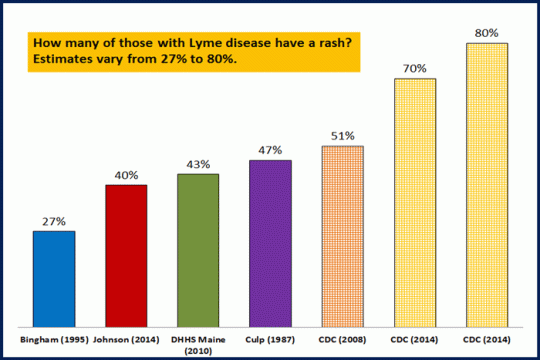
Rashes-larger-blog-4Various studies showing how many get the EM rash.

Infectivity of Asymptomatic SARS-CoV-2 Carriers is Weak

https://www.ncbi.nlm.nih.gov/pmc/articles/PMC7219423/

. 2020 Aug; 169: 106026.
Published online 2020 May 13. doi: 10.1016/j.rmed.2020.106026
PMCID: PMC7219423
PMID: 32405162

A study on infectivity of asymptomatic SARS-CoV-2 carriers

Associated Data

Abstract

Background

An ongoing outbreak of coronavirus disease 2019 (COVID-19) has spread around the world. It is debatable whether asymptomatic COVID-19 virus carriers are contagious. We report here a case of the asymptomatic patient and present clinical characteristics of 455 contacts, which aims to study the infectivity of asymptomatic carriers.

Material and methods

455 contacts who were exposed to the asymptomatic COVID-19 virus carrier became the subjects of our research. They were divided into three groups: 35 patients, 196 family members and 224 hospital staffs. We extracted their epidemiological information, clinical records, auxiliary examination results and therapeutic schedules.

Results

The median contact time for patients was four days and that for family members was five days. Cardiovascular disease accounted for 25% among original diseases of patients. Apart from hospital staffs, both patients and family members were isolated medically. During the quarantine, seven patients plus one family member appeared new respiratory symptoms, where fever was the most common one. The blood counts in most contacts were within a normal range. All CT images showed no sign of COVID-19 infection. No severe acute respiratory syndrome coronavirus 2 (SARS-CoV-2) infections was detected in 455 contacts by nucleic acid test.

Conclusion

In summary, all the 455 contacts were excluded from SARS-CoV-2 infection and we conclude that the infectivity of some asymptomatic SARS-CoV-2 carriers might be weak.

_____________________

**Comment**

A sample of 455 people is nothing to sniff at.

But, similarly to the face-mask issue, the WHO is waffling.  After saying asymptomatic spread is very rare, they now state there’s still too much that’s unknown.  Still, 455 people exposed to an asymptomatic carrier and not one got ill says a lot.

For more:  https://madisonarealymesupportgroup.com/2020/06/06/lockdown-lunacy-the-thinking-persons-guide/

https://madisonarealymesupportgroup.com/2020/06/01/real-covid-19-data-leaked-report/

https://madisonarealymesupportgroup.com/2020/04/11/hospitals-paid-extra-to-list-patients-as-covid19-3x-as-much-if-the-patient-is-on-a-ventilator/

https://madisonarealymesupportgroup.com/2020/06/02/successful-covid-19-critical-care-stonewalled-by-cdc/

https://madisonarealymesupportgroup.com/2020/05/27/cloth-masks-useless-against-covid-19/

https://madisonarealymesupportgroup.com/2020/05/15/social-distancing-is-snake-oil-not-science/

https://madisonarealymesupportgroup.com/2020/05/16/we-could-open-up-again-and-forget-the-whole-thing/

https://madisonarealymesupportgroup.com/2020/05/24/do-lockdowns-work-mounting-evidence-says-no/

Comic relief

http://

Why the Lockdowns Should Last Longer

Here’s why the lockdown should never end. In the global pandemic the lockdown has been used and extended. Many think it should end. Here’s why they’re wrong and it should potentially never end.


Emerging Tick-Borne Diseases & Blood Safety: Summary of a Public Workshop

https://pubmed.ncbi.nlm.nih.gov/32208532/

. 2020 Mar 24.

doi: 10.1111/trf.15752. Online ahead of print.

Emerging Tick-Borne Diseases and Blood Safety: Summary of a Public Workshop

Affiliations expand

Abstract

Tick-borne agents of disease continue to emerge and subsequently expand their geographic distribution. The threat to blood safety by tick-borne agents is ever increasing and requires constant surveillance concomitant with implementation of appropriate intervention methods. In April 2017, the Food and Drug Administration organized a public workshop on emerging tick-borne pathogens (excluding Babesia microti and Lyme disease) designed to provide updates on the current understanding of emerging tick-borne diseases, thereby allowing for extended discussions to determine if decisions regarding mitigation strategies need to be made proactively. Subject matter experts and other stakeholders participated in this workshop to discuss issues of biology, epidemiology, and clinical burden of tick-borne agents, risk of transfusion-transmission, surveillance, and considerations for decision making in implementing safety interventions. Herein, we summarize the scientific presentations, panel discussions, and considerations going forward.

____________________

**Comment**

I only had access to the abstract, but Dr. Cameron writes more fully on the workshop here:  https://danielcameronmd.com/babesia-infection-transmitted-blood-supply/

Interestingly, according to the abstract, they excluded Babesia and Lyme, which are arguably two of the largest problems. It was pointed out that 200 cases of Babesia were transmitted through blood transfusions at the time of the workshop and that Anaplasma is next with increasing clinical cases.

Evidently there have been no reported cases of Lyme transmitted through the blood supply.


Other tick-borne pathogens have been transmitted through donated blood, but these occurrences are rare. (Or rarely reported)

  • 11 cases: A. phagocytophilum, responsible for Anaplasmosis (transmitted by the Ixodes ticks)
  • 2 cases: Tick-borne encephalitis virus complex (TBEV, Powassan virus, DTV), (transmitted by the Ixodes ticks)
  • 1 case: Colorado tick-fever virus (transmitted by Rocky Mountain wood ticks)
  • 1 case: Rickettsia rickettsii, the agent of Rocky Mountain Spotted Fever (transmitted by the Lone Star tick)
  • 1 case: Ehrlichia ewingii (transmitted by the Lone Star tick)

In addition, “two emerging [tick-borne agents] − B. miyamotoi and Powassan virus were discussed − for B. miyamotoi,cases have steadily increased since 2014.”

For more:  https://madisonarealymesupportgroup.com/2019/07/28/tick-borne-infection-risk-in-blood-transfusion/

https://madisonarealymesupportgroup.com/2018/10/11/transfusion-transmitted-babesiosis-one-states-experience/

https://madisonarealymesupportgroup.com/2017/08/08/transfusion-transmitted-babesiosis-in-nonendemic-areas/

https://madisonarealymesupportgroup.com/2019/05/26/fda-recommends-testing-for-tick-borne-illness-in-donated-blood-a-big-duh/

https://madisonarealymesupportgroup.com/2016/06/02/study-showing-results-testing-babesia-microti/


Babesia Microti Imported Into Foreign Countries

https://danielcameronmd.com/babesia-microti-imported-foreign-countries/

BABESIA MICROTI IMPORTED INTO FOREIGN COUNTRIES

Man with babesia microti infection travelling with suitcase

Over the past two decades, there have been reports of the tick-borne infection Babesia microti being imported into foreign countries from the United States. International travelers are unknowingly carrying the disease into countries, which may be unfamiliar with diagnosing tick-borne illnesses.

“Recently, sporadic cases of human babesiosis caused by several species of Babesia have been reported in other countries,” write the authors of “Imported Human Babesiosis, Singapore, 2018.” [1] These cases include:

  • Babesia microti (Germany, Australia, South Korea)
  • Babesia microti-like (Japan, Taiwan, China)
  • Babesia duncani (United States, Canada)
  • Babesia divergens (Europe)
  • Babesia venatorum (Europe, China)
  • Babesia crassa-like (China)
  • Babesia motasi-like (South Korea)

Additionally, in 2003, Nohýnková and colleagues reported what was believed to be the first case of symptomatic Babesia microti infection imported into the Czech Republic from the United States. [2] Meanwhile in 2013, investigators described the “first human case of Babesia microti infection imported to Denmark from the United States by a 64-year-old female traveler with fever of unknown origin.” [3]

READ MORE: Tourists visiting the United States contract Babesia, leaving one dead

According to the authors, “The case raises the possibility that Babesia infections may be under-diagnosed, [and] illustrates the importance of a thorough travel history…” [3]

The number of international travelers carrying tick-borne diseases into foreign countries is rising, making it increasingly important for clinicians to gather a thorough travel history on patients. CLICK TO TWEET 

Two recent case reports demonstrate the rise of tick-borne diseases being imported into other countries and highlights the challenges clinicians face in distinguishing these illnesses, specifically Babesia microti, from malaria.

Case 1: Singapore

A 37-year-old man traveled to multiple places in the year before his illness. His travel history included Vietnam, Thailand, Indonesia, Cambodia, Indonesia, and the United States.

On June 17, 2018, after visiting the Northeastern USA, he noted a right ankle papule that lasted 3 weeks. “He sought consultation at a travel clinic [in Singapore] because of high fever (104°F), rigors, and headaches, which had persisted and worsened over 18 days,” writes Lim and colleagues. [1]

Doctors had prescribed amoxicillin, but the symptoms persisted.

LISTEN TO PODCAST: Babesia treatment of two travelers

“Laboratory test results revealed moderate thrombocytopenia and anemia, and malaria blood films revealed trophozoites forming in erythrocytes, suggestive of Babesia,” writes Lin.

The doctors confirmed the diagnosis of Babesia microti with additional testing. He was treated successfully with quinine and clindamycin.

Case 2: Spain

“A 72-year-old man with a 15-day history of fever, generalized arthralgia, asthenia, and decreased appetite was admitted to Hospital Universitario San Cecilio, Granada, Spain,” writes Guirao-Arrabal and colleagues in “Imported babesiosis caused by Babesia microti − A case report.” [4]

The man had a history of sweating and his inflammatory markers were elevated. He also had a history of type 2 diabetes.

He reportedly traveled to a park in Westchester County, NY, an area that is considered endemic for babesiosis.

Malaria was considered based on intraerythrocytic forms in the red cells. The malaria antigen and PCR tests for malaria were negative.

Babesia microti was presumed with a low level of parasitemia (0.5 %). There was no evidence of another tick-borne illness. After treatment with atovaquone and azithromycin, his parasitemia resolved.

Editor’s note: It is encouraging to see that Babesia is now being considered by clinicians and treated appropriately.

_______________________

For more:  https://madisonarealymesupportgroup.com/category/babesia-treatment/


Azithromycin & Hydroxychoroquine Accelerate Recovery of Outpatients With Mild/Moderate COVID-19

https://www.preprints.org/manuscript/202005.0486/v1

Azithromycin and Hydroxychloroquine Accelerate Recovery of Outpatients with Mild/Moderate COVID-19

Version 1 : Received: 30 May 2020 / Approved: 31 May 2020 / Online: 31 May 2020 (17:51:52 CEST)

How to cite: Guérin, V.; Lévy, P.; Thomas, J.; Lardenois, T.; Lacrosse, P.; Sarrazin, E.; Regensberg de Andreis, N.; Wonner, M. Azithromycin and Hydroxychloroquine Accelerate Recovery of Outpatients with Mild/Moderate COVID-19. Preprints 2020, 2020050486 (doi: 10.20944/preprints202005.0486.v1). Guérin, V.; Lévy, P.; Thomas, J.; Lardenois, T.; Lacrosse, P.; Sarrazin, E.; Regensberg de Andreis, N.; Wonner, M. Azithromycin and Hydroxychloroquine Accelerate Recovery of Outpatients with Mild/Moderate COVID-19. Preprints 2020, 2020050486 (doi: 10.20944/preprints202005.0486.v1).

Abstract

The challenge regarding COVID-19 is to prevent complications and fatal evolution. Azithromycin (AZM) and hydroxychloroquine (HCQ) have proven their antiviral effect in vitro. We aimed to assess the efficacy and safety of AZM alone or combined to HCQ, prescribed, at an early stage, in patients with Covid-19, in a primary care setting.
Eighty-eight patients received either no or a symptomatic treatment (NST) (n=34) or AZM alone (n=34) or AZM+HCQ (n=20). The efficacy end point was the time to clinical recovery and the safety end point was the occurrence of cardiovascular events.
  • The mean (SD) times to achieve clinical recovery were respectively 25.8 days (11.1), 12.9 days (13.4) and 9.2 days (9.3), showing a statistically significant difference between NST and AZM alone (p<0.0001) or AZM+HCQ (p<0.0001).

To improve the evidence level, a case-control analysis was performed on a sample of 57 patients (19/group) matched for age, sex and BMI. The statistical difference between NST and AZM was confirmed (p=0.0149) as well as the difference with AZM+HCQ (p=0.0002). No cardiac toxicity was recorded in any patient. No statistical difference was shown between AZM and AZM+HCQ groups, although the dual therapy tended to be more effective in patients over 50 years, based on an analysis using the cox model.

In conclusion, AZM and AZM+HCQ favourably impacted the course of the disease. We need trials, ideally prospective/double blind, to show if a statistical difference can be evidenced with a broader group, and clarify the indications of each treatment depending on initial clinical presentation.

____________________

For more:  https://madisonarealymesupportgroup.com/2020/06/01/rebuttal-on-huge-hcq-study-in-lancet/

https://madisonarealymesupportgroup.com/2020/05/22/new-study-hcq-zinc-greatly-reduces-covid-19-health-risk/

https://madisonarealymesupportgroup.com/2020/05/11/podcast-evidence-supporting-hcq-azithromycin-for-covid-19/

https://madisonarealymesupportgroup.com/2020/06/02/successful-covid-19-critical-care-stonewalled-by-cdc/

https://madisonarealymesupportgroup.com/2020/03/27/the-truth-about-hydroxychloroquine-plaquenil-in-the-treatment-of-covid-19/

https://madisonarealymesupportgroup.com/2020/03/15/herbal-treatment-for-coronavirus-infections-buhner/

https://madisonarealymesupportgroup.com/2020/03/20/herbal-treatment-for-covid-19-addendum-buhner/

https://madisonarealymesupportgroup.com/2020/04/06/a-plausible-penny-costing-effective-treatment-for-corona-virus-ozone-therapy/

https://madisonarealymesupportgroup.com/2020/04/07/covid-19-integrative-support-in-prevention-early-interventions/

https://madisonarealymesupportgroup.com/2020/03/12/convalescent-plasma-therapy-tested-on-critically-ill-covid-19-patients/

https://madisonarealymesupportgroup.com/2020/02/28/coronavirus-how-bad-can-it-get-includes-treatments-disulfiram-is-one/

https://madisonarealymesupportgroup.com/2020/02/13/washington-doctors-successfully-treat-coronavirus/