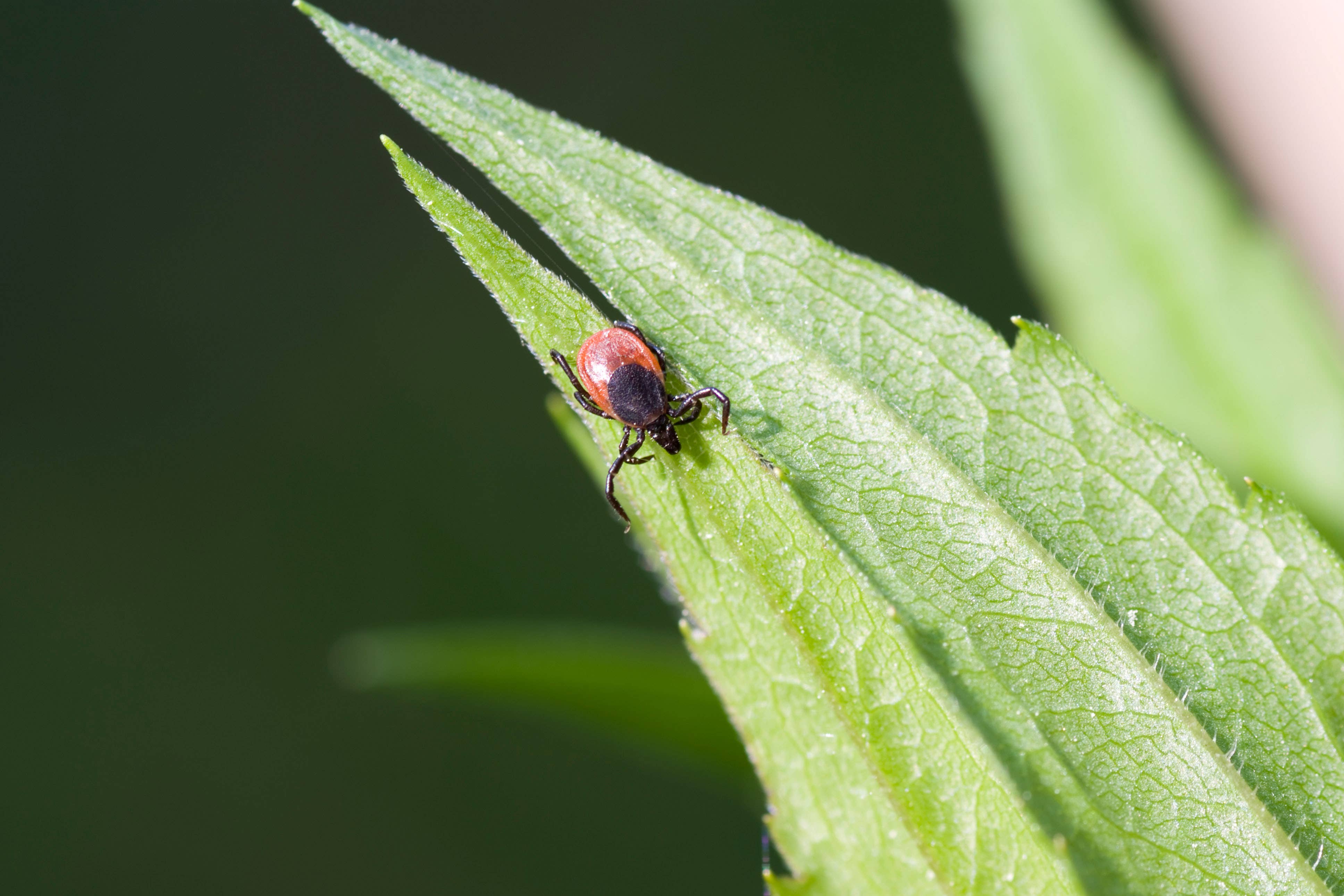
But don’t worry. There are a variety of things you can do to keep yourself and your pets safe from these pesky bloodsuckers, starting with knowing what types of ticks live in North Carolina.
Black legged tick, aka the deer tick (Lyme disease)
The lone star tick (STARI, ehrlichiosis, Alpha-gal allergy)
The American dog tick (Rocky Mountain Spotted Fever)
The brown dog tick
Check out your own state’s resources for local ticks and the diseases they carry, but one word of caution: just because something hasn’t been reported, doesn’t mean it doesn’t exist or can happen. A tick, is a tick, is a tick and ALL are suspect as they bite and exchange bodily fluids with whomever and whatever they bite. Ticks are constantly moving and being found in places they shouldn’t be, carrying things they shouldn’t have.
The website points out the following and I’ve added more:
Black legged tick (Lyme disease, Anaplasmosis) – for some reason they forgot Powassan or Deer tick virus, Borreia miyamotoi, Bartonella, Babesia, Mycoplasma, Tularemia, Ehrlichia muris eauclairenis,hemocytic rickettsia-like organisms, tick paralysis from fully engorged female
lone star tick or seed tick (Ehlichia chaffeensis, Ehrlichia ewingii, Alpha-gal allergy – they have found Lyme in it but no reported cases. They also suspect rickettsia) for some reason they forgot STARI, tularemia, Anaplasma, Rickettsia amblyommatis, tick paralysis)
American dog tick or wood tick (RMSF, tularemia – they have found Lyme in it but no reported cases) for some reason they forgot Anaplasma and tick paralysis.
brown dog tick (RMSF) can also transmit Ehrlichia canis, Babesia canis vogeli, Babesia gibsoni-like to dogs which makes them suspect for humans as well. Source
For some reason there’s been a continual downplaying of where ticks are and what they carry.Prudence would err on the side of caution, but it simply doesn’t regarding Lyme/MSIDS. Take EACH and EVERY tick bite as seriously as a heart attack. If bitten, go here for excellent advice.
While the original article was written for North Carolina, please know that those bitten by ticks in the South have been ignored, denied, and gas-lit for decades. These folks are denied diagnosis and treatment and are told it can’t be Lyme/MSIDS because it doesn’t exist there despite the fact migrating birds are dropping ticks virtually everywhere and the fox, deer, mouse, lizard, and 1,000 other carriers are crossing state borders daily. It’s also important to note that tick researchers admit to tweaking ticks in the lab with the CIA dropping them out of airplanes. Independent researchers that aren’t conflicted due to government grant money admit that ticks are being found in places they never existed before, carrying things they never had before.
WHITE-TAILED DEER BLOOD KILLS BACTERIA THAT CAUSES LYME DISEASE
NEWVEC research at UMass Amherst may lead to strategies to reduce the incidence of tick-borne illness
As tick season kicks in across the country, the executive director of the University of Massachusetts Amherst-based New England Center of Excellence in Vector-Borne Diseases (NEWVEC) and his team have completed research that offers a promising lead in the fight against Lyme disease.
The study, published recently in the journal Vector-borne and Zoonotic Diseases, demonstrates that the blood of the white-tailed deer kills the corkscrew-shaped bacterium that causes Lyme disease, a potentially debilitating illness. The Centers for Disease Control and Prevention (CDC) estimates that each year some 476,000 people are diagnosed with and treated for Lyme, the most common vector-borne disease in the U.S.
“Deer are vitally important to the survival of deer ticks, but they are not involved with transmitting the Lyme bacteria, Borrelia burgdorferi,” explains senior author Stephen Rich, professor of microbiology. “We’ve known for some time that ticks taken from white-tailed deer are not infected, and we speculated that something about the deer prevented those ticks from becoming infected. But until publication of our paper, no one had done the experiment to show that deer blood – specifically the serum component of white-tailed deer blood – kills Lyme.”
Some people infected with Lyme get a tell-tale target rash around their tick bite. Credit: Getty Images
The results of the study may one day lead to new strategies and approaches for Lyme disease prevention and treatment, says lead author Patrick Pearson, a Ph.D. student in NEWVEC, whose upcoming doctoral examination focuses in part on this research.
“In these experiments we determined that white-tailed deer serum kills the Lyme bacterium. The next important question will be to understand exactly how deer blood kills Lyme bacteria,” Pearson says.
The research is one project of NEWVEC, which was funded by the CDC last year with a $10 million award to prevent and reduce tick- and mosquito-borne diseases in New England. NEWVEC aims to bring together academic communities, public health practitioners, residents and visitors across the Northeast, where Lyme infections are concentrated.
The Lyme disease bacterium is passed to juvenile blacklegged (Ixodes scapularis) deer ticks from mice the arthropods feed on. The infected ticks then pass the bacterium on to humans when they feed on people.
“We are the accidental host,” Rich says. “The ticks that bite us are actually looking for a deer because that’s where they breed. Without the deer, you don’t have ticks. But if you had only deer, you wouldn’t have any Lyme.”
To carry out their experiment, the researchers obtained blood serum from a semi-captive white-tailed deer herd at Auburn University in Alabama. The deer were believed to have no exposure to ticks and the bacteria that causes Lyme disease.
The researchers then grew the Lyme disease germ in test tubes and added the deer serum. “And lo and behold, it killed the bacteria,” Rich says. “Whatever it is in the deer that’s killing the germ is part of the innate immune system, a part of the immune system that precedes antibodies.”
Pearson adds, “The Lyme bacterium has proteins on its surface that protect it from the human innate immune system. Deer blood is somehow different such that Lyme bacteria are apparently unable to protect themselves from the innate immune system of white-tailed deer.”
The next research step is to determine the precise mechanisms in deer blood that kill the bacteria.
“We’d like to determine if it’s something we can induce in humans,” Rich says. “Or maybe we could use this somehow to our advantage to reduce the incidence of Lyme disease in the wild.”
While the age-old repellents permethrin, Deet, and Picaridin are all mentioned in the article, a few new things are in the pipeline:
GearJump Technologies received DoD funding to design a controlled-release device utilizing synthetic pyrethroids (not to be put on skin)transfluthrin and metofluthrin that can attach to the boot of soldiers has shown affected ticks became slower moving, less mobile and appeared to be in a “drunken-like state.”
Nootkatone, derived from Alaska yellow cedar trees and citrus fruit, had statistically significant knockdown effects when compared to water-only controls. It also displayed significant residual tick-killing activity after weathering naturally in the landscape for 2 weeks prior to tick application/testing.
While this article states products could be available by 2022, they are obviously not forthcoming. This NY Times article explains it’s considered safe and is used in food and perfume, but the EPA registration only applies only to Nootkatone – not forthcoming products which will each need to be tested and registered.
The CDC has licensed patents to its partnersEvolva and Allylix. The substance is available to be used to develop new insect repellents and insecticides. And this is exactlywhat is wrong with the CDC. I heard about Nootkatone years and years ago and it’s languished on the sidelines like so many things due to CDC patents/influence.
The chemical repels mosquitoes, ticks, bedbugs, fleas and may be effective against lice, sandflies, midges, and other pests. An ISU insect toxicologist found it to be an “impressive repellent but a weak insecticide.”It can kill insects but takes a vast amount of product making it impractical. Nootkatone repels ticks better than synthetics and is their equal at repelling mosquitoes. Unlike other natural products, it does not lose its potency after an hour but lasts as long as synthetics.
Stay ahead of the trend in fashion and beyond with our free weekly Lifestyle Edit newsletter
SIGN UP
I would like to be emailed about offers, events and updates from The Independent. Read our privacy notice
A virus carried by ticks has been found in the UK, and health experts are warning that people need to protect themselves from being bitten.
The UK Health Security Agency (UKHSA) says the species of tick which carry tick-borne encephalitis virus (TBEV) is widespread in the UK.
They stress that although the risk to the public is low, it’s important for people to protect themselves against being bitten by the tiny bugs, which can also transmit the much more common Lyme disease.
“The risk of tick borne encephalitis virus in England is very low, but as ticks can carry other infections, it is as important as ever to be ‘tick aware’,” says Dr Claire Gordon from the UKHSA. “Take steps to reduce your chances of being bitten when outdoors in areas where ticks thrive, such as moorlands and woodlands, and remember to check for ticks and remove them promptly.”
(See link for article)
_________________
SUMMARY:
Symptoms of TBEV are high fever with headache, neck stiffness, confusion or reduced consciousness.
The Tick-borne disease expert is looking at “climate change” and woodland expansion, the first of which has been proven to be a nothing-burger regarding tick and disease proliferation, but is the pushed, accepted narrative in the research world to obtain highly sought after government grants. Corrupt public health needs the metamorphosis of ‘climate change’ from an environmental issue to a public health issue so they’ve used classic narrative braiding and intertwine two propaganda narratives together to reinforce each other. It’s a huge money grab.
There’s a section on tick prevention which you can also read about here.
Back from Lyme disease, disc golfing champ has some advice for you
Ricky Wysocki, currently the number-one professional disc golf player in the world, was bitten by a tick and diagnosed with Lyme disease in 2019. This landed him bedridden for months.
After journeying back to recovery, Wysocki has partnered with Insect Shield to spread awareness about the dangers of ticks and the importance of taking preventative measures to avoid tick bites.
Ticks can now be found in all 50 states and around the world and the number of Lyme disease cases in the United States continues to skyrocket. According to the Centers for Disease Control and Prevention, insurance records suggest that each year approximately 476,000 Americans are diagnosed and treated for Lyme disease. This places a large burden on the health care system and shows a dire need for more effective education and prevention tactics.
For disc golfers, the risk of tick attachments is very high during play. Disc golf courses often have increased tick populations due to their natural environments including tall grasses, bushes, and wooded zones where ticks thrive.
In these environments, ticks can easily attach to skin and clothing. Gear can also pose a risk. Disc golfers carry gear bags and place them on the ground as they move throughout a course.
This practice also increases the risk of tick attachments after the bag has touched the ground and then is picked back up and carried.
Power loss
Several months following the tick bite, Wysocki began to experience symptoms such as fatigue, power loss in his shots, and rashes. A blood test confirmed his Lyme disease diagnosis.
“To go from being a pro athlete to getting diagnosed with Lyme disease, exhausted, barely able to walk, and ultimately bedridden and wondering if I would ever play disc golf at my peak level again, was crazy,” shares Wysocki.
To stay protected on the course while playing disc golf, Wysocki leverages Insect Shield essentials and offers a series of tips:
For more information about how to stay protected from ticks and the dangerous diseases they may carry on the disc golf course, visit Ricky Wysocki – Insect Shield.
https://www.cdc.gov/ncezid/dvbd/media/dpk-nootkatone.html So it appears the update on Nootkatone is that it is now an EPA-registered product the CDC has licensed patents to its partnersEvolva and Allylix. The substance is available to be used to develop new insect repellents and insecticides. And this is exactlywhat is wrong with the CDC. I heard about Nootkatone years and years ago and it’s languished on the sidelines like so many things due to CDC patents/influence.
Everyone and their brother knows that avoiding ticks and not getting infected in the first place is the optimal solution, yet similarly to ivermectin and HCQ/zinc treatments for COVID, our own government stands in the way of progress and true answers. Due to severe conflicts of interests and corruption in pubic health, they continue to deny the public the exact things that would help.