Archive for the ‘Herbs’ Category

New Treatment Options For Chronic Lyme Patients

https://www.lymedisease.org/members/lyme-times/2023-summer-features/new-treatments-chronic-lyme-disease/

New treatment options for chronic Lyme patientsNovel therapeutic protocols offer hope for complex cases.

By Dr. Steve Harris
 
Summer, 2023
 
Summary:
  • Dr. Mike Snyder’s group at Stanford is working on multiomics for chronic fatigue that track an individual patient’s data. This will help Lyme/MSIDS patients because treatments need to be individualized as each case is different.
  • Mitochondrial work is going to become bigger because illness and wellness is fundamentally all about energy.  Detoxing and absorbing nutrients will help the body function effectively without much external intervention.
  • Unique modalities like growth hormone, DHEA, and metformin are being used to decrease the age of cells to help the very complicated group of patients who are not getting better on standard treatments.
  • Regenerative therapies including exosomes, PRP, and alpha 2-macroglobulin, among others are also helpful for tendon issues, osteoarthritis and orthopedics but exosomes have been used in parallel to stem cell therapies which is written about in a book by Amy Scher titled, This is How I Save My Life.  She wrote about her journey through India, where she received human embryonic stem cells, and went from a very severe neurologic case of Lyme to being quite well now. 
  • Jaw misalignment, spinal issues, and craniocervical instability (all related to body structure) needs to be addressed due to the severe inflammation Lyme/MSIDS patients have.
  • Trauma needs to be addressed but often requires a circuitous approach such as the Dynamic Neural Retraining SystemTM (DNRS), vagus nerve training, neurofeedback, neuro stimulation, and various other methods.  A scientist in Wisconsin, Yuri Danilov, developed the PoNS device, which is a tongue neurostimulation device owned by a company called Helius Medical technologies. It is FDA approved for head trauma but it also works for PTSD.  They’re trying to get FDA approval and they are making it available to physical therapists. It’s mentioned in Dr. Norman Doidge’s book The Brain’s Way of Healing. Some patients have had  phenomenal results using it.
  • The onion parable is used to explain the importance of peeling back layer after layer of issues an individual has – and recognizing that being infected with Lyme and/or the various coinfections is only one layer in this complex puzzle.  Typically these onslaughts alone are not the problem, but the cumulative effect of multiple onslaughts is what makes us sick.
  • Viruses, which are becoming more of a problem, are opportunistic and cause the body to decompensate.  Again, treating them singularly usually isn’t the answer, but they are important to consider in the overall picture.
  • mTOR Agents and Autophagy:  Dr. Steven Phillips uses mTOR agents, (mammalian target of Rapamycin) to increase one’s autophagy (cleans the body of debris).  Honokiol (magnolia leaf), doxycycline, methylene blue, vitamin D, and other agents increase autophagy.
  • Toxic load, nutrient status, and environmental stressors:  using different kinds of fats helps patients through membrane chemistry to flush out debris in the lipid bilayer on the surface of cells.  Many things cause patients to be overreactive and dealing with it is very important.

“In conclusion, these are a few different ways to address this most complicated, most difficult group of patients. I truly believe that everybody can get better, and I think that sharing that hope with the patient is a way for them to be able to hold on during what is a marathon for many of them. Not everybody needs to take every step, but the steps are there, and it can be done.” — Dr. Steven Harris

(See link for article)

__________________

For more:

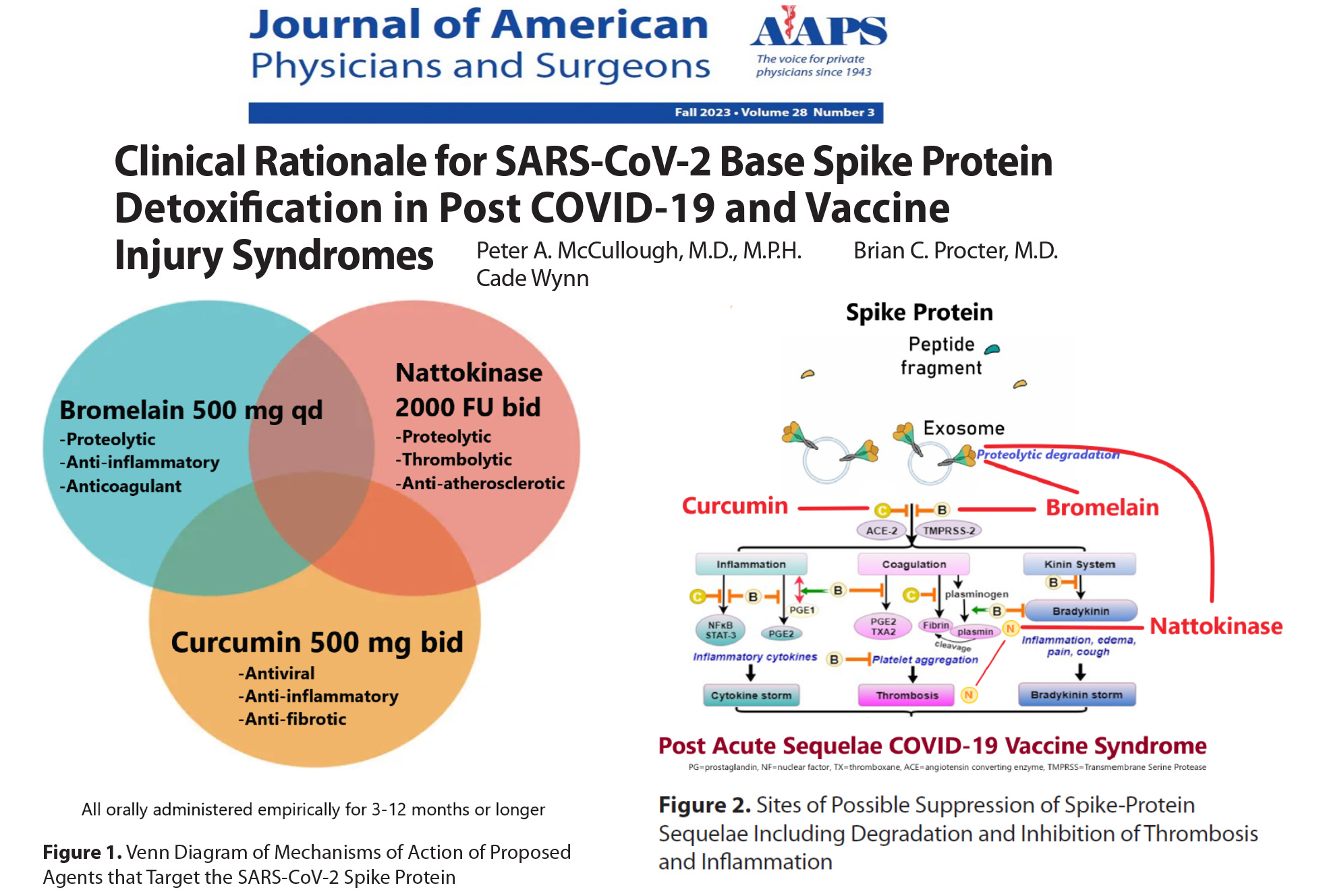
Baseline Protocol for Long-COVID & “Vaccine” Injury Syndromes

https://www.jpands.org/vol28no3/mccullough.pdf  Paper Here

Clinical Rational for SARS-SoV-2 Base Spike Protein Detoxification in Post COVID-19 and Vaccine Injury Syndromes

Publication of Baseline Protocol for Those Suffering from Long-COVID and Post-Acute Sequelae after COVID-19 Vaccination

Peter A. McCullough, M.D., H.P.H., Cade Wynn, Brian C. Procter, M.D.

For more:

ACTION ALERT: FDA Trying to Ban CBD

https://www.paintreatmentdirectory.com/posts/the-fda-is-trying-to-ban-cbd-supplements

The FDA is Trying to Ban CBD Supplements


The FDA is Trying to Ban CBD Supplements


Editor’s note: The following article and call to action about the FDA’s efforts to ban CBD supplements is being reprinted from the Alliance for Natural Health website. This is not the first time the FDA has tried banning natural treatments relied on by millions of Americans, but part of a long and corrupt history. The FDA has also been trying for several years to ban kratom, an herb being successfully used by millions of Americans to treat pain, opioid addiction and withdrawal, anxiety and more. Recently, the FDA has also taken action against homeopathy, a safe, natural system of medicine used worldwide since its development in 1810. The FDA has been trying to get stronger regulatory authority to take vitamins and other supplements off the market. It seems the FDA is leaving no stone unturned in its efforts to protect the profits of the pharmaceutical industry instead of protecting the health of the public.

The FDA Misleads on CBD Safety

…providing further evidence that the agency is trying to engineer a ban on affordable CBD to protect drug industry profits. Action Alert!

As the evidence of CBD’s myriad health benefits continues to pile up, it increasingly looks to us like the FDA is preparing to issue a ban on CBD supplements. We must support bills in Congress that take the issue out of the FDA’s hands by allowing the sale of CBD in supplement form.

Lawmakers do appear to be taking this issue seriously. In addition to the bill introduced by Representative Morgan Griffith (R-VA), another similar bill has just been introduced by Senators Ron Wyden (D-OR), Rand Paul (R-KY), Jeff Merkley (D-OR), and Representative Earl Blumenauer (D-OR) to allow the sale of CBD in supplements. Additionally, Congress is holding a hearing on July 27 during which members will formally scrutinize the impact of the FDA’s failure to develop a regulatory pathway for the sale of CBD in supplements and food. Let’s show the FDA the scale of our opposition to its unjustified plan and demonstrate the huge level of grassroots support for CBD supplements ahead of the hearing.

We want to make it crystal clear what we face if we don’t stop the FDA in its tracks. CBD, or cannabidiol, is one of over 100 natural compounds called cannabinoids found in a wide range of plants, most notably the hemp plant. The cells of our bodies are laced with cannabinoid receptors that form part of the endocannabinoid system that is essential to life and to robust health. We produce cannabinoids internally (endocannabinoids) and we also consume them in some foods (exocannabinoids). Most of these cannabinoids, including CBD, are not psychoactive – THC being an exception – but they all offer profound benefits. CBD is one of the most well researched non-psychoactive cannabinoids and it has an incredible array of health benefits, with evidence showing that has profound anti-inflammatory and immune modulating effects and can help with painanxietydepressioncertain cancers, and even heart health.

Let that sink in for a moment. The opioid epidemic is killing an astonishing number of Americans every year; rates of anxiety and depression are reaching new highs, particularly among young people; heart disease is the leading cause of death for adults in the US. CBD has been found to help with all of these conditions, but instead of working to make this compound more widely available as a supplement, which is the way it should be sold according to the Dietary Supplement and Health Education Act of 1994 (DSHEA), the FDA wants to stop all supplement sales of CBD. The FDA’s justification is the protection of the profits of one pharmaceutical company that has a CBD drug that will cost patients a stunning $32,500 per year. It will also mean citizens who have been benefiting from low-cost health support from CBD supplements since they became widely available a few years ago will have no further access to the supplements they have relied on. There is something deeply wrong with this picture.

How did we get here? For starters, the FDA says that CBD can’t be a supplement because it has approved a drug version of CBD called Epidiolex that is used to treat two rare forms of epileptic seizure, Lennox-Gastaut syndrome (LGS) or Dravet syndrome, in children over 2 years. This ability for FDA to rule in favor of drug companies has to do with the FDA back-channel that we’ve written about many times before. In short, if a substance is studied as a drug (i.e. a drug company has made an Investigational New Drug application) before there is evidence it was sold as a supplement (i.e. evidenced by a supplement company’s New Dietary Ingredient notification), then the drug company can ask the FDA to ban the supplement form of that compound.

Yet, as pressure mounts from Congress and a variety of stakeholders to make CBD more widely available, the FDA has been reviewing scientific information on CBD. Earlier this year, the agency released a statement explaining that the “existing regulatory framework” for foods and supplements is not appropriate for CBD and that a new regulatory pathway is needed.

One of the main issues raised by the FDA is that of safety. The agency claims that CBD presents various safety concerns, specifically the potential for harm to the liver and the reproductive system and concerns for vulnerable populations such as children and pregnant women.

These views are articulated in a review article authored in part by FDA staff. To support the assertion that CBD can pose threats to the male reproductive system, the authors cite a 1981 animal study in which monkeys were administered 30, 100, or 300 milligrams per kilogram of body weight per day (mg per kg bw/day) of CBD orally. But consider that 300 mg per kg bw/day for a human weighing 154 pounds would be 21,000 mg, or 21g, of CBD—far, far more than anyone would ever take as a supplement!

This is emblematic of a larger problem we’ve discussed before: the deeply flawed risk assessment models used by federal bureaucrats to prevent us from utilizing natural medicines to stay healthy. These types of models have been used by European regulators to set absurd limits on supplement dosages (known as tolerable upper limits, or ULs). ANH’s founder and Executive and Scientific Director, Robert Verkerk, PhD, has published several papers critiquing this approach that was originally developed by the Institute of Medicine (now the National Academy of Medicine), pointing to a fundamental flaw: in trying to restrict vitamin or other micronutrient dosages in this way, regulators completely ignore the fact that risks vary greatly depending on the form and dose of a nutrient used, and for most populations you’ll find overlap in the doses that cause health benefits for the majority and risks for a few. So if you then create a law that aims to eliminate a potential risk for everyone, you actually deprive the vast majority access to the micronutrient and all the benefits it offers.

Bringing it back to CBD: the fact that the FDA is, in part, using a decades-old animal study in which an absurdly high CBD dose was used to demonstrate that CBD has safety concerns once again demonstrates that the federal approach to assessing risk and benefit is fundamentally broken. It’s based on a defunct toxicological model that should have no place in modern day food or supplement law-making. The agency is also not giving proper weight to the incredibly favorable safety record of CBD used as a supplement or the multitude of benefits we can get from using CBD as a supplement. Instead, the FDA has chosen to focus on old evidence of harm that was only found when absurdly high doses were taken experimentally. To us, it seems like the agency is simply grasping at any information it can to demonstrate harm so it can justify its proposed ban on CBD supplements. The driver? Nothing less than preventing competition for the pharmaceutical drug version of CBD, given its the drug companies that are the FDA’s principal paymasters.

And, indeed, the FDA’s view on CBD’s safety is not supported by experts in the industry and elsewhere. A 2020 meta-analysis looked at human trials to assess CBD efficacy and safety. The authors concluded that most studies reported no adverse events with acute administration of CBD and mild to moderate effects with chronic administration, with the most common side effects being tiredness, diarrhea and changes of appetite/weight. Again, these side effects must be weighed against the benefits of CBD use for combatting opioid misuse, heart disease, anxiety, and depression. Harvard Health Publishing, the publication of the Harvard Medical School, states simply that, for adults, “CBD appears to be very safe.”

We cannot allow the FDA to cater to the drug industry at the expense of public health.

Action Alert! Write to Congress in support of bills that allow the legal sale of CBD in supplements. Please send your message immediately.

The FDA has said that they will not be allowing CBD to be in food or supplements, explaining that the “existing regulatory framework” for foods and supplements are not appropriate for CBD. The agency denied three Citizens Petitions requesting the agency issue a regulation that would allow CBD to be sold as a supplement. Clearly the FDA is more interested in protecting Big Pharma profits than with promoting consumer access to a product that can benefit their health. We need Congress to take the issue out of the FDA’s hands to create a legal pathway for CBD supplements.

Write to Congress and tell them to support the Hemp and Hemp-Derived CBD Consumer Protection and Market Stabilization Act of 2023 and the Hemp Access and Consumer Safety Act to protect access to CBD supplements.

Sign the Petition Here

_________________

**Comment**

The FDA wants patients between a rock and a hard place.  On one hand they state extended antibiotics are not to be used for Lyme/MSIDS because they are unsafe, and then they also want to remove important supplements that help us, but when the agency is alerted to the fact doctors have never witnessed so many “vaccine”-related injuries and VAERS reports are higher than any other vaccine in its history, after the mRNA gene therapy injections……crickets.

Something doesn’t smell right.

If the FDA had their way we’d just all die already.

For more:

The FDA has a long & sordid history of attempting to ban anything it views as competition to its lucrative drugs & vaccines due to its vested interests with Big Pharma.

Lyme Disease & the Pursuit of a Clinical Cure

https://www.frontiersin.org/articles/10.3389/fmed.2023.1183344/full

REVIEW article

Front. Med., 24 May 2023
Sec. Infectious Diseases: Pathogenesis and Therapy
Volume 10 – 2023 | https://doi.org/10.3389/fmed.2023.1183344

Lyme disease and the pursuit of a clinical cure

  • Division of Immunology, Tulane National Primate Research Center, Tulane University Health Sciences, Covington, LA, United States

Lyme disease, caused by the spirochete Borrelia burgdorferi, is the most common vector-borne illness in the United States. Many aspects of the disease are still topics of controversy within the scientific and medical communities. One particular point of debate is the etiology behind antibiotic treatment failure of a significant portion (10–30%) of Lyme disease patients. The condition in which patients with Lyme disease continue to experience a variety of symptoms months to years after the recommended antibiotic treatment is most recently referred to in the literature as post treatment Lyme disease syndrome (PTLDS) or just simply post treatment Lyme disease (PTLD). The most commonly proposed mechanisms behind treatment failure include host autoimmune responses, long-term sequelae from the initial Borrelia infection, and persistence of the spirochete. The aims of this review will focus on the in vitro, in vivo, and clinical evidence that either validates or challenges these mechanisms, particularly with regard to the role of the immune response in disease and resolution of the infection. Next generation treatments and research into identifying biomarkers to predict treatment responses and outcomes for Lyme disease patients are also discussed. It is essential that definitions and guidelines for Lyme disease evolve with the research to translate diagnostic and therapeutic advances to patient care.

_________________

Translation:  TIME FOR CHANGE!

Thankfully the study authors point out the following:
  • Without intervention, Bb establishes a persistent/chronic infection in both its reservoir and non-reservoir hosts.  
  • Controversy regarding chronic infection revolves around whether Bb can persist after antibiotics and whether they are capable of causing the symptoms patients experience.
  • There are many bacterial species associated with persistent infections in humans including: Mycobacterium tuberculosisPseudomonas aeruginosaEscherichia coliStaphylococcus aureus, and B. burgdorferi (109).
  • Bacterial tolerance is different from resistance in that bacteria are not actively growing in the presence of the antibiotic and there is no heritable genetic change in the persistent bacteria’s genome (110111).
  • The stress response and other mechanisms allow bacteria, including Borrelia, to survive lethal conditions such as limited nutrients, extreme pH levels, and the presence of certain antibiotics.
  • Drug-induced bacterial persisters show a biphasic killing curve and the regrown persister cells have the same minimum inhibitory concentration (MIC) to the administered antibiotic as the original population but a higher minimum bactericidal concentration (MBC) (112).
  • Several independent studies have demonstrated that Bb can form drug-tolerant persister cell in vitro.
  • In vivo studies of Bb antibiotic persistence often use different parameters that can make comparisons between two or more studies difficult.
  • It is likely that lack of consensus of definitions and diagnosis lead to the treatment controversy.
  • Despite treatment controversy, a biostatistical review of the literature found that retreatment of LD with antibiotics may be beneficial in certain cases (163).
  • Since research for PTLD revolves around autoimmunity, immune-mediated factors, and/or persistent infection, most drugs fit into one of three categories: immune therapies, pathogen specific inhibitors, or antibiotics.
  • Studies screening drug libraries have revealed:
    • disulfiram has demonstrated borreliacidal activity both in vitro and in vivo (174176)
    • vancomycin may have efficacy against stationary Bb based upon cultures and evaluation in SCID mice (177)
    • hygromycin A has shown efficacy against Bb, without disturbing the gut microbiome like so many broad-spectrum antibiotics, in vitro and in an in vivo mouse assay, but it’s use in preventing persistent infections was not determined (178)
    • drug combinations such as daptomycin or artemisinin, cefoperazone, and doxycycline as well as the combination sulfachlorpyridazine, daptomycin, and doxycycline have shown evidence of in vitro activity against Bb persisters and round bodied forms (117172). Azlocillin and cefotaxime are effective in in vitro killing against Bb persisters induced by doxycycline, which appear to be more tolerant to other antibiotics (179).
    • daptomycin or daunomycin, doxycycline, and cefuroxime have had success in sterilizing in vitro Bb biofilm-like microcolonies (180181).
    • dapsone, used in treatment of leprosy, has had success when combined with other antibiotics in killing biofilm-like Bb (182), and dapsone has had positive effects in a small PTLD and co-infection clinical study (183).
    • oregano, cinnamon bark, clove, and various flowers, grasses, and berries, as well as natural compounds such as those found in bee venom and its component melittin have demonstrated potential in vitro growth inhibition against Bb and its various forms (184188) but need further research to determine the safety and efficacy of, and the composition and activity of the exact compounds found.
  • Curative treatment during early LD stages is a key to solving the current PTLD public health problem.
  • It is likely that more than one mechanism is involved in antibiotic treatment failure that leads to PTLD.
  • The current treatment guidelines are dependent upon the immune system’s ability to clear persistent spirochetes and conditional to the surviving spirochetes being non-viable and not enough to sustain a prolonged immune response.
  • In order to make PTLD a thing of the past, personalized medicine is required as well as the need to evolve and progress with scientific discoveries and innovations.  

Study Says Opioids No Better Than Placebos For Back & Neck Pain

https://www.paintreatmentdirectory.com/posts/opioids-no-better-than-placebos-for-back-and-neck-pain-new-study-says

Opioids No Better Than Placebos For Back and Neck Pain, New Study Says

7/10/23

A new study just published in The Lancet, a highly respected mainstream journal, reported that patients with low back pain and neck pain who were prescribed opioids did no better than patients given a placebo. The randomized, controlled study of 347 patients found that there was no significant difference in pain scores between the two groups at six weeks. A year later, the placebo group had slightly lower pain scores,1.81 compared to 2.37 for the opioid group. The average age of participants in the study was 44.7 years and they all had lower back pain, neck pain or both for 12 weeks or less.

According to the National Institute for Drug Abuse (NIDA), 10-12% of those prescribed opioids develop an addiction. Despite the fact that over a million Americans have died of opioid overdoses to date, opioids continue to be widely prescribed as noted by the CDC. After peaking in 2012 at 81.3 prescriptions per 100 persons nationwide, the prescription opioid rate was 43.3 per 100 persons in 2020. However, some counties had rates that were nine times higher than that. This study indicates that many pain patients are being unnecessarily exposed to devastating and potentially fatal risks for absolutely no benefit.

I believe that the reason that opioids continue to be so widely prescribed despite the risks is that healthcare providers and patients have heard so often that “opioids are the best treatment we have for pain”. This statement has been repeated so often by pharmaceutical interests and their enablers despite the lack of evidence that most people believe it. Will this study be enough to change these beliefs? I doubt it.

Besides patients’ and healthcare providers’ frequently reinforced beliefs that “opioids are the best treatment we have for pain”, there are several other barriers that get in the way of change. These include:

Healthcare providers are not educated about safer and more effective alternatives.

One survey of medical school curriculum in the U.S. found that physicians were receiving less than two hours of education about pain during their four years of medical school. Post-graduate education is largely sponsored by the drug companies, who fund the medical journals through advertising, sponsor most of the continuing education courses and conferences that physicians attend and send sales reps to physicians’ offices to peddle their wares on an almost daily basis. There are no comparable platforms for educating physicians about alternatives to pharmaceuticals for the treatment of pain.

Insurance companies won’t pay for alternative treatments or severely underfund them.

They do not pay for acupuncture, biofeedback, massage, nutritional counseling or supplements, exercise programs, herbal treatments, light therapy or other proven pain treatments. They have not raised fees for chiropractors, mental health providers or physical therapists in over 40 years.

Government policy often blocks access to alternative treatments.

Marijuana is still federally illegal, making it inaccessible for many. The FDA has gone to great lengths to try to ban kratom, a very effective southeast Asian pain-relieving herb, and failing that, has done their best to demonize it. Several states have banned kratom. 

The FDA has also recently declared homeopathy illegal, classifying all remedies as unapproved drugs, despite significant evidence that homeopathy is safe and effective and a long tradition of its use being legal.

No federal or state laws require insurance coverage for most alternatives or adequate fees for the treatments, like physical therapy, psychotherapy and chiropractic, that are covered.

Sign My Petition to Require Insurance Companies to Pay for Alternative Treatments

The supply of alternative service providers cannot currently meet increased demand.

For instance, while the demand for chiropractic services has been increasing, the U.S. Small Business Administration reports that the five-year survival rate of chiropractic practices is only 48.9%. This is most likely due to low fees and excessive paperwork demands by insurance companies.

The physical therapy profession is currently hemorrhaging providers despite increasing demand, with over 22.000 physical therapists leaving the workforce in the last quarter of 2021 alone. Over 15,000 licensed clinical social workers left the workforce during the same time period in professions where there were already significant shortages.

There are already shortages of massage therapists and demand for acupuncturists is already increasing compared to supply. These shortages will be even more severe if insurance coverage is made available.

Find the Right Provider

The Placebo Effect and Chronic Pain

The placebo effect refers to the improvement in a patient’s condition, despite receiving a treatment with no active pharmacological properties, for example: a sugar pill. Research has consistently shown that when patients genuinely believe they are receiving an effective treatment, their bodies often respond accordingly, producing measurable improvements.

The power of placebos extends beyond a mere psychological response; it can lead to actual physiological changes in the body. Studies have shown that the placebo effect can trigger the release of endorphins (the body’s natural opioids), dopamine (the body’s natural mood elevators) and other neurotransmitters associated with pain relief and improved mood. This indicates that the mind possesses an innate ability to activate the body’s self-healing mechanisms.

Placebo-controlled clinical trials are now standard practice in drug development, enabling researchers to evaluate the true effectiveness of new medications, or in the case of the above-described study, older medications.

While placebos have the potential to produce positive outcomes, some have raised ethical concerns about their use. They claim that deceiving patients by prescribing placebos without their knowledge undermines the principle of informed consent. However, I would counter that by pointing out that prescribing potentially dangerous drugs without warning patients of the full range of risks or the fact that a safer alternative exists is a much higher order ethical violation.

Researchers are exploring ethical ways to use placebos. Some studies have shown that even if you tell patients they are getting a placebo for their condition, it still seems to have the desired effect.

Placebos and the Power of the Mind/Body Connection

Placebos are an indicator of the power of the mind-body connection to influence our well-being. The effectiveness of placebos in pain management has been observed for both acute and chronic pain. Placebos have shown significant analgesic effects in conditions such as migraines, osteoarthritis, and even post-surgical pain. They have been proven to reduce pain intensity, increase pain tolerance, and enhance overall well-being. Placebos have also been shown to reduce anxiety and depression and to improve sleep.

Want to try a placebo for yourself or a loved one? Here is a placebo you can order on Amazon:

Conclusion

Many safer treatments for back pain, neck pain and other types of pain exist and should be offered to patients instead of misinforming patients that “opioids are the best treatment we have for pain”. A “best” treatment doesn’t have the potential to kill people.

Cindy Perlin is a Licensed Clinical Social Worker, certified biofeedback practitioner, chronic pain survivor, the author of The Truth About Chronic Pain Treatments: The Best and Worst Strategies for Becoming Pain Free and the founder and CEO of the Alternative Pain Treatment Directory. She has been helping her clients in the Albany, NY area reach their health and wellness goals for over 30 years. She also provides virtual pain consults. See her provider profile HERE

For more:

BTW, in the effort of staying real: The Lancet and other journals have been caught numerous times publishing fraudulent studies and pushing politics rather than science: