Author Archive

Differentiating RA from Lyme, Sleep Meds, & CD-57 Test

https://globallymealliance.org/dear-lyme-warrior-help-6/

lyme warrior
 

by Jennifer Crystal

Every few months, Jennifer Crystal devotes a column to answering your questions. Do you have a question for Jennifer? If so, email her at lymewarriorjennifercrystal@gmail.com.

How do you differentiate rheumatoid arthritis (RA) from Lyme disease?

These two diagnoses are often mixed up, since symptoms are similar. A good Lyme Literate Medical Doctor (LLMD) should be able to distinguish Lyme from rheumatoid arthritis (RA) and other conditions that Lyme can mimic, such as Chronic Fatigue Syndrome, Multiple Sclerosis (MS), and lupus. They will run specialized tests for Lyme and other tick-borne diseases, and will be able to make a clinical diagnosis.

Though both Lyme and RA can cause joint inflammation and pain, the way this pain presents can help doctors distinguish between the two. Pain from RA tends to be symmetrical; a patient might experience it in both hands, both wrists, or both knees. Conversely, Lyme pain tends to be localized and/or migratory; a patient might only have pain in one wrist, or might have an aching left elbow one day and an inflamed right knee the next.

In his book Why Can’t I Get Better? Solving the Mystery of Lyme & Chronic Disease, Richard I. Horowitz, MD notes, “Rheumatoid arthritis can look a lot like Lyme disease. Like lupus, it is a chronic systemic inflammatory disease that primarily affects the joints, but it also may involve inflammation in tendons, ligaments, muscle, bone, and many organs in the body. To establish a diagnosis of rheumatoid arthritis, the joint score (counting and mapping the joints involved at each visit), the presence of synovitis (inflammation in the synovial membrane surrounding the joints), and the physical exam (range of motion, presence of increased fluid in the joints, nodules, and deviations in the joints) are the focus of the criteria. We can get signs of inflammation in both diseases (including positive ANAs and rheumatoid factors), but the presence of positive anti-CCP antibodies differentiates it from Lyme disease and is a more specific marker for true rheumatoid arthritis.”

In one of your articles, you mentioned that you take medication to help you sleep. I am worried about being on an addictive sleep medication. I am happy to be able to sleep through the night now, but I struggle with the knowledge that I’m on this drug. Any advice?

I had these exact same concerns when I first started taking sleep medication more than ten years ago. I didn’t want to be on an addictive medication; I worried about long-term effects; and I wanted to be able to sleep naturally. Luckily, my doctors gave me some good advice. My LLMD reminded me that without sleep, my body could not heal from Lyme disease, babesiosis, ehrlichiosis, and chronic Epstein-Barr virus. My sleep doctor told me that Western medicine is good for a crisis situation, while Eastern medicine is good for getting at the root cause of a medical issue; both are necessary for optimal health. At my worst points of illness, I had literally been awake for weeks. That was a crisis situation that required narcotic sleep medication.

After a short period, that medication helped restore my system to a point where I could sleep with a non-addictive sleep aid. If I hadn’t taken the narcotic—which I did not become addicted to, despite my worries—I might never have gotten to that point.

The sleep medication I still take is considered non-addictive, though I’m sure I wouldn’t sleep without it. I have been on it under close supervision from my doctor for over a decade, and we have not seen any issues. I have never increased my dose. Would it be nice to be able to sleep naturally? Sure. But I’d prefer to be able to sleep at all, and if that means taking a controlled medication, then that’s what my body needs to function. My doctor calls this effective use of medication, versus abuse.

In addition to medication, I also do neurofeedback, and practice good sleep hygiene: I keep the same sleep and wake times, I shut down screens and do quieter activities before sleep, I don’t read or watch TV in bed, I keep my room quiet and dark, and I nap in the early afternoon. If you’re following good sleep hygiene and following your doctor’s recommendations for safely using medication, I think you can rest easy.

Is the CD-57 test accurate?

The CD-57 test is a marker of natural killer cells and T lymphocytes. In layman’s terms, it is a way of measuring immune function against persistent conditions such as Lyme disease. The IGeneX lab website states, “In cases of chronic diseases, including Lyme disease, the number of CD57 NK cells has been shown to be below normal.” They also recognize, though, that “the utility of this test is controversial…This test measures only the CD57 NK cells and may be useful for patients with known Lyme disease who present with chronic symptoms. If the count is low, the cause of symptoms may be from Borrelia burgdorferi. If the count is normal, the cause may still be from Lyme disease, but it could also be due to some other agent.”

I’m not a medical practitioner and I can’t give medical advice, but I can tell you about my own experience with this test. When I was first sick, my doctor ran this test often, but he was afraid I was getting too connected to the results when the real marker of whether I was getting better was how I was feeling. Since then, we haven’t tested it that often, but we have used it at critical junctures as a way to corroborate clinical evidence of relapse. The first time I thought I was in remission, my CD57 was very low (16; below 60 is considered active infection), but I felt great. Just a few months later, I completely relapsed, after a perfect storm of stress factors and no antibiotic defense enabled spirochetes to flare. The low CD57 marker, then, should have forewarned me that my body was in danger of relapse.

A decade later, I experienced another flare up of symptoms that felt closer to relapse than I’d been in a long time. Again, my CD57 was low. After some tweaks to treatment and additional rest, I started to feel better, and the number came up. So in my experience, the CD57 test has been helpful, but it isn’t a tell-all; I would not recommend using it strictly as a diagnostic tool.

For more blogs, click here


jennifer crystal_2

Opinions expressed by contributors are their own.

Jennifer Crystal is a writer and educator in Boston. Her memoir about her medical journey is forthcoming. Contact her at lymewarriorjennifercrystal@gmail.com.

_____________________

For more on sleep:  

More on the CD-57 test:

Predicting Current & Future Distribution of Western Black-legged Tick Across the Western US

https://journals.plos.org/plosone/article?id=10.1371/journal.pone.0244754

Predicting the current and future distribution of the western black-legged tick, Ixodes pacificus, across the Western US using citizen science collections

Published: January 5, 2021

https://doi.org/10.1371/journal.pone.0244754

Abstract

In the twenty-first century, ticks and tick-borne diseases have expanded their ranges and impact across the US. With this spread, it has become vital to monitor vector and disease distributions, as these shifts have public health implications. Typically, tick-borne disease surveillance (e.g., Lyme disease) is passive and relies on case reports, while disease risk is calculated using active surveillance, where researchers collect ticks from the environment. Case reports provide the basis for estimating the number of cases; however, they provide minimal information on vector population or pathogen dynamics. Active surveillance monitors ticks and sylvatic pathogens at local scales, but it is resource-intensive. As a result, data are often sparse and aggregated across time and space to increase statistical power to model or identify range changes. Engaging public participation in surveillance efforts allows spatially and temporally diverse samples to be collected with minimal effort. These citizen-driven tick collections have the potential to provide a powerful tool for tracking vector and pathogen changes. We used MaxEnt species distribution models to predict the current and future distribution of Ixodes pacificus across the Western US through the use of a nationwide citizen science tick collection program. Here, we present niche models produced through citizen science tick collections over two years. Despite obvious limitations with citizen science collections, the models are consistent with previously-predicted species ranges in California that utilized more than thirty years of traditional surveillance data. Additionally, citizen science allows for an expanded understanding of I. pacificus distribution in Oregon and Washington. With the potential for rapid environmental changes instigated by a burgeoning human population and rapid climate change, the development of tools, concepts, and methodologies that provide rapid, current, and accurate assessment of important ecological qualities will be invaluable for monitoring and predicting disease across time and space.

_____________________

**Comment**

Authors continue the debunked theory that the climate is behind tick proliferation.  Repeating something over and over does not make it true. This study was a complete waste of time and money and does nothing to help suffering patients.  Ticks are showing up worldwide in areas they shouldn’t be carrying pathogens they shouldn’t have.  Move on.  There’s much bigger fish to fry!

For more:  

Severe Neuropathic Pain Due to Lyme Podcast

https://danielcameronmd.com/pain-due-to-lyme-disease/

PODCAST: SEVERE NEUROPATHIC PAIN DUE TO LYME DISEASE

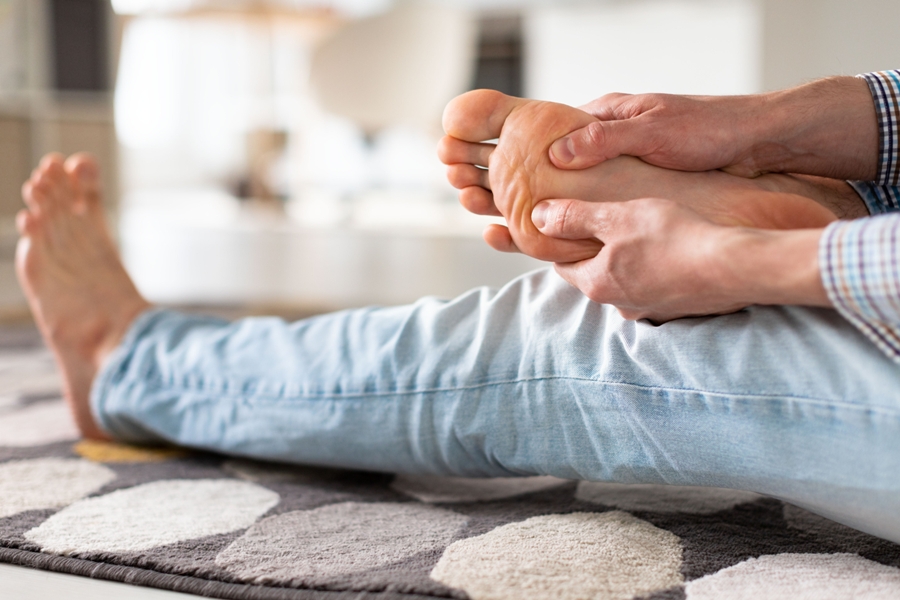
man with foot pain due to lyme disease

Hello, and welcome to another Inside Lyme Podcast. I am your host Dr. Daniel Cameron. In this episode, I will be discussing the case of a 36-year-old man with severe neuropathic pain due to Lyme disease.

(Listen here or go to top link)

I first read about this case in the journal Neuromodulation by Karri and colleagues.

A 36-year-old man suffered with a chronic pain syndrome associated with post-treatment Lyme disease syndrome (PTLDS). [1] PTLDS is a complication of Lyme disease. Individuals with PTLDS remain ill with pain, cognitive impairment, and fatigue and find it difficult to function.

The patient described severe neuropathic pain in both feet and categorized the pain at a level 10 out of 10 despite treatment with methadone 5 mg every 4 hours as needed. The doctors assumed that the tick-borne infection had resolved and elected not to treat with antibiotics.

Instead, they treated the patient’s symptoms. The pain remained severe despite trials of gabapentin, duloxetine, bupropion and narcotics. “The patient was unhappy with associated adverse effects, especially drowsiness and recurrent constipation,” the authors wrote. [1]

Surgical treatments for pain due to Lyme disease

Two surgical procedures were performed, which improved the patient’s pain. First, the man had a spinal cord stimulator surgically placed in the Dorsal Root Ganglion to mask the pain signals before they reach the brain. The pain dropped to a level 3 out of 10.

A spinal cord stimulator alone does not come cheap. “The Journal of Neurosurgery: Spine published an article estimating the cost per patient of spinal cord stimulator implantation at $32,882 for Medicare patients and $57,896 for Blue Cross Blue Shield, with annual maintenance reaching $5,071 to $21,390,” wrote Laura Dyrda in Becker’s spine review. [2]

The doctors then surgically placed a pulse generator in the right paraspinal-flank area. The patient reported the pain dropping to level 0-2. Narcotics were rarely needed and the man was able to return to work as a health-care provider.

The authors stressed the need for novel approaches to pain management for patients with pain associated with post-treatment Lyme disease syndrome.

Some of the following questions are addressed in the podcast:

  1. Have you seen severe pain in Lyme disease?
  2. What types of pain have you seen in Lyme disease?
  3. What is the treatment for Lyme disease pain?
  4. What is Post Treatment Lyme disease Syndrome (PTLDS)?
  5. What are the symptoms of PTLDS?
  6. What is controversial about PTLDS?
  7. What are your concerns with a surgical approach to Lyme disease pain?
  8. Would additional antibiotics have helped resolve the Lyme disease pain?

Thanks for listening to another Inside Lyme Podcast. You can read more about these cases in my show notes and on my website @DanielCameronMD.com. As always, it is your likes, comments, reviews, and shares that help spread the word about Lyme disease. Until next time on Inside Lyme.

Please remember that the advice given is general and not intended as specific advice as to any particular patient. If you require specific advice, then please seek that advice from an experienced professional.

Inside Lyme Podcast Series

This Inside Lyme case series will be discussed on my Facebook and made available on podcast and YouTube.  As always, it is your likes, comments, and shares that help spread the word about this series and our work. If you can, please leave a review on iTunes or wherever else you get your podcasts.

References:
  1. Karri J, Bruel B. Dorsal Root Ganglion Stimulation for Post-Lyme Disease Chronic Peripheral Neuropathic Pain. Neuromodulation. 2020.
  2. 5 Findings on Spinal Cord Stimulator Effectiveness for Failed Back Surgery Syndrome in Becker’s Spine,. Written by Laura Dyrda May 29, 2014. Last accesed April 22, 2020.

_____________________

**Comment**

I am happy to report that after dealing with pain of a magnitude I never knew existed before, I am PAIN FREE.  What got me here?  Antibiotics, herbs, blood ozone, and YEARS of treating this monster.  I want to offer hope that treatment can rid of you all pain or at least get you to a place you can manage it.

It’s truly unfortunate the ‘authorities’ made the decision that this man’s pain had nothing to do with a persistent infection.  The CDC/IDSA is directly behind this bad decision.  Antibiotics and other antimicrobials will not cost near as much as this surgical device, which comes with plenty of its own risks, BTW.

I had one experience where the pharmacist did not notify me they gave me 250mg tablets instead of 500mg so I was inadvertently taking half the dosage.  My pain shot through the roof.  When I finally read the bottle myself and realized the error, within ONE dose, PAIN GONE.  This little exercise taught me the importance of the right dosage.  Dr. Burrascano discusses this along with other treatment nuances: https://madisonarealymesupportgroup.com/2018/12/28/the-history-of-lyme-disease-dr-burrascano/

I highlight the video here:  https://madisonarealymesupportgroup.com/2019/02/22/why-mainstream-lyme-msids-research-remains-in-the-dark-ages/

Treatment for this takes finesse, savvy and experience.  Do not trust mainstream medicine with this or you may find yourself getting needless surgeries to mask something that appropriate treatment could resolve.  

Get to a LLMD asap:  https://madisonarealymesupportgroup.com/2020/11/25/what-makes-a-doctor-lyme-literate/

Moderna Admits: COVID Vaccines Inject an Operating System into Your Body

https://healthimpactnews.com/2021/the-new-mrna-covid-vaccines-inject-an-operating-system-into-your-body-not-a-conspiracy-theory-moderna-admits-it/

The New mRNA COVID Vaccines Inject an Operating System into Your Body – Not a Conspiracy Theory, Moderna Admits It

Comments by Brian Shilhavy
Editor, Health Impact News

Excerpts of article below:

mRNA Platform: Enabling Drug Discovery & Development

modernatx.com

Enabling Drug Discovery & Development

We built Moderna on the guiding premise that if using mRNA as a medicine works for one disease, it should work for many diseases. And, if this is possible – given the right approach and infrastructure – it could meaningfully improve how medicines are discovered, developed and manufactured.

Our Operating System

Recognizing the broad potential of mRNA science, we set out to create an mRNA technology platform that functions very much like an operating system on a computer. It is designed so that it can plug and play interchangeably with different programs. In our case, the “program” or “app” is our mRNA drug – the unique mRNA sequence that codes for a protein.

We have a dedicated team of several hundred scientists and engineers solely focused on advancing Moderna’s platform technology. They are organized around key disciplines and work in an integrated fashion to advance knowledge surrounding mRNA science and solve for challenges that are unique to mRNA drug development. Some of these disciplines include mRNA biology, chemistry, formulation & delivery, bioinformatics and protein engineering.

Our mRNA Medicines – The ‘Software of Life’

When we have a concept for a new mRNA medicine and begin research, fundamental components are already in place.

Generally, the only thing that changes from one potential mRNA medicine to another is the coding region – the actual genetic code that instructs ribosomes to make protein. Utilizing these instruction sets gives our investigational mRNA medicines a software-like quality. We also have the ability to combine different mRNA sequences encoding for different proteins in a single mRNA investigational medicine.

We are leveraging the flexibility afforded by our platform and the fundamental role mRNA plays in protein synthesis to pursue mRNA medicines for a broad spectrum of diseases.

Overcoming Key Challenges

Using mRNA to create medicines is a complex undertaking and requires overcoming novel scientific and technical challenges. We need to get the mRNA into the targeted tissue and cells while evading the immune system.

If the immune system is triggered, the resultant response may limit protein production and, thus, limit the therapeutic benefit of mRNA medicines.

We also need ribosomes to think the mRNA was produced naturally, so they can accurately read the instructions to produce the right protein. And we need to ensure the cells express enough of the protein to have the desired therapeutic effect.

Our multidisciplinary platform teams work together closely to address these scientific and technical challenges.

This intensive cross-functional collaboration has enabled us to advance key aspects of our platform and make significant strides to deliver mRNA medicines for patients.

Source: modernatx.com

Why Bill Gates Switched From Microsoft to Vaccines – Extracted from the full film Plandemic, by Mikki Willis.

https://www.bitchute.com/embed/ZUZ1zkxC4GP1/ (Video here) Vaccine information first, then at about 13:00, the video goes into:

  • Gates’ efforts to block out the sun in which calcium carbonate and other materials are released into the atmosphere in an effort to control ‘global warming’. It’s been called a “global genocide experiment” by environmental scientists.
  • He’s also invested over 1 billion dollars in “Earth Now” global surveillance project putting hundreds of satellites into space for the for the 24/7 monitoring of people everywhere.
  • In partnership with MIT, Gates has developed new technology (quantum dot tattoo) allowing vaccines to be injected under your skin along with your medical records. Authorities can access this with an app on a phone.
  • The Gates Foundation has funded Oxitec, the company releasing GMO mosquitoes allowing people to become vaccinated through mosquitoes.  Science Magazine called them “Flying Syringes.”
  • And then there’s the connection with Jeffry Epstein…..
  • Since the COVID-19 is under the PREP Act, if you are injured, “you are on your own.”

______________________

For more:

How to Strengthen Your Immune System This Winter

https://www.usatoday.com/in-depth/graphics/2020/12/17/how-to-build-strengthen-a-strong-immune-system-and-deal-with-stress/

How to strengthen your immune system this winter

iu-103

A balanced immune system is key to protect your body from illness

Dec. 22, 2020

In a year upended by COVID-19, it seems as if our immune systems have received more attention than ever before. But many unhealthy behaviors brought on by the pandemic make it harder for our bodies to fight off infections. Here are some tips on maintaining a balanced immune system that can protect you this winter:

Strengthening your immune system

The first line of defense is a healthy lifestyle. These factors can put you at risk:  (See link for article)

_______________________

**Comment**

A great general article and reminder how we can make ourselves tough targets for disease.

For more:  https://madisonarealymesupportgroup.com/2020/04/16/viruses-immunity-dr-waters-fix-your-soil-and-the-seeds-cant-grow/

https://madisonarealymesupportgroup.com/2020/08/07/the-shunning-of-nutritional-science-and-self-care-in-the-public-covid-19-narrative/

https://madisonarealymesupportgroup.com/2020/08/21/how-government-cures-drive-out-real-cures/

Article for natural remedies for strengthening the immune system:  https://vitalplan.com/blog/5-natural-remedies-youve-never-heard-of-and-why-you-should-try-them-now