https://www.thedickinsonpress.com/lifestyle/health/4556529-north-dakota-tick-survey-sees-large-uptick-samples-heres-what-health

North Dakota tick survey sees large uptick of samples. Here’s what the health department found.

ticks1_0

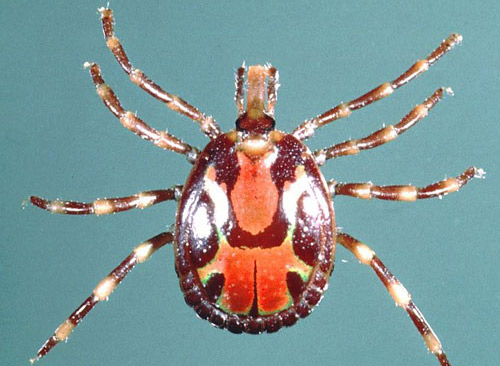
The American Dog tick was the most common tick surveyed in 2018 by the North Dakota Department of Health. This adult female is a known carrier of Rocky Mountain spotted fever.   submitted photo
BISMARCK – Those creepy, crawly creatures are living up to their nasty reputation. In brief, the summary of a second season of a statewide survey of ticks confirms what most people fear – a high percentage of the bloodsucking, pincer pests are carriers of disgusting diseases that are easily transmitted to hosts.


The North Dakota Department of Health first ventured into tick surveillance in 2017 by collecting and testing a relatively small sample of ticks. The ticks in the sample were provided with the help of veterinarians and zoos in the state. The program was significantly expanded in 2018 with active participation from 37 veterinarians, four zoos, North Dakota Game and Fish, Department of Agriculture Wildlife Services and at least one individual.

“They all submitted ticks, which was a huge help,”said Laura Cronquist, NDDOH division of disease control. “We had more coverage throughout the state in 2018, which was real nice.”

Of the 13,640 ticks collected and sent to the state laboratory for disease testing, nearly half were contributed by a single interested individual – John Heiser of Grassy Butte. In all, ticks were submitted from 25 counties in the state.

“We had more participation last year, which was awesome,” said Cronquist. “More ticks were submitted. Our project is really unique for our area.”

The state’s most common tick is the American Dog tick. The dog tick and Rocky Mountain wood tick, which is also found within the state, are closely related. Both are known for their speciality, carrying the dreaded Rocky Mountain spotted fever virus.

Rocky Mountain spotted fever symptoms include stomach pain, nausea, vomiting, loss of appetite and muscle pain. Delayed treatment may lead to severe illness or death. Some Rocky Mountain spotted fever victims may suffer irreversible hearing loss, paralysis, mental disability and damage to blood vessels which could lead to amputation of extremities. Fourteen cases of Rocky Mountain spotted fever were reported in the state in 2017.

There’s another tick present in North Dakota with a well-deserved and ugly reputation too. A surprising number of them were collected in 2018.

“We ended up with more deer ticks from across the state,” noted Cronquist.

While the number of deer ticks submitted to the NDDOH was small in comparison to the number of other ticks, just 51, they were found in 22 of the 25 counties surveyed, including Ward County. Deer ticks are are known carriers of Lyme disease, 56 cases of which were reported in the state in 2017. In addition, deer ticks are believed to have transmitted 17 cases of anaplasmosis and one case of Powassan in 2017.

The symptoms of anaplasmosis are similar to Rocky Mountain spotted fever but can include chills, cough and confusion. Severe cases can lead to difficulty breathing, hemorrhage, kidney failure and disrupt various functions of the nervous system.

Fortunately, Powassan transmission from ticks remains quite rare in North Dakota. It is closely related to West Nile disease. A tick can transmit Powassan in as little as 15 minutes after biting a human. About 10 percent of Powassan cases result in death. According to the NDDOH report on the 2018 study, statistics show that approximately half of Powassan survivors have permanent neurologic conditions including headaches, muscle wasting and memory problems.

The Lone Star tick, whose range is primarily the southern and eastern United States, and has been linked to red meat allergies, is believed to be expanding its range. However, Lone Star ticks remain extremely rare in North Dakota.

“That’s correct,” said Cronquist. “Two years ago two were found. Last year just one and it’s unknown how they got here. They are not all that concerning yet.”

The state was divided into eight regions for the tick surveillance survey. Tick pools from each region, consisting of up to 20 ticks each, were tested for the presence of several diseases. Of the 176 pools made up of American Dog ticks and Rocky Mountain wood ticks, 106 tested positive for disease carrying pathogens. Half of the deer tick pools tested positive.

According to the NDDOH report, ticks can transfer some pathogens to their hosts in as little as 15 minutes. Some pathogens require that the tick to be attached from 24 to 48 hours. When a tick bites into flesh it inserts a feeding tube into the incision which enables the transmission of disease.

Complete results and information regarding the 2018 tick surveillance project can be found on the NDDOH website.

_____________________

For more:  https://madisonarealymesupportgroup.com/2018/07/22/citizen-scientists-help-track-tick-borne-illness-exposure/

https://madisonarealymesupportgroup.com/2018/04/10/canadian-citizen-scientists-helping-with-tick-surveillance/

https://madisonarealymesupportgroup.com/2018/10/26/scientists-high-school-students-find-new-pathogens-hiding-in-indiana-ticks/

https://madisonarealymesupportgroup.com/2018/10/22/tick-project-takes-a-deeper-look-at-disease/

https://www.corebrainjournal.com/2019/01/292-pans-pandas-autimmune-encephalitis-rickert-hong/

292 PANS PANDAS & Autoimmune Encephalitis – Rickert-Hong

PANS, PANDASPhoto by Mohamed Abdelgaffar from Pexels

Urgent Childhood and Adult Psychiatric Details So Often Overlooked

So many kids these days have rages, OCD, tics, aggressive behavior, prolonged tantrums and anxietyall living downstream from PANS, PANDAS and Autoimmune Encephalitis.

If these profound and puzzling symptoms prevail you must look into PANS (Pediatric Acute-onset Neuropsychiatric Syndrome), PANDAS (Pediatric Autoimmune Neuropsychiatric Disorders Associated with Strep) and Autoimmune Encephalitis – especially if your child exhibited sudden behavioral changes or a markedly unpredictable developmental regression.

Listen up; Maria spells out your options.

Autism, ADHD, Executive Function, and Sensory Processing Disorder

Even kids with autism, ADHD and Sensory Processing Disorder should be evaluated for this condition as some practitioners believe that nearly 2/3 of kids with neurodevelopmental disorders also suffer from PANS. As you listeners know, and those of you who have followed our updates over the years, immunity is a relentless and ubiquitous focus in my offices for treatment failure for many years.

The good news: if you identify it correctly and take the necessary steps treatment failure will often, quite surprisingly, turn around.

Note Well

  • PANS is an umbrella term that includes diagnoses such as Lyme disease, PANDAS, PITANDS (Pediatric Infection-Triggered Autoimmune Neuropsychiatric Disorders), and Autoimmune Encephalitis — all of which describe a condition marked by concerning psychiatric and physical symptoms that often, but now always, appear suddenly.
  • Children in the U.S. now suffer from PANS at a very concerning rate – it’s far more prevalent than many assume.

In this CBJ/292 Episode, We Discuss

  • What PANS, PANDAS and Autoimmune Encephalitis are and why so many children are being diagnosed with these conditions.
  • What causes PANS.
  • Why PANS is so commonly seen in children with autism.
  • How PANS is treated.
  • How to get to the root cause(s) of PANS.
  • What parents of children with PANS have done to bring their children back to good health.
  • What leading PANS experts have to say about the cause and treatment of PANS.

Maria co-wrote this book with remarkable colleagues at Epidemic Answers: Beth Lambert, Roseann Capanna-Hodge, Lauren Stone and Jennifer Giustra-Kozek. We’re excited to present this resource to you in your quest for improving your child’s health!

Connections

CBJ Experts On Similar Insights


About our mission, Dr. Charles Parker

Our CBJ hosting objective is critical: upgrade mind and brain data through informed dialogue with neuroscience experts to build more predictable, more comprehensive, more understandable solutions for you and your family. Today’s technology drives significantly improved mind-prognosis – beyond traditional psychiatric measures. Inaccurate labels, speculation, and guesswork are out – critical thinking, data, and measurement are in. Let’s work together to connect advanced biomedical wisdom with everyday street reality. 

__________________

More on PANS/PANDAS/Autoimmune encephalitis:

https://madisonarealymesupportgroup.com/2017/12/01/guidelines-for-treating-pans-its-real/

https://madisonarealymesupportgroup.com/2018/12/17/my-kid-is-not-crazy-study-shows-1-3-kids-with-pans-have-hallucinations/

https://madisonarealymesupportgroup.com/2017/06/30/child-with-lymemsidspans-told-by-doctors-she-made-it-all-up/

https://madisonarealymesupportgroup.com/2018/07/28/stories-of-pandas/

https://madisonarealymesupportgroup.com/2018/01/05/scary-side-of-childhood-strep/

https://madisonarealymesupportgroup.com/2018/11/06/diagnosing-treating-autoimmune-encephalitis-in-patients-with-persistent-lyme-symptoms/

https://madisonarealymesupportgroup.com/2017/10/01/panspandas-steroids-autoimmune-disease-lymemsids-the-need-for-medical-collaboration/  Boy’s Lyme Disease Morphs into Autoimmune encephalopathy.  It took 10 years and 20 doctors to find out 12-year-old Patrik had Lyme disease. Just 4 months later the doctors discovered he also has a condition where his immune system attacks his brain.

https://madisonarealymesupportgroup.com/2019/01/24/toddler-suffering-from-hallucinations-seizures-diagnosed-with-rare-brain-disease/

Spread the word!  Many doctors are still in denial about these conditions.


https://www.ctvnews.ca/health/mothers-on-a-mission-to-prove-lyme-disease-can-be-passed-to-unborn-child-1.4261403  (News Video in Link –  Approx. 4.5 Min)

Mothers on a mission to prove Lyme disease can be passed to unborn child

Published January 20, 2019 

Written by Meredith MacLeod, CTVNews.ca Staff

These mothers and their kids struggled for years with severe dizziness, pain, digestive problems, infections and impaired motor function that doctors couldn’t diagnose. Some were bedridden. One teen boy missed his entire high school education. One family was even close to committing their daughter to an institution because doctors believed her symptoms to be psychosomatic.

They all say the mystery was solved when they were tested and treated for Lyme disease and now a group of Ontario mothers and kids have banded together to build awareness of the transmission of the disease from mother to child before birth.

Kravis says LymeHope is working to ensure all front-line medical professionals understand Lyme disease and that Canada invests in diagnosis, testing and treatments.

“We fight for our own kids, and for all kids and families who are too sick to speak out and have their voices heard.”

‘What are the odds?’

Lyme disease is an infectious disease caused by bacteria that is primarily transmitted by ticks found in wooded or grassy areas.

Kravis says Canadian research shows as many as 90 per cent of Canadians with Lyme disease are being missed. Lyme is a polarizing issue in the medical world, with some professionals questioning the available testing and others debating the efficacy of current treatments.

There are multiple strains, depending on where infection occurs, and just like all bacteria, those strains mutate over time. As well, the symptoms of Lyme disease are wide-ranging, intermittent and affect many systems of the body. They also mimic many other diseases, including chronic fatigue syndrome, multiple sclerosis, fibromyalgia and depression. But typically, they include fatigue, joint and muscle pain, twitching, cognitive impairment and memory loss, heart-related symptoms, nerve pain, numbness, hot/cold sensations, tingling, headache, troubles sleeping, stomach and digestive issues, and depression or mood swings.

As the infection spreads, symptoms and damage to the body intensifies and can lead to permanent disability, making earlier diagnosis crucial.

But diagnosis is not easy. Beyond the broad symptoms, there is no perfectly accurate test. A diagnosis must come through a review of symptoms and history and be supported by a blood test for antibodies. But even a negative test can’t rule out Lyme disease.

LymeHope is pushing for the screening of Lyme disease in pregnant women, research into better testing, and for the use of preventative antibiotics if there are concerns. They say mothers can be asymptomatic and still pass on the disease. And the infant can appear healthy at birth, but display symptoms months or even years later.

One thing not up for debate is the rapid spread of the ticks that carry the bacteria. There were 2,025 confirmed and probable cases of Lyme in Canada in 2017, up from 992 in 2016 and 144 in 2009.

The women behind LymeHope believe they were bitten by infected ticks before getting pregnant. Some displayed symptoms of Lyme disease before or during pregnancy. Others did not. But none suspected Lyme.

Kravis, a former lawyer and bank executive, had to leave work in 2007 when she was debilitated by the sudden onset of severe headaches, numbness, tingling, nerve and joint pain, memory loss, vision problems and neuropathy in her hands.

She was bedridden for a year and diagnosed at 36 with fibromyalgia and chronic fatigue syndrome and was told she had an incurable virus. She saw 68 doctors in Ontario between 2007 and 2014.

Kravis began to research Lyme disease and found a specialist in New York. She’s been taking antibiotics for two years and within days experienced “dramatic improvements.” She also looked at the myriad health issues in her children differently.

She had both daughters tested and both came back positive for Lyme disease.

“I thought, ‘How can this be? This is such a rare disease, what are the odds? We couldn’t possibly all have been bitten by ticks.’”

A lost childhood

Daniel Stimers, 12, says he suffered from migratory pain and severe dizziness and that no specialist could pinpoint a cause. A heavy feeling in his legs forced him to sit out hockey games. Night sweats made it difficult to sleep. He was extremely sensitive to noise and had severe mood swings.

“Dizziness and clumsiness became a problem at school. My friends counted how many times I fell off my chair that year. The total was 109,” Daniel, who lives in Keswick, Ont., told MPs at a LymeHope education roundtable event last May.

He was born in 2006 at full term but weighing just over 4 pounds. He displayed symptoms right from birth, some disappearing but others progressing, says his mom Illana. In 2014, Illana became so riddled with pain and weakness she could barely lift a plate out of the cupboard or brush her hair. She had to take a leave from her work as a veterinarian.

That’s when a colleague raised the possibility of Lyme. All the symptoms suddenly made sense. Illana flashed back to a working trip to Nepal in 2000.

“There were engorged ticks covering most of the animals that we saw and handled.”

Though she doesn’t recall a tick bite or rash, she was the only one in her group to get sick and have enlarged lymph nodes while there. “Within a few months of returning I started having new and strange symptoms that included many body systems and some severe enough to require hospitalization.”

The Stimers family turned to a U.S. doctor for testing, diagnosis and treatment. Three years of antibiotics, anti-malarials and herbal medications means Daniel is now symptom free. His lymph nodes have returned to a normal size, along with unexplained elevated liver enzymes.

Illana is convinced she passed on Lyme disease to her son while pregnant.

“It was heartbreaking, to be honest, to see your child suffer and to watch him lose his childhood, only to realize later that it could have been prevented had I been screened properly or if it had been caught even earlier in me.”

The congenital debate

While the organizers behind LymeHope have no doubt about congenital transmission of the disease, the medical world isn’t convinced.

The Public Health Agency of Canada (PHAC) published a scientific review in November 2018 that says mother-to-baby transmission is “biologically plausible” but that there is little scientific proof that it poses a risk to the child.

The Health Canada website also says: “There is not enough evidence to confirm that Lyme disease during pregnancy has adverse effects for the fetus. In addition, no adverse effects for the fetus have been observed when the pregnant woman receives appropriate antibiotic treatment for her Lyme disease.”

According to LymeDisease.org, an advocacy group based in the U.S., infected women can pass on the disease to their unborn children.

“Some doctors believe other types of human-to-human transmission are possible but little is known for certain,” says the group’s website.

The Society of Obstetricians and Gynecologists of Canada says it has no position on the impact Lyme may have on a fetus, though it is undertaking the development of guidelines for the prevention and symptoms of the disease.

Dr. Howard Njoo, the deputy chief public health officer at PHAC, says research to date is limited and inconclusive about the outcomes of Lyme disease during pregnancy.

“As a physician, we certainly acknowledge the impact that has on families and patients with respect to Lyme disease. But our job is to look at the science objectively, and make conclusions and recommendations based on the findings. And the findings say more research needs to be done.”

But those behind LymeHope are undaunted. The group is partnering with a scientist at Mount Allison University in New Brunswick to test infected mothers and sick children to look for similarities in the DNA of the bacteria and clarify the transmission link. If there is no match, that points to the child having been directly infected by a tick.

“It has been known for quite some time in both humans and animals that some types of the bacteria that cause Lyme disease can be transmitted from mother to the baby in utero but we really don’t know anything else about it,” said Vett Lloyd, the biology professor leading the research at Mount Allison. “We don’t know how often it occurs. We don’t know under what circumstances it occurs. We don’t know which types of the Lyme bacteria do it the most. So there is this huge black box.”

Lloyd says the medical community has focused on ticks as the source of transmission but must consider other sources, including congenital transmission, in order to manage the disease. She says the question of transmission becomes more significant as the number of people with Lyme disease, including women of child-bearing age, rapidly expands worldwide.

“If we find that every time a mom is infected the baby will be infected, then clearly the health-care profession is going to have to figure out a way to deal with maternal infections. If it is one in a million, that’s a different story… But at this point, we don’t know. We have no idea what the shape of the problem is.”

‘Nobody would listen’

Tamara House’s son Luke was plagued by health problems from birth. By 13, he was house-bound by anxiety, digestive problems, dizziness and motor tics and did not attend high school. He was variously diagnosed with Tourette Syndrome, irritable bowel syndrome, depression, chronic fatigue system and other ailments.

Tamara also lived with episodes of tinnitus, hearing loss, vertigo and Bell’s palsy but says she was primarily without symptoms. A test in the U.S. pointed to Lyme disease for both of them, along with an older son, and Tamara is convinced there was maternal transmission.

“I was horrified that I had passed it on to him,” said House, a co-founder of LymeHope.

Now 19 and after two years of antibiotic treatment, Luke is healthy and preparing to go to college.

Sarah Surkos of Toronto was grateful for a Lyme disease diagnosis for herself and her children. She had been told she had multiple sclerosis and her two children had almost constant unexplained fevers from birth and later, gastrointestinal reflux and infections of the bladder, throat and chest.

She was told it was “daycare disease” and it was normal. “Nobody would listen. Things were just always explained away.”

Her daughter Evelyn developed more debilitating symptoms as she grew and at one point, was bedridden for months. The family visited more than 25 specialists over two years and came to believe Evelyn’s illness was psychosomatic and that she needed intensive help.

“Thankfully, a friend called me the day before we signed the papers to commit her and told me to look into something she heard about called Lyme disease.”

Surkos and her children tested positive but Surkos does not believe her daughter or son were ever bitten by a tick. All were treated with antibiotics.

“After three years of treatment, my daughter is now almost there. I still have a long way to go as I have been focusing my efforts and finances for treatment on my kids. Thankfully, my son is now in remission and is a happy, ‘normal’ kid.”

‘Trust your instincts’

Tara Shannon Renaud, an Ottawa musician and business owner, was struck by how quickly years of symptoms disappeared in her and her children once they were treated for Lyme disease. Just last year, she spent three months in bed.

“I was told it was a virus and it would pass.”

But she started to do her own research and got a test for Lyme. She then reconsidered her children’s unexplained health issues, including fatigue, depression and anxiety, nerve pain and muscle weakness, digestive issues, joint pain and swelling and migraines. Tests of five of her seven children came back positive for Lyme. To her knowledge, none have been bitten by a tick.

“In our family, the children were relieved. It brought us a real sense of peace,” she said of the diagnosis. But it also came with frustration “that we went so long without help and so long without answers.”

Despite being a registered nurse, Sue Faber never considered Lyme disease as a cause of the “strange symptoms,” including vomiting, limb pain and profound fatigue experienced by her and her three children. Her youngest daughter Andrea experienced failure to thrive, cyclical fevers and rashes. They all tested positive for Lyme.

“Starting on antibiotics, it was like night and day…Within literally a month of starting treatment, her symptoms just disappeared. She’s just a completely different child.”

Now a co-founder of LymeHope, Faber is among the mothers on a mission.

“It’s just amazing to see these children just flourish with appropriate, proper treatment,” said the Burlington, Ont. woman. “We just want more children to have this benefit of first getting the right diagnosis, getting the right treatment and getting support within Canada.”

The women say they are committed to working together to raise awareness, push for research and prevent more suffering, especially as health authorities warn that the tick population is growing.

LymeHope has collected names on a petition to the federal government that shows many Canadians are trying to find answers to their children’s symptoms, many while fighting their own ailments, says Renaud.

“I started reading through the comments and I was just bawling because you can see the desperation of Canadians and so many people are suffering and so many people are being discredited, pushed to the side, especially mothers.”

They are being told they are anxious, stressed, tired or working too hard, she says.

“So what we want parents to know is: keep fighting, trust your instincts. If something is wrong, something is wrong.”

With files from CTVNews.ca’s Meredith MacLeod

_______________________

More on Congenital Lyme/MSIDS:  https://madisonarealymesupportgroup.com/2018/06/19/33-years-of-documentation-of-maternal-child-transmission-of-lyme-disease-and-congenital-lyme-borreliosis-a-review/

https://madisonarealymesupportgroup.com/2018/11/11/gestational-lyme-other-tick-borne-diseases-dr-jones/

https://madisonarealymesupportgroup.com/2018/12/22/doctors-public-left-in-the-dark-on-danger-to-babies-from-lyme/

https://madisonarealymesupportgroup.com/2019/01/10/transmitted-in-the-womb-children-battle-lyme-disease-from-birth/

https://madisonarealymesupportgroup.com/2018/12/14/scientists-weigh-in-on-the-seriousness-of-tick-borne-illness-video/

https://madisonarealymesupportgroup.com/2018/11/17/young-boy-infected-congenitally-with-lyme-speaks-in-ottawa-house-of-commons/

https://madisonarealymesupportgroup.com/2018/12/12/systematic-review-on-gestational-lyme/

You have never experienced real fear until you mess with a mother’s children.


https://www.nhregister.com/news/article/Connecticut-not-likely-to-see-drop-in-Lyme-13530044.php

Connecticut not likely to see drop in Lyme disease cases

Published

“I think that based on the trend that we have had … we are going to have [an] average number of Lyme disease cases, not substantially lower,” he said. Final totals won’t be in until April, however, Molaei said.

According to the Portland Press Herald, Maine’s reported Lyme disease cases dropped by 29 percent in 2018, although final figures were not yet in. Unlike Connecticut, the original epicenter of Lyme disease, where infections have been gradually dropping through the years, the number of cases has been rising in Maine, from 175 in 2003 to 1,852 in 2017, a record, based on data from the Maine Center for Disease Control and Prevention.

In fact, 2018 was only the fourth year since 2003 in which Lyme disease cases in Maine didn’t set a record. There were 1,310 cases last year, lower even than 2016’s 1,464, the Press Herald reported.

Connecticut had a hot summer, with an average temperature of 71.3 degrees from June to August, more than 3 degrees above the norm, and an average fall, according to the Northeast Regional Climate Center, based at Cornell University. Bridgeport’s temperatures rose above 90 a dozen times by Aug. 31.

But it was also a wet summer and fall, with an average rainfall of 14.81 inches, 117 percent of normal, from June to August, and 21 inches, 159 percent higher than average, from September to November, according to the center.

Molaei said hot, dry conditions may lead to fewer deer ticks and, thus, fewer cases of Lyme disease, which the tick passes on from deer and white-footed mice to humans. “It decreases tick activity because their survivability … is affected by the drought,” he said.

“We have not experienced such drought in recent years,” he said. “Last year, 2018 particularly, we had a hot summer but higher precipitation rate,” he said.

But rainfall isn’t always a good predictor of tick activity, he said. In 2013, “the precipitation was not that high [but] we had the highest number of Lyme disease cases, nearly 3,000 cases.”

According to the state Department of Public Health, Connecticut’s record for Lyme disease infection, first discovered in 1975 in the town of Lyme, was 4,156 cases in 2009, shortly after the state expanded its data-collection system. Since then the numbers have declined to a recent low of 1,752 in 2016. In 2017, there were 2,022 cases.

Molaei said the cause of the fluctuation in reported cases is not easy to determine and may be attributed to “a number of factors, including reporting irregularity.”

One reason may be that “because it is an endemic region, people in our state have developed awareness and they are avoiding tick bites,” Molaei said. Others who have developed Lyme disease multiple times may have “stopped paying attention to the illness” and take unused antibiotics or get them from their doctor without reporting their illness as Lyme.

However, the number of ticks isn’t decreasing.

“The average submission to our lab has been 3,000” by residents, health departments and doctors’ offices, although the number rose to 4,458 in 2017. According to the experiment station, the percentage of deer, or black-legged, ticks that tested positive for Lyme disease has ranged from 27 to 32 percent between 2013 and 2017.

In 2018, “even though we had slightly less tick submission to our laboratory,” back to 3,000, “nonetheless, the infection rate was at 38 percent,” Molaei said. “This increase in infection rate for sure will have some influence or some impact on the number of Lyme disease cases that will be reported in 2018.”

Jocelyn Mullins, the state public health veterinarian, said “survey data is affected by many different things. There’s actual disease changes and tick changes and how data is reported to us.

“I would predict that we’re not going to have a big change from last year, but it’s really too early to say,” since final numbers are not in until April, she said.

Molaei said a reason for a potential increase in Lyme disease in Connecticut “is that the weather pattern has changed. We are seeing shorter winters and warmer winters that allows ticks to survive better.”

If ticks become active earlier, that will mean a larger generation later in the year.

“We are not having brutally or substantially cold winters that reduce the tick population,” he said. Warmer weather also creates favorable conditions for deer and mice hosts, he said.

There are two peaks of tick activity each year: April-May and October-November, Molaei said. There is also a peak in June, caused by nymphs, the stage between larva and adult. “Quite often they are overlooked because of their size and people cannot see them as easily as adult ticks,” he said.

Lyme disease is caused by the bacterium Borrelia burgdorferi. While Lyme-infected tick bites often can be detected by a bull’s-eye rash, that is not always the case. The disease brings flu-like symptoms, such as muscle aches, fatigue and fever, but can include joint pain and swelling, meningitis and facial palsy, according to the state health department. It is usually cured with antibiotics.

Between 10 and 20 percent of patients report post-treatment Lyme disease syndrome, with ongoing symptoms of fatigue and joint or muscle aches, according to the department’s website. While its cause is unknown, many experts believe the syndrome is the result of damage to the sufferer’s immune system, according to the health department.

The Centers for Disease Control and Prevention records about 30,000 cases of Lyme disease nationally each year, most heavily in the Northeast, but that may be only one-tenth the number of actual cases, according to the CDC website.

“The take-home message is that Lyme disease and other tick-borne diseases are a significant public health problem in the United States and … particularly in New England and in our state,” Molaei said.

_________________

**Comment**

There are numerous flaws in this article:

  1. Warm winters are lethal to black-legged ticks:  https://madisonarealymesupportgroup.com/2018/08/13/study-shows-lyme-not-propelled-by-climate-change/  Overwinter survival dropped to 33% when the snow melted.  This link also shows a video where ticks survived 3 degrees in 24 hours under snow cover:  https://madisonarealymesupportgroup.com/2018/12/05/deer-ticks-are-surviving-winter-becoming-a-year-round-problem/
  2. Independent Canadian tick researcher, John Scott, states ticks are marvelously ecoadaptive and seek out leaf-litter and snow cover when conditions become harsh.  His in-house studies have shown that migrating birds and photo-period are to blame for tick proliferation:  https://madisonarealymesupportgroup.com/2018/11/07/ticks-on-the-move-due-to-migrating-birds-and-photoperiod-not-climate-change/,  https://madisonarealymesupportgroup.com/2017/08/17/of-birds-and-ticks/
  3. The jury’s still out on the cause of persistent symptoms.  Just because the health department says it’s due to immune system damage, doesn’t make it so.  Much has shown Borrelia burgdorferi (Bb) to be a persistent organism that survives despite antibiotics: https://madisonarealymesupportgroup.com/2018/04/17/persistent-borrelia-infection-in-patients-with-ongoing-symptoms-of-lyme-disease/, https://madisonarealymesupportgroup.com/2017/08/18/drexel-prof-lyme-persists/, https://madisonarealymesupportgroup.com/2017/05/10/body-of-research-showing-borrelia-persists/  List of 700 articles citing chronic infection associated with tick-borne disease compiled by Dr. Robert Bransfield  http://www.ilads.org/ilads_news/2017/list-of-700-articles-citing-chronic-infection-associated-with-tick-borne-disease-compiled-by-dr-robert-bransfield/
  4. Researchers continue to blindly discuss this as if it’s a one disease illness when nothing could be further from the truth.  Patients are OFTEN infected with a multitude of pathogens:  https://madisonarealymesupportgroup.com/2018/10/30/study-shows-lyme-msids-patients-infected-with-many-pathogens-and-explains-why-we-are-so-sick/  For the first time, Garg et al. show a 85% probability for multiple infections including not only tick-borne pathogens but also opportunistic microbes such as EBV and other viruses.  I’m thankful they included Bartonella as that one is often omitted but definitely a player.  I’m also thankful for the mention of viruses as they too are in the mix.  The mention of the persister form of Bb must be recognized as well, as many out there deny its existence.  https://madisonarealymesupportgroup.com/2019/01/16/study-shows-diminished-pathogen-specific-antibody-production-in-coinfected-mice-contributing-to-persistent-infection/


https://www.ncbi.nlm.nih.gov/m/pubmed/30656468/

First molecular detection of Rickettsia africae in a tropical bont tick, Amblyomma variegatum, collected in Corsica, France.

Cicculli V, et al. Exp Appl Acarol. 2019.

Abstract

Here we report the first detection of Amblyomma variegatum, a tick species of medical and veterinary importance, and the first molecular evidence of a pathogen, Rickettsia africae, both new to Corsica (France). In August 2018, an ixodid tick with an unusual morphology was removed from the ventral part of a cow’s whole skin in a slaughterhouse located in the village of Ponte-Leccia (Haute-Corse). The tick was morphologically identified as an adult male of A. variegatum. This result was confirmed by 16S rDNA sequence analysis with a close relative being a sequence from Senegal showing 99% nucleotide identity. We tested the tick for Ehrlichia and Rickettsia. The tick was positive to Rickettsia and the corresponding sequence matched with R. africae. There is little or no risk of the introduction and establishment of a viable population of A. variegatum in Corsica by migrating birds. However, if it did, it could produce major economic losses for livestock production. Further studies and sustained surveillance are indicated, not only focusing on this species of tick and this rickettsia, but also on other microorganisms of veterinary and medical importance that might be transmitted in Corsica and other Mediterranean islands.

__________________

**Comment**

http://entnemdept.ufl.edu/creatures/livestock/ticks/tropical_bont_tick.htm  The tropical bont tick is considered one of the most detrimental of the tick species present in Africa and now the Caribbean (CaribVet 2011b, Stachurksi and Lancelot 2006).

Now it’s been found in France.

Of human health concern, it is implicated as a potential vector for Crimean-Congo hemorrhagic fever virus (CCHF), Yellow Fever virus (CDC 2001, Merck 2011), & African Tick Bite Fever (Rickettsia africae),which results in fevers, headaches and swollen lymph nodes (Parola et al. 1999).

It has had a huge effect on the livestock industry, primarily through its transmission of heartwater disease, Ehrlichia ruminantium (formerly Cowdria ruminantium) (Allan et al. 1998, CaribVet 2011b, OIE 2009, Parola et al. 1999) and their association with dermatophilosis, Dermatophilus congolensis (Allan et al. 1998, Barré and Garris 1990, CaribVet 2011b, Merck 2011).

It’s also been implicated as a vector or potential vector for several diseases to include Dugbe virus, and Jos virus (Merck 2011). In the Caribbean, only heartwater disease and dermatophilosis have been detected in the hosts and have demonstrated clinical symptoms.

The dispersal of tropical bont tick is associated with the migration patterns of the cattle egret, Bubulcus ibis (OIE 2009, Barré et al. 1995, Pegram and Eddy 2002). The birds transport the larvae and the nymphs of the tick (Deem 1998). Because the non-feeding stages of the life cycle occur within the environment and not on the host, the transport of infested vegetation and litter is a potential source for dispersion as well (Alderink and McCauley 1988, Barré et al. 1995).

The adult ticks are found on various domesticated species such as camels, cattle, goats, sheep and even dogs (Deem 1998, Merck 2011). The ticks also are found on various species of wildlife throughout the distribution range, but the adults are generally found on the larger mammals (Barré et al.1995, Yonow 1995).

Biological controls (birds, parasitic wasps, nematodes, bacteria, and fungi) have not been very successful in eradicating the tick.

tropical_bont_tick02Adult male tropical bont tick, Amblyomma variegatum Fabricius. Photograph by Alan Walker, University of Edinburgh.
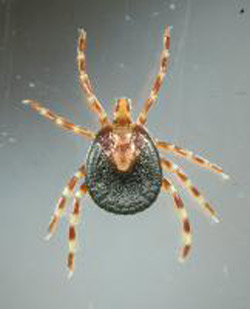
tropical_bont_tick03Adult female tropical bont tick, Amblyomma variegatum Fabricius. Photograph by Richard Matthews and Alan Walker, University of Edinburgh.

Other ticks in other places have been found to carry CCHF (it can also be spread human to human):  https://madisonarealymesupportgroup.com/2018/08/19/monster-ticks-found-in-germany-threaten-europe-with-deadly-disease-crimean-congo-fever/

https://madisonarealymesupportgroup.com/2018/06/14/crimean-congo-the-asian-ebola-virus/