Top U.S. “Non-Profit” Hospitals & CEOs Racked Up Huge Pandemic Profits
The top 20 hospitals pocketed $23 billion in Covid-aid from taxpayers. They profited from the pandemic while ignoring price transparency rules. Patient costs soared while life expectancy plummeted.
OpenTheBooks.com auditors investigated America’s healthcare system and found so-called “non-profit” hospitals and their CEOs are getting richer while the American people are getting sicker and poorer.
Topline
The 20 largest non-profit hospitals in the country continued making massive profits while their cumulative net assets soared to $324.3 billion in 2021 from $200.6 billion in 2018. The year 2021 is the latest year available for cross-comparison purposes.
Those hospital systems received congressional Covid bailouts of $23 billion and only two providers partially paid their Covid bailout back.
Meanwhile, hospital executives racked up Wall Street-sized compensation packages which frequently exceeded $10 million per year. For example, the CEO at Ascension Healthcare based in St. Louis, Missouri made $13 million in 2021 – with three-year pay exceeding $22 million.
Yet, the cost of health care is still astronomically high, as the average family paid $22,463 in health insurance premiums in 2022. That does not include out-of-pocket costs like co-pays and deductibles, which can be thousands more.
This has led to medical debt for about 100 million Americans.
In 2020, the Trump administration issued, and the Biden administration finalized (January 2021) a healthcare transparency rule – to spur market competition and inform patients.
Yet, two years after the rule took effect, an independent audit found that nearly three-quarters of hospitals in the country were not complying— flouting the mandate that prices be posted clearly and comprehensively. (See link for article)
________________
SUMMARY:
Why has life expectancy dropped if we are spending more, and increasing hospital assets?
Are “non-profit” hospitals truly operating in the public interest or are they gaming the system as public healthcare charities under IRS section 501(c)3 of the tax code?
Why aren’t hospitals paying back the COVID aid?
Why are hospitals that score less than 100% on price transparency allowed to keep taxpayer-funded bailout dollars?
Only one of every four hospitals follow the federal price transparency rules. CMS needs to enforce the rules on the three-quarters of hospitals that are not compliant.
America’s non-profit hospitals must justify their pandemic profiteering. In the top 20 largest non-profits, for every $1 in Covid bailout from the U.S. taxpayer, their net assets jumped — on average — $5.
UPDATE 2/1/24: In an effort to be balanced, please read this 48 page exposé on David Martin which shows he has served as an advisor to central banks, global economic forums, national governments, and the World Bank, and has connections to the WEF serving its interests through numerous companies he has worked with.
“The mark of an educated mind is to be able to entertain a thought without accepting it.” ~ Aristotle.
Coronavirus as a model of a pathogen was isolated in 1965 and could be used and modified for a host of reasons.
In 1966 the very first Coronavirus model was used as a transatlantic biological experiment in human manipulation, proving COVID has been long in the making.
In 1967 the U.S. did the first human trials on inoculating people with modified coronavirus.
The common cold was turned into a chimera in the 1970’s
In the mid to late 70’s the U.S. experimented with modifying coronaviruses by putting them into different animals (pigs and dogs).
By 1990 the U.S. discovered coronavirus as an infectious agent was an industrial problem for the dog and pig industries. This became the basis for Pfizer’s 1st spike protein “vaccine” patent filed in 1990 proving that nothing about the COVID gene therapy shots was done at warp speed.
They also knew in 1990 that these shots didn’t work.
Every publication, which is in the thousands, from 1990-2018 concluded that coronavirus escapes the “vaccine” impulse because it mutates too quickly.
In 2002 with funding from Fauci’s NIAID, the University of North Carolina Chapel Hill patented an infectious replication defective clone of coronavirus which is defined as a weapon. This mysteriously preceded SARS 1.0 by a year.
The U.S. engineered SARS to attack human beings.
In 2003 CDC patented coronavirus isolated from humans in violation of all laws. They downloaded a sequence from China and patented it in the U.S. – also a violation/crime.
The U.S. Patent office declined the patent twice until the CDC bribed the office to override the patent examiner to ultimately issue the patent in 2007.
In 2002 and 2003 at EU sponsored events, Dr. David Martin identified the RT PCR test as a bioweapon terrorism threat.
In 2005 this specific pathogen was labeled a bioterrorism and bioweapon platform technology and bioweapon-enabling agent
Since 2005, over10 Billion dollars have been funneled through black operations by Fauci for this work. The media is silent.
In 2014 The University of North Carolina Chapel Hill got an exemption from the bioweapons research moratorium because their grants had already been funded, so in 2016 they could publish the journal article that stated SARS-Cov, titled WIV1 is poised for human emergence.
Nature was hijacked. Science was hijacked. There has never been an independent panel over coronavirus research since 1965.
No more gain of function research – period. No more weaponization of nature – period. No more corporate patronage of science for their own self-interest unless they assume 100% product liability for every injury and death.
Fauci and virologists had much at stake in the assigning of blame for the ‘pandemic,’ as they have been tinkering with viruses for decades by making them more lethal than what exists in nature.
Mainstream media blindly followed the accepted narrative and anyone who proposed the lab leak theory was called a racist and conspiracy theorist. Social media companies removed posts about it. This all came out in the March Senate hearings where it was revealed Fauci et al. tried to prevent the public from learning about U.S. involvement in foreignBiolabs. And a bill that requires declassification of COVID origins documents has already been branded as a “classic Nixonian limited hangout”as it only requires declassification of documents related to the Wuhan Institute of Virology, which may ultimately acknowledge the lab leak theory on one hand, but may reduce the culpability of the U.S. and private actors on the other hand – with a whole lot of redactions in between.
The other glaring issue is the fact everyone keeps reinforcing the assumption it was all a big mistake by calling it a “lab leak,” when it very well may have been intentional.
Researchers Had a Simple Test for Determining if an Asymptomatic Person Who Tested Positive for COVID Was Infectious — But CDC, Fauci Ignored It
Researchers at Stanford University who developed the test also determined that the vast majority of asymptomatic individuals who tested positive — 96% — did not transmit the virus.
This article was originally published by The Defender — Children’s Health Defense’s News & Views Website.
A test that can accurately determine whether an individual with a positive PCR test result for COVID-19 is infectious was available as early as May 2020 — but public health authorities appear to have ignored it.
Researchers at Stanford University who developed the test also determined that the vast majority of asymptomatic individuals who tested positive — 96% — did not transmit the virus.
Investigative reporter and author David Zweig, a previous contributor to the release of the “Twitter files,” first reported on the test on his Substack.
“Transmission from asymptomatic people is far, far less common than we were led to believe,” Zweig wrote. “The novel test at Stanford that showed a very low rate of infectious asymptomatic people who had tested positive was available as early as May 2020.”
“Yet the CDC [Centers for Disease Control and Prevention] and other health authorities did nothing,” Zweig said.
Zweig appeared Thursday on The Hill’s “Rising,” where he told the show’s hosts:
“At Stanford, they developed a test in May of 2020, the very beginning of the pandemic, that actually could find out whether or not you were infectious.
“After you had taken a regular PCR test, if it showed you were positive, they could determine whether or not that positive test meant you could actually infect others or not.”
Zweig wrote that while the standard PCR test commonly administered during the COVID-19 pandemic “detects whether someone has the virus … it cannot detect whether the person is capable of infecting others.”
The test developed by Stanford researchers, however, was able to accomplish this. As Zweig explained:
“SARS-CoV-2 is a positive or ‘plus-stranded’ RNA virus. For it to replicate it must do so with a minus strand.
“Brilliantly, the Stanford test looks to see if the minus strand is present. If it is then that indicates the virus is actively replicating, which means it’s potentially infectious. If the minus strand is absent then the virus is not replicating. (It is not possible to transmit the virus if it is not replicating.)”
Benjamin Pinsky, Ph.D., medical director of Stanford’s Clinical Virology Laboratory and medical co-director for Point of Care Testing, was one of the researchers involved in the development of the test. He told Zweig the purpose of the test was to help hospital clinicians accurately determine if patients were infectious or not.
“The minus strand test gave a definitive answer one way or another,” Zweig wrote. But although the test was available as early as May 2020, the CDC did not publish the researchers’ paper about the test until February 2021.
The paper, published in the Emerging Infectious Diseases journal, stated that the analytical validation for the test was conducted “during May-June 2020.”
By publishing the paper in early 2021, federal agencies “certainly were aware that this test existed” even prior to its publication date, Zweig told “Rising.”
“This raises serious questions for those in charge of the CDC, NIH [National Institutes of Health], and NIAID [National Institute of Allergy and Infectious Diseases] for why resources were not allocated toward making this test broadly available,” Zweig wrote on his Substack, adding:
“Though the test was developed for use in hospitals, its utility outside of a medical setting is obvious.
“Regular people could have paid for the test to find out after they got over a bout of COVID whether they were still infectious or not, enabling them to go to work, visit relatives, and so on. Millions of kids could have tested out of isolation.”
Zweig told “Rising” that while it’s unclear why the paper wasn’t put out more broadly, “the fascinating part is we had this tool to give us an answer to a question that was merely conjecture for the entire pandemic.”
What’s more, according to Zweig, Stanford researchers “later looked at data from this test from July of 2020 through April 2022, and answered the question health authorities neglected to answer,” finding that “only 4% of asymptomatic SARS-CoV-2 PCR-positive patients were shown to be infectious.”
Zweig noted, however, that this percentage did decrease during the “Omicron wave,” where the infection rate among asymptomatic patients “peaked at about 25%.”
Using the classroom environment as an analogy, Tayyar told Zweig, “The probability of a kid in class who is not sick actually being infectious is very low.”
Tayyar noted that while public health officials did not adopt the Stanford test, Stanford itself stopped conducting admission screen testing. He said there was no evidence that this resulted in an increase in transmission of COVID-19.
“The CDC could have immediately conducted a huge study to actually answer the question health officials had only been conjecturing about — what percentage of positive people without symptoms have the capability of infecting others,” Zweig said, but opted not to.
Instead, Zweig wrote, during the first few months of the COVID-19 pandemic, “The specter of asymptomatic transmission undergirded not just policies on masks, but on distancing, and quarantines as well.”
According to Zweig, Dr. Anthony Fauci referred to the purported threat of asymptomatic spread to justify his “180 on community mask recommendations.” For instance, Fauci told The Washington Post in July 2020:
“We didn’t realize the extent of asymptotic spread … as the weeks and months came by, two things became clear: one, that there wasn’t a shortage of masks, we had plenty of masks and coverings that you could put on that’s plain cloth … so that took care of that problem.
“Secondly, we fully realized that there are a lot of people who are asymptomatic who are spreading infection. So, it became clear that we absolutely should be wearing masks consistently.”
The concept of “silent spread” was so influential that Dr. Deborah Birx, the White House Coronavirus Response Coordinator from Feb. 27, 2020, to Jan. 20, 2021, named her book “Silent Invasion: The Untold Story of the Trump Administration, Covid-19, and Preventing the Next Pandemic Before It’s Too Late” after it, Zweig said.
“The entire apparatus of our pandemic response — which, most consequentially, kept millions of healthy children out of full-time school for more than a year — was based on this notion,” Zweig wrote.
Other studies also showed that asymptomatic spread of COVID-19 was uncommon.
“In June 2020, Dr. Maria Van Kerkhove, head of the World Health Organization’s [WHO] emerging diseases and zoonosis unit, said that transmission from asymptomatic people was ‘very rare,’” a “conclusion based on a number of countries doing very detailed contact tracing,” Zweig wrote.
However, “the next day, after criticism from some health professionals, WHO officials walked back her statement, and Van Kerkhove said it was a ‘complex question,’” Zweig added.
And an editorial published in The BMJ in December 2020 stated that “Searching for people who are asymptomatic yet infectious is like searching for needles that appear and reappear transiently in haystacks.”
However, these findings were overshadowed by research claiming that a substantial percentage of COVID-19 infections were caused by asymptomatic individuals.
According to Zweig, such findings “supported the health authorities’ messaging … justified various community interventions” and were “covered everywhere.”
“[Many] of the actions we were told — or compelled — to take, including an acceptance of all those closed or half-empty schools, had little to no benefit,” Zweig wrote. “Schools — as they did in Sweden — and most of society could have simply followed the classic advice ‘if you’re sick, stay home,’ and we would have ended up in the same place.”
Zweig told “Rising” he did not want to speculate on why the Stanford study wasn’t rolled out. “I view my job as to merely bring this to light and … that’s a larger conversation,” he said. “Perhaps something even that investigators within the Congress or others can look into.”
Nothing new here. The CDC has vested interests by owning patents on testing and therefore refuses to use anyone else’s test. In fact, the agency has bullied smaller more accurate CLIA-certified labs by name-calling them “home-brewed.” Mainstream doctors that aren’t privy to this bullying tactic fall in line and refuse to use any testing but the abysmal 2-tiered CDC testing which misses 70–86% of cases. I mean, why even bother? It’s a complete crap-shoot!
Lyme/MSIDS has been and continues to be tyrannically ruled by CDC testing for over 40 years. Everyone and their dog knows these tests suck, but here we are. There is even a lawsuit against the CDC for this testing monopoly. Dr. Sin Hang Lee has sued the CDC for suppressing direct detection tests for Lyme disease, and promoting their own newly patented, unproven metabolomics technology for diagnosis of LD. Current and former CDC representatives receive royalties as a result of working on the approval and promotion/CDC endorsement of a Lyme disease serology test. Lee’s 16S rRNA gene sequencing was able to accurately detect early infection before antibody production.
But the CDC wants nothing to do with Lee’s test either.
You see it isn’t about accurately testing people or even caring if they are truly infectious or not. It’s about money and power by controlling the narrative. He who controls testing controls the narrative because they can utilize testing to give the appearance of anything they want even if it’s wrong. Well the test says it so it must be right! They can can fabricate a ‘pandemic’ out of thin air which they have done with bird flu, COVID, HIV/AIDS, and many others through testing, and then turn around and downplay a real 21st century plague (Lyme/MSIDS) also through testing. It truly is an ingenious scheme where ‘public health’ always wins, makes boatloads of money, and patients lose. Every. Time.
Understanding their tactics makes it quite easy to understand why the CDC wants nothing to do with determining infectiousness in asymptomatic patients. They needed a boogie-man and the asymptomatic were the perfect monsters for their diabolical scheme – as well as the unvaccinated who were treated like second class citizens. With Lyme/MSIDS it’s always been about a lucrative “vaccine,” so they need to frighten people just enough to want it, but at the same time they need to continue to deny the real problem of chronic/persistent infection because that would negate the need for a “vaccine.” It’s a tight-rope act the CDC balances perfectly. Just continue to deny reality and world-wide research showing pathogen persistence, and only mention how bad things are right before a “vaccine” roll-out. Now that you know their script, watch for it.
Did you know the Better Way Conference is an in-person AND virtual event? We understand not everyone can join us in Bath this June so we’ve made it easy and affordable for you to join us virtually! For less than £40/$50, you can participate in three full days of one-of-a-kind conversations right from the comfort of your own home.
Join Master of Ceremonies Neil Oliver and guests like Dr Simon Goddek, Andrew Bridgen, Dr Tess Lawrie, Laura Aboli, Vera Sharav, James Corbett, Dr Pierre Kory, Richard Vobes, Mattias Desmet, Dr Paul Marik, Derrick Broze, Dr Jessica Rose, and so many more!
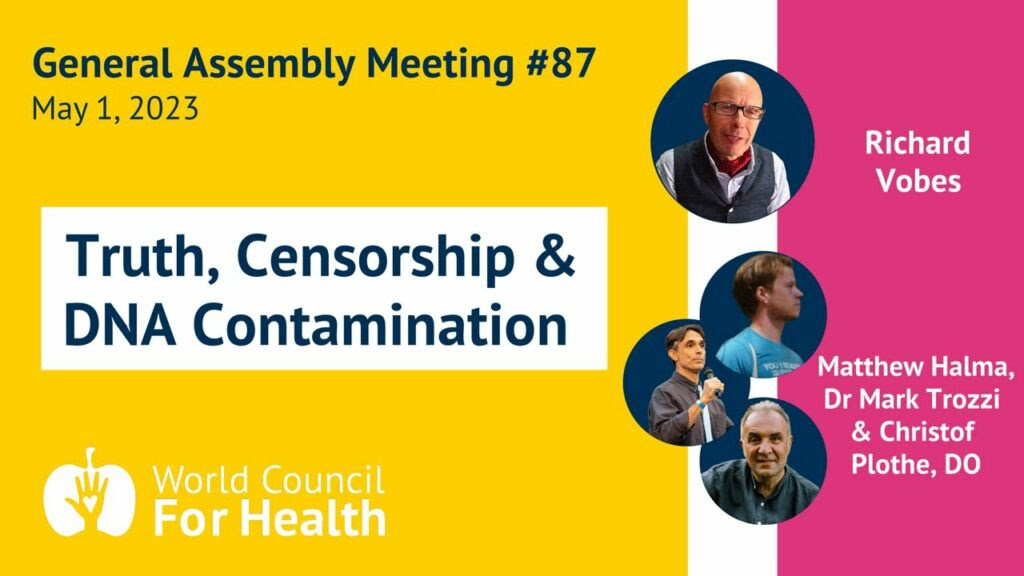
General Assembly Meeting #87 Now Available
On May 1, 2023 we heard from Richard Vobes, Matthew Halma, Dr Mark Trozzi, and Christof Plothe, DO at General Assembly Meeting #87.
The following is critical information especially for Lyme/MSIDS patients as these pathogens also cause hypercoagulation and metabolic issues. Many patients have greatly benefitted from heparin as well as proteolytic enzymes as they both cut down fibrinogen, the proteins produced by the liver that help with blood clotting. Unfortunately, too much fibrinogen causes “thick blood” making it even harder to treat pathogens. Biofilm compounds this problem as well. The Japanese have demonstrated preventive antiviral effects against SARS-CoV-2 mutant strains and bovine herpes virus type 1 by using Nattokinase. The mechanism appears to be proteolytic cleavage of viral proteins.
There was a massive discrediting propaganda campaign hurled at aspirin by Big Pharma fifty years ago when it came out with expensive and dangerous non-steroidal anti-inflammatories (NSAIDs)
Aspirin is a staple medicine that is frequently recommended as a remedy to control inflammation and prevent blood clots. It could have helped limit the pandemic death toll, had it not been downplayed and ignored
According to research published in April 2021, aspirin reduced COVID-19 patients’ need for mechanical ventilation by 44%, ICU admission by 43% and mortality by 47%
Proteolytic enzymes like lumbrokinase, serrapeptase and nattokinase are safer and perhaps even superior choices to aspirin for its anticlot properties. These enzymes, when taken on an empty stomach, act as natural anticoagulants by breaking down fibrin
Proteolytic enzymes may also be helpful for long-COVID. Researchers have found that people who die from COVID have extensive lung damage caused by persistent virus-infected cells that cause scar formation. Proteolytic enzymes can help dissolve this scar tissue, as fibrin is a primary component
Aspirin (acetylsalicylic acid) was introduced in 1899 as an alternative to sodium salicylate,1 a pain reliever and anti-inflammatory known for its unpleasant side effects such as stomach cramps, heartburn, nausea and vomiting. It’s been a staple medicine in most households ever since and is frequently recommended as a remedy to control inflammation and prevent blood clots that can lead to stroke and heart attack.
Aspirin also has other health benefits. It helps increase the oxidation of glucose as fuel for your body while inhibiting the release of fatty acids from your fat cells, specifically linoleic acid (LA), an omega-6 fat which I suspect is a primary driver of chronic disease.
This is important because nearly everyone in the U.S. has excessive LA in their tissues, as it takes seven years of a low LA diet to get it down to healthy levels. So, the last thing you want to do is increase the release of LA into your body from fat stores. It is far better to release LA slowly and allow your liver to process it. It is water soluble, so you can urinate it out without it being metabolized into inflammatory prostaglandins.
Importantly, aspirin will also lower your baseline cortisol — indirectly by lowering inflammation, and directly by inhibiting the enzyme 11-beta-hydroxysteroid dehydrogenase Type 1. This enzyme synthesizes active cortisol from the inactive precursor cortisone.
Aspirin lowers the production of stressed induced aldosterone, which can help to lower blood pressure. Aspirin increases your levels of carbon dioxide and progesterone while inhibiting the major inflammatory pathway, NF kappa-B, which will help your body naturally increase the synthesis of two powerfully important hormones that your body needs, testosterone and progesterone.
Aspirin also uncouples mitochondria. Uncoupling of mitochondrial oxidative metabolism from ATP production can help to increase your metabolic rate and help you lose weight. Dinitrophenol (DNP) is a drug that, like aspirin, uncouples mitochondrial metabolism and produces incredible weight loss. Sadly, it has a very low therapeutic index, so its effective dose is close to its toxic dose and is widely considered too dangerous for clinical use and is no longer available in the U.S.
Aspirin Reduced COVID-Related Hospital Deaths by 47%
Aspirin could also have helped limit the pandemic death toll, had it not been downplayed and overlooked. Many news outlets and COVID-specific websites warned against the use of aspirin for COVID infection, saying it could cause serious bleeding.
While bleeding is a potential side effect, aspirin is no riskier than other anticoagulants, such as heparin,2,3,4 which was recommended by the National Institutes of Health.5
According to research6 published in April 2021, aspirin significantly reduced COVID-19 patients’ need for mechanical ventilation, ICU admission and subsequent mortality. The retrospective, observational cohort study included patients admitted for COVID infection at multiple hospitals across the U.S. between March and July 2020. As reported by General Surgery News:7
“The study’s principal investigator, Jonathan Chow, MD, an assistant professor of anesthesiology and critical care medicine at George Washington University, in Washington, D.C., said:
‘At the beginning of the pandemic, in March and April of 2020, my colleagues and I observed that all these COVID patients in the intensive care unit began to develop excess clot formation and complications related to blood clots and microclot formation throughout the body.’
Numerous autopsy studies from last spring showed these patients had activation of platelets throughout the body and an excessive number of precursors to platelets, according to Dr. Chow.
‘That got us thinking, ‘Why don’t we start using an antiplatelet medication, such as aspirin, to treat these patients?’ he said. ‘Aspirin has been studied extensively in cardiovascular disease to prevent clot formation, and it is widely available and inexpensive.’”
Chow and his team reviewed the charts of 412 patients, 23.7% of whom had either received aspirin within 24 hours of admission, or had taken aspirin for at least seven days prior to admission, and 76.3% who did not.
After adjusting for several confounding variables, including comorbidities, aspirin was independently associated with a:
44% decreased risk for mechanical ventilation
43% reduced risk for ICU admission
47% decrease in hospital mortality
Based on this research, it appears COVID-19-related hospital deaths could have been cut nearly in half, had aspirin been routinely used. Chow commented on the results:8
“The results of the study do not really surprise us because we know that COVID causes excess clot formation and we know that aspirin is a very potent blood thinner. So, when you have a disease that causes clots and a medication that thins your blood, that may lead to the protective effects that we found.”
Aberrant Coagulation in Severe Influenza Pneumonia
As in COVID-19, pneumonia caused by influenza also involves microclotting in the lungs. According to research published in 2016, aberrant coagulation is what causes a hyperinflammatory response in severe influenza pneumonia:9
“Dysfunctional coagulation is a common complication in pathogenic influenza, manifested by lung endothelial activation, vascular leak, disseminated intravascular coagulation and pulmonary microembolism.
Importantly, emerging evidence shows that an uncontrolled coagulation system, including both the cellular (endothelial cells and platelets) and protein (coagulation factors, anticoagulants and fibrinolysis proteases) components, contributes to the pathogenesis of influenza by augmenting viral replication and immune pathogenesis.”
This paper also highlighted the benefits of aspirin, noting it:10
Protects mice from lethal influenza virus infection
Acts as an anti-influenza virus agent in vitro by inhibiting pro-inflammatory NF-κB activity
Improves influenza outcomes
Potentially inhibits platelet activation
Fibrinolytics May Be the Key
According to the 2016 paper above, “Fibrinolysis is involved in both lung inflammation and the influenza A virus life cycle.” Fibrinolysis is a process that prevents blood clots from forming and growing. This is part of your body’s normal processes, but sometimes the clotting becomes too excessive, requiring a fibrinolytic to help break down the clots that have already formed.
Fibrin is the material that blood clots are made of, and while aspirin can help break them down, I believe proteolytic enzymes like lumbrokinase, serrapeptase and nattokinase are superior choices.
These enzymes, when taken on an empty stomach, away from food, act as natural anticoagulants by breaking down fibrin. They must be taken at least one hour before or two hours after meals containing protein, though. Otherwise, they’ll be wasted in the digestion of the protein in your food and won’t be able to activate their fibrinolytic properties.
Fibrinolytic Enzymes for COVID-19
Another paper11 published in July 2020, this one a case series, also hints at the usefulness of fibrinolytic enzymes for COVID. It presented three case studies of patients with severe COVID‐19 respiratory failure who were treated with tissue plasminogen activator (TPA), a serine protease enzyme found on endothelial cells that is involved in the breakdown of blood clots.12
All three patients benefited from the treatment, with partial pressure of oxygen/FiO2 (P/F) ratios, a measure of lung function, improving from 38% to 100%.
Other research13 has shown that the thrombolytic activity of equivalent amounts of nattokinase and TPA are identical, so nattokinase could be a useful alternative. The benefit of nattokinase is that you can take it at home, without a prescription, while TPA is an emergency stroke treatment that is only given intravenously to patients suspected of having an ischemic stroke.
Considering fibrinolytic enzymes are thrombolytics comparable to both aspirin14 and TPA, it seems reasonable to conclude that they can be helpful in the treatment of COVID-19.
Fibrinolytic Enzymes May Be Useful in Long-COVID as Well
Another paper15 published in November 2020 highlighted that people who died from COVID-19 had extensive lung damage, including clotting and long-term persistence of virus cells in pneumocytes and endothelial cells.
The findings indicate that virus-infected cells may persist for long periods inside the lungs, contributing to scar tissue. In an interview with Reuters,16 study co-author Mauro Giacca, a professor at King’s College London, described “really vast destruction of the architecture of the lungs,” with healthy tissue “almost completely substituted by scar tissue.”
This scar tissue, Giacca said, may be responsible for so-called “long COVID,” in which symptoms persist for months after the infection has cleared up. “It could very well be envisaged that one of the reasons why there are cases of long COVID is because there is vast destruction of lung (tissue),” he told Reuters. “Even if someone recovers from COVID, the damage that is done could be massive.”
The good news is that proteolytic enzymes can help dissolve scar tissue as well, as fibrin is a primary component. I would alternate between lumbrokinase and serrapeptase, as you’ll need to take it for about three months and sensitivity can develop over time if you use any one of them daily without interruption.
A Breakdown of the Top Three Fibrinolytics
While lumbrokinase, nattokinase and serrapeptase are all effective thrombolytics, lumbrokinase is by far the most potent, which is why it’s my personal favorite. Lumbrokinase is 30 times more potent than nattokinase and 300 times more potent than serrapeptase.17,18,19
This means you need much higher doses if you’re taking nattokinase or serrapeptase, compared to lumbrokinase. That said, as just mentioned, if you intend to take a fibrinolytic enzyme daily, I recommend alternating them to prevent a sensitivity or allergy from developing. Also remember that they must be taken on an empty stomach.
Aside from potency, each enzyme also has its own set of benefits that might make one preferable over another:
1.Lumbrokinase — A highly effective antithrombotic agent that reduces blood viscosity and platelet aggregation20 while also degrading fibrin, which is a key factor in clot formation.
I recommend that everyone keep some high-quality lumbrokinase in your emergency kit. A while back I developed a significant bruise from a weight training injury. I took a high dose of lumbrokinase for a week, which cleared it up.
I also took lumbrokinase after being stung by three wasps on my forehead right before bed. The stings swelled to nearly the size of half a tennis ball. Wasp venom contains proteins that fibrinolytic enzymes can break down, so I took half a dozen pills and went to sleep.
The next morning, the swelling was nearly gone. If you are going to try this, the sooner you take it after you’re stung, the better it will likely work as it denatures the venom proteins before they inflict their damage.
2.Serrapeptase — Research has shown serrapeptase can help patients with chronic airway disease, lessening the viscosity of sputum and reducing coughing.21 Serrapeptase also breaks down fibrin and helps dissolve dead or damaged tissue without harming healthy tissue.22
3.Nattokinase — Nattokinase has been shown to break down blood clots and reduce the risk of serious clotting23 by dissolving excess fibrin in your blood vessels,24 improving circulation and decreasing blood viscosity.
Aspirin Has Benefits Similar to Fasting
I have long been a fan of fasting for many reasons, but primarily because it has been known to lower biomarkers of inflammation as well as increase autophagy. Interestingly, there was a study done that suggests that aspirin also does precisely this. The study was in mice and used 8 mg/kg which is the equivalent of about two 5 grain (325 mg) tablets a day.25
The study showed that aspirin, or its active metabolite salicylate, caused autophagy by inhibiting the acetyltransferase activity of EP300 which is a specific gene, also known as p300, which codes for proteins that regulate the activity of many genes in tissues throughout your body. It plays an essential role in controlling cell growth and division, prompting cells to mature and take on specialized functions.
Purchasing Guidelines for Aspirin
Getting back to aspirin, if you do decide to use aspirin, be sure to avoid coated extended-release aspirin. It’s not recommended due to the additives they put in it. Immediate-release aspirin is the preferred version and can be found on Amazon.
Look carefully at the list of inactive ingredients. The only one should be corn starch. I looked long and hard and found one that meets all those criteria. The recommended dose is one 325 milligram tablet per day with your largest meal.
Earlier this year I became convinced of the prophylactic value of aspirin, and I now take 325 mg per day. But I use a version that is not a tablet and is 99% pure USP aspirin. I find its prometabolic, antilipolytic, anti-inflammatory, anticortisol, and anti-estrogen effects very appealing, and its safety is well-established.
It is important to understand that there was a massive discrediting propaganda campaign hurled at it by Big Pharma when it came out with its panoply of expensive and dangerous non-steroidal anti-inflammatories (NSAIDs) fifty years ago. Many may not recall that I was the first person on the internet to warn the dangers of one of these NSAIDs, Vioxx, a year before it was released into the market and killed around 100,000 people.
If you are sensitive to aspirin, it would be best to use a salicylic acid or willow bark supplement. When you consume aspirin, the acetylsalicylic acid is metabolized in your body into salicylic acid, which is the compound responsible for the anti-inflammatory, pain-relieving and antithrombotic effects of aspirin. This can be found in willow bark.
To learn more about the risks and benefits of aspirin, and how it compares to fibrinolytic enzymes, see “Daily Aspirin — Healthy or Harmful?”



 Madison Area Lyme Support Group