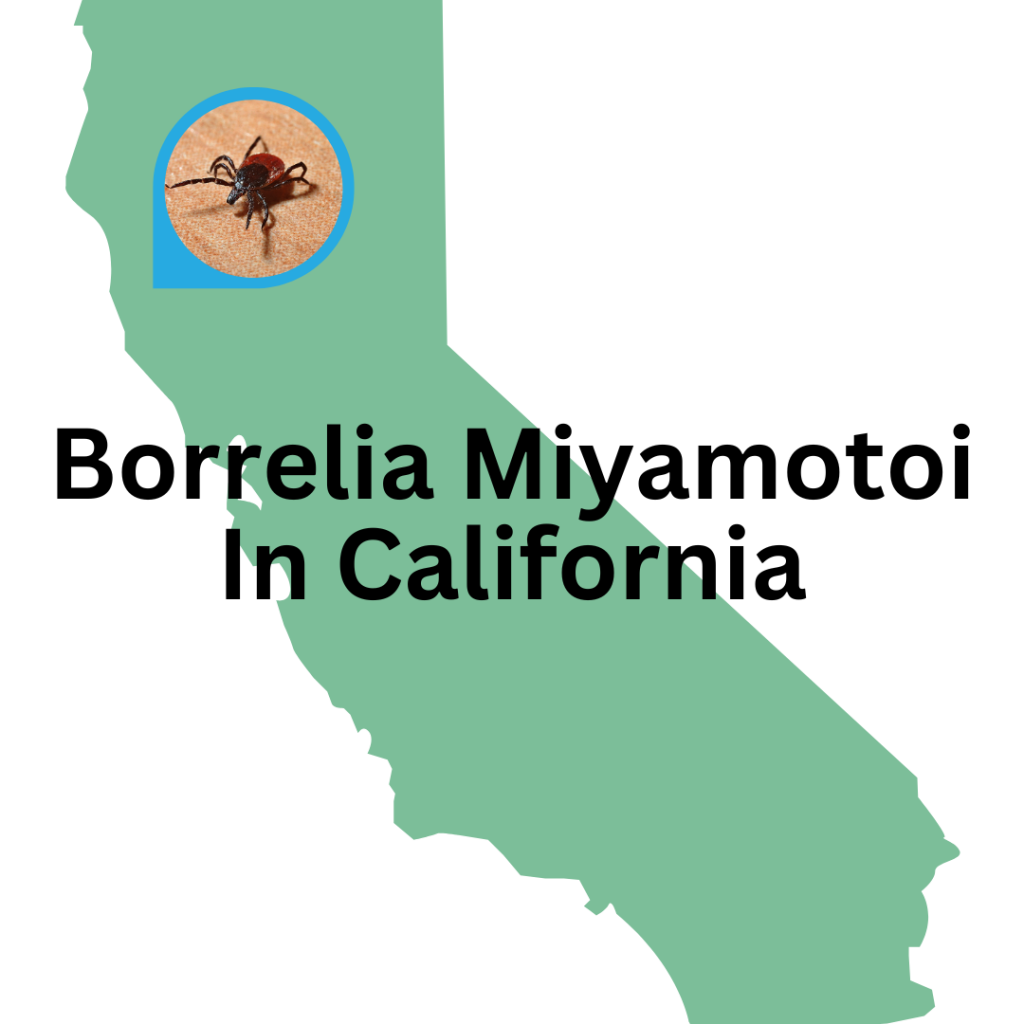
Archive for the ‘Ticks’ Category

What Happens If a Tick Is Removed From a Student At School

https://www.lymedisease.org/pa-legislation-tick-removal-school/

If a tick is removed from a student at school, what happens next?

The Pennsylvania State Senate has passed legislation by Sen. Michele Brooks to create a standard protocol in response to a tick being removed from a student during the school day.

Senate Bill 232 would require school officials to notify parents in writing about the tick removal and provide information on the symptoms of Lyme disease. The notification will include the date of the tick removal and the recommendation that the child’s parent or guardian promptly seek medical treatment.

The bill also states that the tick must be preserved for the student’s parent or guardian to send to East Stroudsburg University’s tick lab for free testing for tick-related diseases including Lyme disease, Rocky Mountain spotted fever or Powassan virus.

The school also has the option of sending the tick for testing.

“Testing a tick found on a child can provide critical information to help medical professionals prevent the child from long-term or chronic effects from the diseases ticks can carry,” Brooks said.

“In keeping with my ongoing efforts to combat the tick crisis in Pennsylvania, I encourage anyone who has removed a tick from themselves, a pet, and especially a child, to place it in a plastic zip-locked bag and send it to the tick lab.”

Pennsylvania leads the nation in the number of Lyme disease cases. Approximately one in four cases of Lyme occur in children, with children ages five to nine being at the greatest risk for contracting Lyme and other tick-borne illnesses.

The bill now moves to the House of Representatives for consideration.

SOURCE OF PRESS RELEASE: The Office of State Senator Michele Brooks

Editorial from Williamsport Sun-Gazette endorsing the legislation: Schools a logical ally in fight against tick-borne diseases

________________

**Comment**

What’s sad here is that it should be normal procedure to contact the parents of a child that has been bitten by a tick.  Duh.  But, in today’s crazy world, this has to be legislated.  And even then, it might not happen!

For more:

Rather than give medical advice about recommended treatment, I’m going to quote the International Lyme and Associated Diseases Society (ILADS – how to handle a tick bite):

“ILADS recommends that prophylaxis (preventive treatment) be discussed with all who have had a blacklegged tick bite. An appropriate course of antibiotics has been shown to prevent the onset of infection.

When the decision is made to use antibiotic prophylaxis, ILADS recommends 20 days of doxycycline (provided there are no contraindications).  The decision to treat a blacklegged tick bite with antibiotics often depends on where in the country the bite occurred, whether there was evidence that the tick had begun feeding, and the age of the person who was bitten.  Based on the available evidence, and provided that it is safe to do so, ILADS recommends a 20-day course of doxycycline.

Patients should also know that although doxycycline can prevent cases of Lyme disease, ticks in some areas carry multiple pathogens, some of which, including Babesia, Powassan virus, and Bartonella, are not responsive to doxycycline. This means a person could contract a tick-borne illness despite receiving antibiotic prophylaxis for their known bite.

ILADS recommends against single-dose doxycycline. Some doctors prescribe a single 200 mg dose of doxycycline for a known bite. However, as discussed in detail in the guidelines, this practice is based on a flawed study that has never been replicated.

Read more in the ILADS treatment guidelines.

For more on treatment:  https://madisonarealymesupportgroup.com/2016/02/13/lyme-disease-treatment/  Although it’s highly doubtful even a LLMD will give you more than doxy, you can read and learn about herbs that are effective against the other coinfections and layer those in yourself.  Of course, discuss all treatments with your doctor.

Tick Tock: CDC Takes Its Time Treating Chronic Lyme Disease

https://news.climate.columbia.edu/2023/03/10/tick-tock-cdc-takes-its-time-treating-chronic-lyme-disease/

Tick Tock: CDC Takes Its Time Treating Chronic Lyme Disease

BY GRACE BURNS |MARCH 10, 2023
a tick on a stalk of grass

Lyme disease is caused by a bacteria that’s spread through tick bites. If left untreated, the bacteria can affect a person’s joints, heart, and nervous system. Photo: Leroy Baptiste 

My knees buckled beneath the weight of my malnourished adolescent frame. Cold, dripping sweat met its match on the tile floor. Every ounce of strength I had cried out to my parents for help. I didn’t stay conscious long enough to realize they raced up the stairs at the sound of my fall, as if on command.

The year was 2018. Losing consciousness was among the everyday occurrences in my middle-class household in suburban West Hartford, Connecticut. Life had been this way since July 5, 2017, just days before my 17th birthday, when my legs went fully numb during a run.

Not until I was almost 20 years old was I diagnosed with chronic and neurological Lyme disease — 16 strains of it, to be precise.

I blame this delay in diagnosis on the Centers for Disease Control and Prevention (CDC)’s refusal to recognize and legitimize chronic Lyme disease. Whereas many patients with Lyme disease can recover after two to four weeks of antibiotics, others, like me, suffer long-term side effects, and no one knows why. This lack of understanding makes it difficult for any medical professional to treat me in a Lyme-specific manner. Doctors are often reluctant to acknowledge Lyme as a possible diagnosis, and are not sufficiently informed to identify symptoms.

Lyme disease is caused by a bacteria that’s spread through tick bites. If left untreated, the bacteria can affect a person’s joints, heart, and nervous system.

Tests for Lyme disease are unreliable, often producing negative results despite patients later discovering they carry upwards of 5, 10, or 16 strains of Lyme-causing bacteria. There is no proven “cure” or treatment plan for chronic Lyme disease. Stringent criteria are required by the CDC to be diagnosed with the disease, and patients are often passed off to other autoimmune or psychiatric diagnoses.  (See link for article)

_______________

**Comment**

Another harrowing story.  Fortunately, there’s a good ending as the patient got to an experienced Lyme literate doctor (LLMD) for appropriate treatment.  This really is key.  Unfortunately, insurance will typically not cover this kind of treatment due to polarity within the medical community so patients must pay out of pocket.  It’s important to understand the sordid backstory to this in order to understand that attempting to get help from mainstream medicine is like shouting at the mountain.  If you are able – GO AROUND THE MOUNTAIN.  It will save you a lot of time, money, and heart-ache in the end.

For more:

California’s First CDC-Confirmed Case of Borrelia Miyamotoi

https://www.lymedisease.org/californias-first-cdc-confirmed-case-of-borrelia-miyamotoi/

California’s first CDC-confirmed case of Borrelia miyamotoi

By Lonnie Marcum

May 4, 2023

A recent case reminds us that Lyme disease isn’t the only tick-borne disease we need to worry about.

Last year, the CDC confirmed California’s first known case of Borrelia miyamotoi—a tick-borne pathogen that causes a relapsing-fever illness in humans.

This discovery highlights the need for increased awareness and surveillance of emerging tick-borne illnesses across the United States.

In this case, a man from Marin County, California, sought care at a neurology clinic in San Francisco. His symptoms included recurring fever, night sweats, mild vision changes and nausea. The fevers typically lasted one day and would recur every 10-14 days. At the time, he was also undergoing monoclonal antibody therapy for multiple sclerosis.

His standard blood work was negative for fungi, Lyme disease, brucellosis and leptospirosis. Chest x-rays and abdominal CT scans were negative as well.

The only notable blood findings were a positive antigen for Epstein-Barr virus, a low platelet count (thrombocytopenia), an elevated C-reactive protein (an inflammatory marker), and an elevated procalcitonin—a biomarker that is released in response to bacterial infections.

Specialty lab testing

Considering the patient’s immunocompromised status and continued relapsing fevers, his blood was sent to a specialty lab for next-generation DNA sequencing. The specialty lab, Karius,  says it can identify over 1000 clinically relevant pathogens including bacteria, DNA viruses, fungi, and parasites from a single blood sample.

The DNA test results came back positive for Borrelia miyamotoi and were sent to the CDC for confirmation. The CDC confirmed the patient’s blood was positive for Borrelia miyamotoi and 100% identical to an isolate that had been previously collected from an Ixodes pacificus tick in Marin County. This indicates the patient acquired the infection in California.

Borrelia miyamotoi, first identified in Japan in 1995, is considered an emerging infectious disease in Asia, Europe and the United States.

A recent study found widespread evidence of Borrelia miyamotoi in human blood samples of people living in the northeastern United States. An earlier study found evidence of tick-borne relapsing fever (TBRF) Borrelia, including Borrelia miyamotoi in the blood of 26 out of 101 samples of residents of Mendocino County, California in the 1980s.

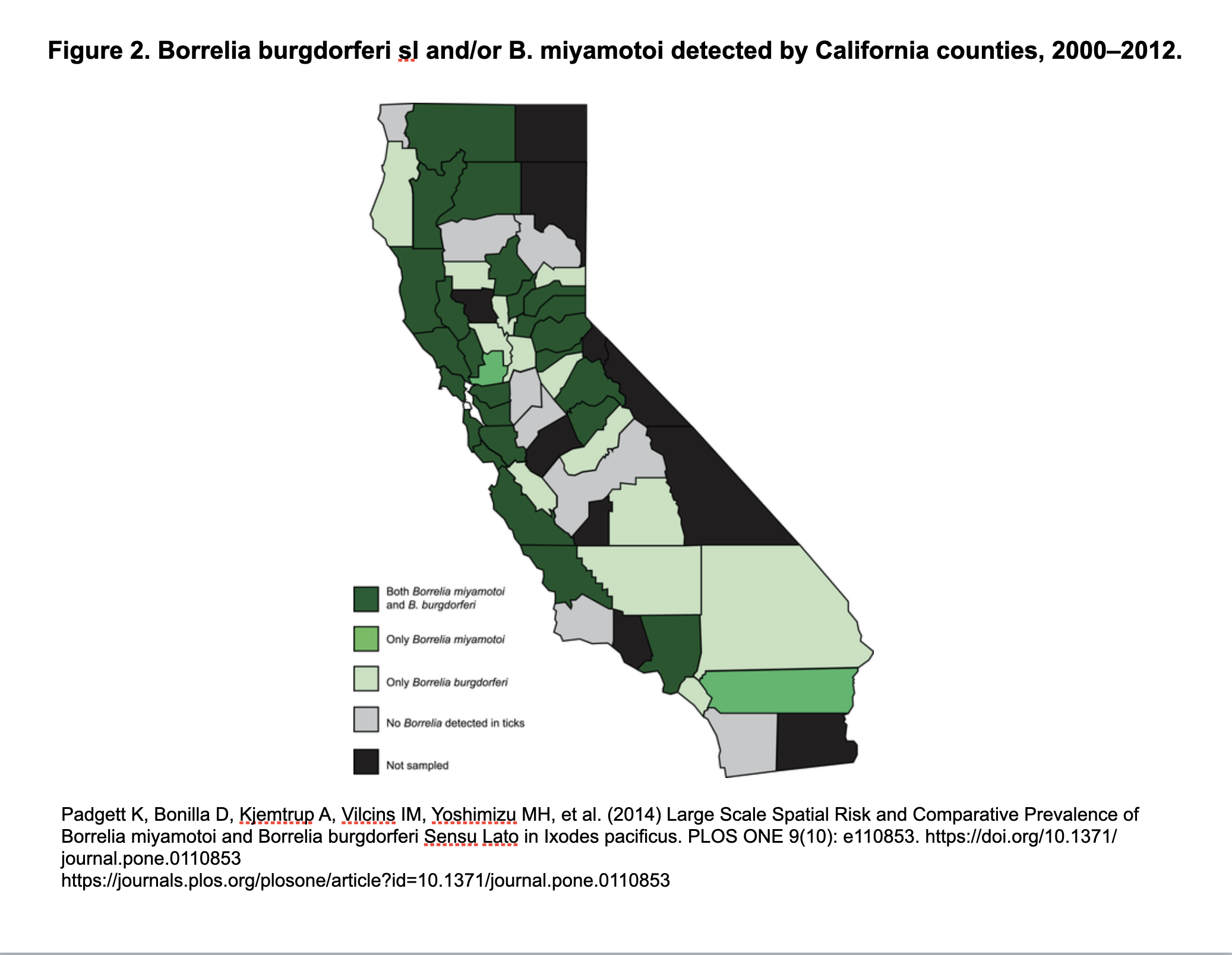
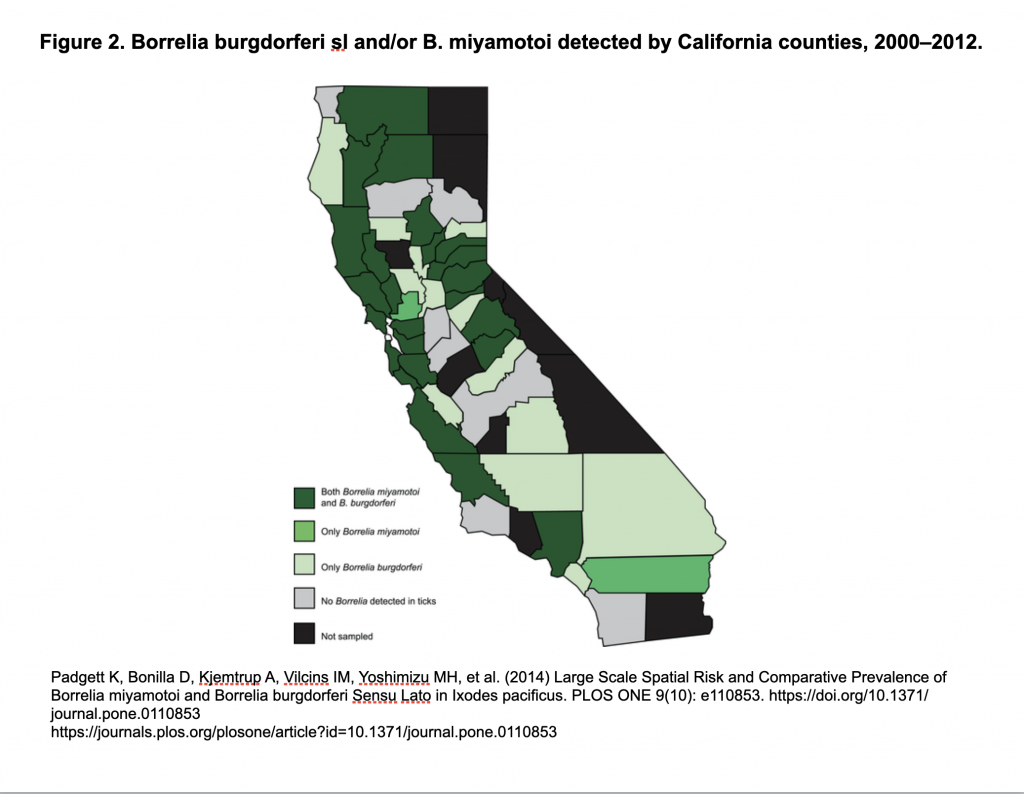
Another study found multiple species of relapsing fever Borrelia in blood samples drawn from patients in 16 out of 24 California counties. And a 13-year-long study found Borrelia miyamotoi in ticks found in 24 out of 48 counties in California (see map below).
Borrelia miyamotoi is transmitted to humans through the bite of infected blacklegged ticks. These are the same  hardbodied ticks (Ixodes scapularis, Ixodes pacificus) that transmit Lyme disease to humans and animals. Other types of North American tick-borne relapsing fever Borrelia (B. hermsii, B. turicatae, B. parkeri), are transmitted by soft-bodied ticks.

The symptoms of Borrelia miyamotoi disease are similar to those of other tick-borne illnesses, such as Lyme disease. But standard Lyme tests will be negative, making the diagnosis challenging.

TBRF

According to the CDC, the main symptoms of TBRF are high fever, headache, muscle and joint pain. Fewer than 1 in 10 patients will develop a rash. Left untreated, the symptoms typically repeat, producing a telltale pattern of relapsing fever lasting 1-3 days, followed by 7-10 days without a fever, followed by another 1-3 days of fever.

The CDC website says: “Confirmation of a diagnosis relies on 1) the use of polymerase chain reaction (PCR) tests that detect DNA from the organism or 2) antibody-based tests. Both types of tests are under development and not widely commercially available but can be ordered from a limited number of CLIA-approved laboratories.”

Treatment for TBRF involves the use of antibiotics, such as doxycycline, amoxicillin or cefuroxime . In this case the man was given a 4-week course of doxycycline and achieved complete resolution of his symptoms. One month after completing antibiotics ,follow-up laboratory testing showed complete resolution of thrombocytopenia and normalization of inflammatory markers.

All tick-borne diseases are a significant health concern worldwide, particularly in areas where ticks are prevalent. These illnesses can present with a range of symptoms, some of which can be mysterious and difficult to diagnose.

While relapsing fever Borrelia has been detected in California before, this is the first CDC-confirmed case of Borrelia miyamotoi in California.  This case highlights the need for continued education and awareness of tick-borne diseases.

As with all tick-borne illnesses, prevention is key. To reduce the risk of tick bites, take precautions when spending time outdoors, such as pre-treating shoes and clothing with permethrin, using insect repellant on yourself, your children and your pets, and performing thorough tick checks after being outdoors.

LymeSci is written by Lonnie Marcum, a Licensed Physical Therapist and mother of a daughter with Lyme. She served two terms on a subcommittee of the federal Tick-Borne Disease Working Group. Follow her on Twitter: @LonnieRhea  Email her at: lmarcum@lymedisease.org.

Reference

Rubio LA, Kjemtrup AM, Marx GE, Cronan S, Kilonzo C, Saunders MEM, et al. Borrelia miyamotoi infection in immunocompromised man, California, USA, 2021. Emerg Infect Dis. 2023 May https://doi.org/10.3201/eid2905.221638 DOI: 10.3201/eid2905.221638

Padgett K, Bonilla D, Kjemtrup A, Vilcins I-M, Yoshimizu MH, Hui L, et al. (2014) Large Scale Spatial Risk and Comparative Prevalence of Borrelia miyamotoi and Borrelia burgdorferi Sensu Lato in Ixodes pacificus. PLoS ONE 9(10): e110853. https://doi.org/10.1371/journal.pone.0110853

Additional Resources

Stanford: Tick-borne disease risk high in SF Bay Area

Yale: Tick-borne Borrelia miyamotoi widespread in northeastern US

LYME SCI: Infected ticks in California? It’s complicated.

LYME SCI: B. miyamotoi has been in California ticks for a long time

LYME SCI: Lyme-carrying ticks in West differ from their Eastern cousins

LYME SCI: How many “negative” Lyme tests are due to B. miyamotoi?

LYME SCI: Tick infection rates as high as 31% in some coastal areas of California

BALF: New interactive maps show where citizen scientists found infected ticks

For more:

And the question begging to be asked is: how many people with B. miyamotoi are falling through the cracks?  It isn’t even reportable to the CDC yet (which notoriously undercounts all things tick-borne-related).

For more:  https://igenex.com/tick-talk/what-you-need-to-know-about-borrelia-miyamotoi/

This article points out the confusion with B. miyamotoi: 

  • many separate it from other tick-borne relapsing fevers
  • while it can cause relapsing fevers, it sometimes doesn’t
  • it appears to be the only TBRF transmitted from a hard bodied tick, unlike TBRF which is mainly transmitted from a soft bodied tick (I remain skeptical of this as ticks have repeatedly been found to transmit things they shouldn’t – just like they are found in places they shouldn’t be.)
  • symptoms often resemble Lyme disease
  • you can be infected with BOTH B. miyamotoi AND Lyme disease (as well as numerous other coinfections) which will complicate symptom presentation
  • testing for B. miyamotoi is just as abysmal as it is for Lyme/MSIDS:  https://madisonarealymesupportgroup.com/2020/03/01/study-cdcs-2-tier-lyme-testing-inaccurate-in-more-than-70-of-cases/

Study: Bait Boxes and Met52 Not Effective in Controlling Tick Populations

https://danielcameronmd.com/tick-control-methods-not-effective-residential-neighborhoods/

TICK CONTROL METHODS NOT EFFECTIVE IN RESIDENTIAL NEIGHBORHOODS

Mouse with tick embedded on shrub branch.

Controlling tick populations can help reduce the likelihood of individuals being bitten by an infected tick and developing a tick-borne illness, such as Lyme disease. Multiple types of tick control methods have been employed but with varying degrees of success. This study explores the effectiveness of bait boxes and the biopesticide spray Met52 in reducing tick abundance and tick encounters with humans.

In their study, “Impacts Over Time of Neighborhood-Scale Interventions to Control Ticks and Tick-Borne Disease Incidence,” Ostfeld and colleagues examined the effectiveness of tick control methods in 24 residential neighborhoods endemic for Lyme disease in New York.¹

The study, conducted over several years, assessed the impact of tick control system (TCS) bait boxes and Met52 spray on reducing tick abundance and tick encounters with people and outdoor pets. And whether these interventions led to a decrease in reported cases of tick-borne diseases.

“Rapid increases in incidence rates and geographic ranges of tick-borne diseases have stimulated efforts to reduce human exposure.”

The authors examined two interventions:

TCS Bait Boxes

TCS bait boxes attract small animals to a food source inside an enclosed device and apply the tick-killing chemical, fipronil. (Fipronil is lethal to ticks but harmless to mammals.)

Met52 Spray

Met52 spray is a biopesticide, which consists of spores of the F52 strain of the fungus Metarhizium brunneum. The solution, mixed with water, is sprayed on the ground and low-lying vegetation.

Impact varies with type of tick control intervention

“By killing ticks attached to small mammals, TCS bait boxes are expected to affect the abundance of host-seeking (questing) ticks the following year,” the authors explain.

Whereas, “Met52 targets host-seeking ticks, with impacts expected within days to weeks after deployment.”

Unfortunately, interventions were unable to control tick populations in 24 residential neighborhoods in New York over a 4-to-5-year period.

“… the lack of association between reduced abundance of host-seeking nymphal blacklegged ticks in residential areas receiving acaricidal treatments and the incidence of tick-borne diseases in those areas … suggests that tick control for disease reduction needs new approaches.”

STUDY FINDINGS:

  • The study found that in neighborhoods with active bait boxes, questing blacklegged ticks and ticks attached to small mammals were reduced by approximately 50%.
  • These interventions “significantly reduced owner-reported cases of tick-borne diseases in outdoor pets,” the authors point out.
  • However, “neither intervention (nor both combined) was associated with reductions in either human encounters with ticks or self-reported cases of tick-borne disease.”
  • “In neighborhoods with active TCS bait boxes, populations of blacklegged ticks (Ixodes scapularis) were not reduced over time in any of the three habitat types tested (forest, lawn, shrub/garden).”
  • “There was no significant effect of Met52 on tick abundance overall…”

May 3, 2023 Tick Boot Camp Podcast: Eva Sapi, PhD

https://tickbootcamp.com/eva-sapi-geneticist-and-molecular-biologist-at-university-of-new-haven/

Eva Sapi, Geneticist And Molecular Biologist At University Of New Haven

Eva Sapi

Tick Boot Camp Podcast
Dr. Michael Snyder was featured on the Tick Boot Camp Podcast:

Launching May 3…

Background
Professor Eva Sapi is a Hungarian-American microbiologist and researcher who has dedicated her career to advancing our understanding of Lyme disease.

Early Life and Career
Born in Hungary, Sapi comes from a family of engineers and scientists. She studied biology at a university in Hungary from 1987 to 1995 and earned her Ph.D. in biology from the same university. She went on to complete postdoctoral work in Germany and Switzerland, where she focused on studying gene regulation in bacteria, and understanding how genes are turned on and off in response to environmental cues.

Early Research
Professor Sapi started her research career studying breast cancer until she was hit with chronic Lyme disease and it paused her life. After finally getting a proper Lyme diagnosis and spending years trying many different pharmaceutical and herbal treatments, Sapi began to feel better and started collecting and studying ticks. She discovered that ticks carry Bartonella and that ticks could carry many different species of bugs that can infect humans, which was not received well by the medical community at the time.

Official Lyme Career Pivot
Next, Professor Eva Sapi joined the University of New Haven in Connecticut as an Associate Professor in the Department of Biology and Environmental Science. She was also appointed as the Director of the Lyme Disease Research Group at the university, where she continued her research on Lyme disease and other tick-borne illnesses.

Popular Work
Sapi is known for her groundbreaking research on the persistence and treatment of Lyme disease. She was the first to discover that Borrelia burgdorferi can form biofilms that protect it from antibiotics and the immune system. Her current research, with James Goldman, a Columbia University professor of pathology and cell biology, centers on a case in which a woman received 16 years of antibiotic therapy and still died from Lyme disease. Their findings – published in Healthcare 2018 – supported her earlier discoveries that Borrelia can form biofilm, a protective layer around itself, making it extremely resistant to antibiotics.

Notable Achievements
Professor Sapi has authored 70 peer-reviewed scientific papers on Lyme disease and trained more than 100 graduate students in Lyme disease research. She is a sought-after speaker and presenter and has appeared on radio and television programs. Her groundbreaking research has earned her several recognitions, including the research trailblazer award from LymeDisease.org in 2018, and the Courage Award from Lyme Connection of Ridgefield. Her ultimate goal is to identify novel antibacterial agents that are effective in killing all forms of Borrelia.

Recent Breakthroughs
Sapi’s research has also shown that some herbal remedies, such as Stevia, can be effective in treating Lyme disease. Her recent breakthrough, with her students, is in the potential of liquid, whole-leaf Stevia extract in reducing biofilm mass. In a recent study, they found that liquid, whole-leaf Stevia extract is an effective treatment for Lyme biofilm. This finding is significant because Borrelia biofilm is a protective layer around itself, making it extremely resistant to antibiotics.

Lyme and Cancer
Sapi’s research has also found evidence that Borrelia may be present in breast cancer tissues, as well as ovarian and endometrial cancer. She and her students are focusing on Borrelia, examining more than 400 invasive breast cancer tissues. A significant number of samples were positive for Borrelia, suggesting that the bacteria may play a role in breast cancer development and metastasis.

Looking Ahead
Professor Eva Sapi’s work on breast cancer and its link to Lyme disease has opened new avenues for research and has the potential to lead to novel discoveries in the field. The scientific community and the Lyme disease community are fortunate to have such a dedicated and passionate researcher leading the charge in advancing Lyme disease research, including its role in cancer.

Listen on Apple Podcasts, Spotify, or Google Podcasts

Listen on Apple Podcasts
Listen on Spotify
Listen on Google Podcasts