Archive for the ‘Ticks’ Category

NY Tick Study Challenges Belief That Tickborne Disease Risk is Only in Natural Settings

https://www.ncbi.nlm.nih.gov/pubmed/31107213

2019 Jun;25(6):1136-1143. doi: 10.3201/eid2506.181741.

Enhancement of Risk for Lyme Disease by Landscape Connectivity, New York, New York, USA.

Abstract

Most tickborne disease studies in the United States are conducted in low-intensity residential development and forested areas, leaving much unknown about urban infection risks. To understand Lyme disease risk in New York, New York, USA, we conducted tick surveys in 24 parks throughout all 5 boroughs and assessed how park connectivity and landscape composition contribute to Ixodes scapularis tick nymphal densities and Borrelia burgdorferi infection. We used circuit theory models to determine how parks differentially maintain landscape connectivity for white-tailed deer, the reproductive host for I. scapularis ticks.

We found forested parks with vegetated buffers and increased connectivity had higher nymph densities, and the degree of park connectivity strongly determined B. burgdorferi nymphal infection prevalence.

Our study challenges the perspective that tickborne disease risk is restricted to suburban and natural settings and emphasizes the need to understand how green space design affects vector and host communities in areas of emerging urban tickborne disease.

________________

**Comment**

Until we can restrict movement of all birds, rodents, reptiles, lizards and people, ticks will be transported everywhere. The idea of looking at a map to diagnose and treat people is pure folly and has done nothing to hurt patients for over 40 years. Doctors desperately need education and to start using their brains rather than relying on ancient, unscientific information such as faulty maps and mythology.

Please watch this video of how ticks were found in the cracks of sidewalks in CA:  https://madisonarealymesupportgroup.com/2019/05/17/video-showing-questing-ticks-in-the-middle-of-the-sidewalk/

Ticks have been found in caves, on rocks, underneath picnic benches, and have fallen from trees onto patios:  https://madisonarealymesupportgroup.com/2018/06/07/ticks-on-beaches/

It’s a good thing they don’t fly.  But, they do blow in the wind. Advocates have told me stories of ticks blowing into their swimming pools. My neighbor with a farm field mowed his lawn, blowing the grass toward my house. I found ticks crawling on my basement screens and a few found their way inside the house on the walls.

Yeah…..we need to bust myths big-time.

Get Ready for Tick Bite: An Infographic to Post on Your Wall Or Promptly Throw into the Trash – Not Kidding

https://www.medscape.com/viewarticle/911927

Get Ready for Tick Bites: An Infographic to Post on Your Wall

Centers for Disease Control and Prevention

May 29, 2019

EDITORIAL COLLABORATION

MEDSCAPE &

Serious disease caused by ticks has tripled over the past 10-15 years, and the affected regions of the nation are ever-expanding. Climate change makes it likely that patterns of vector-borne disease will continue to morph.[1] So if you haven’t yet seen Lyme disease in your community, you probably will.

Summer is the peak season for these infections. For the first time, the Centers for Disease Control and Prevention (CDC) is funding surveillance efforts by states to get a better handle on the true scope of tick-borne disease.

As part of this effort, CDC has created this infographic to remind healthcare providers of the steps to take if a patient presents with a tick attached to the skin. The cheat sheet covers important points such as safe tick removal and Lyme disease prophylaxis.

Post it on your wall so it’s always handy when you need it.

Tick Guidance for Clinicians

And here’s a handout that tells patients how to remove a tick and when to see a healthcare provider after a tick bite.

Tick Bite: What to Do

___________________
**Comment**
I hesitate to even post this there’s so many inaccuracies….
2)  The one or two doses of doxy does NOT cure Lyme:  https://madisonarealymesupportgroup.com/2017/03/24/one-pill-of-doxy-only-reduces-prevalence-of-rash-not-lyme-disease/ The IDSA 1 pill of doxy approach started in 2006 despite the fact that three previous prophylactic antibiotic trials for a tick bite had failed.  According to Dr. Cameron, a well-known Lyme literate doctor, Nadelman’s study had several other limitations:
  • It was not designed to detect Lyme disease if the rash were absent.
  • The six-week observation period was not designed to detect chronic or late manifestations of Lyme disease.
  • It was not designed to assess whether a single dose of doxycycline might be effective for preventing other tick-borne illnesses such as Ehrlichia, Anaplasmosis, or Borrelia miyamotoi.”
3) By this point they shouldn’t care where a person was bit. Speilman’s maps have kept people from proper diagnosis for decades. There’s been enough suffering.  Ticks are everywhere.  https://www.discovermagazine.com/health/the-confounding-debate-over-lyme-disease-in-the-south  (Article discusses Speilman’s maps which are faulty but have ruled like the Iron Curtain, and have been used to keep folks from being diagnosed and treated)
4) According to independent Canadian tick researcher John Scott, Ixodes cookei or the groundhog tick also transmits Lyme disease. Ticks, associated tick-borne pathogensSome are also convinced the Lone Star Tick is involved and that STARRI is a form of Lyme. Also, many credentialed researchers feel there’s far more than the black legged tick at play: https://madisonarealymesupportgroup.com/2019/05/24/microbiology-professor-im-convinced-lyme-disease-is-transmittable-from-person-to-person/, and https://madisonarealymesupportgroup.com/2019/04/02/transmission-of-lyme-disease-lida-mattman-phd/
5) Tick attachment needing to be treater than 36 hours is a bunch of hogwash.  https://madisonarealymesupportgroup.com/2017/04/14/transmission-time-for-lymemsids-infection/  Study showed transmission in under 16 hours and many have become infected much sooner. Minimum time required has never been studied.  Within the link we learn the case of a little girl that within a 4-6 hour tick attachment time developed facial palsy and couldn’t walk or talk.  
6) Prophylaxis can be started within 72 hours of tick removal is questionable at best.  In areas with a high percentage of infected ticks – TREAT NOW and don’t look back!
7) “Antibiotic treatment following a tick bite is not recommended as a means to prevent tickborne diseases other than Lyme disease (such as anaplasmosis, babesiosis, ehrlichiosis, Rocky Mountain spotted fever). There is no evidence this practice is effective, and it may simply delay onset of disease.”  Yeah, but there’s no evidence to the contrary either.  Hardly anyone has looked at concurrent infection, yet we know people are typically coinfected with many things making cases more severe and of longer duration: https://madisonarealymesupportgroup.com/2018/10/30/study-shows-lyme-msids-patients-infected-with-many-pathogens-and-explains-why-we-are-so-sick/
8) There’s a picture of a kid with a thermometer hanging out his mouth that states, “Symptom Watch.”  Now that is asinine.  For 40 years we’ve followed the “wait and see” approach that’s literally killed people.
“Insanity is doing the same thing over and over and expecting different results.”  Albert Einstein.
Everyone agrees that prompt diagnosis and treatment makes all the difference, so why are we still waiting?
This information belongs pretty much in the trash can.  So much work to be done yet they blow this out like the 10 commandments.  Shame on them.
Please educate doctors who are willing to listen. The same misinformation keeps getting propagated.

Review of PSI Joint Infections in Pediatrics – All With Negative Blood Cultures: Bartonella & Brucella, Among Others

https://www.ncbi.nlm.nih.gov/pubmed/31130517

2019 May 23. pii: S1695-4033(18)30548-4. doi: 10.1016/j.anpedi.2018.07.017. [Epub ahead of print]

[Pyogenic sacroiliitis: Lessons learned from an atypical case series].

[Article in Spanish]

Abstract

INTRODUCTION:

Pyogenic sacroiliitis (PSI) is a rare condition that amounts to 1% to 2% of all joint infections in the paediatric age group. Its diagnosis is often difficult and delayed due to its nonspecific signs, symptoms and physical findings. Also, the identification of the causative microorganism is frequently challenging due to a high proportion of negative blood cultures and the risks involved in joint aspiration in this site.

PATIENTS AND METHODS:

We performed a retrospective review of the health records of all patients aged less than 18 years admitted to a tertiary children’s hospital due to PSI between 2008 and 2016.

RESULTS:

We identified 6 cases of paediatric PSI. The blood cultures were negative, and the identification of the causative agent required joint fluid aspiration in one patient with infection by Aggregatibacter aphrophilus, and specific screening tests for less frequent agents in the other patients: Kingella kingae (n=2), Brucella melitensis (n=1) and Bartonella henselae (n=1). The patients were treated with specific antimicrobial regimens, and all had favourable clinical outcomes and were free from sequelae during the follow-up.

CONCLUSIONS:

Despite the small sample size, our study evinced the low effectiveness of blood cultures for diagnosis of paediatric PSI. It also highlights the need for a high level of suspicion for atypical agents and the early use of adequate diagnostic methods, including imaging and serological testing or polymerase chain-reaction (PCR) analysis of blood samples, as well as prescription of effective antimicrobial therapy.

____________________

**Comment**

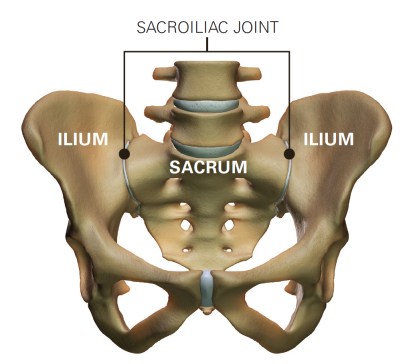
Pyogenic sacroiliitis = puss forming joint infection in the sacroiliac joint.

iu-16

Brucella melitensisa gram negative rod-shaped bacteria, is a human pathogen (Malta fever), B.abortus (Bang’s disease), and in rare cases, B. suis and B. canis. Transmission occurs through animal contact (birth) or animal products, inhalation of infected particles, STD, breastfeeding, bone marrow transplants, blood products, and yes, ticks.  Pathogens are found in macrophages which are transported to lymph nodes, then spread throughout the body.  Treatment consists of doxycycline, rifampicin, & gentamicin.  Also, Ciprofloxin 500mg twice a day for 7-14 days.  http://brucellamelitensis.com

http://drsusanmarra.com/patient-resources/lyme-disease/brucella/ It has been found in eggs, larvae and engorged females of Dermacentor marginatus ticks (that bite humans)  https://www.sciencedirect.com/science/article/pii/S1877959X17303990

Hosts are most mammals including humans.  http://www.bristoluniversitytickid.uk/page/Dermacentor+marginatus/13/#.XPgbgS2ZPSc

Symptoms are very non-specific:  https://www.cdc.gov/brucellosis/symptoms/index.html

http://www.cfsph.iastate.edu/Factsheets/pdfs/brucellosis_melitensis.pdf  Actually the best information is found here.

And…according to the CDC:  https://www.cdc.gov/brucellosis/clinicians/brucella-species.html

*Three types of the bacteria that cause brucellosis – Brucella abortusBrucella melitensis and Brucella suis – are designated as select agents. This means that they have the potential to be developed as bioterrorism agents due to their ability to undergo aerosolization.

Oh goody, another potential bioweaponized agent spread by ticks.

For more on the history of brucella as a bioweapon:  https://www.globalsecurity.org/wmd/intro/bio_brucellosis.htm

https://www.ncbi.nlm.nih.gov/pubmed/8425348?dopt=Abstract  Acute Lyme arthritis in the hip mimicking acute pyogenic arthritis in 5-year old girl.

https://www.ncbi.nlm.nih.gov/pmc/articles/PMC3358077/  Bartonella & all sorts of rheumatic symptoms in patients from Lyme endemic regions with histories of cat, dog, mosquitoes, ticks, fleas, and biting fly exposure.

Staph is usually the culprit, but this case report highlights that Lyme, Bartonella, Brucella, and mycoplasma should be tested for as well.  Things to watch for in children/babies – pain with diaper changes, limping, fever, irritability, decreased range of motion in the pelvic area.  This review stated the highest incidence was in adolescents:  https://link.springer.com/article/10.1007/s00431-019-03333-8, but that it’s an under recognized entity in infants with an unidentified bacterial source.  Could this be a manifestation of congenital Lyme/MSIDS that’s flying under the radar?


High Titers of Bartonella Found in Patients With Musculoskeletal Complaints

https://www.ncbi.nlm.nih.gov/pubmed/31115789

2019 May 22. doi: 10.1007/s10067-019-04591-5. [Epub ahead of print]

The seroprevalence of Bartonella spp. in the blood of patients with musculoskeletal complaints and blood donors, Poland: a pilot study.

Abstract

BACKGROUND:

Bartonella spp. can cause a variety of diseases, such as lymphadenopathies, cat scratch disease, and trench fever, but can also give rise to many non-specific symptoms. No data exists regarding the prevalence of Bartonella spp. in patients with musculoskeletal complaints, nor among blood donors in Poland.

METHODS:

The presence of anti-Bartonella IgM and IgG in the serum of blood donors (n = 65) (Lodz, Poland) and in the patients of the Department of Rheumatology Clinic (n = 40) suffering from musculoskeletal symptoms was tested by immunofluorescence. Blood samples were cultured on enriched media. Epidemiological questionnaires were used to identify key potential risk factors, such as sex, age, contact with companion animals, and bites from insects or animals.

RESULTS:

Altogether,

  • 27 of the 105 tested subjects were seropositive for Bartonella henselae IgG (23%)
  • 3 for Bartonella quintana IgG (2.85%)
  • IgMs against B. henselae were found in 3 individuals (2.85%)
  • IgMs against B. quintana were found in one (1.54%)

No statistically significant difference was found between the prevalence of B. henselae in the blood of donors or patients and the presence of unexplained musculoskeletal complaints (23% vs 30%). Individuals who had kept or been scratched by cats were not more likely to be B. henselae seropositive (p > 0.01). Tick bites were more commonly reported in patients, but insignificantly (p > 0.01).

CONCLUSION:

This is the first report of a high seroprevalence of anti-Bartonella IgG in patients with musculoskeletal symptoms and in blood donors in Poland. The obtained results indicate that such seroprevalence may have a possible significance in the development of musculoskeletal symptoms, although it should be confirmed on a larger group of patients. Asymptomatic bacteremia might occur and pose a threat to recipients of blood from infected donors. Hence, there is a need for more detailed research, including molecular biology methods, to clarify the potential risk of Bartonella spp. being spread to immunocompromised individuals.

KEY POINTS:

•This is the first study presenting high seroprevalence of Bartonella spp. in Poland. • IgG and IgM antibodies against B. quintana were found in blood samples of blood donors.


Another Tick-Borne Disease To Worry About – Alongshan virus (ALSV)

https://www.npr.org/sections/goatsandsoda/2019/06/01/728375159/another-tick-borne-disease-to-worry-about

Another Tick-Borne Disease To Worry About

June 1, 20197:00 AM ET

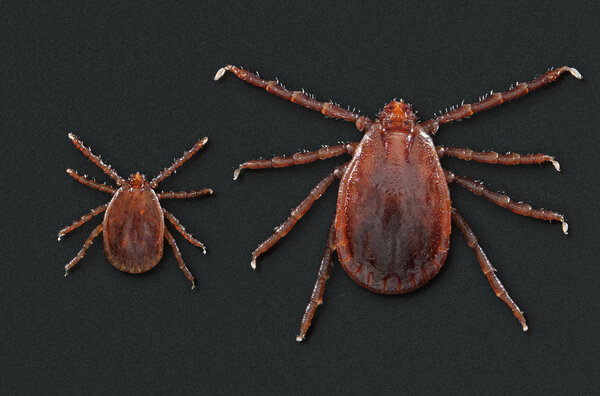
This photo depicts two Haemaphysalis longicornis ticks, commonly known as the longhorned tick. It has been linked to the spread of a hemorrhagic fever in China. The smaller of the two ticks on the left is a nymph. The larger tick is an adult female.

Science Source

When a tick bores into your skin, anchoring itself for what can be a leisurely meal while often spreading germs, it isn’t just Lyme disease that you have to worry about.

Various kinds of ticks have been shown to carry at least 16 diseases in the U.S alone that can infect humans, according to the Centers for Disease Control and Prevention. Now add one more to the global list of ills that a tick bite can bring about, according to a study in the May 30 New England Journal of Medicine.

The study, identifying a new tick-borne disease, shows that we still don’t know how many more diseases ticks can carry. “We continue to discover new viruses,” says Dr. Bobbi Pritt, director of the Clinical Parasitology Laboratory and co-director of the Vector-Borne Disease Lab Services at Mayo Clinic. She was not involved in the study.

The newly discovered disease was found in Inner Mongolia, an autonomous region of China. In April 2017, a 42-year-old female farmer from the Mongolian town Alongshan went to a county hospital complaining of fever and headache. She had a history of tick bites. In searching for the cause of the patient’s fever, researchers ruled out the usual tick-borne diseases found in the area. Using genome sequencing, a process of determining the makeup of an organism’s DNA, they isolated a new disease-causing agent, which they called Alongshan virus, or ALSV, after the patient’s hometown.

Further testing found 86 additional patients in the same Inner Mongolia region who were infected with ALSV. “Neither permanent clinical complications nor death occurred among patients with confirmed infection,” wrote the authors, from various universities and laboratories in China, in the journal article.

The patients in the study had symptoms of headache and fever coming an average of three to seven days after a tick bite, according to an email response to questions from Quan Liu, an author of the study from the School of Life Sciences and Engineering at Foshan University in Foshan, China. They were treated with ribavirin, an antiviral, and benzylpenicillin sodium, an antibiotic, for three to five days, he wrote.

“The symptoms usually resolved after six to eight days of treatment, and all patients had complete recovery.”

Diseases from a variety of ticks are seen around the world, but there are regional differences depending on the virus or bacteria carried by the ticks in the area. So far, ASLV has been found only in Inner Mongolia, in Ixodes persulcatus ticks, according to the study. It has also been found in mosquitoes in the same area, so researchers can’t be certain whether the patients got sick from a tick bite or a mosquito bite.

Like the victims of ASLV, most patients recover from the diseases caused by tick bites — although some tick-borne diseases can result in enduring joint pain, impaired muscle movements and fatigue.

Finding a new disease can only reinforce the need for people to take precautions to avoid tick bites.

In the U.S., where more than 59,000 cases of tick-borne diseases were reported in 2017, tick season is just beginning.

“Once the snow melts, the ticks come out. Stay away from tall grasses and forested areas,” says Pritt. “If you go into those areas, wear protective clothing and use an insect repellent with DEET.”

The CDC also suggests treating clothing and camping gear with the repellent permethrin, walking in the center of paths to avoid brushing against plants and leaves, and bathing and checking your body for ticks after an outdoor excursion.

And if you do come down with a fever that isn’t easily explained or diagnosed, make sure you tell your physician about any travel or recent outdoor experiences, says Pritt.

“The overarching theme is the more we look at ticks, the more we find,” says Wendy Adams, research grant director, Bay Area Lyme Foundation, who was not involved in the study. “We find parasites, viruses, bacteria. We just found worms in ticks in New York.”

It means that when humans are bitten by ticks, there are many diseases and infections they can contract — even a disease carried by a parasite within a tick.

Susan Brink is a freelance writer who covers health and medicine. She is the author of The Fourth Trimester: Understanding, Protecting, and Nurturing an Infant through the First Three Months, and co-author of A Change of Heart.

CorrectionJune 1, 2019

A previous version of this story incorrectly referred to the Centers for Disease Control and Prevention as the Centers for Disease Control and Infection.

__________________

**Comment**

OK, another virus discovered in ticks…..and in none other than the Asian Longhorned tick that’s galavanting it’s way across the U.S.:  https://madisonarealymesupportgroup.com/2019/05/30/invasive-longhorned-tick-found-in-east-tennessee/  According to this recent article, it’s in 11 states so far and shows no signs of slowing down.

To date this tick which causes significant havoc in Asia, has not transmitted any diseases in the U.S. yet, but the concern is palpable due to its ability to clone itself and replicate quickly.  It also lines up on a stalk of grass like a cluster bomb waiting to be touched by something to detonate.  When you study this tick for 5 min. it becomes clear why this particular tick infestation can drain cattle of their blood.  https://madisonarealymesupportgroup.com/2018/09/12/three-surprising-things-i-learned-about-asian-longhorned-ticks-the-tick-guy-tom-mather/
three_surprising_4.png

Notice the article states that ticks are full of all manner of things: bacteria, viruses, parasites, and yes, even worms – which is not a new thing, BTW.  Willy Burgdorfer found worms in ticks decades ago. Here we see filarial nematodes (worms) in N.Y. ticks:  https://madisonarealymesupportgroup.com/2019/05/10/study-shows-many-different-pathogens-in-deer-ticks-from-ny-ct/

Worms have been found to harbor spirochetes. This is a big deal because it will take anthelmintics to kill the worms to be able to get to the spirochetes (Lyme). Some patients only get better after anti-worm treatment:  https://madisonarealymesupportgroup.com/2017/10/03/removing-parasites-to-fix-lyme-chronic-illnesses-dr-jay-davidson/  If you’ve reached a plateau, discuss this with your practitioner as a consideration.

According to microbiologist Tom Grier, great care needs to be taken with anti-wormers because the die off can create severe, perhaps deadly herxes:  https://madisonarealymesupportgroup.com/2016/08/09/dr-paul-duray-research-fellowship-foundation-some-great-research-being-done-on-lyme-disease/

With the high rates of dementia, Alzheimer’s, ALS, etc., we should be considering tick borne illness with these patients as we’ve learned that many can regain their mental faculties with appropriate treatment:  https://madisonarealymesupportgroup.com/2019/04/09/the-diagnosis-is-alzheimers-but-thats-probably-not-the-only-problem/  See comment section.