Archive for the ‘Ticks’ Category

First US Human Bite From Worrying Longhorned Tick Noted (But it’s Actually The Second Human bite)

http://www.cidrap.umn.edu/news-perspective/2019/06/first-us-human-bite-worrying-longhorned-tick-noted

First US human bite from worrying longhorned tick noted


In a report last week, researchers described the first human in the United States known to bitten by an Asian longhorned tick, a rapidly spreading invasive species that the US Centers for Disease Control and Prevention (CDC) warned about last year.

Though the 66-year-old man did not get sick, scientists know that Haemaphysalis longicornis can harbor bacteria that can cause human and animal diseasespossibly including Lyme disease—and an investigation into areas where the man lived found the tick in locations other ticks aren’t typically found, which could lead to changes in public health risk messaging.

A team from the CDC, New York, and New Jersey reported the findings on May 31 in Clinical Infectious Diseases.

The tick was found in the United States for the first time in 2017 on a sheep in New Jersey, and since then, the species has been found in at least 10 states, mainly in the eastern states but also Arkansas. It’s still not known how widespread Asian longhorned ticks are in the United States, but health officials are worried, because they are aggressive biters.

Females can produce massive numbers of offspring without mating, and in some parts of the world—such as New Zealand and Australia—the species have reduced production in dairy cattle by 25%.

Ticks found on sunny lawns

According to the new report, a 66-year-old man from Yonkers, New York, removed a tick from his leg in June 2018. He had not traveled outside his home county for the past 30 days, and his only outdoor exposure was his lawn and one other lawn in the same area. His doctor prescribed him a single 200-milligram dose of doxycycline, presuming that the tick was Ixodes scapularis, the most common US Lyme vector.

Later that day, the patient took the tick to the Lyme Disease Diagnostic Center in Westchester, New York. He didn’t have any symptoms at the time and didn’t get sick over the next 3 months.

Testing in New York identified the tick as an Asian longhorned tick nymph, with genetic sequencing adding more evidence affirming the finding. The National Veterinary Services Laboratory in Ames, Iowa, further confirmed the finding.

Tick sampling using corduroy drag cloths found Asian longhorned ticks on the patient’s manicured lawn, some of them in direct sun. More were found in the park across the street from the patient’s house, both in open, cut grass exposed to direct sun and in taller, shaded grass next to the woods. Testing also found ticks on a nearby public trail, in mowed short and midlength grass near the trail edge, both in full sun and partial shade. The discovery of the ticks near the man’s house were the first known collections in New York state.

The authors wrote that finding the ticks on manicured lawns and in open sun may be significant, because public education efforts often stress that Ixodes scapularis ticks—the most common biting tick in New York state—are found in wooded areas or shaded grass.

Next steps for ongoing threat

In a related editorial in the same issue, Bobbi Pritt, MD, MSC, with the division of clinical microbiology at the Mayo Clinic in Rochester, Minnesota, wrote that though the report of a human bite isn’t surprising, it proves that the invasive longhorned tick continues to bite hosts in its newest location.

“This is extremely worrisome for several reasons,” she wrote. One reason is that Asian longhorned ticks can carry several important human pathogens, including the potentially fatal severe fever with thrombocytopenia syndrome (SFTS) virus and Rickettsia japonica, which cases Japanese spotted fever. “While these pathogens have yet to be found in the United States, there is a risk of their future introduction,” she added.

Also, Pritt said several other human pathogens have been detected in the ticks, but it’s not clear the Asian longhorned species are able to transmit them to humans. They include Anaplasma, Ehrlichia, Rickettsia, and Borrelia species. Lyme disease is caused by Borrelia burgdorferi bacteria.

She warned that the organisms are present in states where longhorned ticks have been found and that it’s possible that the tick—known to be an aggressive biter—might be able to transmit Heartland virus, given its close relationship to SFTS virus.

Pritt said it’s clear that the invasive species is here to stay for the foreseeable future, and next steps should include public awareness campaigns that incorporate the new information, easy-to-use resources for labs to identify the tick, and more research to understand the implications of the new findings.

See also:

May 31 Clin Infect Dis abstract

May 31 Clin Infect Dis commentary

Nov 30, 2018, CIDRAP News story “CDC: Worrisome longhorned tick spreading rapidly in US

___________________

**Comment**

The actual first human bite by the Asian Longhorned tick was in 2018 & in Connecticut:    https://madisonarealymesupportgroup.com/2018/10/03/1st-person-bitten-by-east-asian-longhorned-tick/

No pathogen transmission has happened by this tick in the U.S. so far, but as the article states is responsible for numerous diseases in Asia.

A number of concerning issues:


Mum of Three Unable to Eat, Walk, Or Leave Her Bedroom Because of Tick Bites

https://www.mirror.co.uk/news/uk-news/mum-three-unable-eat-walk-16252344?utm_source=facebook.com&utm_medium=social&utm_campaign=mirror_main

Mum-of-three unable to eat, walk or leave her bedroom because of tick bites

EXCLUSIVE: Once a busy career woman, Joanne Baskett, 46, now needs 24-hour care because of Lyme disease
By Matt Roper
Joanne discovered she had been infected by Lyme at least three times
Joanne discovered she had been infected by Lyme at least three times (Image: Joanne Baskett)

Busy mum-of-three Joanne Baskett had no idea the tiny ticks she found on her cat could carry disease, let alone completely destroy her life in just a few years.

A few days later as she was trimming the hedge at the bottom of her garden she found one of the insects buried in her own skin, and removed it with the same tick tool she had used on her pet.

When a red, bullseye rash appeared around the bite she went to her GP, who gave her medicine for ringworm.

And by the time, six weeks later, she came down with a fever and flu-like symptoms, a swollen throat, ear ache and heavy legs, Joanne didn’t imagine it was anything to do with the insect THAT had bitten her in her garden.

In fact Joanne, whose children were six, nine and 13, had been infected with Lyme disease, a bacterial illness spread by the bloodsucking deer tick, which is about the size of a poppy seed.

The disease is rare, with less than a third of deer ticks carrying it, and less than five per cent of bites resulting in an infection.

Joanne was a busy mum and career woman (Image: Joanne Baskett)

Incredibly, though, when Joanne finally discovered what the mystery illness was that was slowing devastating her body, paralysing vital organs including her stomach, bladder and bowel, she found out that she had been very unlucky indeed.

Scientists in America who tested her found she had been infected on at least THREE separate occasions – once in Greece, once in the States and then by the tick in her garden in Swindon, Wilts.

The makeup of Lyme disease is different in each region, and she was carrying four different strains, which she could only have contracted in those countries.

But by the time she had finally been diagnosed, Joanne was a shadow of her former self, bed bound, unable to walk, eat or even wash herself and needing round-the-clock care.

And because the pathogens in her body had suppressed her immunity, Joanne was also fighting HPV squamous cell carcinoma – the early onset of cancer – which has meant she has had 36 surgeries with much of her reproductive and excretory organs removed.

Lyme is spread to humans by the deer tick (Image: Getty Images/iStockphoto)
Yet incredibly she has had no treatment for Lyme disease – the cause of all her problems – despite having three different clinical diagnoses of the illness.

Joanne, 46, says the NHS is “in complete denial” of Lyme, claiming that tests in Britain aren’t thorough enough to test positive for the disease in many cases.

She said: “The NHS won’t treat me. They only us serology testing which looks for antibodies but because I was on steroids at the time I was bitten and couldn’t produce antibodies so they discarded the possibility of Lyme.

“Since then I’ve had diagnoses from three different professionals in Germany, America and Ireland.

“And to my shock I didn’t have just one strain of Lyme like most people, I had four. I had been bitten and infected with Lyme at least three times.

“I tested positive for your strains of Lyme and seven infections caused by Lyme.

“Two were from America, probably picked up when I was in Connecticut in 1993.

“And one was from Europe, which was probably during a backpacking trip in the Greek islands when I was bitten by lots of insects.

Joanne’s stomach, bowels and bladder are paralysed (Image: Joanne Baskett)

“It has ruined by life. I don’t have a life anymore. I’m permanently disabled now, I have spent the last eight years of my life inside my bedroom.

“I have carers coming in three times a day to help undress me, often I’m too unwell to be helped to my wet room so they have to wash me in bed. Sometimes I can’t stand up or even hold anything.

“If I had been diagnosed earlier it would certainly have stopped my illness progressing to the stage it’s at now, which is total bowel paralysis, stomach paralysis and bladder paralysis.

“Slowly but surely my organs are failing on me, and it’s frightening.

“I feel absolutely devastated. Angry isn’t the right word, I would say heartbroken, that my whole life didn’t turn out the way I expected it to, and all because of a tick.

“I don’t know what’s going to happen to me. How long do I have left? My kids have only got me in their life. When I’m not here they won’t have anyone.”

Joanne was an working mum-of-three, an HR consultant travelling around the country to visit clients, when she decided to do some gardening on a hot June day in 2009.

She said: “Three days prior to that, I had been grooming the cat and felt lumps and realised they were ticks, so I removed them with a tick tool. But I never knew they could spread disease, I was totally unaware about that.

“While I was trimming the hedge I found one on my right lower leg.

“I used to tick tool to get it out but it was quite a small one and quite tricky to remove. A few days later I had a rash around where I had been bitten.

“I wasn’t until six weeks later that I began to feel really fluey and not myself.

“My throat was swollen, I had ear ache and heavy legs, and I was getting hot and cold chills.”

Joanne hasn’t left her bedroom for the last eight years (Image: Joanne Baskett)

Joanne’s health quickly went downhill, until the point where she was no longer able to get out of bed.

And her long-term partner left her just a year after her symptoms started, leaving her to look after her three young children alone.

She said: “The disease quickly affected my whole body. I cannot eat because my stomach is paralysed, and my bowels don’t empty without machinery because that’s paralysed too.

“My cognition is very poor so often I can’t think or speak properly. I can’t walk.

“At first my GP said I had fibromyalgia and ME/CFS. I believed that to start with.

“Then a friend told me that a bullseye rash means you have Lyme, and I started to research it. I began to realise that what I had were the symptoms and not the actually illness.

“That’s when I went to a specialist clinic in the States and they found I had four types of Lyme disease. I did tests in Germany and Ireland and the results were the same.

“But when I took the tests back to my GP the NHS didn’t want to know.”

Joanne says she was a “good mum” to her children before she became ill, and “a bit of a foodie”.

She said: “It has been absolutely devastating and soul destroying.

“I haven’t been able to be a proper parent to my children, and they’ve not had a proper mum.

“I wasn’t able to do the things that parents should be able to do, I couldn’t go to their sports days or make them food when they came home.

Joanne has campaigned for a greater awareness of Lyme disease

“They’ve had a really hard upbringing, they’ve seen my struggle so much and even now, seeing my go through so many surgeries, and still now getting better.

“I love cooking and used to love Mediterranean food, I was always cooking fresh meals for my children. But I’ll never be able to eat those foods again.

“Because my stomach is paralysed I vomit everything I eat. I’m now on water, and squares of organic dark chocolate that melt in my mouth.

“That’s all I’ve been able to eat since last year, and I’ve lost 25 per cent of my body weight in that time.”

Joanne believes more needs to be done to warn the public about the dangers of the ticks that carry Lyme.

She said: “These ticks can contain more than four pathogens. If you get bitten by one its touch and go whether you’re going to become disabled or be OK, and we’re not taking it seriously enough.

“I had no idea that tick bites could do this, and ended up losing my home, my career, my partner, everything.

“I’m a completely different person to the one I once was. I worked hard, went to uni, did a lot of extra study to get to where I was, and it was all for nothing. I feel my talent has been wasted.

“Now my brain is affected, my eyesight isn’t good anymore and I my cognition is getting worse.

“If I had known what I know now I might have been able to get help quicker. Now there’s no more time, and it’s very frightening.”

__________________

**Comment**

How many more have to lose their lives to this plague?  How much more suffering has to occur before authorities get their heads out of the sand?

  • First, this is NOT rare!  Do your reading.
  • 22% of deer tick nymphs in Wisconsin are infected with Lyme. The infection rate for adults is around 40-45 %. In some locations infection rates are 75 % of the tick population.
  • Looking at maps and basing diagnostics on where ticks supposedly are and aren’t is asinine.  Research shows birds transporting ticks everywhere.
  • Second, a history of tick bites and you give her ringworm medication?  Really?
  • She gets 3 separate diagnoses and you won’t treat her?  
  • Mark my words – there will be more and more stories just like this one. Things will not change until people in power positions get infected.

“Flying Ticks” Invading Area Are Not Ticks At All

https://www.times-news.com/news/flying-ticks-invading-area-are-not-ticks-at-all/article_49a87016-1914-11e5-afe9-8f3c89282f7d.html

“Flying ticks” invading area are not ticks at all

"tick like" insects invade tri-state region
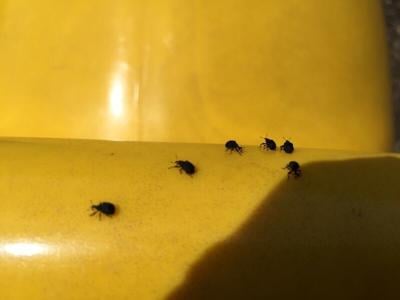
Poplar weevil’s shown on a yellow swing set at the Glendening Park Playground in Frostburg. The insects are often mistaken for ticks, earning them the nickname of “Flying ticks.”

CUMBERLAND — Move over stink bugs, the poplar weevil is here. Sometimes referred to as “flying ticks,” the latest insect invasion has arrived in the tri-state region. But not to worry, the insects are not ticks at all.

Residents in the area are reporting seeing the tiny black bugs everywhere including on cars, lawn furniture, window wells and playground equipment.

“I was stopped by a woman at the Glendening Park Playground and she was concerned about them. A lot of people are confusing them for ticks,” said Brian Vought, Frostburg’s director of parks and recreation.

Harmless to humans, the poplar weevil seems to be replacing the stink bug as the latest insect invader of the mid-Atlantic region.

Officially known as yellow poplar weevil, the insects are not yellow at all. These diminutive black/brown bugs appear during the summer months. However, every four to five years, they can be seen in large numbers.

The term yellow in the insects’ name refers to the poplar weevil’s attraction to the color yellow, along with bright safety green and white.

“People think they are ticks. You really have to take a close look at them,” said Vought.

At first glance they may resemble ticks, however, a closer look reveals the differences. The poplar weevil, about 3/16-inch long, can fly and has six legs and an elongated snout. Ticks have eight legs and do not fly. Also, the body of the poplar weevil is “humped,” with ticks being generally flat.

Dee Dee Ritchie, executive director of Canal Place, also had a run in with the poplar weevil at Glendening Park.

“I was at the yellow swings with my granddaughter. They were all over the place,” said Ritchie.

Ritchie was not alarmed by the bugs because she lives in the country and knows a tick when she sees it.

“They kept flying and we were flinging them with our fingers,” said Ritchie.

Poplar weevils are not dangerous to humans and do not carry lyme disease. Unless you are a magnolia or tuliptree, you have nothing to worry about.

The weevil can cause considerable browning to trees. Other trees they are drawn to include evergreen and sassafras trees.

The damage to the trees is normally cosmetic and does not permanently injure the tree.

The poplar weevil, unlike ticks, have antennae. The weevils do not deliver a bite. When disturbed, they often fly away.

The weevils are often seen in June and July across Pennsylvania, West Virginia and Maryland. The good news is they are expected to be gone by August.

The brown marmorated stink bug has been seen in enormous numbers throughout the mid-Atlantic region in recent years. The stink bugs are proving to be difficult to irradicate due to their tolerance to pesticides.

Greg Larry is a reporter at Cumberland Times-News. To reach him, call 301-876-5329, email glarry@times-news.com and follow him on Twitter.
___________________
**Comment**
For a better picture of the yellow poplar weevil and a good read:  https://entomology.ca.uky.edu/ef414
weevil-fig-1
The yellow poplar weevil is a small dark snout beetle (Photo: Ric Bessin, UK)
I couldn’t find this particular weevil’s presence in Wisconsin, but we do have other weevils:  https://uwm.edu/field-station/tag/weevils/  All of them have the elongated snout making them look more like a tiny rhinoceros than a tick.
And while ticks do not fly, they can blow in the wind:  https://madisonarealymesupportgroup.com/2019/06/07/ny-tick-study-challenges-belief-that-tickborne-disease-risk-is-only-in-natural-settings/  Please read comment after article.
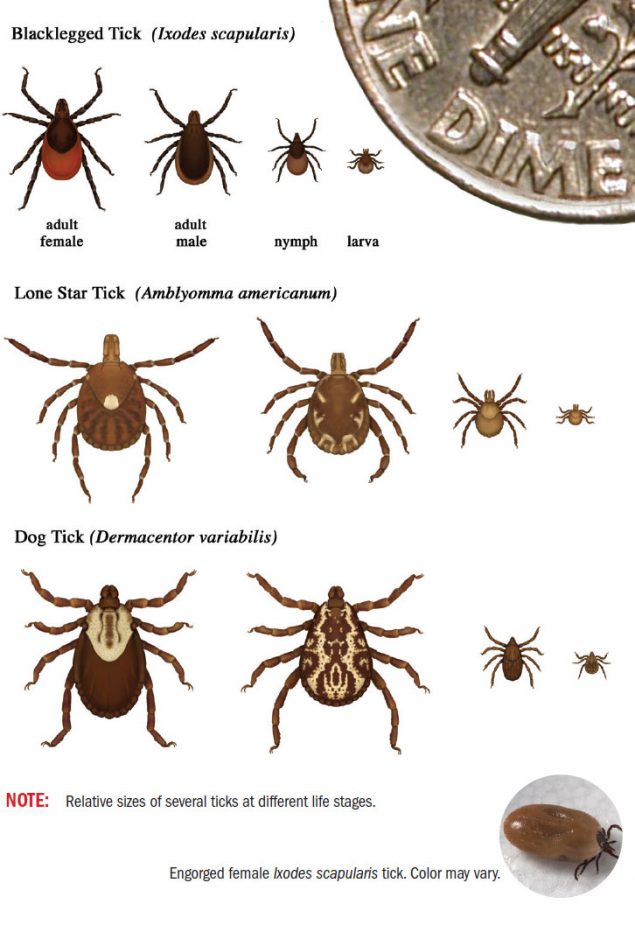
Also, tick larvae only have 6 legs so at least at one stage of their lives can be confused with insects who also have 6 legs:

Tick Factoids: Larvae & Nymphs

TickEncounter resource Center


Ticks Are Out For The Summer: How Can Bites Be Prevented?

https://www.galaxydx.com/tick-bite-prevention/

Ticks are out for the summer: How can bites be prevented?

Representatives Create Bipartisan Bill – Tick Act

https://chrissmith.house.gov/news/documentsingle.aspx?DocumentID=405938

News Item

Smith Introduces Legislation to Create a New National Strategy on Lyme Disease

WASHINGTON, Jun 5, 2019

Reps. Chris Smith (R-NJ) and Collin Peterson (D-MN) have introduced new legislation to create a new national strategy to aggressively fight Lyme disease and target an additional $180 million to boost funding for research, prevention and treatment programs.

The new bipartisan bill, dubbed the TICK Act (Ticks: Identify, Control, Knockout Act) (HR 3073) is a companion to identical legislation introduced in the Senate and inspired by legislation Smith and Peterson introduced earlier this year (HR 220) to create a new national strategy on Lyme with enhanced provisions to provide funding for critical research, prevention and protection programs, and coordinating federal efforts across agencies to fight Lyme disease. The Senate version was introduced by Sens. Susan Collins (R-ME), Tina Smith (D-MN), and Angus King (I-ME).

“Lyme disease prevalence has exploded and there are cases in every state across the nation.  We need a strong, coordinated effort at all levels to combat this disease which is crippling Americans of all ages,” Smith said. “The recent report to Congress of the HHS Tick-Borne Disease working group should sober us all—there are around 300,000 estimated new cases of Lyme in the U.S. each year, with 18 recognized tick-borne pathogens and new ones emerging.”

“Having identical bills in the House and Senate with bipartisan support in each chamber, reflects an added urgency to combat Lyme and offers the best opportunity to finally meet this disease with the federal resources and funding it demands,” Smith said.

“In addition to increasing the resources used to fight this epidemic, we need to make sure our federal response is targeted, well-coordinated and effective,” Smith said. “A new national strategy—as defined in the TICK Act will—will ensure everyone is on the same page in fighting Lyme.”

Smith’s legislation would also strengthen efforts at the regional and local levels to fight Lyme by reauthorizing Regional Centers of Excellence in Vector Borne Disease at $60 million over six years (FY2021-26), as well as authorizing CDC grants of $120 million over six years (FY2021-26) to build a public health infrastructure for Lyme and other tick-borne diseases.

Smith is the founder and co-chair of the Congressional Lyme Disease Caucus, and has authored more than a dozen comprehensive bills to advance treatment and prevention of Lyme, improve research, and improve federal efforts to fight Lyme.

Last week, he hosted a Congressional town meeting on Lyme disease in Wall Township, NJ, featuring a panel of national experts including Dr. Ben Beard, Deputy Director of the Division on Vector-Borne Diseases at the U.S. Centers for Disease Control; Pat Smith, President of the Lyme Disease Association; and Dr. Richard Horowitz, an Internist and expert in treating patients with Lyme and other tick-borne diseases.

The legislation is supported by more than 25 organizations, including the Entomological Society of America, the National Association of Vector-Borne Disease Control Officials, the Northeast Regional Center for Excellence in Vector Borne Diseases, and the National Association of County and City Health Officials.

___________________

**Comment**

In our efforts to obtain funding, let us never forget the tick is most probably NOT the sole perp, and funding desperately needs to go toward transmission studies in other bugs, as well as congenital, STD, via breast milk, etc:  https://madisonarealymesupportgroup.com/2019/04/02/transmission-of-lyme-disease-lida-mattman-phd/

https://madisonarealymesupportgroup.com/2018/06/19/33-years-of-documentation-of-maternal-child-transmission-of-lyme-disease-and-congenital-lyme-borreliosis-a-review/

https://madisonarealymesupportgroup.com/2019/05/24/microbiology-professor-im-convinced-lyme-disease-is-transmittable-from-person-to-person/

Until this is truly researched with open-minds, those who become infected in other ways will probably go undiagnosed as mainstream medicine refuses to acknowledge anything other thank tick exposure.  While there isn’t any perfect studying showing sexual transmission, there isn’t any perfect study showing there isn’t.  The last time I checked,

“The absence of evidence isn’t evidence of absence.”