Archive for the ‘research’ Category

New Study Finds Evidence of Lyme Bacteria in Brain Tissue

https://www.newscentermaine.com/article/news/health/new-study-finds-evidence-of-lyme-bacteria-in-brain-tissue-news-center-maine-tick-week-deer-dog-cdc-tulane-university-borrelia-burgdorferi-lab-disease/97-

New study finds evidence of Lyme bacteria in brain tissue

The research shows how pathogens that cause Lyme can linger in the body despite early treatment.
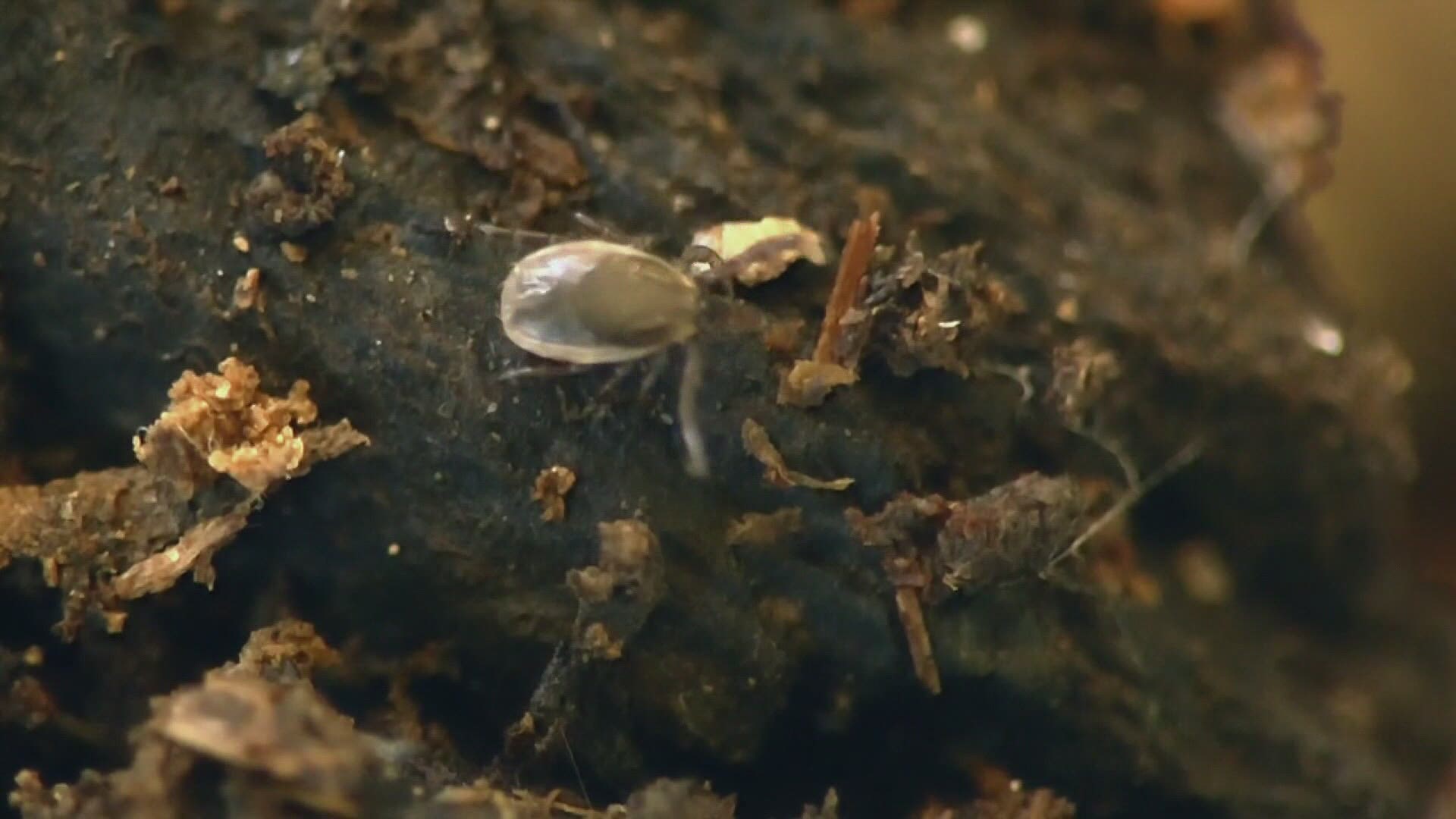
 

MAINE, Maine — According to the U.S, Centers for Disease Control & Prevention, Lyme disease can cause long-term health effects including fatigue, chronic pain, heart issues, and neurological problems.

The CDC says most symptoms caused by the tick-borne illness can be treated successfully with antibiotics if caught early.

A new study by Tulane University shows that Lyme bacteria can persist in a patient’s brain. Researchers found Lyme bacteria in the brain tissue of an elderly woman even after she had received 10 days of antibiotics following a tick bite.

Dr. Monica Embers, Ph.D., is an associate professor of microbiology and immunology at Tulane University School of Medicine in New Orleans. She and other researchers at the Tulane National Primate Research Center conducted the study in collaboration with the Lyme and Tick-Borne Diseases Research Center at Columbia University Irving Medical Center. 

The study was recently published in “Frontiers in Neurology,” the leading peer-reviewed journal for neurologists. It’s a breakthrough that could lead to changes in recommendations for treatment, including longer courses of antibiotics to address a growing public health crisis. (See link for article)

________________________

**Comment**

Excerpt:

“This is not a pathogen you want in your brain,” she said.

But that’s exactly what researchers found in a 69-year-old woman who donated her brain to Columbia University for research before she died from dementia-related complications.

The woman received 10 days of antibiotics.  She went on to develop late-stage Lyme.

Despite years of IV treatment, the woman suffered from sleep disorders, personality changes, and dementia. Lyme pathogens were also found in her spinal cord. 

Embers states that Borrelia evades the immune system by changing its proteins and burying into the body.  It can also evade antibiotics.

Lyme bacteria is persistent and evasive in the human body.

A doctor goes onto state that blood testing is often negative.


Another woman was mentioned in the article who had to hunt to find practitioners willing to treat her.  After finding two, she finally got relief after going on a regimen of antibiotics, anti-viral medications, and supplements; however she still suffers from numbness & leg pain.

Her Lyme journey is featured in the book, “The Waiting Room: Invisible Voices of Lyme.”  

Watch Dr. Embers’ full interview below.

For more:

None of this is new, and everything experienced by these patients has been experienced by thousands of others for 40 years.  Spirochetes were found in Vicky Logan decades ago.

Vicky’s doctor, Dr. Kenneth Liegner wrote a lengthy book chronicling Vicky’s story and his unrelenting efforts to get her IV treatment which kept her alive.  

He also gave details about a 2001 International Lyme Conference in New York where attendees were censored by having their microphones shut off whenever they brought up the issue of chronic Lyme disease. Wormser denied to Liegner that the event was CDC sponsored, which is an important detail as it possibly could have been opened up by legislators; however, distributed materials showed the event was in fact CDC-sponsored.

But the real zinger occurred when Liegner requested an autopsy on Vicki and the pathologist not only refused, he refused to even let an outside pathologist use the facilities to perform it.  

The reason?  Wait for it…..

……danger of infection to himself and his staff.

But, I thought Lyme disease was benign and similar to the common cold – easily cured with 21 days of doxy?

Liegner wasn’t about to let the ball drop and found a way to get Vicki to the Chief of Neuropathology at Columbia Presbyterian where her autopsy results are now available to all.  Without this critical step, propelled by Liegner, the pathologist at Hudson Valley Hospital would have successfully prevented medical knowledge of chronic and neurologic Lyme disease as well as the cause of her hypotension, a missed diagnosis of myocardial infarction.

Under “Microscopic Description” it states, “The autopsy shows histopathologic findings consistent with the neurological manifestations of chronic Lyme disease.”

In the 1800’s, Texans had the battle cry, “Remember the Alamo.”

For Lyme patients, advocates, and the doctors who dare to treat them, we have a battle cry too:

“Remember Vicki Logan.”

Call me crazy, but the continued denial of Borrelia persistence despite a plethora of research demonstrating it in both animals and humans is akin to the current COVID madness despite effective treatments, and denial of COVID injection adverse reactions and deaths.  Our corrupt public health ‘authorities’ and conflict-riddled researchers have already determined what fits in their accepted narrative and a persistent infection just doesn’t fit, as it would render the need for lucrative Lyme vaccines null and void and we certainly can’t take away that lucrative cash cow.

Babesia Symptoms Can Be Deadly: A Family’s Story

https://danielcameronmd.com/babesia-symptoms-can-be-deadly-a-familys-story/

BABESIA SYMPTOMS CAN BE DEADLY: A FAMILY’S STORY

babesia-symptoms-deadly
The number of Babesia cases appears to be rising and as a recent article in the Washington Post reports, the tick-borne infection can be deadly when symptoms go unrecognized.

Babesia symptoms can be wide-ranging and difficult to recognize by clinicians and a missed or delayed diagnosis can be deadly.

In hopes of raising awareness, one family shares their story of a Babesia diagnosis that came just a little too late.

Jeff, a 51-year-old husband and father, was hospitalized with symptoms of jaundice, agitation and inability to urinate. It took 3 days before he was diagnosed with Babesia. But his symptoms had been present for at least one month — unrecognized, as the infection progressed.

Tiny tick leads to deadly infection

As his wife tells writer Abby Schwartz from the Washington Post,¹ Jeff frequently hiked outdoors near their home in Bucks County, Pennsylvania. About a month prior to being admitted into the hospital, he had removed a tick, “no bigger than a poppy seed.”

In hindsight, “he may have had Babesia for a month,” Schwartz writes.

Diagnosis comes too late

For several weeks, Jeff reportedly had Babesia symptoms including fevers and night sweats. But clinicians presumed he had a kidney infection and prescribed a course of antibiotics. He improved briefly.

Then, he took a turn for the worst. “Jeff was weaker, sweating, unable to sleep,” his wife explains. “His breathing was labored. The whites of his eyes had yellowed, and his bilirubin was climbing, a sign that red blood cells were breaking down at an unusual rate or of liver trouble.”


READ MORE: Babesia cases among the elderly are rising, may require longer treatment


He was moved to the ICU and placed in a medically-induced coma and put on a ventilator. Doctors noted that his symptoms resembled malaria, but still did not suspect a tick-borne infection.

“His team periodically woke him, and he would squeeze his wife’s hand.”

On Tuesday, an infectious disease doctor shared some positive news. “We think we have a diagnosis.”

They suspected that Jeff had Babesiosis, a potentially deadly infection caused by parasites Babesia microti, which is typically transmitted through a tick bite.

He was prescribed an antibiotic (azithromycin) and antiparasitic (Atovaquone) medication for 7 to 10 days.

On Thursday, he died — just 2 days after starting treatment.

“If Jeff had been diagnosed early, when he first complained of night fevers, it might have been different for him,” writes Schwartz.

Since Jeff’s death, his wife and family have worked to raise awareness about Babesia.

Babesia signs and symptoms

Most people infected with Babesia do not show symptoms or have mild to moderate flu-like symptoms such as fatigue, chills, sweats, headache, body aches, nausea, and loss of appetite, which can appear days or even months later. (There is no telltale rash as with Lyme disease.)

Individuals most at-risk include the elderly and people with immunocompromised conditions. In fact, the death rate among those with an impaired immune system is as high as 20%, explains Peter Krause, a senior research scientist at Yale School of Public Health and Yale School of Medicine.

Although it is usually transmitted through a tick bite, Babesia can be acquired through a tainted blood transfusion.

Babesia cases are reported mostly in the Northeast and Upper Midwest but the disease is “increasing in frequency and geographic range,” warns Krause.

Babesia: Not recognized by all doctors

“It has to step up to the level of an infectious-disease specialist being brought in before it might get diagnosed, whereas in an area where it’s more prevalent, some of the front-line people, the emergency room doctors or urgent care doctors, might be a little more attuned to it,” says Sorana Segal-Maurer, an infectious-disease specialist at New York-Presbyterian Queens Hospital.¹

Editor’s notes:

I disagree with three statements made by doctors interviewed for the story:

  1. I have Babesia patients who do not improve with only 7 to 10 days of treatment.
  2. I have Babesia patients who are sick who do not meet the risk criteria described above.
  3. I have Babesia patients who removed the tick in less than 24 hours and still became ill.
References:
  1. Babesiosis, a dangerous tick-borne infection that attacks red blood cells, appears to be a growing problem. Abby Schwartz, Washington Post, 5/29/21.

______________________

For more:

Vaccine-Induced Thrombocytopenia & Thrombosis

https://www.nejm.org/doi/full/10.1056/NEJMoa2109908?

Clinical Features of Vaccine-Induced Immune Thrombocytopenia and Thrombosis

List of authors.

  • Sue Pavord, F.R.C.Path., 
  • Marie Scully, M.D., 
  • Beverley J. Hunt, M.D., 
  • William Lester, M.D., 
  • Catherine Bagot, M.D., 
  • Brian Craven, M.B., B.Ch., 
  • Alex Rampotas, M.R.C.P., 
  • Gareth Ambler, Ph.D., 
  • and Mike Makris, M.D.

Abstract

BACKGROUND

Vaccine-induced immune thrombocytopenia and thrombosis (VITT) is a new syndrome associated with the ChAdOx1 nCoV-19 adenoviral vector vaccine against severe acute respiratory syndrome coronavirus 2. Data are lacking on the clinical features of and the prognostic criteria for this disorder.

METHODS

We conducted a prospective cohort study involving patients with suspected VITT who presented to hospitals in the United Kingdom between March 22 and June 6, 2021. Data were collected with the use of an anonymized electronic form, and cases were identified as definite or probable VITT according to prespecified criteria. Baseline characteristics and clinicopathological features of the patients, risk factors, treatment, and markers of poor prognosis were determined.

RESULTS

Among 294 patients who were evaluated, we identified:

  • 170 definite cases of VITT
  • 50 probable cases of VITT
  • All the patients had received the first dose of ChAdOx1 nCoV-19 vaccine and presented 5 to 48 days (median, 14) after vaccination. The age range was 18 to 79 years (median, 48), with no sex preponderance and no identifiable medical risk factors
  • Overall mortality was 22%
  • The odds of death increased by a factor of
    • 2.7 (95% confidence interval [CI], 1.4 to 5.2) among patients with cerebral venous sinus thrombosis
    • 1.7 (95% CI, 1.3 to 2.3) for every 50% decrease in the baseline platelet count
    • 1.2 (95% CI, 1.0 to 1.3) for every increase of 10,000 fibrinogen-equivalent units in the baseline d-dimer level
    • 1.7 (95% CI, 1.1 to 2.5) for every 50% decrease in the baseline fibrinogen level
    • Multivariate analysis identified the baseline platelet count and the presence of intracranial hemorrhage as being independently associated with death
    • observed mortality was 73% among patients with platelet counts below 30,000 per cubic millimeter and intracranial hemorrhage
CONCLUSIONS

The high mortality associated with VITT was highest among patients with a low platelet count and intracranial hemorrhage. Treatment remains uncertain, but identification of prognostic markers may help guide effective management. (Funded by the Oxford University Hospitals NHS Foundation Trust.)

_____________________

**Comment**

The numbers don’t lie.  

A majority of these “vaccinated” patients had VITT which explains what is happening in reality – blood clotting issues.  

  • We’ve been warned by a Canadian doctor doing D-dimer tests on his “vaccinated” patients that 62% show microscopic blood clotting.
  • A pathologist also states these injections cause severe inflammation due to the “spike protein” which is a dangerous toxin that crosses the blood-brain barrier and disrupts blood vessels throughout the body and brain.  He also reiterates that these injections are not “vaccines.”

Please notice the overall mortality of 22% and significant increased odds of death on these fully “vaccinated” individuals that have been told ad nauseam that these injections will be protective and keep you from hospitalization and death.

For a mounting list of adverse reactions and death (with many examples of blood clotting & cardiovascular issues – even in young people):  https://madisonarealymesupportgroup.com/2020/12/21/warning-3150-injuries-in-1st-week-of-covid-vaccines-among-american-healthcare-workers-pregnant-women-included/

Double-Blind Study Shows Ivermectin Reduces Disease Duration & Infectiousness

https://m-jpost-com.cdn.ampproject.org/c/s/m.jpost.com/health-science/israeli-scientist-says-covid-19-could-be-treated-for-under-1day

MAAYAN JAFFE-HOFFMAN

Double-blind study shows ivermectin reduces disease’s duration and infectiousness • FDA and WHO caution against its use

Ivermectin, a drug used to fight parasites in third-world countries, could help reduce the length of infection for people who contract coronavirus for less than a $1 a day, according to recent research by Sheba Medical Center in Tel Hashomer.
Prof. Eli Schwartz, founder of the Center for Travel Medicine and Tropical Disease at Sheba, conducted a randomized, controlled, double-blinded trial from May 15, 2020, through the end of January 2021 to evaluate the effectiveness of ivermectin in reducing viral shedding among nonhospitalized patients with mild to moderate COVID-19.
Ivermectin has been approved by the US Food and Drug Administration since 1987. The drug’s discoverers were awarded the 2015 Nobel Prize in medicine for its treatment of onchocerciasis, a disease caused by infection with a parasitic roundworm.
Over the years, it has been used for other indications, including scabies and head lice. Moreover, in the last decade, several clinical studies have started to show its antiviral activity against viruses ranging from HIV and the flu to Zika and West Nile.  (See link for article)
____________________
**Comment**
The study found in MedRxiv, a health-research sharing site, has not yet been peer reviewed.  The study found:
  • Approx. 72% of the Ivermectin group tested negative and 13% were infectious after day six
  • 50% of the placebo group tested positive and 50%, almost 4 times as many, were infectious after day six
  • 5 patients were referred to hospitals, 4 of them were in the placebo group
  • One hospitalized patient complained of shortness of breath, continued on ivermectin and was sent back to the hotel a DAY later in good condition
“Our study shows first and foremost that ivermectin has antiviral activity,” Schwartz said. “It also shows that there is almost a 100% chance that a person will be noninfectious in four to six days, which could lead to shortening isolation time for these people. This could have a huge economic and social impact.”
The study author points out that while this study did not address ivermectin as a prophylactic, or address hospitalization reduction, other studies have shown such evidence.
Other studies have shown:
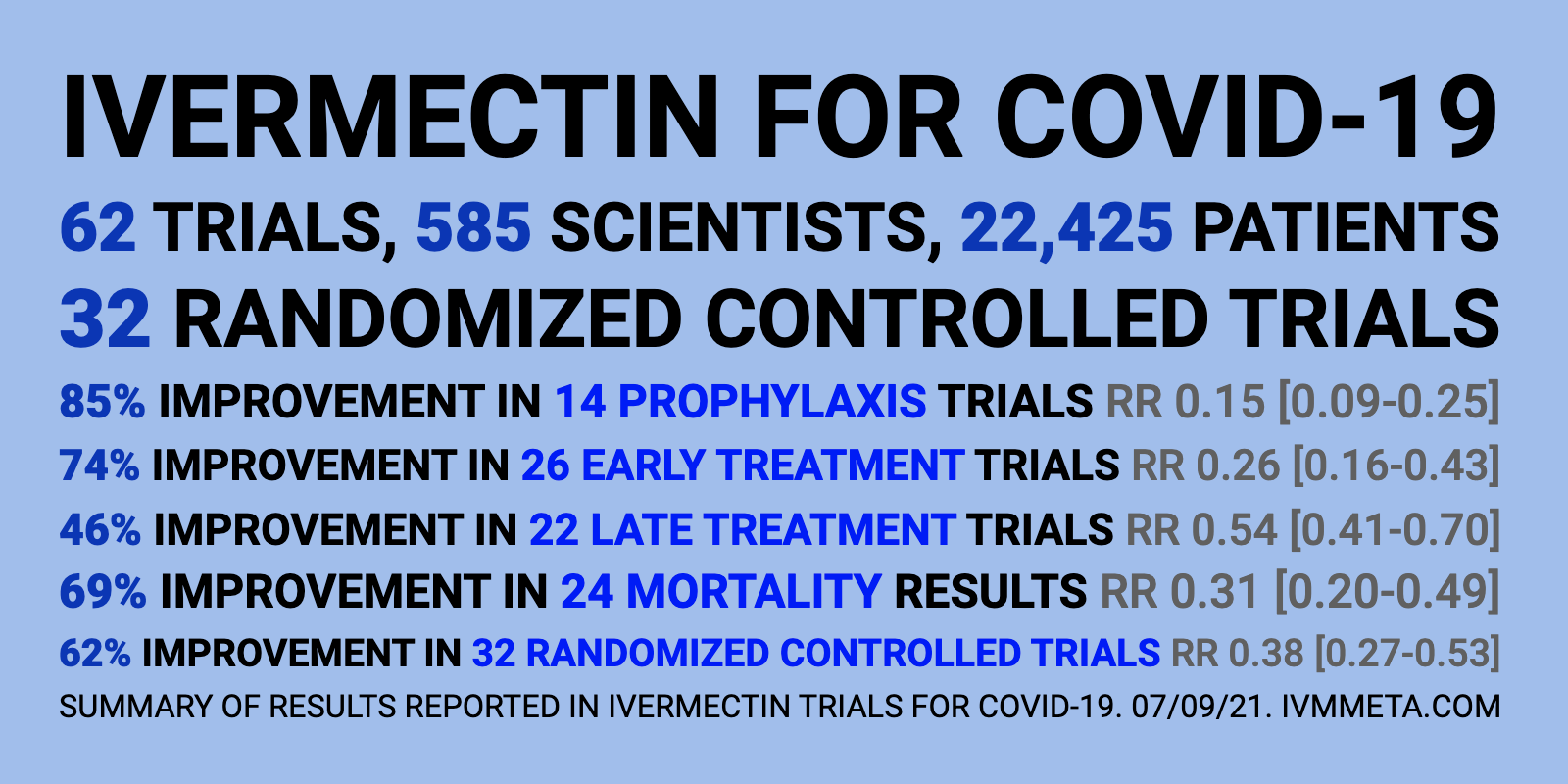
  • 27 studies demonstrate ivermectin’s ability to prevent COVID
  • a recent review found ivermectin reduced death by 75%

Please see:  

isummary

Interestingly, ivermectin is on the WHO’s list of essential medicines yet an Israeli professor states there’s significant risks with it and that ‘caution should be used on a virus that the vast majority of the public will recover from without treatment.’  He didn’t bother to mention anything about fast-tracked experimental “vaccines” that thousands have been maimed and killed from and that experts are warning against.
To date the WHO is not supporting any trials to determine ivermectin’s viability.
Researchers in other places worldwide began looking into the drug at around the same time. But when they started to see positive results, no one wanted to publish them, Schwartz said.
“There is a lot of opposition,” he said. “We tried to publish it, and it was kicked away by three journals. No one even wanted to hear about it. You have to ask how come when the world is suffering.”
This drug will not bring any big economic profits,” and so Big Pharma doesn’t want to deal with it, he said.
The article points out that some of the loudest opposition has come from Merck, the manufacturer of ivermectin since the 80’s.  Merck was peddling COVID vaccines until it was discovered “the immune responses were inferior to those seen following natural infection and those reported for other SARS-CoV-2/COVID-19 vaccines.”  Now it’s peddling molnupiravir, which raked in 1.2 BILLION from a deal with the U.S. government.  It is currently in a phase 3 clinical trail.  So why make pennies when you can make BILLIONS?
For more:

Can Lyme Disease Trigger An Autoimmune Disease?

https://danielcameronmd.com/can-lyme-disease-trigger-an-autoimmune-disease/

CAN LYME DISEASE TRIGGER AN AUTOIMMUNE DISEASE?

elderly man with Lyme disease and autoimmune disease taking his temperature

An increasing number of studies indicate that Lyme disease may ignite an autoimmune reaction in some individuals or symptoms may mimic an autoimmune disease. In their report, “Lyme arthritis presenting as adult-onset Still’s disease,” researchers describe the first known case of Lyme disease triggering Adult-Onset Still’s Disease, an auto-inflammatory condition that can impact the entire body (systemic disease).

Adult-onset Still’s disease (AOSD) is often thought to be an autoimmune disease, but is, in fact, a systemic auto-inflammatory condition, believed to be caused by an over-reactive immune response to an infection, such as Lyme disease. As Cimmino points out, both diseases share several clinical characteristics.¹

Still’s disease can cause “a triad of high fever, salmon-colored nodular rash and arthritis and/or arthralgia,” explains Ocon in the British Medical Journal.² Lyme disease can also present with fevers, atypical rashes and arthritis and/or arthralgias.

Both conditions were first identified in children. Still’s disease was initially considered a severe version of juvenile idiopathic arthritis (JIA), while Lyme disease symptoms were originally attributed to juvenile rheumatoid arthritis (JRA).

Lyme disease and autoimmune diseases

A growing number of studies indicate that Lyme disease may trigger an autoimmune response in some individuals or symptoms may mimic an autoimmune disease.

The authors suggest, “[Lyme disease] could be a great mimicker of other autoimmune diseases like DM.”

Case Presentation: Still’s disease

A 61-year-old man presented with a “complaint of intermittent spiking fevers, night sweats, generalised malaise, as well as a history of erythematous circular rashes on his right upper extremity,” writes Ocon.²

He was diagnosed clinically with Lyme disease and received two 10-day courses of doxycycline, but continued to suffer from fevers, chest pressure, a dry cough, along with malaise and arthralgia.

The man was subsequently diagnosed with Still’s disease, as he met the criteria with a fever greater than 102.2°F for at least 1 week; a characteristic rash; a white cell count of at least 10,000; lymphadenopathy, and elevated liver transaminases.

He was treated successfully with intravenous steroids and anakinra (a humanised interleukin-1 receptor antagonist), which is used to modulate the immune system.

Author’s Takeaway:

“For the first time, we describe a case of AOSD precipitated by Lyme disease.”

“Lyme disease is a rare trigger of adult-onset Still’s disease, likely mediated via immune system inflammatory activation.”

“AOSD presented with a rare manifestation of haemorrhagic pericarditis and tamponade.”

“We believe that the immunological response to Lyme disease may have triggered AOSD via a hyper-activated immune system.”

UPDATED: July 1, 2021

References:
  1. Cimmino MA, Trevisan G. Lyme arthritis presenting as adult-onset Still’s disease. Clin Exp Rheumatol. 1989;7(3):305-308.
  2. Ocon AJ, Kwiatkowski AV, Peredo-Wende R, Blinkhorn R. Adult-onset Still’s disease with haemorrhagic pericarditis and tamponade preceded by acute Lyme disease. BMJ Case Rep. 2018;2018:bcr2018225517. Published 2018 Aug 16. doi:10.1136/bcr-2018-225517
  3. Cross A, Bouboulis D, Shimasaki C, Jones CR. Case Report: PANDAS and Persistent Lyme Disease With Neuropsychiatric Symptoms: Treatment, Resolution, and Recovery. Front Psychiatry. 2021 Feb 2;12:505941. doi: 10.3389/fpsyt.2021.505941. PMID: 33603684; PMCID: PMC7884317.

For more: