Archive for the ‘research’ Category

Tick Study Assumes ‘Climate Change’ Alters Tick Movement but Provides No Data

https://parasitesandvectors.biomedcentral.com/articles/10.1186/s13071-021-05096-4

Letter to the editor

Open Access

Published:

Errata in East Coast tick study: retort to Tufts & Diuk-Wasser

John D. Scott

Abstract

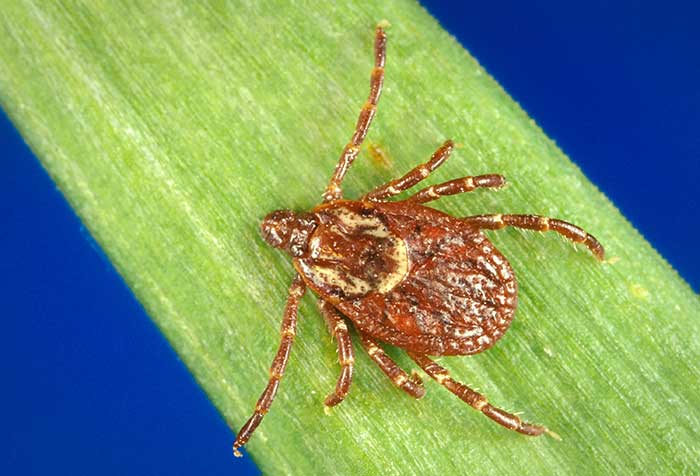
The authors overlook the first report of Haemaphysalis punctata in the Western Hemisphere documented by a pioneer acarologist in 1910. The authors assume that climate change alters movement of ticks, but provide no data. The authors’ assumptions are only opinions, and must be corrected and challenged.

Letter to the Editor,

Tufts & Diuk-Wasser purport that their discovery of the red sheep tick, Haemaphysalis punctata (Acari: Ixodidae), on Block Island, Rhode Island, USA, is the first report of this tick species in the Western Hemisphere [1]. However, Hadwen reported H. punctata at Winnipeg, Manitoba 111 years earlier [2]. Moreover, H. punctata was reported by C.L. Koch, at Para, Brazil in 1847. Therefore, Tufts and Diuk-Wasser have overlooked previously published scientific research on the presence of H. punctata in the Western Hemisphere.

Tufts & Diuk-Wasser allege that range expansion of ticks is due to climate change. In fact, the ambient temperatures on Block Island are modulated by the Gulf Stream, and there are no data (i.e. historical daily mean temperatures over the past 100 years) to substantiate climate change on this coastal island. In reality, multiple abiotic and biotic factors contribute to the distribution of H. punctata, including

  • dog travel
  • suitable hosts
  • photoperiod
  • songbird migration
  • livestock imports
  • seasonal weather variation
  • dislocation of parasitized songbirds during trans-Atlantic storms

Based on a recent Scandinavian tick-host study [3], researchers on bird ticks reported H. punctata parasitizing songbirds, and these avian hosts have the potential to widely disperse H. punctata, especially during bidirectional migration. In North America, passerine migrants disperse ticks, particularly during northward spring migration [4]. Pertinent to native ticks, the blacklegged tick, Ixodes scapularis, which is indigenous east of the Rocky Mountains, is eco-adaptive. For example, at Kenora, Ontario, this tick species survives temperatures ranging from − 44 °C to + 36 °C. This is a temperature differential of 80 °C. Any research to link ticks to climate change has been inconclusive and unsubstantiated.

Not only did the authors miss the initial discovery of H. punctata in North America, they unfortunately failed to justify any finite effect of climate change on ticks.

References

  1. Tufts DM, Diuk-Wasser MA. First hemispheric report of invasive tick species Haemaphysalis punctata, first state report of Haemaphysalis longicornis, and range expansion of native tick species in Rhode Island. USA Parasit Vectors. 2021;14:394.  Article  Google Scholar
  2. Hadwen S. Note on the finding of Haemaphysalis punctata at Winnipeg, Manitoba. Can Entomol. 1910;42:221–2.  Article  Google Scholar
  3. Wilhelmsson P, Jaenson TGT, Olsen B, Waldenstöm J, Lindgren P-E. Migratory birds as disseminators of ticks and the tick-borne pathogens Borrelia bacteria and tick-borne encephalitis (TBE) virus: a seasonal study at Ottenby Bird Observatory in south-eastern Sweden. Parasit Vectors. 2020;13:607.  Article  Google Scholar
  4. Scott JD, Clark KL, Foley JE, Bierman BC, Durden LA. Far-reaching dispersal of Borrelia burgdorferi sensu lato-infected blacklegged ticks by migratory songbirds in Canada. Healthcare. 2018;6:89.

______________________

For more:

LymeMind 2021 Conference

http://

LymeMIND 2021 Session 1 New Clinical Initiatives

Nov. 22, 2021

http://

LymeMIND 2021 Session 2 Clinical Issues Facing Pregnant Women, Children, and Parents

Nov. 22, 2021

http://

Lyme MIND 2021 Session 3 Q&A

Nov. 22, 2021

http://

LymeMIND 2021 Session 4 Learning from Long COVID and Other Infection Associated Conditions

Nov. 22, 2021

http://

LymeMIND 2021 Session 5 Progress on Dr. Neil Spector’s Research

Nov. 22, 2021

http://

LymeMIND 2021 Session 6 Q&A

Nov. 22, 2021

http://

LymeMIND 2021 Session 7 Understanding the Peer Review and Government Grant Selection Process

Nov. 22, 2021

http://

LymeMIND 2021 Session 8 Government Action Against Tickborne Diseases

Nov. 22, 2021

http://

LymeMIND 2021 Session 9 Q&A

Nov. 22, 2021

Revisiting Incarnation Children’s Center – AIDS Drug Trials Funded by Fauci

https://www.omsj.org/blogs/incarnation-childrens-center-aids-trials

Revisiting Incarnation Children’s Center – AIDS Drug Trials

February 23, 2014

(LIAM SCHEFF) –  In 2004, I broke open the NIH Clinical Trial Scandal, the internationally-covered story of hundreds of New York City orphans used by government agencies and pharmaceutical companies in deadly AIDS drug trials.

In reporting this issue, I entered the orphanage where children were being used as guinea pigs, and over a period of several years, took interviews with mothers, children and childcare workers at the Incarnation Children’s Center. I also interviewed the medical director, and investigated the FDA documentation and published medical literature on the tests and drugs used, drugs which were often force-fed through nasal and gastric tubes to the children. I reported several deaths in children, and although the mainstream denied that any deaths were due to drug toxicity, they admit that over 200 children died.

(See link for article)

_____________________

**Comment**

Your tax dollars at work, directed by Dr. Fauci, head of the National Institute of Allergy and Infectious Diseases (NIAID) since 1984 – and current Hollywood star for COVID propagandaPlease take the time to listen to 10 full minutes of COVID contradictory propaganda from our leaders, including Fauci.

Summary:

  • NYC hired Vera Institute to create a final report on this inhumane experiment but weren’t given access to the children’s medical records. The VERA investigator refused to take data from Scheff that listed the trials, drugs used, and recorded ‘black box’ warnings.
  • The report stated that out of 532 children in the study, 25 died directly during the study, another 55 died later in foster care, and the Director at VERA as of 2009 stated that 29% of the remaining 417 had died. In a follow-up interview, the head of VERA admitted that many more children had died.
  • According to this: one staff member, Jacklyn Hoerger, spoke out about the deceitful protocol:
    • “We were told that if they were vomiting, if they lost their ability to walk, if they were having diarrhea, if they were dying, then all of this was because of their HIV infection. I just faithfully gave it as I was told by doctors.” Fauci and the NIAID claimed the drugs and vaccines were the only chance for survive.  (Sound familiar?)
    • Hoerger put that theory to the test and adopted two half-sisters. She removed the children from the experiments and watched them recover. The girls began eating properly for the first time in their lives and improved “almost instantaneously.” Hoerger concluded that the drugs were causing the children’s bodies to shut down. When the doctors and administrators found out she was ostracized as a “negligent parent.” The girls were taken from her and she wasn’t allowed to see them again.
    • Fauci wanted adherence at all costs – even the children’s well being.  No matter what happened, doctors could blame HIV; however, NIAID and their partners presumed all the children had HIV.  They never used any laboratory confirmation.  (I will add that PCR testing for HIV is just as abysmal as it is for COVID and should never be trusted by itself for diagnosis)
    • What isn’t discussed is the fact that when parents withdrew consent, their child was removed and placed in a foster home that would comply. 
  • Watch the documentary “Guinea Pig Kids”, and read Celia Farber and the late Liam Scheff’s expose’ on these crimes against humanity, which also a WBAI New York news-report
  • Both Wikipedia and the NY Times covered up the sordid details and heralded it as one of the great successes of AIDS treatment. They erroneously state that doctors obtained permission for using the foster kids, but admits that the “permissions” for many of these children are “missing,” (or were never there).  They also didn’t review the children’s medical files – but still conclude it was a medical success.
  • Fauci got away with crime, and appears to be getting away with the current crimes against humanity regarding COVID.  He’s known by many as “the Teflon man” as nothing sticks to him.

Physician Frustration With Lyme Disease Patients

https://danielcameronmd.com/physician-frustration-with-lyme-disease-patients/

Physician frustration with Lyme disease patients

physician-frustration-lyme-disease-patients

In their study, “Primary care clinical provider knowledge and experiences in the diagnosis and treatment of tick‑borne illness: a qualitative assessment from a Lyme disease endemic community,” Mattoon and colleagues examined frontline and primary care doctor’s knowledge and practices for identifying patients with tick-borne diseases.

They found that some physicians are frustrated with Lyme disease (LD) patients. “Providers described challenges and frustrations in counseling patients with strong preconceptions of LD diagnosis and treatment in the context of chronic infection,” the authors wrote.

The authors came to this conclusion after a series of focus groups with 14 clinicians from three primary care practices and a survey of 24 urgent and emergency care clinicians.

The diagnostic process contributed to some of the frustration.

Clinicians had a self-professed lack of awareness of TBDs [tick-borne diseases] outside of Lyme disease, noting that they were unfamiliar with the signs, symptoms, and appropriate serologic testing needed to diagnose non-Lyme TBDs, as well as the prevalence of these TBDs in their local communities.”

More specifically, nearly 50% of clinicians reported feeling “not at all knowledgeable on anaplasmosis.”

Treatment approaches also led to frustration. Clinicians:

“appeared to have difficulty in identifying the appropriate treatment approach for patients with nonspecific symptoms and negative Lyme disease serology, with only 66.7% [of clinicians] providing the correct answer,” the authors wrote.

Problems presented by patients with chronic illness

Some doctors were frustrated when patients challenged their treatment plan.  “This commonly came in the form of patients rejecting results of serologic testing, wanting a different length of antibiotic course than that prescribed, or seeking an alternative treatment modality.”

Some doctors were frustrated with the time and effort involved in taking care of these patients.

“Clinical encounters with these patients were described as time consuming and difficult.

Finally, some doctors were frustrated by contradictory information by outside providers. “Two focus group discussions centered around differences in care plans between participants’ primary care offices and what they termed the ‘Lyme literate’ community.”

Need for more education and training

Clinicians felt additional training would be help avoid some of these problems. The authors cited an example:

“I ordered what I thought was sort of the standard Lyme titer. It came back negative and this kid continued to have a swollen knee…He went to the orthopedist. They couldn’t figure it out. He’s going up to the rheumatologist. And it’s just because I ordered the wrong test…I think [I] ordered the PCR, which was like, you know, the quick and easy one. But actually that wasn’t probably a good one to do.” [FG3, Pediatrics]

“The gaps in knowledge identified through the focus group and online survey data, coupled with the consistent necessity to provide point-of-care counseling and education to patients,” the authors concluded, “highlight a pressing need for resources and support for primary care and frontline providers treating patients for TBDs.”

Editor’s perspective

Neither the authors nor the participating clinicians questioned the accuracy of the diagnostic testing and treatment plans they administer.
References:
  1. Mattoon, S., Baumhart, C., Barsallo Cochez, A.C. et al. Primary care clinical provider knowledge and experiences in the diagnosis and treatment of tick-borne illness: a qualitative assessment from a Lyme disease endemic community. BMC Infect Dis 21, 894 (2021). https://doi.org/10.1186/s12879-021-06622-6

_____________________

**Comment**

A cringe-worthy article for sure.  I couldn’t help but think that if doctors think they are frustrated, try being a severely sick patient, perhaps who’s spouse is just as ill, whose life is spiraling down a vortex of doom in every way possible and your doctor, the person who is supposed to have the answers, is completely and hopelessly in the dark.

Talk about frustration!

My advice: bypass these doctors at all costs and get straight to an educated, Lyme literate doctor with experience.  It will save you time, money, and heartache in the end.

Could An 80-Year-Old Drug Cure Alzheimer’s Disease?

https://newsblog.drexel.edu/2021/11/08/could-an-80-year-old-drug-cure-alzheimers-disease/

Could an 80-year-Old Drug Cure Alzheimer’s Disease?

Analysis of Alzheimer’s disease in hospital, conceptual image

Unlike diseases that impair the body in a myriad of physical ways, dementia can rob mental faculties and identity, as patients struggle to remember memories from previous days. As the disease progresses, victims may also forget friends or relatives and the functional skills to perform a daily routine.

The most common form of dementia, Alzheimer’s disease, is a disorder in which brain cells shrink and die. There is no cure, although some medicines, support groups and other programs may help patients manage the disease.

Considering this void, the search for better treatments presses on. More than $3 billion in National Institutes of Health funding is dedicated to Alzheimer’s research, although progress seems painfully slow for the roughly 5.8 million Americans currently suffering from the disease. Some existing drugs are controversial, such as Aduhelm, which was recently approved by the Food and Drug Administration for patients with mild cognitive impairment or early onset Alzheimer’s. Among the many questions about the drug is whether it is worth its $56,000 a year cost and side effects risk.

The glaring limitations of available therapeutics led one College of Medicine professor to consider whether the solution is not an expensive drug, but one that has been around since World War II. This is the question posited by Herbert B. Allen, MD a professor and chair emeritus in the College of Medicine, who offers a bold challenge to colleagues: consider whether penicillin could help prevent Alzheimer’s, and when combined with a disperser, whether penicillin may slow progression of the disease — or maybe even stop it altogether.

Allen’s hypothesis paper, recently published in the Journal of Alzheimer’s Disease, expands beyond penicillin’s current role in treatment of infections, like syphilis and gonorrhea, and introduces the possibility that there could be similar effectiveness when applied to Alzheimer’s.

Two regimens proposed by the hypothesis: prevention using penicillin via a once a year shot, or pills for two weeks, or treatment of early-onset Alzheimer’s using penicillin and a drug such as rifampin to break the biofilms so the penicillin can break through into the body.

Allen says the path of Alzheimer’s in the tissues of patients starts with two types of spiral-shaped bacteria, known as spirochetes, known as Borrelia burgdorferi (which also causes Lyme disease) and Treponema denticola. These dangerous bacteria enter the brain via nerve cells and brain circuits and create biofilms that are responsible for the tangles and the attack on brain cells that cause Alzheimer’s, Allen said.

Alzheimer’s disease is a chronic infection,” said Allen. “Up until to this point in time, no one has been able to find these biofilms that cause disease hidden in live tissue.”

After reading that a colleague at the International Alzheimer Research Center in Switzerland, Judith Miklossy, MD, PhD, grew Lyme organisms from the brains of Alzheimer’s patients, Allen got an idea.

“I thought maybe there’s something to this, because Lyme is a skin disease first, so I put the same staining procedure together for tissue samples from our tissue bank here and it showed that the organisms made biofilms and the hypothesis grew from there.”

Allen explains that it’s these spiral-shaped bacteria that make the biofilms and make the beta-amyloid located inside and outside of cells and attack normal, healthy Tau protein and cause the breakdown of nerve cells.

Miklossy is credited with the discovery that the pathology of syphilis and Alzheimer’s are the same, Allen said.

Allen points to penicillin’s success in preventing syphilis and psoriasis as possible reason why it may have success in Alzheimer’s and possibly other neurodegenerative diseases. Despite this, Allen says research funding prioritizes new drug development over study of existing drugs like penicillin. Following the money to see part of the reason why, Allen points to billions of dollars in revenue for drugs like Humira, with billions of dollars in sales each year to psoriasis and rheumatoid arthritis patients.

The first data showing that spiral-shaped bacteria played a role in Alzheimer’s was discovered by Alan MacDonald, MD, back in the 1980s when MacDonald was working as a pathologist at Southhampton Hospital in New York. This latest hypothesis from Allen follows his decades of research in dermatology, including a 2014 JAMA Dermatology paper showing that eczema is also an infection.

Those over age 65 and/or with a family history of Alzheimer’s, are at greater risk of the disease. There are also specific genes implicated in Alzheimer’s risk, such as the risk gene APOE-e4. Estimates suggest that roughly 40 to 65 percent of those diagnosed with the disease have this gene. There are very rare deterministic genes in about one out of every hundred cases that guarantee an individual with the gene will develop Alzheimer’s.

_____________________
For more: