Archive for the ‘Prevention’ Category

Vaccinating Mice to Protect People?

https://www.lymedisease.org/lyme-shield-vaccine-mice/

Vaccinating mice to protect people from Lyme disease
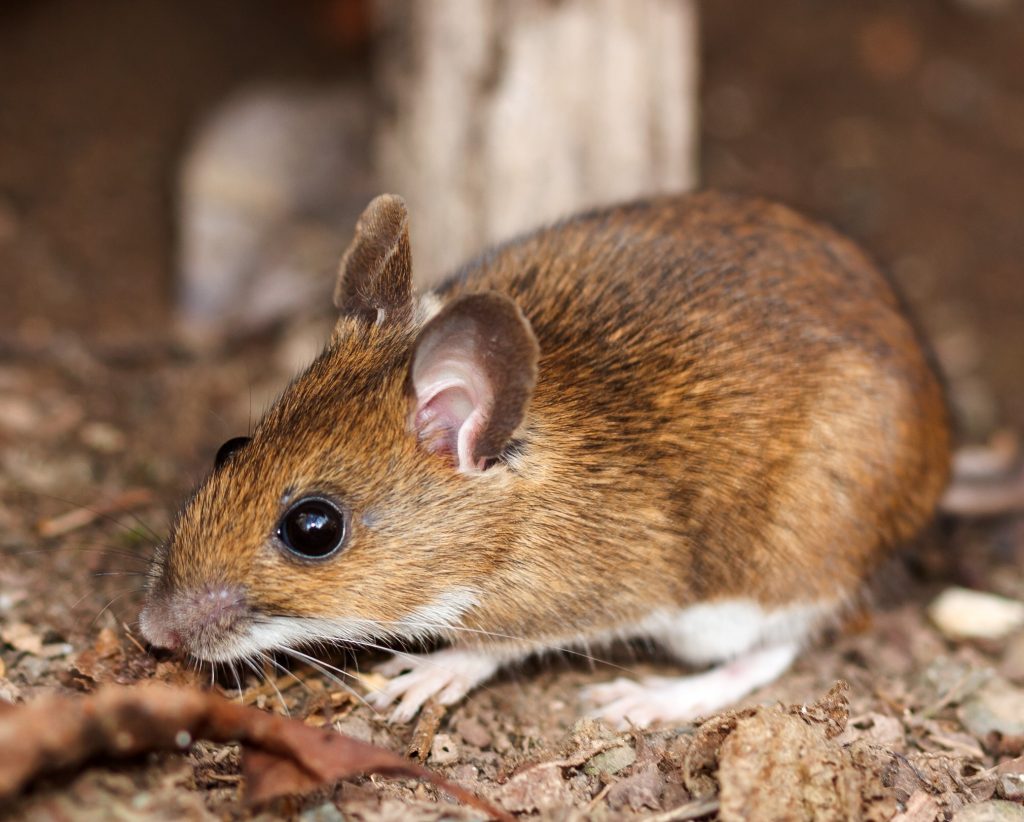
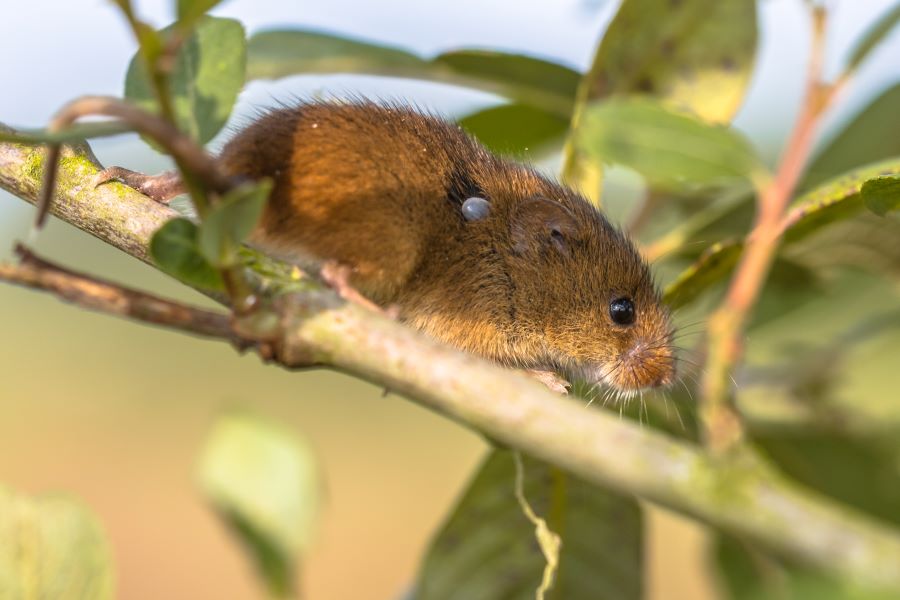
The US Department of Agriculture has conditionally licensed an oral Lyme vaccine that targets mice.

The substance is sprayed onto pellets and distributed in natural settings to be consumed by mice in the wild.

That vaccinates the mice against Lyme bacteria, so they will not pass the infection to ticks, which in turn cannot pass it to people and pets.

According to US Biologic, the maker of the vaccine, “We’ll distribute the pellets in different ways to residences, public lands, and commercial properties. At residences, we will use the LymeShield System, which is an integrated tick-management program offered by pest-management professionals and includes the timed-application LymeShield Station. “

The vaccine is called Borrelia Burgdorferi Bacterin. The product, called LymeShield, includes a device or “station” that holds and applies the pellets.

SOURCE: US Biologic

____________________

**Comment**

Sorry, just not excited about this at all.

There’s this thing called the law of unintended consequences and the past three years have demonstrated it perfectly.  Researchers and public health ‘authorities’ are typically very myopic and do not factor in variables that happen in real life that can affect the outcome of studies done in a lab in a petri dish.  The human body and the environment are complicated worlds where many things affect them.

For instance, what will these sprayed pellets do to other species that eat them?  What will this do to species that eat mice that have eaten these sprayed pellets?  What will this do to the groundwater that surrounds the area of these pellets and how will this affect wild-life and humans?  I mean, the questions abound here and no answers are forthcoming because we are all living in a continual experiment where we simply find out through the course of events.  Kind of like passing a bill before you read it.  (That actually happened)

For more:

Research has become a run-away train with zero oversight and zero ethics.  The world will suffer.

Please note that Lyme/MSIDS research always focuses on “vaccines” and never upon effective tests or treatments.  Coincidence?  I think not.

Lyme Awareness News Story 2023

http://

May is Lyme Disease Awareness Month

KMIZ ABC 17 News

https://abc17news.com/health/2023/05/08/may-marks-lyme-disease-awareness-month/

By Ethan Heinz

May 8, 2023

COLUMBIA, Mo. (KMIZ)

May is national Lyme Disease Awareness month, giving activists and those suffering from Lyme disease a chance to spread information on how to prevent the disease.

According to the Centers for Disease Control’s website, Lyme disease is often found in the upper midwest and northeastern states in the United States, and is transferred through tick bites.

The CDC says 476,000 people are treated for Lyme disease each year, based on insurance records.

Liam Conlon is Lyme positive, and lives with the illness after a tick infected him.

(See link for story)

________________

**Comment**

Fairly balanced reporting here for once.

While the spokeman for the Columbia/Boone County Health Department is correct in stating that not all ticks are infected, this is the wrong approach.  When will we learn?

Take each and every tick bite as seriously as a heart attack and ASSUME you are infected.  The risk simply isn’t worth it.

I’m thankful the article points out Lyme is only the tip of the spear and there are many other pathogens they can transmit besides the ones listed in the article.  Bartonella is one of the worst and isn’t even mentioned.

There are also many other signs and symptoms than what are listed in the article.  Time to get educated.  Time to stop regurgitating age-old information that is incomplete or inaccurate.  One example is waiting for symptoms before seeing a doctor.  At this point it would be foolish to “wait and see,” because this approach has doomed thousands of people to a life-time of suffering.  Each tick bite should be treated.

For more:

Tick Report: Interview With Professor Stephen Rich

https://podcast.tickbootcamp.com/episode/a51237a6/tick-report-an-interview-with-professor-stephen-rich  Interview Here  (Approx. 2 hours)

Episode 355: Tick Report – an interview with Professor Stephen Rich

May, 2023

In this episode of the Tick Boot Camp Podcast, we welcome Professor Stephen Rich, a well-respected scientist in the chronic Lyme disease community from the University of Massachusetts Amherst. Join us as Professor Rich shares insights into his research on tick-borne diseases and practical applications, focusing on Lyme disease transmission, deer’s role in the spread of Lyme, and various preventive measures.

Discussion Points

  • His team’s groundbreaking discovery last month that the blood of the white-tailed deer kills Lyme bacteria
  • Professor Rich’s background and the Laboratory of Medical Zoology at UMass Amherst
  • Practical applications of Lyme research and training other scientists
  • Understanding the tick feeding process and Lyme disease transmission
  • The debate on Lyme disease transmission through other vectors (mosquitoes, bed bugs)
  • Spatial protection tools for preventing tick bites
  • Attachment times for Lyme and other tick-borne illnesses
  • The mystery behind the Lone Star tick-borne illness Alpga-Gal Syndrome (AGS)
  • The role of mice in Lyme disease transmission
  • Strains of Borrelia burgdorferi and their impact on humans
  • CDC’s stance on tick testing and available testing options through Tick Report
  • The importance of tick checks and using multiple senses

In this informative episode, Professor Stephen Rich offers valuable knowledge about the transmission and prevention of Lyme disease and other tick-borne illnesses. By understanding these complex processes, we can develop better preventive measures and treatment strategies. Stay tuned for future episodes featuring more insights from experts in the field.

For more:

Live the Adventure Podcast: Ticks, Lyme Disease, & Pathogens

https://canlyme.com/2023/05/20/cormode-david-webb-explore-magazine-podcast/

Sarah Cormode joins host David Webb on Explore Magazine’s Live the Adventure Podcast

Sarah and David want listeners to continue exploring in nature and stay safe in the outdoors.
Explore's Live the Adventure Podcast logo floating over a kayaker on the shore.

Sarah Cormode, host of the Looking at Lyme podcast, speaks to outdoor enthusiasts across the country in this Explore podcast with host David Webb. Sarah’s interests in education and awareness shine through as she talks about the Looking at Lyme podcast, and how to avoid tick bites and Lyme disease while enjoying the outdoors. Sarah and David want listeners to continue exploring in nature and stay safe in the outdoors!

Ticks. Lyme disease. Pathogens.

Are you scared yet?

Well, you don’t need to be. Even active outdoor enthusiasts like us only need to be educated and aware—then we can stay tick safe!

Today’s conversation is with Sarah Cormode, from the Canadian Lyme Disease Foundation. Sarah is a podcaster and has had the opportunity to speak with dozens of experts in the field of medicine and outdoor safety and education.

So let’s talk ticks with Sarah Cormode!

Learn more about prevention strategies at CanLyme.com and consider purchasing a Tick Removal Kit to ensure safe and timely tick removal.

____________________
Take a survey and get a chance to win a tick-removal kit:  https://canlyme.com/2023/04/13/survey-for-our-looking-at-lyme-listeners/
For more:

Study: Bait Boxes and Met52 Not Effective in Controlling Tick Populations

https://danielcameronmd.com/tick-control-methods-not-effective-residential-neighborhoods/

TICK CONTROL METHODS NOT EFFECTIVE IN RESIDENTIAL NEIGHBORHOODS

Mouse with tick embedded on shrub branch.

Controlling tick populations can help reduce the likelihood of individuals being bitten by an infected tick and developing a tick-borne illness, such as Lyme disease. Multiple types of tick control methods have been employed but with varying degrees of success. This study explores the effectiveness of bait boxes and the biopesticide spray Met52 in reducing tick abundance and tick encounters with humans.

In their study, “Impacts Over Time of Neighborhood-Scale Interventions to Control Ticks and Tick-Borne Disease Incidence,” Ostfeld and colleagues examined the effectiveness of tick control methods in 24 residential neighborhoods endemic for Lyme disease in New York.¹

The study, conducted over several years, assessed the impact of tick control system (TCS) bait boxes and Met52 spray on reducing tick abundance and tick encounters with people and outdoor pets. And whether these interventions led to a decrease in reported cases of tick-borne diseases.

“Rapid increases in incidence rates and geographic ranges of tick-borne diseases have stimulated efforts to reduce human exposure.”

The authors examined two interventions:

TCS Bait Boxes

TCS bait boxes attract small animals to a food source inside an enclosed device and apply the tick-killing chemical, fipronil. (Fipronil is lethal to ticks but harmless to mammals.)

Met52 Spray

Met52 spray is a biopesticide, which consists of spores of the F52 strain of the fungus Metarhizium brunneum. The solution, mixed with water, is sprayed on the ground and low-lying vegetation.

Impact varies with type of tick control intervention

“By killing ticks attached to small mammals, TCS bait boxes are expected to affect the abundance of host-seeking (questing) ticks the following year,” the authors explain.

Whereas, “Met52 targets host-seeking ticks, with impacts expected within days to weeks after deployment.”

Unfortunately, interventions were unable to control tick populations in 24 residential neighborhoods in New York over a 4-to-5-year period.

“… the lack of association between reduced abundance of host-seeking nymphal blacklegged ticks in residential areas receiving acaricidal treatments and the incidence of tick-borne diseases in those areas … suggests that tick control for disease reduction needs new approaches.”

STUDY FINDINGS:

  • The study found that in neighborhoods with active bait boxes, questing blacklegged ticks and ticks attached to small mammals were reduced by approximately 50%.
  • These interventions “significantly reduced owner-reported cases of tick-borne diseases in outdoor pets,” the authors point out.
  • However, “neither intervention (nor both combined) was associated with reductions in either human encounters with ticks or self-reported cases of tick-borne disease.”
  • “In neighborhoods with active TCS bait boxes, populations of blacklegged ticks (Ixodes scapularis) were not reduced over time in any of the three habitat types tested (forest, lawn, shrub/garden).”
  • “There was no significant effect of Met52 on tick abundance overall…”