Archive for the ‘Lyme’ Category

Lyme Disease & POTS

https://www.globallymealliance.org/blog/lyme-disease-and-pots?
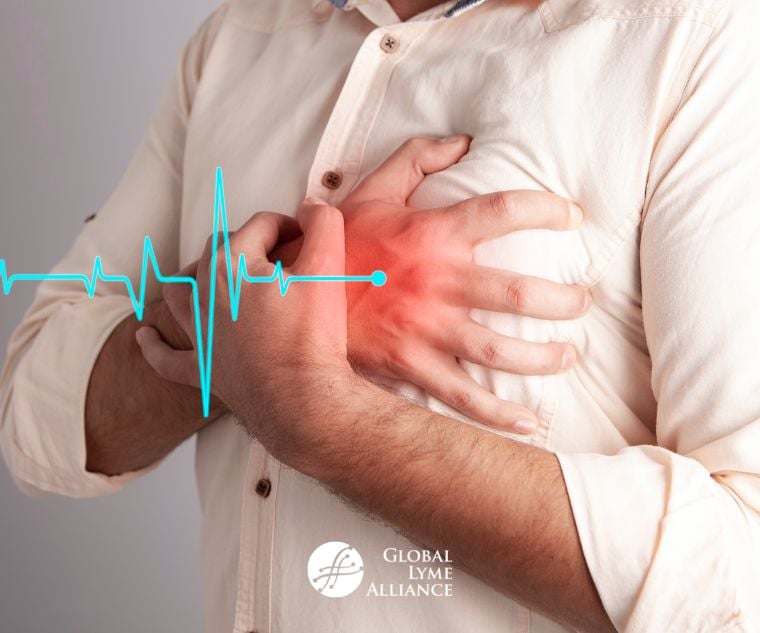
Learn about the connection between Lyme disease, POTS, and Lyme carditis, and discover the importance of early diagnosis and specialized medical care.

Have you heard of POTS?

Between my freshman and sophomore years of college, I was bitten by a tick while working at a summer camp in the woods of Maine. As I’ve described in many of my blog posts, it took eight years for me to be accurately diagnosed, and during that time I suffered from a range of physical and neurological symptoms. During the fall semester of my sophomore year, I had flu-like symptoms as well as symptoms of what the college nurses thought were panic attacks.

Looking back now, I wonder if my heart palpitations, lightheadedness, and dizziness were in fact signs POTS, or Postural orthostatic tachycardia syndrome. At the time, POTS was little if at all understood, but now researchers and physicians are seeing POTS not just in Lyme disease patients but also in conditions like long COVID and ME/CFS.

POTS occurs when moving from lying to standing causes an increase in heart rate by at least 30 beats per minute for adults and 40 beats per minute for children. In addition to this abnormal increase in heart rate, the Heart Rhythm Society defines POTS as a clinical syndrome characterized by symptoms of lightheadedness, blurring of vision, palpitations, intolerance to exercise, and fatigue, as well as the absence of orthostatic hypotension[i] (meaning the blood pressure does not drop when the heart rate rises). I experienced all of these symptoms that fall in college. Had POTS been more well-known, its symptoms could have pointed puzzled medical practitioners in the direction of tick-borne disease. That was 1997; a recent study shows that the incidence of POTS has increased four-fold since 2000.[ii]

Another Lyme-related condition, Lyme carditis

Heart-related symptoms such as racing heartbeat can also be a sign of another condition known as Lyme carditis, when the Lyme bacteria goes to the heart. This can cause atrioventricular block, often referred to as “heart block,” which is an electrical disconnect between the upper and lower chambers of the heart, causing them to beat at different rhythms. Lyme carditis can also manifest as costochondritis (inflammation of the cartilage that connects the ribs to the breastbone), tachycardia (racing heart rate) and bradycardia (slow heart rate). It can also cause myopericarditis (inflammation of the heart muscle and lining), which patients may feel as chest pain or shortness of breath.

Though Lyme carditis is rare, according to a 2008 study, 4% to 10% of all patients with Lyme borreliosis. Whenever the clinical suspicion of Lyme carditis arises, an ECG is mandatory to detect or exclude an atrioventricular conduction block.

If you have already been diagnosed with Lyme disease, it’s important that your doctor check specifically for Lyme carditis, and also evaluate you for POTS. If you are experiencing symptoms of either Lyme carditis or POTS, see a Lyme Literate Medical Doctor (LLMD) to find out if tick-borne disease may be the cause. I only wish I had seen a LLMD sooner; I might have avoided years of suffering.

Click here to read more blogs.

[i] https://www.ncbi.nlm.nih.gov/pmc/articles/PMC7255540/

[ii]  Epidemiology of postural tachycardia syndrome. [Apr;2020 ];AbdelRazek M, Low P, Rocca W, Singer W. https://n.neurology.org/content/92/15_Supplement/S18.005 Neurology. 2019 92:0.

The above material is provided for information purposes only. The material (a) is not nor should be considered, or used as a substitute for, medical advice, diagnosis, or treatment, nor (b) does it necessarily represent endorsement by or an official position of Global Lyme Alliance, Inc. or any of its directors, officers, advisors or volunteers. Advice on the testing, treatment or care of an individual patient should be obtained through consultation with a physician who has examined that patient or is familiar with that patient’s medical history.

Writer

Jennifer Crystal

Opinions expressed by contributors are their own. Jennifer Crystal is a writer and educator in Boston. Her work has appeared in local and national publications including Harvard Health Publishing and The Boston Globe. As a GLA columnist for over six years, her work on GLA.org has received mention in publications such as The New Yorker, weatherchannel.com, CQ Researcher, and ProHealth.com. Jennifer is a patient advocate who has dealt with chronic illness, including Lyme and other tick-borne infections. Her memoir, One Tick Stopped the Clock, was published by Legacy Book Press in 2024. Ten percent of proceeds from the book will go to Global Lyme Alliance. Contact her via email below.

Email: lymewarriorjennifercrystal@gmail.com

Lyme Research – Same Crap, Different Day

https://pubmed.ncbi.nlm.nih.gov/28613720/

Lyme Disease

In: StatPearls [Internet]. Treasure Island (FL): StatPearls Publishing; 2025 Jan.
.
  • PMID: 28613720

Excerpt

Lyme disease, or Lyme borreliosis, is the most commonly transmitted tick-borne infection in the United States (US) and among the most frequently diagnosed tick-borne infections worldwide. Lyme disease is divided into 3 stages: early localized, early disseminated, and late. Early localized disease is distinguished by the red ring-like expanding rash of erythema migrans at the site of a recent tick bite. Other symptoms experienced at this stage may be malaise, headache, fever, myalgia, and arthralgia. Most patients only experience the symptoms of early localized disease. About 20% of patients develop early disseminated disease, with the most common symptoms being multiple erythema migrans lesions.

Other symptoms of the disseminated stage are flu-like symptoms, lymphadenopathy, arthralgia, myalgia, palsies of the cranial nerves, especially of cranial nerve VII, ophthalmic conditions, and lymphocytic meningitis. Additionally, cardiac manifestations, including conduction abnormalities, myocarditis, or pericarditis, may occur. The most common late-stage manifestation is arthritis, which is usually pauciarticular and affects large joints, especially the knees. Lyme disease is a curable condition if identified and treated appropriately.

_______________

**Comment**

Sigh……here we go again.  Our tax dollars at work killing patients by regurgitating the same myths for over 40 years.

  1. The ‘3 stages’ of Lyme myth has been dispelled numerous times yet repeated with abandon.  Here we learn of a child who within 4-6 hours of tick bite developed widely disseminated disease where she suddenly couldn’t walk or talk.  The ‘stage’ narrative is killing people by giving them a false sense of time.  Some people have very little time before chronic/persistent infection becomes a reality.
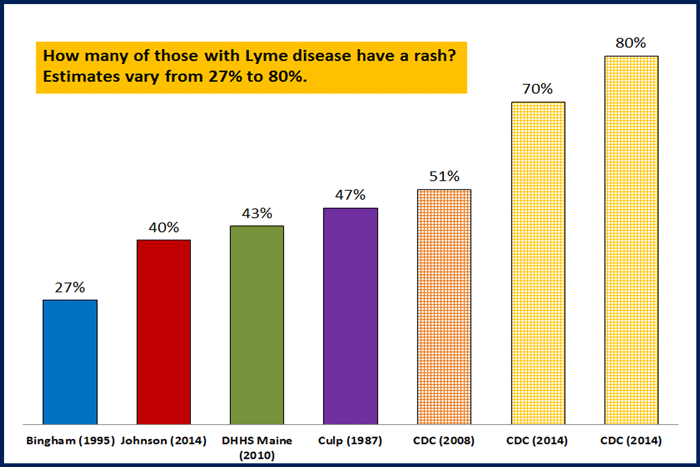
  2. Hardly anyone I work with gets an EM rash, and a study found only 6% got it.  The rash is highly variable and prone to misdiagnosis.  There is nothing ‘classic’ about it.

    • The rash issue, as well as waiting for the results of a faulty test, has caused frequent, unnecessary delays in diagnosis and treatment, dooming patients to a lifetime of suffering, as doctors are not properly educated on actual science, but have been fed a CDC-narrative that continues on with ratchet studies like this one.  Most doctors are unaware that while this rash is diagnostic for Lyme disease and that misdiagnosis can have fatal consequences, lack of a rash means zippo.
    • Aucott reports that 54% of Lyme disease patients who present without a rash are misdiagnosed.
  3. The litany of symptoms (that can be psychiatric) continues to be ignored despite case after case after case showing this reality. Many of these symptoms are often caused by coinfections that come with Lyme, but this factoid is repeatedly ignored by mainstream research. Therefore the statement: “Most patients only experience the symptoms of early localized disease,” is completely and utterly erroneous.  Further, the statement: “the most common late-stage manifestation is arthritis, which is usually pauciarticular (involvement of 4 or fewer joints) and affects large joints, especially the knees,” is also utter garbage. They insist on propagating an acute illness, caused by a singular bacterium because it fits the ‘vaccine’ narrative.  This is also why the vaccine topic is huge and should be taken seriously by the Lyme/MSIDS community, and in order for that to happen, an understanding of the ‘vaccine’ fraud is mandatory reading, not to mention the fact every patient I know who got ‘vaccinated’ relapsed.
  4. Sexual and congenital transmission is also categorically ignored.
  5. The statement: “Lyme disease is a curable condition if identified and treated appropriately,” is sheer hopium based upon nothing but pixie dust.
  6. Besides the fraudulent ‘vaccine’ narrative, it’s imperative to understand government ‘public health’ is nothing more than a peddler for Big Pharma.  This is why mainstream research via government grants and/or industry funding will only continue to regurgitate damaging information presented in this recent article. The design of Lyme/MSIDS research purposely omits the sickest patients, ignores seronegativity, and relies upon a test that misses around 90% of all casesutilizing a rash nobody can identify and few have! 
There is no greater example of having the deck stacked against you.

The only hope for chronically ill patients is N-of-1 Trials.

This study and all others funded by government is a waste of time and money.

Who’s Trying to Stop America From Being Healthy Again?

Asking who is trying to stop us from being healthy should be important to everyone, but particularly to Lyme/MSIDS patients.  You don’t have to be in Lymeland for very long before realizing ‘things are not right.’

Lyme Monsters: Doctors who repeatedly attack sick patients, advocates, nonprofits, and Lyme literate doctors”.

It’s also important to ask due to the fact an alarming new study shows deaths of Americans aged 25-44 spiked to 70% above the expected rate in 2023.  They examined over 3.3 million deaths.

Predictably ignoring the elephant in the room, drug overdoses, suicides, alcohol, and the pandemic are blamed for the trend, despite the fact the causes of these deaths normally kill much older people, as well as the sudden contribution of cardiometabolic conditions.

Dr. Pierre Kory notes:

“the inexplicable and unprecedented rises in group term life insurance claims among young people 25-44, which occurred suddenly in the 3rd quarter of 2021 when mandates were all the rage.”

Dr. James Thorp is also sparking widespread concern that babies from COVID ‘vaccinated’ mothers are dying from placentas failing to grow and blood flowing incorrectly to the umbilical cord.

In the following article, A Midwestern Doctor gives the sordid history.  Please remember the many and varied Big Pharma tactics including the fact that Merck created a hit list to ‘destroy,’ ‘neutralize,’ or ‘discredit’ dissenting doctors.  This tactic is common everywhere in ‘public health‘ and the medical industrial complex and was routinely used during COVID.

________________

https://www.midwesterndoctor.com/p/whos-trying-to-stop-america-from?

Who’s Trying to Stop America From Being Healthy Again?

Untangling the century of dark industry tactics that have poisoned the health of America

Silencing Dissent

Since COVID-19 began, those who tried to warn the public about the clear dangers of how we were addressing COVID-19 (e.g., lockdowns, vaccines, and remdesivir) have been targeted and silenced. While many were initially in disbelief our government could do something like this, more cynical parties (e.g., myself) suspected something like this would happen (as it always does) and caught the early warning signs of it.

In my eyes, beyond the over-the-top marketing throughout the media to promote the COVID boondoggle, there were three particularly noteworthy (and interwoven) facets to this campaign:

  1. Widespread censorship of opposing ideas (e.g., GoFundMe deleting fundraisers for individuals who had severe COVID vaccine injuries and nowhere else to turn for help since those fundraisers alerted people to the vaccines not being completely “safe and effective” and most of the news networks refusing to question the COVID narrative). Of note, from the start, I assumed there had to be shadow banning occurring (as I could see the effects of it happen in real time) and coordination between the social media platforms and the Biden administration—an illegal activity which was gradually confirmed by lawsuits (e.g., due to the Twitter file) and other leaks that revealed shadow banning was widespread on the tech platforms.
  2. The establishment targeted anyone who dissented against the narrative in a coordinated fashion. For example, many absurd complaints were used to target the medical licenses of physicians who were saving patients from dying from COVID (e.g., Meryl Nass, whose suspension was so absurd that 13 members of Maine’s legislature formally complained to the medical board about it).
  3. A very aggressive and coordinated campaign to neutralize anyone who disputed the narrative on social media. Early on, I began to suspect this was happening because I’d see the same bad actors (typically doctors) use the same sculpted talking points. In April 2024, I found out an industry funded group did indeed exist, and that: •Many of the people I’d suspected were in a coordinated conspiracy did indeed belong to a secret group (“Shots Heard”) dedicated to fighting misinformation online.  •That group was tied to the Federal Government and funded by the pharmaceutical industry. •That group, one by one, would target dissident healthcare workers and attempt to both get them removed from social media, to have their medical licenses taken away or get them fired from work, and in some cases, to directly harass them at their homes.

(See link for article)

_________________

**Comment**

Once again, a very astute piece by AMD on important history that is imperative to understand.

A brief bullet-point of items discussed:

  • A chronology of the FDA’s war against America’s health and how many toxic food additives got ‘grandfathered’ into or food supply as ‘generally recognized as safe,’ as well as the cutthroat lobbying from the food industry and the resulting monopolization of food.
  • Due to powerful lobbyists defending industries that contribute to poor health, actions to address ‘the root causes of disease,’ are never taken.
  • The power of public relations and the common tactic they underhandedly deploy:
    • by paying a ‘trusted’ 3rd party ‘expert’ to promote their message
    • by creating an organization with a name that implies the opposite of what it actually does and then having the group promote policies that harm their stated cause to support the industry that in turn funds it all

N-of-1 Trials: The Only Hope for Lyme Patients & the Vaccine Injured

https://johncatanzaro.substack.com/p/n-of-1-trials-the-only-hope-for-long?

N-of-1 Trials: The Only Hope for Long COVID, Spike Protein Complications, and Vaccine-Injured Patients

Signal-Based Medicine | N-of-1 Trials

Feb 03, 2025

The Current Dilemma

The current medical system is failing those suffering from Long COVID and vaccine injuries—patients are gaslit, dismissed, and left to deteriorate without real solutions. The reason? Our healthcare model is built around randomized controlled trials (RCTs), which were never designed for individualized treatment.

What Is an N-of-1 Trial?

An N-of-1 trial is a personalized, single-patient clinical study that aligns treatment based on the individual’s unique biomolecular response. Instead of relying on population-based statistics, this method uses real-time molecular surveillance, patient-specific peptide therapeutics, and adaptive treatment adjustments to achieve true precision medicine.

Unlike traditional one-size-fits-all drug development, N-of-1 trials are built around the patient—tracking their unique exome, transcriptome, and proteome to correct faulty molecular signaling at the source.

We do not have time to wait for mass-scale trials designed for bureaucratic approval pipelines rather than real-world recovery. Lives are deteriorating daily, careers are lost, and families are crumbling. The answer is clear: we need a personalized, adaptive medical model that responds to the patient in real-time—not a slow-moving, industry-driven system.

A Stark Illustration:

Recent breakthroughs in gene-based therapies have demonstrated impressive success in conditions like spinal muscular atrophy, sparking renewed hope for addressing complex neurogenetic diseases. However, many of these interventions are designed to target specific genetic variations, and the rigid structure of traditional clinical trials has created a severe bottleneck in innovation.

Economic and bureaucratic barriers ensure that commercial development is prioritized only for high-prevalence druggable genetic variants— those deemed profitable and feasible for large-scale trials. As a result, countless patients with rare or individualized molecular disruptions are left without viable treatment options, reinforcing the urgent need for N-of-1 trials that bypass these restrictive models and deliver precision-driven solutions in real-time.

Unfortunately, this progress has not extended to Long COVID and vaccine-related injuries, where patients are suffering from Spike-protein-induced immune dysregulation, severe cardiac damage, neuroinflammation, and persistent spike-related organ damage with no viable path to treatment.

The reason is clear: traditional clinical trial models prioritize druggable conditions with large, commercially profitable patient populations while existing N-of-1 trials are still shackled by the same flawed system, failing to deliver the personalized, compassionate care that patients with complex, individualized needs urgently require. The solution is simple: individualized N-of-1 trials must operate independently, untainted by the dysfunction of the current medical research model.

The Catastrophic Failure of RCTs in Chronic Disease

RCTs were designed for standardized drug testing, not complex, multi-systemic conditions like Long COVID and vaccine injuries. These illnesses vary drastically between individuals, yet the medical system continues to force them into rigid study parameters that discard individualized responses.

Why the System Is Broken:

• Deliberate Exclusion of the Suffering – Long COVID and vaccine-injured patients don’t fit neatly into RCT parameters, so they are ignored.

• Slow, Bureaucratic Approval Processes – Years-long trials mean patients deteriorate while waiting for an answer.

• Generalized Data Over Personalized Care – RCTs focus on “majority response,” discarding those who don’t fit the mold.

This isn’t science—it’s systemic neglect.

A System Rigged Against Individualized Care

We don’t see this approach in mainstream medicine because it threatens the financial strength of the pharmaceutical industry.

• Precision-targeted treatments mean fewer mass-produced drugs—which cuts into Big Pharma’s profit margins.

• A truly individualized medical system means fewer hospitalizations, fewer unnecessary interventions, and fewer chronic patients dependent on expensive lifelong medications.

• RCT-based gatekeeping ensures only patented, billion-dollar drugs get approval—while peptide and precision small molecule therapeutics remain buried under regulatory red tape.

This system is not designed to heal people—it is designed to sustain an industry. We Can’t Afford to Wait—Patients Are Deteriorating Now  (See link for article)

Further reading:

  1. https://www.nature.com/articles/s41591-021-01519-y
  2. https://jamanetwork.com/journals/jamaneurology/fullarticle/2829260?guestAccessKey=37236d8c-7c7d-4581-b9a3-a0bc7166de92&utm_source=silverchair&utm_medium=email&utm_campaign=article_alert-jamaneurology&utm_content=olf&utm_term=012725&adv=004812881201
  3. https://ascpt.onlinelibrary.wiley.com/doi/10.1002/cpt.2425

__________________

**Comment**

I was struck with how this article directly pertains to many of the problems in Lymeland.  RCTs have been the bane of research for Lyme/MSIDS.  Because mainstream medicine denies this complex illness can be chronic with persistent pathogen infection, and the inclusion of numerous coinfections, RCTs only include those who test positive on a test that misses nearly 90% of cases, and have a rash that is highly variable.  Maternal-fetal transmission was identified in 1985, but it took 27 years to recognize and investigate. While ‘the powers that be’ acknowledge it can be transmitted congenitally, they still claim it’s rare.  Due to this stance, doctors continue to fail to acknowledge and treat it.

Everything’s rare, until it isn’t.

The sickest patients are not represented in the research.

Lyme Disease Triggers Neuropathy in Legs

https://danielcameronmd.com/femoral-neuropathy-neurologic-symptom-lyme-disease/

Lyme disease triggers neuropathy in the legs

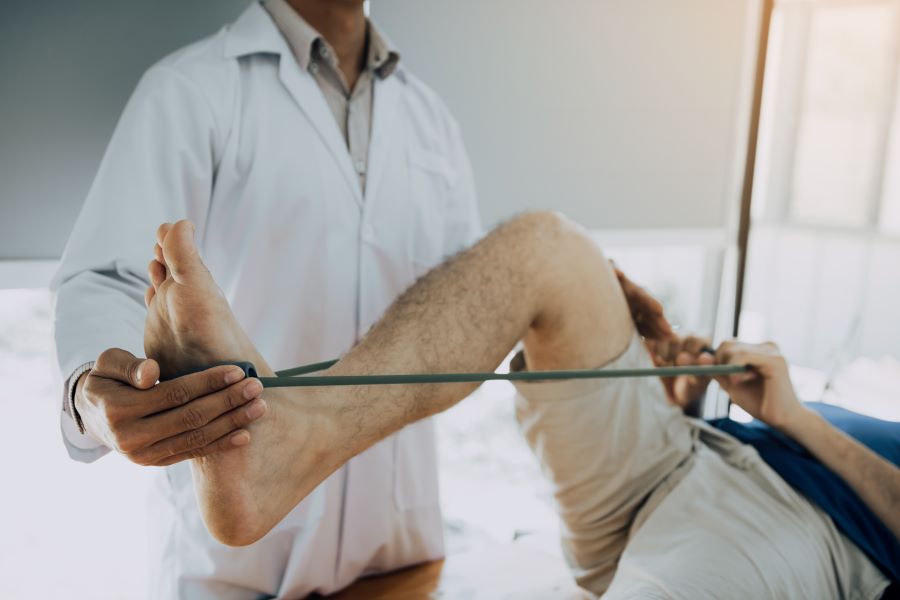
Man with neuropathy due to Lyme disease receiving physical therapy.

It is well-recognized that Lyme disease can cause neurologic symptoms, such as peripheral neuropathy when the infection goes untreated. Patients can experience muscle weakness and/or twitching, loss of sensation in parts of the body, numbness, tingling sensations, problems with balance and bladder control, and a feeling of dizziness or faintness. But now, new research indicates that femoral neuropathy may also be due to Lyme disease.

A case report by Lazaro and Butt, published in the International Medical Case Reports Journal, describes a 67-year-old patient with Lyme disease and femoral neuropathy.¹ This is believed to be the first reported case of isolated femoral neuropathy triggered by Lyme disease.

Femoral neuropathy, also referred to as femoral nerve dysfunction, involves a loss of movement or sensation in parts of the legs due to damage to the femoral nerve.

The patient, who lived in central New York, a region endemic for Lyme disease, developed a large erythema migrans (EM or bull’s-eye) rash on his chest, which lasted for 3 weeks, along with swelling of his left knee.

An IgG Western blot test for Lyme disease was positive, and he was treated with a 4-week course of doxycycline.

“Shortly after the completion of the doxycycline therapy, this patient began complaining of gait difficulties and frequent falls, as well as intermittent painful cramps in his right thigh.”

An electromyography (EMG) test, which measures muscle response or electrical activity when a nerve muscle is stimulated, indicated the patient had a femoral neuropathy.

READ MORE: Small fiber neuropathy in Lyme disease and COVID-19

“A year after the onset of the disease, and following an extensive course of physical therapy, this patient was able to return to his full-time work as an attendant in a local store,” writes Lazaro.

“We firmly believe that the femoral neuropathy and Lyme disease seen in this patient were causally related,” the authors conclude.

This patient’s femoral neuropathy could have developed into a multifocal neuropathy, which involves damage to 2 or more different nerve areas, if the antibiotic treatment had been delayed.

“… if not for a timely institution of antimicrobial therapy, [the femoral neuropathy] might have evolved into a more overt or disseminated infectious or parainfectious process, affecting both the peripheral and central nervous systems.”

The authors’ findings suggest that femoral neuropathy is “analogous to facial nerve palsy as a presenting symptom of Lyme disease without the overt involvement of other cranial or peripheral nerves.”

The list of peripheral neuromuscular segments affected in Lyme disease has grown to include the nerve cell bodies and their axons, all of the cranial nerves except the olfactory nerve, the nerve roots, the brachial and lumbosacral plexuses, and the peripheral nerves, either in isolation or as part of a multiple or diffuse neuropathic process.²-³

References:
  1. Lazaro RP, Butt K. Femoral mononeuropathy in Lyme disease: a case report. Int Med Case Rep J. 31 July 2019, Pages 243-247.
  2. Halperin JJ. Lyme disease and the peripheral nervous system. Muscle Nerve. 2003;28:133–147.
  3. Logigian EL. Peripheral nervous system Lyme borreliosis. Semin Neurol. 1997;17:25–29.

For more: