
She’s Battling Lyme, Bartonella, Babesia, Anaplasmosis, and PANS
Eileen Clossick opens up about her Lyme disease, Bartonella, Babesia, and Anaplasmosis, and PANS in an effort to help others and spread awareness.
The puzzle pieces are finally starting to come together after going through what I now recognize was the perfect storm this past year: getting the Covid vaccine (& subsequently developing paresthesia in my legs), contracting Covid, going through an emotional stressor, and then being exposed to mold (and later finding out I have mold toxicity, or “mycotoxicity”). The floodgates were opened, and my body could no longer suppress the viral load it was carrying.
Experiencing Symptoms
I was experiencing such severe insomnia that I would go days without sleeping, even after taking four or five Benadryl at a time. I was having heart palpitations, night terrors, such severe brain fog that I couldn’t plan my days off of work without ending up in tears, tingling in my head as well as my legs, intrusive thoughts, dizzy spells, tinnitus, and neck stiffness. I was seeing black dots, snowflakes, and stars. I had weird neuro symptoms like dropping things all the time and mixing up left and right. I would wake up at night with shaking episodes because I couldn’t regulate my body temperature. And worst of all, I was experiencing a darkness and spiral in my mind that I have yet to figure out how to explain in words. By nature, I am a very joyful, energetic, and enthusiastic person, so I knew that this was not me, and something was deeply wrong. I was afraid to hurt a patient at work due to my exhaustion caused by severe insomnia, so I started calling out of shifts.
After a boatload of research, and visiting and calling multiple doctors and clinics, I finally got into a Lyme Literate doctor. I explained my story to her, all the way back to the onset of symptoms at 5 years old. She looked at me and said, “this is classic Bartonella,1 I’ll be shocked if it isn’t.” I instantly burst into tears in her office, and the only thing I could repeat was “no one should ever be told they’re just anxious for 20 years.”
Pediatric Acute-onset Neuropsychiatric Syndrome (PANS)
If it hadn’t been for the flare up this past year, I may have never gotten the answers I needed. I was forced to ask the deeper question of what was really going on.
At the age of five, I had a sudden onset of severe anxiety, OCD symptoms, destructive behavior, night terrors, and sensory issues. It escalated to the point that I needed to be admitted to a children’s psych hospital for a little over a week. My doctors tested me for Strep (for a PANDAS diagnosis), which was negative. Unfortunately, they did not have the knowledge of tick borne illnesses or PANS (Pediatric Acute-onset Neuropsychiatric Syndrome). So, I was seen as a psych case, told I had a “delay in my neurological development” and prescribed psych meds at a young age. Over the years, I led a normal life, but always dealt with what I believed was an anxiety disorder. So I attributed other strange symptoms to anxiety throughout my life. There have been periods when it was worse than others, but overall, I tried incredibly hard to hide it from most people, because I hated that I struggled with it. If it hadn’t been for the flare up this past year, I may have never gotten the answers I needed. I was forced to ask the deeper question of what was really going on.
Multiple Tick-borne Diseases
-2-1.jpeg?width=218&height=358&name=thumbnail_image2%20(1)-2-1.jpeg) When the full Tick Borne Panel came back, my doctor was correct in her assumption. I was diagnosed with Lyme, Bartonella, Babesia, and Anaplasma. Along with these tick borne illnesses, I also had the Neural Zoomer Plus test done which identified blood brain barrier disruption2 and demyelination. With that, I was diagnosed with PANS. Along with those diagnoses, I was also diagnosed with 9 new food sensitivities and mycotoxicity. My doctor looked at me and said “you’re one tough cookie for walking around with all of this.”
When the full Tick Borne Panel came back, my doctor was correct in her assumption. I was diagnosed with Lyme, Bartonella, Babesia, and Anaplasma. Along with these tick borne illnesses, I also had the Neural Zoomer Plus test done which identified blood brain barrier disruption2 and demyelination. With that, I was diagnosed with PANS. Along with those diagnoses, I was also diagnosed with 9 new food sensitivities and mycotoxicity. My doctor looked at me and said “you’re one tough cookie for walking around with all of this.”
Surprisingly, with each new diagnosis came a sense of relief. I finally had proof that everything I was experiencing was real. This illness can be dangerously misleading, and oftentimes cause me to doubt my own experiences, as I look normal from the outside and I have good moments and days when I feel like myself. Because a lot of what I endure is not outwardly visible to others, I have been challenged to put into words what I am experiencing, so I can let others in, especially those closest to me.
My Most Recent Flare
This past spring, I was having flashbacks to my childhood, and experiencing odd bouts of deja vu. My body was trying to tell me I was experiencing a flare, but I couldn’t read the signs. I was begging the Lord to give me sleep, fighting for rest in any way I could: putting my phone away 2 hours before bed, creating a nighttime routine, etc, all to no avail. Even when I did fall asleep, I was awoken by night terrors, pinprick sensations, or shaking episodes and required even more sleep aides to get back to sleep. I didn’t know if I was doing something wrong. All I knew was that I was struggling and needed help, badly. I didn’t know exactly what was going on at the time, but I knew that I was done taking the band aid approach offered to me. I didn’t want to just take more pills; I wanted to know why I was experiencing all of these random symptoms.
Unfortunately, when these tick borne illnesses and other infections have crossed the blood brain barrier and gone systemic after being in the body for years, antibiotics alone do not work. These bugs are quite intelligent. They create a biofilm to protect themselves. So, while I will most likely be on antibiotics and anti-parasitic drugs long-term, the road to recovery involves so much more than just antibiotics. I have yet to meet a single person who healed from long-term Lyme/coinfections with antibiotics alone. In fact, I experienced some of the worst die-off symptoms (herxing) after starting some of the herbal regimens prescribed by my ILADS doctor. From someone coming from healthcare and working with pharmaceuticals, I had no idea how potent and effective some of these herbs could be.
The Healing Process
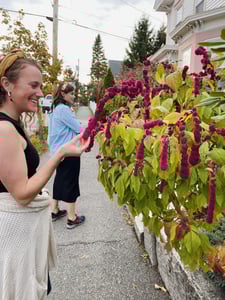 In addition to medications and supplements, there are other supportive therapies to help my body and mind heal. Since this has gone undiagnosed for so long and crossed the blood-brain barrier, I will be undergoing treatment for the next couple of years. There are numerous routes to take, so treatment may look different at different points in time over the next couple of years. Because my immune system has been suppressed for years, I need to do everything I can to help boost it. I am currently taking Immunoglobulins. There are many diet and lifestyle changes to make as well to help boost my immune system and decrease the inflammation in my body and brain.
For me, I’ve found that the best medicine of all is being with people. It’s often seeing others and socializing that pulls me out of the never ending darkness or mental spiral that I can’t escape alone.
And, since my body has been stuck in a fight or flight mode (sympathetic state) for so long fighting infection without me knowing, I have to help my body learn how to re-enter the parasympathetic state (or, rest and digest state). For me, I’ve found that the best medicine of all is being with people. It’s often seeing others and socializing that pulls me out of the never ending darkness or mental spiral that I can’t escape alone. When I was a kid, nothing worked, so I am thankful that I have found something that does work. There are other simple things I’ve found effective such as laughter, music, prayer, and being in nature. There are also certain therapies like cold-water exposure, craniosacral therapy, EMDR therapy, & neurofeedback, that help my body shift from the sympathetic to the parasympathetic state. Our bodies heal best in the parasympathetic state. I could create a whole other blog post just on all the treatment and therapies involved. Keeping track of it all is a full time job in and of itself!
And as I mentioned, there is something called the Jarisch-Herxheimer reaction (or “herxing”). I don’t have a worst enemy, but even if I did, I would not wish this on him or her. Basically, as the bacteria die off, they release toxins, so all of the symptoms you’ve experienced come to a head and get worse before they get better. But, as people have told me, even though it’s a living hell, it’s something to celebrate, because you know you’re hitting the nail on the head. Since most of the symptoms I have experienced have been neuro and psychiatric, and because these bacteria have crossed the blood brain barrier and caused PANS, most of the herxing involves worsening of the neuro and psychiatric symptoms. “In PANS and PANDAS, autoantibodies target healthy proteins or receptors in the brain, principally in the basal ganglia, a region of the brain responsible for motor movements, learning, cognition, and emotion.”3 Because I’ve had this for so many years without knowing, there will be a lot of bacteria that need to die off, and lots of herxing to go through, but I am determined to go through whatever I need to in order to get to the other side. It’s taken me years to arrive at this point; I can’t expect to heal in a month or two. As I begin to experience some days in between herxing where I feel like myself again, I am hopeful for complete healing in time and better days ahead.
There is also the issue of mycotoxicity. Who knew mold could wreak such havoc on your brain and nervous system? When not excreted from the body, it gets stored in fatty tissues, including the brain, which explains why everything got worse when I had a new mold exposure. For whatever reason, people with Lyme & co-infections don’t flush out toxins from their body like the average person (many of these people also have an MTHFR gene mutation).
Due to the ups and downs of these illnesses, many weekly appointments, and the financial burden that comes along with all of this, I made the decision to move home to Rhode Island and go ‘all in’ on my healing journey. Although this has felt like rock bottom all around, I am challenging myself to view this situation in a new light. What if this is an opportunity to give my body the rest, space, and time it needs to heal? What if the “falling apart” of my old life, is actually a new path falling together? What if I can use this as an opportunity to spread awareness, and therefore alleviate the suffering of others? What if I can heal completely, and then get back out there, further my degree, and work with the kiddos (& their families) who battle PANS/PANDAS?
Earlier diagnosis = earlier treatment, and therefore, better outcomes.
 As I’ve mentioned before, I am open about my journey, in order to spread awareness, and to one day fight alongside and achieve victories for others, so that no one will ever go misdiagnosed for so long like I did. Earlier diagnosis = earlier treatment, and therefore, better outcomes. Because of the frequent mental spiral I experience, especially during this past year, I have doubted many of my decisions. However, since I discovered all of this, I have not for one second doubted that I was handed this cross so that I can one day help others with a similar cross. They say people who battle long term Lyme & co-infections with a purpose and reason to get through it, have better outcomes than those without a purpose, and I have most definitely found mine. No one should go misdiagnosed for 20 years, and then have to fight so hard just for a diagnosis. No one should have to go to therapy to process 1) the trauma that comes along with PANS, and 2) the shock of going misdiagnosed for so long. No one should have to pay thousands of dollars out of pocket to regain their health after it was the medical field that missed the bigger picture. No one should be treated as though they are crazy by certain doctors who have not been trained in or educated themselves on tick borne illnesses (as well as PANS, molecular mimicry, etc), because it’s often a complicated and “controversial” topic.
As passionate as I am about this, I am also realizing there are emotional, spiritual, & mental components to work through as well. I could also write a whole blog post (or book, truthfully) just on those aspects alone. I am learning that I can’t expect to heal while holding onto anger and resentment towards all those who couldn’t help me more when I was a kid, or even this past year. I am also learning to be patient with myself as I process the aftershocks, all the emotions that come with it, and some of the painful memories.
It was only when I came to a place of deep acceptance, that I achieved a sense of peace.
For more GLA blogs, click here.
Endnotes
- 1. “About Lyme Disease Coinfections”, lymedisease.org, 2022, https://www.lymedisease.org/lyme-basics/co-infections/about-co-infections/ .
- 2. Jennifer Crystal, “Breaking Down Lyme Disease and the Blood Brain Barrier”, Global Lyme Alliance (blog), October 1, 2022, https://www.globallymealliance.org/blog/breaking-down-lyme-disease-and-the-blood-brain-barrier
- 3. “PANS and PANDAS Overview”, Moleculeralabs, 2022, https://www.moleculeralabs.com/pans-and-pandas-overview/.
- 4. Neil Nathan, MD, “Toxic: Heal Your Body from Mold Toxicity, Lyme Disease, Multiple Chemical Sensitivities, and Chronic Environmental Illness” (Victory Belt Publishing Inc, 2018).
 Madison Area Lyme Support Group